Article Contents:
- Biological Foundations of Exceptionality
- Physical and Mechanical Properties: Numbers Speaking of Quality
- Drying Technology: Transforming Living Wood into Stable Material
- Chemical Composition: natural laboratory
- Critical Importance of Moisture Content
- Kiln Drying: Controlled Perfection
- Art of Planing: From Rough Stock to Perfect Surface
- Conditioning: Final Stabilization
- Philosophy of Surface Treatment
- Technological Parameters of Planing
- Quality Control of Planed Surfaces
- Grading and Classification: Selection for Every Task
- Russian Quality Classification
- European Grading System
- Special Categories of Oak
- Applications: From Utility to High Art
- Furniture Industry: Traditions and Innovations
- Construction Applications: Strength for Centuries
- Parquet Production: beauty underfoot
- Technological Innovations: Traditions Meet the Future
- Decorative and applied art
- Thermal Modification: Enhancing Nature
- Radio Frequency Drying: Technologies of the 21st Century
- Impregnation with Stabilizing Agents
- Working with Oak Boards: Secrets of Mastery
- Choosing the Right Material
- Storage and Acclimatization
- Ecological Aspects and Sustainable Forestry
- Finishing and Treatment
- Oak as a Renewable Resource
- FSC and PEFC Certification
- Carbon Footprint and Environmental Benefits
- Oak Timber Market: Trends and Prospects
- Global Consumption Trends
- Global Consumption Trends
- Price factors
- Development prospects
- STAVROS: where traditions find modern embodiment
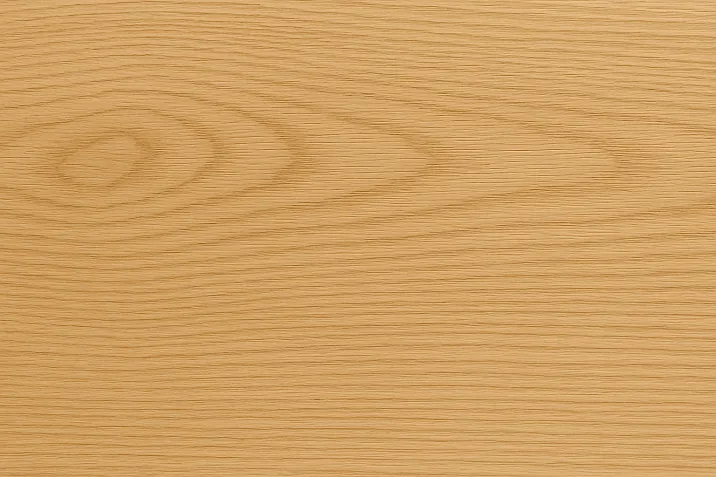
Some materials are simply used in work, while others engage in dialogue with the craftsman. oak board dry planed It belongs to the second category — this is living material that requires understanding, respect, and a professional approach. Every millimeter of this board carries within it decades of history: from the first leaf on a young oak to the moment when the master’s skilled hand transforms raw timber into a perfectly flat, silky surface.
Oak is not just a tree. It is a symbol of strength, constancy, nobility. No wonder oak leaves are used in heraldry to denote honor and glory, and in folk culture, oak is considered the king of the forest. When we speak of planed oak boards, we speak of a material that has served humanity for centuries, forming the foundation for the greatest achievements in architecture, furniture art, and decorative crafts.
But what transforms ordinary oak timber into premium material, ready to realize the boldest creative visions? The secret lies in the combination of the natural perfection of wood with the precision of modern processing technologies, where each stage of production is aimed at revealing the unique qualities of this noble material.




The greatness of oak: natural architecture of perfection




Biological foundations of exceptionalism
The oak tree is a natural engineering structure, perfected over millions of years. Its wood represents a complex system of interconnected elements, where each cell performs a strictly defined function. Thick-walled fibers provide mechanical strength reaching 120–140 MPa in bending. Vessels up to 0.4 mm in diameter create the characteristic ring-porous structure, giving oak its unique decorative quality.
The uniqueness of oak lies in its high content of tannins — substances that make up up to 12% of the wood’s mass. These natural polyphenols not only protect the material from biological damage but also impart a distinctive astringent aroma, which connoisseurs of natural wood recognize without fail.
Oak ray cells, making up up to 25% of the wood’s volume, create a radial structure visible as silver streaks on radial cuts. It is precisely this feature that makes oak texture so expressive and noble, especially under proper lighting.
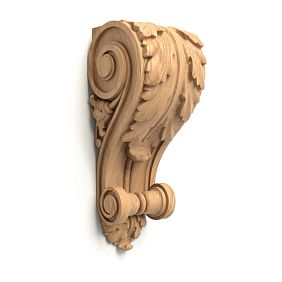
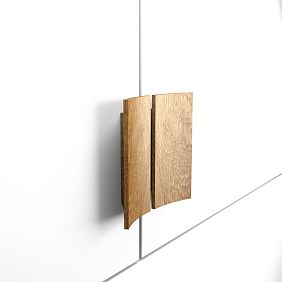
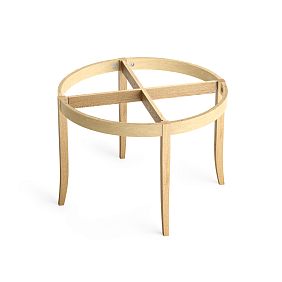
Our factory also produces:





Physical and mechanical properties: numbers that speak of quality
The density of dry oak varies from 650 to 800 kg/m³ depending on growing conditions and tree age. This characteristic directly affects the material’s strength properties and workability. Slow-growing oak from northern regions is usually denser and stronger than its southern counterparts.
The modulus of elasticity of oak wood reaches 13 GPa, comparable to some light alloys. At the same time, oak retains relative plasticity, allowing it to be processed using the most complex methods — from fine milling to artistic carving.
Oak wood’s swelling coefficients vary by direction: along the grain — 0.1%, radially — 4.0%, tangentially — 7.8%. This anisotropy must be considered when selecting cutting methods and grain orientation in finished products.
Get Consultation
Chemical Composition: Natural Laboratory
Oak wood contains 40–45% cellulose, 25–35% lignin, and up to 12% extractives. It is precisely the extractives — tannins, flavonoids, organic acids — that determine the unique properties of oak wood.
Oak tannins possess pronounced antiseptic properties, suppressing the growth of fungi and bacteria. This explains the phenomenal longevity of oak structures — archaeologists find perfectly preserved oak items dating back several centuries.
Moreover, tannins can interact with iron salts, forming characteristic dark spots. This effect was used by craftsmen of the past to create decorative effects, while in modern production, it requires the use of stainless steel or colored metal fasteners.
Drying technology: transforming living wood into stable material
Critical importance of moisture
Freshly cut oak wood contains 50–80% moisture, making it completely unsuitable for producing quality items. The drying process is not merely removing moisture — it is a controlled alteration of the material’s structure aimed at achieving dimensional stability and optimal physical and mechanical properties.
Planed oak board should have a moisture content of 8±2% for internal use and 12±2% for external use. These values are not arbitrary — they correspond to the equilibrium moisture content of wood under typical operating conditions.
Kiln drying: controlled perfection
Modern kiln drying of oak is a high-tech process requiring precise adherence to temperature and humidity regimes. For oak, gentle regimes are used with an initial temperature of 45–50°C and relative air humidity of 80–85%.
The drying process is divided into several phases: preheating, actual drying, conditioning, and cooling. Each phase has strictly defined parameters; deviation from them may result in rejection of the entire batch.
Special attention is paid to controlling the drying rate. Oak does not tolerate accelerated regimes — too rapid moisture removal leads to internal cracks and warping. The optimal drying rate is 0.5–1.0% moisture per day for boards 25–50 mm thick.
Conditioning: final stabilization
The final stage of kiln drying — conditioning — is aimed at equalizing moisture content across the board’s thickness and relieving internal stresses. The process is carried out at a temperature 10–15°C higher than the drying temperature and with increased air humidity.
A properly dried oak board, after conditioning, has uniform moisture content throughout its cross-section with a variation of no more than 2%. Such material is practically immune to warping and cracking during further processing.
Joinery Art: From Rough Stock to Perfect Surface
Surface Processing Philosophy
Planing oak boards is a process requiring a deep understanding of the material's structure and its behavior under cutting tools. The hardness of oak, reaching 3.7–4.0 Brinell units, imposes special requirements on tool quality and processing parameters.
The goal of planing is not merely to achieve a smooth surface, but to reveal the inner beauty of wood, emphasize its texture, create a surface pleasant to the touch and ready for finishing coatings.
Planing Technical Parameters
The cutting speed when planing oak should be 20–25 m/s — lower speeds lead to tool marks, higher speeds cause burn marks from friction. Feed rate is limited to 8–12 m/min to ensure the required surface quality.
The direction of planing relative to wood grain is particularly important. The ideal result is achieved by planing "with the grain," when the cutting edge cuts into the wood at a sharp angle to the grain direction. Planing "against the grain" may result in tool marks and splinters.
The cutting depth per pass should not exceed 1.5–2.0 mm. Larger allowances are removed in several passes with gradually decreasing cutting depth to achieve optimal surface quality.
Quality Control of Planed Surfaces
The quality of planed surfaces is evaluated by several parameters: roughness, presence of processing defects, geometric accuracy. For first-grade surfaces, roughness should not exceed Ra 12.5 μm, corresponding practically to a mirror-like surface.
Tool marks, tool marks, burn marks, splinters, and other processing defects are unacceptable. Geometric dimensions must be maintained with accuracy ±0.2 mm in thickness and ±0.5 mm in width.
Grade and Classification: Choosing for Every Task
European Grading System
In European practice, oak wood is classified using the FAS (Firsts and Seconds) system developed by the American Hardwood Association. The highest FAS grade requires that at least 83% of the board's surface be free of defects.
Select grade allows small healthy knots and minor defects on up to 17% of the surface area. Common No. 1 may contain more noticeable defects but retains good strength characteristics.
Domestic Quality Classification
The domestic sorting system is regulated by GOST 8486-86 and divides wood into five grades: premium, first, second, third, and fourth. Solid Wood Items High-quality products are made from premium and first-grade wood.
Premium grade wood practically contains no defects and is intended for the most demanding applications — luxury furniture, musical instruments, artistic items. The cost of such material may exceed the cost of fourth-grade wood by 5–7 times.
Special Categories of Oak
Especially valuable is stained oak — wood that has been submerged in water for decades or even centuries. Such material acquires a unique dark gray or black color and increased hardness. Stained oak is extremely rare and prized by collectors.
Thermally modified oak is obtained by processing at 160–220°C in a steam environment. The process changes the wood color from light brown to chocolate and improves dimensional stability.
Application Areas: From Utility to High Art
Furniture Industry: Traditions and Innovations
Oak furniture — symbol of solidity and good taste. Planed Oak Board Used for manufacturing luxury furniture passed down from generation to generation. Oak tables, chairs, cabinets, and beds are not merely functional — they create an atmosphere of nobility and stability.
Modern designers have learned to combine classic oak elements with innovative materials — glass, metal, composites. Such combinations allow creating furniture meeting modern lifestyle requirements while preserving ties to tradition.
Technological requirements for furniture-grade oak are especially strict. Moisture content must be 8±1%, even the slightest defects are unacceptable as they may manifest during use. Radial sawing is especially valued, providing an attractive pattern of medullary rays.
Parquet Production: Beauty Underfoot
Oak parquet — the classic of the genre, the benchmark of quality for floor coverings. Modern technologies allow creating parquet in various formats — from traditional individual laying to large-format parquet boards.
For parquet production, only sapwood and the central part of the trunk are used, excluding loose heartwood. The moisture content of parquet blanks must be strictly 7±0.5% to ensure stable joint connections.
Modern oak parquet can have various surface treatments — from classic lacquered to oil-wax. Brushing, aging, toning — all these techniques allow creating a finish that perfectly blends into any interior.
Construction structures: strength for centuries
In construction, oak is used for the most critical structures — load-bearing beams, roof trusses, frame elements. High strength characteristics allow oak to withstand significant loads for centuries.
Moldings, cornices, baseboards Oak is not only used for functional purposes but also becomes decorative interior elements. A properly profiled oak molding can radically change the perception of space.
For construction purposes, oak of the second and third grades is permitted, but only with compliance with all strength requirements. Complete cracks, rot, and fungal damage are unacceptable.
Wood occupies a special place in decorative-applied art. The naturalness of the material, the richness of textures, and the possibility of fine processing create unique opportunities for artistic self-expression.
Oak is a favorite material for carvers and sculptors. Its dense, uniform structure allows for both large relief compositions and delicate, intricate carving. Classic oak carvings adorn museums and private collections around the world.
Modern masters use oak to create exclusive interior items — carved panels, decorative furniture elements, artistic compositions. Each piece is unique and bears the mark of the artisan’s individuality.
Technological innovations: traditions meet the future
Thermal modification: improving nature
Thermal modification of oak at 160-220°C radically changes its properties. The wood acquires a noble dark tone, increased dimensional stability, and improved biostability.
The thermal modification process takes place in special chambers in a steam environment without oxygen access. This eliminates combustion and ensures uniform treatment throughout the entire board cross-section.
Thermally modified oak has moisture absorption 2-3 times lower than ordinary oak, making it ideal for use in rooms with variable humidity — saunas, pools, terraces.
Stabilizing impregnation
Modern polymer compositions allow creating oak wood with unique properties. The polymer penetrates the wood structure, filling pores and microcapillaries, which dramatically improves material stability and longevity.
Stabilized oak practically does not change dimensions with humidity fluctuations, is resistant to biological damage, has increased hardness and wear resistance. At the same time, it retains the natural appearance and workability of the wood.
Radio frequency drying: technologies of the 21st century
Innovative radio frequency drying technology allows evenly removing moisture from the wood thickness, minimizing internal stresses and deformations. The process is controlled by a computer and takes several times less time than traditional chamber drying.
Radio frequency drying is especially effective for thick oak blanks, where traditional methods may lead to internal cracks. The quality of the dried material surpasses results of classical technologies.
Working with oak boards: secrets of craftsmanship
Choosing the right material
The success of any project depends 80% on the correct choice of material. When purchasing oak boards, pay attention to moisture content — it must match the conditions of use of finished products.
The color of the wood should be uniform within a single batch. Sharp color variations may indicate violations in the drying technology or different origin of the material.
Check the geometric parameters of the boards — they must match the declared values with accuracy ±0.5 mm. Curvature and warping are unacceptable for quality material.
Storage and acclimatization
Oak boards must be stored in a dry, ventilated room on supports ensuring free air circulation. Direct exposure to sunlight is not allowed — ultraviolet rays may change the color of the wood and cause cracking.
Before use, boards must be acclimatized under expected operating conditions for at least 72 hours. This is especially important when transitioning from a dry storage room to a humid working area.
Processing and finishing
Oak is well-suited for all types of mechanical processing, but requires high-quality sharp tools. Dull knives and bits may cause scratches and burns, especially when working with hard latewood sections.
When gluing oak parts, it is necessary to consider the high tannin content, which may reduce the strength of the glue joint. It is recommended to use special glues for hardwoods or to pre-clean surfaces.
Finishing oak requires a special approach. Tannins may interact with certain varnishes and paints, causing color changes or staining. It is recommended to conduct a test staining on samples before applying the main finish.
Ecological aspects and sustainable forestry
Oak as a renewable resource
Oak is a slow-growing species, reaching technical maturity at the age of 80-120 years. This requires a particularly responsible approach to timber harvesting and planning of reforestation activities.
Modern principles of sustainable forestry involve selective logging with retention of seed trees and natural regeneration. This approach allows maintaining oak forest productivity without harming the ecosystem.
FSC and PEFC Certification
Voluntary forest certification systems FSC (Forest Stewardship Council) and PEFC (Programme for the Endorsement of Forest Certification) guarantee that timber is harvested in accordance with ecological and social standards.
Certified oak timber enjoys increased demand on international markets and can be sold at a premium of up to 15-20% above the standard price.
Carbon footprint and ecological advantages
Using oak timber instead of synthetic materials contributes to reducing the carbon footprint of construction and production. One cubic meter of oak timber contains approximately 350 kg of stored carbon.
Oak products last for decades, and at the end of their service life, they fully biodegrade, creating no waste disposal problems, unlike plastics and composite materials.
Oak timber market: trends and prospects
Global consumption trends
The global oak timber market demonstrates steady growth, driven by increasing demand for eco-friendly materials and premium products. Leading consumers are countries in Western Europe, the USA, and China.
European furniture and parquet manufacturers have particularly high requirements for oak raw material quality. Russian oak timber enjoys a good reputation on the global market due to climatic conditions that ensure high density and strength of the material.
Price factors
The cost of oak timber is determined by multiple factors: quality of raw material, drying method, precision of processing, logistics expenses. Premium grades may cost 5-10 times more than standard products.
Thermally modified and stabilized oak is sold at a significant premium compared to standard material, but its unique properties justify the additional costs.
Development prospects
The development of new wood processing and modification technologies opens up new application opportunities for oak. Nanotechnologies, biotechnologies, digital quality control methods — all of this contributes to enhancing the competitiveness of oak products.
Growing interest in eco-friendly materials and handmade products creates favorable conditions for the development of the market for high-quality oak timber.
STAVROS: where traditions find modern embodiment
In the wood processing industry, there are manufacturers, suppliers, and true masters who see potential for creating masterpieces in every piece of wood. STAVROS belongs to the last category — it is a company where deep understanding of wood nature combines with flawless mastery of modern technologies.
Philosophy of STAVROS is built on respect for wood as a living material, requiring a delicate and professional approach. Each oak board dry planed goes through multiple stages of quality control, where experienced specialists evaluate not only technical characteristics but also aesthetic qualities of the material.
STAVROS production base represents a unique symbiosis of traditional wood processing methods and high-tech equipment. Here, the long experience of woodworkers is complemented by the precision of computerized control systems, ensuring results unattainable using only one of these approaches.
STAVROS Quality Control Department operates according to standards exceeding the strictest international requirements. Each batch of products undergoes multi-level inspection — from incoming raw material control to final inspection of finished goods. This guarantees that only the highest quality material reaches the customer.
The company's research and development department continuously works on improving oak processing technologies, studying new wood modification methods, and developing innovative solutions to expand the application scope of this noble material.
STAVROS customer service is not just selling materials — it is comprehensive project support of any complexity. Experienced consultants will help select the optimal material for specific tasks, calculate requirements, and provide recommendations on processing and application.
Choosing STAVROS means choosing not just a supplier of quality timber, but a reliable partner who shares your passion for perfection and is ready to support you at every stage of project implementation. This is an investment in quality that will delight you for many years, laying the foundation for realizing the most ambitious creative ideas.