












































































Article Contents:
- Material as the foundation of premium quality
- Solid wood versus substitutes: why wood is the elite's choice
- Metal: when brass and bronze speak of status
- What to avoid: silumin, plastic, pseudo-bronze
- Manufacturing technology: handcraft versus stamping
- Milling from solid wood: when a handle is born from a single piece
- Hand casting of metal: a tradition rooted in centuries
- Multi-layer coatings: protection and aesthetics
- Design and form: where art meets function
- Author's forms: when a handle becomes a sculpture
- Ergonomics: a handle that fits the hand like a glove
- Stylistic versatility or narrow specialization
- Brand and origin: who stands behind the handle
- Well-known European brands: a guarantee of quality
- Russian manufacturers of premium level
- No-name China: when cheapness kills quality
- Price: how much does premium cost
- Price range: from hundreds to tens of thousands
- Why expensive does not always mean good
- Economy that costs dearly
- How to choose: practical evaluation criteria
- Weight test
- Sound test
- Texture test
- Geometry test
- Mounting test
- Installation and operation: premium demands respect
- Professional installation versus amateur work
- Care for wooden handles
- Metal Handle Care
- Frequently Asked Questions
- Why Are Solid Wood Handles Better Than MDF or Plywood?
- How to Tell Real Brass from Coated Silumin?
- Is It Worth Paying Extra for a Brand or Can You Buy No-Name Handles of the Same Quality?
- Can wooden and metal handles be combined in one interior?
- How to Calculate the Required Number of Handles for a Furniture Set?
- Why Are Premium Handles More Expensive Than All the Furniture from Mass-Market?
- Is There Any Point in Putting Expensive Handles on Inexpensive Furniture?
- How to Understand That a Handle Is Ergonomic Without Buying It?
- Can a Wooden Handle Be Restored If It Gets Scratched?
- Which Handles Are Better for the Kitchen — Wooden or Metal?
- How to Check That a Handle Is Made of Solid Wood and Not Veneered MDF?
- STAVROS Company: Where Premium Becomes Accessible
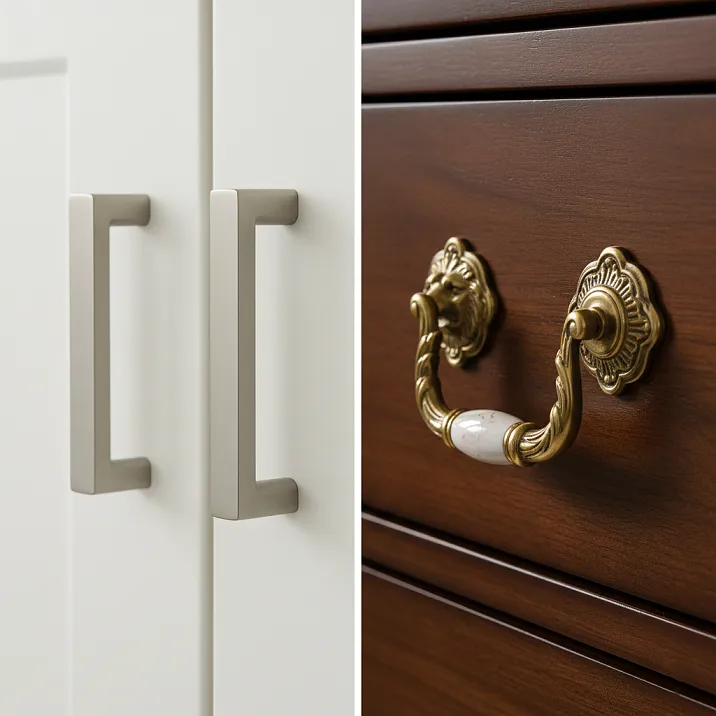
Touch the cabinet door — and everything becomes clear. A cold, stamped bracket made of thin silumin with peeling chrome instantly gives away budget furniture. A heavy wooden handle made of solid oak with careful sanding and a noble patina signals: you are looking at premium.Designer furniture handles— is not just functional hardware, but a calling card of the interior, a status marker, an indicator of how seriously the owner pays attention to details.
There is a common misconception: expensive furniture automatically means quality. In practice, many manufacturers save precisely on hardware — they put cheap handles on expensive fronts, hoping the buyer won't notice the difference. But professionals and people with developed taste see the catch instantly. A mass-market handle on an elite chest of drawers is like plastic buttons on a Brioni suit: an absurdity that destroys the integrity of the image.
Where is the line between ordinary hardware andpremium designer furniture? It's not just about price, although that matters too. An elite handle is a combination of factors: material, manufacturing technology, design, ergonomics, brand philosophy. It's a piece product where every millimeter is thought out, every line has meaning, every touch brings pleasure. Let's break down what distinguishes real premium hardware from imitation.


Material as the Foundation of Premium
The first thing that separates ordinary and elite hardware is the material. Not the surface finish, but the very material from which the handle is made.




Solid Wood vs. Substitutes: Why Wood Is the Choice of the Elite
Solid wood from noble species — oak, beech, walnut, ash — is a traditional material for premium hardware. There are several reasons, and they are not limited to aesthetics.
The tactility of natural wood is unique. When the hand grasps a wooden handle, it feels the warmth of the material (wood has low thermal conductivity, the surface is always warm), the texture of the annual rings, the living organic structure. A metal handle is cold, a plastic one is dead. Wood is alive, and this contact with a living material is subconsciously registered as pleasant, calming, status-enhancing.
The uniqueness of the wood grain makes each wooden handle individual. Even made from the same blueprint, two solid wood handles will differ in grain direction, texture distribution, and tonal nuances. This feeling of being a piece, of exclusivity, is the opposite of mass reproduction.
The eco-friendliness of wood is critical for the premium segment. Affluent buyers are increasingly focusing on natural, safe, renewable materials. Wood from certified forests, treated with natural oils without toxic solvents — this is not just a trend, but a conscious choice in favor of a healthy living environment.
The durability of solid wood surpasses artificial materials. A quality wooden handle lasts for decades without losing either strength or appearance. Moreover, over time it acquires a noble patina — a slight change in shade and surface sheen that only adds value. It's like good wine or a vintage leather bag — the older, the more valuable.
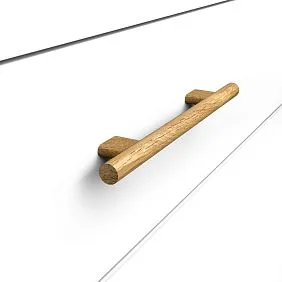
Our factory also produces:



Metal: When Brass and Bronze Speak of Status
Metal handles in the premium segment are made from solid-cast brass or bronze. Not stamped from thin sheet, but cast from molten metal into molds. Wall thickness — at least 3-4 mm, weight — tangible, substantial.
Brass — an alloy of copper and zinc — has a warm golden hue that over time develops a natural patina. In classic and neoclassical interiors, brass is indispensable: it is associated with palace luxury, antique furniture, vintage hardware.
Bronze — an alloy of copper and tin — is even more noble. Heavier than brass, darker in color (from dark gold to brown), with an expressive patina. Bronze handles are the choice for representative interiors, where every detail must demonstrate affluence and taste.
Stainless steel in the premium segment is used for modern, minimalist interiors. But not just any stainless steel—high-alloy steel (e.g., AISI 316) with impeccable polishing or satin finishing. The cold shine of quality stainless steel, perfectly even edges, and the absence of the slightest scratches or irregularities are signs of premium quality.
Get Consultation
What to avoid: silumin, plastic, pseudo-bronze
Silumin is a cheap alloy of aluminum and silicon—a mass-market material for economy-class hardware. Light (almost weightless in the hand), brittle (easily breaks upon impact), with poor coating adhesion (chrome or gold plating quickly peels off). A silumin handle gives itself away immediately by its weight and the sound when tapped—dull and hollow.
Plastic in any of its forms—even quality ABS or polyamide—is unacceptable for a premium interior. Plastic is mass-market, cheapness, disposability. No coating can make a plastic handle elite.
Pseudo-bronze—silumin or steel painted to look like bronze—is easily identified by its weight (too light for 'bronze') and its patina (painted on, not natural). It is an imitation that only deceives the inexperienced eye.
Manufacturing technology: manual labor versus stamping
The production method of a handle radically influences its quality and status.
Milling from solid wood: when a handle is born from a solid block
Premium wooden handles are made using 3D milling from solid wood. The process begins with selecting the board—only top-grade wood, without knots, cracks, or rot. The board is cut into blanks, which are dried to a moisture content of 8-10% (critical for dimensional stability).
The blank is placed in a CNC machine, where a multi-axis milling head carves the handle according to a 3D model. Positioning accuracy is within hundredths of a millimeter, ensuring perfect geometry. Milling allows for creating complex three-dimensional shapes that cannot be achieved through stamping or casting.
After milling comes multi-stage sanding: coarse (80-120 grit), medium (180-240 grit), fine (320-400 grit), polishing (600-1000 grit). Each stage removes scratches left by the previous one, bringing the surface to a mirror-like smoothness. In the premium segment, fine sanding is often done by hand—the craftsman feels the slightest imperfections with their hand that a machine cannot detect.
Manual metal casting: a tradition rooted in centuries
Premium metal handles are cast in molds manually or semi-automatically. The craftsman pours molten brass or bronze into a sand or ceramic mold, lets it cool, and extracts the casting. Then comes manual finishing: removing casting seams, cleaning the surface, polishing or patinating.
Unlike stamping, casting allows for creating three-dimensional, relief handles with complex ornamentation. The depth of the relief can reach several millimeters, which is impossible with stamping (maximum 0.5-1 mm of embossing).
The quality of a casting is determined by the absence of cavities (air bubbles in the metal thickness), uniformity of wall thickness, and clarity of the relief. A premium casting is smooth, dense, without porosity, with sharp edges of the ornament.
Multi-layer coatings: protection and aesthetics
The final coating is the last but critically important stage. In the premium segment, this is not just applying paint but a multi-layer system of protection and decoration.
For wooden handles—oil-wax in several layers. The oil penetrates the wood structure, highlights the grain, and provides water-repellent protection. Wax creates a thin film on the surface that protects against dirt and gives a silky sheen. An alternative is a hard water-based lacquer in 3-5 layers with intermediate sanding of each layer. The result is a smooth, glossy or matte surface resistant to wear.
For metal handles—galvanic coating (chromium plating, nickel plating, gold plating) or PVD coating (physical vapor deposition). PVD is a modern technology that creates a coating only microns thick but exceptionally hard and wear-resistant. PVD coating does not peel, scratch, or tarnish for decades. This is the standard for premium hardware.
PatinationPatination—the technique of artificial aging, where contrasting paint (usually dark on a light background or light on a dark one) is rubbed into the recesses of the relief. This creates depth, volume, and an antique effect. Patination is a sign of expensive hardware, as it is done by hand and requires artistic taste.
Design and form: where art meets function
A premium handle is not only about quality material and technology but also thoughtful design, where aesthetics and ergonomics are inseparable.
Author's forms: when a handle becomes a sculpture
In mass-market, handles copy each other—dozens of manufacturers stamp the same U-shaped brackets, round knobs, and arched bars. Premium hardware is unique: these are author's designs by designers or replicas of historical models.
Sculptural handles—voluminous, complex in shape, often asymmetrical. They can imitate natural objects (branches, stones, shells), abstract forms (waves, spirals, geometric polyhedra), or zoomorphic motifs (stylized animal heads, birds). Such a handle is a work of small-scale sculpture, existing on the border between hardware and a decorative object.
Classical replicas—reproductions of historical handles from palaces, mansions, and antique furniture. For example, a Louis XV-style handle with curved scrolls and floral ornamentation. Or an Art Deco handle with geometric stepped forms and chrome finishing. A replica requires historical accuracy, achievable only through manual manufacturing or high-precision milling.
Minimalist geometry—for modern premium-class interiors, handles of extremely simple forms are characteristic: cylinders, rectangular blocks, thin bars. But simplicity is deceptive—here, proportions, quality of edge finishing, and perfection of geometry are critical. Any inaccuracy, the slightest chip, or irregularity destroys the premium quality.
Ergonomics: a handle that fits in the hand like a glove
expensive designer furnitureErgonomics implies comfort of use. A handle must be not only beautiful but also convenient.
Anatomical form follows the curve of the palm. Oval or boat-shaped handles with smooth curves fit perfectly in the hand, distribute force evenly, and do not press on individual points of the palm. Holding such a handle is pleasant even with intensive use (opening heavy doors, pulling loaded drawers).
Grip diameter is a critical parameter. A handle that is too thin (less than 15 mm) cuts into the fingers. One that is too thick (more than 40 mm) is uncomfortable to grasp. The optimum is 20-30 mm for cylindrical handles, 25-35 mm for rectangular handles at their narrowest point.
Weight balance — a heavy handle (massive wood or metal) must be balanced so as not to create torque or pull the cabinet front downward. Mounting points are calculated considering the center of gravity, which requires an engineering approach.
Stylistic universality or narrow specialization
Mass-market hardware tries to be universal — to suit any furniture, any style. The result is blandness, a lack of character.
Premium hardware is often specialized. Classic brass handles with rococo ornamentation are intended exclusively for classic furniture. Minimalist steel bars are for contemporary styles. Wooden handles made of unprocessed oak with knots are for wabi-sabi or rustic styles.
Narrow specialization is a sign of a serious manufacturer. They do not spread themselves thin but delve deeply into a specific style, creating collections where every element is thought out down to the smallest detail.decorative inlays for furniture, carved legs, handles — everything is executed in a unified aesthetic, combines easily, and creates a harmonious ensemble.
Brand and origin: who stands behind the handle
The manufacturer's name is an important, though not absolute, criterion of premium quality.
Well-known European brands: a guarantee of quality
Italy is the trendsetter in hardware. Italian brands are known for design, material quality, and meticulous execution. But you pay for the name: prices for Italian premium hardware start from several thousand rubles per handle.
Germany is the epitome of technological sophistication and reliability. German hardware is not always design-revolutionary, but it is engineeringly flawless. Dimensional precision, coating durability, and thoughtful ergonomics are its strong points.
France, Great Britain — traditions of classic hardware, historical replicas, patination, gilding. This is the choice for interiors where historical authenticity and aristocracy are important.
Russian premium-level manufacturers
The stereotype 'the best is from Europe' is outdated. Russian manufacturers, working on European equipment, with European raw materials, and according to European quality standards, create hardware that is not inferior to imported products but is significantly more affordable in price.
Advantages of Russian premium: absence of customs duties and lengthy logistics, possibility of custom orders (European factories work with minimum batches of hundreds of pieces, Russian ones can produce 10-20 pieces from a sketch), prompt technical support and warranty service.
Russian companies specializing in carved wooden decor and solid wood hardware often surpass European ones in carving complexity and detailing. This is connected to the traditions of the Russian school of wood carving, which has always gravitated towards volume, multi-layeredness, and fine detailing.
No-name China: when cheapness kills quality
Chinese hardware has flooded the market. Cheap, diverse in design, accessible. But the overwhelming majority is of low quality: zamak instead of brass, stamping instead of casting, paint instead of galvanic coating.
Premium Chinese production also exists (factories working on order for European brands, with their quality control and materials). But it is difficult to distinguish from cheap goods — the markings are the same, they look similar. The risk of buying a low-grade counterfeit under the guise of quality hardware is high.
Signs of Chinese mass-market goods: extremely low price (5-10 times lower than European or Russian premium), light weight (zamak), imprecise geometry (gaps when joining handle parts), chemical smell (cheap paints and varnishes), absence of manufacturer markings on the product.
Price: how much does premium cost
Price is an obvious, but not the only, indicator of hardware class.
Price range: from hundreds to tens of thousands
Mass-market hardware costs from 50 to 500 rubles per handle. This is stamped zamak with coating, plastic, thin stainless steel. It works functionally, but is aesthetically and tactilely poor.
Mid-range segment — 500-2000 rubles. Here, cast brass handles of simple shapes, solid wood handles of basic models, and quality stainless steel appear. This is a reasonable compromise of price and quality for most interiors.
Premium — from 2000 to 10000 rubles per handle. Solid noble woods with hand carving, cast brass or bronze of complex shapes with patination, authorial designer models. Here, each handle is a small investment, but it pays off with durability and aesthetics.
Exclusive — from 10000 rubles and above. Single pieces, handmade to individual order, often using precious metals (silver, gold), inlays (mother-of-pearl, stones), and the most complex carving. This is no longer hardware, but a piece of jewelry.
Why expensive does not always mean good
An inflated price is possible for several reasons: overpayment for the brand (the name adds 50-100% to the cost), unjustifiably complex packaging and marketing (beautiful catalogs, advertising campaigns are built into the price), a monopoly position (the sole supplier of a certain style).
A savvy buyer evaluates the price-to-value ratio: material, technology, design. Sometimes a Russian pen for 3000 rubles is objectively better quality than an Italian one for 8000, simply because the Italian brand invests more in marketing, while the Russian one invests in production.
Saving that costs dearly
Trying to save on hardware when buying expensive furniture is a common mistake. A solid oak wardrobe for 500,000 rubles with cheap silumin handles for 300 rubles creates a visual dissonance that devalues the entire piece of furniture.
Cheap hardware quickly fails: the coating peels off after six months, fastenings become loose after a year, handles break after two. Replacing hardware means additional expenses, time, and nerves. Often it's easier (and cheaper in the long run) to buy quality handles that will last decades right away.
Quality hardware increases the liquidity of furniture. If you ever decide to sell or pass down the furniture, premium handles made of solid wood or bronze will add value. Furniture with cheap, peeling hardware is perceived as worn out, even if the carcass is in perfect condition.
How to choose: practical evaluation criteria
When faced with a choice, it's easy to get confused. I propose a system of criteria that will help distinguish genuine premium from imitation.
Weight test
Take the handle in your hand. If it's suspiciously light, it's silumin or plastic. A solid wood handle 15 cm long weighs 80-150 grams (depending on the wood species and thickness). A brass or bronze handle of the same size weighs 150-300 grams. A noticeable weight is a sign of a serious material.
Sound test
Tap the handle with your knuckle. Solid wood produces a clear, ringing sound with slight resonance. A hollow silumin handle produces a dull, empty sound. Cast brass or bronze produces a dense, metallic sound without rattling.
Texture test
Run your fingers over the surface. A quality wooden handle is smooth, without burrs, chips, or unevenness. The wood grain is visible and palpable but does not scratch the skin. A metal handle with quality galvanic or PVD coating is perfectly even, without scratches, dots, or uneven shine.
Geometry test
Look at the handle from different angles. Straight lines should be strictly straight, curved lines should be smooth, without kinks. A symmetrical handle should be mirror-symmetrical without distortions. If the handle consists of several parts (plate + rosettes for fastening), the parts should join without gaps or steps.
Fastening test
A quality handle has a well-thought-out fastening assembly. Screws are made of stainless steel or brass (not ordinary black steel, which rusts). The thread is clear, without stripped turns. Screw length is sufficient for fastening to 16-22 mm thick fronts. The presence of decorative rosettes that hide the screw heads is a sign of attention to detail.
Installation and operation: premium demands respect
Buying quality handles is half the battle. Proper installation and care are important.
Professional installation vs. amateur work
Installation of premium hardware on expensive furniture should be performed by a professional. A mistake in marking holes, incorrect drill diameter, overtightening screws—any slip-up can ruin an expensive front.
A craftsman uses templates for precise marking, drills with a backing (to avoid chipping on the drill exit), controls the tightening torque (does not overtighten to prevent cracking of the handle or front wood). The service cost is a few hundred rubles per handle, but it guarantees that everything will be installed perfectly.
Care for wooden handles
Wooden handles coated with oil need the coating refreshed once every year or two. Apply a thin layer of furniture oil (linseed, tung, special), let it absorb, remove excess with a cloth. This restores the protective layer, refreshes the color, and prolongs life.
Varnished handles are low-maintenance—simply wipe with a damp cloth and mild detergent. Do not use abrasives or aggressive chemicals—they will damage the varnish.
Avoid prolonged contact with water (do not leave wet rags on handles), do not place furniture with wooden handles in direct sunlight (ultraviolet will fade the wood).
Care for metal handles
Brass and bronze darken over time, developing a patina. For many, this is a desired effect of noble aging. If you want to preserve the original shine—periodically polish with a special paste for brass or bronze.
Handles with galvanic coating (chrome, nickel, gold) do not require special care—simply wipe with a damp cloth. PVD coating is even more durable—does not scratch, does not tarnish, does not require polishing.
Do not use abrasive powders, metal sponges, or acidic agents to clean metal handles—they will irreversibly damage the coating.
Frequently Asked Questions
Why are solid wood handles better than MDF or plywood?
Solid wood is solid timber, while MDF and plywood are processed products (pressed sawdust or glued veneer layers). Solid wood is stronger, more durable, has a pronounced texture, and is pleasant to the touch. MDF and plywood are cheaper but inferior in all parameters, including eco-friendliness (they contain formaldehyde-based adhesives).
How to distinguish real brass from coated silumin?
By weight (brass is 2-3 times heavier) and by sound (brass rings clearly, silumin sounds dull). You can scratch an inconspicuous spot: if there's silvery metal under the coating, it's silumin (aluminum alloy); if it's yellowish, it's brass.
Is it worth paying extra for a brand, or can you buy no-name handles of the same quality?
A well-known brand often adds 30-50% to the price for the name. But a brand is a guarantee of quality, service, and the ability to purchase identical handles years later (the manufacturer keeps molds for re-release). No-name handles can be of good quality, but there are no guarantees, and they may be out of stock in a year.
Can wooden and metal handles be combined in one interior?
Yes, if it's a conscious design decision. For example, in the kitchen — metal (more practical, easier to clean); in the living room and bedroom — wood (warmer, cozier). The main thing is to maintain stylistic unity (don't mix classic with high-tech).
How to calculate the required number of handles for a furniture set?
Count the number of doors and drawers. For each hinged door — one handle (if the door is narrow, up to 40 cm) or two (if wide, over 60 cm). For each drawer — one handle in the center. Add 2-3 spare handles in case of damage or loss.
Why are premium handles more expensive than all the furniture from mass-market stores?
Because it's small-batch production, manual labor, expensive materials. Mass-produced furniture is made in millions of copies on automated lines from cheap materials (laminated chipboard, plastic). A premium handle is a small-series or one-off item made of solid wood or cast bronze, with manual finishing. Comparing prices is incorrect — these are different product categories.
Is there any point in installing expensive handles on inexpensive furniture?
Yes, if the furniture is of good quality (solid wood, MDF with good finish) but comes with standard cheap hardware. Replacing handles with premium ones can transform the furniture, elevating it to a higher level. But if the furniture is obviously cheap (chipboard with peeling film, crooked fronts) — expensive handles will look out of place, emphasizing the poor quality of the base.
How to understand if a handle is ergonomic without buying it?
In a good showroom, there are always samples you can hold in your hand. Assess how comfortably the handle fits in your palm, whether it presses on your fingers, and how easy it is to grip. If buying online — order one sample before ordering the entire batch.
Can a wooden handle be restored if it gets scratched?
Yes, wooden handles are repairable. Scratches are sanded with fine sandpaper, then the surface is re-coated with oil or varnish. This can be done independently or by contacting a furniture restorer.
Which handles are better for the kitchen — wooden or metal?
Metal is more practical: easier to clean, doesn't absorb grease and odors, and is moisture-resistant. But wooden handles, coated with quality varnish or oil with wax, are also quite suitable for the kitchen. The choice depends on the interior style and willingness to maintain them.
How to check if a handle is made of solid wood and not veneered MDF?
Look at the ends of the handle (mounting points). On solid wood, you can see annual rings, the direction of the grain — the pattern continues throughout the thickness. On veneered MDF, the end will be uniform, without texture, or the texture is only on the surface (a thin layer of veneer).
Company STAVROS: where premium becomes accessible
When the choice questiondesigner furniture handlesarises for a professional or a demanding private client, the name STAVROS sounds like a synonym for reliability and premium quality without the European markup.
Since 2002, STAVROS has specialized in the production of wooden decor and hardware made from solid oak and beech. The 6000 m² production complex in St. Petersburg is equipped with 19 latest-generation CNC machines, allowing for milling accuracy up to 0.1 mm — a level unattainable with manual processing.
The STAVROS furniture handle collection includes 32 models of various shapes and styles. Minimalist geometric shapes for modern interiors. Classic oval and curved handles for traditional furniture. Carved models with floral ornaments for luxurious interiors in Baroque or Empire style. Each model is made from solid wood using 3D milling followed by multi-stage sanding.
Materials — only of the highest grade. Oak and beech are sourced from trusted European suppliers; the wood undergoes chamber drying to 8-10% moisture content, guaranteeing dimensional stability and no deformation. No MDF, plywood, or glued blanks — only solid wood.
Finishing is done with professional compounds from German and Italian manufacturers. Osmo and Biofa oils for natural finishes that highlight the wood grain. Sayerlack water-based varnishes for glossy and matte coatings. High-opacity enamels for colored solutions.Patinationis done manually by artist-decorators, ensuring the uniqueness of each item.
STAVROS offers not only a standard catalog but also custom manufacturing services. A designer or private client can provide a sketch (drawing, photo of a historical handle, 3D model), and STAVROS engineers will develop the manufacturing technology, create a control program for CNC machines, and produce a batch from 10 pieces. Lead time — from 2 weeks, cost — 30-40% lower than European analogues due to no customs duties and short logistics chains.
Quality control is multi-stage. Incoming raw material control (rejecting boards with unacceptable defects). Post-milling control (checking geometry, absence of chips). Post-sanding control (surface perfection). Post-coating application control (uniformity of layer, absence of drips). Final control before packaging. Defect rate — less than 0.5%, which is an order of magnitude below industry averages.
Logistics are organized for customer convenience. A warehouse program with constant availability of popular models allows for same-day order shipment upon request. Delivery across Russia is handled by reputable transport companies, with protective packaging in boxes that prevents damage. For Moscow and St. Petersburg — courier delivery with in-home lifting.
STAVROS prices represent a reasonable balance of premium quality and affordability. Solid oak wooden handles with a finish range from 1,200 to 4,500 rubles depending on size and complexity. This is 2-3 times lower than European counterparts while offering comparable (often superior) quality of materials and craftsmanship.
By choosing STAVROS, you acquire hardware that transforms ordinary furniture into premium pieces, adds prestige to your interior, and creates that very effect where a guest, opening a cabinet door and touching the handle, understands: everything here is genuine, uncompromising, with respect for details and for oneself.


