












































































Article Contents:
- Psychology of furniture details: why accents matter
- First impression and status
- Tactile experience and emotional connection
- Visual hierarchy and compositional unity
- Wooden handles: the warmth of nature in your hands
- Why wood?
- Wood species and their characteristics
- Shapes and styles
- Finishing and protection
- Polyurethane molding for furniture: when plastic is nobler than wood
- Why polyurethane surpasses traditional materials
- Types of furniture decor made of polyurethane
- Styling and application
- Combining handles and decor: creating a holistic image
- Stylistic unity
- Scale Correspondence
- Color harmony
- Functional placement
- Installation and Maintenance: Practical Aspects
- Installing Wooden Handles
- Mounting of polyurethane decor
- Maintenance and care
- Where to apply: from kitchen to bedroom
- Kitchen: function and aesthetics
- Living room: representativeness and style
- Bedroom: Comfort and Harmony
- Children's room: safety and playfulness
- Entryway: First Impression
- Frequently Asked Questions
- Can wooden handles be installed on furniture in the bathroom?
- How much does a polyurethane overlay weigh and will the adhesive hold it?
- How to choose the handle size for the facade?
- Can wooden handles be painted after installation?
- What adhesive is best for polyurethane decor?
- How much do designer handles and polyurethane decor cost?
- How to care for gilded polyurethane decor?
- Can handles and decor of non-standard sizes be ordered?
- Which handles are suitable for furniture in loft style?
- How often should furniture handles be replaced?
- Are polyurethane overlays safe for health?
- Can wooden handles made from different types of wood be combined on the same furniture?
- Company STAVROS: a workshop of details that create an image

There is a common misconception: furniture is evaluated by shape, material, functionality. In fact, the first thing the eye notices is the details. Touch a wardrobe — and your hand will rest on the handle. Look at a chest of drawers — and your gaze will catch on the decorative overlays on the facades. It is these seemingly insignificant elements that determine whether the furniture will be perceived as ordinary or as a work of authorial design. When you decideDesigner furniture handlesuse in your project andbuy polyurethane molding for furniture, you choose to ensure that every touch, every glance brings aesthetic pleasure.
A furniture handle is more than just functional hardware. It is the point of contact between a person and an object, a moment of tactile interaction that repeats dozens of times a day. A high-quality, beautifully crafted handle transforms the mundane action of opening a door into a pleasant ritual. Decorative overlays on facades are punctuation marks in the visual text of an interior; they are accents that place semantic emphasis, create rhythm, and define style.


The Psychology of Furniture Details: Why Accents Matter
Human perception is structured so that we read an object not as a whole, but by its key points. The eye catches the most contrasting, expressive, detailed areas and builds a general impression from them. In furniture, these points become precisely the handles and decorative elements.




First Impression and Prestige
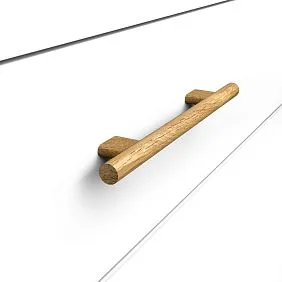
Imagine a guest entering your apartment for the first time. They walk into the hallway, hang their coat in the closet. Their hand rests on the closet door handle—and an impression is instantly formed. If it's a cheap, stamped bracket made of thin metal with uneven chrome plating, the subconscious registers: economy class, mass-market segment, budget solution. But if it's a wooden handle made of solid oak with a noble texture, carefully sanded, coated with matte oil—the signal is completely different: here they value quality, taste, durability.
The same logic applies to decorative overlays. A smooth kitchen cabinet facade made of laminated MDF is functional but faceless. The same facade, but with a decorative carved polyurethane overlay imitating classic carving—is already a story, character, belonging to a certain aesthetic tradition.
The prestige of an interior is read precisely by its details. You can buy an expensive sofa, but if the rest of the furniture is decorated with cheap hardware, the overall impression degrades to the level of the weakest element. Conversely, even simple-shaped furniture can be elevated with quality handles and decor, raising it several steps in the hierarchy of perception.
Our factory also produces:



Tactile Experience and Emotional Connection
We live in a world where most interactions are mediated by screens and buttons. Tactile contact with physical objects is becoming increasingly valuable. When a hand grasps a wooden handle, feels its warmth, texture, weight—areas of the brain responsible for emotional memory and attachment are activated.
This is not abstract psychology, but concrete physiology. Quality materials—wood, stone, metal with a noble patina—evoke positive emotions at the level of the reptilian brain, which over millions of years of evolution learned to distinguish good (safe, durable, reliable) from bad. A plastic handle does not elicit such a response. It is cold, slippery, lifeless. A wooden one is alive, warm, pleasant to the touch.
An emotional connection with furniture is formed through repeated tactile contacts. If every touch is pleasant, the furniture begins to be perceived not as a utilitarian object, but as a valuable part of personal space. People take better care of such furniture, keep it longer, and replace it with new items less often.
Get Consultation
Visual Hierarchy and Compositional Unity
In interior design, the same laws of composition apply as in painting or graphics. The eye needs accents—points it can latch onto, from which it can begin exploring the space. Without accents, an interior turns into a homogeneous mass that the eye perceives as emptiness.
furniture design solutionsoften rely on the play of contrasts: smooth facade planes and volumetric handles, neutral cabinet colors and expressive hardware shades, simple cabinet forms and complex decorative overlay patterns. These contrasts create a visual hierarchy—a system where some elements dominate, others are subordinate, and others bind everything together.
Handles and decor serve as visual nodes where attention is concentrated. Properly placed, they guide the gaze, form perception routes, and create rhythm. Three identical handles on three dresser drawers create a vertical rhythm. Symmetrically placed overlays on cabinet doors form an axial composition. These invisible structures are subconsciously read as harmony and order.
Wooden Handles: The Warmth of Nature in Your Hands
Wood is the most ancient material humanity has worked with for millennia. We are genetically programmed to perceive wood as something good, safe, beautiful.Designer furniture handlesmade of solid oak or beech carry this primal appeal of natural material.
Why Wood Specifically
The modern market offers furniture handles made from dozens of materials: plastic, aluminum alloy, stainless steel, brass, bronze, glass, ceramic, leather. Each has its merits. But wood possesses a unique set of properties that make it unsurpassed for tactile contact.
Wood has low thermal conductivity. When a hand touches a wooden handle, it does not feel cold—the surface temperature quickly equalizes with skin temperature. A metal handle is always cold (unless heated by heat sources), which creates discomfort, especially in cold seasons. A plastic one is neutral but lifeless. A wooden one is warm and alive.
The texture of wood is unique for each piece. Annual rings, grain direction, natural shade variations—all this makes each handle individual. Even if made from the same blueprint, two wooden handles will differ in wood grain. This feeling of exclusivity, uniqueness, handcraftedness—even if production is automated.
The eco-friendliness of wood is undeniable. It is a renewable resource that does not require complex chemical processing to become a finished product. Wooden handles do not emit harmful substances, do not cause allergies, and are safe for children and people with heightened sensitivity.
Tree species and their characteristics
Not all wood is suitable for making furniture handles. Hard, dense wood is needed, which does not warp from humidity, does not scratch from daily use, looks beautiful, and is pleasant to work with.
Oak is the king of furniture woods. Density 700-800 kg/m³, Brinell hardness 3.7-3.9. This means high resistance to mechanical damage, minimal shrinkage and swelling with humidity changes. Oak texture is expressive: annual rings are clearly visible, medullary rays create a characteristic sheen on radial cuts. Color ranges from light yellow to brown, depending on the tree's age and processing method. Oak handles look noble, prestigious, monumental.
Beech is slightly softer than oak (density 650-700 kg/m³, hardness 3.3-3.5), but more uniform in texture. The wood grain is delicate, fine-pored, without sharp contrasts. Color is warm pinkish-beige. Beech is easy to work with, takes any shape, and can be sanded to perfect smoothness. Beech handles look restrained and elegant, suitable for modern and Scandinavian interiors.
Ash is close to oak in hardness but lighter in color. The texture is contrasting, with clearly defined annual rings. Ash is flexible, making it convenient for manufacturing curved handles of non-standard shapes.
Walnut is a precious wood, expensive and striking. Color is rich chocolate with dark veins. The texture is complex, wavy, unique. Walnut handles are a choice for exclusive premium-segment furniture.
Shapes and Styles
Modern wood processing technologies allow for the creation of handles in any shape — from simple geometric to complex sculptural.
Round button handles are a minimalist classic. Diameter 3-5 cm, projection height 1.5-2.5 cm. Mounted in the center of a door or drawer, convenient for small fronts. Can be smooth (polished wood) or textured (preserving the natural grain).
U-shaped pull handles are a universal option for drawers and hinged doors. Length 10-30 cm, distance between mounting points 96-256 mm. Comfortable grip, suitable for any furniture style. Can have a rectangular cross-section (modern aesthetic) or a rounded one (softer, more organic look).
Oval and boat-shaped handles are ergonomic forms that fit perfectly in the palm. Length 12-20 cm, smooth curves follow the anatomy of the hand. Look elegant, suitable for classic and neoclassical furniture.
Triangular and asymmetrical handles are avant-garde solutions for modern interiors. Unexpected geometry attracts attention, creates an accent, and distinguishes furniture from standard solutions.
Sculptural handles are works of art. They can imitate natural forms (branches, stones, leaves), abstract objects, or geometric figures of complex configuration. Made by 3D milling from solid wood, each is unique.
Finishing and Protection
A wooden handle needs a protective coating to prevent soiling, darkening, moisture absorption, and wear.
Oil impregnation is a natural solution that emphasizes the wood grain, making it more contrasting and expressive. Oil (linseed, tung, special furniture oils) penetrates the wood structure without creating a film on the surface. The handle remains tactilely pleasant, preserving the natural texture. The downside is that the oil requires periodic renewal (every 1-2 years).
Lacquer coating creates a protective film that completely isolates the wood from external influences. The lacquer can be glossy (shiny surface, pronounced grain) or matte (noble velvety texture). Lacquered handles require no maintenance, are easy to clean, and are durable. The downside is that the tactile sensation is less lively than that of oiled wood.
Enamel painting completely hides the wood grain, turning the handle into a colored object of the desired shade. Suitable for cases where the material is not important, but the shape and color are. Popular options: white (Scandinavian and neoclassical styles), black (contrast solutions), gray (neutral background), colored enamels (bright accents).
Patination is an artificial aging technique where paint of a contrasting color (usually white, gray, gold) is rubbed into the grain recesses. Creates an antique effect, suitable for classic and vintage interiors.
Polyurethane molding for furniture: when plastic is more noble than wood
Decorative overlays on furniture fronts were traditionally carved from wood. Carvers manually created the most complex ornaments, turning an ordinary cabinet into a work of art. But hand carving means time (weeks of work for one set), high cost, and limited reproducibility. Modern casting technologybuy decorative moldingsfrom polyurethane solves these problems while preserving all the aesthetics of carved decor.
Why polyurethane surpasses traditional materials
Polyurethane is a synthetic polymer that in modern furniture decor demonstrates advantages unattainable for natural materials.
The detail of relief in quality polyurethane is higher than in carved wood. Paradoxically, but true: the casting mold allows reproduction of the ornament with micron precision, including the finest details — leaf veins, volute curls, petal texture. Wood carving, even done on CNC machines, has limitations — the cutting tool has a finite diameter, cannot penetrate narrow recesses, or create perfectly sharp edges. Casting is free from these limitations.
The weight of polyurethane overlays is 5-10 times less than that of wooden counterparts. A wooden overlay measuring 20×30 cm with an ornament thickness of 2 cm weighs 400-600 grams (depending on the wood species). A polyurethane one weighs 50-80 grams. This is critical for vertical cabinet fronts: heavy wooden overlays create a load on the fasteners and may peel off or sag over time. Light polyurethane ones hold reliably with ordinary mounting adhesive.
The moisture resistance of polyurethane is absolute. Wood is hygroscopic — it absorbs moisture from the air, swells, then releases moisture and dries out. These cyclic deformations over time lead to cracking of the carving, peeling of overlays, and warping. Polyurethane is inert to moisture and does not change size or shape at any humidity. This makes it indispensable for kitchen fronts (with constant humidity fluctuations from cooking) and furniture in bathrooms.
The production cost of polyurethane decor is many times lower than that of carved wooden decor. Casting is an automated process: a master mold is created, then polyurethane mixture is poured into it, and the finished product is extracted after a few hours. Productivity — hundreds of products per day from one mold. Hand wood carving is piece production, where each overlay is created separately. The price difference can reach 10-15 times with identical aesthetics.
Types of furniture decor made from polyurethane
The range of polyurethane decor for furniture is extensive — from miniature corner overlays to large central panels.
Rosettes and medallions — round or oval overlays with a diameter from 5 to 50 cm with concentric or radial ornamentation. Placed in the center of a cabinet or dresser door as the main decorative accent. Ornamentation is varied: plant motifs (acanthus, grapevines, floral garlands), geometric patterns (rosettes, meanders, braids), mythological subjects (mascarons, putti).
Corner overlays — elements sized 8-15 cm, placed in the corners of rectangular fronts. Create a framing effect, turning a simple door into a panel with a decorative frame. Shapes: curls (volutes), acanthus leaves, stylized flowers, geometric figures.
Vertical and horizontal overlays — narrow, long elements (width 3-8 cm, length 20-100 cm) that create the structure of the front. Placed around the perimeter of the door, forming a frame, or divide the plane into zones. Profiles: flat with ornament, three-dimensional relief, imitating baguette or molding.
Central panels — large overlays sized 30×60 cm and larger, covering a significant part of the front. Can depict complex scenes: bouquets of flowers, still lifes, architectural motifs, ornamental compositions. Used on central doors of wardrobe cabinets, kitchen unit fronts, bed headboards.
Panel overlays — imitate traditional paneled fronts, where the center of the door is slightly recessed relative to the frame. The polyurethane overlay creates the illusion of a relief frame on a smooth front, visually complicating it without actual structural complexity.
Styling and application
Polyurethane decor for furniture suits many styles — from strict classic to eclectic fusion.
Classic style requires symmetrical compositions with plant ornamentation. A central rosette on a cabinet door, corner acanthus overlays
At the four corners, vertical half-columns on the sides — such a configuration creates a sense of formality and monumentality. Color: white with gold patina or natural wood with white decor (contrast).
Baroque and Rococo love excess. Numerous small overlays, scrolls, garlands, and putti cover the facades with a dense pattern. Every free area is filled with ornament. Color: gold, silver, white with abundant patina, complex multicolor schemes.
Neoclassicism prefers restraint. One or two decorative elements on the facade, simple geometric shapes, minimal ornamentation. A rosette in the center or a panel around the perimeter — nothing more. Color: monochrome (white on white, gray on gray), tonal transitions.
Art Nouveau (Art Nouveau) uses smooth biomorphic forms. Overlays imitate curved plant stems, stylized iris or lily flowers, wavy lines. Asymmetry is acceptable and even desirable. Color: natural shades of green, brown, muted gold.
Contemporary style allows decor in measured doses. One large geometric overlay (circle, square, rhombus) as an accent on a neutral facade. Or a complete rejection of volumetric decor in favor of flat graphic overlays of simple shapes. Color: contrasting (black on white, white on black, colored on neutral).
Combination of handles and decor: creating a holistic image
Furniture looks professional and expensive when handles and decorative elements are stylistically, proportionally, and coloristically coordinated.
Stylistic unity
If a Baroque polyurethane rosette with lush scrolls and putti is placed on a cabinet facade, the handle should be appropriate: either a classic metal one with ornamentation or a carved wooden one. A minimalist U-shaped stainless steel bracket will look alien, disrupting the stylistic integrity.
Conversely: on a laconic contemporary facade with a simple geometric overlay, an equally simple handle is appropriate — a straight bracket, a round knob, an asymmetrical bar. A classic handle with monograms is inappropriate here.
The rule is simple: the ornamentation of the handle and decor should be comparable in complexity. Abundant ornamentation requires an ornamental handle. Laconic forms require a laconic handle.
Scale correspondence
The size of the handle should relate to the size of the decorative overlays. A large central rosette with a diameter of 40 cm on a cabinet door requires a proportionate handle — at least 15-20 cm long. A small knob handle with a diameter of 3 cm will get lost against large decor, and the composition will fall apart.
Conversely: if the decor is minimal (small corner overlays 5×5 cm), a large handle will dominate, overwhelming the decor. Proportionality is needed: the size of the handle should be comparable to or slightly smaller than the size of the decorative elements.
Designers use the golden ratio rule: if the maximum overlay size is X cm, the optimal handle size is 0.618×X cm. This creates a visually harmonious ratio without mathematical calculations by eye.
Coloristic harmony
The color of handles and decor can be coordinated (in the same tone) or contrasting, but not random.
Coordinated option: wooden handles made of natural oak color and polyurethane overlays painted to resemble oak (special paints imitate wood texture). Or white wooden handles and white polyurethane overlays. Everything in a unified color scheme, differing only in shape and texture.
Contrasting option: dark wooden handles (walnut, wenge) on light facades with white polyurethane overlays. Or bronze metal handles with gold polyurethane overlays on dark blue facades. Contrast creates drama but should be stylistically justified.
What to avoid: chaotic mixing of colors and materials. Plastic chrome handles with wooden walnut overlays on a white facade — this is visual cacophony, where each element conflicts with the others.
Functional placement
The placement of handles and decor is subject not only to aesthetics but also to function.
The handle should be convenient to grip. If a large central overlay is placed on the facade, the handle cannot be placed directly on it (inconvenient to hold, plus risk of damaging the decor). The handle is placed on the side, on a free area of the facade.
Decorative overlays should not interfere with opening. If the overlay is volumetric (protrudes 1.5-2 cm from the facade plane) and the door opens inward, it is necessary to check that the overlay does not catch on internal cabinet elements or adjacent doors.
Vertical pilaster overlays on the sides of the facade visually lengthen the door, making the cabinet taller. Horizontal frieze overlays — widen, making it broader. This effect is used to correct furniture proportions.
Installation and maintenance: practical aspects
Installationdesigner furniture handlesand polyurethane decor does not require special skills, but following the technology ensures durability and impeccable appearance.
Installation of wooden handles
Handles are attached with screws (bolts) through holes in the facade. Standard distance between holes for brackets: 96, 128, 160, 192 mm. For knobs — one central hole.
Marking is critical. Use a template (included with the handles or made yourself from cardboard) for accurately transferring hole positions to the facade. An asymmetrically installed handle is noticeable and difficult to correct (additional holes need to be filled).
Drilling: hole diameter slightly larger than the screw diameter (usually 5 mm for an M4 screw). Drill from the front side, placing a block on the back side to avoid chipping when the drill exits.
Fastening: insert the screw from the back side through the facade into the threaded hole of the handle, tighten with a screwdriver or wrench. Do not overtighten — the wood may crack.
Installing polyurethane decor
Polyurethane overlays are glued to the facade with special mounting adhesive (acrylic type like liquid nails or polyurethane).
Surface preparation: the facade must be clean, degreased, and dry. Wipe the installation area with alcohol or acetone.
Marking: determine the exact position of the overlay (symmetrically relative to the facade axes, at the desired height). Lightly outline the contours with a pencil.
Applying adhesive: apply adhesive to the back of the overlay in a zigzag or dots. Do not overdo it — excess will squeeze out when pressed and stain the facade.
Installation: place the overlay on the facade according to the markings, press evenly over the entire area. Hold for 30-60 seconds. If the adhesive is high-quality, additional fixation is not needed. For large, heavy overlays, you can temporarily secure them with painter's tape until the adhesive fully sets (24 hours).
Finishing: after installation, the overlay is painted in the desired color (if not pre-painted). Use acrylic paints, apply with a roller or brush in 2-3 coats.
Care and Maintenance
Wooden handles are wiped with a dry or slightly damp cloth. Once a year, you can refresh the oil coating (if the handles are oiled): apply a thin layer of oil, let it absorb, remove excess with a rag.
Varnished wooden handles are low-maintenance — simply wipe periodically with a damp cloth and mild detergent.
Polyurethane decor is even simpler: clean with a damp sponge and any household detergents (except abrasives). Polyurethane does not absorb dirt, does not yellow, and does not fade.
If a polyurethane overlay is damaged (chip, scratch), it can be easily repaired with acrylic putty and touched up to match the color.
Where to use: from kitchen to bedroom
Designer furniture handlesand decorative molding are appropriate in any room, but each has its own nuances.
Kitchen: Function and Aesthetics
Kitchen facades are opened and closed dozens of times a day. Handles must not only be beautiful but also ergonomic, durable, and easy to clean with wet wipes.
U-shaped brackets are the optimal choice for the kitchen. Convenient grip, easy to clean, suitable for drawers and hinged doors. Length 12-16 cm for standard facades 40-60 cm wide.
Wooden handles in the kitchen should be protected with varnish or oil with wax — this prevents absorption of grease and dirt. Oiled handles without wax in the kitchen will quickly become soiled.
Polyurethane decor in the kitchen is an excellent solution for classic sets. Overlays on upper cabinets (where there is no hand contact) can be complex and ornate. On lower cabinets (where hands frequently touch), it's better to use simpler, smooth overlays — they are easier to clean.
Living room: representativeness and style
Cabinets, dressers, consoles in the living room are showcase furniture that demonstrates the owner's taste and status. The most impressive handles and decor are appropriate here.
Sculptural wooden handles of unusual shapes, carved, with patination — on the facades of display cabinets where dishes or collections are stored.
Large polyurethane panels with lush ornaments — on the central doors of buffets and sideboards. This creates a focal point that draws the attention of those entering the living room.
Gilding and silvering of decor is appropriate precisely in the living room — here, demonstrative luxury is in place.
Bedroom: comfort and harmony
Bedroom furniture should create a sense of tranquility. Handles and decor are chosen with calm shapes and colors.
Round wooden button handles made of light wood (beech, ash) on dressers and bedside tables — tactilely pleasant, visually soft.
Concise oval overlays on sliding wardrobe doors — create structure without overloading the space.
Pastel colors: white, beige, light gray — for decor. Avoid bright contrasts and abundant gilding in the bedroom.
Children's room: safety and playfulness
Children's furniture requires a special approach. Handles must be safe (no sharp corners, protruding elements), durable (children are not gentle with furniture), and fun in design.
Wooden handles in bright colors: red, blue, green, yellow — on the drawers of a children's dresser. Each drawer its own color — this is not only beautiful but also helps the child remember what is where.
Polyurethane decor with cartoon themes: clouds, stars, animals, flowers — on the facades of a children's wardrobe. Can be painted in different colors, creating a fun composition.
Rounded handle shapes without sharp corners are a mandatory safety requirement.
Entryway: first impression
Furniture in the hallway is the first thing guests see. Here, impressiveness is important.
Metal handles with black or bronze finish on dark cabinet fronts create a strict, elegant look.
Geometric polyurethane decor (rectangular panels, diamonds) on built-in wardrobe doors is a modern aesthetic that emphasizes the architectural quality of the space.
Handles must be comfortable for intensive use — the hallway is used daily.
Frequently Asked Questions
Can wooden handles be installed on bathroom furniture?
Yes, but with caveats. The wood must be protected with high-quality moisture-resistant varnish or oil with wax. Choose dense species: oak, teak. Avoid beech (hygroscopic) and pine (soft, easily damaged). An alternative is polyurethane handles painted to look like wood — they are completely moisture-resistant.
How much does a polyurethane overlay weigh and will the adhesive hold it?
An overlay measuring 20×30 cm weighs 50-80 grams. Quality mounting adhesive can withstand a load of up to 50 kg per 10 sq.cm. This means that for reliable attachment of such an overlay, an adhesive layer on an area of less than 1 sq.cm is sufficient. In practice, adhesive is applied to the entire back surface, providing a multiple safety margin. Detachment is only possible when using low-quality adhesive or mounting on a dirty, un-degreased surface.
How to choose the right handle size for a front?
For hinged doors: the handle is placed 3-5 cm from the edge of the front, on the vertical axis of symmetry or offset towards the edge (where the hand naturally reaches when opening). The length of a bracket handle is approximately 1/4-1/3 of the front's width. For a front 40 cm wide, a 10-14 cm handle is optimal.
For pull-out drawers: the handle is centered on the front, horizontally. Length is 1/3-1/2 of the front's width. For a drawer 60 cm wide, a 20-30 cm handle is suitable.
Can wooden handles be painted after installation?
Yes, but it's inconvenient. It's better to paint before installation: remove the mounting screws from the handle, paint it (paint, varnish, stain), let it dry completely (24-48 hours), then install. If painting already installed handles, you need to carefully tape off the front around them with painter's tape to avoid staining.
What is the best adhesive for polyurethane decor?
Specialized adhesive for polyurethane: Titan, Moment Montazh, Tytan Professional. These adhesives have high initial tack (no need to hold the overlay pressed for long), remain elastic after drying (compensate for thermal expansion), and do not damage polyurethane. Do not use adhesives based on organic solvents (like type 88) — they can deform polyurethane.
How much do designer handles and polyurethane decor cost?
Wooden handles: 300-1500 rubles per piece (simple geometric shapes are cheaper, sculptural complex ones are more expensive). Polyurethane overlays: 200-5000 rubles (small corner elements start from 200, large panels up to 5000 and above). For a 3-meter kitchen set (15 fronts), a set of wooden handles will cost 4500-12000 rubles. Decorating a classic wardrobe with polyurethane overlays (4 doors, 3 elements each) — 5000-15000 rubles.
How to care for gilded polyurethane decor?
Gilding (imitation gold leaf or gold paint) on polyurethane is protected by varnish, so care is simple: wipe with a dry or slightly damp soft cloth. Do not use abrasive cleaners or hard sponges — they can scratch the varnish and damage the gilding. Once a year, you can renew the protective varnish (acrylic colorless) with a thin brush.
Can handles and decor of non-standard sizes be ordered?
Yes, many manufacturers offer custom manufacturing services. For wooden handles, individual shape development with subsequent CNC machining is possible. For polyurethane decor, an individual silicone mold is made from your sketch or sample. Production time is 2-4 weeks, cost is 30-50% higher than standard products.
What handles are suitable for furniture in the loft style?
Loft prefers industrial aesthetics: metal, roughly processed wood, rivets, visible fasteners. Suitable handles: forged metal from black steel, wooden from untreated boards (preserving natural cracks, knots), leather strap handles, tubular metal handles. Polyurethane decor is rarely used in loft, but laconic geometric overlays painted in industrial colors (concrete gray, rust) are possible.
How often should furniture handles be replaced?
Quality wooden or metal handles last for decades without needing replacement. It makes sense to change handles when updating the interior style, due to physical damage (crack, chip), or severe wear (worn coating, loose fasteners). On average — once every 10-15 years when updating furniture or interior.
Are polyurethane overlays safe for health?
Quality polyurethane used for furniture decor is environmentally safe. It does not emit volatile substances, has no odor, and is hypoallergenic. It is certified for use in residential premises, including children's rooms. Cheap polyurethane of dubious origin may have an odor and emit styrene — such should not be used. Buy products from trusted manufacturers with certificates.
Can wooden handles made from different species be combined on the same piece of furniture?
Yes, if it is a conscious design decision. For example, a chest of drawers with drawers, where each drawer has a handle from a different species (oak, beech, walnut, ash) — creates an interesting visual mosaic. Or a kitchen where upper cabinets have handles from light wood, lower ones from dark wood (vertical zoning). The main thing is that the combination looks intentional, not accidental.
Company STAVROS: a workshop of details that create the image
Details decide everything — this truth is confirmed by every project where furniture transforms from a utilitarian object into an object of admiration. The company STAVROS, with 23 years of experience, specializes precisely in those elements that define the character of furniture:solid wood furniture handlesanddecorative stucco made of polyurethane.
The STAVROS production facility in Saint Petersburg is equipped with a modern equipment fleet: 19 CNC machines for precision woodworking, 3D milling sections for creating complex sculptural forms, lathes for turned handles, and a casting shop for producing polyurethane decor. This enables quality control at all stages — from wood selection to the final polishing of the finished product.
The STAVROS catalog of wooden handles includes 32 models of various shapes: round knobs, U-shaped pulls, oval, triangular, asymmetric — for any style from classic to avant-garde. They are made from solid oak and beech — species that combine hardness, beautiful grain, and durability. Available in four finish options: natural oiled wood, white enamel, black enamel, brown tint.
The STAVROS polyurethane decor collection comprises over 300 items: from miniature 5×5 cm corner appliqués to large-scale 80×120 cm panels. The ornamentation covers all historical styles: antique classic, Baroque, Rococo, Empire, Art Nouveau, Art Deco. Each element is cast from European-made two-component polyurethane, which guarantees sharp relief detail and durability.
A feature of STAVROS products is attention to detail. Wooden handles undergo multi-stage sanding (coarse, medium, finish, polishing), ensuring a perfectly smooth surface without burrs or irregularities. Polyurethane appliqués are hand-finished after demolding — a master removes the finest casting seams, checks the clarity of the ornament, and deepens details with a chisel if necessary.
The STAVROS technical support service advises clients on selecting handles and decor for specific projects: helps determine the optimal size, shape, color, style, calculates the required quantity, and suggests combination options. For designers and furniture manufacturers, a service for developing exclusive handle and decor models based on individual sketches is available.
STAVROS logistics ensures delivery across Russia and the CIS. The stock program allows shipping popular items within 1 day. Products are packaged in protective film and corrugated boxes, preventing damage during transportation.
Choosing STAVROS for equipping furniture with handles and decor means acquiring products that transform an ordinary wardrobe into an author's piece, a standard chest of drawers into a family heirloom, a serial kitchen into a unique ensemble. Because details are not trifles. Details are everything.
Furniture without quality handles and decor is like a suit without buttons and cufflinks. Functionally suitable, but lacking completeness, elegance, individuality. When designer furniture handles are placed


