Article Contents:
- Revolution Against Uniformity: Why Personalization Has Become Imperative
- Handcrafted Work: The Philosophy of Slow Creation in a Fast World
- Wood as a Material of Choice: Why 2026 is the Year of Wood
- Details Make All the Difference: Furniture Handles, Moldings, and Small Forms
- Styles of Personalization: Find Your Language of Expression
- New Classicism: Traditions with a Modern Accent
- Ecological Minimalism: Simplicity with Soul
- Eclecticism with Character: Bold Mixing
- Ethnic Personalization: Cultural Identity
- Color and Texture of Wood: The Art of Choice
- Light Wood: Air and Space
- Mid-Tones: Universal Harmony
- Dark Wood: Drama and Luxury
- Toned Wood: Endless Possibilities
- Technology Serving Tradition: How Items Are Made in 2026
- Digital Design: Visualizing Your Dream
- CNC Machining: Precision Down to the Millimeter
- Laser Cutting: Jewel-like Precision
- Quality Control: From Drying to Finishing
- Ecology and Ethics: Personalization as a Responsible Choice
- Sustainable forestry
- Durability vs. Disposability
- Carbon footprint
- Health safety
- Psychology of Personalized Space: Home as Therapy
- Stress Reduction Through Familiarity
- Tactile comfort
- Visual Harmony
- Pride of Ownership
- Practical Guide: How to Start Personalizing Your Home
- Step One: Self-Discovery
- Step Two: Space Audit
- Step 3: Prioritization
- Step 4: Working with Details
- Step 5: Consultation with Professionals
- Step 6: Patience and Adjustments
- Frequently Asked Questions about Interior Personalization
- Is it expensive to create a personalized interior?
- How long does it take to create a personalized interior?
- Can different styles be combined in a personalized interior?
- How to choose the type of wood for your interior?
- Do you need to order all wooden elements from one manufacturer?
- How to care for wooden elements in the interior?
- Is It Ecological to Use Wood in Interior Design?
- Can you order unique wooden elements according to your design?
- How do wooden elements affect the perception of space?
- Where to start if you want to personalize your interior?
- Conclusion: Create your world with STAVROS masters

The world is tired of templates. This fatigue is deep, accumulated over years of living in standard apartments with identical mass-market furniture, where every home is a copy of the previous one, where individuality dissolves into the sea of faceless standardization. But something extraordinary is happening: humanity is rediscovering the value of uniqueness.Individual Interior 2026Years — this is not just a fashionable trend, it is a powerful cultural movement, a manifesto against depersonalization, a return to roots, when every home told the story of its inhabitants through objects created by craftsmen.
The digitalization has turned us into avatars existing in virtual space. Remote work has blurred the boundaries between office and home. Social networks created an illusion of closeness but bred a sharp sense of loneliness. In this whirlpool of intangibility, the human desperately seeks materiality, tangibility, reality. And he finds it in the space of his own home, transforming it from an anonymous box into an artwork that reflects his soul.Trends of the interior of the futureThey all point to one thing: the era of mass production is ending, and the age of handmade beauty is beginning.




Revolution against uniformity: why personalization has become imperative
Let’s be honest: for the last thirty years, interior design has been captive to a few dominant concepts. Scandinavian minimalism, with its sterile whiteness and total functionality, captured minds. Industrial loft, with bare concrete and visible utilities, became a symbol of urban chic. High-tech, with its abundance of glass, metal, and technology, promised futuristic perfection. All of this is wonderful, but with one problem — these styles became formulas copied by millions of households, turning unique homes into standardized decorations.
The year 2026 declares war on this uniformity. Personalization is no longer just desirable — it has become necessary to preserve mental health in a world where algorithms dictate what we watch, read, and buy. The home becomes the last bastion of individuality, where a person can be themselves, not conforming to others’ expectations and standards.
What is interior personalization in its deeper sense? It is not a chaotic accumulation of random items or following a new trend that replaces the previous one. It is the conscious creation of space that resonates with your essence. Every item here has a story. Every surface carries meaning. Every detail is chosen not because it’s fashionable or necessary, but because it says something about you, your path, your values.
Space customizationIt requires courage. Courage to reject ready-made solutions from designer celebrities whose projects are mass-produced in glossy magazines. Courage to trust your taste, even if it goes against the mainstream. Courage to invest time and resources into creating something unique, instead of buying a ready-made furniture set with one click. But the reward is a home that is truly yours, impossible to reproduce, that lives and breathes with you.




Handcrafted work: philosophy of slow creation in a fast world
We live in an era of instant gratification. Want something — order it online, and it arrives within a day. Don’t like it — return it, take something else. Furniture has become disposable: use it for a few years, throw it away, buy a new one. This consumption logic has created gigantic landfills and emptiness in people’s souls, surrounded by things that mean nothing.
Handcrafted work is the antidote to this disease. It is the philosophy of slow creation, where not only the result but also the process matters. A craftsman who carves from woodDecorative InsertsFor furniture, each movement of the chisel carries decades of experience, knowledge of the material, artistic intuition. He does not rush. He cannot speed up, because quality demands time. Every line must be precise. Every curve — harmonious. Every detail — perfect.
What makes handmade items so valuable? Primarily — uniqueness. Even if the craftsman creates a series of identical items, each one will differ from the others. Wood is alive; each board has its own grain pattern, its own knots, its own color nuances. The craftsman’s hand will never repeat a movement with absolute precision. This means that yourCarved Columnorwooden pilasterexists as a one-of-a-kind piece, unique, like a fingerprint.
But even more important is the energy invested in the item. This is not mysticism, but a fully explainable phenomenon. When the craftsman works with love for the material, with respect for tradition, with pride in their craft — this energy literally absorbs into the wood. You may not believe in such things rationally, but subconsciously you feel them. Touching hand-carved work, you feel warmth that factory stamping never provides. Looking at carved ornamentation, you see not just a pattern, but a living trace of human presence.
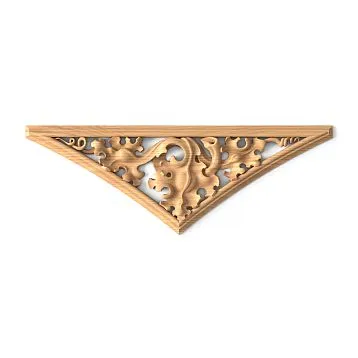
In 2026, demand for handmade items explodes. People are willing to pay more, wait longer, to obtain an item created by a craftsman. This applies not only to large items such as furniture, but also to details.wooden handles from solid woodcarvedbalusters for staircases, decorativeWooden moldings— these elements transform an ordinary interior into a space with soul. They create a sense of home in its deepest meaning — a place where you are protected, where everything is imbued with meaning, where every object is a friend, not a faceless utilitarian item.
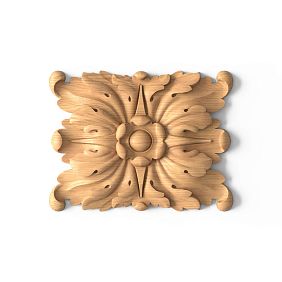
Our factory also produces:




Wood as a material of choice: why 2026 is the year of wood
If one material were to be singled out as dominating in personalized interiors of 2026, it would be wood. Not plastic, not metal, not synthetic composites — natural wood in all its diversity. Why exactly it?
Let’s start with biology. Humans evolved in the presence of trees. Our ancestors lived in forests, built shelters from wood, used it to create tools, lit fires. At the cellular level, we are programmed to perceive wood as a safe, friendly, beneficial material. When we see a wooden surface or touch it, ancient neural pathways activate, evoking feelings of calm and comfort. This is not romantic fiction — it is a scientifically confirmed fact.
Wood possesses unique physical properties. It feels warm to the touch — unlike metal or stone, wood does not draw heat from the skin, but rather feels warm. It breathes — the ability of wood to absorb and release moisture creates a healthy microclimate in the room. It sounds — the acoustic properties of wood make a space alive, eliminating unpleasant echoes while preserving the naturalness of sound. It smells — the natural aroma of wood, especially freshly processed, has a therapeutic effect, reducing stress and improving mood.
But most importantly — wood is beautiful with its natural, organic beauty, which cannot be imitated. The pattern of growth rings tells the story of the tree — dry years when it grew slowly, rainy seasons of vigorous growth, scars from damage, healed by nature itself. Each board is unique. The color palette of wood is incredibly rich — from nearly white birch to charcoal-black walnut, from golden ash to chocolate-colored walnut. The texture can be velvety-smooth or expressively textured. All of this makes wood the ideal material for creating a personalized interior.
In 2026, wood is used everywhere, but not as before. This is not heavy oak sets from Soviet times. This is delicatewooden slats, creating airy partitions. These are carveddecorative elements, transforming a wall into a work of art. These areSolid Wood Itemsunusual shapes, balancing between functionality and sculpture. Wood becomes a pliable material, with which designers and homeowners create unique spaces.
Get Consultation
Details decide everything: furniture handles, moldings, and small forms
In interior personalization, there is a paradox: it is precisely small details that create a sense of uniqueness, not large items. You can buy an expensive designer sofa, but if the rest of the furnishings are standard — the interior will remain faceless. But replacing ordinary furniture handles with carved wooden ones, adding moldings to walls, installing decorative appliqués on cabinet facades — these small changes radically transform the space.
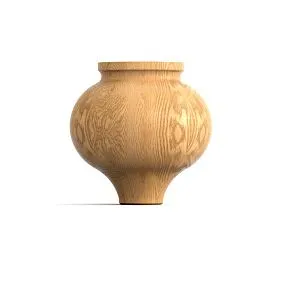
Furniture handles — a vivid example of how a detail can change everything. Most furniture manufacturers equip their products with standard hardware — plastic or simple metal handles, which perform a function but carry no aesthetic value. Replace them with handles made of natural wood — and the furniture transforms. It becomes warmer, more noble, more individual. Especially striking arecarved handles made of solid oak or beech— they are pleasant to hold in the hand, creating tactile pleasure every time you open a cabinet or drawer.
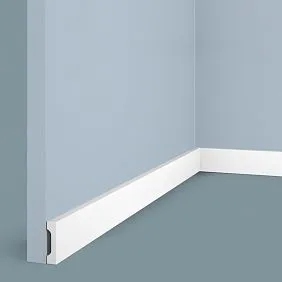
, framing walls and creating architectural divisions.Wooden moldings, which turn the ceiling into a fifth wall, worthy of attention.picture framesconvert the ceiling into a fifth wall worth attention.
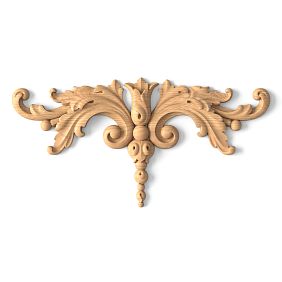
Decorative appliqués — a way to turn the simplest furniture into a unique piece. An ordinary commode from a mass-market store, enhanced with carved wooden appliqués on its facades, becomes a piece of furniture art. Standard kitchen facades, adorned with carved elements, gain individuality and character. This technique allows saving money, without buying expensive designer furniture, yet creating a unique interior.
Balusters and Posts for Staircases— another category of elements that radically affects the perception of the interior. A staircase with simple metal or glass balusters looks cold and faceless. Replace them with carved wooden balusters — and the staircase becomes an architectural focal point of the house, an element that attracts attention and creates an atmosphere. The variety of baluster shapes is immense — from classic turned to modern geometric, from strictly symmetrical to avant-garde asymmetrical.
Personalization styles: find your language of expression
Personalization does not mean the absence of style. On the contrary, it requires an even more careful approach to stylistic unity, because you are creating not a standard interior by a ready-made recipe, but a unique space that must be harmonious. In 2026, several dominant directions of personalization can be identified, each offering its own language of expressing individuality.
New Classic: Traditions with a Modern Touch
carved elements are used sparingly, as elegant accents, not as massive dominants. Wood here prefers noble species — oak, walnut, beech — but the processing is lighter, less overloaded with ornamentation.pilastersandColumnsare used sparingly, as elegant accents rather than massive dominants. Here, hardwoods such as oak, walnut, and beech are preferred, but the processing is lighter, less overloaded with ornamentation.
The color palette of the new classic is muted noble tones: gray-blue, dusty rose, olive, deep emerald. They create an atmosphere of refinement without pretentiousness. Carved elements may be gilded or silvered, but very delicately, with patina, not bright shine. Furniture combines classic silhouettes with modern comfort — high headboards of beds with soft upholstery but carved wooden frames; elegant chairs with turned legs, but modern proportions.
Ecological Minimalism: Simplicity with Soul
bare walls are complementedwooden planksstrict forms are softened by organic textures. This is minimalism that does not reject coziness for the sake of an idea, but creates coziness through simplicity.
Personalization in ecological minimalism is achieved through the selection of unique items made from natural materials. This could be a table made from a solid wood slab with its uneven edge preserved. Or a shelf made from unprocessed planks with visible texture and knots. OrWooden InlaysEclectic with Character: Bold Mixing
Eclecticism with character: bold mixing
Eclecticism is a style for bold individuals, for those who are not afraid of experiments and trust their taste. Here, antique furniture coexists with modern items, classic carved elements combine with industrial details, ethnic motifs intertwine with minimalist forms. It may seem chaotic, but in the hands of a skilled creator, it transforms into a harmonious symphony.
Wood in eclectic interiors plays the role of a unifying element. Even if items from different eras and styles, wooden details create visual connection.Carved Wooden ElementsThey can be used both on an antique chest of drawers and on a modern wardrobe, creating a dialogue between eras. It is important to maintain color harmony — it is better to choose wood of one shade or color temperature, so that the space does not visually fall apart.
Ethnic Personalization: Cultural Identity
ornamentation and carved panels.plinthEthnic personalization is not creating a museum of folk life, but delicately introducing cultural codes into modern space. A few carved elements in traditional style, characteristic color palette, use of typical tree species for the culture — this is enough to create an atmosphere, without turning the home into decoration.
Ethnic personalization is not about creating a museum of folk art, but delicately introducing cultural codes into modern space. A few carved elements in traditional style, characteristic color palette, use of wood species typical for the culture — this is enough to create an atmosphere, without turning the home into a decoration.
Color and Texture of Wood: The Art of Selection
Wood is associated with the color brown, but this is a simplification. The palette of wood is incredibly rich, and modern processing methods expand it even further. Choosing the right shade and texture is critically important for creating the desired atmosphere.
Light Wood: Air and Space
Birch, beech, maple, white oak — these species create a sense of lightness, purity, spaciousness. Light wood visually expands a room, reflects light, making the interior more airy. This is an ideal choice for small apartments, northern rooms with insufficient natural light, and minimalist interiors.
The texture of light wood can vary. Birch is almost uniform, with a fine grain. Beech, on the contrary, has expressive long fibers, creating a dynamic pattern. Maple combines lightness with interesting inclusions. The choice depends on whether you want a calm neutral background or an active texture that draws attention.
Middle Tones: Universal Harmony
Natural oak, beech, cherry — this is the golden middle that suits almost any interior. Middle wood tones are warm enough to create coziness, but not so dark as to visually reduce space. They combine easily with different wall, furniture, and textile colors.
Oak — classic that never goes out of fashion. Its expressive texture with clear growth rings creates a noble, substantial look. Beech is more uniform, with fine pores and a pinkish hue, adding warmth. Cherry darkens over time, acquiring a noble patina, making it especially valuable for lovers of things with history.
Dark Wood: Drama and Luxury
Walnut, wenge, stained oak, mahogany — dark species create an atmosphere of luxury, intimacy, drama. They visually reduce space, making it more intimate, which can be both a drawback and an advantage, depending on the purpose. In spacious rooms with high ceilings, dark wood looks especially striking, creating a sense of respectability and solidity.
Dark wood requires careful lighting. Insufficient light will make the interior gloomy. But with proper lighting, dark wood reveals its full glory — the play of shades, depth of texture, nobility of the material.Carved ElementsDetails made from dark wood are especially expressive — light and shadow create a dramatic relief, highlighting the craftsmanship of the carver.
Toned Wood: Endless Possibilities
Modern technologies allow changing the color of wood while preserving its texture. This opens incredible possibilities for personalization. Grey wood — the hit of recent years — creates a modern, urban look while preserving natural texture. Bluish, greenish, even pinkish shades — all of this is achievable with staining.
It is important that staining does not hide wood, but transforms it. Annual rings remain visible, texture is preserved, but the color becomes whatever you want. This allows wooden elements to be perfectly integrated into your interior color concept, without sacrificing the material’s naturalness.
Technologies at the service of traditions: how items of 2026 are made
There is a myth that handcraft and technology are antagonists. In reality, in 2026, they are allies, complementing each other. Modern technologies allow achieving precision and complexity of forms that were impossible for masters of the past. But final finishing and bringing life to the item still require human involvement.
Digital design: visualization of your dream
The process of creating a personalized interior begins with an idea, which is then embodied in a 3D model. Modern software allows you to see the future interior in all its details even before production begins. You can virtually 'walk' through your home, examine every corner, understand how different elements will interact. Want to see howCarved Pilasterswill look in your living room? The program will show this with photographic accuracy.
This is especially important for personalized projects, where each element is unique. An error in dimensions or proportions can cost dearly — you’ll have to remake the item. 3D modeling allows identifying and correcting all discrepancies during the design phase, when it costs nothing.
CNC processing: precision down to the millimeter
CNC machines have revolutionized the production of wooden items. What used to require weeks of work from an experienced carver is now accomplished in hours with perfect precision. Complex three-dimensional reliefs, repeating ornaments, perfectly symmetrical elements — all of this is created by CNC machines based on a digital model.
Does this mean the end of hand carving? Absolutely not. CNC creates the rough shape, the base, but final processing is still done by hand. The craftsman sands, smooths sharp edges, reveals the wood’s texture, adds nuances that cannot be programmed. It is precisely at this stage that the soulless blank transforms into a work of art with soul.
Laser cutting: jewel-like precision
To create thin, delicate elements, laser cutting is used. The laser can cut lines thinner than a millimeter, creating lace-like patterns from wood. This is especially in demand for decorative panels, screens, grilles. The laser works quickly and cleanly, leaving no chips or irregularities.
The combination of laser cutting and hand finishing creates amazing effects. A delicate pattern cut by laser is enhanced with hand painting or patination, transforming a functional item into an art object.
Quality control: from drying to finish
The quality of wooden items is established even during material preparation. Wood must be properly dried to 8-12% moisture to prevent deformation or cracking in the future. This is a lengthy process requiring precise control of temperature and humidity in drying chambers.
After manufacturing, each item undergoes multi-stage quality control. Geometry, carving quality, and absence of defects are checked. Final finishing — varnishing, oiling, staining — is done in multiple layers with intermediate sanding. Only after passing all control stages is the item packaged and shipped to the client.
Ecology and ethics: personalization as a responsible choice
Interior personalization in 2026 is inseparably linked to ecological awareness. When creating a unique space, people increasingly consider the impact their choices have on the planet. Here, natural wood — especially from responsible producers — turns out to be one of the most ethical options.
Sustainable Forestry
Responsible manufacturers work only with wood sourced from forests with certified management. FSC or PEFC certificates guarantee that for every tree cut down, new ones are planted, that logging does not harm the ecosystem, and that workers’ rights in the forestry industry are respected. BuyingSolid wood productsfrom such manufacturers supports sustainable forestry.
Durability versus disposability
The culture of disposability is one of the main ecological problems of modernity. Furniture made of particle board lasts 5-7 years, after which it is sent to a landfill, where it will decompose for centuries, releasing toxic substances. Items made of solid wood last for decades, often centuries. They can be restored, repainted, adapted to new styles. Buying quality wooden furniture and decor is an investment that pays off many times over.
Carbon footprint
During growth, wood absorbs carbon dioxide, binding carbon into its structure. When you use wooden items in interiors, this carbon remains bound for decades. Unlike the production of plastic, concrete, or metal, which releases enormous amounts of CO₂, wood processing has a minimal carbon footprint. Choosing wood means contributing to the fight against climate change.
Safety for health
Many synthetic materials emit volatile organic compounds (VOCs), which can cause allergies, headaches, respiratory problems. Natural wood is not only safe, but beneficial — it regulates humidity in rooms, and some species emit phytoncides, improving air quality. This is especially important for families with children and for people with heightened sensitivity.
Psychology of personalized space: home as therapy
Interior influences us much more strongly than we realize. Colors, shapes, materials, details — all of this affects the psyche, mood, productivity, even physical health. A personalized space, created according to your needs and preferences, becomes a therapeutic tool supporting your well-being.
Stress reduction through familiarity
A generic interior is impersonal — it may be functional, but it does not create an emotional connection. A personalized space, on the contrary, is filled with familiar, meaningful elements. You know the story of each item. You remember how you chose theseWooden handles, how you consulted with the craftsman about carving, how you waited for delivery. This connection creates a sense of stability and safety, which is critically important in an unstable world.
Tactile Comfort
Touching pleasant textures activates the release of oxytocin — a hormone associated with feelings of calmness and trust. Wooden surfaces are especially effective in this regard — they are warm, pleasant to the touch, often have interesting textures. Simply running your hand over a carved wooden surface gives you a dose of calm.
Visual harmony
A personalized interior is harmonious because it is created with a unified logic reflecting your preferences. There is no visual noise, random elements, conflicting styles. This creates a sense of order and control, reducing cognitive load — the brain does not have to constantly process contradictory information.
Pride of ownership
A home you created yourself evokes a sense of pride. It is not just a place where you live, but your creation, the result of your efforts, taste, and investments. This boosts self-esteem, gives a sense of achievement, and motivates you to maintain and develop the space further.
Practical guide: how to start personalizing your home
The idea of creating a personalized interior may seem daunting. Where to start? How to avoid mistakes? How to avoid wasting your budget? Here is a step-by-step guide to help you confidently move toward your goal.
Step one: self-awareness
Before making any changes to the interior, you need to understand what you want. Which colors calm you? Which materials are pleasant? Which styles resonate with you? Create a mood board — a collage of photos, material samples, and color palettes. Don’t rush — this is a process that may take weeks or months. You are not looking for what is trendy, but what resonates with you.
Step two: space audit
Critically evaluate what you currently have. Which items do you truly love? Which are kept out of inertia but do not bring joy? What can be eliminated? What can be updated? Often, to create a personalized interior, you don’t need to change everything — it’s enough to remove the unnecessary and add a few meaningful elements.
Step three: prioritization
For most people, budget is limited. Determine what is most important to you. Maybe it’s the kitchen, where you spend a lot of time? Or the bedroom, whose quality of sleep affects your entire life? Or the living room, where you host friends? Focus your resources on key zones; the rest can be updated gradually.
Step four: working with details
Start small — replace furniture handles with wooden ones, add a fewof carved elementson the walls, hangWooden moldings. These small changes will give you a sense of direction, help you understand whether you like the result, and allow you to adjust your approach if needed. Personalization is a marathon, not a sprint.
Step five: consultation with professionals
Do not be afraid to consult with specialists. An interior designer will help you avoid mistakes, a woodcarver will advise you on which shapes and wood species are best suited for your project. Companies like STAVROS provide consultations, helping clients choose optimal solutions. A professional perspective is valuable, even if you are creating the interior yourself.
Step six: patience and adjustment
A personalized interior is not created in a week. It is a process that may take years. And that’s perfectly normal. Live in your space, observe what works and what doesn’t. Do not be afraid to change your decisions, try new approaches. The interior, like you, evolves — it is a living organism, not a static decoration.
Frequently asked questions about interior personalization
Is it expensive to create a personalized interior?
It depends on the scale and approach. You can create a personalized interior with minimal investment, replacing a few details — furniture handles, adding wooden elements, repainting old furniture. Or you can invest significant funds in custom furniture and unique decorative items. The key is that personalization does not necessarily mean high cost — it means thoughtfulness and individuality.
How long does it take to create a personalized interior?
From several months to several years. It all depends on the scale of the project and the budget. But it's important to understand that a personalized interior is not a one-time task, but an ongoing process. You will constantly find new elements you want to add, change, or improve. And that’s the beauty — the interior grows and evolves with you.
It is not only possible, but often the most interesting results are achieved this way. The key is to maintain color and texture harmony so the space does not visually fall apart. Wooden elements work excellently as a unifying factor — even if items are of different styles, wood creates a visual connection between them.
Not only is it possible, but often this is exactly how the most interesting results are achieved. The main thing is to maintain color and textural unity so that the space doesn't visually fall apart. Wooden elements work excellently as a unifying factor — even if the items are of different styles, wood creates a visual connection between them.
How to choose the type of wood for your interior?
Consider several factors: interior style, desired shade, budget, usage conditions. For classic interiors, oak or walnut are suitable. For Scandinavian interiors — ash or birch. For modern interiors — you can experiment with stained wood. If elements will be used intensively (e.g., furniture handles), choose hardwoods. For decorative elements, any wood will do.
Do you need to order all wooden elements from one manufacturer?
Not necessarily, but it is desirable if you want uniformity in shade and texture. Different manufacturers use different types of wood and finishing methods, which may result in visual mismatch. If you order from different craftsmen, ensure they use the same wood type and finish.
How to care for wooden elements in the interior?
Care is simple: regularly wipe with a soft dry cloth to remove dust, avoid excessive moisture and direct sunlight, periodically (every one to two years) renew protective coating with oil or wax. Wood is a living material, but with proper care, it lasts for decades, becoming even more beautiful over time.
Is it eco-friendly to use wood in interior design?
Yes, provided the wood is sourced from responsible manufacturers with sustainable forestry certification. Wood is a renewable resource, it absorbs carbon, is fully biodegradable. Solid wood items last for decades, unlike particle board furniture, which quickly ends up in landfills.
Can you order unique wooden elements according to your design?
Yes, many manufacturers offer custom-made production based on individual sketches. You can develop a unique design for carved elements, choose the wood type, dimensions, and finishing method. This is more expensive than standard items, but the result is a completely unique element, unmatched by anyone else.
How do wooden elements affect the perception of space?
Wood makes space warmer, cozier, more human. Vertical wooden elements visually raise the ceiling, horizontal ones expand the space. Light wood makes a room feel more spacious, dark wood — more intimate and cozy. Carved elements add depth and create play of light and shadow.
Where to start if I want to personalize my interior?
Start small — replace a few details, add one or two accent elements. See how they change the feeling of the space. This will give you direction and confidence for further steps. Don’t rush to do everything at once — personalization requires time and thought.
Conclusion: Create your world with STAVROS masters
Personalization of interiors is not just a trend that will pass in a couple of years. It is a fundamental shift in understanding what residential space should be. We no longer want to live in standard boxes with catalog furniture. We want homes that tell our stories, reflect our values, create a unique atmosphere. AndIndividual Interior 2026years — this is a manifesto of this desire.
Handcrafted wooden elements play a key role in creating personalized interiors. They carry the warmth of nature, uniqueness of each piece, the energy of the craftsman.carved appliqués, wooden handles from solid wood, balusters for staircases, decorative moldingsThese, seemingly small details, transform space, turning it from standard to unique, from cold to warm, from impersonal to distinctive.
Trends of the interior of the futureIt is clear: mass production gives way to individual approaches, synthetic materials to natural ones, quick solutions to thoughtful projects. People are willing to invest time and resources into creating homes that truly belong to them, homes that will serve not five years until the next renovation, but decades, becoming better with age.
Space customizationIt requires a partner who understands your vision and can bring it to life. STAVROS has specialized in creatingof wooden elements for interior— from furniture hardware to architectural details. We combine Russian traditional carving craftsmanship with modern production technologies, creating items that meet the highest quality standards.
STAVROS offers more than 5,900 models of carved wooden items. We work with noble woods — oak, beech, ash — carefully selecting and processing the wood to achieve maximum stability and longevity. Our production is equipped with modern equipment from leading European manufacturers, but final finishing is always done manually by experienced masters, giving each item individuality and soul.
STAVROS offers not just ready-made items, but also custom manufacturing services. If you have a unique idea, sketch, or concept — we will bring it to life in material. Our designers will help refine the project, optimize it technically, create 3D visualization. You will see the result even before production begins and can make adjustments. This guarantees that the final item fully meets your expectations.
We understand that creating a personalized interior is a journey, not a one-time purchase. Therefore, STAVROS provides full support at every stage: from consultation on selection to installation and subsequent maintenance. Our specialists will help you choose optimal solutions for your space, considering style, budget, and functional requirements. We organize delivery throughout Russia and, if needed, perform professional installation.
Over the years, STAVROS has participated in implementing hundreds of projects — from private homes and apartments to large-scale restorations of historical interiors. We worked on restoring the Constantine Palace, the Hermitage, the Alexander Palace, the Troitsko-Izmaylovsky Cathedral. These projects required deep knowledge of historical styles, the highest craftsmanship, and absolute precision. And we succeeded, proving that we can work at any level of complexity.
But for us, each private client who wants to make their home special is equally important. Whether it’s a small apartment or a spacious cottage, we approach every project with the same attention and professionalism. Your home is your life, and it deserves the best materials, the best craftsmanship, the best service.
We believe in the beauty of natural materials. We believe in the value of handcrafted work. We believe that a home should not be just a functional space, but a work of art that inspires and supports. We believe that personalization is not a whim, but a necessity to preserve individuality in a standardized world.
By choosing STAVROS, you choose quality proven over time. Uniqueness that cannot be replicated. Eco-friendliness that does not harm the planet. Craftsmanship passed down from generation to generation. We don’t just sell items — we help create homes you want to live in, spaces that become part of your story.
Start your journey toward a personalized interior with STAVROS. Explore our catalog, contact our consultants, share your ideas. We’ll help bring them to life, creating a space that is entirely yours. Because you are unique. And your home should be too.
Interior design in 2026 — this is personalization and handcrafted work. This is natural materials and attention to detail. This is respect for traditions and openness to innovation. This is the philosophy of creating a space that reflects your soul. And all of this is possible with STAVROS.