Article Contents:
- Philosophy of Wooden Architecture in Modern Interior
- Historical Heritage and Modern Interpretations
- Psychology of perception of wooden elements
- Technological Aspects of Baluster Post Production
- Wood Selection and Preparatory Processes
- Innovative Processing Methods
- Final finishing and protective coatings
- Constructive features and dimensional characteristics
- Anatomy of the Baluster Post
- Dimensional Scale and Standardization
- Stylistic Directions and Design Solutions
- Classicism and neoclassicism
- Modern and Art Deco
- Modern minimalism
- Wood species and their characteristics
- Exquisite Hardwoods
- Exotic species
- Joining and Installation Technologies
- Traditional Joining Methods
- Modern fastening systems
- Features of installation under various conditions
- Decorative Techniques and Artistic Processing
- Wood Carving
- Inlay and Intarsia
- Patina and Artificial Aging
- Operational Characteristics and Longevity
- Strength characteristics
- Resistance to External Factors
- Service Life and Warranties
- Economic Aspects and Pricing
- Factors Affecting Cost
- Investment attractiveness
- Trends and innovations
- Ecological Aspects
- Digital technologies in design
- Personalization and customization
- Maintenance and care
- Regular maintenance
- Preventive Measures
- Restoration and repair
- Conclusion
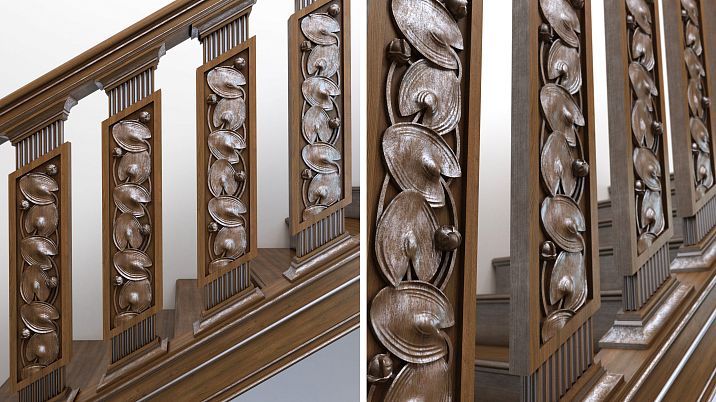
In the world of architectural art, there are elements that can transform space simply by their presence. A wooden baluster post is precisely such an element, combining functional necessity with aesthetic perfection. This architectural component has become an indispensable part of stair constructions, turning an ordinary ascent into a majestic elevation.
What makes wooden baluster posts so special? Primarily, their ability to bear not only physical load but also the emotional component of the interior. Each wooden post baluster tells its own story — of the craftsman’s skill, of the nobility of the material, of the pursuit of beauty.


Philosophy of Wooden Architecture in Modern Interior




Historical Heritage and Modern Interpretations
Wooden baluster posts trace their roots to deep antiquity, when master builders first realized that functionality could be inseparably linked with beauty. In the Renaissance era, these elements reached their peak, becoming symbols of refined taste and architectural mastery.
Modern wooden baluster posts preserve the spirit of tradition, yet are enriched by new technological possibilities. Today, masters use high-precision equipment to create ideal geometric forms, without losing the soul of handcrafted work.
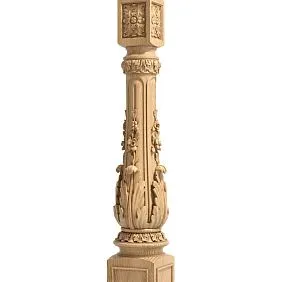
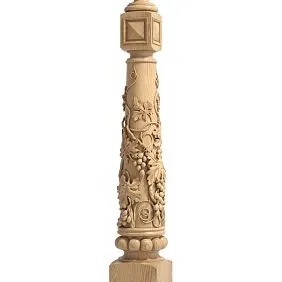
Our factory also produces:



Psychology of perception of wooden elements
Why is wood so attractive to the human eye? Scientists claim that the natural texture of wood activates ancient instincts in our brain, associated with safety and comfort. Wooden baluster posts create a special atmosphere in which a person feels protected and tranquil.
Each fiber of wood carries information about the tree’s growth years, climatic conditions, and the strength of nature. This energy is transmitted to the space, making it alive and animated.
Get Consultation
Technological Aspects of Baluster Post Production
Wood Selection and Preparatory Processes
Creating a high-quality wooden baluster post begins with careful selection of raw material. Masters prefer wood harvested during specific seasons, when sap movement in the trunk is minimal. This ensures material stability and prevents deformation during use.
The wood drying process is an art requiring deep knowledge and years of experience. Modern drying chambers allow precise control of humidity down to tenths of a percent, which is critically important for creating durable products.
Innovative Processing Methods
Modern baluster post production uses advanced technologies that enable unprecedented precision and surface quality. CNC machines can create complex profiles with repeatability down to the micron.
Laser engraving opens up limitless possibilities for surface decoration. This method allows applying delicate ornaments impossible to create using traditional methods, without compromising the material’s structural integrity.
Finishing and protective coatings
The final stage of creating a wooden baluster post is applying protective coatings. Modern compositions not only protect wood from external influences but also accentuate its natural beauty. Oil-based coatings penetrate deeply into the wood structure, forming a breathable protective film that preserves the tactile sensation of natural material.
Constructive features and dimensional characteristics
Anatomy of the Baluster Post
Each wooden baluster post consists of three main parts: base, central section, and capital. The base ensures secure attachment to the foundation, the central section bears the primary decorative load, and the capital serves as support for the handrail.
The proportions of these elements conform to the laws of the golden section, ensuring harmonious perception of the structure. Experienced masters intuitively sense correct proportions, creating products that delight both the eye and the soul.
Dimensional Scale and Standardization
Standard sizes of baluster posts vary widely, allowing optimal selection for any project. The height of the items is usually between 900 and 1200 millimeters, and the cross-section can be round (diameter from 50 to 100 millimeters) or square (from 80×80 to 120×120 millimeters).
Custom manufacturing allows creating wooden baluster posts in non-standard sizes, tailored to specific architectural requirements. This is especially important during the restoration of historical objects or in creating exclusive interiors.
Stylistic directions and design solutions
Classicism and neoclassicism
The classical style implies strict proportions and restrained elegance. Baluster posts in classical style feature clear lines, symmetrical forms, and noble simplicity. They are often adorned with fluting — vertical grooves that create play of light and shadow.
Neoclassical style allows greater freedom in interpreting traditional forms. Here, wooden baluster posts may combine classical proportions with modern decorative elements, creating a unique synthesis of eras.
Modern and Art Deco
The modern era brought smooth, natural lines into architecture. Baluster posts in the modern style often imitate plant forms — stems, leaves, flowers. These items require the highest level of craftsmanship, as every detail must appear natural and organic.
Art Deco, on the contrary, leans toward geometric forms and strict symmetry. Wooden baluster posts in this style feature sharp edges, contrasting textures, and bold decorative solutions.
Modern minimalism
Modern style requires baluster posts to have maximum functionality with minimal decorative elements. Here, line purity, perfect proportions, and surface finish quality are crucial. The beauty of such items lies in their minimalism and technological perfection.
Wood species and their characteristics
Noble hardwoods
Oak remains the unrivaled leader among materials for manufacturing wooden baluster posts. Its strength, durability, and noble texture make each item a true work of art. Oak baluster posts can serve for centuries, acquiring a unique patina over time that only enhances their beauty.
Ash attracts craftsmen with its flexibility and resistance to deformation. Ash baluster posts feature expressive texture and the ability to withstand significant loads without losing shape.
Beech is renowned for its uniform structure and ease of processing. It is ideal for creating complex decorative elements requiring high precision.
Exotic species
Using exotic wood species allows creating truly unique wooden baluster posts. Redwood, teak, and wenge — each of these species possesses unique color and texture characteristics.
Exotic species require special processing and protection approaches. Their high cost is justified by exceptional aesthetic qualities and longevity of finished items.
Fastening and installation technologies
Traditional connection methods
Classic baluster post mounting is done using wooden dowels — cylindrical rods that provide strong and inconspicuous connections. This method has been tested over centuries and remains one of the most reliable.
Dowel connections require high precision in drilling holes. Even the slightest deviation may weaken the structure or create gaps. Therefore, this work is entrusted only to experienced masters.
Modern fastening systems
Threaded metal bolts provide maximum strength for connecting wooden baluster posts to the base and handrail. Such fastening allows disassembling elements if necessary without damaging the main structure.
Hidden fastening systems preserve the item's aesthetics by completely concealing connection elements. This is especially important for modern-style items, where any visible fastener detail may disrupt the overall concept.
Features of installation under various conditions
Installing baluster posts in rooms with high humidity requires using special sealants and protective compounds. It is important to ensure reliable waterproofing at connection points to prevent moisture from penetrating the wood structure.
When installing on open areas, material temperature deformation must be considered. Compensating gaps and elastic gaskets help avoid structural stress during weather changes.
Decorative techniques and artistic finishing
Threaded connections for wood
Hand carving transforms an ordinary wooden baluster post into a work of art. Master carvers create intricate ornaments that can tell entire stories. Each carving element requires not only technical skill but also artistic sensitivity.
Modern CNC machines allow reproducing complex carved elements with high precision. However, handwork remains more valuable, as it carries the soul of the master and uniqueness of execution.
Inlay and Marquetry
Inlay technique allows decorating baluster posts with inserts made of other materials — metal, mother-of-pearl, ivory. These elements create striking accents and emphasize the exclusivity of the item.
Marquetry — the art of creating images from pieces of various wood species — requires exceptional skill. Each fragment must be precisely fitted by size and color to create a harmonious composition.
Patina and artificial aging
Artificial aging techniques allow giving a new wooden baluster post the appearance of an antique item. Patination creates an effect of noble antiquity, especially prized in classical interiors.
Various patination compounds allow mimicking natural wood aging processes, creating a convincing illusion of the item's multi-century history.
Operational characteristics and durability
Strength Indicators
A well-made baluster post can withstand significant loads. Vertical load capacity may reach several hundred kilograms, significantly exceeding building code requirements for residential spaces.
Horizontal loads arising from support on handrails also pose no problem for a properly designed structure. Wooden baluster posts demonstrate excellent resistance to cyclic loads, which is crucial for elements subjected to constant stress.
Resistance to external factors
Modern wood treatment methods significantly enhance baluster posts' resistance to adverse effects. Special impregnations protect the material from moisture, fungi, and insect pests.
Thermal modification of wood alters its structure at the molecular level, making the material practically immune to biological damage and significantly reducing water absorption.
Service Life and Warranties
With proper manufacturing and maintenance, wooden baluster posts can serve for decades. Items made of oak and other hardwoods often outlive several generations of owners, becoming family heirlooms.
Manufacturers of high-quality items provide long warranties, indicating confidence in the durability of their products. This is an important criterion when selecting balusters for significant projects.
Economic aspects and pricing
Factors Affecting Cost
The price of a wooden baluster depends on many factors: wood species, processing complexity, batch volume, and manufacturer reputation. Items made from exotic woods or with hand-carved details may cost several times more than standard options.
Custom-made items always cost more than mass-produced ones, but they allow obtaining a unique piece fully matching the project's requirements.
Investment Appeal
Quality balusters should be considered a long-term investment. They not only serve for decades but also increase property value. A beautiful staircase with elegant balusters becomes a home’s signature feature.
Antique and unique items only increase in value over time, making them attractive to collectors and admirers of beauty.
Trends in development and innovation
Ecological aspects
Modern production of wooden balusters increasingly focuses on ecological aspects. Using wood from certified forests, applying eco-friendly coatings, and recycling waste — all of these are becoming industry standards.
Consumers increasingly choose items produced according to sustainable development principles. This encourages manufacturers to adopt more eco-friendly technologies.
Digital Technologies in Design
3D modeling and virtual reality revolutionize the design process. Clients can see how balusters will look in their interiors even before production begins.
Parametric design allows quickly creating variants of items with different characteristics, optimizing the selection of the optimal solution.
Personalization and Customization
Modern technologies make mass customization of wooden balusters possible. Each item can be adapted to the client’s individual preferences without significant cost increase.
Laser engraving allows applying personalized elements — monograms, dates, symbols — making each baluster unique and irreplaceable.
Care and Maintenance
Regular Maintenance
Proper care extends the service life of balusters and preserves their original appearance. Regular cleaning with soft cloth removes dust and dirt, preventing their accumulation in wood pores.
Using special wood care products nourishes the material and maintains the protective properties of the coating. The frequency of treatment depends on usage conditions and coating type.
Preventive measures
Controlling humidity in the room helps prevent deformation of wooden balusters. Optimal air humidity is 40-60%, which is comfortable for both people and wooden items.
Protection from direct sunlight prevents fading and cracking of the coating. Using curtains or blinds in sunny rooms extends the lifespan of the items.
Minor damage to oak balusters can be repaired yourself using special wax pencils or wood putty. It is important to select the material to match the wood tone precisely for an undetectable repair.
Balusters can be restored if needed, returning them to their original appearance. Minor damages are repaired with putty and subsequent painting; more serious defects require professional intervention.
Restorability is another advantage of wooden items over synthetic analogs. Quality wood allows repeatedly renewing the coating without losing the material’s core properties.
Conclusion
The world of architecture constantly evolves, but some elements remain timeless in their beauty and functionality. Wooden balusters — these are elements capable of transforming any space, filling it with the warmth and coziness of natural wood.
Choosing quality items means investing not only in the beauty of your home but also in its longevity. Each baluster carries a piece of the creator’s craftsmanship, the energy of living wood, and a pursuit of perfection.
Modern technologies open boundless creative possibilities, enabling the creation of unique items that will become ornaments of any interior. From classic forms to avant-garde solutions — wooden balusters can realize the boldest design ideas.
For many years, STAVROS has remained a leader in producing high-quality solid wood items. The combination of traditional processing methods with modern technologies allows creating products that meet the highest standards of quality and aesthetics. Choosing STAVROS means choosing reliability, beauty, and craftsmanship, proven by time.