Article Contents:
- The Essence of Molded Profile: Where Function Meets Form
- Classification of Profile Products: Diversity of Forms and Purposes
- Wall Moldings: Graphics of Verticals and Horizontals
- Ceiling Cornices: Completion of the Vertical Plane
- Floor skirting boards: protection and finishing
- Door Casings: Framing the Opening
- Wood Species for Profile Products: Character of the Material
- Oak: Age-Old Strength and Nobility of Texture
- Beech: Plasticity of Form and Versatility of Application
- Ash: Contrasting Texture and Mechanical Strength
- MDF: Geometric Stability and Cost-Effectiveness
- Technological Process: From Log to Finished Profile
- Cutting and primary processing: forming the base
- Profile Milling: Micron Precision
- Sanding: Preparation for Finishing
- Finishing Options: From Natural Wood to Enamel Coatings
- Oil Coating: Natural Texture
- Varnish Coating: Protective Film
- Toning: Color Change
- Enamel Coating: Colored Surface
- Application of Profiles in Various Interior Styles
- Classical Styles: Symmetry and Order
- Scandinavian Style: Simplicity of Lines
- Loft: Contrast of Rough and Polished
- Modern Style: Purity of Geometry
- Installation of Profile Products: Technology of Flawless Results
- Preparation of base: guarantee of durability
- Marking and Cutting: Precision as the Foundation of Aesthetics
- Fastening: Adhesive and Mechanical Fasteners
- Joint Treatment: The Art of Invisibility
- Maintenance and operation: preserving original appearance
- Regular cleaning: prevention of dirt
- Coating Renewal: Restoring Freshness
- Damage Repair: Defect Elimination
- Economic aspects: investment in quality
- Material costs: from budget to premium
- Installation costs: professionalism pays off
- Durability: designed for decades
- Impact on spatial perception: psychology of profile elements
- Vertical divisions: rhythm and scale
- Horizontal lines: stability and extension
- Relief and chiaroscuro: surface dimensionality
- Frequently asked questions: practical answers
- How to choose skirting board height for a specific room?
- Can wooden profiles be used in damp areas?
- How often should wooden profile coatings be renewed?
- Can wooden profiles be painted?
- How to join profiles in a corner — at a 45-degree angle or butt joint?
- What distinguishes shaped profile from standard molding?
- Can profiles be made to custom sketches?
- Which wood species is optimal for profiles in a children's room?
- How to care for profiles with carvings and complex relief?
- How long does profile acclimatization take before installation?
- Can wooden profiles be installed on heated floors?
- Profile integration into smart home systems
- Integrated lighting: technology and aesthetics
- Hidden installation of utilities
- Sensor and detector integration
- Environmental aspects: naturalness and sustainability
- Resource Renewability
- Air quality in the room
- Future of profile products: innovations and trends
- Hybrid materials: wood and composites
- Digital manufacturing: from scanning to milling
- Smart coatings: self-healing and antibacterial
- Conclusion: perfection of detail shapes the whole

Wooden Profile Purchase: Architecture of Form and Philosophy of Material
Can an interior be considered complete if it lacks thoughtful transitions between planes? Can finishing create an impression of spatial integrity without using profile elements? The answer is obvious:wooden shaped profilebecomes the connecting link between disparate surfaces, transforming a set of planes into a harmonious architectural composition. It is precisely shaped products made from natural wood that create rhythm, place accents, and form the visual hierarchy of space.




Essence of shaped profile: where function meets form
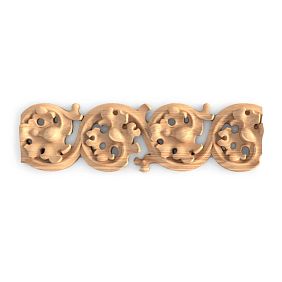
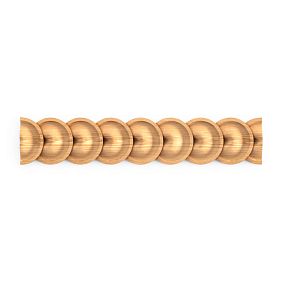
A shaped profile differs from simple millwork in the complexity of its cross-section. While an ordinary batten or strip has a rectangular or square cross-section, a shaped product exhibits relief—flutes, roundings, protrusions, recesses, fillets. This complexity of form arises not from a designer's whim, but from centuries of refined understanding of how light interacts with a surface, how the eye perceives volume, how the hand feels the material.
Wooden decorative profileIt performs many tasks simultaneously: it conceals joints between dissimilar materials, protects vulnerable areas from mechanical damage, visually corrects room proportions, creates decorative accents, and establishes the stylistic identity of the interior. Every facet, every radius of rounding carries functional and aesthetic weight. Nothing is accidental—only precise calculation, verified by centuries of use in the architecture of different cultures and eras.
The production of shaped profiles requires high-precision equipment and a deep understanding of wood properties. Four-sided planers with milling heads process the workpiece in a single pass, forming complex relief with an accuracy of up to a tenth of a millimeter. The slightest deviation in geometry will result in noticeable steps or gaps when joining elements. Professional production eliminates such defects thanks to multi-stage quality control at every step.




Classification of profile products: diversity of forms and purposes
Our factory also produces:


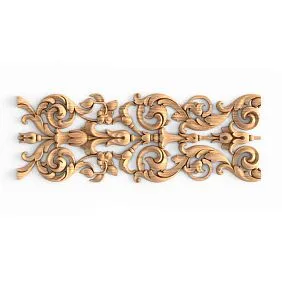


Wall moldings: the graphics of verticals and horizontals
Moldings create architectural articulation on smooth walls—division into panels, framing of door and window openings, horizontal division of the plane at the level of a conditional plinth. In classical interiors, moldings form boiserie—a system of wooden panels with frame-like framing, which protects walls and creates a sense of solidity and respectability. The width of moldings varies from thin decorative strips of twenty-thirty millimeters to powerful architectural elements of one hundred twenty-one hundred fifty millimeters.
The profile of a molding determines the character of the interior. Simple rectangular cross-sections with slight edge rounding are suitable for minimalist modern spaces. Complex multi-stage profiles with alternating convex and concave elements are characteristic of classical styles—Empire, Baroque, Neoclassicism. Asymmetrical profiles with smooth transitions refer to the aesthetics of Art Nouveau and Art Nouveau. Choosing a molding profile is choosing the language in which the interior will speak to the viewer.
Get Consultation
Ceiling cornices: completing the vertical plane
A ceiling cornice forms a visual transition from the vertical of the wall to the horizontal of the ceiling. Without this element, the joint appears sharp, unfinished, random. A cornice, however, creates a smooth transition, adds height to a room or, conversely, makes it more intimate depending on its size and profile. The classical rule prescribes a cornice height from one-tenth to one-eighth of the room's height. With three-meter ceilings, the cornice should have a height of three hundred-three hundred seventy-five millimeters to maintain harmonious proportions.
Profiles of ceiling cornices often include characteristic classical elements: ovolos (egg-shaped convexities), dentils (a row of small rectangular projections resembling teeth), flutes (vertical grooves), acanthus leaves. These elements came from ancient architecture and remain relevant in modern interpretations of classical styles. Even a simplified version of a classical cornice without rich carving retains the basic proportions and rhythm of the elements, creating a recognizable image.
Floor baseboards: protection and finishing
A baseboard solves a utilitarian task—it covers the technological gap between the floor covering and the wall, protects the lower part of the wall from dirt, vacuum cleaner impacts, and wet cleaning. But the aesthetic role of the baseboard is no less important: it creates a visual foundation for the wall, completes the finishing composition, sets a horizontal line that organizes the perception of space. The height of the baseboard is selected proportionally to the room's height: for standard apartments, seventy-eighty millimeters; for high ceilings, ninety-one hundred twenty millimeters.
Profile made of woodThe profile for baseboards varies from simple rounded to complex shaped. Modern aesthetics lean towards tall baseboards of simple form, painted the color of the walls, which visually increases the room's height. Classical interiors require baseboards with a pronounced profile, contrasting in color with the walls. An important point—the top edge of the baseboard should have a rounded profile for ease of wet cleaning and to prevent dust accumulation.
Door casings: framing the opening
A casing performs a dual function: it conceals the mounting seam between the door frame and the wall, and creates a decorative frame for the opening. The width of the casing is determined by the proportions of the opening and the scale of the room. The classical rule—the width of the casing is about one twenty-fifth of the opening's height. For a standard opening two meters high, the optimal casing width is seventy-eighty millimeters.
The profile of a casing can be flat for modern interiors or relief for classical ones. Carved casings with rich ornamentation are characteristic of the Russian style, Baroque, and Victorian aesthetics. Telescopic casings with adjustable depth allow for covering openings with non-standard wall thicknesses without additional extensions. Well-chosen and installed casings create a sense of thoughtfulness and completeness in the interior.
Wood species for profile products: the character of the material
Oak: age-old strength and nobility of texture
Oak remains the benchmark material for manufacturing premium-class decorative profiles. The density of oak wood, six hundred fifty-seven hundred fifty kilograms per cubic meter, ensures exceptional wear resistance and durability. A Brinell hardness of three point seven units means that an oak profile practically does not wear down, preserving the clarity of its relief for decades of intensive use. High tannin content, up to ten percent, protects the wood from biological damage—fungus, mold, insects.
The texture of oak is expressive, with clearly distinguishable annual rings and medullary rays on a radial cut. This natural decorative quality allows the use of oak profiles with minimal processing—oil coating emphasizes the natural beauty of the wood without the need for additional decoration. The color range of oak varies from light golden to dark brown depending on the wood's origin and processing method. Bog oak, having lain in water for decades, acquires a deep dark gray hue with a purple sheen.
Beech: plasticity of form and versatility of application
Beech represents an optimal combination of performance characteristics and affordable price. The density of beech wood, six hundred twenty-six hundred eighty kilograms per cubic meter, approaches that of oak; a hardness of three point six units ensures good wear resistance. The main advantage of beech for producing shaped profiles is exceptional formability after steaming. Beech blanks, treated with steam at a temperature of one hundred-one hundred ten degrees, bend easily with a minimal radius, allowing for the creation of curvilinear elements for arched openings and bay windows.
The texture of beech is fine-grained, uniform, without a pronounced pattern. This makes beech profiles an ideal base for tinting and painting. The light-colored beech wood easily imitates expensive exotic species when using appropriate stains. The natural pinkish hue of beech creates a warm atmosphere in the interior. A disadvantage of beech is increased hygroscopicity, requiring a stable microclimate. With humidity fluctuations of more than ten percent, deformations are possible.
Ash: contrasting texture and mechanical strength
Ash surpasses oak in mechanical properties, combining high hardness with good toughness. This species withstands impact loads without cracking, which is critical for profiles installed in areas of intensive use. The texture of ash is bright, contrasting, with wide annual rings creating an expressive pattern on a longitudinal cut. The color range from light cream to olive-brown allows for selecting a shade for any interior.
Ash processes well with cutting tools, milling with a clean surface without chips or tear-outs. Ash profiles require high-quality protective treatment, as the wood is susceptible to infestation by wood-boring insects. Polyurethane varnishes or oils with insecticidal additives provide reliable protection. Ash profiles, with proper treatment, last thirty-forty years without loss of decorative qualities.
MDF: stability of geometry and cost-effectiveness
High-density MDF with a density of seven hundred fifty-eight hundred fifty kilograms per cubic meter is an alternative to solid wood for profiles intended for painting. The main advantage is absolute dimensional stability with changes in humidity and temperature. MDF does not crack, warp, or shrink. The homogeneous structure of the material allows milling thin relief elements without the risk of chipping. The MDF surface is perfectly smooth, requiring no lengthy sanding before painting.
A disadvantage of MDF is the absence of natural wood texture, making transparent or semi-transparent coatings impossible. MDF profiles are always painted with opaque enamels. The environmental friendliness of quality European MDF of emission class E1 meets the requirements for residential premises—the content of free formaldehyde does not exceed zero point one milligram per cubic meter of air. The cost of MDF profiles is forty-fifty percent lower than similar products made from solid oak.
Technological process: from log to finished profile
Wood Drying: The Foundation of Stability
The quality of profile products is seventy percent determined by the correctness of wood drying. Freshly sawn wood contains fifty-eighty percent moisture, making its processing and use impossible. Drying in specialized chambers reduces moisture to eight-twelve percent—the optimal level for use in heated premises. The process takes from two to four weeks depending on the wood species and the thickness of the blanks.
The drying mode is selected individually: temperature, humidity in the chamber, and air circulation speed are gradually changed according to a set program. Too fast drying leads to cracking, warping, and internal stresses. Slow drying is economically inefficient and increases the production cycle. Modern computer-controlled drying equipment ensures an optimal balance of speed and quality.
After chamber drying, the wood undergoes a stabilization period — it is laid out in the workshop under normal conditions for at least a week. During this time, moisture equalizes throughout the entire workpiece volume, and internal stresses are relieved. Only after stabilization does the material proceed to processing. Violation of drying technology inevitably leads to deformation of finished products several months after installation.
Profile milling: micron precision
Complex profile shaping is performed on four-sided planers with milling heads. In one pass, the workpiece is processed on four sides, acquiring the specified geometry. Milling knives are made from high-speed steel or equipped with carbide inserts for processing dense wood species. The knife profile precisely matches the product drawing with a tolerance of no more than 0.1 mm.
The workpiece feed speed and milling head rotation frequency are selected depending on the wood species and profile complexity. Oak requires a lower feed speed due to its high density, while beech is processed faster. Properly selected modes ensure a clean surface without fuzz, tear-outs, or burns. After milling, the profile is checked with templates — metal plates with a cutout that exactly matches the product cross-section.
Sanding: preparation for finishing
Even after quality milling, the wood surface requires sanding to remove the finest irregularities and prepare for coating application. The process includes sequential treatment with abrasives of increasing grit: P80 for rough leveling, P120 for intermediate processing, P180 for preparation under tinting, P240 for final sanding under varnishing.
Complex-shaped profile products are sanded on specialized equipment with copying heads that replicate the profile relief. Manual sanding is used for finishing hard-to-reach areas and carved elements. Sanding quality is critical for finishing: a poorly sanded surface will not ensure proper coating adhesion, and all defects will appear after applying varnish or stain.
Finishing options: from natural wood to enamel coatings
Oil coating: natural texture
Oil compositions deeply penetrate the wood structure, impregnating it to a depth of two to three millimeters. Unlike film-forming coatings, oil does not create a surface layer but modifies the wood itself, making it moisture-resistant and resistant to soiling. The wood texture under oil retains a natural appearance, becoming more contrasting and expressive. The surface acquires a silky matte finish, pleasant to the touch.
Hard oils and oil-wax compositions create a more durable coating compared to simple oils. They contain natural waxes, which after polymerization form a thin protective layer on the wood surface. Oil coating renewal is performed every twelve to eighteen months by applying a thin layer of oil to the cleaned surface. Local repair of damaged areas is done without dismantling the profile — it is sufficient to sand the problematic spot and re-impregnate with oil.
Varnish coating: protective film
Varnishes form a protective film on the wood surface with a thickness of fifty to one hundred fifty microns, which reliably protects the material from moisture, mechanical damage, and ultraviolet radiation. Water-based acrylic varnishes are eco-friendly, odorless, and dry quickly. Polyurethane varnishes provide maximum wear resistance and are suitable for objects with intensive use. Alkyd varnishes create a warm amber hue that emphasizes the beauty of the wood grain.
The gloss level of the varnish coating varies from deep matte to high gloss. Matte varnishes preserve the natural look of the wood, while glossy varnishes enhance the contrast of the grain and give the surface an elegant appearance. Semi-matte coatings represent a compromise — a light silky sheen without pronounced highlights. The varnish coating is applied in two to three layers with intermediate drying and sanding of each layer with fine abrasive P320-P400.
Toning: color change
Stains and tinting oils allow changing the wood color while keeping its grain visible. Light beech can be turned into an imitation of walnut or wenge, pine can be tinted to resemble oak, and oak can be given the shade of bog oak. Water-based stains are safe and odorless but raise the wood grain, requiring additional sanding. Alcohol-based stains dry quickly and do not raise the grain but provide less even coloring. Oil-based stains ensure maximum even color and are easy to apply.
Multi-layer toning technique creates complex color effects. First, a base tone is applied; after drying, the protruding elements of the profile are lightly sanded, revealing lighter wood. Then a second, darker tone is applied, which is absorbed primarily into the recesses. The result is an expressive relief with interplay of light and dark areas. Patination — applying a contrasting pigment into the relief recesses followed by rubbing — creates an effect of noble aging.
Enamel coating: colored surface
Opaque enamels completely hide the wood grain, creating a smooth colored surface. This type of finishing is optimal for MDF profiles and budget wood species with unremarkable grain. The color palette of enamels is practically limitless — from classic white and ivory to rich deep tones. Modern water-based acrylic enamels are eco-friendly, do not yellow over time, and have good adhesion to wood.
Surface preparation for enameling includes thorough sanding, priming with compositions that block tannins and resins, which may bleed through the enamel. After the primer dries, the surface is sanded to remove raised grain and create roughness for enamel adhesion. Enamel is applied by spraying in two to three layers with intermediate drying and matting. Quality enamel coating creates a perfectly smooth surface without brush marks, sags, or craters.
Application of profiles in various interior styles
Classical styles: symmetry and order
Classical interiors are unthinkable without the use ofdecorative wooden profilewith complex relief. Empire, Baroque, Rococo, and Classicism operate with a system of moldings, cornices, pilasters, creating a strict order structure of space. Profiles include characteristic elements of ancient architecture — egg-and-dart, ovolos, dentils, acanthus leaves. The complexity of the relief is emphasized by the interplay of light and shadow, creating volume and depth.
The proportions of classical profiles are mathematically verified and follow the rules of the golden ratio. The height of the cornice relates to the height of the frieze as five to eight, the width of the molding to the distance between moldings as three to five. Adherence to these proportions creates visual harmony, pleasing to the eye. Violation of proportions makes the interior disharmonious, even if quality materials and expensive finishes are used.
The color palette of classical profiles is white, ivory, cream for light interiors, dark walnut, mahogany for studies and libraries. Gilding on red bole creates a luxurious effect, appropriate in formal halls. Patination — artificial aging with emphasis of relief using dark pigment — adds nobility and historical depth to the profiles.
Scandinavian style: simplicity of lines
Scandinavian aesthetics demand simplicity and functionality. Profiles of minimal complexity — flat slats with slight edge rounding, without decorative excesses. Width twenty to forty millimeters, height thirty to sixty millimeters. Color — white, light gray, or natural light wood. Profiles create clear graphic lines that organize space without overloading with details.
A horizontal molding at nine hundred millimeters from the floor visually divides the wall into two parts, allowing for different finishes in the upper and lower zones. The lower part is painted in a darker or more saturated color, while the upper part remains light. This technique creates visual stability in the composition and makes the room cozier. The profile at the junction serves not only as a decorative but also a practical element—it protects the wall at the level of chair backs and other furniture.
Loft: contrast of rough and polished
The industrial aesthetic of a loft allows for minimal use of wooden profiles, but where they do appear, the contrast between the rough texture of concrete or brick and smoothly polished wood becomes an expressive accent.Round profile moldingwith a diameter of fifty millimeters made of dark oak or walnut on metal brackets creates brutal staircase railings. The simplicity of the form emphasizes the quality of the material and the thoroughness of the processing.
Massive wooden beams with a cross-section of one hundred by one hundred or one hundred fifty by one hundred fifty millimeters under the ceiling imitate the load-bearing structures of old factory buildings. Deliberately rough processing with preserved saw and axe marks enhances authenticity. The contrast of dark wood and whitewashed brick walls creates expressive spatial graphics. Wooden elements soften the brutality of the industrial interior, making it suitable for living.
Modern style: purity of geometry
Modern interiors use profiles of the simplest geometric forms—rectangular cross-sections, sharp edges, minimal rounding radii. High baseboards of one hundred twenty to one hundred fifty millimeters are painted to match the wall color, visually becoming an extension of them. This technique visually increases the height of the room, creating a sense of air and space. Concealed mounting without visible fasteners enhances the effect of a seamless surface.
Profiles can be not only wooden—combining wood with metal inserts made of stainless steel or brass creates a modern, technological look. A thin metal strip inlaid along a wooden profile adds graphic quality and emphasizes the line. The contrast of warm wood and cold metal visually enriches the simple geometry. Such solutions require the highest precision in manufacturing—the slightest misalignment of elements will be noticeable.
Installation of profile products: technology for flawless results
Foundation preparation: guarantee of durability
The quality of installation is seventy percent determined by the preparation of the base. The surface must be level, dry, and cleaned of dust and contaminants. Wall irregularities exceeding three millimeters per meter of length will cause the profile not to adhere to the base, resulting in gaps. Leveling is done by filling convexities and depressions with putty. For significant wall curvature, leveling with plaster or drywall will be required.
The moisture content of the base should not exceed four percent for concrete and two percent for wood. Excessive moisture will lead to adhesive failure and mold development under the profile. Moisture measurement is performed with a special device—a moisture meter. If moisture is high, it is necessary to wait for complete drying or use forced drying. Priming the base strengthens the surface layer, improves adhesive adhesion, and prevents dusting.
Marking and cutting: precision is the foundation of aesthetics
Marking the position of profiles is done using a laser level or water level. Horizontal lines must be strictly parallel to the floor or ceiling, vertical lines—strictly perpendicular. A deviation from horizontal of one millimeter per meter of length is visually noticeable and creates an impression of carelessness. Pencil marking is applied to the wall around the entire perimeter of the room, with level checks at several points.
Cutting profiles is done with a miter saw with a rotating table. For corner joints, the ends are cut at a forty-five-degree angle. Cutting precision is critical—a deviation of half a degree on a one-hundred-millimeter-long profile results in a joint gap of about one millimeter. A high-quality miter saw ensures an accuracy of zero point one degree. Final finishing of the joint surfaces is done by sanding on a stationary block.
Fastening: adhesive and mechanical fasteners
Installation of lightweight molding and trim profiles is done with polyurethane adhesive. The compound is applied in a zigzag pattern along the entire length of the back side of the profile. The element is pressed against the base, then removed and allowed to sit for three to five minutes for partial adhesive polymerization—this technique increases adhesion. After re-pressing, the profile is secured with painter's tape or clamps for twelve to twenty-four hours until the adhesive fully cures.
Heavy cornices weighing more than five kilograms per linear meter require additional mechanical fastening. Every four hundred to five hundred millimeters, the profile is fastened through to the base with screws or dowels. Pre-drilling holes with a diameter of eighty to ninety percent of the screw diameter prevents wood cracking. Screw heads are countersunk two to three millimeters, and the holes are filled with putty to match the profile color.
Joint treatment: the art of invisibility
Joints of profiles in corners and along the length are the most vulnerable points aesthetically. Perfectly fitted ends, when glued, form an almost invisible seam. Excess adhesive that squeezes out is immediately removed with a damp sponge before it hardens. After the adhesive fully cures, the joint is lightly sanded with fine abrasive to remove the slightest steps between elements. If necessary, micro-gaps are filled with acrylic sealant or wood putty matching the profile color.
Forty-five-degree corner joints require special care. The ends after cutting must form tight contact across the entire cut plane without gaps. A dry fit check is performed before applying adhesive. If gaps are found, the ends are refined by sanding. A well-executed corner joint after gluing can withstand a pull-out load of over one hundred kilograms, exceeding the strength of the wood itself.
Care and maintenance: preserving the original appearance
Regular cleaning: prevention of dirt
Weekly dry cleaning with a soft cloth or vacuum with a soft brush attachment removes dust, preventing it from being ground into the wood pores. Damp wiping with a well-wrung cloth is allowed no more than once a week. Excess moisture penetrates the wood, causing swelling and subsequent cracking of the protective coating. Specialized wood care products contain wax components that restore the protective layer and give the surface a fresh look.
Profiles at height—cornices, upper moldings—accumulate dust more slowly but require periodic cleaning two to three times a year. Access to high elements is achieved using stepladders or telescopic mops with soft attachments. Stiff brushes and abrasive products are unacceptable—they scratch the surface and damage the protective coating. Baseboards, as the most heavily used elements, require weekly damp cleaning.
Coating renewal: restoring freshness
Oil coatings require renewal every twelve to eighteen months, depending on the intensity of use. Signs of the need for renewal include the appearance of matte spots, surface coarsening, and reduced water-repellent properties. The procedure is simple: the surface is cleaned, lightly sanded with fine P320 abrasive, dusted, and coated with a thin layer of oil. Excess is removed after ten to fifteen minutes with a dry cloth. After twenty-four hours, the surface is ready for use.
Lacquer coatings with local damage require partial restoration. The damaged area is sanded down to the wood, dusted, and primed. After the primer dries, lacquer is applied in two to three thin coats with intermediate drying and matting. High-quality restoration makes the repair spot practically unnoticeable. With significant coating wear over a large area, complete re-lacquering with removal of the old coating is advisable.
Repairing damage: eliminating defects
Shallow scratches on an oil coating are eliminated by lightly sanding the damaged area with fine P400 abrasive followed by oil coating. Deep scratches that penetrate the wood thickness are filled with hard wax for wood of a suitable shade. The wax is heated, fills the scratch, and after cooling, is trimmed flush with the surface and polished. Dents from impacts can be partially eliminated by steaming—a damp cloth is placed on the damaged area and ironed with a hot iron. Steam softens the wood, and compressed fibers partially restore volume.
Chips and broken fragments require more serious repair. If the broken piece is preserved, it is glued back in place with wood glue and clamped. If the fragment is lost, the damaged area is cut out, and a new piece of wood of the same species is glued in, matching the grain direction and texture. After the glue dries, the repair area is thoroughly sanded, tinted, and coated with a protective compound. A well-executed repair is unnoticeable even upon close inspection.
Economic Aspects: Investment in Quality
Material cost: from budget to premium
The price per linear meter of profile products ranges from two hundred rubles for a simple pine skirting board to five thousand rubles for a carved oak cornice. The cost is determined by the wood species, profile complexity, and type of finish. MDF profiles for painting are thirty to forty percent cheaper than similar solid beech products. Oak profiles are twenty to thirty percent more expensive than beech profiles with comparable complexity.
Profile complexity directly affects the price — each additional relief element requires special tools and additional processing passes. A simple rectangular-section skirting board with one rounding costs three hundred rubles per linear meter, a figured skirting board with three to four relief elements costs seven hundred to eight hundred rubles. Hand-carved elements increase the cost by two to three times compared to machine milling.
Installation costs: professionalism pays off
Professional installation of profile products costs from three hundred to eight hundred rubles per linear meter depending on complexity. Simple straight sections are installed quickly, the cost is minimal. Corners, curved sections, junctions with door and window openings require more time and skill. Quality installation pays off in durability — profiles installed with proper technology last for decades without repair.
Self-installation is possible with tools and basic carpentry skills. Required: miter saw, level, tape measure, miter box, glue, clamps. Savings on labor will be thirty to fifty percent of the project cost, but quality may be lower than professional. Inaccuracies in miter cuts, uneven installation, visible gaps in joints are typical amateur mistakes. Fixing such defects often costs more than initial professional installation.
Durability: Calculated for Decades
Quality profile products made of oak or ash last fifty to seventy years without replacement, requiring only periodic coating renewal. Beech profiles with proper care maintain functionality for thirty to forty years. MDF profiles under enamel last fifteen to twenty years before coating renewal is needed. When calculating economic efficiency, the entire product lifecycle should be considered.
Oak skirting board at three thousand rubles per linear meter with a fifty-year service life costs sixty rubles per meter per year. MDF skirting board at eight hundred rubles with a fifteen-year service life costs fifty-three rubles per meter per year. Considering the cost of two to three MDF profile replacements over fifty years, total costs are comparable or even exceed the cost of oak profiles. This is compounded by inconveniences related to demolition and installation, time costs, and construction debris.
Impact on space perception: psychology of profile elements
Vertical divisions: rhythm and scale
Vertical profile elements — pilasters, vertical moldings, door frame trims — create a rhythmic structure of space. Repeating verticals at equal intervals organize perception, making a room orderly and comprehensible. A frequent rhythm of narrow verticals creates a sense of dynamics, a sparse rhythm of powerful elements creates monumentality and calm. The absence of vertical divisions makes a large wall amorphous, lacking structure.
The height of vertical elements affects the perception of room scale. Profiles running from floor to ceiling without horizontal breaks visually increase height. Dividing the vertical with horizontal belts reduces apparent height, making the space more human in scale. The golden ratio recommends placing horizontal divisions at a height constituting six-tenths of the total wall height — this proportion is most harmonious for perception.
Horizontal lines: stability and extension
Horizontal profiles — skirting boards, cornices, frieze strips — create a sense of stability and solidity. A powerful high skirting board forms a visual plinth for the room, making it firmly grounded. A ceiling cornice completes the vertical development of space, creating a boundary between wall and ceiling. A horizontal molding at mid-wall height divides it into two zones, allowing the use of different finishing materials or colors.
A continuous horizontal line running along the room perimeter unites all walls into a single whole, creating a sense of spatial integrity. Breaks in the horizontal at openings disrupt this unity, making the room fragmented. Classical architecture always strives for continuity of horizontal lines — cornices and moldings bypass openings, maintaining a single level. Modern aesthetics allow breaks, creating dynamics and lightness.
Relief and chiaroscuro: surface volume
Complex relief of profile elements creates interplay of light and shadow, enlivens a flat wall, giving it volume and depth. As lighting changes throughout the day, profiles look different — morning oblique light reveals relief with maximum contrast, midday vertical light softens shadows, evening side lighting creates dramatic shadows. This variability makes the interior lively, not static.
Relief depth determines the strength of the chiaroscuro effect. Shallow relief of three to five millimeters creates subtle interplay of halftones, deep relief of twenty to thirty millimeters gives contrasting shadows. Lighting direction is critical — light falling along the wall maximally reveals relief, frontal lighting practically doesn't show it. When designing lighting, profile placement should be considered and light sources planned to emphasize their relief.
Frequently Asked Questions: Practical Answers
How to choose skirting board height for a specific room?
Skirting board height should correspond to room proportions. For standard apartments with ceilings of two meters seventy centimeters, skirting boards of seventy to eighty millimeters are optimal. With high ceilings of three to three and a half meters, skirting boards should be ninety to one hundred twenty millimeters. General rule — skirting board height is about three percent of room height. Too low a skirting board in a high room looks disproportionate, too high in a low room visually reduces space.
Can wooden profiles be used in wet rooms?
Yes, provided the correct wood species is chosen and high-quality protective treatment is applied. Oak is naturally moisture-resistant due to its high tannin content. Ash and beech require thorough moisture protection with polyurethane varnishes or special oils for wet areas. Proper ventilation is essential to prevent condensation buildup. MDF profiles are not used in wet rooms—the material swells when wet.
How often should wooden profile coatings be renewed?
Renewal frequency depends on coating type and intensity of use. Oil coatings are renewed every year to year and a half in residential spaces, every six to eight months in public spaces. Varnish coatings last three to five years in residential spaces, one to two years in public spaces. Visual indicators for renewal: loss of gloss, appearance of matte areas in frequent contact spots, general coarsening of the surface.
Can wooden profiles be painted?
Yes, wood accepts paint excellently. For quality results, preparation is necessary: sanding, priming with isolating primer for oak or penetrating primer for beech, applying paint in two to three coats with intermediate drying and sanding. Water-based acrylic enamels are eco-friendly and don't yellow, alkyd paints create more durable coatings. Painting allows turning inexpensive profiles into premium interior elements when technology is followed.
How to join profiles in a corner — at forty-five degrees or butt joint?
External corners are always joined at a forty-five degree angle — this method creates an aesthetic joint without visible ends. Internal corners can be joined butt-to-butt with simple profiles or at forty-five degrees with complex figured profiles. Joining at forty-five degrees requires high cutting and fitting precision, but the result is worth it — professionally executed corners look like a single piece, the joint is practically invisible. Butt jointing is simpler to execute, but the end of one profile remains visible, reducing aesthetics.
What is the difference between shaped profile and regular millwork?
Shaped profile has a complex cross-section with relief elements — protrusions, depressions, roundings of various radii. Regular millwork are simple strips and bars of rectangular or square cross-section without decorative relief. Shaped products create architectural expressiveness, regular millwork primarily performs structural functions. Production of shaped profiles requires special tools and high qualification, which is reflected in the cost.
Can profiles be manufactured according to a custom sketch?
Most manufacturers offer the production of profiles according to custom drawings. This will require the development of milling cutters for the specific profile, which increases the cost and production time. The minimum batch for non-standard profiles is usually from fifty linear meters. For small volumes, it is more economically viable to choose from the existing range of standard profiles, of which there are hundreds of options of varying complexity.
What type of wood is optimal for profiles in a children's room?
For a children's room, the environmental friendliness and safety of the material are important. Oak and beech are hypoallergenic and do not release resins or volatile substances. The coating should be water-based—acrylic varnishes or oils without solvents. Avoid coniferous woods with high resin content. Rounded profiles without sharp edges reduce the risk of injury from accidental impacts. MDF is only permissible if it is emission class E1 from European manufacturers.
How to care for profiles with carvings and complex relief?
Carved elements accumulate dust in the recesses of the relief, requiring more thorough cleaning. Use soft brushes or a vacuum cleaner with a brush attachment to remove dust from hard-to-reach places. Wet cleaning is performed with a slightly damp cloth without excess water. Specialized aerosol products for wood with an antistatic effect slow down dust accumulation. Refinishing the coating on carved elements is best entrusted to professionals due to the difficulty of applying it evenly on a relief surface.
How long does the acclimatization of profiles take before installation?
Profiles must lie in the room where they will be installed for a minimum of forty-eight hours, optimally seven to ten days. During this time, the wood's moisture content will equalize with the room's air humidity, which will prevent deformation after installation. Acclimatization is especially important in winter when there is a large temperature difference between the warehouse and the heated room. Profiles are laid horizontally with spacers for uniform air access.
Can wooden profiles be installed on underfloor heating?
Yes, but with certain limitations. The surface temperature of the underfloor heating should not exceed twenty-seven degrees Celsius. At higher temperatures, the wood dries out and may crack. Use profiles with a moisture content of eight to ten percent—they are more stable under thermal influences. Installation with adhesive that has elastic properties compensates for thermal deformations. Oak and ash are more resistant to thermal influences than beech.
Integration of profiles into a smart home system
Built-in lighting: technology and aesthetics
Modern profile products can integrate LED strips, creating impressive decorative lighting. Cornices with a hidden niche for LED lighting provide soft, diffused light around the perimeter of the ceiling. Such lighting visually increases the height of the room and creates an atmosphere of a floating ceiling. Skirting boards with bottom lighting form a light strip along the floor, ensuring safe movement in the dark and creating a futuristic look.
LED strips are mounted in a special groove of the profile and protected by a transparent or matte polycarbonate cover. Power is supplied from twelve or twenty-four volt units, ensuring operational safety. Dimmers allow brightness adjustment, RGB controllers create color scenarios. Integration into a smart home system allows lighting control from a smartphone, setting automatic activation modes based on motion sensors or time of day.
Concealed routing of utilities
Large-format profiles with internal cavities allow for concealed routing of electrical cables, low-voltage networks, and smart home communications. This solves the problem of exposed wiring, preserving the interior's aesthetics. Removable covers provide access for servicing and upgrading utilities without dismantling the finish. Such integration is especially relevant in historical buildings where wall chasing for concealed wiring is impossible.
Skirting board cable channels with a height of ninety to one hundred twenty millimeters accommodate numerous cables—power, television, computer, telephone. Partitions inside the profile separate power and low-voltage lines according to electrical safety requirements. The wooden front part creates an aesthetic appearance, while the plastic back part ensures the technological ease of cable installation. This solution combines functionality and the beauty of natural wood.
Integration of sensors and detectors
Stylish interior decorcan include built-in motion, light, temperature, and humidity sensors. Modern miniature sensors are easily hidden in profile elements, becoming invisible to the eye. Motion sensors in skirting boards activate night lighting when a person approaches. Light sensors automatically adjust the brightness of decorative lighting depending on natural light. Humidity sensors in bathrooms control ventilation.
The integration of smart technologies turns decorative profiles from passive finishing elements into active components of a building management system. At the same time, the classic appearance is preserved—no visible sensors, wires, or devices. The technology dissolves into the architecture, working unnoticed by the residents. This combination of modern technologies and traditional materials creates a comfortable living environment where innovations serve people without overwhelming them with their technological nature.
Environmental aspects: naturalness and sustainability
Renewable resource
Wood is the only building material capable of self-renewal. A properly managed forest produces wood faster than it is used. FSC certification guarantees that the wood comes from forests where logging is compensated by planting, biodiversity is preserved, and the rights of local communities are respected. By choosing certified wooden profiles, the consumer supports sustainable forestry.
The carbon footprint of producing wooden profiles is significantly lower than that of polymer or metal counterparts. One cubic meter of wood sequesters nine hundred kilograms of carbon dioxide throughout the entire lifecycle of the product. Wooden profiles in interiors essentially act as carbon storage, removed from the atmosphere. Upon disposal, wood biodegrades without harming the environment or can be used as biofuel.
Indoor air quality
Natural wood regulates air humidity, absorbing excess moisture when humidity is high and releasing it when it is dry. This natural buffering effect creates a comfortable microclimate. Oak and beech wood releases phytoncides into the air—volatile substances with antibacterial properties that suppress the development of pathogenic microorganisms. The presence of wooden elements in the interior improves air quality and reduces the risk of respiratory diseases.
Water-based coatings—acrylic varnishes and oils—do not release toxic substances and are safe for people with allergies and sensitivity to chemical odors. Unlike synthetic materials, wood does not release formaldehyde, phenols, or styrenes even when heated. This makes wooden profiles an ideal choice for children's rooms, bedrooms, and spaces where people spend a lot of time.
The future of profile products: innovations and trends
Hybrid materials: wood and composites
Modern technologies allow for the creation of hybrid profiles that combine natural wood with engineered composites. A front part made of valuable wood species, three to five millimeters thick, is glued onto a base made of a stable composite. This construction preserves the aesthetics of natural wood with increased dimensional stability and reduced cost. Hybrid profiles do not warp with humidity fluctuations, do not crack, and maintain their geometry for decades.
Composite cores made of wood-polymer materials provide increased strength with less weight. This allows for the creation of large-section profiles without the risk of sagging under their own weight. Large-format cornices, massive door/window surrounds made of hybrid materials are easier to install and last longer than solid wood ones. Externally, a hybrid profile is indistinguishable from solid wood—the same texture, the same tactile experience.
Digital production: from scanning to milling
Three-dimensional scanning technologies enable precise copying of historical profiles for restoration projects. An antique cornice is scanned, a digital model is created, and milling cutters are manufactured based on it. New elements accurately reproduce the original, preserving all relief nuances. This opens up possibilities for high-quality restoration of historical interiors with the recreation of lost elements.
Five-axis CNC milling machines create profiles of any complexity, including curvilinear sections, variable cross-sections, and intricate carvings. Digital control ensures reproducibility—each item in a series is absolutely identical to the others. The ability to quickly change programs allows for small batches of custom profiles without high equipment retooling costs. Customization becomes accessible to a wide range of customers.
Smart coatings: self-healing and antibacterial
Developing coatings with silver nanoparticles creates antibacterial surfaces that suppress the growth of bacteria and fungi. Such profiles are relevant for medical institutions, kindergartens, and food production facilities. Silver ions are embedded in the polymer matrix of the varnish, gradually releasing onto the surface, providing long-term protection. The antibacterial effect persists for years without diminishing.
Self-healing coatings with polymer microcapsules heal minor scratches under heat exposure. When damaged, the capsules rupture, the polymer fills the scratch, and polymerizes under ambient temperature. Such coatings do not eliminate deep damage, but many minor scratches from daily use disappear on their own. The surface retains its pristine appearance longer, reducing maintenance needs.
Conclusion: the perfection of the detail forms the whole
An interior is like a text—it is composed of words, each of which is important.to buy wooden molding— means acquiring not just a linear product, but a tool for creating architectural expressiveness. Profiles shape the character of a space, set rhythm, create transitions between materials and planes, protect vulnerable areas, and conceal technological joints. They transform a set of surfaces into an integral architectural composition, where each element occupies its place and fulfills its role.
Why does natural wood remain an unsurpassed material for profile products? Tactile experience—the hand feels the warmth and texture of a living material. Visual richness—the unique pattern of annual rings, interplay of shades, noble aging. Environmental purity—the material does not emit toxins, regulates humidity, and improves the microclimate. Durability—quality wooden profiles serve for generations, becoming witnesses to family history. Repairability—damage is eliminated by sanding and renewing the coating without replacing the element.
The choice of wood species determines product characteristics. Oak—maximum hardness, expressive texture, natural resistance to moisture and bio-damage, service life of fifty to seventy years. Beech—uniform structure, excellent formability for curvilinear elements, affordable price, service life of thirty to forty years. Ash—high strength and toughness, contrasting texture, resistance to impact loads. MDF—absolute geometric stability, capability for complex milling, optimal option for painting.
Production quality determines seventy percent of the final result. Proper drying to eight to twelve percent moisture content, precise milling with a tolerance of zero point one millimeter, multi-stage sanding, professional finishing—each stage is critical. Violation of technology at any stage leads to defects in the finished product—warping, cracking, geometric inaccuracy, poor coating. Saving on production results in problems during installation and operation.
The STAVROS manufacturing workshop has specialized in producing linear products from solid valuable wood species for over twenty years. Latest-generation European equipment combined with master craftsmanship ensures unparalleled product quality. Each batch undergoes multi-stage control—from incoming wood inspection to final geometry testing of finished profiles. Processing accuracy, surface cleanliness, and compliance with drawings are checked at every stage.
The STAVROS catalog features dozens of standard profiles of varying complexity—from laconic modern to richly decorated classical. Moldings, cornices, baseboards, architraves made of oak, beech, ash with various finishing options are available for immediate shipment from warehouses in Moscow. Custom production for specific projects—manufacturing non-standard profiles, radius elements, carved details—is completed within ten to twenty-one days.
The STAVROS technological service provides consultative support at all stages of project implementation. Experienced specialists will help select the optimal profile for a specific task, choose wood species and coating type, calculate the required material quantity, and develop technical solutions for non-standard situations. The company's goal is to ensure successful product application and their long-term impeccable service.
Investing in quality profile products made from natural wood is an investment in the durability, aesthetics, and environmental friendliness of your interior. It is a choice of natural material that becomes nobler over the years, acquires a patina of time, and preserves the history of the home. It is a decision to use a renewable resource instead of synthetic materials, caring for the environment. It is creating a space where details are thoughtful, where functionality meets beauty, where each element occupies its place in overall harmony.
STAVROS wooden profiles are the point where centuries-old traditions of joinery meet modern production technologies. Where the natural beauty of wood is enhanced by processing precision and coating quality. Where every linear meter is the result of professionalism, attention to detail, respect for the material and the client. Choosing STAVROS products means choosing quality tested by time, reliability confirmed by thousands of completed projects, and confidence that your interior will be flawless in every detail.