












































































Article Contents:
- Provence and country — how a skirting board conveys the spirit of rustic coziness
- Moulded skirting board with a small profile — a choice for Provence
- Painted wooden skirting board in mint, blue, milk — Provence colors
- Distressing technique: how to age a new skirting board for country style
- Combination with wooden beams, paneling, wicker furniture
- Restoration of an old skirting board into Provence style — a budget-friendly solution
- Wooden skirting board photos: the visual language of Provence in details
- Selection of additional elements: furniture, floor, textiles
- Practical Tips for Choosing and Installing
- Seasonal adaptation: skirting board as an element of variable atmosphere
- Inspiration and non-obvious solutions
- FAQ: Answers to Popular Questions

There are interior details that don't catch the eye at first glance, but they are precisely what create that unique atmosphere of warmth and coziness we spend hours scrolling through inspiring interiors for. A wooden skirting board is one such detail. Modest, literally grounded, it can either disrupt the harmony of a space or become that final note that elevates a room from 'not bad' to 'living the dream.' This is especially true for Provence and country styles — the two most humane, warmest trends in modern design. It is here thatpainted wooden skirting boardor an aged one transforms from a construction element into an artistic statement.





Provence and country — how a skirting board conveys the spirit of rustic coziness
To understand why a wooden skirting board fits so organically into Provence and country styles, one must first feel the very essence of these trends. Provence is the south of France, lavender fields, sun-bleached walls, the scent of herbs, and the feeling that life here flows slowly and correctly. Country is rural America, farmhouses with wide porches, rough-hewn solid wood furniture, plaid fabrics, and iron lanterns. Both styles share one thing: they tell the truth about materials. There is no place for plastic imitating wood or laminate imitating stone. Everything must be genuine — or look as if it has lived a long, honest life.
That is precisely why a wooden skirting board in these styles is not a compromise or a budget solution, but a conscious choice. Wood breathes, ages, acquires patina. It carries the memory of the forest it came from. And when you run your hand over a skirting board with soft distressing on the profile edges, you feel not an 'imitation of antiquity,' but the authentic character of the material. A beautiful wooden skirting board in a Provençal interior is not decoration for decoration's sake. It is the language the space speaks.
The Provence style loves whiteness, but not sterile — warm like milk, like lime, like old cotton. The country style loves textures: rough, tangible, slightly careless. And the skirting board here must match this language — be voluminous, alive, have a history. Even if you create that history yourself, with your own hands, in one evening.
Here's something interesting: most people who undertake a renovation in the spirit of Provence or country spend enormous effort choosing furniture, textiles, lighting — and completely forget about the skirting board. And then they wonder why the interior 'doesn't read,' why something is missing. The skirting board is the picture frame. You can paint a masterpiece, but if you put it in a random frame, the impression will be blurred. A wooden skirting board in the color of bleached linen or muted azure — and suddenly the interior comes together as a whole.




Moulded skirting board with a small profile — a choice for Provence
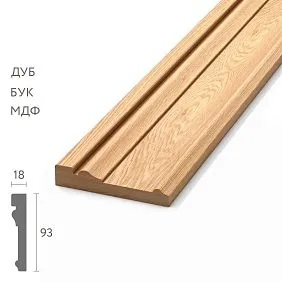
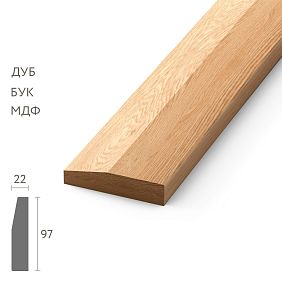
When it comes to a Provençal interior, the first thing to understand is: they don't like flashy moldings. They don't like loud shapes or ornate curls in the Baroque spirit. Provence is subtle elegance, almost accidental beauty that arises where everything is in its place and nothing is superfluous. That is precisely why a moulded wooden skirting board for this style should have character, but without pretension.
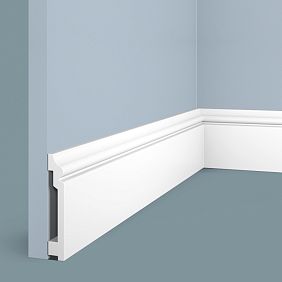
The ideal profile for Provence is something between classic and modest. The height of a skirting board in a Provençal interior is usually from 6 to 10 centimeters. This is enough to create a visual accent at the base of the wall, but not so much that the skirting board 'eats up' the space. The profile may include one or two smooth steps, a slight rounding of the top edge, a barely noticeable bead at the base. No sharp angles, no aggression of forms — only soft lines that flow along the wall like a wave on the shore.
The material is of fundamental importance. A moulded wooden skirting board for Provence is best made from soft or semi-hard woods — pine, linden, poplar. First, these species are easy to process and paint. Second, they have a lively, slightly uneven grain structure that shows through a thin layer of paint — exactly how a 'natural' Provençal skirting board should look. Third, soft wood takes artificial aging techniques beautifully: distressing on it looks organic and convincing.
An important point — installation. In a Provençal interior, the skirting board is often installed not flush with the floor, but with a small gap, which is then neatly filled with soft putty. This gives a perfectly smooth joint line and eliminates gaps that are especially noticeable on light surfaces. Provence does not tolerate sloppiness — even where other styles forgive carelessness.
If you want to add even more character to the interior, pay attention to a skirting board with a rustic profile — the so-called 'rustic' moulded skirting board. It is distinguished by deliberate asymmetry of lines, imitating the work of a hand plane. Such a moulded wooden skirting board looks especially good in country style, where the roughness of form is perceived not as a defect, but as a virtue. Combine it with painted walls in shades of ecru, vanilla, or soft white — and the room will immediately acquire that very 'country house' warmth that city dwellers long for.
Our factory also produces:
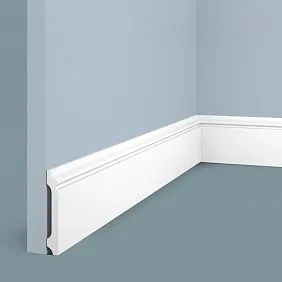
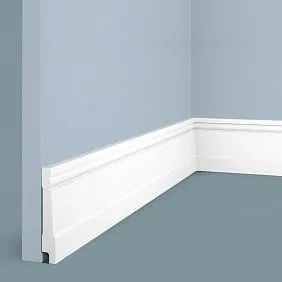
Painted wooden skirting board in mint, blue, milk — Provence colors
Color in a Provençal interior is a separate philosophy. There are no pure, aggressive shades here. No screaming red, no glossy black, no cold gray. Provence lives in halftones — in the shades that things acquire after lying in the sun for a long time. Slightly faded, slightly tired, but all the more beautiful for it. Anda wooden skirting board in the color ofmint, faded blue, or warm milk — is not a designer's whim, but a perfectly accurate hit on the image.
Mint shade — one of the most popular for a Provençal skirting board. It occupies an amazing position between green and blue, between meadow freshness and sea coolness. On a wooden skirting board, mint color never looks loud — wood 'mutes' it, makes it quieter, deeper. A mint skirting board looks especially beautiful in combination with white or beige walls and a wooden floor in a natural color. This combination works flawlessly in a bedroom, kitchen, or children's room.
Blue is the second classic color for a Provençal skirting board. But this isn't sky blue, and certainly not navy. It's a faded blue, almost grey—the kind you see on old shutters in the south of France. This shade is hard to find in ready-made paints at the store—it's usually mixed by hand, adding a drop of blue and a touch of grey to a white base. It's precisely this homemade quality of the shade that creates a sense of authenticity.
Milky white is a universal choice for those just starting to explore the Provençal style. It's not pure white, but a warm, slightly creamy tone—with a subtle yellow or pink undertone. A milk-colored painted wooden skirting board can have a distressed finish applied, instantly giving it the look of an antique element that has seen several generations of owners.
How to properly paint a wooden skirting board in the Provençal style? First and foremost—no gloss. Only matte or semi-matte paint. A glossy surface kills the Provençal spirit instantly: it's too modern, too 'new.' Matte paint, on the contrary, absorbs light, creating a soft, almost velvety surface. This is the kind of skirting board you want to look at, you want to touch. Before painting, always apply a primer—this ensures even paint absorption and prevents stains. It's better to paint in two thin coats rather than one thick one: this way the paint goes on more evenly and lasts longer.
It's worth mentioning the 'dry brush' technique separately, which is actively used in creating Provençal decor. The essence is simple: a brush with a minimal amount of paint is dragged along the edges of the profile, leaving a light, almost transparent trace. This allows a second color to be applied over the base one—for example, white over mint or cream over blue. The effect is incredible: the skirting board looks as if it was painted twice in different eras, with the lower layer showing through the upper one. This is the kind of layering that Provence loves.
Get Consultation
The 'distressing' technique: how to age a new skirting board for a country look
This is where things get really interesting. The technique of artificial aging is one of those rare cases where you can create something with your own hands that looks better than a factory-made version. A distressed country-style skirting board is not a sign of poverty or carelessness. It's an intentional artistic technique that gives the interior depth, character, and that elusive 'liveliness' you can't buy at a hardware store.
Why does distressing work? Because it tells a story. When you see a skirting board with peeling paint on the corners, dark streaks along the bottom edge, light scratches on the profile—you instinctively read: people lived here. There was movement, noise, laughter, arguments at the dinner table. Here a cat sharpened its claws on the bottom corner, and children pushed toy cars along the wall. This isn't destruction—it's life, captured in the material.
So, how to create convincing distressing on a new wooden skirting board?
Method one—the wax technique. This is a classic, time-tested method. Before painting, apply ordinary paraffin wax or special furniture wax to the places where wear naturally occurs (profile edges, corners, top edge). After the paint dries, the surface in these areas is carefully treated with sandpaper or a steel wool pad. The paint comes off easily where the wax was applied, revealing the wood or a lower layer of paint in a different color. The effect is completely natural—exactly how real distressing looks on old wood.
Method two—two-layer painting. First, apply a base coat of paint—usually darker or contrasting. For example, dark grey, ochre, or terracotta. After it dries completely—apply the top coat in the desired color (white, mint, blue). When the top coat is dry, treat the surface with 120–180 grit sandpaper. On the edges and raised parts of the profile, the base color starts to show through the top one—exactly as it happens on genuinely old furniture.
Method three—mechanical aging. Before painting, treat the new skirting board with a wire brush along the grain, creating deep scratches and pulling out soft wood fibers. This makes the surface textured, relief-like. After painting, such a skirting board looks as if made from very old wood—with a pronounced structure, with indentations that the paint doesn't completely fill. For a country style, this is especially effective: the slightly rough texture fully matches the character of the style.
Method four — staining with wood stain. After mechanical aging and before the final painting, you can apply wood stain — dark brown or 'walnut.' It is especially important to rub it into the profile recesses and the areas created by the metal brush. After drying, excess stain is wiped off with a dry cloth. As a result, the dark tone remains only in the recesses — exactly where dirt and dust accumulate on real old wood. This technique makes the aging look as convincing as possible.
After all manipulations, the surface must be protected. For the Provençal style—matte varnish or clear furniture wax. For country style, you can use a slightly tinted matte varnish, which will add extra depth to the surface. Do not use glossy varnish—it will undo all the aging work in one stroke.
An important nuance: distressing must be logical. Nature doesn't create it randomly—it always appears where the surface experiences the most mechanical impact. These are edges, corners, areas near doorways, the bottom edge of the skirting board near the floor. If you create distressing in the middle of a flat section—it will look unnatural. Think like time: where did it 'work' the hardest?
Combination with wooden beams, paneling, wicker furniture
A wooden skirting board is part of the large wooden family in Provençal and country interiors. It doesn't exist in a vacuum: it's always in dialogue with the floor, walls, ceiling, and furniture. And for this dialogue to be harmonious, you need to understand a few principles of compatibility.
Wooden ceiling beams are one of the main symbols of country and rustic Provençal style. When there are beams in the interior, the skirting board should either match their color or be noticeably lighter. Dark beams plus a dark skirting board create a visual 'squeeze' of the space—it starts to seem smaller. Dark beams plus a light painted skirting board is a different story: the space breathes, the top and bottom balance each other. If the beams are light or painted white, the skirting board can be the same shade—then the interior is perceived as a single, carefully thought-out whole.
Wall paneling is another typical element of country interiors. Here the principle is different: the skirting board should either blend with the wall (be painted the same color) or clearly separate from it. An intermediate option—'almost the same color, but a bit darker'—usually looks like an accident, not a design decision. If the paneling is white, the skirting board can be milky or cream—slightly warmer, differing a bit in tone. This gives the interior nuance without contrast. If the paneling is stained in a natural wood color—it's better to paint the skirting board, creating a clear color distinction.
Wicker furniture—light, airy, somewhat summery—requires an equally light approach to the skirting board color. A heavy, dark skirting board under wicker chairs looks like an awkward combination. But a light, matte one with subtle distressing is exactly what's needed. Wicker furniture pairs well with a wooden skirting board in a whitewashed wood color, warm white, or natural linen.
The combination of the skirting board with a wooden floor deserves special attention. One of the eternal debates in design: should the skirting board match the floor color? For Provençal and country styles, the answer is unequivocal: no, it shouldn't. Here, the skirting board is a transitional element between the floor and the wall, and it should belong more to the wall than to the floor. If the floor is dark wood—paint the skirting board a light color and it 'joins' the wall. If the floor is light pine—the skirting board can be slightly darker or in an accent color—mint, blue, ochre.
It's also important how the skirting board interacts with textiles. In a Provençal interior, there's a lot of fabric: linen curtains, cotton bedspreads, tablecloths with small floral prints. The skirting board color should echo at least one textile element—then the interior is perceived as built on a unified color palette. For example, a mint skirting board plus mint-and-white striped pillows—that's not a coincidence, it's a rhyme. And it works.
Restoring an old skirting board in the Provençal style—a budget-friendly solution
There's a particular pleasure in not throwing away the old, but transforming it. Restoring a wooden skirting board is one of the most economical and yet one of the most effective ways to change the character of an interior. Especially if you live in a house with history, where the skirting boards bear traces of several renovations, layers of old paint, and the genuine patina of time.
Restoring a wooden skirting board in the Provençal style begins with diagnosis. First, you need to understand the condition of the wood under the paint. If it's sound—without rot, deep cracks, or signs of woodworm—the skirting board can be restored. If the wood is soft, crumbles when pressed—it's better to replace it, no matter how much you might regret it.
The restoration process for a Provençal look is as follows. First—removing the old paint. Here you can use a heat gun and a scraper, a chemical paint stripper, or mechanical sanding. The heat gun is the fastest method, chemicals are the gentlest on the wood. After removing the paint, the wood must be sanded—first with coarse sandpaper (60–80 grit), then medium (120), then fine (180–240). Each sanding stage removes traces of the previous one and gradually reveals a clean, smooth surface.
If there are cracks or chips in the skirting board—they are filled with special wood filler. For the Provençal style, this is especially important: minor imperfections are very visible under matte light paint. After drying, the filler is sanded flush with the main surface. Then—primer. Primer seals the wood pores, prevents uneven paint absorption, and ensures good adhesion. Without primer, even the most expensive paint will eventually start to peel.
An interesting feature of restoring an old skirting board: often, under several layers of old Soviet oil paint, beautiful wood with a lovely grain is hidden—oak, pine with pronounced growth rings, sometimes even ash or birch. If you're lucky and find good wood under the paint, you can opt for a more delicate finish—not fully opaque paint, but a glaze: a thin tint that colors the surface in the desired shade but leaves the wood grain visible. This is especially beautiful in a Provençal interior, where the naturalness and 'liveliness' of the material are valued above all.
The economic aspect is also important. Completely replacing a wooden skirting board around the perimeter of an apartment involves not only the cost of the skirting board itself but also removing the old one, waste disposal, installing the new one, fasteners, filling the joints, and painting. Restoration costs several times less and, when skillfully executed, yields a result indistinguishable from a new installation. And in the context of the Provençal style—even more authentic. Because Provence loves things with history.
Wooden skirting board photos: the visual language of Provence in details
If you've ever browsed collections of interiors in the Provençal style, you've probably noticed one pattern: wooden skirting board photos in these interiors always look 'deliberately casual.' Here's a skirting board with a barely noticeable paint slip on the corner by the door. Here's one where the bottom edge is slightly darker—as if a wooden water basin stood here for a long time. Here's a skirting board with a tiny chipped-out notch that was repaired but not concealed.
All these details are not accidental or defective. They are intentionally created or carefully preserved traces of life. And it is precisely these that make the wooden baseboard in a Provençal interior photo so alive, so authentic. Looking at it, you want to enter the room and sit on the porch with a cup of tea—even if the photo is just of a kitchen in a city apartment.
What makes a 'Provençal' baseboard photo convincing? Several things. First—light. Slanted, soft, 'sunny' light that falls along the baseboard and accentuates the profile relief, slight surface irregularities, and wood texture. Second—background. The baseboard is always perceived in contrast with the wall and floor—a light baseboard against a darker floor looks distinct and beautiful. Third—nearby details. A woven basket standing by the wall. A bouquet of lavender in a white jug. A linen rug. All this creates a context in which the baseboard becomes part of the story.
For those planning to create an interior and want to see the result in advance: seek inspiration in photos of real homes in the south of France, in Tuscan agriturismos, in early 20th-century American farmhouses. There, the wooden baseboard is not a design element invented on purpose, but simply part of the house that ages with it. And it is precisely this naturalness that you need to recreate.
Selection of additional elements: furniture, floor, textiles
A beautiful wooden baseboard is, of course, important, but it exists within a system. A well-designed Provençal or country interior is like an orchestra, where each instrument plays its part and together they create something greater than the sum of its parts. Let's systematically break down the selection of elements.
The floor in a Provençal interior is most often wooden—made of wide pine boards, oak, sometimes old herringbone parquet. Preferably matte, with an oil finish or wax. Color—natural or slightly tinted in warm shades. Under such a floor, the wooden baseboard is best painted—either white, mint, or the color of the wall. This creates a clear delineation of planes.
Walls in a Provençal interior are a separate poem. Most often, it's textured plaster—'Venetian,' lime-based, or simply rough decorative plaster with visible texture. Sometimes—painted white paneling. Sometimes—wallpaper with a small floral pattern. In any case, the baseboard should either continue the wall color, become a darker version of it, or be an accent—in mint or blue.
Furniture in a Provençal interior is invariably wood. Massive dining tables made of aged oak, dressers with twisted legs, buffets with glass doors, beds with wooden headboards. The furniture color is most often white or painted—the same aging principle as the baseboard. This is where the main decorative secret of Provence arises: furniture and baseboard, executed in the same technique and color, create a sense that the interior was designed as a unified whole—even though all elements may be from different sources.
Textiles—linen, cotton, lace—are always abundant in a Provençal interior. Floor-length curtains made of heavy linen. Embroidered bedspreads. Lace tablecloths. Striped or polka-dot pillows. All of these are carriers of the color palette. And if the painted wooden baseboard is executed in a color present in at least one textile element, the interior gains that very 'stitched-together' coherence that distinguishes professional design from a random assortment of items.
Practical Tips for Selection and Installation
Choosing a wooden baseboard for a Provençal or country interior is not only a matter of aesthetics but also of practicality. Let's break down the key points to consider before purchase and installation.
Wood species. For high-traffic areas (entryway, kitchen, children's room), it's better to choose hardwoods—oak, ash, beech. They are resistant to mechanical impact and, with proper care, last for decades. For bedrooms and living rooms, softer woods can be used—pine, linden, poplar: they are easier to decorate and look 'warmer.'
Room humidity. A wooden baseboard in a bathroom or kitchen must be especially well protected. Here, a high-quality primer in several layers is mandatory, and the finish coating should be varnish or hard wax, but not ordinary furniture wax, which is afraid of moisture. In other rooms, two layers of primer and matte paint are sufficient.
Baseboard height. For rooms with ceilings up to 2.7 m, the optimal baseboard height is 6–8 cm. For high ceilings (from 3 m), the baseboard can be 10–12 cm. In a Provençal interior, the baseboard should not be very high: it overloads the lower zone and disrupts the balance.
Mounting. The wooden baseboard is attached with liquid nails or finish nails with a nail set. Nail heads are countersunk into the wood and filled. Liquid nails are a more modern and neat method, especially for even walls. Important: before installation, let the baseboard 'rest' in the room for 2–3 days at room temperature. The wood will acclimate to the room's humidity and stop deforming after mounting.
Corners and joints. This is the main place where beginners make mistakes. Internal corners of the baseboard are made either with a 45-degree miter cut or 'butt-jointed' using corner caps. External corners are always at 45 degrees, and this cut must be perfectly precise. An inaccurate angle is a very noticeable defect on a light baseboard. Use a miter saw with a rotating table—this is the only tool that provides the necessary precision.
Seasonal adaptation: baseboard as an element of variable atmosphere
In a Provençal interior, they know how to work with seasonality. The same wooden baseboard in a winter interior photo and a summer one is perceived differently, even though the baseboard hasn't changed. The thing is, a Provençal interior 'changes clothes' seasonally: fabrics are changed, decorative elements are added or removed, lighting changes. And the baseboard each time becomes part of a new picture.
In winter, a mint baseboard softens in combination with warm blankets, candles, and spruce branches. In summer, the same baseboard combined with linen curtains and a bouquet of lavender creates a sense of southern summer. This is the flexibility provided by a correctly chosen and correctly painted wooden baseboard: it does not dictate the mood—it supports it.
That's why, when choosing a baseboard color, you should think not only about how it looks 'now,' at the moment of renovation, but also about how it will work in a year—when you change the curtains, add a new rug, rearrange the furniture. A neutral but lively color—milky, mint, faded blue—ensures this long-term flexibility.
Inspiration and non-obvious solutions
Finally—a few solutions that are rarely talked about but work flawlessly in Provençal and country interiors.
Two-tone baseboard. The lower third of the baseboard is painted in a darker shade—for example, terracotta or ochre—and the upper two-thirds in a light color. This mimics the 'mud line' that naturally forms on old baseboards in country houses. It looks incredibly authentic.
Baseboard with applied pattern. In country style, stencil painting on the lower part of the baseboard is sometimes used—simple geometric motifs, floral patterns. This requires care, but the effect is stunning. Especially beautiful in a children's room or kitchen.
Baseboard as a frame for paneling. If wall panels are used in a Provençal interior—vertical slats, moldings—the baseboard can serve as their base, unifying the lower part of the wall into a single decorative zone. This creates the effect of a 'finished plinth,' which is very characteristic of French provincial houses.
Baseboard made of aged boards. Instead of a profiled baseboard—horizontally nailed boards 18–20 mm thick, aged and painted. Such a 'rustic plinth' 15–20 centimeters high looks very country and creates a sense of a real log house.
FAQ: Answers to popular questions
What paint to use for a wooden baseboard in Provence style?
Acrylic matte paint is the optimal choice. It adheres well to wood, dries quickly, mixes easily to achieve the desired shade, and withstands wet cleaning well. Oil paint is also suitable but dries slower and gives a more plastic, slightly soft surface.
How often should the paint on a wooden baseboard be refreshed?
With proper surface preparation and use of good paint—every 5–7 years. If the baseboard is installed in an entryway or children's room where the load is higher—every 3–4 years. The Provençal style forgives minor touch-ups: they only add authenticity.
Can wooden baseboards be used in a bathroom?
Yes, but with conditions. The wood must be well protected: primer in several layers, moisture-resistant paint or varnish. The lower edge of the baseboard must be sealed with caulk at the floor line. With good ventilation and proper finishing, a wooden baseboard in a bathroom in Provence style serves perfectly for many years.
What height should a baseboard be in a Provence-style interior?
Optimally — 6–8 centimeters for standard ceilings up to 2.7 m. This is enough for the baseboard to be noticeable and serve a decorative function, but not so much as to visually 'lower' the walls.
How to remove old paint from a wooden baseboard without removing it?
With a construction heat gun at 200–250°C — the paint softens and is removed with a scraper. It's important to work in small sections and not overheat the wood. Alternatively — apply a chemical paint remover gel, let it sit for 20–30 minutes, and remove with a scraper.
How does a baseboard for Provence differ from a baseboard for Country style?
In a Provence interior, the baseboard is usually more elegant: with a thin, shaped profile, in light pastel shades, with light distressing. In a Country-style interior, the baseboard can be rougher, wider, with a pronounced wood texture, in darker or contrasting shades. The commonality is natural wood and the technique of artificial or genuine aging.
How to make distressing on a baseboard that looks natural?
The main rule — distressing should be where it occurs naturally: on edges, corners, near doorways. Use the wax technique or two-layer painting with sanding. Do not make the distressing symmetrical and too uniform — randomness makes it convincing.


