Article Contents:
- Modern requirements: why wires should be invisible
- Visual chaos: wires ruin aesthetics
- Safety: wires on the floor are a risk
- Standards: norms for cable laying in residential premises
- Skirting boards with cable channels: construction and selection
- Construction: how a skirting board with cable channel is arranged
- Materials: wood, MDF, plastic
- Skirting board height: which to choose for cable channel
- Installation: laying cables under skirting board yourself
- Preparation: planning cable routes
- Installing skirting board base: mounting to wall
- Laying cables: technique and rules
- Installing cover: final stage
- Decorative polyurethane molding: masking upper communications
- Wall moldings: function and aesthetics
- Moldings behind TV: TV zone without wire chaos
- Ceiling cornices: hidden lighting and wires from chandelier
- Modern furniture: integrating technology without wires
- TV stand with cable management: order inside
- Work desk: how to hide computer wires
- Frequently Asked Questions
- Conclusion: clean interior without wires

Wires are the curse of modern interiors. Phone chargers, cables from TV, router, speakers, computer, lamps — dozens of wires snake across the floor, wind along walls, get tangled underfoot, spoil the view, create visual chaos. The ideal interior — clean, calm, without unnecessary details — requires hiding communications.Wooden baseboard for wiring— elegant solution: skirting board with built-in cable channel (internal cavity with cross-section 15×15 mm, 20×20 mm or 30×40 mm where wires are laid) hides lower communications — outlets along walls, internet cables, TV antennas, wires from floor lamps. Skirting board is installed around room perimeter, wires are laid inside channel, removable skirting board cover snaps on top, wires are invisible.Polyurethane decorative molding for walls— moldings, cornices, overlays — complements skirting board, creates multi-level architecture (skirting board at bottom hides lower cables, wall moldings at 100-150 cm level mask upper communications — wall lamps, TV cables on accent wall, air conditioners, ceiling cornices at top conceal wires from chandeliers, ceiling lighting).modern TV furniture— cabinets with closed back panels having cable holes, built-in cable management systems — integrates into interior with hidden wiring, technology is connected but wires are invisible. In this article we analyze modern requirements for wiring organization (why hiding wires is not a whim but a necessity), skirting boards with cable channels (construction, types, installation, laying cables yourself), decorative molding for masking upper communications (moldings, cornices, overlays — where, how, why), integration of technology and furniture (TV zone without chaos, work desk without web of wires). Prepare to create interiors where technology is present but doesn't dominate, where wires are hidden and gaze glides over clean surfaces.





Modern requirements: why wires should be invisible




Visual chaos: wires ruin aesthetics
Interior is a composition of lines, shapes, colors, materials assembled into harmonious whole. Every element in its place: furniture, lamps, decor, plants — everything is thought out, verified, balanced. Wires destroy this composition: random lines that don't follow design logic, snake across floor, hang from walls, get tangled in furniture, attract attention (human eye is sensitive to lines, especially chaotic, unnatural ones — wires are perceived as visual noise, irritant). The more technology in home (TV, computer, gaming consoles, sound system, smart speakers, router, charging stations, lamps), the more wires, the stronger the chaos.
A professional interior is clean: wires are hidden, equipment is connected, but the wiring is not visible. The eye glides over the walls, floor, furniture, stops at decor, art, window views, and doesn't stumble over wires. Visual cleanliness creates psychological calm: a space without chaos is a space where it's easy to breathe, think, and rest.
Our factory also produces:

Safety: wires on the floor are a risk
Wires lying on the floor (a phone charger cable stretched from an outlet to the sofa, a cable from the TV to the router running across the living room, an extension cord with five plugs lying in the middle of the room) are a risk. Tripping over a wire (especially in the dark, at night, when getting up to go to the bathroom or to the kitchen for water—the wire is not visible, your foot catches, you fall), children or elderly people fall more often (children run, don't look at their feet, the elderly are less stable, a fall is more dangerous for them). Pets (cats, dogs, ferrets) chew on wires (they play, try them with their teeth—damaged insulation on a live wire creates a risk of electric shock, short circuit, fire).
Wires in plain sight wear out faster: you step on them (repeated mechanical impact damages the insulation, the conductors inside the cable break, resistance increases, the wire heats up), you vacuum (the vacuum cleaner brush catches wires, pulls, bends them), you move furniture (a chair or sofa leg crushes a wire, the insulation cracks). Concealed wiring (in walls, in baseboards, in cable channels) is protected from mechanical damage and lasts for decades without problems.
Get Consultation
Standards: norms for cable installation in residential premises
Electrical standards (PUE - Rules for Electrical Installations, SNiP - Building Codes and Regulations) regulate cable installation in residential premises. The main requirement: live cables (220 V, 380 V) must be protected from mechanical damage (installation in walls in chases, in baseboards with cable channels, in corrugated pipes, in special boxes). Open wiring (wires on clips along the wall, hanging from the ceiling, lying on the floor) is only permitted temporarily (during renovation, for connecting temporary equipment), permanent open wiring is prohibited (exception: dachas, garages, utility rooms—where aesthetics are secondary, safety is ensured by other methods).
Low-current cables (internet, TV antennas, telephone, audio systems—voltage up to 24 V, current up to 10 A, safe for humans) do not require rigid protection but should be hidden for aesthetic reasons (exposed low-current cables are not dangerous but are unsightly, creating visual chaos). Running low-current cables next to power cables (in the same cable channel, in the same chase) is undesirable (power cables create an electromagnetic field that induces interference on low-current cables—internet slows down, TV signal has interference). Solution: separate channels (power cables in the lower part of the baseboard cable channel, low-current cables in the upper part, separated by a partition).
Baseboards with cable channels: construction and selection
Construction: how a baseboard with a cable channel is structured
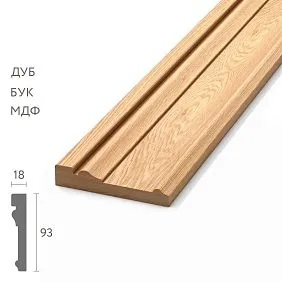
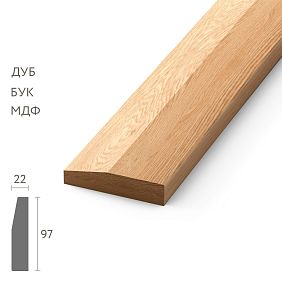
Wooden baseboard for wiring— not a solid plank, but a composite structure of two or three elements. Base (base plank) - a profile 80-120 mm high, 18-25 mm thick, with a cavity inside (a channel for cables with a cross-section of 15×15 mm for a small number of wires, 20×20 mm for a standard set—two or three cables, 30×40 mm for multiple cables—five to eight wires of different cross-sections). The base is attached to the wall with screws or adhesive (like a regular baseboard), wires are laid inside the channel before closing the cover.
Cover (decorative overlay) - a removable element that snaps onto the base (attachment with clips—plastic or metal clamps along the top edge of the base, the cover is inserted from bottom to top, snaps with a characteristic click, holds firmly but can be removed without tools—press from below, unclip, remove). The cover closes the cable channel, creating a finished look for the baseboard (externally, a baseboard with a cable channel is no different from a regular one, the channel is not visible, wires are hidden). If you need to add a new cable or replace an existing one, you remove the cover (without tools, in 2-3 minutes), lay the cable, snap the cover back on—access to the wiring is constant, convenient.
Partitions (optional, not in all models) - vertical plates inside the cable channel, dividing it into two or three compartments (power cables in one compartment, low-current cables in another, separation provides electromagnetic protection, prevents interference). Partitions are removable (if you need to pass a thick cable that doesn't fit in one compartment, you remove the partition, use the entire channel).
Materials: wood, MDF, plastic
Wooden baseboard with cable channel (solid oak, ash, pine) - premium option. Base and cover made of wood (solid cross-section or glued from several lamellas), the channel is milled inside the base, the cover snaps on with metal or plastic clips. Advantages of wood: naturalness (living material, texture of annual rings, tactile warmth), durability (oak baseboard lasts 80-120 years without loss of strength and appearance), prestige (wood is associated with quality, status). Cons: high price (a baseboard with a cable channel made of oak, 100 mm high, costs 2500-4200 rub/m compared to 1800-3200 rub/m for a regular baseboard without a channel—the cable channel complicates production, price increases by 30-40%), heavier (a linear meter of baseboard with a channel weighs 1.8-2.2 kg compared to 1.3-1.6 kg for a regular one—requires reliable fastening).
MDF baseboard with cable channel - budget alternative to wood. Base made of MDF (medium-density fiberboard 750-870 kg/m³), cover also MDF, the channel is formed during MDF board pressing or milled after. Advantages of MDF: lower price (baseboard with channel, 100 mm high, costs 650-1200 rub/m—2-4 times cheaper than wood), lighter weight (1.2-1.5 kg/m—easier installation), smooth surface (MDF paints perfectly, without pores or irregularities). Cons: not natural wood (no texture, smell, tactile feel of wood), afraid of prolonged contact with water (in damp rooms MDF is risky, even moisture-resistant).
Plastic baseboard with cable channel (PVC, polypropylene) - the cheapest, most practical, utilitarian option. Base and cover made of plastic (extruded profile, hollow inside), the channel is formed during extrusion, the cover snaps on with plastic clips. Advantages of plastic: minimal price (280-650 rub/m), absolute moisture resistance (can be installed in bathrooms, kitchens, saunas—plastic does not rot, does not swell), lightness (0.5-0.8 kg/m—can be glued with liquid nails without screws). Cons: visual plastic look (the baseboard looks like plastic, cold, artificial—inappropriate in classic, traditional interiors), fragility (upon impact, plastic cracks, a wooden baseboard would get a dent but not break).
Baseboard height: which to choose for a cable channel
The height of a baseboard with a cable channel determines the size of the channel, and thus how many cables will fit. Baseboard 80 mm: channel cross-section 15×15 mm or 18×18 mm (will fit two or three thin cables 4-6 mm in diameter—internet cable, TV cable, one power cable with cross-section 2×0.75 mm²). Sufficient for minimal wiring (outlet for a floor lamp, internet cable to a computer). Baseboard 100 mm: channel cross-section 20×20 mm or 25×25 mm (will fit four or five cables 5-8 mm in diameter—several internet cables, TV cables, two power cables). Standard option for most rooms (living room, bedroom, study—sufficient for all ordinary wiring). Baseboard 120 mm: channel cross-section 30×30 mm or 35×40 mm (will fit six to eight cables of different cross-sections—many low-current, several power cables, possibly divided into two compartments with a partition). Used in rooms with a lot of equipment (home theater, game room, home office with several computers and peripherals).
Rule: if in doubt about how many cables you'll need, choose a taller baseboard (extra channel space is better than a shortage—adding a new cable in the future is easier if there's room in the channel; if the channel is packed, you'll have to run the wire openly or chase the wall—expensive, messy).
Installation: laying cables under a baseboard yourself
Preparation: planning the cable route
Laying cables in a baseboard starts with planning the route (which cables go from where to where, where outlets are, where consumers are). Draw a room diagram on paper or in a program (simplest option—draw a room plan by hand on an A4 sheet, mark outlets with red crosses, consumers—TV, computer, lights—with blue squares, draw lines from outlets to consumers—cable routes). Lines should run along the perimeter of the room (along walls where the baseboard will be), not cross the center of the room (there's no baseboard there, you'd have to run the cable openly or chase the floor—difficult).
Place outlets to minimize cable length (outlet for TV—on the wall behind the TV at a height of 120-150 cm from the floor, cable from the outlet goes down vertically to the baseboard behind the TV—not visible; outlet for computer—on the wall behind the desk at a height of 80-100 cm, cable down to the baseboard also behind the desk). If an outlet is far from the consumer (outlet on one wall, TV on the opposite—the cable must go around the entire perimeter of the room, 10-15 meters), consider adding an outlet closer (chase the wall, lay concealed wiring, install an outlet behind the TV—more expensive, but the cable in the baseboard is short, the channel is not overloaded).
Installing the baseboard base: attaching to the wall
The base of a baseboard with a cable channel is attached to the wall before laying cables (first the base around the perimeter, then wires inside the channel, then the cover snaps on—installation logic). Marking: mark a horizontal line on the wall at a height of 80-120 mm from the floor (depends on baseboard height), the line shows where the top edge of the baseboard base will be. Use a laser level (projects a horizontal line on the wall, mark with a pencil) or a water level (cheap, accurate, doesn't require electricity).
Attachment with screws: place the baseboard base against the wall (top edge along the marked line, bottom edge on the floor), drill holes through the base into the wall (spacing 40-50 cm, hole diameter 6 mm for 6 mm dowels), insert plastic dowels into the holes, screw the base with screws 50-70 mm long (screws pass through the baseboard base, enter the dowels, hold firmly). Screw heads are countersunk into wood or MDF by 2-3 mm (so they don't interfere with snapping the cover), holes above the heads are filled with putty or masked with plugs after installing the cover (but often not masked, as the cover hides them, not visible).
Attachment with adhesive: if walls are perfectly even (variations no more than 1-2 mm over a 2-meter length), the base can be glued with liquid nails (construction adhesive in a 310 ml tube, applied with a caulking gun). Apply adhesive to the back of the baseboard base in a zigzag pattern (a strip of adhesive 5-7 mm wide along the top and bottom edge of the base), press against the wall, hold for 2-3 minutes, adhesive sets. Advantage: no screws needed, no need to drill the wall (faster, cleaner). Con: if walls are uneven, adhesive won't hold a heavy base (especially wooden), the baseboard will fall off in a month or a year.
Laying cables: technique and rules
After installing the baseboard base around the entire perimeter of the room, lay the cables. Start at the outlet (the point where the cable exits the wall—outlet at a height of 120 cm, cable goes down vertically behind furniture or in a chase, exits below the bottom edge of the baseboard base at floor level). Insert the cable into the channel of the baseboard base through the bottom edge (the channel is open at the top, the cable is inserted from below, laid inside the channel horizontally along the wall). The cable should lie freely, without tension (allow 10-15 cm of slack for every 2 meters of length—if you ever remove the baseboard, the cable won't be pulled out of the outlet).
Cable bend radius: the minimum bend radius for standard cables (internet, TV, power cables with cross-section up to 3×2.5 mm²) is 25-30 mm (you cannot bend a cable at a sharp 90-degree angle, the conductors inside break, resistance increases, the cable stops working). In room corners (where the baseboard turns 90 degrees, the cable must also turn) make a smooth bend (radius 30-40 mm, the cable bends in an arc, doesn't break). If the channel is narrow, the cable is thick, the bend becomes sharp (radius 15-20 mm), use corner elements for the cable channel (special plastic corner inserts with a smooth bend, inserted into the channel at the corner, the cable passes through the insert, bends smoothly).
Separation of power and low-voltage cables: If both power (220V) and low-voltage (internet, television) cables are laid in the channel, separate them with a partition (if the baseboard has a partition, place power cables in the lower compartment and low-voltage cables in the upper one; if there is no partition, lay power cables along the bottom wall of the channel and low-voltage cables along the top, maximizing the distance — 20-30 mm reduces electromagnetic interference). For critical low-voltage cables (gigabit internet, HDMI for 4K video), use shielded versions (cable with a metal braid around the conductors, the braid blocks interference, ensuring a clean signal even near power wires).
Installing the cover: the final stage
After laying all cables, install the baseboard cover. The cover snaps onto the base: insert the lower edge of the cover into the groove of the lower part of the base (groove depth 3-5 mm, the cover fits tightly), press the upper edge of the cover against the base (the snaps along the upper edge of the base engage the cover with a click), the cover holds firmly. Check: the cover should be flush with the base (not protruding or sinking), joints between covers in corners should be tight (gap no more than 0.5 mm, otherwise wires are visible through the crack).
Cover joints in corners: covers are cut at a 45-degree angle (like the baseboard base), meeting butt-to-butt in the corner. If the joint is not tight (gap 1-2 mm), fill it with acrylic putty (white paste, applied with a finger or spatula, fills the gap, sanded with fine sandpaper after drying, painted along with the baseboard — the joint becomes invisible).
Polyurethane decorative molding: concealing upper utilities
Moldings on walls: function and aesthetics
Polyurethane decorative molding for walls— moldings (horizontal strips 40-100 mm wide), cornices (wide moldings 100-150 mm wide, mounted under the ceiling), overlays (corner elements, rosettes, decorative inserts) — not only decor but also a functional element for concealing utilities. A wall molding at a height of 100-150 cm from the floor can hide a wall lamp cable (lamp at 180 cm height, cable runs vertically down behind the molding to an outlet at 30 cm height, cable is invisible). A molding behind the TV on an accent wall (horizontal strip at 120-150 cm level) conceals TV cables (HDMI, power, antenna — cables run vertically down behind the molding to a baseboard with a cable channel, then along the baseboard to outlets).
Polyurethane ceiling cornice (height 80-150 mm, mounted at the wall-ceiling junction) conceals chandelier cables (cable from the chandelier runs to a junction box, the box behind the cornice is invisible), ceiling lighting cables (LED strip along the cornice, LED strip power wires are laid behind the cornice, invisible).
Moldings behind the TV: TV zone without wire chaos
A wall-mounted TV is a classic source of wire chaos (power cable, HDMI from a set-top box or gaming console, audio cables to speakers, antenna — at least four-five cables hang behind the TV, visible from the side, unsightly). Solution: a false panel behind the TV with moldings and hidden wiring. The false panel is a wooden or MDF board 18-25 mm thick, slightly larger than the TV (if the TV is 55 inches — 120×70 cm, panel 140×90 cm), mounted to the wall on brackets or battens at a distance of 50-80 mm from the main wall. Inside the panel (between the panel and the wall) cables run (vertically from the TV down to the baseboard, horizontally from outlets to the TV), cables are invisible.
Polyurethane moldings are mounted on the false panel around the perimeter (forming a frame around the TV), the moldings conceal the panel edges, creating an architectural frame. The TV is mounted on the panel (TV bracket screwed to the panel, the panel is sturdy enough — 18 mm MDF supports a TV weight of 20-30 kg), cables are connected to the TV, run down inside the panel, exit below the lower edge of the panel at baseboard level, enter the baseboard cable channel, run along the baseboard to outlets. Externally, only the TV and the molding frame are visible, wires are invisible.
Outlets behind the panel: on the main wall behind the panel, outlets are mounted (outlet at 140 cm height from the floor — for TV power, outlet at 120 cm — for HDMI switch or set-top box). Outlets are behind the panel, accessible through a removable cover in the lower part of the panel (cover 20×30 cm on hinges or magnets, opens for access to outlets to connect new equipment, closes, invisible).
Ceiling cornices: hidden lighting and chandelier wires
Polyurethane ceiling cornice (height 100-150 mm, wall attachment width 60-100 mm) mounted at the wall-ceiling junction, creates an architectural ceiling frame, but also conceals utilities. Chandelier wires (chandelier hangs in the center of the ceiling, wires run from the chandelier to a junction box in the room corner — the box is mounted behind the cornice at 2.5-2.7 m height from the floor, wires are laid horizontally behind the cornice, invisible). The junction box behind the cornice is accessible (if the cornice is removed — the cornice is glued with polyurethane adhesive, but can be carefully removed by prying with a knife, access to the box for inspection or repair is available).
Hidden ceiling lighting with LED strip: LED strip is glued to the ceiling along the cornice (strip width 10-12 mm, length along the room perimeter, light directed upward to the ceiling or downward to the wall — depends on strip position). LED strip power wires (low-voltage, 12V or 24V, current up to 5A per 5 meters of strip) are laid behind the cornice (horizontally along the perimeter, then vertically down the wall behind a molding or in a chase to the power supply, power supply hidden behind furniture or in a niche). The cornice covers the LED strip and wires, externally only soft ceiling lighting is visible, the light source is invisible (indirect lighting — creates coziness, visually increases ceiling height).
Modern furniture: integrating technology without wires
TV stand with cable management: order inside
modern TV furniture— stands with closed compartments for technology (gaming consoles, media players, receivers, routers — all hidden behind doors or inside drawers, invisible), with holes in the back panel for cables (holes 50-80 mm diameter with plastic bushings, neat, cables from technology to outlets pass through them), with an internal cable management system (plastic or metal channels, wire fasteners inside the stand — wires are not dangling chaotically but neatly laid, secured with ties or clips).
Choosing a TV stand for an interior with hidden wiring: the stand should be placed flush against the wall (the stand's back panel adjoins the wall, wires exit through holes in the back panel directly to outlets behind the stand or to a baseboard with a cable channel). The stand height is selected so that the TV on the stand or on the wall above the stand is at a comfortable height (center of the TV screen at eye level of a seated person — 100-120 cm from the floor for a standard-height sofa, 90-110 cm for a low sofa).
Inside the stand: compartments for technology (gaming console, media player in one compartment with ventilation — holes in the back and side walls of the compartment for air intake, technology does not overheat), drawers for remotes, discs, wires (charging cables, spare HDMI, audio cables — all in drawers, not lying in sight). Power strip inside the stand (strip with five-six outlets mounted inside the technology compartment, all technology is connected to the strip, one wire from the strip goes to the outlet behind the stand — convenient, one plug in the outlet instead of five).
Desk: how to hide computer wires
A desk with a computer, monitor, keyboard, mouse, printer, lamp — at least six-seven wires (computer power, monitor power, cable from computer to monitor, USB for keyboard and mouse, USB for printer, lamp power, internet cable). Wires hang from the desk, tangle underfoot, creating chaos. Solution: cable management on and under the desk.
Cable channel under the tabletop: plastic or metal channel 50-80 mm wide, 60-120 cm long (along the desk length), attached to the underside of the tabletop with screws or double-sided tape (along the rear edge of the tabletop, not visible to someone sitting at the desk). Wires are placed in the channel (computer power, monitor power, lamp power, USB cables), the channel is covered with a lid, wires do not hang or tangle. One thick bundle of wires exits the channel vertically down (behind the rear desk leg), goes to a baseboard with a cable channel, along the baseboard to an outlet.
Cable clips: plastic or metal clips attached to the rear edge of the tabletop or desk legs (clips with holes through which cables are threaded, cables are secured, do not hang or tangle). Each cable in its own clip (computer power in one, monitor in another, USB in a third — wires are separated, easy to find the needed one, easy to disconnect or replace).
Hole in the tabletop (cable grommet): round hole 60-80 mm diameter in the tabletop (drilled with a wood hole saw), through the hole wires from the desk surface (keyboard, mouse, monitor) descend under the tabletop to the cable channel. The hole has a plastic bushing (bushing covers the hole edges, neat, aesthetic), the bushing can have a cover (cover opens, you pass the cable through, closes, wires are invisible).
Frequently asked questions
Can 220V power cables be laid in a wooden baseboard with a cable channel?
Yes, they can, if electrical safety standards (PUE) are observed. Cables with voltage up to 380V are allowed to be laid in closed cable channels provided: the cable has double insulation (standard household cables VVG, NYM have double insulation — insulation of each conductor plus a common sheath), the channel is covered with a lid (access to cables is limited, accidental contact is excluded), the channel does not pass through damp rooms (in bathrooms, saunas, power cables in wooden baseboards are not recommended — wood absorbs moisture, possible insulation breakdown, electric shock). For bathrooms and kitchens, use a plastic baseboard with a cable channel (plastic does not conduct electricity, moisture-resistant).
Cable cross-section: for general-purpose outlets (connecting a floor lamp, phone charger, laptop) a cable with a cross-section of 3×1.5 mm² is sufficient (three conductors — phase, neutral, ground, each conductor cross-section 1.5 mm²). For high-power consumers (heater, electric kettle, washing machine) a cable of 3×2.5 mm² is needed (withstands current up to 25A, power up to 5.5 kW). Check if the cable fits in the channel: a 3×2.5 mm² cable has a diameter of about 8-10 mm (with sheath), three such cables in a 20×20 mm channel will fit tightly (better to choose a 100-120 mm baseboard with a 25×25 mm or 30×30 mm channel, extra space won't hurt).
How to run cables through a doorway if the baseboard is interrupted at the door?
In a doorway, a baseboard is not installed (gap between the door frame and floor is usually 5-10 mm, baseboard doesn't fit). Cables running along the baseboard must pass through the opening to the baseboard on the other side. Methods: laying under the threshold (if there is a threshold — wooden or metal strip at the flooring junction in the doorway — cables are laid under the threshold, the threshold is removed, cables are placed in a recess, the threshold is reinstalled, cables are invisible). Laying in a floor chase (if there is no threshold, floor is level — chase the floor across the opening to a depth of 10-15 mm, width 20-30 mm, place cables in the chase, fill with cement mortar or sealant, flooring on top — cables are hidden, but chasing the floor is labor-intensive, dusty). Laying along the top of the door frame (cables rise vertically up the wall from the baseboard behind the door casing, run horizontally along the top of the frame behind the casing, descend vertically down on the other side behind the casing to the baseboard — cables behind casings are invisible, but requires removing casings, laying cables, reinstalling casings).
How much does a cable channel skirting board and installation cost?
Price of cable channel skirting board: wooden (oak) 100 mm high 2500-4200 rub/m (depends on profile, finish, manufacturer), MDF 100 mm high 650-1200 rub/m, plastic (PVC) 80 mm high 280-650 rub/m. For a 60 m² apartment (wall perimeter 65 meters): wooden skirting board with channel = 65 m × 3000 rub/m = 195000 rub, MDF = 65 m × 900 rub/m = 58500 rub, plastic = 65 m × 450 rub/m = 29250 rub.
Installation cost: installing a cable channel skirting board is 30-50% more expensive than a regular skirting board (requires cable laying, cover installation, communication checks — takes longer, more complex). Price 450-850 rub/m (base installation, cable laying, cover installation, corner joining). For a 60 m² apartment: installation = 65 m × 650 rub/m = 42250 rub. Total with material and labor: wooden skirting board 237250 rub, MDF 100750 rub, plastic 71500 rub.
Do you need to remove the skirting board cover every time you add a new cable?
Yes, the cover is removed (but it comes off easily, without tools — press from below, unclip, remove in 10-20 seconds). Adding a cable: remove the cover on the section where you need to run the new cable (usually 2-4 meters of skirting board length), lay the cable in the channel (insert from one end, pull to the other end), snap the cover back on (insert the lower edge into the groove, press the upper part, snap — done). The process takes 5-10 minutes for one cable 5-8 meters long. Convenience: no need to chase walls, disassemble the entire skirting board, ruin the finish — remove the cover locally, add the cable, close it, everything works.
How does decorative wall molding combine with modern minimalist-style furniture?
Molding is associated with classic style (moldings, cornices, rosettes — elements of classical architecture, baroque, empire), modern minimalist furniture (low sofas on metal legs, tables with thin tops, cabinets without decoration) is associated with simplicity, clean lines. They can be combined if the molding is simple, geometric, painted the same color as the walls. Smooth rectangular profile moldings 40-60 mm wide (without ornaments, without carvings), painted white to match the wall color (moldings create frames on walls, relief, but not decorativeness — minimalism allows relief if it is calm, not flashy). Ceiling cornice is a simple stepped profile 80-100 mm high, white (frames the ceiling but does not overload). Avoid: lush baroque moldings with curls, acanthus leaves, gilding (they will kill minimalism, create a stylistic conflict).
How to care for a cable channel skirting board and polyurethane molding?
Cable channel skirting board (wooden, MDF, plastic): dust is wiped off with a dry cloth or vacuum with a soft attachment (once a week or two). Stains (shoe marks, spots) are removed with a damp cloth and soapy solution (not wet, so water does not penetrate the channel, does not wet the cables — moisture on live cables is dangerous). The skirting board cover is removed to clean inside the channel (once a year or two, remove dust from the channel with a vacuum, check the condition of the cables, snap the cover back on).
Polyurethane molding (moldings, cornices, overlays): dust is wiped off with a dry cloth, brush, or vacuum with a soft brush (polyurethane is smooth, dust does not absorb, cleans easily). Stains (greasy stains in the kitchen, fingerprints) are removed with a damp cloth and soapy solution. Polyurethane is moisture-resistant (can be washed with water, not afraid), does not yellow (quality polyurethane with density 180-220 kg/m³ remains white for decades). If the molding is painted, the paint lasts 10-15 years, then may fade, requiring repainting (wipe the molding from dust, paint with a roller or spray gun with acrylic paint, two coats — molding like new).
Conclusion: a clean interior without wires
Wires are a temporary evil of the technological era. Wireless technologies are developing (Wi-Fi instead of ethernet cables, Bluetooth instead of audio cables, wireless charging instead of charging wires), but it is still impossible to completely get rid of wires (TV needs to be plugged into an outlet, computer to power, speakers to amplifier — wires remain). Solution: do not refuse wires (impossible), but hide them so that the interior remains clean, calm, visually free.
Wooden baseboard for wiring— a basic element of hidden wiring in the interior. Skirting board with built-in cable channel (height 80-120 mm, channel cross-section 15×40 mm, removable cover) hides lower communications (outlets along walls, internet, TV cables, wires from floor lamps, appliances). The skirting board is mounted along the perimeter of the room, cables are laid inside the channel before installing the cover, the cover is snapped on, wires are not visible, access to them is preserved (remove the cover, add a cable, snap back — simple, fast).
Polyurethane decorative molding for walls— moldings, cornices, overlays — complements the skirting board, creates multi-level architecture of hidden wiring. Wall moldings at a height of 100-150 cm mask cables of wall lamps, TV on an accent wall. Ceiling cornices 100-150 mm high hide wires from the chandelier, ceiling LED strip lighting. Polyurethane molding is lightweight (linear meter of molding 80 mm wide weighs 0.5-0.7 kg), moisture-resistant (can be installed in bathrooms, kitchens), easy to install (glued with polyurethane adhesive, sets in 10-15 minutes), paintable (white acrylic paint or any RAL color).
modern TV furniture— cabinets with cable management (closed compartments for appliances, holes in the back wall for wires, internal channels for neat cable laying) — integrates into the interior with hidden wiring. All appliances (gaming consoles, media players, routers) are hidden behind cabinet doors, wires exit through holes in the back wall to the skirting board with cable channel, along the skirting board to outlets. Outside, only the TV, cabinet, clean wall are visible — no wire chaos.
Company STAVROS has been working in the interior solutions market for over twenty-three years, offering comprehensive systems for organizing hidden wiring and decorative interior design. Wooden skirting boards with cable channels made of solid oak, ash, pine — height from 80 to 140 mm (standard 80, 100, 120, 140 mm), channel cross-section from 15×15 mm to 35×40 mm (for two-three cables or for eight-ten cables), removable cover with clips (access to cables without tools, removed and installed in 10-20 seconds), finish natural with oil (emphasizes wood texture, natural color), tinted (gray, brown, wenge, black), painted (white enamel, any RAL color). Cost 2200-4200 rub/m depending on wood species (pine cheaper, oak more expensive), height, channel size, finish.
Skirting boards with cable channels made of MDF — height from 70 to 120 mm (standard 80, 100, 120 mm), channel cross-section from 18×18 mm to 30×30 mm, removable cover, supplied white primed (ready for final painting with acrylic paint) or unpainted. MDF density 800-870 kg/m³, emission class E1 (safe for residential premises), production Russia or Europe. Cost 650-1200 rub/m.
Polyurethane molding for walls and ceilings — over 150 molding profiles (width from 30 to 150 mm, simple smooth for minimalism, classic with ornaments for classic style, baroque with lush decor for luxurious interiors), over 80 ceiling cornice profiles (height from 60 to 200 mm, attachment width 50-120 mm), chandelier rosettes (diameter from 30 to 150 cm, styles from classic to modern), decorative overlays (corner elements, inserts, 3D panels for accent walls). Polyurethane from European manufacturers with density 180-250 kg/m³ (high density ensures whiteness, strength, clarity of relief, durability without yellowing), moisture-resistant (can be installed in bathrooms, kitchens), lightweight (linear meter of molding 80 mm wide weighs 0.5-0.7 kg, cornice 120 mm high weighs 0.8-1.2 kg). Cost of moldings 320-1450 rub/m, cornices 450-1800 rub/m, rosettes 2200-18000 rub/piece depending on size and complexity of ornament.
Modern furniture — TV cabinets (width from 120 to 240 cm, depth 40-50 cm, height 40-60 cm, closed compartments for appliances, holes in the back wall with plastic bushings diameter 60-80 mm, internal cable channels), desks (width from 120 to 180 cm, depth 60-80 cm, cable channels under the tabletop, holes for wires with bushings, clips for cable fixation), shelves and cabinets (open and closed, with holes for cables, with internal wiring for LED strip lighting). Materials: MDF with enamel (white, gray, black), solid oak or ash (natural oil finish or tinting), metal and glass (for tables, shelves). Cost of TV cabinet 45000-180000 rub, desk 35000-120000 rub, shelving unit 55000-220000 rub depending on dimensions, materials, complexity of construction.
Comprehensive approach: STAVROS offers to select skirting boards with cable channels, moldings, cornices, furniture so that all elements harmonize stylistically (unified style — classic, neoclassic, minimalism, Scandinavian, loft, eclectic), color-wise (natural wood + white molding, white skirting boards + white moldings + white furniture, gray skirting boards + gray moldings + gray furniture), functionally (all wiring hidden in skirting boards, moldings, furniture — interior clean, technology present but not dominant). Designer consultations (selection of elements, calculation of material quantity, development of wiring layout schemes, planning of TV zone, workspace), technical support (instructions for installing skirting boards with cable channels, cable laying, molding installation, furniture assembly), quality guarantee (on solid wood skirting boards 24 months, on MDF 18 months, on molding 36 months, on furniture 24-60 months).
Choosing STAVROS, you choose quality materials (chamber-dried solid wood, E1 class MDF, polyurethane from European manufacturers), functionality (skirting boards with well-thought-out cable channels, furniture with cable management, molding for masking communications), professional consultations (help in selection, calculation, design), honest prices without markups. Create interiors where technology serves comfort but does not spoil aesthetics, where wires are hidden, the eye glides over clean surfaces, space breathes. With STAVROS, a clean interior without wires becomes a reality.