Article Contents:
- Pilaster and skirting board — how vertical and horizontal decor form a unified whole
- Architectural logic of the system
- When the system of pilasters and skirting board is particularly appropriate
- Material connection: why wood works best
- Tall wooden skirting board as a base for pilaster — a rule of classical architecture
- Why specifically a tall skirting board
- Pilaster base and skirting board: junction boundary
- Connection of skirting board and pilaster profiles
- Size and profile of skirting board for pilaster — proportions
- Key ratio: pilaster width and skirting board height
- Skirting board thickness and pilaster projection
- Proportion table for practical application
- Skirting board profile for different pilaster styles
- Capital at the top and skirting board at the bottom — complete framing of a doorway
- Why a capital is needed
- Ratio of capital, shaft, and skirting board
- Connecting rosettes as a framing element
- Buying a capital — how to choose correctly
- Installation in the correct sequence: skirting board → pilaster → capital
- Why the sequence matters
- Step one: marking
- Step two: installing the skirting board
- Step three: installing pilaster bases
- Step four: installing pilaster shafts
- Step five: installing capitals
- Step six: finishing joint treatment
- Decorative elements in the pilaster and skirting board system
- Moldings as horizontal crosspieces
- Corner connecting sockets
- Carved decorations on pilaster shaft
- Half-columns as an alternative to flat pilasters
- Pilasters in room decor system: several scenarios
- Scenario 1: Framing a doorway in the living room
- Scenario 2: Accent wall in the study
- Scenario 3: Fireplace with flanking pilasters
- Complete order: baseboard + pilasters + capitals from one collection
- Why you cannot assemble the system "piece by piece"
- What is included in a complete system order
- Economy of a complete order
- FAQ - answers to popular questions
- About the Company STAVROS
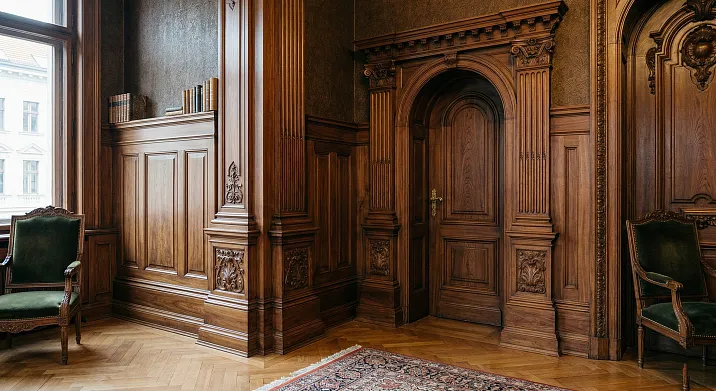
Classical architecture was never a set of random elements. Every detail—from the monumental cornice to the modest floor profile—existed in a strict hierarchy of proportions, obeying a single law: the vertical responds to the horizontal, the base supports the vertical, the capital completes its upward movement. That is why, when aPilaster—a vertical flat projection with a base and capital—appears in a modern interior, it immediately demands a worthy partner from below: tall, expressive, materially substantialof floor wooden skirting. Without it, the pilaster hangs in the air—literally and visually.
This article is about the system. About howTall wooden skirting boardand wooden pilasters form an inseparable architectural whole, how to calculate proportions, how to properly organize installation, and why ordering everything from one collection is not an aesthete's whim but a technical necessity. Read carefully: this is not just decor. This is architecture.




Pilaster and baseboard—how vertical and horizontal decor form a single whole
Imagine a wall without a baseboard and without pilasters. It is just a plane—neutral, faceless. Add a baseboard—and the wall gains a foundation, a lower tier, a support. Add apilaster—and the wall spoke with verticality, rhythm and architectural accent appeared.
Now imagine that the baseboard and pilaster exist in space independently—different materials, uncoordinated profiles, random tones. Both are present, but there is no connection between them. The interior turns out to be "broken" in details, even if the overall concept is good. This connection is exactly what will be discussed.




Architectural logic of the system
The classical order—Doric, Ionic, Corinthian—was built on a single principle: the base carries the shaft, the shaft holds the capital, the capital supports the entablature. On the scale of interior finishing, this system is reproduced as follows: the baseboard is the stylobate, the lower horizontal tier on which the vertical elements "stand."Pilasteris the shaft, the vertical accent.Capitalis the completion that translates the movement of the vertical into the horizontal of the ceiling cornice or lintel.
To break this chain is to destroy the logic. A baseboard without a pilaster is a foundation without a vertical. A pilaster without a baseboard is a vertical without a foundation. Together they create a complete architectural phrase.
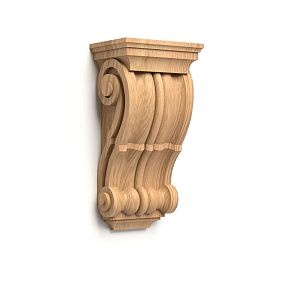
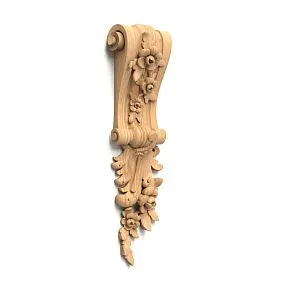
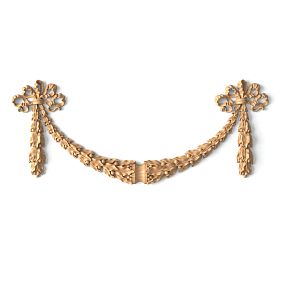
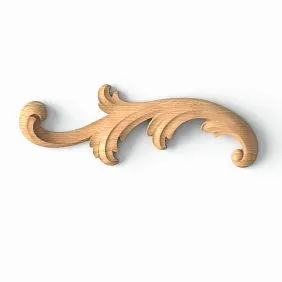
Our factory also produces:


When the system of pilasters and baseboard is especially appropriate
Not every interior requires pilasters. This is an expressive tool, and its application must be conscious. Pilasters paired with a tall baseboard are especially organic in the following situations:
-
Designing formal openings—wide doors, arches, transitions between zones.
-
Creating a symmetrical accent wall in the living room or dining room.
-
Framing a fireplace on both sides with vertical elements.
-
Finishing niches, built-in wardrobes, library sections.
-
Creating a full-fledged classical or neoclassical interior with an order system.
-
Dividing a long blank wall into architecturally meaningful sections.
In all these cases, the baseboard is an obligatory participant in the system — not a background element, but a full-fledged architectural tier.
Get Consultation
Material connection: why wood works best
When both the pilaster and the baseboard are made from the same type of wood — oak, ash, walnut — a living material connection arises between them. The texture of the fibers, the natural pattern, the warmth and depth of the solid wood are perceived as a single surface, separated in space. This is precisely whyWooden pilastersand a wooden floor baseboard are an ideal pair: they are united not only by constructive logic but also by material affinity.
A tall wooden baseboard as a base for a pilaster — a rule of classical architecture
In classical architecture, no column or pilaster ever starts directly from the floor. Between the floor level and the lower base of the vertical element, there is always a horizontal tier — a podium, stylobate, or plinth. In an interior, this tier is the baseboard. And it must be tall enough to fulfill this role.
Why specifically a tall baseboard
A low baseboard of 50–70 mm is a functional element that covers the gap between the floor and the wall. It is neutral, almost invisible. It plays no architectural role.
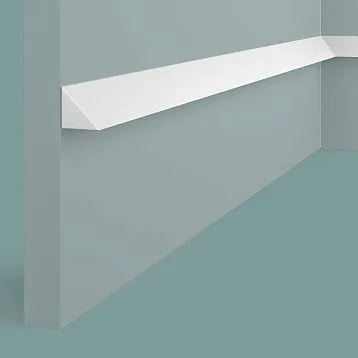
Tall wooden skirting boardfrom 100 mm and above — this is already an architectural element. It forms the lower tier of the wall, creates a zone perceived as the 'plinth' of the entire finish. Its upper edge — the line from which the pilaster begins — acts as a horizontal rail, linking all vertical accents into a unified system.
When installing pilasters, the optimal baseboard height is 120–150 mm. This value is not arbitrary: in a classical order, the base of a column is approximately 1/7 of its height. For a pilaster 2.4 m tall (from the top edge of the baseboard to the bottom point of the capital), the base — the baseboard — should be about 340 mm. But that is a monumental scale, appropriate in rooms with ceilings 4 m and higher. In residential spaces with ceilings of 2.7–3.2 m, a baseboard of 120–150 mm creates sufficient visual weight for the foundation.
Pilaster base and baseboard: the junction boundary
Technically, a pilaster consists of three parts: the base (lower decorative detail), the shaft (main flat part),Capital(upper finishing element). The pilaster base is installed directly on the top edge of the baseboard — either flush with it, without a gap, or on a small overhang, creating a stepped transition.
STAVROS offers several types of pilaster bases: from the laconic base BS-009.1 (from 820 rub.) to the monumental carved base BS-007 (from 5,700 rub.) and the decorative base BS-004 (from 3,360 rub.) — depending on the scale and style of the project. Important: the pilaster base should be 5–10 mm wider than the pilaster shaft and the baseboard on each side. This creates a stepped expansion downwards — an architectural technique that visually strengthens the entire system.
Connection of baseboard and pilaster profiles
The profile of the top edge of theof floor wooden skirtingshould echo the profile of the pilaster base. This does not mean they must be identical — but their geometric 'language' must match.
If the top edge of the baseboard has a smooth rounding — the pilaster base should contain rounded elements. If the baseboard ends with a clear bevel — the base uses straight-line cuts. Mixing geometric principles (rounded baseboard + rectangular base) creates dissonance, which is immediately visible and cannot be explained — simply 'something is wrong'.
Size and profile of the baseboard for a pilaster — proportions
Correct proportions are not an academic whim. They are a practical tool: observed proportions work, violated ones catch the eye and ruin the impression.
The main ratio: pilaster width and baseboard height
The width of the pilaster shaft and the height of the baseboard should be related by proportion. A universal rule: baseboard height — from 1/5 to 1/4 of the pilaster width. For a pilaster 120 mm wide — a baseboard 25–30 mm? No: this rule works for pilasters on the scale of an architectural order. In interior scale, the ratio is different.
In a residential interior: the baseboard height should be 60–80% of the pilaster width. A PLM-016 pilaster 120 mm wide requires a baseboard 70–100 mm high. A PLM-015 or PLM-020 pilaster of greater width (180–200 mm) — a baseboard 120–150 mm.
Baseboard thickness and pilaster projection
A pilaster projects from the wall surface by a certain amount. The baseboard should have a thickness comparable to this projection — or slightly less, but not greater.
If the baseboard is thicker than the pilaster — it 'projects' more than the vertical element, and destroys the hierarchy: the foundation cannot be more powerful than what stands on it. If the baseboard is noticeably thinner — there is a feeling that the pilaster is 'cut into' the wall, and the baseboard is an extraneous element. The ideal ratio: baseboard thickness = 80–100% of the pilaster projection.
Proportion table for practical application
| Ceiling Height | Recommended skirting board height | Pilaster shaft width | Recommended base |
|---|---|---|---|
| 2.5–2.7 m | 90–100 mm | 80–100 mm | BS-009.1 |
| 2.8–3.0 m | 110–130 mm | 100–140 mm | BS-001, BS-005 |
| 3.1–3.5 m | 130–160 mm | 140–180 mm | BS-004, BS-006 |
| 3.6 m and above | 160–200 mm | 180–240 mm | BS-002, BS-003, BS-007 |
Baseboard profile for different pilaster styles
Pilasters come in various styles — from minimalist modern (PLM-016, PLM-014 — straight shaft without decoration) to richly decorated classical (DD-007, DD-008, DD-009 with carved ornament). The baseboard should match the pilaster style:
-
For minimalist pilasters PLM-016, PLM-021: baseboard with a rectangular profile and minimal bevel on the top edge — clean geometry without embellishments.
-
For pilasters with medium decoration level PLM-015, PLM-020, PLM-022: baseboard with a single bevel or small profile — a transitional option.
-
For richly decorated pilasters DD-007, DD-008, DD-009: baseboard with an elaborate profile, including several stepped elements — it should be architecturally 'ready' to receive the decorative vertical.
Capital at the top and baseboard at the bottom — full framing of the doorway
If the pilaster rests on a baseboard at the base, then at the top it is completed withcapital— a decorative element that transitions the vertical movement of the shaft into the horizontal of the lintel or cornice. The baseboard and capital together form the 'framing' — the lower and upper horizontal frames, between which the pilaster shaft develops its vertical movement.
Why a capital is needed
The capital serves several purposes simultaneously. The first is architectural: it completes the pilaster, giving it a finished look. A pilaster without a capital is like a sentence without a period. The second is visual: the capital widens upward, smoothly transitioning into the horizontal of the cornice or lintel. This widening softens the transition from vertical to horizontal. The third is structural: the wide capital covers the joint between the pilaster shaft and the horizontal element, masking possible installation inaccuracies.
Ratio of capital, shaft, and baseboard
In a proportional system, the capital should be:
-
Wider than the pilaster shaft — by 10–20% on each side.
-
Slightly wider than the base — or equal to it in width.
-
In height — 10–15% of the total pilaster height (shaft + base + capital).
For a medium-height pilaster PLM-020 or PLM-022 (2.2–2.4 m), the capital should have a height of 220–360 mm. This is a significant element that is clearly visible and serves as an architectural accent.
Connecting rosettes as a framing element
STAVROS offers connecting rosettes RS-001 (from 450 rub.), RS-002 (from 950 rub.), RS-003 (from 1,110 rub.), and RS-004 (from 650 rub.) — decorative overlays installed at the intersections of vertical and horizontal elements. They function like corner blocks in a molding system: masking joints, accentuating intersections, adding a detail that turns a technical solution into a decorative one.
In full doorway framing, the rosette is installed where the pilaster meets the horizontal lintel or architrave. The lower equivalent — the joint between the baseboard and the pilaster base — can also be accentuated with a corner decorative element.
Buying a capital — how to choose correctly
When the question arisesbuy a capitalFor door framing or wall pilasters, three parameters must be considered: the width of the pilaster shaft (the capital should be 20–30 mm wider), the style of decoration (must match the shaft and base decoration), and the material and tone (from the same batch of wood as the other elements).
Installation in the correct sequence: baseboard → pilaster → capital
The question of installation sequence often seems secondary—until it becomes the reason for rework. The correct order of work ensures accuracy and eliminates many potential problems.
Why sequence matters
Each subsequent element is oriented based on the previously installed one. If the baseboard is installed first—its top edge serves as a horizontal reference for installing the pilaster base. If the pilaster is installed first—the baseboard must be fitted to it, which is significantly more difficult.
Step one: marking
Before installation begins, the entire system is applied to the wall as axial lines and contours. A laser level provides a horizontal line for the top edge of the baseboard and vertical lines for the pilaster axes. All positions are marked with a pencil: where the baseboard ends (at the pilaster base), where the base stands, where the shaft will be, where the capital will be.
Symmetry is checked: if pilasters frame an opening on both sides, their axes must be at an equal distance from the edge of the opening. Asymmetric placement of pilasters is one of the most noticeable installation errors.
Step two: baseboard installation
Floor wooden skirtingis installed first around the entire perimeter of the room. Where a pilaster will stand, the baseboard either continues behind the pilaster base (if the pilaster base is thinner than the baseboard) or is cut exactly at the edge of the pilaster base.
The horizontal level of the baseboard's top edge is checked with a laser level—this is critical because the entire vertical system will be aligned from it. The permissible deviation is no more than 1 mm per 2 m of length.
Baseboard fastening: polyurethane mounting adhesive + finishing nails 2×50 mm every 40–50 cm.
Step three: installation of pilaster bases
Bases are installed on the top edge of the baseboard or directly next to it—depending on the design solution. The base of the base must fit tightly against the top edge of the baseboard without a gap.
Base fastening: mounting adhesive on the back side + two wall anchors at the top and bottom. For heavy bases (BS-007, BS-003, BS-002) additionally—anchor bolts M6×60 mm.
After installing all bases, it is checked: all bases are at the same height (laser level horizontally), all bases are vertical (plumb or level vertically).
Step four: installation of pilaster shafts
The pilaster shaft is installed on the base and rests with its lower end on its upper step. The shaft must stand strictly vertical—checked with a level on both sides.
The shaft length is calculated in advance: total height from the top edge of the base to the lower edge of the capital. Shafts are cut on a miter saw with an accuracy of ±0.5 mm.
Shaft fastening: mounting adhesive over the entire back surface + two screws in the upper and lower ends, penetrating the wall by 50 mm. The screw heads are covered by the base below and the capital above.
Step five: installation of capitals
Capitalis installed on the upper end of the shaft. It should adjoin the ceiling cornice or horizontal lintel above—either tightly or with a 2–3 mm gap, which is filled with sealant.
After installing the capitals, the entire system is checked comprehensively: all verticals are parallel, all horizontals are at the same height, all joints are tight without visible gaps.
Step six: finishing of joints
All joints between elements—baseboard/base, base/shaft, shaft/capital, capital/cornice—are treated with acrylic sealant matching the finish coating tone. After drying—careful sanding with P320 and final painting or tinting as needed.
Decorative elements in the pilaster and baseboard system
The 'baseboard + pilaster + capital' system can be supplemented withdecorative elements, which enrich it visually and enhance the architectural effect.
Moldings as horizontal lintels
Between pilasters—at a height corresponding to the dividing line of an English panel or the mantel shelf of a fireplace—a horizontalwooden moldingIt will connect the pilasters with a horizontal line, creating a complete "order facade" system for the wall — vertical pilasters, horizontal moldings, a high baseboard at the bottom.
Connector rosettes in corners
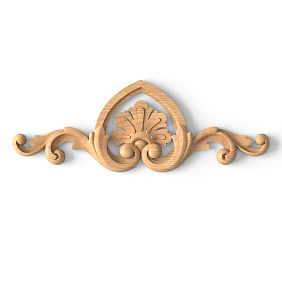
Where a pilaster meets a horizontal molding or architrave, a connector rosette is installed — RS-001, RS-002, RS-003, or RS-004. This small element concentrates a decorative accent at the intersection point: the eye "catches" on the rosette, perceiving the joint as an intentional architectural solution, not a technical accident.
Carved decorations on the pilaster shaft
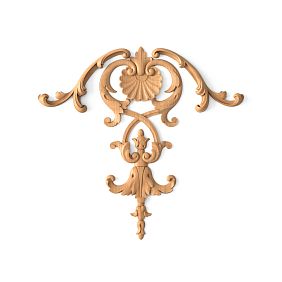
Pilasters of the DD series — DD-007 (from 14,490 rub.), DD-008 (from 7,230 rub.), DD-009 (from 5,900 rub.) — feature rich carved decoration on the shaft: geometric patterns, floral motifs, fluting. For such pilasters, the baseboard must have at least two decorative profile levels — otherwise, the gap between the pilaster's rich decor and the laconic baseboard will be too stark.
Half-columns as an alternative to flat pilasters
If space allows and the style demands greater monumentality — a half-column PLM-023 (from 28,070 rub.) is appropriate instead of a flat pilaster. A half-column is round in cross-section, protrudes from the wall by about half its diameter — creating a more expressive volumetric effect. For it, the principles of working with the baseboard are the same, but the requirements for the baseboard's height and robustness are even stricter: the half-column is more massive, and its base must be proportionate to its more monumental nature.
Pilasters in a room decor system: several scenarios
Abstract principles become clearer with specific examples.
Scenario 1: Framing a doorway in a living room
A wide 1200 mm opening between the living room and dining room. Pilasters PLM-022 (width 160 mm) with bases BS-004 on both sides of the opening. Between them at the top — a horizontal architrave made of molding MLD-015, 80 mm wide. Baseboard along the entire perimeter of both rooms — height 130 mm, same oak, same tone. The capitals above the pilasters abut the lower plane of the architrave. Connector rosettes RS-003 at the points where the capitals meet the architrave.
Result: the opening acquires a solemn, classical appearance. The baseboard, running under the pilasters and along the entire room perimeters, unites both spaces into a single architectural ensemble.
Scenario 2: Accent wall in a study
A solid wall 4 m wide with bookshelves in niches. Three pilasters PLM-016 divide the wall into four equal 900 mm sections. Pilasters are placed between the niches. A 120 mm high baseboard runs along the entire wall, passing under the base of each pilaster. The pilaster capitals support a horizontal cornice at a height of 2.2 m, above which are the upper library shelves. Above the cornice — a ceiling cornice from the same collection.
Result: the wall with books transforms into a library "facade" with clear architectural logic — lower tier (baseboard), verticals (pilasters), horizontal cornice, upper tier (shelves).
Scenario 3: Fireplace with flanking pilasters
Fireplace centered on a wall. Two pilasters DD-009 with rich carved decoration flank the portal on both sides. A 150 mm high baseboard runs under the pilasters and along the entire wall, responding to the lower horizontal line of the fireplace portal. Bases BS-006 with a decorative profile add tectonic weight to the pilaster bases. Capitals at the level of the fireplace's upper shelf link the verticals of the pilasters with the horizontal shelf of the portal.
Result: the fireplace transforms from a built-in structure into the architectural center of the room, framed by a full-fledged order system made of natural oak.
Complete order: baseboard + pilasters + capitals from one collection
This is a fundamental question that directly affects the final result.
Why you cannot assemble the system "piecemeal"
Wooden elements purchased from different places or at different times will inevitably have tonal mismatches. Even oak from the same manufacturer but different batches can vary in color by 5–10% — enough for the difference to be noticeable. With painting, the mismatch is less critical (paint covers everything), but with tinting or oil finishes, where the wood grain is exposed — the difference in tone between the baseboard and pilaster will be glaring.
Profiles may also not match in joint geometry. A capital from one manufacturer and a shaft from another may have different end dimensions, leading to visible gaps or the need for adjustment.
What is included in a complete system order
Fullwooden decorfor one room or one opening includes:
-
Floor baseboard of the required height and profile — along the entire perimeter.
-
Pilaster bases — type and quantity according to the project.
-
Pilaster shafts — of the required height and decorative execution.
-
Capitals — coordinated in width with the shafts.
-
Connector rosettes — if there are intersections with horizontal moldings.
-
Horizontal moldings — if architraves or lintels are provided.
-
Ceiling cornice — if coordination with the upper tier is planned.
Economics of a complete order
A single order from STAVROS offers several advantages that directly impact project economics. First, volume discount — typically from 10% when ordering a set. Second, one delivery instead of several. Third, no 'unforeseen' adjustments on site: all elements are compatible by default, the installer doesn't waste time on fitting.
Most importantly: a set from one batch of wood guarantees an absolute match in tone for all elements. Baseboard, pilaster shafts, bases, capitals — all from the same oak or ash trunk, painted in one cycle. No 'almost identical' mismatches.
FAQ — answers to popular questions
How does a pilaster differ from a column?
A pilaster is a flat vertical projection of rectangular cross-section that adjoins a wall. A column is a three-dimensional, typically round, vertical element standing separately or adjoining a wall by half its diameter (half-column). Functionally they are analogous, but a pilaster requires less space and is easier to mount on a flat wall.
Can pilasters be installed without capitals?
Technically — yes. Aesthetically — it's a debatable solution. A pilaster without a capital looks unfinished: the vertical element lacks a 'stopping point,' the gaze doesn't receive completion. If ceiling height doesn't allow for a full capital, a minimal horizontal strip or a wide molding can be used as a simplified abacus.
Which material is better for pilasters — oak or beech?
For pilasters with rich carved decor (DD-series), oak is preferable: its dense texture holds fine carving elements without chipping. For concise flat pilasters (PLM-series), beech is also suitable — its homogeneous structure paints and stains well. When painted white or gray, the difference between species is minimal.
At what distance from a wall corner should a pilaster stand?
Minimum setback from an internal corner — not less than the width of the baseboard plus 20 mm. This is necessary so the baseboard can smoothly turn behind the pilaster into the corner. For external corners — setback not less than the width of the pilaster base plus 30 mm.
Is it necessary to remove the baseboard if pilasters are being installed in an already finished room?
Only in the spot where the pilaster base will stand, if it must adjoin directly to the floor. If the base is installed on the top edge of the existing baseboard — nothing needs to be removed.
What is the minimum room height for using pilasters?
With a ceiling height of 2.5 m, pilasters are appropriate, but in a minimalist, concise execution (PLM-016, PLM-014) with small bases and capitals. Monumental pilasters with carved decor from the DD-series require a ceiling from 3.0 m — otherwise their vertical scale 'presses' on the space.
Can pilasters be used in an entryway?
Yes, and it's a very effective solution. A narrow entryway with pilasters acquires a solemn 'enfilade' character. Important: in an entryway, the width of pilasters should be small (80–100 mm), so they don't narrow the already limited space.
About the company STAVROS
Create an interior wherepilasters, capitals, andWooden baseboard form a unified architectural system — is a task requiring not only good taste but also a reliable manufacturer. The company STAVROS solves it comprehensively.
STAVROS is a Russian manufacturer of the full spectrum of architectural decor from solid oak, beech, and ash. The catalog includes wooden pilasters PLM and DD series with over 15 models, pilaster bases of six types, connecting rosettes, carved columns IKN, half-columns, as well as the full spectrum ofwooden trim: baseboards, moldings, cornices, architraves. All products are manufactured on modern European equipment with a tolerance of ±0.1 mm, from certified raw materials with 8–12% moisture content.
STAVROS accepts complete orders for specific projects: specialists will select pilasters and baseboards from one collection, calculate the quantity of all items according to the room plan, manufacture elements from one batch of wood to guarantee tone unity. The result — an architectural system created once and for decades to come.