












































































Article Contents:
- Typology of Wooden Wall Decor: Elements for Building Compositions
- Basic Elements of the Modular System
- Additional Details and Accessories
- Stylistic Compositions: For Every Interior
- Classic Style: Symmetry and Ornament
- Modern Minimalism: Geometry and Simplicity
- Scandinavian style: comfort and naturalness
- Eclectic Style: Mixing Forms and Materials
- Assembly Techniques for Modular Compositions
- Planning and Sketching
- Surface Preparation and Marking
- Mounting: Mechanisms and Technology
- Materials and finishing
- Wood selection
- Finishing and Painting
- Compositional Solutions for Different Rooms
- Living Room: Focal Element
- Bedroom: Softness and Coziness
- Kitchen: Functionality and Decoration
- Children's Room: Fun and Safety
- Practical Tips for Maintenance and Longevity
- Conclusion: Creativity and Personalization

Wooden wall decortransforms space, adding warmth, naturalness, character to the interior. Unlike stationary furniture or permanent decorative elements, modular wooden decor offers creative freedom — it is easy to rearrange, reconfigure, and adapt to changing tastes and styles. From simplewooden boards on the wallto complex carved compositions, wooden decor offers endless opportunities for self-expression. In this article, we will examine how to properly select, combine, and install wooden decor elements to create a harmonious composition that reflects your individuality and matches the chosen interior style.





Typology of Wooden Wall Decor: Elements for Building Compositions




Basic Elements of the Modular System
Wooden planks— universal base for creating wall compositions. Straight planks of different widths (from 20 to 100 mm), thicknesses, and profiles allow creating geometric patterns, intricate designs, decorative panels. Smooth rails suit modern interiors, profiled ones with rounded edges and grooves — for classic styles. Color — from light pine to dark wenge, natural oil treatment or painting is possible.Wooden boards in interiorcreate focal points, structure space, add coziness.
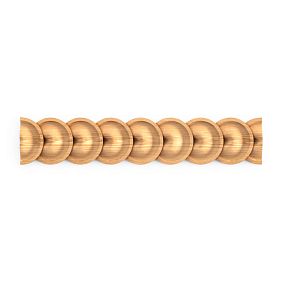
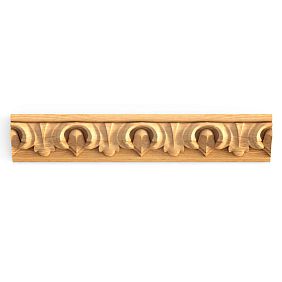
Moldings and baseboards — traditional architectural decoration elements, reinterpreted in a modern context.wooden corniceframes the upper part of the wall, creating a transition to the ceiling, while simultaneously serving as a horizontal accent.Wooden baseboardis not only functional — it conceals the gap between the wall and floor — but also decorative, emphasizing the architecture of the room.Furniture supportor decorative element in the form of a bracket supporting a shelf or decorative item, adds structural integrity and visual support to the composition.
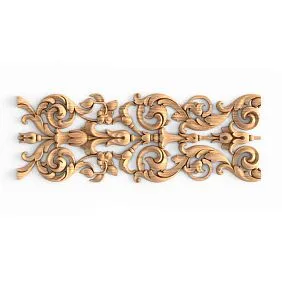
Carved elements — the pinnacle of wooden decor, where the woodcarver’s skill transforms a flat board into a work of art. Rosettes, capitals, decorative appliqués with botanical motifs, heraldic elements create richness of relief, play of light and shadow.Decorative brackets for shelvesnot only support but also decorate space with their carved forms. Such elements — for accents, combined with simpler details for a balanced composition.
Racks and panels are a relatively new decorative trend in traditional use, but have become popular.Wooden moldingWith widths of 10-50 mm and lengths of 2-4 meters, they allow creating modular grids on walls — geometric patterns, interweavings, visual dividers. Used as standalone decor or as framing for other elements. Price is lower than carved elements, versatility is higher.
Our factory also produces:




Additional details and accessories
Balusters and posts — elements of stair systems, used for decorative purposes.Wooden balusterWith a distinctive profile — vase-like shape, expansion in the middle, tapering at the bottom — creates a vertical accent, especially effective in groups.Flat balustersWith a carved pattern on one side — ethnic, Slavic motif, suitable for Russian style, folk interiors.Balusters for staircaseMade of oak, beech, pine — materials defining durability and aesthetics.
Baseboards and furniture frames — not only functional components, but also visible decorative elements.wooden base for tableCan serve as inspiration for creating a similar structure on the wall — a visual anchor associated with support and stability. Combining planks in the style of baseboards creates design harmony, unifying furniture and walls into a single composition.
Furniture handles and hardware details — often overlooked elements that can become accent details in decor. A carved wooden handle, integrated into the plank composition as a small relief accent, adds texture and interest.
Get Consultation
Stylistic compositions: for each interior
Classic style: symmetry and ornament
Classic wooden decor is based on symmetry, order, and use of traditional ornaments. Central vertical axis, from which elements are symmetrically placed — one of the main composition principles. Carved capitals crown vertical planks, rosettes frame the central element — mirror, panel, decorative panel.wooden corniceWith profiled section under the ceiling, unifies the composition, completes the upper part.
Classic color palette — white, ivory, golden tones of wood, possible gilding of individual elements. Matte finish or slight gloss highlights the nobility of the material. Scale of elements corresponds to ceiling height — large carved elements are used in high rooms, modest moldings in low ones.
Composition for classic interior: verticalWooden planksWith carved capitals at the ceiling and plinth at the floor, frame the central mirror in a carved frame. On the sides — consoles (decorative brackets), on which decorative vases or sculptures stand. This composition creates the impression of a complete architectural element, the center of the wall, focal point.
Modern minimalism: geometry and simplicity
Modern decor avoids ornamentation, opulence, focusing on form, geometry, minimal number of elements.Wooden planksOf equal width, arranged parallel — horizontally, vertically, or diagonally — create a graphic pattern, structuring the wall. Distance between planks is uniform, chosen according to room proportions.
Color — white, gray, natural light wood tone, maximum one or two shades in the composition. No gilding, carving, decorative excesses. Function of decor — to introduce order, structure space, without distracting attention.
Composition for minimalism: stripewooden stripsWidth 50-100 cm, height 150-200 cm, covers one wall entirely. Planks are arranged with 5-10 cm spacing, creating a rhythmic pattern. On an open wall without panels, without a central object — pure geometry, minimal elements.
Scandinavian style: comfort and naturalness
Scandinavian decor feels comfortable with natural wood, its texture, uncolored surface or light paint. Planks, moldings, panels create a sense of warmth, coziness, closeness to nature. Combination of wood with white, gray, beige wall backgrounds enhances naturalness.
Composition is often asymmetrical but balanced — planks of different heights, uneven placement, but overall the composition is perceived as harmonious. Shelves made ofwooden stripsor integrated into panels store decorative items, plants, creating a living, functional composition.
Composition for Scandinavian style: lower half of the wall is clad with horizontal wooden planks — effect of a natural home, cabin. Upper half is painted white. Open shelves above the planks hold baskets, ceramics, creating a cozy rustic corner.
Eclectic style: mixing forms and materials
Eclecticism allows combining elements of different styles, creating unique compositions. Smooth planks coexist with carved balusters, natural wood with white paint, verticals with horizontals, creating tension, dynamism. Color palette is diverse, but must be unified by a common idea, color scheme.
Wooden boards in interiorIn eclectic interiors, they play the role of mediator between elements of different styles, visual bridge connecting parts of the composition.
Composition for eclectic style: the center of the wall is occupied by a large mirror in a carved frame (classic element). On the sides — asymmetric groupswooden strips— vertical on one side, diagonal on the other (modern element). Books and ceramics are stored on shelves, creating a personal museum for the apartment owner.
Assembly technique for modular compositions
Planning and sketching
Before purchasing materials, create a sketch on paper or in a graphic editor. Draw the wall to scale, experiment with element placement. What do you want to create — a vertical stripe, horizontal division of the wall, a panel around an object, full cladding? What are the sizes of the elements, what is the distance between them? What color, material, style?
Laser or painter’s tape mock-up on the real wall allows you to evaluate the composition at 1:1 scale. Does too many elements clutter the space, or are too few elements lost? Is the height, width, and spacing correctly chosen?
Surface preparation and marking
The wall must be clean, flat, and primed. Irregularities prevent elements from fitting tightly, creating gaps. If necessary, prime and let dry. Marking — lines for mounting rails are marked with pencil or laser level. The accuracy of marking determines whether the composition will look professional or crooked.
Mounting: mechanisms and technology
For planks up to 50 mm wide, 10-20 mm thick, up to 2 meters long, when mounted on drywall, use anchors and self-tapping screws. Drill holes deeper than the anchor by 5-10 mm, insert anchors, and screw in self-tapping screws. For brick or concrete — use impact anchors for heavy loads. For wooden framing — use self-tapping screws without anchors. Mounting points should be spaced 80-100 cm apart to prevent plank sagging.
Hidden mounting through the back — professional option. The plank is routed to create a groove or recess on the back, into which self-tapping screws are screwed, protruding 5-10 mm below the plank surface. When mounted on the wall, screws enter previously drilled holes in the wall. Only the edges of the plank and fasteners are visible from the outside, giving a clean facade.
Adhesive for decorative elements — mounting polymer adhesive (for lightweight wooden elements up to 2-3 kg) is applied to the back of the element, pressed against the wall, and held for 30-60 seconds. After the adhesive dries (12-24 hours), the element holds securely.
Materials and Finishing
Selection of wood
Spruce — affordable, easy to process material, light color, soft structure. Suitable for painting or staining. Less expensive option, but less durable, prone to scratches and dents. Birch, ash — harder, uniform structure, light color, holds paint well. Oak, beech — premium materials, hard, durable, beautiful texture, expensive. Walnut, teak — exotic options for exclusive projects.
Material selection depends on purpose, budget, and room climate. In humid areas (kitchen, bathroom) use materials resistant to moisture, protected with lacquer or oil.
Finishing and painting
Natural oil or wax highlights the beauty of wood texture, giving a matte or slightly glossy finish. Requires periodic renewal every 1-2 years, but long-term, it looks more noble than paint.Wooden cornicesOften treated with oil, leaving natural color and texture.
Paint (white, colored) completely covers the texture, allowing you to achieve the desired color, independent of wood type. Water-based acrylic paint for indoor wood is safe, dries quickly, and is easy to clean. Can be applied in one or two layers. Matte, satin, or glossy — choice based on desired effect.
Gilding and patina — decorative finishing techniques for classic carved elements, adding luxury, depth, and a sense of stability.
Compositional solutions for different rooms
Living room: focal element
Wall above the sofa or opposite the window — main candidate for wooden composition. Large-scale composition ofwooden strips, moldings, carved elements creates an architectural focal point, transforming a typical living room into a personal space. Height of composition — from floor to ceiling or limited to a specific zone. Color contrasts or harmonizes with wall background, creating desired effect.
Bedroom: softness and coziness
Wooden decor in the bedroom creates coziness, warmth, and promotes relaxation. Soft wood colors (light oak, ash), natural oil finish, asymmetric compositions. Often wooden decor is placed above the bed — high wall behind, creating a sense of protection and comfort.Wooden planksIn the bedroom, often arranged horizontally, psychologically creating a sense of stability and calm.
Kitchen: functionality and decor
In the kitchen, wooden decor often combines with functionality — open shelves made of planks store beautiful dishes, spices, creating a lively decor. Area above the worktop may be clad with wooden paneling — protection from splashes, beauty in one. Material must be treated with water-resistant compound, lacquer, to resist moisture and grease.
Children's room: fun and safety
Wooden decor in the children's room should be bright, fun, and safe. Planks are painted in bright colors, forming images of animals, plants. Soft rounded edges (unlike sharp corners) do not injure the child. Shelves store toys, books, creating a practical and beautiful space.Furniture legsDecorative shapes, integrated into the plank composition, add playfulness and fun.
Practical tips for care and longevity
Protection against moisture, pests, and deformation is achieved through quality finishing, regular maintenance, and proper microclimate in the room (humidity 40-60%).
Protection against moisture, pests, and deformation is achieved through quality finishing, regular maintenance, and proper microclimate in the room (humidity 40-60%).
Conclusion: Creativity and personalization
Wooden wall decor— it is not just decoration, but a tool for self-expression and space transformation. Modular compositions allow experimenting and creating unique interiors reflecting the owner’s personality. By combiningWooden planks, moldings, carved elements, you can achieve unlimited variety of compositions, adapted to any style, budget, and space.
STAVROS Company offers a wide range of wooden decor — from simple planks to complex carved elements, numerous materials, finishes, and sizes. Technical support helps choose the right elements and plan the composition. European-level quality, reasonable prices, and timely delivery make STAVROS the optimal choice for those who want to create beautiful, long-lasting wooden decor. Start simple —buy furniture legsor severalwooden stripsas the first element, gradually expanding the composition, adding new details as inspiration strikes. The result will exceed expectations — a typical apartment will transform into a personal work of art.


