












































































Article Contents:
- Philosophy of a house where everything is made from the same wood
- Which wood species to choose for the entire house?
- Floor baseboard: the foundation on which the interior stands
- Baseboard installation: what to pay attention to
- Ceiling cove molding: smooth transition from wall to ceiling
- Installing cove molding on paneling: process specifics
- Mirrors in wooden frames: reflection of nature
- How to choose a frame for a mirror
- Paneling: the soul of a wooden house
- Paneling installation: process nuances
- Casing: framing openings in a unified style
- Curtain rods: function and beauty
- Natural oil: emphasizing wood texture
- Eco-friendliness and coziness: why wood is the right choice
- How STAVROS helps create a dream home
- Practical tips for arranging a wooden house
- Where to start the project?
- Installation: do it yourself or hire professionals?
- Finishing treatment: when and how
- Care for wooden surfaces
- Design techniques for wooden interiors
- Combining wood with other materials
- Lighting a wooden house
- Textiles and Accessories
- Frequently Asked Questions
- Conclusion: a house where everything is in its place

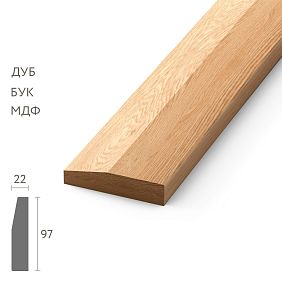
When you enter a house built of wood, you don't just cross the threshold — you immerse yourself in an atmosphere that embraces everyone with its warmth. The scent of pine resin, the texture you want to touch, the soft light reflected from the honey tones of the solid wood — this is not just an interior. It's a philosophy of living in harmony with nature. And in such a house, every element should resonate in unison: from the floorSolid Wood Skirting Boardto the ceiling cove moldings, from mirror frames to the paneling covering the walls and ceiling.
How to create a cohesive, meticulously detailed interior? How to make a house not look like it's assembled from random elements, but be perceived as a single organism? The answer is simple yet complex: choose one wood species for all key finishing elements. This is exactly what our story is about.




Philosophy of a house where everything is made from the same wood
Imagine: you're building a house not for sale, not to show off to guests — but for yourself. For family, for children, for long winter evenings by the fireplace and summer mornings with coffee on the terrace. Such a house should be alive, warm, sincere. And sincerity in an interior is when materials don't contradict each other, don't compete for attention, but complement, enhance, and create a single melody.
Wood is not just a building material. It's nature that has come into your home. And if the walls are clad with light pine paneling, whileCeiling baseboard woodenmade of dark oak — creates dissonance. The eye catches the mismatch, the brain registers the disruption of harmony. And the coziness diminishes.
A single wood species for all finishing elements is not a perfectionist's whim. It is a thoughtful solution that creates visual integrity of the space. When skirting boards, cornices, architraves, mirror frames, and the cladding itself are made from the same solid wood — the room breathes, it becomes homogeneous, calm, harmonious. Such an interior does not tire, does not distract — it is simply right.




Which wood species to choose for the entire house?
The choice of wood is the starting point. It determines the color palette, durability, performance characteristics, and, of course, the project budget.
Pine — a classic of wooden house construction. Light, warm, with pronounced annual rings and natural amber hues. Pine is affordable, easy to work with, and has a pleasant resinous scent. Its softness is both a plus and a minus:Wooden Skirting Boardsskirting boards made of pine are easy to install, but they are vulnerable to mechanical damage. However, pine is ideal for country houses, saunas, dachas — anywhere where naturalness and affordability are valued.
Larch — a denser, stronger, more moisture and rot-resistant species. Color ranges from golden-reddish to brown with a reddish undertone. Larch is more expensive than pine but serves for decades even in high humidity conditions. If your house is located near water, if the climate is humid — larch is your choice.Wooden claddingmade of larch will serve faithfully, without losing its appearance.
Oak — a symbol of prestige, durability, status. Dark, noble shades, dense texture, incredible strength. A house finished with oak is for centuries. But the price is corresponding. Oak elements are an investment in quality, style, and a legacy passed down to children and grandchildren.
Cedar — an elite species with a unique aroma that is not only pleasant but also beneficial for health. Cedar contains phytoncides that purify the air and kill bacteria. Color ranges from light pink to reddish-brown. Cedar is expensive, but if you are building a dream home where every detail matters — cedar is worth considering.
Whatever species you choose, one thing is important: use it everywhere. Skirting boards, cornices, architraves, frames, cladding — all from the same wood, preferably even from the same batch, so that the shades match as accurately as possible.
Our factory also produces:




Floor skirting board: the foundation on which the interior stands
A skirting board is not decoration, it is a structural necessity. It covers the technological gap between the wall and the floor, protects the lower part of the wall from dirt, and conceals the edges of the floor covering. But in a wooden house, a skirting board is also an aesthetic element that must match the entire finish.
Wooden baseboardmade of solid pine or larch — an ideal choice for a house where walls and ceilings are clad with cladding of the same species. The height of the skirting board depends on the ceiling height: for standard 2.5–2.7 meters, a skirting board 80–100 mm high is suitable. If ceilings are above 3 meters — you can confidently choose a skirting board 120–150 mm high; it will look proportional, not getting lost in the space.
The shape of the skirting board also matters. A simple rectangular profile — for minimalist interiors where function, not decorativeness, is important. A skirting board with a slightly rounded top edge — a universal option suitable for almost any style. A figured skirting board with a milled profile — for classic, traditional interiors where details and woodworking craftsmanship are valued.
Get Consultation
Skirting board installation: what to pay attention to
Installing a solid wood skirting board requires precision. Wood is a living material; it reacts to humidity and temperature, can expand and contract. Before installation, the skirting board should lie in the room for at least 2–3 days to 'acclimatize' — to adopt the humidity that will be in the house permanently.
The skirting board must be fastened securely but delicately. The best way is with screws, countersinking the heads and subsequently masking them with wood filler or wooden plugs. Or with liquid nails if the walls are perfectly even. The main thing is not to over-tighten, not to split the wood, and to leave microscopic gaps in the corners so that during temperature changes the skirting board does not press against itself.
Corners are the most difficult place. Perfect joining of skirting boards in corners requires precise cutting at a 45-degree angle. For this, a miter box or miter saw is used. If the corners in the house are not perfectly straight (which is normal in wooden houses) — you will have to adjust manually, filing in place. Gaps in corners can be masked with acrylic sealant matching the wood color or with wooden corner pieces.
Ceiling cornice: a smooth transition from wall to ceiling
In a house clad with paneling, a ceiling skirting board is not just decoration, but a logical completion of the composition.Ceiling baseboard woodenA ceiling cornice, or coving, creates a smooth transition between vertical and horizontal planes, conceals joints, and softens the geometry of the room.
If walls and ceilings are clad with pine paneling — the cornice should be made of the same pine. Matching texture, color, and annual ring pattern creates an effect of monolithicness, as if the house were carved from a single trunk of a huge tree.
Shapeceiling cornicescan be different: from a simple triangular one (the most affordable and universal option) to a complex figured one with several steps and roundings. The choice depends on the interior style: for a Scandinavian or modern wooden house, a simple cornice is suitable; for a Russian classic style — a figured one, with traditional profiles.
The size of the cornice is selected according to the ceiling height. For standard 2.5–2.7 meters, a cornice 50–70 mm high is optimal. For high ceilings from 3 meters — you can choose cornices 80–100 mm and even larger. A massive cornice on a high ceiling looks organic, creating a sense of solidity and stability.
Installing a cornice on paneling: process specifics
InstallationInstalling cornices on paneling— is a more complex process than installing a floor skirting board. Paneling has a relief surface: protruding ridges, recessed grooves. The cornice should fit snugly against the wall and ceiling, but the paneling interferes with this.
There are two solutions. The first is to choose a special profile cornice designed for installation on cladding. Such a cornice has an increased contact area that covers the relief of the cladding. The second is to use additional battens (strips) that are installed along the cornice mounting line and create a flat base for attachment.
The cornice must be attached to both the wall and the ceiling — this ensures the rigidity and reliability of the structure. Use self-tapping screws, finishing nails, or special brackets. The heads of the self-tapping screws are countersunk and masked with wood putty or decorative plugs.
Cornice corners — both internal and external — are cut at a 45-degree angle. The quality of corner joints is an indicator of craftsmanship. A perfect cornice corner looks like a single piece, without gaps, steps, or misalignments. If the room corners are not perfectly straight (a common situation in wooden houses) — the cutting has to be done 'by eye', fitting each corner individually.
Mirrors in wooden frames: a reflection of nature
mirror in wooden frame— it's not just a functional item, it's a decorative element that can become an accent in the interior or delicately blend into the overall composition. In a house where everything is made from the same type of wood, the mirror frame should be made from the same solid wood — pine, larch, oak.
A mirror visually expands space, reflects light, and adds depth to a room. In a wooden house, a mirror reflects nature itself: the texture of the cladding, the warm light falling on wooden surfaces, the sun's glints on solid baseboards and cornices. This creates an amazing effect — the house seems even more spacious, bright, and airy.
The shape of the frame depends on the interior style. A simple rectangular frame with minimal processing — for modern, Scandinavian, minimalist interiors. A frame with light milling, rounded corners, a delicate profile — for classic, traditional styles. A massive carved frame — for interiors in the spirit of a Russian estate, where details and craftsmanship are valued.
Placing mirrors in a wooden house requires thoughtfulness. A mirror opposite a window is an excellent solution: it doubles the amount of natural light, making the room brighter. A mirror opposite a beautiful interior element (fireplace, carved door, decorative panel) — creates a visual accent, attracts attention. A mirror in a narrow hallway or on a stair landing — expands space, eliminates the feeling of tightness.
How to choose a mirror frame
The frame must correspond to the size of the mirror and the scale of the room. For a small mirror (50×70 cm), a frame 5–7 cm wide is suitable. For a large mirror (100×150 cm and larger), a more massive frame 8–12 cm wide is needed so that the structure looks proportional and doesn't appear fragile.
The thickness of the frame is also important. A thin frame (2–3 cm) looks elegant but may not be strong enough for a heavy mirror. A thick frame (4–6 cm) — is solid, reliable, but may look somewhat rough in a small room. The optimal thickness is 3–4 cm, a universal option combining strength and visual lightness.
The corner joint of the frame is an indicator of quality. The best method is a miter joint (at 45 degrees) with a tenon or dowel, glued with wood glue. Such a joint is strong, aesthetic, and durable. A frame assembled with metal brackets or self-tapping screws — is less reliable and less beautiful.
The finish of the frame must match the finish of all other wooden elements in the house. Ifcladding and baseboardsare coated with natural oil — the frame should also be oiled. If varnish was used — the frame is varnished. The unity of the finish is as important as the unity of the wood species.
Cladding: the soul of a wooden house
Cladding is not just wall and ceiling sheathing, it's the foundation of the entire interior of a wooden house.wooden plankcreates the atmosphere, sets the style, shapes the perception of space.
Choosing the cladding profile is an important point. Classic 'Euro lining' with an enlarged tongue and deep groove — a universal option suitable for most interiors. 'Shtil' (softline) — cladding with a smooth rounded bevel, without a pronounced groove — for modern, minimalist interiors where surface smoothness is important. 'Block house' — cladding with a convex profile imitating a rounded log — for interiors in the style of a log house.
The width of the board affects the visual perception of the room. Narrow cladding (80–90 mm) creates a more detailed, 'busy' surface — suitable for small rooms where you want to add dynamism. Wide cladding (120–150 mm) gives a calmer, more monolithic surface — ideal for spacious rooms where it's important to emphasize scale.
The direction of cladding installation changes the geometry of the room. Vertical cladding visually raises the ceiling, makes the room taller. Horizontal — expands space, makes the room wider. Diagonal or herringbone — creates a dynamic, unconventional interior but requires more material and skill during installation.
Cladding installation: process nuances
The quality of cladding installation determines the durability and appearance of the entire sheathing. The cladding must be properly dried (moisture content 10–12%), otherwise after installation it will start to dry, deform, and gaps will appear between the boards.
Before installation, the cladding needs acclimatization — it should lie in the room for at least 2–3 days to adjust to the ambient humidity. This is especially important if the cladding was brought from a different climate (e.g., from a dry warehouse to a house with high humidity).
The frame for cladding — a lathing of wooden beams 40×40 or 50×50 mm. The beams are mounted perpendicular to the direction of the cladding with a spacing of 40–60 cm. The frame must be leveled — this is critical, otherwise the cladding will be wavy, with unevenness.
Attaching the cladding — either with clips (special brackets inserted into the groove and screwed to the frame) or with finishing nails or self-tapping screws countersunk into the groove. Clips — a more aesthetic method, the fasteners are completely hidden. Nails and screws — a more reliable method but requires care to avoid splitting the board.
There should be technical gaps of 5–10 mm between the cladding boards and the walls, ceiling, floor — to compensate for thermal expansion of the wood. These gaps are covered with baseboards, cornices, trims.
Trims: framing openings in a unified style
Wooden casingsfor doors and windows — another element that should be made from the same wood species as all other finishes. The trim covers the joint between the door (window) frame and the wall, masks installation gaps, gives the opening a finished look.
The width of the trim is selected depending on the scale of the room and interior style. For small rooms, trims 60–70 mm wide are suitable — they don't overload the space. For spacious halls, you can choose trims 80–100 mm wide or even wider — they look solid, emphasize the significance of the openings.
The profile of the casing—from simple flat to complex shaped—should match the interior style. Simple casing with lightly rounded edges is for modern styles. Casing with milled profiles, steps, and roundings is for classic interiors.
Installing casings requires precision: corners are cut at 45 degrees (or joined at 90 degrees, but then the ends need to be covered), fastened with finish nails or countersunk screws. High-quality corner cutting—where the joint is almost invisible and profiles smoothly transition into each other—is a sign of professionalism.
Curtain rods: function and beauty
Wooden cornicesCurtain rods are a functional element that becomes part of the overall composition in a wooden house. A rod made from the same wood species as the paneling, baseboards, and casings is a logical continuation of the design.
Curtain rods come in different types: round rods (single or double), profile cornice rods. For a wooden house, solid wood round rods are often chosen—they are simple, reliable, and aesthetic. The rod diameter depends on the curtain weight: for light tulle, 25–28 mm is sufficient; for heavy drapes, rods of 35–50 mm are needed.
The finish treatment of the rod should match the treatment of all other elements: oil, wax, or varnish—in line with the overall concept. Rod brackets are also preferably chosen in wood or wood-like finishes to maintain stylistic unity.
Natural oil: highlighting wood texture
Finish treatment is the final chord in creating the interior of a wooden house. The choice of coating affects the appearance, tactile feel, and durability of all elements.
Natural wood oil is the best choice for a country house. Oil penetrates the wood pores, highlights the texture, makes the annual ring pattern more expressive, and deepens the color. Oiled wood acquires a noble matte sheen, becomes pleasant to the touch, and is protected from moisture and dirt.
Oil can be clear (preserves the natural wood color), tinted (adds a shade: white, gray, brown) and colored (significantly changes the color). To preserve the natural beauty of pine or larch, it's better to choose clear or lightly tinted oil. For oak, dark tones can be used to emphasize the nobility of the species.
The oil application technology is simple but requires care. The surface must be sanded and cleaned of dust. Oil is applied with a brush or roller in 2–3 coats with intermediate drying. Excess is removed with a soft cloth. After drying, the surface becomes matte, silky, and resistant to water and dirt.
Alternatives to oil are wax (provides a richer sheen but is less wear-resistant) or varnish (creates a glossy film but hides the wood texture and removes tactility). In a classic wooden house, oil or wax is preferable—they preserve the naturalness and authenticity of the material.
Eco-friendliness and coziness: why wood is the right choice
Wood is the most eco-friendly building material. It does not emit toxins, does not contain chemical additives (if not treated with aggressive impregnations), regulates indoor humidity, and creates a healthy microclimate.
A wooden house 'breathes': wood absorbs excess moisture when humidity is high and releases it back when the air becomes dry. This is a natural air conditioner, operating without electricity and noise.
The aroma of wood—especially coniferous species—calms the nervous system, improves sleep, and boosts immunity. Phytoncides contained in pine, cedar, and larch disinfect the air, killing bacteria and viruses. Living in a wooden house is not just comfortable; it's beneficial for health.
The tactile sensations from wood are also important. Touching the warm, living surface of solid wood evokes positive emotions and reduces stress. Wood does not feel cold like metal or plastic, nor does it repel like artificial materials—it invites contact, creates a sense of security and home.
How STAVROS helps create your dream home
The company STAVROS has specialized in manufacturing solid wood interior products for over two decades. The range includes everything needed to create a cohesive wooden house: floor and ceiling baseboards, coving, casings, paneling, curtain rods, mirror frames, stair components, panels, and moldings.
The feature of STAVROS is a comprehensive approach. You can order all finishing elements from the same wood species, from the same batch, with uniform treatment. This guarantees visual unity, matching shades, and perfect harmony of all interior details.
STAVROS production is equipped with modern machinery, allowing the creation of products of any complexity with the highest processing quality. But technology is just a tool. The main thing is the craftsmen, for whom working with wood is not just a profession but a calling. Every detail leaving the STAVROS workshops carries a piece of the soul of those who created it.
The STAVROS quality control system is unparalleled: raw material inspection, control at every production stage, final inspection of finished products. Only products meeting the strictest standards earn the right to bear the STAVROS brand.
STAVROS service includes consultations on material selection, calculation of required quantities, assistance in choosing components, recommendations for installation and finish treatment. The logistics service ensures careful delivery to any point in the country in special packaging that protects the products from damage.
STAVROS is not just a manufacturer of wooden products. It is a partner that helps create your dream home—a home where every detail is thought out, every element harmonizes with others, where wood lives and breathes, creating an atmosphere of coziness, warmth, and true family happiness.
Practical tips for furnishing a wooden house
Where to start the project?
Start by choosing the wood species. Decide which wood is closer to you in color, texture, performance characteristics, and budget. Order samples—small pieces of paneling, baseboard, and casing from different species. View them in your home, under your lighting, and assess how they combine with the floor, furniture, and windows.
Make a list of all necessary elements: how many square meters of paneling, how many linear meters of floor and ceiling baseboard, casings, how many mirror frames, curtain rods. It's better to order everything at once, from the same batch—this guarantees matching shades.
Installation: do it yourself or hire professionals?
If you have experience working with wood, tools, and time—you can install it yourself. This will save money and provide satisfaction from doing it yourself. But there are nuances: cutting corners, joining profiles, leveling the frame—all of this requires skill and precision.
If you have no experience, it's better to hire professionals. Quality installation will pay off with durability and aesthetics. Poorly installed paneling will crack, baseboards will fall off, and corners will develop gaps. Saving on installation can result in additional costs for rework.
Finishing: When and How
The finishing coating (oil, wax, varnish) is applied after the complete installation of all elements. The room must be clean and dust-free. Temperature should be no lower than +15°C, humidity no higher than 60%.
If the elements are already factory-treated (e.g., paneling and baseboards are oiled at the factory), it is sufficient to apply a finishing layer to the cut areas, joints, and fastenings. If the elements are supplied untreated, the coating is applied completely to all surfaces.
Oil is applied in 2–3 coats with an interval of 4–6 hours (drying time depends on temperature and humidity). Each coat must dry before applying the next. After the final coat, the surface should not be touched for at least 24 hours to allow the oil to fully polymerize.
Caring for wooden surfaces
Wood coated with oil or wax does not require complex care. It is enough to wipe with a dry or slightly damp cloth to remove dust. Every 1–2 years, you can refresh the coating by applying an additional layer of oil—this revitalizes the color and restores protective properties.
Avoid aggressive cleaning agents, abrasive sponges, and excessive moisture. Wood does not like direct contact with water—puddles and leaks should be wiped up immediately. Scratches and wear on an oiled surface are easily removed with light sanding and applying a new layer of oil.
Design techniques for wooden interiors
Combining wood with other materials
Wood pairs beautifully with natural stone (granite, marble for countertops, fireplace surrounds), metal (wrought iron elements, cast iron stoves), and textiles (linen curtains, cotton throws). Avoid plastic and artificial materials—they clash with the naturalness of wood.
Color accents in a wooden interior should be delicate. Bright, acidic colors disrupt harmony. It's better to choose natural shades: white, gray, beige, green, terracotta. They emphasize the beauty of wood without competing with it.
Lighting a wooden house
Wood loves warm light. Lamps with a color temperature of 2700–3000K (warm white) highlight the amber tones of pine, the reddish hue of larch, and the nobility of oak. Cold light (4000K and above) makes wood look gray and lifeless.
Spotlights, track lights, and sconces create a play of light and shadow on the textured surface of paneling, moldings, and baseboards. This adds volume, depth, and makes the interior more interesting. A central chandelier provides general light, but it's the additional sources that create atmosphere.
Textiles and accessories
In a wooden house, textiles should be natural: linen, cotton, wool. Synthetics look cheap and disrupt the eco-friendliness of the interior. Colors should be natural and calm: white, beige, gray, terracotta, green.
Accessories—minimal but high-quality. Handmade ceramics, wrought iron candle holders, woven baskets, wooden boxes. Each item should have meaning, function, and a story. Clutter kills the beauty of a wooden interior.
Frequently asked questions
Can different types of wood be combined in one interior?
Theoretically, yes, but it's difficult. Different wood species have different shades, textures, and grain patterns. Achieving harmony is hard. It's better to choose one species for all key elements and make accents (e.g., furniture) from another species, but in a way that is stylistically justified.
Which wood species is best for wet areas?
Larch is the leader in moisture resistance among available species. It practically does not rot or warp from moisture. For saunas, steam rooms, and bathrooms—larch is ideal. Oak is also resistant but more expensive. Pine is not recommended for wet areas—it can darken and develop mold.
Is it necessary to treat wood with antiseptics?
For exterior structures—absolutely. For interior spaces—it is advisable, especially if the house is new, the wood is fresh, and there is a risk of fungal or insect infestation. Choose safe, eco-friendly water-based antiseptics without strong odors or toxic components.
How often should oil coating be refreshed?
In living spaces—every 2–3 years. In high-traffic areas (hallways, corridors)—every 1–2 years. In low-traffic areas (bedrooms)—every 3–5 years. Signs that refreshing is needed: appearance of matte areas, loss of shine, surface roughness.
Is wood in interiors expensive?
More expensive than plastic or particleboard, but cheaper than stone or premium ceramics. Pine paneling and baseboards are affordable even on a modest budget. Oak products are in the premium segment. But considering durability (wood lasts for decades), eco-friendliness, and aesthetics—it's a worthwhile investment.
Can wood be painted white?
Yes, and it's a popular solution for Scandinavian interiors. Use opaque paints or white oil with high pigment content. But remember: painting hides the wood grain and its natural beauty. If you want to preserve the pattern, choose a transparent or lightly tinted coating.
How to avoid cracks and wood deformation?
Use properly dried wood (moisture content 10–12%). Allow the material to acclimate before installation (2–3 days in the room). Leave expansion gaps to compensate for movement. Maintain stable humidity and temperature in the house. Apply protective coating to all surfaces, including end grains.
What to do if gaps appear between paneling boards?
Cracks are normal if the house is new and the wood continues to dry. If cracks are small (1–2 mm) — not critical, it's part of wood's life. If large (3–5 mm or more) — can be filled with acrylic sealant, wooden splines, or left as is if it doesn't affect functionality.
Wood is flammable — is that a concern?
Wood burns, but solid wood burns slowly, forming a protective charcoal layer that slows fire spread. There are fire-retardant treatments (fire retardants) that increase fire resistance. Following fire safety rules (proper electrical wiring, careful heating) makes a wooden house safe.
Where to buy quality solid wood products?
Turn to trusted manufacturers with years of experience, such as STAVROS. Don't buy wood at spontaneous markets or from unverified suppliers — high risk of getting poor-quality, wet, defective material. The quality of solid wood products determines the durability and beauty of the entire interior.
Conclusion: a house where everything is in its place
A wooden house where every detail is thought out, where baseboards, coving, trims, paneling, mirror frames are made from the same wood species, processed uniformly, installed professionally — this is not just a dwelling. It's a space you want to live in, that gives strength, calms, inspires.
Creating such a house requires attention to detail, understanding of the material, respect for wooden architecture traditions. But the result is worth the effort: you get an interior that will delight you and your loved ones for decades, that will become a family nest passed down through generations.
Company STAVROS is ready to be your partner on this journey. We offer not just solid wood products — we offer solutions that turn a house into a work of art. Our craftsmen, technologies, quality control, service — everything is aimed at you getting exactly the house you dreamed of.
Contact STAVROS — and we'll help create your wooden house from floor to ceiling, where every element harmonizes with others, where wood lives, breathes and creates an atmosphere of true coziness.


