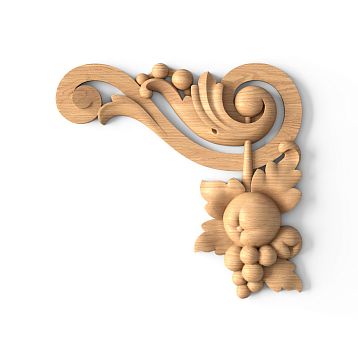
Article Contents:
- Philosophy of wooden decor: warmth in details
- Where to use wooden decor
- Carved shelves: function and beauty in one whole
- Types of carved shelves
- Carving on shelves: ornaments and styles
- Installation of carved shelves
- Polyurethane ceiling molding: completing the composition
- Ceiling rosettes: central accent
- Ceiling cornices: perimeter framing
- Moldings and coffers on the ceiling
- Wooden baseboards and cornices: unity of style
- Solid wood floor baseboards
- Wooden curtain ceiling cornices
- Combination of wood and polyurethane: the best of both worlds
- Wood — for tactile zones
- Polyurethane — for visual zones
- Unity through painting
- Interior examples: wooden decor and polyurethane molding in action
- Frequently asked questions: decor without mistakes
- Conclusion: create your dream home with STAVROS

What turns an apartment into a home? Why does one interior seem cold and impersonal, while another envelops you with warmth from the first step across the threshold? The answer lies not in square meters or the cost of renovation. It's in the details. In how light plays on a carved cornice. In how a hand involuntarily touches a warm wooden shelf. In how the gaze glides over a ceiling rosette, pausing on its floral swirls.wooden decor in interiorcreates that very elusive feeling of home — a space filled with life, history, soul. And when combined withpolyurethane ceiling moldingit transforms into a symphony of classical style, where each element complements the other, creating harmony between natural and modern, tradition and practicality.
Why wood specifically? Because it's the only material that carries the memory of living nature. Wood is warm to the touch — its temperature is 2-3 degrees higher than room temperature, it breathes, releases phytoncides (natural antiseptics), and creates acoustic comfort. Why polyurethane? Because modern polymer molding solves problems that have plagued owners of classical interiors for centuries: the weight of plaster, fragility, crumbling, cracking, and the inability to use in damp areas. Polyurethane is 5-7 times lighter than plaster, stronger, moisture-resistant, doesn't crack, and lasts for decades without restoration.


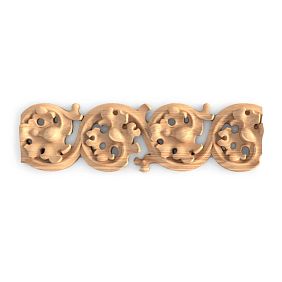


Philosophy of wooden decor: warmth in details
wooden decor for the home— is not a fashion, not a trend, not a stylistic technique. It's a return to roots, to a time when homes were built to last centuries, when every element was made by hand, when a craftsman put not only skill but also a piece of soul into a carved overlay. Today we revive this tradition, adapting it to modern realities: factory production ensures precision and accessibility, but the wood remains natural, the carving — three-dimensional, the feeling — authentic.




Where to use wooden decor
Decorative elements made of solid wood are appropriate in every room, but their role and scale differ.
In the living roomWooden decorationcreates a sense of grandeur and solemnity. Carved wall consoles, shelves for displaying collections, frames for paintings and mirrors made of solid wood with Baroque carving, wooden curtain cornices—all of this forms a classic atmosphere where every detail matters. The living room is the face of the house; here, decor can be maximally expressive: large ceiling rosettes, high baseboards, moldings dividing walls into sections.
In the bedroom, decor is more intimate, cozy. A carved bed headboard, bedside shelves with acanthus scrolls, frames for family photos—elements that create comfort and a sense of security. Excessive decorativeness is not needed here; a few accents are enough: a ceiling rosette above the chandelier, a high baseboard, a cornice with a subtle profile.
In the study, wooden decor emphasizes intellectuality and seriousness. Carved bookshelves, consoles for table lamps, wall panels creating a library atmosphere. Here, wood is not just decoration but function: shelves hold books, consoles hold documents, panels create acoustic comfort (absorb sound, making the room quieter).
In the dining room and kitchendecor of a wooden shelftransforms into a practical element: open shelves for dishes, spices, decorative ceramics. Carved brackets support the shelves, creating visual lightness. Wooden moldings frame the backsplash, cornices finish the upper cabinets.
In the hallway, decor creates the first impression. A console with carved legs at the entrance, a mirror in a wooden frame, a shelf for keys and small items—minimum elements, maximum expressiveness. The hallway is usually small, so every element must work: the console is functional (for placing bags, gloves), the mirror visually expands the space, the shelf organizes storage.
Our factory also produces:


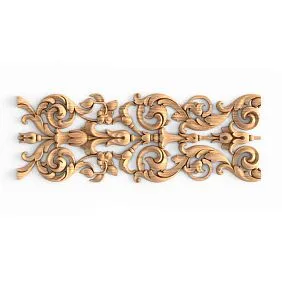


Carved shelves: function and beauty in a single whole
Carved shelfis not just a board attached to the wall. It is an architectural element, a sculpture, an ornament. A shelf made of solid oak or beech with hand-carving or CNC milling becomes a focal point on the wall, attracts the eye, creates volume and depth.
Get Consultation
Types of carved shelves
Console shelf—a wide plank 20-40 cm deep, 60-120 cm long, supported by two or three carved brackets (supports). Brackets are not just fasteners; they are decorative elements with plant scrolls, geometric patterns, animal motifs. The console shelf is used for placing vases, figurines, photos, books, creating a wall composition.
Corner shelf—a triangular plank mounted in a room corner. Carving frames the edges of the shelf, creating a border. The corner shelf saves space (does not occupy wall space), suitable for small rooms, used for placing flowers, candles, small items.
Shelf with a frieze—a straight plank with a decorative carved overlay (frieze) along the front edge. The frieze is a horizontal strip 50-100 mm high with a repeating pattern (acanthus leaves, grapevine, geometry). A shelf with a frieze creates the impression of a miniature cornice, suitable for classic interiors, placed above doors, windows, fireplaces.
Multi-tiered shelf—a system of two or three shelves arranged one above the other, united by side posts with carving. The multi-tiered shelf is a full-fledged piece of furniture, a rack, used for libraries, collections, displaying decorative items.
Carving on shelves: ornaments and styles
The carving ornament determines the style of the shelf, its belonging to an era, its mood.
Acanthus leaves—a classic motif originating from ancient architecture. Acanthus is a plant with jagged leaves, a symbol of Greece and Rome. Carving in the form of acanthus scrolls is characteristic of Classicism, Empire, Neoclassicism. A shelf with acanthus looks solemn, grand, suitable for living rooms, dining rooms, studies.
Plant scrolls (rocaille, volutes)—curved lines resembling climbing plants, seashells. Characteristic of Baroque, Rococo, Art Nouveau. A shelf with rocaille looks dynamic, decorative, suitable for interiors where visual complexity and abundance of details are important.
Geometric patterns (meander, rhombuses, circles, fluting)—strict, repeating elements. Characteristic of Neoclassicism, Art Deco, modern classic. A shelf with geometry looks restrained, elegant, suitable for minimalist classic interiors where purity of lines is important.
Animal and bird carving (lion masks, eagles, griffins)—animal motifs, symbols of strength, power, protection. Characteristic of Empire, Gothic, Eclecticism. A shelf with animal motifs looks monumental, dramatic, suitable for studies, libraries, masculine interiors.
Installation of carved shelves
Shelves made of solid wood weigh 3-8 kg (depending on size, wood species). The fastening must be reliable, capable of supporting the weight of the shelf plus the weight of placed items (vases, books, figurines).
Mark the installation location on the wall (use a level—the shelf must be strictly horizontal). If the shelf is on brackets, first mount the brackets (fasten with 8×60 mm wall plugs, screws through the bracket), then place the shelf on them, secure from below with screws. If the shelf is attached with hidden fasteners (metal hinges embedded in the back), drill holes in the wall for plugs, insert plugs, hang the shelf on the hinges.
For heavy shelves (over 5 kg), use at least three fastening points. For drywall walls, use special butterfly plugs or anchors that distribute the load.
Ceiling molding made of polyurethane: completing the composition
The ceiling is the fifth wall, often forgotten in decoration. But in a classic interior, the ceiling is as important as the walls.Buy ceiling molding made of polyurethanemeans getting a tool for creating volume, architectural quality, and completeness of the interior without the weight and fragility of traditional plaster.
Ceiling Rosettes: The Central Focal Point
A ceiling rosette is a round or square decorative element placed in the center of the ceiling, typically at the point where a chandelier is mounted. The rosette creates a focal point, visually raises the ceiling, frames the light fixture, transforming it from a utilitarian object into a compositional centerpiece.
Rosette diameters range from 300 mm (for small rooms) to 1500 mm (for halls with high ceilings).Ceiling rosette CPU-071Measuring 1365×1365 mm — large-format stucco with a Baroque ornament, suitable for living rooms, dining rooms, and formal spaces with ceilings from 3 meters high. The rosette's ornament consists of plant scrolls, acanthus leaves, and rosettes radiating from the center to the edges, creating radial symmetry.
Rosette relief — 10-20 mm (the height of protruding elements above the background). This creates a play of light and shadow: with side lighting (chandelier, sconces), the relief becomes three-dimensional, lively, and dynamic. With overhead lighting (ceiling spotlights), the relief softens but remains noticeable due to shadows in the recesses.
Ceiling Cornices: Perimeter Framing
A ceiling cornice (cove, ceiling skirting) is a molding installed along the perimeter of a room at the junction of the wall and ceiling. The cornice serves several functions:
Aesthetic — creates a transition between the wall and ceiling, completes the wall composition, visually raises the ceiling (a cornice projecting from the wall creates the illusion that the ceiling starts higher).
Practical — conceals the joint between the wall and ceiling (which is often uneven or cracked), hides concealed LED lighting (LED strips are placed behind the cornice, light is directed upwards, creating a floating ceiling effect).
Acoustic — a cornice with a projection of 80-150 mm creates a visor that diffuses sound, making the room acoustically more comfortable.
The width of the cornice (projection from the wall) is chosen based on ceiling height: for ceilings 2.5-2.7 m — a 50-80 mm cornice; for ceilings 2.8-3.2 m — a 100-150 mm cornice; for ceilings above 3.2 m — a 150-200 mm cornice or more. The rule: the higher the ceiling, the more massive the cornice should be (otherwise it gets lost and looks skimpy).
The cornice profile can be simple (one or two curves, roundings) or complex (multiple steps, ornamental bands — dentils, egg-and-dart, pearl molding). A simple profile suits Neoclassical or minimalist classic styles. A complex one suits Baroque, Rococo, Empire styles, where decorative richness is important.
Moldings and Coffers on the Ceiling
In addition to the perimeter cornice, the ceiling can be decorated with moldings forming geometric frames (coffers). A coffer is a recess in the ceiling framed by moldings, creating the illusion of a three-dimensional structure.
Coffers are mounted on a flat ceiling (do not require a suspended system). Moldings are glued to the ceiling, forming rectangular or square sections. Inside the sections, the ceiling is painted a contrasting color (if the ceiling is white, inside the coffers is light gray or cream) or wallpapered. In the center of each coffer is a rosette (small, 200-400 mm in diameter) and a light fixture (spotlights, small chandeliers).
A coffered ceiling is visually more complex and richer than a flat one but requires a height of at least 3 meters (otherwise it feels oppressive and consumes space).
Wooden Skirting Boards and Cornices: Stylistic Unity
Towooden decor in interior photosappear cohesive and harmonious, material unity is needed. If the walls have wooden shelves, carved overlays, then the skirting boards should also be wooden. If the ceiling has a polyurethane cornice, the transition to the walls can be via a wooden upper molding (framing wall panels, a curtain cornice).
Solid Wood Floor Skirting Boards
A floor skirting board is an element that covers the joint between the floor and wall, protects the lower part of the wall from mechanical damage, and hides cables (modern skirting boards often have a cable channel). The height of the skirting board for classic interiors is 100-150 mm (higher than the standard 60-80 mm), which creates visual weight and proportionality to high ceilings.
The profile of a classic skirting board: a curve at the bottom (transition to the floor), a straight shelf (main part), a bead or fluting at the top (decorative band).Wooden baseboardMade from solid oak, beech, or ash, it is finished with oil (preserves the grain), varnish (glossy or matte), or paint (opaque, color of choice).
Installation of a wooden skirting board: attached to the wall (not the floor!) with screws through the skirting into wall plugs (fastening spacing 50-70 cm), screw heads are countersunk, holes are filled, sanded, and painted. Corners are cut at 45 degrees (internal and external), joints are tight, without gaps.
Wooden Ceiling Curtain Cornices
A curtain cornice is a horizontal rod or batten on which curtains and sheers are hung. A wooden cornice is not just functional but a decorative element continuing the theme of wooden decor.Ceiling Cornice KZ-008with a 90×44 mm cross-section made of oak or beech — a massive profile suitable for heavy drapes and classic interiors with tall windows.
The cornice is mounted to the ceiling (or to the wall above the window) on metal brackets. Curtains are hung on hooks or rings that slide along the lower edge of the cornice. The ends of the cornice are covered with decorative end caps (wooden balls, carved overlays).
A wooden cornice can be painted to match the wall color, left natural (with oil finish), patinated (gold, silver), creating an accent.
Combination of wood and polyurethane: the best of both worlds
How to combine wooden decor and polyurethane molding so they don't conflict but complement each other? Follow the principle of zoning by materials.
Wood — for tactile zones
Use wood where people touch, where warmth and texture are important: shelves (hands touch when taking items), consoles (for placing bags, keys), mirror frames (visible up close), baseboards (details can be examined), curtain rods (opening and closing operations).
Polyurethane — for visual zones
Use polyurethane where elements are visible from a distance, where lightness and durability are important: ceiling rosettes (high up, not touched), perimeter ceiling cornices (visual element), wall moldings (framing, borders), coffers (decorative structure).
Unity through painting
Paint all polyurethane elements white or close to white (ivory, ecru). Leave wooden elements natural (with oil finish, preserving the texture of oak, walnut) or paint them in a contrasting tone (gray, beige). White polyurethane + natural wood is a classic combination, creating a balance of cold and warm, visual and tactile.
Alternative: paint everything (both wood and polyurethane) the same color. Then the difference in materials is erased, creating solidity and unity.
Interior examples: wooden decor and polyurethane molding in action
Living room in neoclassical style: Walls painted light gray, with polyurethane molding frames (white) on the walls, forming rectangular sections. Inside the sections — wallpaper with a subtle floral pattern. At the bottom — a tall wooden oak baseboard (natural with oil finish). On the ceiling — a white polyurethane cornice 120 mm wide, in the center — a ceiling rosette 800 mm in diameter, crystal chandelier. On the walls — carved wooden oak shelves (two shelves one above the other on brackets), with books, figurines, photos on the shelves. Console against the wall with carved legs, on the console — a table lamp, vase. Furniture — sofa and armchairs with tufting, coffee table on carved legs. Result: a living room where wood creates warmth, polyurethane creates architecturality, color creates calm.
Bedroom in French Provence style: Walls white, on the wall behind the bed headboard — MDF panels painted with white enamel, framed by polyurethane moldings (white). Bed with a carved wooden headboard (painted white enamel with patina), classic bedside tables. On the walls — two carved shelves (one on each side of the bed), with candles, flowers on the shelves. At the bottom — a wooden baseboard painted white enamel. On the ceiling — a white polyurethane cornice (simple profile), ceiling rosette 500 mm in diameter, chandelier with fabric shades. Curtains on a wooden rod (painted white enamel). Result: a bedroom where everything is white (monochrome), but wood adds volume, relief, tactility.
Study in classic style: Walls lower part (plinth 120 cm high) — MDF panels with oak veneer (natural with oil finish), upper part — painted dark green. Between the plinth and upper part — a wooden oak molding (horizontal belt). At the bottom — a tall wooden oak baseboard. On the ceiling — a white polyurethane cornice, no rosette (minimalism). On the walls — oak bookshelves (built-in floor-to-ceiling shelving), carved console for a table lamp. Writing desk made of solid oak, leather armchair. Result: a study where wood dominates (texture, warmth, seriousness), polyurethane — only at the top (light accent).
Frequently asked questions: decor without mistakes
Can you combine wooden decor from different species (oak + walnut)?
Yes, but with caution. If the species contrast in color (light oak + dark walnut), the combination may look fragmented. Solution: paint one species to match the other or use species with similar shades (oak + ash — both light, walnut + mahogany — both dark).
How much does it cost to decorate a 20 m² room with wooden elements and polyurethane molding?
Approximately:
-
Carved wooden shelves (4 pcs) — 3000 rub/pc × 4 = 12000 rub
-
Decorative console — 15000 rub
-
Wooden baseboard (25 linear m) — 800 rub/m × 25 = 20000 rub
-
Ceiling cornice polyurethane (25 m) — 500 rub/m × 25 = 12500 rub
-
Ceiling rosette — 5000 rub
-
Wall moldings (50 m) — 400 rub/m × 50 = 20000 rub
-
Fasteners, glue, putty, paint — 10000 rub
-
Total materials: 94500 rub
-
Labor (installation, painting): 50000-80000 rub
-
Total: 144500-174500 rub
Do wooden elements need to be painted or can they be left natural?
Depends on the style. Natural wood with oil finish suits country, Provence, Scandinavian, and modern classic styles. Painted wood (white, gray, colored enamel) suits French Provence, shabby chic, and neoclassical styles. Natural wood is warmer, more tactile, but requires maintenance (oil renewal every 3-5 years). Painted wood is more durable, practical, but hides the texture.
How to care for polyurethane molding?
Wipe with a dry or slightly damp cloth (to remove dust). Polyurethane does not require special care, is not afraid of moisture, and does not crack. If soiled, it can be washed with a soapy solution. For mechanical damage (chips, dents), it can be locally touched up with acrylic paint.
Can wooden elements and polyurethane moldings be installed independently?
Yes, if you have the skills. Polyurethane is easy to glue (polyurethane adhesive, finishing nails), the difficulty lies in precise corner cutting (45 degrees, using a miter box or miter saw). Wooden shelves require secure fastening (dowels, screws, level check). Painting is accessible to anyone (brush, roller, two to three coats). If you lack experience, it's better to hire a professional for installation; painting can be done independently.
Is wooden decor suitable for modern interiors (minimalism, loft)?
Yes, but in a simplified form. For minimalism — wooden shelves without carving (smooth, geometric), baseboards with simple profiles, absence of polyurethane moldings (or minimal cornices). For loft — rough wooden shelves made from untreated boards, consoles on metal brackets, combination of wood and metal.
Where can I see photos of interiors with wooden decor?
On the manufacturer's website, in sections with project examples, in designers' portfolios. Photos show how elements look in real interiors, help visualize scale, combination with furniture, and color palette.
Conclusion: create your dream home with STAVROS
wooden decor in interiorin combination withpolyurethane moldings on the ceiling— this is the formula for a cozy classic home, where traditions meet modern technology, where the naturalness of wood is complemented by the practicality of polymer, where every element serves for decades without losing its beauty.
STAVROS Company — a leading Russian manufacturer of solid wood products and polyurethane moldings with over twenty years of history. STAVROS creates materials for those who understand: a home is not square meters, but an atmosphere created by details.
Carved shelves made of solid woodfrom STAVROS — oak, beech, ash of class A, hand carving or CNC milling (relief precision up to 0.5 mm), Prestige-level sanding (surface ready for finishing). The catalog features dozens of shelf models: console shelves on brackets, corner shelves, with friezes, multi-tiered. Sizes range from compact (length 40 cm) to large-scale (length 150 cm). Each shelf can be painted in any color from the RAL catalog, coated with oil (preserving texture), or patinated (gold, silver).
wooden decorative elementsfrom STAVROS — carved overlays for furniture and walls, brackets, consoles, mirror frames, curtain cornices. Everything is made from solid oak or beech, undergoes multi-stage quality control (geometry, smoothness, strength check). Possibility of custom manufacturing according to your dimensions and sketches.
polyurethane moldingsfrom STAVROS — ceiling rosettes with diameters from 300 to 1500 mm, cornices with widths from 50 to 200 mm, wall moldings, coffers, pilasters, decorative overlays. Polyurethane density 300-350 kg/m³ (maximum relief clarity), white primer (ready for painting), moisture resistance (can be installed in bathrooms, kitchens). The assortment includes over 200 profiles, from simple geometric to complex Baroque with ornamentation.
Complete set service: order all decor for a room from a single source. STAVROS designers will create an interior sketch, select wooden and polyurethane elements, calculate quantity and cost. You will receive a kit ready for installation: shelves, consoles, baseboards, cornices, rosettes, moldings, fasteners, adhesive, paint — everything is thought out, coordinated, and packaged.
Professional partner crews of STAVROS perform turnkey installation: installation of wooden elements, mounting of polyurethane moldings, joint puttying, painting. Work duration for a 20 m² room — 4-6 days. Material warranty 5 years, workmanship warranty 2 years.
By choosing STAVROS, you choose the quality of natural wood, proven by generations. You choose modern polyurethane technologies that make classic style accessible. You choose a partner who understands: an interior is a living space, not just finishing.
Transform your apartment into a home where every detail tells a story. Where wooden shelves hold not just things, but memories. Where a ceiling rosette is not just molding, but a symbol of classical beauty. Where mornings begin with touching a warm wooden console, and evenings with contemplating the play of light on a carved cornice. With STAVROS materials and technologies, creating a cozy classic home ceases to be a dream and becomes reality!