












































































Article Contents:
- Philosophy of a unified style: why the house and garden should be connected
- What does style unity mean?
- Wooden garden decor: from functional to artistic
- Wooden flowers: bright accents on flower beds
- Wooden houses and mills: architectural miniatures
- Carved elements for gazebos: turn a simple structure into a work of art
- Solid wood garden furniture: benches, tables, swings
- Facade stucco: architecture that withstands any weather
- Facade moldings and cornices: horizontal articulation
- Window and door trims: accents that attract the eye
- Columns and pilasters: vertical architecture
- Decorative elements: consoles, rosettes, keystones
- Porch and terrace balusters: safety and beauty
- Baluster materials: wood, polyurethane, composite
- Baluster shapes and styles
- Installing balusters on the porch
- Style unity: how to link garden decor with house facade decor
- Strategy 1: Repeating patterns
- Strategy 2: Unified color palette
- Strategy 3: Architectural rhyme
- Strategy 4: Material harmony
- Russian style: traditions of wooden architecture in modern execution
- Elements of Russian style on the facade
- Elements of Russian style in the garden
- Color palette of Russian style
- Practical case: designing a country property in a unified style
- Design plan
- Frequently asked questions: answers for confident choice
- Conclusion: create a unified space with STAVROS

A country house is not just a building on a plot of land. It is a territory where the architecture of the house, the garden landscape, the entrance area, the gazebo, and the fencing are woven into a single composition. But how often do we see dissonance: the house is designed in a classical style with columns and cornices, while the garden is a featureless lawn with plastic benches. Or vice versa: the garden is filled withwooden garden decor— carved birdhouses, decorative windmills, solid wood flower pots, but the house facade remains bare, without a single architectural element, like a box that accidentally ended up amidst the beauty. Harmony arises when the decor of the house and garden are connected stylistically, materially, conceptually, whenpolyurethane stucco for the house facadeechoes the carved elements of the gazebo, when the porch balusters repeat the terrace balusters, when the color of the window casings on the house matches the color of the wooden decor of the garden furniture.
This article is a guide to creating a cohesive space for a country plot, where the house and garden speak the same language. We will analyze how to selectwooden flowers for decorfor flowerbeds and lawns, which polyurethane facade elements suit different architectural styles, howbuy balustersand install them so that the porch becomes the house's calling card, how to createWooden-style decor, combining the traditions of Russian architecture with the practicality of modern materials. We will learn why stylistic unity is critical for the perception of the plot, what mistakes are made when combining elements, and how to avoid turning the territory into a chaotic exhibition of mismatched decorations.


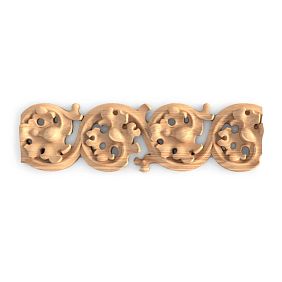


The Philosophy of a Unified Style: Why the House and Garden Should Be Connected
Imagine a 19th-century estate: the main house in the style of Russian classicism with a portico, columns, a pediment, white window casings. Around it — a park with alleys, a gazebo-rotunda (a miniature copy of the house's portico), garden benches with carved backs, a wrought-iron fence repeating the ornament of the porch balusters. Everything is connected. The architect designed not just a house, but a living space where every detail supports the overall idea.
Modern country plots often lack this integrity. The house is designed by an architect, the landscape by a landscape designer (a different person, possibly years later), decor is bought spontaneously (saw a cute wooden owl in a store, bought it, placed it by the porch, even though it doesn't match anything). The result is a stylistic cacophony where the eye doesn't know where to focus.




What does stylistic unity mean?
It does not mean everything should be identical (boring, monotonous). Unity is about common principles:
A common color palette: if the house facade is white with dark casings (contrast), the garden decor should support this scheme — white or dark elements, not bright multicolored ones. If the house is natural wood (log house, timber), the garden decor should also be natural wood (not painted or matching the house's tone).
Common shapes and ornaments: if the house facade has carved casings with a plant ornament (grapes, leaves), the gazebo can have a similar ornament on its railings. If the facade is minimalist (clean lines, absence of decor), the garden furniture should also have simple forms.
Common materials: wood and polyurethane (imitating wood or stone) combine perfectly if selected in a unified style. Metal (wrought-iron elements) can be an accent but should not dominate if the house is wooden or plastered.
A common concept: if the house is in the style of Russian architecture (carving, casings, ridge), the garden is designed in a Russian style (decorative wooden wells, mills, terem-style birdhouses). If the house is modern (panoramic windows, flat roof, minimal decor), the garden is minimalist (geometric flowerbeds, laconic benches, decor made of metal and concrete).
Our factory also produces:


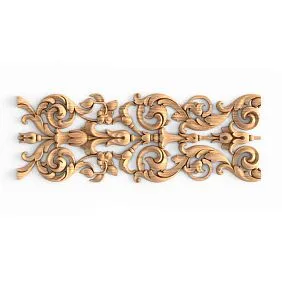


Wooden Garden Decor: From Functional to Artistic
Wooden garden decor— these are elements that decorate the plot, create atmosphere, zone the space, and draw attention to certain points (flowerbeds, paths, water features). Decor can be functional (benches, planters, fencing) or purely artistic (sculptures, wooden figures of animals, birds, fairy-tale characters).
Get Consultation
Wooden flowers: bright accents on flowerbeds
wooden flowers for decor— these are three-dimensional or flat flower figures (daisies, sunflowers, tulips, roses), cut from 10-20 mm thick plywood or solid wood, painted in bright colors (yellow, red, pink, blue) or natural tones (for minimalist styles). The flowers are mounted on stakes (metal rods driven into the ground), creating compositions among living plants or on the lawn.
Sizes of wooden flowers: from miniature (diameter 15-20 cm, for small flowerbeds) to large (diameter 50-80 cm, for accents on the lawn). Large flowers are visible from afar, attract the eye, and serve as landmarks on the plot.
Application: wooden flowers are placed in groups (3-5-7 pieces of different sizes, imitating a bouquet), along paths (one flower every 2-3 meters), on flowerbeds among living flowers (wooden flowers do not wilt, retain brightness all season), at the entrance to the house or gate (a welcoming accent).
Maintenance: wooden flowers are treated with protective compounds (antiseptic, varnish, weather-resistant paint) but require renewal every 2-3 years (touch up faded areas, refresh the varnish). It is recommended to store them in a shed for the winter (to prevent damage from snow and ice).
Wooden Houses and Mills: Architectural Miniatures
Decorative wooden houses (huts, terems) and mills are a traditional element of Russian garden decor. Houses are used as planters (a flower pot is placed inside), birdhouses (with an opening for birds), or decorative objects (simply beautiful, without function).
Sizes: from small (height 30-50 cm, for placement on flowerbeds, along paths) to large (height 1.0-1.5 meters, for placement in the center of the lawn, at the entrance). Large houses can be functional (inside — storage for garden tools, hoses).
Style: Russian izba (log cabin, gable roof, carved window frames, ridge with ornament), terem (multi-tiered roof, openwork carving, turrets), mill (windmill with blades that rotate from the wind, or watermill with a wheel).
Material: solid pine (budget option, requires antiseptic treatment and painting), laminated pine panel (more stable, doesn't crack), larch (expensive but maximally durable, doesn't rot even without treatment).
Application: houses are placed at key points in the garden (at path intersections, in the center of a flowerbed, near a pond), mills - in open areas (where the wind rotates the blades, creating movement, attracting attention).
Carved elements for gazebos: turn a simple structure into a work of art
Gazebo - the center of garden life, a place for rest, tea parties, meetings. A simple gazebo (four posts, roof, benches) is functional but faceless. Carved elements turn it into an architectural object that harmonizes with the house.
Carved eaves boards (pricheliny) - openwork boards attached under the roof eaves of the gazebo. The ornament is through (gaps between carvings), creating a lace effect. Eaves boards protect the roof-wall joint from rain (functionally) and decorate the gazebo (aesthetically).
Carved window frames for gazebo windows or openings - if the gazebo is enclosed (with windows) or semi-enclosed (with openings), frames surround these openings, creating a connection with the house's window frames.
Carved posts and corbels - posts supporting the roof are decorated with carvings (vertical flutes, plant tendrils). Corbels (brackets under beams) - three-dimensional carved elements imitating support, enhancing the visual power of the structure.
Carved balusters for railings - if the gazebo is elevated (with a porch, steps), railings are decorated with balusters (vertical turned or carved posts), creating rhythm and elegance.
Garden furniture from solid wood: benches, tables, swings
Wooden garden furniture - not just function (a place to sit, dine), but also decor. A bench made of solid oak with a carved back (ornament - grapes, leaves) looks completely different than a plastic bench from a store.
Benches: straight (for placement along paths, near house walls), corner (for terrace corners, gazebo), with backrest (comfort) or without (minimalism). Carving on the backrest repeats the ornament on the house or gazebo window frames.
Tables: dining (for terrace, gazebo), coffee tables (low, for the relaxation area). Tabletop is solid (40-50 mm thick, made of oak, larch), legs are turned or carved.
Swings: hanging (on chains or ropes, attached to a crossbar) or on supports (A-frame structure). Seat is wide (for two-three people), backrest is carved.
Material: oak (strength, durability, 30-50 years of service), larch (moisture resistance, suitable for areas near ponds), pine (budget-friendly, requires treatment).
Finish: natural oil (emphasizes texture, protects from moisture, requires renewal every 2-3 years), varnish (creates a protective film, durability 5-10 years), paint (white, gray, black - for modern styles).
Stucco on house facade: architecture that withstands any weather
polyurethane stucco for the house facadeStucco - these are decorative elements that give a building architectural character, style, individuality. Unlike interior stucco, facade stucco must withstand extreme conditions: frost down to -40°C, heat up to +50°C (surface of a dark facade in the sun), rain, snow, ultraviolet, wind loads. Polyurethane for facades is produced with increased density (400-450 kg/m³ compared to 280-320 kg/m³ for interior stucco), contains UV stabilizers (prevent fading, cracking), reinforced with fiberglass (increases bending and impact strength).
Facade moldings and cornices: horizontal articulation
Facade moldings - horizontal strips dividing the facade into tiers (first floor, second floor, attic), creating rhythm and proportionality. Cornices - wide moldings under the roof, visually completing the facade, diverting rainwater from the walls.
Inter-floor moldings (width 80-150 mm) are attached at the level of floor slabs (between first and second floor), visually separating tiers. Profile is classical (roundels, beads) or modern (simple lines).
Window sill moldings (width 60-100 mm) are attached under windows, frame the window from below, visually connect windows into a single composition (if windows are on the same horizontal line).
Cornices under the roof (width 150-300 mm) - the most noticeable element of the facade. A wide cornice creates an impression of monumentality, massiveness (palace style), a narrow one - lightness, modernity. The cornice can be smooth or with ornaments (dentils, meander, plant motifs).
Installation: facade stucco is attached with special adhesive foam (polyurethane, frost-resistant) and additionally secured with dowels (through the stucco into the wall, spacing 40-60 cm). Joints are filled with frost-resistant sealant, after which the stucco is primed and painted with facade paint.
Window and door surrounds: accents that attract the eye
Windows and doors are visual centers of the facade. Surrounds made of stucco (frames, pediments, sills) highlight them, creating architectural depth.
Frames - surrounds around windows, consisting of vertical posts (side strips), a horizontal lintel on top, a sill at the bottom. The profile can be simple (rectangular cross-section with a bevel) or complex (multi-tiered with ornaments). Frame width 80-150 mm.
Pediments (canopies over windows and doors) - decorative projections, visually protecting the window from rain (functionally, a facade pediment doesn't protect, it's purely decor). A pediment can be straight (horizontal strip), arched (semicircle), triangular (gable). Decorated with ornaments (modillions, corbels on the sides).
Sills - horizontal strips under windows, width 100-200 mm, protruding from the wall plane by 50-100 mm. The top surface has a slope (for water runoff), the underside may have a drip edge (groove through which water runs off without seeping under the sill onto the wall).
Columns and pilasters: vertical architecture
Columns (freestanding round pillars) and pilasters (flat columns attached to the wall) are elements of classical architecture that give the facade monumentality and solemnity.
Half-columns – protrude from the wall by half their diameter, visually divide the facade into sections, flank the entrance door (on the sides), windows.
Pilasters – flat, protrude from the wall by 30-50 mm, create vertical accents without the massiveness of columns. Suitable for small houses (where columns would be too bulky).
Capitals – the upper part of a column or pilaster, with ornamentation (Ionic with volutes, Corinthian with acanthus leaves, Doric simple). The capital is attached to the top of the column shaft.
Bases – the lower part of a column, widened, creating a visual support. The base is installed on a plinth or foundation.
Application: columns are used for decorating the entrance group (a portico with columns in front of the door), bay windows (columns at the corners of the projection), terraces and verandas (columns support the roof). Pilasters – for dividing long facades (pilasters every 3-4 meters divide the facade into sections).
Decorative elements: consoles, rosettes, keystones
Consoles (brackets) – three-dimensional elements under cornices, balconies, canopies, imitating support. Consoles are decorative (do not bear load, purely visual), but create an impression of massiveness and reliability. Ornament is Baroque (scrolls, acanthus), classical (fluting, rosettes).
Facade rosettes – round or oval decorative elements with a diameter of 300-600 mm, attached to blank wall sections (between windows, on pediments). Relief from flat to deep, ornament is floral or geometric.
Keystones – decorative elements in the center of an arch above a window or door (at the top point of the arch). Imitate the keystone of an arch (in stone architecture, the keystone holds the entire arch). The keystone protrudes from the plane of the arch, decorated with relief (mask, coat of arms, rosette).
Balusters for porch and terrace: safety and beauty
buy balustersInstalling balusters on a porch means transforming a simple staircase into an architectural element connecting the house and garden. Balusters are vertical posts 700-900 mm high, installed between steps and railings, forming a railing. Function – safety (prevent falls), decor – creating rhythm and style.
Baluster materials: wood, polyurethane, composite
Wooden balusters made of oak, beech, larch – classic, natural, tactile. Balusters are turned (on a lathe, symmetrical, with smooth curves) or carved (ornaments, figures carved by hand or CNC). Standard height 900 mm (from step to railing), cross-section 40×40 or 50×50 mm (square at base and top), in the middle part – turning (figurative, creating volume).
Polyurethane balusters – imitation of wood or stone, lightweight (5-7 times lighter than wooden), moisture-resistant (not afraid of rain, snow, frost), durable (30-50 years without maintenance). Suitable for outdoor installations (porch, open terrace), where wood requires regular treatment.
Composite balusters (wood-polymer composite) – a mixture of wood flour and polymers, pressed. Externally similar to wood (texture, color), but resistant to moisture, rot, insects. More expensive than polyurethane, cheaper than solid oak.
Baluster shapes and styles
Classical – symmetrical turned balusters with smooth curves, resembling a vase (wide base, narrowing in the middle, widening at the top). Suitable for houses in classicism, empire, neoclassical styles.
Baroque – complex turning with multiple curves, spirals, decorative bands. Luxurious, visually heavy, suitable for palatial styles.
Modern – simple shapes (square or round cross-section without turning, minimal details), clean lines. Suitable for minimalist, Scandinavian, loft styles.
Carved – balusters with ornaments (plant tendrils, geometric patterns) carved along the entire height or in specific sections. Suitable for Russian style, country, Provence.
Installing balusters on the porch
Balusters are installed on steps (lower end) and under railings (upper end). Baluster spacing – 10-15 cm between centers (the closer, the denser the railing, safer for children, but more expensive). The lower end of the baluster is fixed in a hole drilled in the step (depth 20-30 mm, diameter equal to the baluster tenon diameter), with glue (wood glue PVA for wood, polyurethane for polyurethane balusters). The upper end fits into a railing groove or is fastened with a screw from the side.
After installing all balusters, railings are mounted (horizontal plank 80-120 mm wide, 30-40 mm thick), covering the balusters from above. Railings are attached to support posts (large posts with a cross-section of 100×100 mm, installed at the beginning and end of the staircase, at turns).
Unity of style: how to link garden decor with house facade decor
Now that we have examined the elements separately, let's combine them into a holistic concept.
Strategy 1: Repeating ornaments
If the house facade has carved window surrounds with a grapevine ornament, use the same ornament on the gazebo soffits, on garden bench backs, on decorative fence panels. Ornament is a visual code linking the elements.
Exact repetition is not necessary (boring, monotonous). Variations are welcome: on window surrounds – grapes with leaves and clusters, on the gazebo – only leaves, on the bench – only vine tendrils. But the general motif is recognizable.
Strategy 2: Unified color scheme
If the house facade is painted in light tones (white, beige, cream) with dark accents (dark brown window surrounds, cornices), the garden decor supports this scheme: wooden furniture is dark (toned to walnut, wenge), decorative elements (houses, flowers) are painted in dark or neutral tones.
If the house is natural wood (log cabin, timber without paint), garden decor is also natural wood treated with oil or varnish (without opaque paint).
Strategy 3: Architectural Rhyme
Facade and garden elements rhyme architecturally: if the facade has columns with capitals, the gazebo also has columns (smaller diameter, but the same style, with capitals). If the facade is decorated with semicircular arches above the windows, the gazebo entrance is also arched.
If the house porch has carved balusters of a specific profile, the garden terrace (or second-floor balcony) is equipped with balusters of the same profile. The rhythm of the balusters creates a visual connection.
Strategy 4: Material Harmony
Polyurethane facade molding (imitating stone or plaster) combines with wooden garden decor if painted in natural tones (white, gray, beige, terracotta). Wood and polyurethane are different materials, but visually harmonize if the colors are chosen correctly.
Avoid bright-colored plastic (red, blue, acid green) in garden decor if the house is classic with molding. Plastic looks cheap and breaks the style.
Russian Style: Traditions of Wooden Architecture in Modern Interpretation
Wooden-style decor— is an appeal to the roots, to architecture that has been shaped for centuries in Russian forests and fields. A log house with carved window surrounds, a roof ridge with a horse figure, cornice valances, a carved porch — symbols of Russian architecture, intuitively recognizable.
Elements of Russian style on the facade
Carved window surrounds — wide boards (width 150-250 mm) framing the window, with openwork or relief carving. Ornament: solar signs (circle with rays), plant motifs (grapes, leaves, flowers), geometric patterns (diamonds, meander), zoomorphic symbols (birds, horses).
Valances (pricheliny) — decorative boards under the roof cornice, protecting log ends from moisture, decorating roof overhangs. Carving is openwork (openings create a lace effect).
Roof ridge — the top edge where the slopes meet. Traditionally crowned with an okhlupen — a board with openwork ornamentation or a sculptural horse figure (symbol of the sun, protector of the house).
Carved porch — a canopy on carved console posts, steps with carved risers, railings with carved balusters. The porch is the face of the house, a business card, the first thing guests see.
Elements of Russian style in the garden
Wooden teremok houses — miniature log houses with carved window surrounds, a ridge, a gable roof. Used as birdhouses, planters, decorative objects.
Decorative wooden well — a log frame (diameter 100-150 mm), gable roof, windlass with chain and bucket. Inside — a planter for flowers or a real well (if there is a water source on the property).
Windmill — a multi-tiered structure 1.5-3.0 meters high, with blades rotating from the wind. The mill is an accent object, placed in an open area.
Carved benches and tables — massive furniture made of logs or timber, with backs decorated with carving (solar signs, plant motifs).
Woven fences — low fences (height 50-80 cm) made of wicker or twigs, zoning the area (separating the vegetable garden from the recreation area, flower beds from the lawn).
Color palette of Russian style
Natural wood (pine, spruce, larch) treated with oil or varnish (light honey, amber tones). If painted — traditional colors of Russian architecture: red (ochre, terracotta), blue (light blue, cornflower blue), green (emerald, malachite), white. Bright colors were used in decor (window surrounds, valances), the main body of the house remained natural wood.
Practical case: designing a country property in a unified style
House: one-story with an attic, white plastered walls, dark brown gable roof. Windows with polyurethane facade surrounds (white, classic profile with coves), window sills under windows (white), cornice under the roof (white, width 150 mm). Entrance porch: three steps, platform, canopy on two columns (polyurethane, white, with capitals).
Garden: lawn, two flower beds (round, diameter 3 meters), paths (paving tiles), gazebo (wooden, 3×4 meters, gable roof), barbecue area, children's playground.
Design plan
Gazebo: white cladding (board painted white, like the house facade), dark brown roof (like the house roof). Under the gazebo cornice — carved valances (plant ornament, echoing the profile of the house window surrounds). Gazebo posts — white, with capitals (miniature copies of the porch column capitals). Gazebo railings — white, with carved balusters (profile the same as on the house porch, but smaller size).
Garden furniture: table and benches made of solid pine, painted white (matching the gazebo and house). Bench backs with carved overlays (plant ornament, like on the gazebo valances).
Flower beds: flower bed edging — wooden border (board width 150 mm, painted dark brown, like the roof). In the center of each flower bed — a decorative wooden flower (sunflower, diameter 60 cm, painted yellow with a brown center).
Paths: along the paths — garden lanterns on posts (posts wooden square section 80×80 mm, painted white, with carved overlays at the base).
Barbecue area: a canopy on four posts (posts are white, like in the gazebo), roof is dark brown. Under the canopy — a table and benches (the same as in the gazebo, same series).
Playground: a playhouse (log cabin painted in natural tones — light wood), swings on an A-frame support (supports are dark brown, seat is white).
Result: the plot looks cohesive. White color (house, gazebo, furniture, lanterns) and dark brown (roofs, flower bed borders) create a unified color scheme. Carved elements (soffits, balusters, overlays) repeat patterns, linking the house and garden. Capitals on porch and gazebo columns — an architectural rhyme. Everything is harmonious, nothing superfluous, each element in its place.
Frequently Asked Questions: answers for confident choice
Will polyurethane facade molding withstand harsh winters?
Yes, if it is high-quality facade molding with frost resistance of at least 100 freeze-thaw cycles. Polyurethane does not absorb water (unlike gypsum, which deteriorates when moisture inside freezes), maintains strength at -40°C. The main things are proper installation (quality adhesive, sealing joints) and painting with facade paint (UV protection).
Is it necessary to treat wooden garden decor with antiseptic?
Yes, if the decor is made of untreated solid wood. Antiseptic protects against rot, mold, wood-boring insects. Applied with a brush in 2-3 coats, each coat dries 4-6 hours. After antiseptic — oil or varnish (protection from moisture, UV). If the decor is sold already treated (primed, painted) — additional treatment is not needed, only periodic renewal of the coating (every 3-5 years).
Can interior molding be used on the facade?
No. Interior molding is not designed for temperature fluctuations, humidity, UV. After 1-2 seasons it will crack, yellow, crumble. Facade molding is 20-30% more expensive, but lasts 30-50 years compared to 1-2 years of interior molding outdoors.
How to secure balusters on a porch so they don't wobble?
The lower end of the baluster fits into a hole drilled in the step (depth 25-30 mm), with adhesive (waterproof D4 carpenter's PVA or polyurethane). The upper end fits into a groove in the railing or is fastened with a screw from the side (pre-drill to avoid splitting). Baluster spacing 10-15 cm (the more frequent, the stiffer the structure). If balusters still wobble — add a horizontal bar (apron) at the mid-height of the balusters, connecting them into a single structure.
How much does comprehensive landscaping for a 10-acre plot cost?
Depends on the volume of decor. Approximate estimate:
-
Facade molding for the house (casings for 6 windows, cornice around the perimeter, door framing, porch columns): 120,000-180,000 rub (materials) + 60,000-90,000 rub (installation, painting).
-
Carved gazebo (3×4 meters, soffits, balusters, posts): 150,000-250,000 rub (turnkey).
-
Garden furniture (table, 2 benches, swings): 80,000-120,000 rub.
-
Decorative elements (houses, flowers, lanterns): 30,000-50,000 rub.
-
Total: 440,000-690,000 rub.
Can be done in stages: first year — facade and porch, second year — gazebo, third year — furniture and decor.
Where to buy quality decor for home and garden?
From manufacturers with experience, portfolio, guarantees. Avoid no-name sellers on marketplaces (quality unpredictable, no guarantees). Check certificates (for facade molding — frost resistance, for wood — moisture content no more than 12%, antiseptic treatment).
Conclusion: create a unified space with STAVROS
Wooden garden decorandpolyurethane stucco for the house facade— these are not just decorations, they are elements that create atmosphere, style, connection between the house and the surrounding space. A harmonious plot is one where the house facade, gazebo, garden furniture, decorative elements speak the same language, wherewooden flowers for decorflower beds echo the patterns on casings, wherebuy balustersfor the porch and terrace means creating a visual rhyme, linking architectural elements, whereWooden-style decorunites the traditions of Russian architecture with the practicality of modern materials.
Company STAVROS — a leading Russian manufacturer of decorative elements for facades and gardens, offering a full range for creating a cohesive space for a suburban plot. STAVROS understands: beauty is not in individual elements, but in their harmonious combination, in the unity of style, in a thoughtful composition, where every detail is in its place.
STAVROS polyurethane facade molding — frost resistance 150 cycles (withstands any Russian winters), density 400-450 kg/m³ (strength, clarity of relief), UV stabilizers (does not fade, does not crack in the sun), fiberglass reinforcement (resistance to impacts, wind loads). Range: casings, cornices, moldings, columns, pilasters, consoles, rosettes, keystones — everything for facade design in a unified style (classic, baroque, modern, contemporary).
STAVROS wooden garden decor — products made of solid pine, oak, larch, treated with antiseptic, ready for installation and painting. Summer Garden collection: wooden flowers (daisies, sunflowers, tulips, diameters 20-80 cm), fairytale houses (birdhouses, planters, height 30-150 cm), windmills (height 1.5-3.0 meters, blades rotate), decorative wells, benches, tables, swings. Russian Style collection: carved casings for windows and doors, soffits for gazebos and porches, carved balusters (classical, baroque, contemporary), carved overlays and consoles.
STAVROS solid wood balusters — oak, beech, larch, standard height 900 mm, cross-section 40×40 or 50×50 mm, figured turning (over 30 profiles in the catalog). Balusters for interior stairs, porches, terraces, gazebos. Finish: unpainted (for self-processing), white primed (ready for painting), painted (white, gray, black, colored according to RAL), tinted (walnut, oak, wenge).
Comprehensive design service — STAVROS designers will create a design project for your property: select facade decor elements (trims, cornices, columns) in a unified style, design a gazebo with carved elements, select garden furniture and decorative objects, create 3D visualization (see the result before work begins), calculate material and installation costs. Design cost — from 15,000 rubles (included in the order cost when purchasing materials).
Professional partner crews from STAVROS perform turnkey installation: installation of facade molding (adhesive, dowels, joint sealing, priming, painting with facade paint), gazebo construction (frame, cladding, roof, installation of carved elements, painting), installation of balusters on porches and terraces, assembly of garden furniture, placement of decorative elements. Material warranty 5-10 years (wood 5 years, polyurethane 10 years), workmanship warranty 3 years.
Choosing STAVROS means choosing a manufacturer with 25 years of experience, own production facilities, full cycle (from design development to installation), widest range (over 3000 decor items for facades and gardens), quality guarantee (strict control at every stage), delivery across Russia (own logistics, reliable packaging).
Create a unified space for your country property, where the house and garden harmoniously complement each other, where every detail is thoughtfully designed, where architecture and nature intertwine into beauty that delights the eye and soul. With materials, projects, and craftsmanship from STAVROS, your dream of a perfect country property will become a reality!


