Article Contents:
- What is a Wooden Beam: Definition, Classification, Essence
- Types of Beams by Processing Method
- Wooden Beam: Sizes for Every Task
- Wood species: from pine to oak
- Coniferous Species: The Foundation of the Construction Market
- Deciduous Species: Beauty with Character
- Application in Construction: From Foundation to Ridge
- Frame construction
- Battens: Roof, Facade, Walls
- Formwork: Temporary but Critically Important
- Floor Joists: A Reliable Foundation Underfoot
- Wooden Beam in Interior Design: From Shelves to Slatted Partitions
- Exposed Beams and Decorative False Beams
- Slatted Partitions: Zoning with Character
- Shelves, Racks, Storage Systems
- Furniture Made from Beams: Eco-Friendly, Stylish, Durable
- Wooden Beam in Creativity and Handmade Crafts
- Children's Toys and Educational Items
- Candle Holders, Stands, Organizers
- Decorative Patterns and Ornaments
- How to Choose a Wooden Beam: A Practical Guide
- First Question: What Exactly For?
- Moisture — A Parameter That Cannot Be Ignored
- Visual Quality Check
- Cross-Section Selection Table
- Protection and Treatment of Wooden Beams: Extending the Material's Lifespan
- Antiseptics: The First Line of Defense
- Fire Protection: Fire Retardants
- Finishing: Beauty and Protection in One Step
- Installation of Wooden Beams: Error-Free Technology
- Acclimatization
- Fasteners: What to Choose
- Expansion Joints
- Wooden Batten and Decorative Space Design: A Connection Not to Be Underestimated
- Modern Trends: Wood as a Conscious Choice
- Biophilic design
- Japanese Wabi-Sabi and Scandinavian Minimalism
- Facade Decor and Classic Style
- Ecology and Sustainability: Why Wood is Better Than Any Substitute
- Storing Wooden Battens: Rules That Preserve Quality
- Where to Buy Wooden Batten: Tips for Choosing a Supplier
- FAQ: Answers to Common Questions About Wooden Batten

There are things that don't need reinventing.Wooden block— belongs precisely to this category. It has existed for as long as carpentry itself, and each new generation of craftsmen rediscovers this material — finding in it what no synthetic analogue can provide: the warmth of living wood, natural strength, and flawless compatibility with any style and era. Today, as architects return to natural materials and interior designers bet on biophilia and organic elements, the batten is experiencing a true renaissance — not as an archaic relic, but as a conscious choice of a thoughtful person.




What is a Wooden Batten: Definition, Classification, Essence
Let's start with a precise definition — without unnecessary words. A wooden batten is a piece of lumber with a rectangular or square cross-section, where both sides of the cross-section do not exceed 100 mm. This parameter is what distinguishes a batten from a beam: a beam is thicker and used in load-bearing structures, while a batten is more compact, maneuverable, and versatile. Essentially, it is the workhorse of the woodworking industry: easy to handle, geometrically precise, and affordable.
Battens are produced by longitudinally sawing logs on frame saws or band saws. Then, depending on the intended use, the blank is either left as sawn or planed, profiled, and dried in kilns. Each processing stage adds to the cost — but also adds to the quality, stability, and ease of installation.




Types of Battens by Processing Method
Sawn batten — the most affordable option, straight from the saw, without additional processing. The surface is rough, moisture content is high, and geometry is approximate. This material is used for rough work: formwork, temporary structures, substrate for concealed finishes.
Planed batten — the next level. All four faces are processed, the surface is smooth and pleasant to the touch. It can already be used in visible structures — shelves, exposed beams, furniture elements. Under clear varnish, a planed pine batten with a lively grain looks excellent.
Kiln-dried batten — material that has undergone forced drying to a moisture content of 8–14%. Geometry is stabilized, and the risk of deformation is minimal. This is the type of batten to choose for finish work, furniture, and interior solutions where precision is critical.
Profiled batten — grooves and tongues are milled on the side faces for precise, gap-free joining of elements. Used in furniture manufacturing and products requiring perfect fitting.
Our factory also produces:

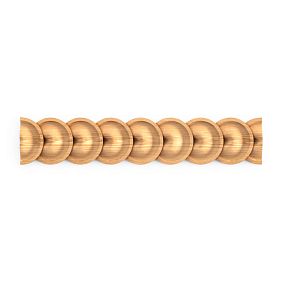
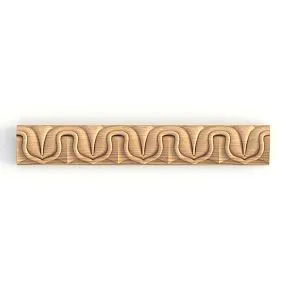

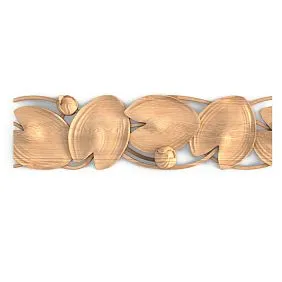
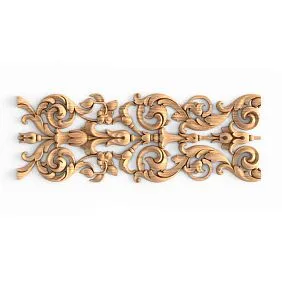


Wooden Batten: Sizes for Every Task
A discussion about wooden batten is impossible without discussing cross-sections. The standard range is 20×20, 25×25, 30×30, 40×40, 40×60, 50×50, 50×70, 50×100, 60×80, 75×100 mm. Length — from 1.5 to 6 meters, with the most common being 3 and 6 m. What does this mean in practice? For lathing under cladding or drywall, you need 40×40 or 50×50. For roof sheathing — 50×50 or 50×100. For floor joists — 50×100 and 50×150. For furniture frames — square sections from 30×30 to 60×60. An important nuance: actual dimensions may slightly differ from nominal ones due to shrinkage during drying — always allow a tolerance of 1–2 mm in precise calculations.
Get Consultation
Wood Species: From Pine to Oak
Not all trees are the same — and this is not just a nice remark, but a practically significant fact. The species determines density, hardness, scent, color, behavior during processing, and resistance to external influences. Before choosing a wooden batten, you need to clearly understand what you expect from the material.
Softwoods: The Foundation of the Construction Market
Pine — the absolute leader. Light, resinous, with an amber hue and a characteristic aroma. It accepts fasteners well, can be worked with any tool, and is relatively moisture-resistant due to natural resins. Pine batten is a universal choice for most construction and finishing tasks. Affordable price and the widest range of sizes make it a favorite among professional crews and private craftsmen.
Spruce — slightly softer than pine, lighter, less resinous. Good for interior work, but outdoors without protective coating, it quickly darkens and succumbs to rot.
Larch — a special category. One of the densest and hardest softwood materials, phenomenally resistant to moisture. Larch batten is the choice for exterior structures, terraces, verandas, garden buildings. Over time, under environmental influence, it acquires a noble silvery-gray patina, highly valued in Scandinavian and Japanese design.
Hardwoods: Beauty with Character
Oak — heavy, dense, incredibly strong. Oak structures in old European buildings have stood for several hundred years. In modern interiors, oak batten is used for furniture, stair elements, decor — everything that should look solid and expensive. When a Balusters for staircase made from the same solid oak is installed next to such a beam, the interior gains a wholeness and expressiveness that cannot be achieved with any imitations.
Ash is slightly lighter than oak, with a fibrous, expressive texture. It is elastic, viscous, and bends well without losing strength. Used for tool handles, sports equipment, and furniture frames.
Beech has a uniform, fine-grained structure, a light pink hue, and respectable hardness. It is indispensable in the production of furniture and kitchen equipment. However, it is sensitive to humidity fluctuations: if storage conditions are violated, it warps.
Birch is an affordable hardwood with a pleasant light tone. It processes well and holds varnish and paint. Birch blocks are used for budget furniture, toys, souvenirs, and small decor.
Application in construction: from foundation to ridge
When builders talk about timber for construction, they don't mean a single material, but a whole family of solutions—because timber is present at every stage of building construction.
Frame construction
Frame houses are experiencing steady growth. Fast construction, good thermal insulation, material availability—all this makes frame technology attractive. The foundation of any frame house consists of studs, beams, braces, and plates. All are made from wooden timber with cross-sections of 50×100, 50×150, or 100×100 mm. Timber in a frame structure works simultaneously in compression and bending, so requirements are high: kiln drying, absence of large knots in critical joints, stable geometry. Mistakes here are costly—not only in money but also in safety.
Battens: roof, facade, walls
The word 'batten' is one of the most frequent in construction lexicon, and for good reason. Under soft roofing, continuous battens made of boards and timber are installed. Under metal tiles, corrugated sheets, ondulin—spaced battens with spacing depending on the roofing material type. Counter-battens—timber laid along rafters over waterproofing, creating a ventilation gap. Without it, condensation systematically destroys both insulation and rafters. On facades, timber battens serve as the base for ventilated systems—under siding, planks, fiber cement panels. Inside rooms—as a base for drywall, paneling, decorative panels. None of these stages can be done without properly selected timber. And when it's time to attach to finished wallsWooden baseboardorwooden cornice, a level and precisely installed base becomes the key to a flawless final result.
Formwork: temporary but critically important
When pouring concrete structures—foundations, floors, stairs—formwork is a mandatory element of the technology. Wooden timber forms a rigid frame that holds panels under the pressure of the concrete mass. Here, strength in bending and compression is crucial, so affordable sawn pine timber with a cross-section of 50×100 or 50×150 mm is used.
Floor joists: a reliable foundation underfoot
Wooden floors on joists are a classic solution that never goes out of style. Joists are horizontal timber laid perpendicular to the future flooring, providing it with a rigid, level base. Standard cross-section is 50×100 or 50×150 mm, spacing is 400–600 mm depending on load. Under joists, smaller-section timber is used for height adjustment and leveling—this allows working even on uneven bases without installing a screed.
Wooden timber in interior design: from shelves to slatted partitions
Construction is only the first life of timber. Its second life, much brighter, unfolds in the world of design and decor. Designers, furniture makers, decorators, and DIY enthusiasts have long appreciated this material for its neutrality, which, with the right approach, turns into an artistic statement.
Exposed beams and decorative faux beams
Wooden beams on the ceiling are a fail-safe interior technique. Moreover, making them load-bearing is not necessary: 'faux beams' made from large-section timber, attached to the ceiling, provide the same visual effect at minimal cost. For beam imitation, aged or thermally treated timber with a cross-section of 80×80 to 100×150 mm is used. They are attached with anchors or metal brackets, coated with tinted oil or wax—and the interior gains depth, history, and that elusive coziness unattainable with plastic.
Slatted partitions: zoning with character
Wooden timber in a vertical arrangement is one of the most elegant ways to zone an open space. Such aSlatted partition does not separate—it hints at a boundary between zones without destroying the airiness of the room. Light penetrates between elements, wood adds organic texture, the space remains unified—yet structured. For such partitions, square timber 40×40 or 50×50 mm, installed with a spacing of 10–15 cm, is ideal. They can be tinted in different shades, combined with metal or glass, arranged in rhythmic patterns. If you want to enhance the effect—refer to the article onDIY slatted partition: installation methods and design options are detailed there.
Shelves, racks, storage systems
A wall-mounted shelf made from solid timber is one of the most popular DIY projects. Planed dry timber with a cross-section of 50×200 or 40×180, length 60–120 cm, on metal brackets or invisible supports—already a ready-made interior object. For books, plants, kitchenware. A rack made from timber and metal pipes is a separate story: industrial aesthetic, simple assembly, configurable. Such a rack became a symbol of loft interiors and remains relevant despite changing trends. To such structures,Furniture Handles made of wood fit organically—they preserve material unity and give furniture a handmade, living character.
Furniture from timber: eco-friendly, stylish, durable
The rectangular geometry of timber is ideal for minimalist furniture. A coffee table from 60×60 timber with metal legs, a bench from aged solid wood, a wabi-sabi style bed from untreated timber with live edges—these are not just functional items, but statements about a lifestyle. For furniture, oak timber is especially good: its dense structure allows for thin parts without losing strength, and its expressive texture speaks for itself. Complement such furniture withwooden handles without coating—and you get a cohesive look where every detail supports the overall idea of naturalness. For those seeking finished solutions, stavros.ru featuresClassic Furniture made from solid wood, where wooden timber is the foundation of the entire structural logic.
Wooden timber in creativity and handmade
Let's talk about what construction articles usually keep silent about — the creative side of this material. You can buy a wooden block even in small quantities today, making it accessible to anyone who wants to create something with their own hands.
Children's toys and educational items
Wooden toys are experiencing a revival. Parents tired of plastic constructions with flashing lights are returning to natural materials. The block is the basis of most classic wooden toys: cubes, pyramids, sorters, construction sets, railways. For children's products, birch, linden, and beech are used, which have undergone chamber drying and are knot-free. The coating is only non-toxic oils or waxes that are safe for children.
Candle holders, stands, organizers
A small piece of block plus a drill — and you already have a candle holder. A few holes for tea candles, an oil coating — done. Phone stands, desktop organizers, and wall key holders are born just as simply. This genre of woodworking requires neither complex tools nor years of experience — but the result always looks stylish because natural wood is beautiful in itself. Complement such productswith a wooden framefor photos or paintings — and your home workshop will turn into a source of truly valuable, one-of-a-kind items.
Decorative patterns and ornaments
Blocks of various cross-sections serve as the basis for decorative ornaments — geometric panels, interior installations, spatial objects. A wooden ornament composed of neatly sawn and assembled blocks is an independent artistic technique popular in Scandinavian and Japanese design. If you're interested in this topic more deeply — the article aboutwooden patternson stavros.ru details the approaches to creating decorative wooden compositions.
How to choose a wooden block: a practical guide
Before placing an order, you need to clearly understand several key parameters. Not all blocks are created equal — and a mistake in choice will cost more than any imagined savings.
First question: what exactly for?
The purpose determines everything else — species, cross-section, moisture content, grade. Rough construction work: sawn pine block with natural moisture. Lathing for finishing: planed dry block 40×40 or 50×50. Furniture and interior: planed dry block of chamber-dried larch, oak, or beech. Outdoor work — terraces, canopies, open verandas: block made of larch or antiseptic-treated pine.
Moisture content — a parameter that cannot be ignored
The moisture content of wood directly determines the material's behavior in a structure. A freshly sawn block contains 40–60% moisture. As it dries, wood shrinks — unevenly: across the grain significantly more than along it. The result — deformation, cracking, loss of geometry. For most interior work, the optimal moisture content is 10–14%. It is checked with a moisture meter — a small device with two needle probes. For any serious work, this is a mandatory tool, not an option.
Visual quality check
Blue stain on the ends is a sign of fungal infection; such a block cannot be used in visible structures and rooms with high humidity. Surface cracks are acceptable; deep through cracks reduce strength. Large knots in load-bearing areas are unacceptable. Warping and twisting indicate that the material has already deformed during storage — it will be difficult to straighten it during installation. Rot in any manifestation — loose, dark areas with disrupted structure — means the material is not suitable for use.
Cross-section selection table
| Task | Recommended cross-section |
|---|---|
| Wall lathing for clapboard | 20×40, 25×50 mm |
| Ceiling lathing | 40×40, 50×50 mm |
| Subfloor joists | 50×100, 50×150 mm |
| Frame partition studs | 50×100, 50×150 mm |
| Decorative shelf | 40×180, 50×200 mm |
| Furniture frame | 40×40, 50×50, 60×60 mm |
| Rafter system | 50×150, 50×200 mm |
| Slatted partition | 40×40, 50×50 mm |
Protection and treatment of wooden beams: extending material lifespan
Wood is a living material vulnerable to moisture, fire, ultraviolet radiation, and biological threats. Proper treatment isn't a luxury but an essential part of working with wood that cannot be skipped.
Antiseptics: first line of defense
Antiseptic compounds protect wood from rot, mold, fungus, blue stain, and wood-boring beetles. Water-soluble ones are for interior work—they don't change color and have no strong odor. Organic-soluble penetrate deeper and are suitable for exterior use. Oil-based provide maximum protection in the harshest conditions. Apply antiseptic before installation, treating all surfaces—especially the ends, the most vulnerable part of any beam.
Fire protection: fire retardants
Fire-retardant compounds significantly slow combustion. Regulatory requirements mandate fire-retardant impregnation for roof and attic structures. Some antiseptics are combined with fire retardants—this is convenient and saves time. Apply with a brush or by immersing workpieces in a solution bath.
Finishing: beauty and protection in one step
Wood oil penetrates the wood structure, preserves tactile warmth, and enhances grain—but requires periodic renewal. Varnish creates a protective film and is more durable than oil. Staining and dyeing change color without altering texture—water-based stains are preferable for living spaces. When a beam becomes the base for a decorative element—say, a frame for decorative molding or framing for furniture moldings — the quality of the finish directly affects the final appearance of the entire composition.
Installation of wooden beams: error-free technology
The best material becomes a source of problems if installed incorrectly. Several rules experienced builders follow without exception.
Acclimatization
Beams brought from outdoors or storage cannot be immediately installed in a heated room. Wood must acclimate to the temperature and humidity of the usage location. Minimum acclimatization time is 48 hours for dry beams, up to a week for material with higher moisture content. Neglecting this rule leads to installed battens or floors starting to 'move'—beams dry out or absorb moisture, and the entire structure deforms.
Fasteners: what to choose
Wood screws—a universal option for joining wooden parts: reliable fixation and disassembly capability. Nails—fast and cheap, but permanent: optimal for rough structures. Anchor bolts—for attaching to concrete and brick bases, essential for installing joists and battens on walls. Metal brackets and plates reinforce joints and distribute load—mandatory in load-bearing nodes of frame structures.
Expansion gaps
Wood moves—this must be accepted as a given. When installing decking, floors, or cladding, always leave expansion gaps: 3–5 mm between elements, 10–15 mm from walls. Without these gaps, wooden decking will buckle when air humidity changes—and no finish material will fix this.
Wooden beams and decorative space design: a connection not to be underestimated
The construction phase is complete—beams are integrated into structures. Now begins the finishing stage where every detail matters. Here, the quality of the foundation directly determines the quality of decoration. Even battens made from beams create a perfect base for Solid Wood Skirting Board flooring, which will lay without gaps or cracks. Precisely calibrated frame geometry ensures that Wooden ceiling baseboard will fit perfectly without trimming or puttying. Stavros.ru offers a full range of solid wood millwork—from floor skirting boards to cornices—all designed for such professional foundations.
When solid wood furniture legs are added to wooden beam frames, wooden Balusters for staircaseand elegantwooden furniture handles— the interior ceases to be a collection of separate items and becomes a unified, well-thought-out space. It is this systematic approach that distinguishes professional work from amateur.
Modern trends: wood as a conscious choice
Architecture and design are returning to natural materials after decades of dominance by plastic, glass, and concrete. And the wooden block finds itself at the center of this shift—not as an archaic element, but as a response to the demands of the time.
Biophilic Design
Biophilia—the human instinctive attraction to nature—has become one of the main principles of modern interior design. Wooden blocks, slats, and beams bring living organic elements into urban dwellings. The texture of wood reduces stress levels and creates a sense of coziness—this is supported by research in neuroaesthetics. Wooden moldings, decorative slats, exposed block structures—all these are tools of biophilic design accessible to everyone. When a space is complemented bywooden ornamentationor carved details, the natural essence in the interior is felt especially strongly.
Japanese wabi-sabi and Scandinavian minimalism
The philosophy of wabi-sabi—the acceptance of imperfection and transience—is best embodied in wood. An unprocessed block with live edges, knots, and tool marks is not a defect but an artistic technique. Furniture in this style is deliberately 'imperfect,' but it is precisely this imperfection that makes it unique. Scandinavian style, on the other hand, emphasizes clean geometry and light tones—and pine blocks are perfectly suited here. Shelves made of light pine, birch table legs, slatted ceiling details—simple elements that yield a complete and stylish result.
Facade decoration and classical style
In classical architecture, wooden blocks often serve as the base for applied decoration. Pilasters, capitals, moldings—all are attached to a block frame. On stavros.ru, you can find both theSolid Wood Itemsfor finishing, as well asdecorative polyurethane elements—moldings, overlays, cornices—that organically combine with wooden structural elements. When door decoration is based on block architraves and applied elements, the result is classic in its pure form: strict, precise, timeless.
Ecology and sustainability: why wood is better than any substitute
Wood is the only building material that literally grows from the air. During growth, a tree absorbs carbon dioxide and stores it in its structure. When wood is made into a block and incorporated into a structure, this carbon remains 'locked' in the building for decades—a wooden structure acts as a kind of carbon depot. The production of wooden blocks requires incomparably less energy than the production of steel, concrete, or aluminum. With responsible forestry—including reforestation and adherence to quotas—forests are a renewable resource. At the end of their life cycle, wooden structures decompose naturally or are processed into biofuel—unlike plastic, which remains in the environment for hundreds of years.
Storing wooden blocks: rules that preserve quality
Outdoors, blocks should be stacked on supports at least 15 cm off the ground, with gaps between rows for air circulation. Cover with a canopy to protect from rain and direct sun, but avoid tight plastic covers: they create a greenhouse effect and promote mold. Indoors, the main thing is to avoid dampness and sudden temperature fluctuations. Blocks for interior work are best stored directly in the room where installation will take place. Without antiseptic treatment, raw material can start to mold within a few weeks during the warm season.
Where to buy wooden blocks: tips for choosing a supplier
Check moisture content: if the seller doesn't have a moisture meter or refuses to show a measurement—that's a red flag. Look at the ends: a fresh cut looks different from one that dried long ago. Ask for documents: a quality supplier will provide a declaration of conformity. Compare not just price: cheap, raw blocks end up costing more in the final result due to deformations and rework. Choose specialized sellers: companies focused on wooden products and finishing materials generally understand the product better and take responsibility for its quality. Onstavros.rua wide range of solid wood products is presented—and here wooden blocks fit organically into a complete system: from structural base to final decoration, fromwooden trimto carved architectural elements.
FAQ: answers to popular questions about wooden blocks
What is the difference between a block and a beam?
A block is lumber where both sides of the cross-section do not exceed 100 mm. A beam is a more massive material, where at least one side is greater than 100 mm. Blocks are more compact, lighter, and cheaper; beams are used in load-bearing structures.
Which block to choose for lathing under drywall?
Planed dry pine block 40×40 or 50×50 mm, moisture content no higher than 14%, without large knots or visible deformations. Raw or warped blocks will create an uneven surface, and installing drywall will become a nightmare.
Is it necessary to treat blocks with antiseptic indoors?
In living rooms with normal humidity—advisable but not mandatory for hidden structures. In bathrooms, toilets, kitchens, basements—mandatory without exception.
How long does a block of natural moisture take to dry?
Approximately 1 mm per day in thickness when stored under a canopy. A 50×50 mm block will reach equilibrium moisture content in about two months. Kiln drying reduces this time to several days.
How to choose a batten for floor joists?
Dry pine or larch batten 50×100 or 50×150 mm, moisture content not exceeding 18%. Larch is preferable for ground-level first floors and high-humidity areas. Antiseptic treatment is mandatory.
What is 'Extra' grade?
The highest grade of lumber — practically free of knots, blue stain, cracks, and deformations. Even geometry, smooth surface. Used for furniture, visible decorative elements. Costs significantly more than standard grades — and worth it.
How to calculate the amount of batten for lathing?
Determine the surface area. Divide by the lathing spacing (usually 0.4–0.6 m). Multiply by the row length. Add 10–15% for waste. For example: a 3×4 m wall with 60 cm spacing — about 20–22 linear meters of 40×40 batten.
Can you paint a wooden batten?
You can and should — if it is used in damp conditions or outdoors. For exterior use — facade paints or impregnating compounds. For interiors — acrylic paints, stains, varnishes. The surface must be sanded and dusted before painting.
What is the difference between sawn and planed batten?
Sawn — from the saw, without additional processing, surface is rough, geometry is approximate. Planed — processed on a machine, surfaces are even and smooth. For visible structures and furniture, planed is needed; for hidden rough work, sawn is suitable.