Article Contents:
- Anatomy of wooden perfection: what makes a blank ideal
- Cellular architecture as the basis of beauty
- Chemical composition: the formula of longevity
- Physical properties: numbers defining possibilities
- Classification of species: from universal to specialized
- Coniferous species: reliability and accessibility
- Hardwood species: diversity without limits
- Exotic species: extravagance with character
- Technological processes: the path from log to blank
- Correct raw material preparation
- The art of wood drying
- Stabilization and modification
- Types of blanks: shape determines possibilities
- Sawn timber: the foundation of foundations
- Sheet materials: when stability is needed
- Profiled Blanks: Time and Effort Saving
- Tools and techniques: transforming a blank into a masterpiece
- Hand tools: the master’s touch
- Power tools: speed and precision
- Machine tools: professional level
- Creative techniques: from traditions to innovations
- Wood carving: ancient art in the modern world
- Inlay and marquetry: painting with wood
- Turning: symmetry and dynamics
- Pyrography: drawing with fire
- Application areas: where wooden blanks find their calling
- Decorative and applied art
- Functional items
- Architectural elements
- Artistic tools and accessories
- Selecting quality blanks: professional criteria
- Assessment of wood quality
- Origin and certification
- Packaging and storage
- Modern Trends and Innovations
- Digital Technologies in Woodworking
- Ecological Technologies
- Hybrid Materials
- Economic Aspects of Creativity
- Project Budget Planning
- Cost optimization
- Commercialization of Creativity
- STAVROS: Where the Quality of Wooden Blank Meets Creative Inspiration
Touch the silky surface of an oak board. Feel the warmth radiating from birch under your fingers. Inhale the scent of pine resin. What happens at this moment? Your imagination instantly begins to sketch images of future creations, your hands instinctively envision tool movements, and ideas form in your mind, eagerly awaiting to be brought into reality. This is how the magic of working with wooden blanks for creativity — a material that has served humanity faithfully for millennia in creating beauty.
But why wood? In an era of synthetic materials and digital technologies, when you can print almost any shape on a 3D printer, wood continues to enchant craftsmen around the world. The secret lies in that unique combination of physical properties and aesthetic qualities that nature created over millions of years. Every tree is an individuality, every blank is a unique story of growth, climatic conditions, soil, and time.
Working with wood is a dialogue with living nature. The material responds to tool contact, suggests the direction of the blade, resists improper movements. An experienced craftsman feels the character of each species, knows its preferences and weaknesses, and can extract maximum beauty from every piece of wood.


Anatomy of Wooden Perfection: What Makes a Blank Ideal




Cellular Architecture as the Basis of Beauty
The beauty of the finished product is laid down even at the microscopic level of wood structure. Each cell performs its function: tracheids provide strength along the grain, parenchymal cells store nutrients, vessels transport water and minerals from roots to crown. This complex architecture creates a unique combination of strength, lightness, and decorative appeal.
Annual rings tell the story of a tree’s life — wide rings indicate favorable years with ample moisture and nutrients, narrow rings signify droughts and hardships. It is precisely this alternation that creates a unique pattern, which craftsmen and lovers of beauty highly value.
Radial cells, visible as radial lines on the end grain, give wood a distinctive decorative quality. In oak, they create characteristic "mirrors" on radial cuts, in beech — fine speckling, in pine — almost imperceptible streaks.
Our factory also produces:


Chemical Composition: The Formula of Durability
Wood consists of three main components: cellulose (40-50%), lignin (20-30%), and hemicellulose (20-25%). Cellulose provides fiber strength, lignin binds them into a single structure, hemicellulose imparts elasticity. Extractives — resins, tannins, essential oils — determine color, scent, and resistance to biological damage.
It is precisely the chemical composition that determines the behavior of wood during processing and use. High resin content in coniferous species provides natural protection against moisture and insects. Oak tannins make it practically immune to fungi and bacteria. Low extractive content in linden explains its popularity among carvers — the material does not affect tools and is easily stained.
Get Consultation
Physical Properties: Numbers Defining Possibilities
Wood density ranges from 300 kg/m³ in balsa to 1200 kg/m³ in ironwood. For most creative projects, optimal density is 400-700 kg/m³ — such materials are strong enough, yet do not create processing problems.
Moisture is a critically important parameter. Freshly cut wood contains 40-80% moisture, making it unsuitable for creative work. Properly dried material has moisture content of 8-15% and is ready for any kind of processing.
Swelling coefficients determine dimensional stability when moisture changes. In quality wood, these indicators are predictable and allow for anticipating possible dimensional changes in the finished product.
Species Classification: From Universals to Niche Specialists
Coniferous Species: Reliability and Accessibility
Common pine is a classic material for beginner craftsmen. Soft, easy to work with, it has a pleasant resinous scent. Clearly expressed texture with contrast between early and late wood creates an expressive pattern. Resin content provides natural protection against moisture and pests.
European spruce has a more uniform structure and lighter color. Less resin makes it preferable for food-contact items. High resonant qualities explain its popularity in musical instrument manufacturing.
Siberian larch is a unique coniferous species with the density of broadleaf trees. High resin content and special chemical composition make larch practically immune to rot. Attractive reddish hue and expressive texture are valued in decorative items.
Siberian cedar attracts with ease of processing and bactericidal properties. Cedar items are not only beautiful but also beneficial to health due to the release of phytoncides.
Deciduous Woods: Diversity Without Boundaries
Karelian Birch — a gem of Russian forests. Its unique wavy texture creates distinctive patterns reminiscent of marble or malachite. High hardness requires skill to work with, but the result surpasses all expectations.
Small-leaved Lime — a traditional material for Russian woodcarvers. Soft, uniform, practically odorless and tasteless. Easily cuts in any direction, does not splinter, holds fine details well. Ideal for delicate artistic carving.
European Oak — a symbol of strength and durability. High tannin content provides natural preservation. Expressive texture with large vessels creates an elegant pattern. Requires experience to work with due to high hardness.
European Ash — a benchmark for structural uniformity. Small pores evenly distributed across the cross-section ensure a smooth surface regardless of processing. Easily stains, bends well after steaming.
Common Ash combines the strength of oak with elasticity. Contrasting texture is striking in large items. Traditionally used for sports equipment and tool handles.
Exotic Woods: Extravagance with Character
Merbau from Southeast Asia is attracted by its golden-brown color and natural oiliness. High moisture resistance makes it ideal for items used under harsh conditions.
Wenge from West Africa — material for true connoisseurs. Dark brown, almost black color with contrasting light veins creates a dramatic effect. High hardness requires professional processing skills.
Teak — legendary shipbuilding wood. High oil content provides unique resistance to moisture and seawater. Elegant golden color and pleasant texture make teak a sought-after material for elite items.
Processing Technologies: The Path from Log to Blank
Proper preparation of raw material
Quality of finished wooden blanks for creativity is established even in the forest. The time of felling affects the properties of wood — winter logs are preferable due to the cessation of sap flow and minimal moisture content in the trunk.
The method of felling and delimbing determines the presence of internal stresses in blanks. Careful felling with proper sawing sequence minimizes cracking and warping.
Primary processing includes bark removal, end trimming, and cutting into blanks. Each operation must be performed considering the anatomical structure of the trunk and grain direction.
The Art of Wood Drying
Drying is a critically important process that determines all future material properties. Natural air drying takes years but ensures maximum preservation of the wood’s natural qualities.
Kiln drying accelerates the process to weeks, but requires precise adherence to temperature and humidity regimes. Overly aggressive regimes lead to internal cracks, warping, and loss of strength.
Modern technologies offer alternative methods — vacuum drying, microwave drying, drying in liquid heat carriers. Each method has its advantages and areas of application.
Stabilization and Modification
Thermal modification at 160–220°C improves dimensional stability and biostability. The process is conducted in a steam environment without oxygen access, preventing combustion.
Polymer-based chemical stabilization transforms wood into a material with unique properties. The polymer fills pores and microcracks, increasing density and hardness while preserving workability.
Impregnation with special compounds can impart new properties to wood — fire resistance, biostability, color change, improved mechanical characteristics.
Types of blanks: shape determines possibilities
Plywood: The Foundation of Foundations
Planks of various thicknesses — a universal material for most projects. Standard sizes 25, 32, 40, 50 mm cover needs ranging from thin decorative panels to massive sculptures.
Square or rectangular blocks are convenient for turning, carving, making frames and frames. Size range from 20×20 to 100×100 mm allows selecting the optimal option for any task.
Small-section strips are used for decorative lattices, mosaics, assembled structures. Dimensional accuracy is critically important for tight element connections.
Sheet Materials: When Stability is Needed
Plywood combines the beauty of natural wood with the stability of a multi-layered structure. The cross-oriented layer arrangement prevents warping and cracking, even in large-sized items.
Plywood panels with a core of solid wood strips and veneer facing offer a compromise between solid wood and plywood. Thickness from 16 to 30 mm is suitable for medium-complexity furniture projects.
MDF with natural veneer finish provides access to premium wood species within a limited budget. The stable base eliminates deformation, while the veneer delivers natural beauty.
Profiled blanks: saving time and effort
Turned blanks — cylinders, cones, spheres — are ready for finishing and decoration. Precise adherence to dimensions saves time on rough processing.
Milled profiles allow creating complex shapes without special equipment. Moldings, cornices, baseboards Ready for installation or can serve as a base for further decoration.
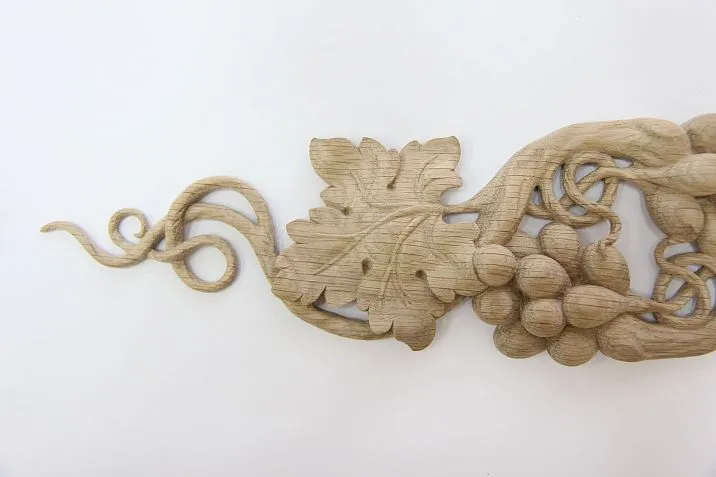
Carved elements — rosettes, inlays, corner pieces — add elegance to any item. Machine carving ensures precision and repeatability of details.
Tools and techniques: transforming blanks into masterpieces
Hand tools: the touch of the craftsman
Working with hand tools provides full control over the process and unique expressiveness of the result. Every stroke carries the mark of the craftsman’s individuality.
Carving chisels — the primary tool of the woodcarver. Chisels of various widths and profiles, gouges for scooping semicircular recesses, and detail chisels for fine detailing — each tool has its specific purpose.
Crosscut saws for blanks must provide a clean cut without splintering. Fine teeth, proper set, and sharpness of the blade determine the quality of the cut.
Hand planes and scraper planes create surfaces with the distinctive texture of handwork. Modern tools with carbide blades retain sharpness significantly longer than traditional ones.
Power tools: speed and precision
Jigsaws provide high-quality curved cuts. The choice of blade depends on the material — fine teeth for thin blanks, coarse teeth for fast cutting of thick boards.
Router bits open up limitless possibilities for edge profiling, dado cutting, and joint creation. The router bit set must match planned operations.
Various types of sanders accelerate surface preparation for finishing. Belt sanders for rough work, eccentric sanders for finishing, delta sanders for hard-to-reach areas.
Machine tools: professional level
Turning lathes for making rotational bodies — from simple handles to complex architectural elements. Power, rigidity, and spindle accuracy determine the capabilities of the equipment.
CNC routers allow reproducing the most complex 3D shapes with perfect accuracy. Programmability ensures repeatability of the result.
Belt saws for precise cutting of blanks. Thin blade allows performing curved cuts with minimal material waste.
Creative techniques: from traditions to innovations
Wood carving: ancient art in the modern world
Carving is one of the oldest arts of humanity. Each nation developed its own techniques, motifs, and traditions. Modern masters creatively reinterpret their ancestors’ heritage, creating works resonant with our time.
Low-relief carving creates a three-dimensional image on a flat surface. Different depths of detail work create an illusion of spatiality. The technique is accessible to beginners but allows creating museum-level works.
Three-dimensional sculptural carving requires spatial thinking and high skill. Work proceeds from general forms to details, each cut is carefully planned and weighed.
Openwork carving creates delicate compositions with play of light and shadow. Especially effective under backlit conditions, when shadows from openings create additional decorative effects.
Inlay and marquetry: painting with wood
Techniques of creating images from pieces of various species open up unique opportunities for artistic self-expression. The play of natural colors and textures creates effects unattainable by other methods.
Inlay uses elements of varying thickness, embedded into the base. The technique allows creating volumetric compositions with rich play of light and shadow.
Marquetry uses thin veneers glued onto a base. The ability to use veneers of rare species expands the artist's palette.
Turning: symmetry and dynamics
Turning creates items with axial symmetry — from utilitarian objects to works of art. Modern turning machine capabilities allow realizing the most daring concepts.
Turning between centers is used for long parts — balusters, furniture legs, tool handles. This technique requires understanding of wood behavior under load.
Turning in a chuck allows creating hollow forms — vases, bowls, lamps. Special skill is required for thin-walled items.
Pyrography: drawing with fire
Pyrography transforms a simple wooden surface into a canvas for artistic creation. Modern pyrography devices with temperature control allow creating works of photographic precision.
Wood selection is critically important — light-colored species with uniform structure yield the best results. Surface preparation before processing determines the quality of the final result.
Applications: where wooden blanks find their purpose
Wood occupies a special place in decorative-applied art. The naturalness of the material, the richness of textures, and the possibility of fine processing create unique opportunities for artistic self-expression.
Solid Wood Items Carved panels transform interiors, create accent zones, and emphasize the style of the room. Modern designers actively use wooden carving in combination with other materials — metal, glass, stone.
Sculptural compositions made of wood bring the living energy of nature into space. Each piece is unique due to the uniqueness of the wood's texture and grain.
Functional items
Solid wood furniture never goes out of fashion. Tables, chairs, cabinets, beds — each item can become a work of art with a creative approach to its creation.
Kitchenware made of wood is valued for its eco-friendliness and functionality. Cutting boards, spatulas, bowls are not only practical but also adorn the kitchen with their natural warmth.
Wooden toys develop children's tactile sensations, are safe for health, and durable. Each toy carries a part of the soul of the craftsman who created it.
Architectural elements
Mouldings, cornices, balusters, handrails — all these elements define the architectural style of a building. Modern technologies allow reproducing historical samples or creating original compositions.
Wooden interior finishing creates an atmosphere of coziness and comfort. Panels, ceilings, staircases — the possibilities of application are limited only by the designer's imagination.
Artistic tools and accessories
Frames for paintings, stands for sculptures, cases for musical instruments — all these items require special attention to the quality of the material and craftsmanship.
Musical instruments are the highest expression of craftsmanship in working with wood. The acoustic properties of different species are used to create a unique sound for each instrument.
Selection of quality blanks: criteria of professional approach
Assessment of wood quality
Visual inspection is the first stage of quality assessment. The color should be uniform, without spots or darkening. Cracks, knots, resin pockets must correspond to the declared grade of material.
Moisture is controlled by electronic moisture meters. For creative work, optimal humidity is 8-12%. Material with increased moisture requires additional drying.
Geometric dimensions must correspond to declared values with a tolerance of ±1-2 mm. Curvature and twisting are unacceptable for quality material.
Origin and certification
Legality of wood origin is confirmed by appropriate documents. FSC certification guarantees compliance with principles of sustainable forestry.
Climate conditions of growth affect the properties of wood. Northern forests grow more slowly, but have a denser and more stable structure.
Packaging and storage
Proper packaging protects material during transportation and storage. Polyethylene film prevents changes in humidity, padding eliminates deformation.
Storage conditions must ensure stable humidity and temperature. Direct exposure to sunlight may cause cracking and color change.
Modern trends and innovations
Digital technologies in woodworking
CNC machines have revolutionized wood processing capabilities. Previously requiring months of manual labor, complex three-dimensional forms are now created in hours.
3D modeling allows visualizing the project before starting work, calculating material consumption, and optimizing cutting layouts.
Laser cutting and engraving open new possibilities for decorating items. Precision and repeatability are unattainable with manual methods.
Ecological technologies
Bio-treatments replace chemical compositions, providing wood protection without harm to health or the environment.
Zero-waste technologies convert sawdust and shavings into valuable raw materials for composite materials or biofuel.
Certification of origin guarantees compliance with principles of sustainable forestry and social responsibility.
Hybrid materials
Wood-polymer composites combine the beauty of wood with the practicality of synthetic materials. Resistance to moisture and biological damage expands application areas.
Thermowood is obtained by processing at high temperature without chemical additives. Improved stability and biostability while maintaining eco-friendliness.
Economic aspects of creativity
Project budget planning
Material cost can range from 30% to 70% of total project expenses depending on complexity. Proper planning helps avoid overspending.
Pricing depends on wood species, processing quality, and blank sizes. Exotic species may cost 10-20 times more than local ones.
Seasonal price fluctuations are related to the specifics of wood harvesting and drying. Planning purchases can save up to 15-20%.
Cost optimization
Group purchases reduce material and delivery costs. Creative collectives often organize joint orders.
Using production waste for small items increases material efficiency.
Proper storage prevents material damage and associated losses.
Commercialization of creativity
The market for handmade items shows steady growth. Uniqueness and quality are increasingly valued by consumers.
Online platforms simplify the sale of creative works and expand sales geography.
Workshops and training can become an additional income source for experienced artisans.
STAVROS: where quality wooden blanks meet creative inspiration
In a world saturated with mass production and synthetic materials, STAVROS chose the path of preserving traditions of working with natural wood. Here, they understand that
wooden blanks for creativity — are not just raw materials for production, but the foundation for realizing the most daring creative ideas, the basis for creating works that will delight generations. The philosophy of STAVROS is based on deep respect for wood as a living material, requiring special understanding and careful handling. Each blank undergoes careful selection, where not only technical characteristics but also aesthetic qualities and potential for creative use are considered.
The company's assortment includes traditional Russian species — pine, birch, oak, linden — as well as exotic materials from around the world. Each species is available in various formats — from thin strips for mosaics to massive beams for sculptural carving.
STAVROS' technological processes combine time-tested methods with modern innovations. Wood drying occurs in special chambers with precise temperature and humidity control. Each batch undergoes quality control to ensure compliance with declared characteristics.
Special attention is paid to packaging and logistics. Special packaging protects materials from damage during transport, while an extensive network of warehouses ensures fast delivery to any point in the country.
The STAVROS team consists of professionals with years of experience working with wood. They are ready to consult on selecting optimal materials for a specific project, explain the peculiarities of processing different species, and share craftsmanship secrets.
Service support does not end with material sales. STAVROS offers technical support at all stages of the creative process, helps resolve arising issues, and provides warranty service.
Choosing STAVROS, you get not just quality materials, but a reliable partner in your creativity. This is an investment in the quality of your future works, a guarantee that the material will not let you down at the most critical moment, and confidence that each blank will help you bring your most ambitious ideas to life.
263.29 $ р.