Article Contents:
- Why Furniture Needs Decorations: The Philosophy of Decoration
- Aesthetic Function: Beauty as a Need
- Individualization: Your Furniture is Unique
- Value Enhancement: Investment in Quality
- Cultural Function: Connection with Traditions
- Types of Wooden Furniture Decorations: Variety of Elements
- Decorative Overlays: The Foundation of Furniture Decor
- Decoration Sets: Ready-Made Solutions
- Carved Rosettes: Accent Elements
- Furniture Molding: Frames and Trims
- Carved Legs and Supports: Functional Beauty
- Cornices and Friezes: Finishing Elements
- Pilasters and Columns: Architectural Elements
- Materials for Furniture Decorations: Wood Selection
- Oak: The King Among Species
- Beech: elegant alternative
- Ash: Expressive Texture
- Other Wood Species: Walnut, Linden, Pine
- Styles of Furniture Decor: From Classic to Modern
- Classicism: Symmetry and Order
- Baroque: opulence and drama
- Rococo: Elegance and Playfulness
- Modern: natural lines
- Modern Minimalism: Concise Forms
- Application of Wooden Decorations: Furniture Transformation
- Kitchen Fronts: From Simple to Sophisticated
- Cabinets and Dressers: Decorating Bedrooms and Living Rooms
- Doors: Entry and Interior
- Tables and Chairs: Furniture for Dining Areas
- Shelving and Shelves: Decorative Storage
- Bed Headboards: Bedroom as a Sanctuary
- Manufacturing and Installation Technology: From Blank to Finished Product
- Design: The Birth of an Idea
- Wood Preparation: Drying and Selection
- Carving: Creating Shape and Ornament
- Sanding: Achieving Smoothness
- Finishing: Color and Protection
- Installation: Mounting on Furniture
- Care for Wooden Decorations: Preserving Beauty
- Regular Cleaning
- Protection against damage
- Recoating
- Frequently Asked Questions: Addressing Doubts
- Can Wooden Overlays Be Used on Chipboard Furniture?
- How to Choose the Right Size Overlays for My Furniture?
- Do Wooden Elements Need to Be Painted Before Installation?
- What glue is best to use?
- Can Decorative Elements Be Custom-Made to My Sketch?
- How Much Do Wooden Furniture Decorations Cost?
- How Long Do Wooden Elements Last?
- Can Decorative Elements Be Used on Furniture in the Bathroom?
- How to Match Furniture Decor with the Overall Interior Style?
- Can Overlays Be Installed Independently or Is a Craftsman Needed?
- Conclusion: Turn Your Furniture into a Work of Art with STAVROS

Imagine walking into a room and seeing furniture that seems to speak to you. It doesn't remain silent like a faceless mass of chipboard covered in plastic. It tells stories—through carved patterns, elegant lines, the noble texture of natural wood. Every wardrobe, every dresser, every door becomes a work of art when touched by the skill of a carver.Decoration of wooden items— is not just decorating a surface. It is the transformation of a simple object into something that evokes admiration, something you want to look at, something you want to touch.
Furniture surrounds us every day. We use it without thinking. But what if every item in your home became a source of aesthetic pleasure? What if kitchen fronts turned into a gallery of carved art? What if the dresser in the bedroom became not just a place to store linens, but an exquisite piece worthy of a palace? Wooden furniture decorations make this possible—they bring back into our homes the beauty that mass production has displaced.




Why Furniture Needs Decorations: The Philosophy of Decor
Why decorate furniture? After all, it is functional on its own. A wardrobe stores clothes, a table serves for meals, a bed is for sleeping. Isn't that enough? This is exactly what people think who don't understand that a home is not just a place to live. It is a space where we spend most of our lives, where our mood is shaped, where we rest our soul and body.




Aesthetic Function: Beauty as a Need
Humans are wired to need beauty. It is not a luxury, not a whim—it is a basic need, just like food and sleep. Surrounding ourselves with beautiful things makes us feel better, calmer, more confident. Ugly, faceless furniture is depressing, creating a sense of emptiness and meaninglessness.
Wooden furniture decorations fill space with meaning. A carved pattern is not a random set of lines; it is a composition governed by the laws of harmony, rhythm, and proportion. Floral motifs remind us of nature, geometric patterns speak of order and structure, figurative elements evoke human presence and history.
Our factory also produces:


Individualization: Your Furniture Is Unique
Mass production has killed individuality. You walk into a furniture store—everything looks the same. IKEA in Moscow looks exactly like IKEA in Tokyo or New York. Dull uniformity, where your wardrobe is indistinguishable from a million others.
When you add carved overlays, decorative wooden elements to furniture, you make it one of a kind. Even if the basic wardrobe is bought from a regular store, carved decor turns it into an exclusive item. No one else has exactly the same furniture. It is yours, personal, reflecting your taste and character.
Get Consultation
Increasing Value: An Investment in Quality
Cheap furniture quickly looks shabby, loses its appearance, and breaks. After a few years, it is thrown away and new furniture is bought. This is an endless cycle of consumption that brings no joy.
Furniture adorned with quality wooden elements lasts for decades. It does not become morally obsolete because classic patterns are timeless. Over time, it becomes more valuable—both materially, as an antique piece, and emotionally, as a family heirloom preserving memories.
Cultural Function: Connection with Traditions
Wood carving is an ancient art. Our ancestors decorated their homes, furniture, and utensils with carvings. Each region had its own traditions, patterns, and techniques. By bringing wooden decorations back into modern interiors, we restore this connection with the past, with culture, with the craftsmanship of our ancestors.
Types of Wooden Furniture Decorations: Variety of Elements
The world of wooden furniture decor is vast. There are dozens, hundreds of types of elements, each performing its own function and creating its own effect. Let's explore what can be used to transform your furniture.
Decorative Overlays: The Foundation of Furniture Decor
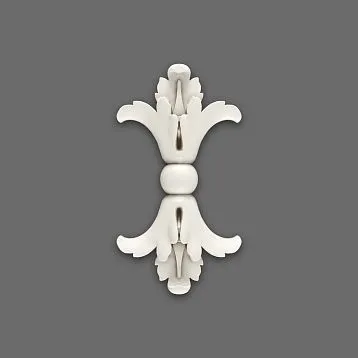
Decorative Inserts— are carved elements of various shapes and sizes that are mounted on the surface of furniture. They can be central (placed in the middle of the facade), corner (installed in corners), or side (framing the edges).
Overlays can be symmetrical — with identical patterns relative to the central axis. Such elements create a sense of order and classical harmony. Asymmetric overlays, on the contrary, are dynamic, modern, creating movement and unpredictability.
The sizes of overlays vary from miniature (50-80 mm) to large panels (500-800 mm and more). Small overlays are used for accents, punctuation, and creating rhythm. Large ones become compositional centers, dominants, around which the entire decorative program is built.
Overlays are made using various carving techniques. Relief carving creates volume, interplay of light and shadow. Openwork carving — a delicate, airy effect. Contour carving — graphic quality, clarity of lines. Combined technique combines the advantages of all types.
Decorative Sets: Ready-Made Solutions
Furniture Decorative Sets— are sets of several elements selected by style, size, and ornament. They are intended for decorating a specific piece of furniture: a wardrobe, chest of drawers, door, or wall unit.
A set typically includes a central overlay (the largest and most expressive), corner elements, side strips, and rosettes for decorating handles or keyholes. All elements harmoniously combine, creating a cohesive composition.
The advantage of a set is that you don't need to select elements yourself, think about proportions and compatibility. The designer has already done it for you. You get a ready-made solution that only needs to be mounted.
Sets vary by style. Classical sets with acanthus leaves, rocaille, cartouches. Baroque with lush scrolls, floral garlands, dramatic forms. Modern with laconic geometric patterns. Ethnic with traditional ornaments from different cultures.
Carved Rosettes: Accent Elements
A rosette is a round or polygonal element with an ornament radiating from the center. Rosettes can be flat and three-dimensional, simple and complex, small and large.
Rosettes are used in various places on furniture. On the center of the facade — as a compositional center. In corners — for decorating joints. Around handles, keyholes — for their decorative framing. On chair backs, bed headboards — as an independent decorative element.
The ornament of a rosette can be floral (a flower with petals), geometric (a pattern of polygons, rays), solar (stylized sun), figurative (mascaron — a face of a person or mythical creature).
Furniture Molding: Frames and Trims
Molding products are long profiled strips used for framing facades, creating frames, and decorative inserts. They can be smooth and carved, narrow and wide, simple and complex in profile.
Molding allows creating relief, division, and structure on a flat facade. Several strips forming rectangles or rhombuses turn a simple wardrobe door into a classic paneled facade. Molding with carved ornament becomes an independent decorative element.
The use of molding is especially relevant when restoring or updating old furniture. A simple Soviet-era wardrobe, to which carved strips and rosettes are attached, turns into an exquisite interior item.
Carved Legs and Supports: Functional Beauty
Legs are not only supports but also an important element of furniture design. Carved legs turn an ordinary table, chair, or chest of drawers into a work of art.
Legs vary in shape. Straight, conical, baluster-shaped (with a bulge in the middle), cabriole (curved, in the shape of an elegant letter S), animal paws (lion's, eagle's). Each shape corresponds to a specific style.
Carving on legs can be complex, covering the entire surface, or local, in the form of individual elements — rosettes, bands, capitals. Carved legs are especially important for formal furniture — living room tables, consoles, armchairs.
Cornices and friezes: finishing elements
A cornice is a horizontal protruding element that crowns the upper part of a wardrobe, sideboard, or wall unit. It creates completeness, architectural quality, and makes the furniture monumental.
A frieze is a decorative strip that runs along the upper or lower part of furniture, often adorned with carved ornament. A frieze can depict floral garlands, geometric patterns, or narrative compositions.
Cornices and friezes are especially characteristic of classical furniture. They give it a resemblance to architectural elements, creating an impression of solidity and respectability.
Pilasters and Columns: Architectural Elements
A pilaster is a flat vertical projection imitating a column. A column is a three-dimensional element. Both are used for decorating the side parts of wardrobes, sideboards, and bookshelves.
Pilasters and columns have a classical structure: base (foundation), shaft (main part), capital (upper part). The shaft can be smooth, fluted (with vertical grooves), or carved. The capital is decorated with ornamentation — Ionic (scrolls), Corinthian (acanthus leaves), Doric (simple forms).
The use of architectural elements in furniture creates a connection with grand architecture, gives the interior a monumental quality, and makes the furniture the central object of the room.
Materials for furniture decorations: wood selection
The quality of decorative elements directly depends on the material. Which wood to choose for decorating your furniture?
Oak: The King Among Species
Oak is the most prestigious species for making furniture decor. Its dense, hard wood is practically eternal. Oak elements last for centuries without losing shape, deforming, or deteriorating.
Oak's texture is expressive, with large pores and distinct annual rings. The color varies from light straw to dark brown, depending on the processing method. Bog oak (aged in water) acquires an almost black color, noble and mysterious.
Oak is ideal for carving. It holds fine details, allowing for the creation of complex, openwork ornaments. At the same time, oak carving does not chip, break, and remains clear and expressive.
The only drawback of oak is its high cost. But if you are creating furniture for centuries, if quality and prestige are important to you, oak is the only correct choice.
Beech: Elegant Alternative
Beech is a species that is close to oak in many characteristics but somewhat cheaper. Beech is dense, durable, and easy to work with. Its wood is uniform, fine-pored, with a delicate pinkish hue.
Beech is excellent for fine, elegant carving. Small details, thin lines, and complex ornaments turn out perfectly in beech. Beech carving has a special delicacy, elegance, and airiness.
After processing, beech can be tinted, painted, or patinated to achieve any desired shade. The natural color of beech — light pink, creamy — creates a feeling of warmth, softness, and coziness.
Beech is sensitive to humidity, so beech elements require stable operating conditions. For the kitchen, where there are vapors and temperature fluctuations, it is better to choose more stable species.
Ash: expressive texture
Ash is a species with a very contrasting, expressive texture. Ash's annual rings are distinct, creating a beautiful pattern on the surface. The color ranges from light cream to olive.
Ash is strong, elastic, and withstands loads well. It is ideal for making carved legs, supports, and structural elements that should be not only beautiful but also functional.
Carving on ash is expressive due to its contrasting texture. Relief elements are emphasized by the natural wood grain, creating an additional visual effect.
Other species: walnut, linden, pine
Walnut is valued for its noble dark color, beautiful texture, and strength. Walnut carved elements look luxurious, respectable, and are ideal for expensive furniture.
Linden is a soft species that is ideal for complex, fine carving. Carvers love linden for its obedience, for allowing the creation of the smallest details. But linden is less durable and requires careful handling.
Pine is an affordable species suitable for budget projects. Pine elements are cheaper but less durable. Pine contains resin, which can create problems during finishing.
Styles of furniture decor: from classic to modern
The choice of style for decorative elements is a matter of the overall interior concept, personal preferences, and the functional purpose of the room.
Classicism: symmetry and order
The classical style is strict symmetry, proportionality, and noble restraint. Ornaments are based on ancient motifs: acanthus leaves, meanders, rosettes, palmettes.
Classical furniture decor does not tolerate excess. Every element is in its place, every line has meaning. The carving is shallow, neat, emphasizing the form, not overloading it.
The color palette of classicism is natural wood, white, cream, gilding. Classic furniture with carved decor fits perfectly into strict, respectable interiors — studies, living rooms, dining rooms.
Baroque: opulence and drama
Baroque is the opposite of classicism. Here, excess, drama, and emotion reign. The carving is abundant, complex, and multi-layered. Ornaments densely cover the surface, leaving no free space.
Characteristic elements of Baroque: scrolls, rocaille (asymmetrical shells), cartouches (decorative shields), garlands, putti (child angel figures). The carving is deep, creating strong shadows and dramatic effects.
Baroque furniture requires an appropriate setting. In a small room, it will look bulky. But in a spacious formal living room, with high ceilings and stucco — Baroque creates an atmosphere of luxury and grandeur.
Rococo: elegance and playfulness
Rococo is a lighter, more graceful continuation of Baroque. The ornaments of the Rococo style are asymmetrical, flowing, reminiscent of sea waves, shells, and foam swirls.
Rococo loves delicate colors: pastel tones, gilding, mother-of-pearl. The carving is light, airy, not overloading but decorating. Furniture in the Rococo style seems weightless, despite the abundance of decor.
This style is ideal for women's boudoirs, bedrooms, and bathrooms. It creates an atmosphere of sophistication, romance, and elegance.
Modern: natural lines
Art Nouveau (Modern Style) is a style from the turn of the 19th-20th centuries that drew inspiration from natural forms. It is characterized by smooth, flowing lines, plant motifs, and stylized depictions of flowers, leaves, and insects.
Art Nouveau carving is organic and lacks symmetry. It follows natural forms, creating a sense of growth, movement, and life. Depictions of lilies, irises, dragonflies, and butterflies are often used.
Art Nouveau furniture looks modern even today, a century later. It does not become outdated because it appeals to the eternal forms of nature.
Contemporary minimalism: conciseness of forms
A contemporary approach to furniture decor involves minimal ornamentation and maximum expressiveness of the material. Simple geometric shapes, clear lines, and an absence of excess.
Wooden elements in a minimalist interior are used sparingly, as accents. One large carved overlay on a smooth facade attracts the eye precisely because there is nothing around it.
Minimalism does not mean a rejection of beauty. It is the beauty of pure forms, quality of execution, and nobility of material.
Application of wooden decorations: transforming furniture
Where and how to use decorative elements? What furniture can be decorated?
Kitchen facades: from simple to exquisite
The kitchen is a place where we spend a lot of time. A beautiful kitchen creates a mood and makes the cooking process enjoyable. Wooden furniture decorations turn an ordinary kitchen set into a work of art.
Carved overlays on central facades, rosettes around handles, carved molding around the perimeter of doors—all this creates a classic look. A range hood decorated with a carved cornice and brackets becomes the dominant feature of the kitchen.
It is important that decorative elements are protected from moisture, grease, and temperature. Quality coating—varnish, enamel—ensures durability and ease of care.
Wardrobes and dressers: decorating bedrooms and living rooms
Wardrobes in the bedroom, living room, or hallway are large objects that occupy a significant wall area. A decorated wardrobe ceases to be just a storage space and becomes a compositional center.
Symmetrical placement of decorative elements on wardrobe doors creates a classic composition. A central rosette or overlay, corner elements, frames made of molding—all this gives the facade structure, depth, and expressiveness.
A dresser is a piece of furniture that is especially grateful for decoration. Carved overlays on drawers, carved legs, a cornice—the dresser turns into an exquisite object worthy of a museum.
Doors: entrance and interior
The door is the first thing people see when entering a room. A decorated door sets the tone for the entire interior. Carved overlays on the door panel, carved trim, a rosette around the handle or keyhole—all this creates an impression.
Double-leaf doors with symmetrical decor look especially impressive. They resemble the doors of palaces and mansions, creating a sense of solemnity and respectability.
An entrance door decorated with carved elements demonstrates the taste and status of the owners even before guests enter the house.
Tables and chairs: furniture for dining areas
The dining table is the center of family life, a place where people gather for meals and conversations. A table with carved legs and a carved frieze under the tabletop becomes not just a functional item, but a symbol of the home hearth.
Chairs with carved backs and carved legs create a set together with the table. It is important that the ornament of the chairs repeats or complements the ornament of the table, creating stylistic unity.
Armchairs in the living room, carved armrests, backs with overlay elements—all this makes the relaxation area refined and conducive to leisurely conversations.
Shelving units and shelves: decorative storage
Bookshelves, shelves for souvenirs, display cabinets—this is furniture that not only stores items but also displays them. A decorated shelving unit itself becomes an exhibit.
Carved columns or pilasters on the sides of the shelving unit, a carved cornice on top, carved brackets supporting the shelves—all this turns a simple structure into an architectural object.
A display cabinet with glass doors decorated with carved overlays showcases a collection of porcelain, glass, or books in a worthy frame.
Bed Headboards: The Bedroom as a Sanctuary
The bed is the center of the bedroom, a place for rest and rejuvenation. A carved headboard transforms the bed into a throne, an altar, an object worthy of a royal bedchamber.
A tall headboard with a carved central panel, with applied elements, with rosettes—this is not just a functional element, but a work of art, pleasant to look at while falling asleep and waking up.
Bedside tables, decorated in the same style as the headboard, create a harmonious ensemble.
Manufacturing and Installation Technology: From Blank to Finished Product
How are wooden furniture decorations created? What path do they take from a piece of wood to an elegant overlay on your cabinet?
Designing: the birth of an idea
It all starts with an idea. A designer or carver creates a sketch of the future element. This can be a hand drawing or a computer 3D model. The sketch considers the shape, ornament, proportions, and dimensions.
During design, the purpose of the element, the style of the furniture it will be mounted on, and the technological capabilities of production are taken into account. Complex elements may require a combination of machine and hand carving.
Wood Preparation: Drying and Selection
The wood must be properly dried to a moisture content of 8-10%. Only at this moisture level is the wood stable and will not warp after the product is made.
From the dried wood, blanks without defects—knots, cracks, resin pockets—are selected. If panel material is used, boards are glued together under a press to form a panel of the required size.
Carving: Creating Shape and Ornament
Simple elements are cut on CNC machines. A computer program controls the milling cutter, which cuts the ornament with an accuracy of tenths of a millimeter. This ensures repeatability if several identical elements need to be manufactured.
Complex artistic carving is done by hand. A master carver works with various tools—chisels, gouges, knives—creating a unique ornament. Hand carving always differs slightly, even if the master repeats the same motif.
A combined approach—machine roughing and hand finishing—allows for production optimization while maintaining high quality.
Sanding: Achieving Smoothness
After carving, the product is sanded. Burrs, tool marks, and unevenness are removed. Sanding is done with sandpaper of different grits—from coarse to fine.
Special attention is paid to internal corners, slots, and complex elements of the ornament. Special attachments, sanding sleeves, and hand finishing are used.
Quality sanding is the key to the beauty of the finished product. A smooth surface is pleasant to the touch and provides a better base for the finish.
Finishing: Color and Protection
Wooden elements can be shipped without a finish—for the customer to finish themselves. Or they can be ready for installation—painted, varnished, patinated.
Staining with wood stain changes the color of the wood and emphasizes the grain. Painting with enamel creates a solid-color surface in any color. Varnishing preserves the natural color, adds shine, and protects from moisture.
Patinating—a technique of artificial aging—creates the effect of an antique item. Patina accumulates in the recesses of the carving, emphasizing the relief and adding depth.
Gilding—applying a thin layer of gold paint or gold leaf—gives the element a luxurious, festive appearance. Gilded carved elements are ideal for Baroque and classic interiors.
Installation: Mounting on Furniture
Wooden decorations are mounted on furniture in several ways. The simplest and most common is adhesive attachment. Wood glue PVA, polyurethane glue, and epoxy compounds are used.
The furniture surface and the back of the overlay are cleaned and degreased. Glue is applied, the overlay is pressed and fixed with clamps or weights until the glue is completely dry.
For more secure attachment of large elements, screws are used. They are screwed in from the back of the overlay or countersunk, and the holes are covered with plugs or filled with putty.
After installation, if the elements were not painted, the final finishing of the entire piece of furniture is carried out so that the decor and the base form a single whole.
Caring for Wooden Decorations: Preserving Beauty
Wooden decor is durable but requires proper care.
Regular cleaning
Dust is removed with a soft dry cloth or brush; a vacuum with a soft attachment can be used. Do not use abrasive cleaners or stiff brushes—they scratch the surface.
For kitchen furniture where grease accumulates, use special wood care products. After cleaning, wipe the surface dry.
Protection against damage
Carved elements are more fragile than smooth surfaces. Thin details may chip or break upon impact. Handle with care during use, especially when rearranging furniture or moving items.
If an element does get damaged, small chips can be filled with wood putty, sanded, and touched up. Serious damage requires a craftsman's help or replacement of the element.
Recoating
Over time, the varnish coating may dull or lose its shine. It can be renewed by removing the old varnish and applying a new coat. This requires certain skills but is quite doable on your own.
Painted elements can be touched up locally or completely repainted, refreshing the color or changing the furniture's style.
Frequently Asked Questions: Addressing Doubts
Can wooden overlays be used on chipboard furniture?
Yes, wooden elements mount perfectly on any base—solid wood, chipboard, MDF, plywood. The main thing is to properly prepare the surface and choose suitable adhesive.
How to choose the size of overlays for my furniture?
The overlay should be proportional to the size of the facade. For a 400x600 mm facade, an overlay of 150-250 mm is suitable. For large facades of 600x800 mm—300-400 mm. Don't be afraid to experiment—lay out the elements on the facade before mounting, assess visually.
Do wooden elements need to be painted before mounting?
It depends on the situation. If the element is being mounted on already painted furniture, it's better to paint it separately, matching the exact shade. If the furniture will be painted entirely after mounting, painting is not needed.
What adhesive is best to use?
For small elements—PVA wood glue. For large and heavy ones—polyurethane or epoxy adhesive. Follow the adhesive manufacturer's instructions.
Can decorative elements be custom-made according to my sketch?
Yes, many workshops accept individual orders. You provide a sketch, dimensions, preferences for material and finish, and the craftsman creates a unique element specifically for you.
How much do wooden furniture decorations cost?
The price depends on the wood species, size, and complexity of carving. Simple pine overlays start from 500-1000 rubles. Complex carved elements from oak or beech—from 3000-10000 rubles and up. Exclusive handmade items can cost tens of thousands.
How long do wooden elements last?
With proper care—for decades. Oak and beech elements can last a century or more, becoming family heirlooms.
Can decorative elements be used on furniture in the bathroom?
The bathroom has high humidity, which can damage wood. If you still want to use wooden decor, choose resistant species (oak, larch), ensure reliable moisture-protective coating, good ventilation.
How to match furniture decor with the overall interior style?
The decor should match the interior style. Classic decor—for classic interiors, minimalist—for modern ones. If in doubt, consult a designer.
Can overlays be mounted independently or is a craftsman needed?
Simple overlays are not difficult to install yourself if you have basic tool skills. For complex projects requiring precision, it's better to invite a craftsman.
Conclusion: Turn Your Furniture into a Work of Art with STAVROS
Wooden furniture decorations are not just a way to update an interior. It's an opportunity to surround yourself with beauty, create a space that pleases the eye and warms the soul. Every time you open a cabinet with carved overlays, you will experience the pleasure of touching real art.
By investing in high-quality decorative elements made from natural wood, you are investing in the durability, beauty, and uniqueness of your home. Furniture adorned with carved decor never becomes outdated, never goes out of style, and never grows tiresome. It becomes part of your story, a witness to events, and a keeper of memories.
STAVROS is a leader in the production of wooden interior and furniture products. For over twenty years, STAVROS has been creating carved elements of the highest quality, adorning thousands of homes across Russia and beyond. The STAVROS catalog features over 400 models of decorative overlays, rosettes, and decor sets made from solid oak and beech.
The STAVROS assortment is impressive in its diversity. Here you will find both traditional classical elements with acanthus leaves and Baroque curls, as well as modern, laconic forms. The unique author's collection "Summer Garden" offers exquisite carvings with botanical motifs, endowed with a contemporary artistic resonance.
All STAVROS products are made from select wood—oak and beech—that has undergone proper drying and preparation. Carving is performed on modern CNC machines, ensuring perfect geometric precision and repeatability of elements. After machine processing, the items are hand-finished by craftsmen, giving them individuality and finishing perfection.
STAVROS offers elements of various types: central and corner overlays, symmetrical and asymmetrical items, luxurious ornamental panels, decor sets for various types of furniture. Models with mirror imaging allow for creating symmetrical compositions. Constructor overlays (modular elements) are complemented with connecting parts for joining with profiled moldings.
STAVROS products are used for decorating kitchen furniture, cabinets, dressers, doors, wall panels, stairs, and fireplaces. Designers, furniture makers, restorers, and private clients choose STAVROS for consistently high quality, a wide assortment, and reasonable prices.
You can purchase STAVROS decorative elements through the online store by placing an order online or by phone at 8-800-555-46-75. The minimum order is from 1 piece, allowing you to purchase exactly the quantity you need. Fast delivery is available to any city in Russia. Self-pickup from warehouses in Moscow and St. Petersburg is possible.
The STAVROS team is always ready to help with selection and provide consultation on application, installation, and finishing of elements. The company's specialists possess deep knowledge in woodworking, decoration, and the history of styles, enabling them to provide professional recommendations.
Transform your furniture. Turn ordinary cabinets into works of art. Create an interior that reflects your taste, your character, your pursuit of beauty. With wooden decorations from STAVROS, your home will become a place where harmony of form and content reigns, where every detail is thoughtfully considered, and where beauty surrounds you daily!