












































































Article Contents:
- Why wood wins the battle of materials
- Biophilia: innate attraction to nature
- Tactile comfort and thermal conductivity
- Ecological and health benefits
- Wooden wall cladding: types and possibilities
- Plank: the classic of the genre
- Board on wall: non-standard solution
- Solid wood panels: luxury and solidity
- Planks: modern trend with endless possibilities
- Wooden planks: from function to art
- Zoning: division without separation
- Accent wall: focus of attention
- Ceiling Structures: The Fifth Wall
- Furniture and decor: details matter
- Wood species: character in every fiber
- Coniferous Species: Accessibility and Aroma
- Broadleaf Species: Nobility and Durability
- Exotic species: exclusivity and luxury
- Installation technologies: from idea to implementation
- Preparing the base: the foundation of success
- Frame method: universal solution
- Adhesive method: fast and clean
- Modular systems: constructor for adults
- Finishing and protection: beauty requires care
- Sanding: smoothness and purity
- Staining: play of shades
- Oils and waxes: natural protection
- Lacquers: durable protection
- Painting: color without boundaries
- Ecological style: philosophy of harmony with nature
- Principles of ecological style
- Wood in ecological style: the main hero
- Energy Efficiency and Ecology
- Practical projects: inspiration in details
- Project 'Scandinavian Warmth'
- Project 'Loft with Soul'
- Project 'Japanese Harmony'
- Care and Maintenance: Preserving Beauty
- Regular maintenance
- Updating protective coating
- Protection against damage
- Frequently Asked Questions
- Is Wooden Wall Cladding Expensive?
- Can Wood Be Used in the Bathroom?
- How Long Does Wooden Cladding Last?
- Is It Ecological to Use Wood in Interior Design?
- Can Wooden Cladding Be Installed by Yourself?
- How to Combine Wood with Other Materials?
- Does Wood Darken Over Time?
- STAVROS: Partner in Creating Wooden Interiors

In an era of total urbanization, when concrete and glass dominate the architectural landscape,Wooden wall claddingit becomes not just a design solution, but a way to bring back into our homes the living breath of nature.
Today, we will dive into the wonderful world of wooden interior cladding, where special attention will be paid to one of the most current and universal solutions —to wooden strips in interior designThis element can radically transform the space, filling it with rhythm, volume, character, and that elusive atmosphere of coziness that only natural wood can create.




Why Wood Wins the Battle of Materials
Have you ever wondered why interiors with wooden elements are invariably perceived as warmer, cozier, and more alive? It's not only about aesthetics, although the beauty of natural wood is undeniable. There are deep reasons explaining our attachment to this material.




Biophilia: Inborn Tendency Toward Nature
Biophilia — a term introduced by biologist Edward O. Wilson — describes the innate human tendency to seek connections with nature and other forms of life. Evolutionarily, we developed in a natural environment, and our organism, at the cellular level, is 'tuned' to interact with natural materials. Wood in interiors fulfills this deep need, creating a sense of harmony and calm.
Studies show that the presence of natural wood in a room reduces stress levels, normalizes heart rate, and improves concentration. Offices with wooden cladding demonstrate higher employee productivity. Schools — better academic results. Hospitals — faster patient recovery. This is not mysticism, but biology, confirmed by numerous studies.
Our factory also produces:


Tactile Comfort and Thermal Conductivity
Wood possesses unique physical properties. Its thermal conductivity is significantly lower than that of stone, metal, or plastic. This means that a wooden surface always feels warm to the touch, even in a cool room. Touching wood is pleasant, natural, and comfortable — unlike cold glass or indifferent plastic.
The texture of wood, with its unique grain pattern, natural irregularities, and living surface, creates a rich tactile experience. In a world dominated by perfectly smooth, impersonal surfaces of factory production, this 'imperfection' of natural wood is felt as a breath of fresh air.
Get Consultation
Ecological and Health Benefits
Eco Style in Interior Design— it is not just a fashionable trend, but a conscious choice for health. Wood is a renewable resource. With proper forest management, using wood does not harm nature — it even helps: young growing trees absorb carbon dioxide more actively than older ones.
Unlike many synthetic materials, natural wood does not emit harmful substances. Moreover, wood has the ability to regulate humidity in a room, absorbing excess moisture and releasing it when the air is dry. This creates a comfortable microclimate, especially important in city apartments with central heating, which dries out the air.
Some wood species have bactericidal properties. For example, cedar releases phytoncides — volatile substances that suppress the growth of bacteria and fungi. Larch contains natural antiseptics, making it resistant to rot. Oak, due to its high content of tannins, also possesses antimicrobial properties.
Wooden Wall Cladding: Types and Possibilities
wooden wall cladding— a broad concept encompassing numerous materials, technologies, and stylistic solutions. Let's consider the main options available to modern designers and homeowners.
Plank: The Genre's Classic
Plank is a profiled board with a 'tongue-and-groove' joint, ensuring tight fitting between elements. A traditional material for wall cladding, it has not lost its relevance due to its simplicity of installation, accessibility, and variety of types.
There are several plank profiles: classic (with bevel), 'shTyle' (without bevel, creating almost seamless surface), 'American' (imitating lap joint), block house (imitating log). Each profile creates its own visual effect and suits certain stylistic solutions.
Planks are made from various types of wood. Pine — the most affordable option, light-colored with a distinct texture. Spruce — slightly less resinous, with a more uniform structure. Larch — strong, moisture-resistant, with a beautiful golden hue. Cedar — aromatic, with bactericidal properties, ideal for saunas and steam rooms.
Planks can be installed horizontally, vertically, or even diagonally. Horizontal placement visually expands the space, making it grounded and cozy. Vertical installation raises the ceiling, creating a sense of height and lightness. Diagonal installation adds dynamism, draws attention, and becomes a striking accent.
Floorboard on the wall: an unconventional solution
An interesting trend — using floorboard for wall cladding. Solid or parquet boards with interlocking joints are mounted on walls just as they are on floors. Result — an elegant, substantial surface with no visible seams and a noble wood texture.
The advantage of this approach — enormous variety of options. Floorboard is available in dozens of species, shades, widths, with various surface treatments: from perfectly smooth to brushed (with emphasized relief). You can choose boards with a weathered effect, with cracks and wear, creating a sense of history.
Installing floorboard on walls requires specific skills and proper preparation of the base. A flat surface or a substructure to which the elements will be attached is necessary. Installation can be done using adhesive (for thin parquet boards) or clips and screws (for solid boards).
Solid wood panels: luxury and sophistication
Solid wood wall panels are no longer just decoration — they are premium-class elements that highlight the owner’s status and taste.Wooden panelsThey can be simple rectangles or have complex structures with lattices, moldings, carved elements.
The classic option — boiserie, panels from floor height to mid-height or two-thirds of the wall height. This cladding is characteristic of classic interiors, but can be adapted to modern styles by choosing a minimalist design and appropriate finishing.
Panels can cover entire walls or highlight specific zones — the area behind the bed headboard, fireplace zone, library. Combining panels with other finishes (paint, wallpaper, decorative plaster) creates an interesting texture play and helps structure the space.
Rafter panels: a modern trend with endless possibilities
And finally, the heroes of our conversation —Rafter panelsThis is a relatively new direction, rapidly gaining popularity due to its versatility, modern appearance, and relative ease of implementation.
A rafter is a narrow rectangular-sectioned board. Rafters are mounted on walls (or ceilings) parallel to each other with a specific spacing, creating a rhythmic structure. The gaps between rafters can be narrow or wide, uniform or variable, creating various visual effects.
Rafter cladding is incredibly versatile. It looks equally well in minimalist Scandinavian interiors, brutalist lofts, eclectic fusions, even in neoclassicism with proper finishing. Rafters can be painted any color, stained, weathered, or coated with metallic finishes — possibilities are limited only by imagination.
Wooden rafters: from function to art
Let’s examine this phenomenon of modern design in more detail —Wooden boards in interiorWhy exactly have they become so popular? What problems do they solve? How to use them properly?
Zoning: dividing without separation
One of the main functions of rafter structures — zoning space. In open floor plans, where the kitchen flows into the living room and the living room into the work zone, there is a need for visual separation of functional zones without installing solid walls that would destroy the sense of spaciousness.
A rafter partition solves this problem perfectly. It clearly marks the boundary between zones, yet allows light, air, and sight to pass through. The space remains unified but structured. Especially effective are partitions that do not reach the ceiling: they zone at the level of human perception while preserving the unifying ceiling.
Rafter zoning can be vertical or horizontal. Vertical ones create a sense of lightness and airiness, visually raising the ceiling. Horizontal ones are more substantial, creating a sense of stability, but may visually lower the room’s height. The choice depends on the specific situation and design concept.
Accent wall: focus of attention
Rafter cladding on one wall creates a powerful visual accent. This can be the wall behind the TV in the living room, behind the bed headboard in the bedroom, in the dining area, or in the hallway. Rafters attract attention, create depth, and structure the wall’s surface.
An interesting effect is achieved by combining rafters with a contrasting background. Dark rafters on a light wall — classic, creating a graphic, clear composition. Light rafters on a dark background — a softer, enveloping option. Rafters in the wall’s color — a subtle tone play, where structure is created exclusively through relief and light play.
Rafters can cover the entire wall surface or form panels of a specific shape — square, rectangle, even circle. You can create a composition with rafters of different lengths, forming a wavy or stepped pattern. You can combine vertical and horizontal elements, creating complex geometry.
Ceiling structures: the fifth wall
The ceiling is often overlooked in design projects, although it is precisely the ceiling that defines the perception of room volume. Rafter ceiling cladding — a bold but incredibly effective solution. Rafters on the ceiling create rhythm, direction, and structure. They can run parallel to long walls, emphasizing the room’s geometry, or diagonally, creating dynamism.
Multi-level constructions are especially interesting, where rafters form volumetric compositions, waves, steps. Such solutions require serious design and professional installation, but the result is impressive: the ceiling stops being a flat surface and becomes a sculptural object.
A practical advantage of rafter ceilings — the ability to conceal utilities and integrate lighting. Lamps can be placed between rafters, creating soft ambient lighting. LED strips hidden behind rafters provide striking contour lighting, highlighting the structure’s geometry.
— this is just one of the applications. Racks are actively used in furniture and decorative elements. Headboards, cabinet facades, commode doors, chair backs — this element is suitable and expressive everywhere.
rafter walls for wallsRacks can form open shelves and storage systems. Their lacy structure creates lightness, does not overload space, but still provides sufficient strength for placing books, decor, tableware. Such shelves are especially good for zoning — they divide space but maintain visual continuity.
Decorative panels made of racks become art objects. You can create compositions with changing rhythm, using racks of different thicknesses and lengths, painted in various colors. Adding backlighting turns such a panel into a standalone work of art, especially effective at night.
Choosing the wood species for racks is not only a question of budget and operational characteristics. It is a choice of character, mood, energy of the space. Each species is unique.
Wood species: character in every fiber
Spruce — the most common and accessible species. Light, with distinct annual rings, yellowish resin pockets, spruce creates a warm, cozy atmosphere. It is easy to process, holds fasteners well, and is stable after proper drying. The downside — relative softness, tendency to dents under mechanical impact.
Coniferous Species: Accessibility and Aroma
Fir — slightly more uniform in structure than spruce, with less resin. It is lighter, almost white, making it ideal for Scandinavian interiors. Fir is well-suited for staining and painting. The downside — presence of small knots, requiring careful material selection.
Larch — the elite among conifers. Dense, hard, with a beautiful golden-brown hue, larch is resistant to moisture and decay due to high resin content. It is more expensive than spruce and fir, but these investments are justified by longevity and beauty. Larch is ideal for humid areas — bathrooms, saunas, verandas.
Cedar — a premium-class species with unique properties. Its wood contains essential oils, imparting a characteristic pleasant aroma and providing bactericidal properties. Cedar was traditionally used for building temples and dwellings due to its ability to purify air. Color ranges from light pink to reddish-brown.
Oak — the king among deciduous species. Hard, dense, with a distinctive texture, oak is associated with solidity, reliability, nobility. Its color palette is diverse: from light golden to dark brown, almost black (black oak). Oak is practically immune to deformation, does not fear moisture, and lasts for decades.
Broadleaf Species: Nobility and Strength
Ash — a species close to oak in strength, but with lighter, almost white wood with contrasting dark veins. Ash is elastic, making it easier to process. Its modern, graphic appearance makes ash popular in minimalist and Scandinavian interiors.
Beech — a species with uniform, fine-grained structure and warm pinkish hue. Beech is strong, easy to process, and ideal for staining due to its uniform texture. It creates a soft, cozy atmosphere, especially suitable for bedrooms and children’s rooms.
Beech — a species with uniform, fine-grained structure and warm pinkish hue. Beech is strong, easy to process, and ideal for staining due to its uniform texture. It creates a soft, cozy atmosphere, especially suitable for bedrooms and children’s rooms.
Walnut — a premium-class species with luxurious chocolate-brown color and wavy texture. Walnut is hard, stable, and exceptionally decorative. It is associated with classic interiors, but can also be used in modern spaces to create warm, refined accents.
Birch — a light, pale species with delicate texture. Birch is less dense than oak or ash, but with proper processing, it is sufficiently durable. Its light, almost white color with a slight yellowish tint is ideal for creating airy, bright interiors. Birch is excellent for painting.
Exotic species: exclusivity and luxury
For those seeking unconventional solutions, exotic species with unique characteristics are available. Teak — moisture-resistant wood with oily structure, traditionally used in shipbuilding. Its golden-brown color with dark veins is elegant and noble.
Wenge — dark, almost black wood with striking longitudinal lines. Wenge is incredibly hard and dense, creating a sense of luxury and exoticism. It is ideal for contrasting compositions, especially when combined with light species or white surfaces.
Merbau — reddish-brown wood with golden veins. It is resistant to moisture, insects, and mold, and over time slightly darkens, acquiring a noble patina. Merbau creates a warm, cozy atmosphere with exotic notes.
Technologies of installation: from idea to realization
The beauty of a design project can be ruined by unprofessional installation. Let’s consider the main methods of installing wooden planks and panels.
Base Preparation: The Foundation of Success
Any wooden finish requires a flat, strong base. Walls must be cleaned of old coatings, cracks filled, and leveled. If unevenness is significant, plastering or gypsum board cladding may be required.
The most important step — waterproofing. Wood fears moisture, so before mounting on concrete or brick walls, a waterproofing compound must be applied. This is especially critical for ground floors, basements, and bathrooms.
The material must undergo acclimatization — staying in the room where it will be installed for at least 48–72 hours. This allows the wood to adapt to temperature and humidity, minimizing the risk of deformation after installation.
Frame method: universal solution
For most types of wooden finishes, the frame method is used. A frame made of wooden beams or metal profile is attached to the wall, to which the finishing elements are then fixed. The frame solves several tasks: it levels unevenness, creates a ventilation gap, and simplifies wiring.
The spacing of the frame depends on the type of finishing material. For siding and boards, it is usually 40–60 cm. For planks — it can be larger if the planks are sufficiently thick and rigid. It is important that the frame is strictly horizontal or vertical (depending on the direction of finish), which is controlled by a level.
To wooden frames, elements are attached with nails or screws. To metal frames — only with metal screws. There are hidden mounting methods: clamps for siding, special systems for panels. They do not disrupt the surface aesthetics but require certain installation skills.
Adhesive method: fast and clean
For thin elements (wall-mounted parquet boards, thin planks, panels), adhesive mounting directly onto a leveled wall is possible. Special wood adhesives are used, ensuring reliable bonding and some elasticity to compensate for thermal expansion.
Advantages of the adhesive method — speed, absence of visible fasteners, minimal space loss (no frame). Disadvantages — requirement for high-quality base, inability to remove without damaging material, difficulty in laying wiring.
Adhesive is applied to the back surface of the element using a toothed spatula (tooth size depends on the element size). The element is pressed against the wall and held for the time specified by the adhesive manufacturer. For heavy elements, additional fixation may be required until the adhesive fully sets.
Modular systems: construction kit for adults
Modern manufacturers offer ready-made modular wooden finishing systems. These are panels of standard sizes with pre-finished surfaces, already mounted on a base and ready for installation. Systems come with all necessary fasteners and detailed instructions.
Advantages of modular systems — simplicity and speed of installation, possibility of self-installation without professional skills, guaranteed result. Disadvantage — limited choice (standard sizes and designs), usually higher cost compared to traditional materials.
Modular slat panels are especially popular. The slats are already fixed to the base (usually MDF or plywood) with precisely maintained spacing. Panels are mounted on the wall, forming a unified composition. Joints between panels, if properly fitted, are practically invisible.
Finishing and protection: beauty requires care
Solid Wood ItemsWood requires proper finishing treatment to protect against moisture, dirt, UV radiation, and to highlight the natural beauty of the material.
Sanding: smoothness and cleanliness
Basic operation — sanding. Even if the material is supplied already sanded, it is recommended to lightly sand with fine-grit sandpaper before final finishing. This removes contaminants, opens wood pores for better absorption of protective coatings, and creates a perfectly smooth surface.
Sanding is performed along the grain, never across — otherwise, scratches will remain on the surface. For large areas, orbital or belt sanders are used; for small elements and hard-to-reach areas — manual sanding. After sanding, the surface is thoroughly cleaned of dust using a vacuum cleaner and slightly damp cloth.
Staining: play of shades
Staining allows changing the wood color, emphasizing or smoothing the texture, imitating expensive species. Stains are available in water-based, alcohol-based, or oil-based formulations. Water-based stains are the safest and easiest to apply, but they raise wood fibers, requiring subsequent sanding. Alcohol-based stains dry quickly and do not raise fibers. Oil-based stains penetrate deeply and provide rich color.
Stain is applied with a brush, sponge, or spray along the grain. It is important to work quickly and evenly, avoiding overlaps and missed spots. For a deeper color, stain is applied in multiple layers with intermediate drying. After staining, the surface is sanded with fine-grit sandpaper and coated with a protective finish.
Oils and waxes: natural protection
Oils and waxes — traditional wood protection methods, returning to popularity due to their eco-friendliness. Oil deeply penetrates the wood structure, protecting from within, highlighting the texture, and creating a velvety surface. Wax forms a protective film on the surface, providing a slight gloss and enhancing water resistance.
Oil is applied in a thin layer with a brush or cloth, left to absorb (time depends on oil type and wood species), excess is wiped off. The procedure is repeated after one day. Usually, 2-3 layers are sufficient. After full drying (several days), the surface may be polished to enhance gloss.
Oil-wax — a combined formulation combining the advantages of both materials. It is easier to apply, dries faster, and provides excellent protection. Wood treated with oil-wax feels pleasant to the touch, has a slight silk-like gloss, and retains the ability to 'breathe'.
Lacquers: strong protection
Lacquers create a strong protective film on the wood surface, reliably protecting against moisture, dirt, and abrasion. There are many types of lacquers: alkyd, polyurethane, acrylic, nitrocellulose. They differ in durability, drying speed, eco-friendliness, and appearance.
For interior work, water-based acrylic lacquers are more commonly used. They are safe, odorless, dry quickly, and create a durable, flexible coating. Lacquer can be matte, satin, or glossy. Matte preserves the natural wood appearance, glossy highlights the texture and creates a 'wet' effect.
Lacquer is applied with a brush or spray in 2-3 layers with intermediate drying and light sanding. The first layer is often thinned for better penetration. Subsequent layers are applied undiluted. Quality lacquering requires skill: it is important to apply even layers without streaks or pooling.
Painting: color without boundaries
Painting with covering paint completely hides the wood texture, but opens up endless possibilities for color solutions. For interior work, water-based acrylic paints are used — eco-friendly, odorless, with excellent performance characteristics.
Paint can be matte, satin, or glossy. Matte creates a velvety surface, hiding minor imperfections. Glossy provides a shiny, easy-to-clean surface, but highlights all flaws. Satin is a compromise option.
Before painting, wood must be primed. Primer improves adhesion, reduces paint consumption, and equalizes absorption. Paint is applied in 2-3 layers with intermediate drying and light sanding. Application direction — along the grain, final layer — without streaks or transitions.
Eco-style: philosophy of harmony with nature
Eco Style in Interior DesignIt is not just about using natural materials. It is a whole philosophy based on respect for nature, striving for harmony, and conscious consumption.
Principles of eco-style
The foundation of eco-style — natural, eco-friendly materials. Wood, stone, clay, glass, natural fabrics (linen, cotton, wool, jute). Minimal synthetic, plastic, or artificial materials. Preference is given to local materials whose production and transportation do not significantly harm the environment.
The color palette of eco-style — natural. Shades of wood, stone, earth, sand, grass, sky. No acidic or unnatural colors. Warm, calm tones dominate, creating an atmosphere of tranquility and connection with nature.
Forms in eco-style — simple, natural, without excessive ornamentation. Natural, organic lines are encouraged, while cold geometry is avoided. Furniture is functional and comfortable, often has a simple, even rough appearance, emphasizing the naturalness of the material.
The key element of eco-style is the abundance of living plants. Indoor plants, large potted specimens, vertical greenery, and terrariums — plants are not merely decoration but full-fledged inhabitants of the space, purifying the air and creating a living atmosphere.
Tree in eco-style: the main hero
Natural Wood— the central element of eco-interior. It is used extensively: floors, walls, ceilings, furniture, decor. Preference is given to wood with minimal processing, preserving its natural appearance, texture, even imperfections — knots, cracks, color variations.
In eco-style, furniture made of untreated wood, slabs (longitudinal cuts of the trunk) as countertops, logs and branches as decorative elements are appropriate. Weathered wood, reclaimed wood from old buildings, barn board (ambar board) with a patina of time are valued.
Wood treatment in eco-style is minimal. Preference is given to natural oils and waxes that preserve the wood's ability to 'breathe'. Glossy varnishes are avoided as they create an artificial look. Color is predominantly natural or light toning in natural shades.
Energy efficiency and ecology
Modern eco-style is impossible without considering energy efficiency. Use of energy-saving technologies — LED lighting, smart climate control systems, solar panels — fits organically into the philosophy of careful resource management.
The origin of materials is also important. Wood should be from certified forestry operations practicing responsible forest management. Use of fast-growing species (bamboo), reclaimed wood, and wood processing waste is encouraged.
Eco-style implies minimizing waste, avoiding disposable items, preferring durable, repairable products. This is not asceticism, but rational consumption, where every item has value and serves for a long time.
Practical projects: inspiration in details
Theory gains meaning through practice. Let's consider several real projects using wooden cladding and planks.
Project 'Scandinavian Warmth'
65 m² apartment in a panel building. The task — to create a bright, spacious, cozy space in Scandinavian style. Solution: walls painted in warm white, floor — light laminate in oak. Accent wall in the living room is clad with vertical pine planks, painted white.
Planks with a 30×40 mm cross-section are spaced 50 mm apart. Behind the planks — a wall painted in a soft beige-gray tone, creating a subtle contrast. LED lighting is built between the planks, creating soft, cozy lighting in the evening. The same plank structure is repeated in the headboard of the bed in the bedroom, creating design continuity.
Project 'Loft with Soul'
80 m² studio apartment in a former industrial building. High ceilings, large windows, concrete walls and columns. The task — to preserve the industrial character while adding warmth. Solution: one wall is fully clad with thermally treated beech board, preserving its natural dark color.
The board is laid horizontally, creating rhythmic lines. The contrast of warm wood and cold concrete creates tension, making the interior dynamic and lively. The same board is used to clad the kitchen island and to make the dining table from a slab. A plank partition made of the same materials separates the sleeping area from the living room.
Project 'Japanese Harmony'
120 m² private house in the suburbs. Clients — admirers of Japanese culture and philosophy. The task — to create a space combining Japanese aesthetics with the comfort of modern housing. Solution: minimalist finish with emphasis on natural materials and lines.
Plank partitions made of light-colored maple create zoning in the open space, separating the entryway, dining area, and tea room. The planks are thin (20×30 mm), spaced evenly 40 mm apart, creating a light, almost transparent structure. Ceilings are partially clad with horizontal bamboo planks — a nod to traditional Japanese interiors.
In bedrooms, walls are half-clad with cedar panels, emitting a light, pleasant aroma. Sliding partitions in Japanese style (sōji) with wooden planks and semi-transparent rice paper divide the rooms. Furniture — low, simple forms, made of dark walnut. Overall atmosphere — calm, contemplative, harmonious.
Care and maintenance: preserving beauty
Wooden cladding, with proper care, serves for decades, preserving beauty and functionality.
Regular Maintenance
The basis of care is regular dry cleaning. Dust is removed with a soft dry cloth, a specialized dust broom, or a vacuum cleaner with a soft attachment. Frequency — weekly or as needed. Dust not only spoils the appearance but also absorbs into the wood pores, especially if it lacks protective coating.
Wet cleaning is permissible but with caution. The cloth should be well wrung out, almost dry. After wiping, the surface should be dried thoroughly. For cleaning, use specialized wood cleaners or mild neutral cleaning agents. Aggressive chemicals, abrasives, and stiff brushes are prohibited.
Updating protective coating
Over time, protective coating (oil, wax, varnish) thins, especially on high-load surfaces. Periodically (every 1–3 years depending on usage intensity) the coating must be renewed.
For oil finish: surface is cleaned, lightly sanded with fine-grit sandpaper, and a new layer of oil is applied. For wax finish: old wax is partially removed, new wax is applied, and polished. For varnish finish: if the varnish is in good condition, it is sufficient to clean and apply a new layer. If there are damages — complete removal of old varnish, sanding, and re-varnishing is required.
Protection against damage
Wood is vulnerable to mechanical damage, moisture, and ultraviolet light. For protection, follow simple rules: use coasters under hot and wet items, avoid direct water contact, protect from direct sunlight (curtains, blinds), maintain stable indoor humidity (40–60%).
Minor scratches and scuffs on oil or wax finish are easily repaired by local treatment of the damaged area. On varnished surfaces, minor defects can be polished with special polish. Deep damage requires local restoration with matching color and texture.
Frequently asked questions
Is wooden wall cladding expensive?
Cost varies widely — from budget to premium. Pine boarding — budget option, approximately 300–500 rubles/m². Wall-mounted parquet board — mid-range, 1500–3000 rubles/m². Panels from valuable hardwoods — premium, from 5000 rubles/m² and above. Planks — from 200 rubles/meter for simple pine to 1500 rubles/meter for oak. Don't forget about installation and finishing costs.
Can wood be used in the bathroom?
Yes, but with limitations. Choose moisture-resistant species (larch, teak, cedar), ensure proper protective treatment with specialized wet-area compounds, and provide good ventilation. Avoid direct contact with water. Wood in the bathroom requires more careful maintenance but creates a unique spa atmosphere.
How long does wooden finishing last?
With proper installation, treatment, and maintenance — for decades. Coniferous species with quality protection — 20-30 years. Hardwoods (oak, beech) — 50 years and more. There are known examples of wooden finishes lasting centuries. Key factors for longevity: wood quality, proper drying, protective treatment, and maintenance.
Is it eco-friendly to use wood in interior design?
With a responsible approach — yes. Choose wood from certified forestry operations (FSC, PEFC), where a new tree is planted for every one cut down. Prefer local species to minimize the carbon footprint from transportation. Use eco-friendly water-based protective coatings. Wood is a renewable resource, biodegradable, and carbon-neutral when managed responsibly.
Can wooden finishing be installed by oneself?
It depends on the project's complexity and your skills. Simple planks or rails on a frame can be installed yourself with basic tool-handling skills. For complex structures, panels, or curved forms, it’s better to hire professionals. Installation errors may damage expensive materials and create problems during use.
How to combine wood with other materials?
Wood is versatile and combines well with almost everything. Classic pairings: wood+stone (natural harmony), wood+metal (contrast of warm and cool), wood+glass (lightness and naturalness), wood+textile (coziness and softness). Avoid overloading: if wood is dominant, other materials should be restrained and neutral. Play with contrasts or, conversely, create subtle, nuanced combinations.
Does wood darken over time?
It depends on the species and conditions. Coniferous species (pine, spruce) lighten under light and air exposure, acquiring a golden hue. Oak darkens, especially when treated with oil. Beech may slightly gray. Exotic species (teak, merbau) darken, acquiring a noble patina. This is a natural process, part of the wood’s life. If natural aging is undesirable, use UV filters in protective coatings.
STAVROS: partner in creating wooden interiors
Turning an idea into reality requires not only inspiration and knowledge, but also access to quality materials. STAVROS — your reliable partner in creating interiors from natural wood.
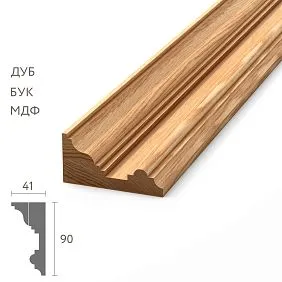
STAVROS offers a wide range ofwooden itemsfor interior design: rails of various cross-sections and profiles, planks, panels,Moldings, baseboards, door casings,decorative elements. All products are made from carefully selected wood of the best species: pine, spruce, oak, beech, birch, cedar.
The company operates on modern equipment ensuring high precision in dimensions and processing quality. Environmentally friendly protective coatings, safe for health, are used. Custom-made items according to individual sizes and sketches — your ideas will be realized in wood with flawless quality.
STAVROS specialists will help you select optimal solutions for your project, calculate the required amount of materials, and advise on installation, treatment, and maintenance. We work with professionals — designers, architects, construction companies — as well as private clients, providing each with an individual approach.
By contacting STAVROS, you receive not just materials, but a comprehensive solution: from idea to implementation, from selecting wood species to final finishing, from delivery to after-sales support. We value every client and strive to make the process of creating your dream interior as comfortable and effective as possible.
Your home deserves the best. Natural wood, warmth, eco-friendliness, beauty — all of this is available with STAVROS. Come, choose, be inspired, create spaces filled with life and harmony!


