Article Contents:
- Why Wooden Planks Have Become a Symbol of Modern Interior Design
- Material Matters: Which Wood to Choose
- Functional Diversity: Where and How to Use Planks
- Wall Finishing: From Accent to Full Coverage
- Ceiling Structures: Architecture Above
- Space Zoning: Lightness and Functionality
- Furniture and Decorative Elements
- Installation technology: from preparation to finishing
- Preparation stage
- Mounting methods
- Working with Different Wood Species: Key Features
- Final finishing
- Stylistic Solutions: Planks in Different Interiors
- Scandinavian minimalism
- Loft and Industrial Style
- Modern classicism
- Japanese Minimalism
- Eco-style and biophilic design
- Practical Aspects: Selection, Purchase, Maintenance
- Wood Quality: What to Look For
- Sizes and profile
- Where to Buy in Saint Petersburg
- Maintenance and operation
- Economic Considerations: Investment or Expense
- Pricing
- Durability as a factor of savings
- Energy efficiency
- Ecology and Health: Why It Matters
- Natural Wood and Air Quality
- Psychological Impact
- Sustainable development
- Trends and the Future: Where Design Is Heading
- Technology integration
- Customization and Uniqueness
- Ecological responsibility
- Frequently Asked Questions: Answers to Popular Queries
- Can wooden planks be used in a bathroom?
- How Long Does Installation Take?
- How Do Planks React to Changes in Humidity?
- What Is the Optimal Spacing Between Planks?
- Is Special Care Required?
- Can Wooden Planks Be Painted?
- How Difficult Is It to Remove Planks When Needed?
- How Do Planks Affect Room Acoustics?
- Are Planks Suitable for a Child's Room?
- How to Combine Planks with Underfloor Heating and Warm Walls?
- Conclusion: The Choice That Defines the Atmosphere

When it comes to interiors capable of inspiring awe and remaining relevant for decades, natural wood takes center stage. There is nothing more expressive than the texture of living material, capable of breathing with the space and filling it with warmth.Wooden planks SPBThey become more than mere decorative elements — they transform into a philosophy of arranging residential or commercial spaces, where every line matters and every surface tells its own story.
Modern interior design increasingly turns to minimalism, but this does not mean abandoning expressiveness. On the contrary, the simplicity of forms requires more careful selection of accents, and it is precisely here that wooden planks fully reveal their potential. They can set the rhythm of space, create visual dynamics, or, conversely, calm an overly busy interior by introducing an element of natural harmony.


Why wooden planks have become a symbol of modern interior design
Architectural fashion is cyclical, but some solutions transcend temporary trends and become classics. Solid wood planks are precisely such a case. Their popularity is not due to fleeting trends but to a deep human need to be surrounded by natural materials. In the age of synthetics and plastic, wood brings us back to our roots, reminding us of our innate connection to nature, genetically embedded in us.
What makes itWooden planks SPBWhy are planks so popular in the northern capital? First, it's the climate. St. Petersburg, with its humidity and temperature fluctuations, requires materials capable of adapting to changing conditions. Properly processed wood — oak, beech, ash — has a natural ability to regulate the microclimate of a room, absorbing excess moisture and releasing it when necessary. Second, it's aesthetics. St. Petersburg's architecture, imbued with the spirit of classicism and modernism, demands a special approach to interior solutions, and natural wood fits organically into this context, preserving the harmony of the space.
Planks for walls and ceilings become a tool that allows shaping the perception of a room. Vertical placement visually raises the ceiling, horizontal placement expands the space, diagonal placement introduces dynamism and movement. This versatility opens up limitless possibilities for designers and those who create unique interiors independently.




Material matters: which wood to choose
Not all wood species are equally suitable for making planks. The choice of material determines not only the aesthetic characteristics of the product but also its durability, resistance to external influences, ability to maintain shape under changes in humidity and temperature.
Oak — the aristocrat among species. Its dense structure, expressive texture, and noble tone make oak planks an ideal choice for interiors where respectability and longevity are valued. Oak is practically immune to deformation, resistant to mechanical damage, and only gains a richer color over time. Decorative oak planks look splendid in classical and neoclassical interiors, as well as in loft-style spaces, where the brutality of metal and concrete demands a balance provided by warm wood.
Beech — a more democratic, yet no less quality option. This species features a uniform texture, light tone, and high strength. Beech planks are easily stained and can imitate more expensive species while retaining their own excellent performance characteristics. Beech is ideal for Scandinavian interiors, where light color palettes and natural materials are prized.
Ash — a species with a distinctive, pronounced texture and elasticity. Ash planks have good flexibility, simplifying installation on curved surfaces. At the same time, ash is sufficiently hard and resistant to loads. Its light, slightly grayish tone fits perfectly into modern minimalist interiors.
It should be noted that the quality of wood processing is no less important than the choice of species. Proper drying, sanding, and application of protective coatings all influence the final result.Wooden planksPlanks, professionally processed, retain their geometry, do not crack or deform even under significant humidity fluctuations.
Our factory also produces:


Functional diversity: where and how to apply planks
The possibilities of using wooden planks in interior design are limited only by imagination. Each application reveals new facets of this versatile material, enabling the creation of unique spatial solutions.
Get Consultation
Wall finishing: from accent to full coverage
A wall finished with wooden planks becomes an independent artistic object. This solution works on multiple levels simultaneously: visual, tactile, and even acoustic. Planks create a relief that changes depending on lighting, forming a play of light and shadow. This is especially valuable in rooms with limited natural light — the wooden surface comes alive even under artificial lighting, reflecting and refracting light rays.
An accent wall made of planks can become the focal point of a living room, highlighting the fireplace or TV area. In a bedroom, such a wall behind the headboard creates an atmosphere of coziness and security. In a hallway, planks serve not only a decorative but also a practical function — hooks, shelves, mirrors can be mounted between them, creating a functional storage system.
Full wall coverage with planks is a bolder but incredibly effective solution. This technique visually structures the space, giving it depth and volume. Particularly interesting is the combination of planks of different widths or their placement with variable spacing — this creates a dynamic rhythm that prevents the eye from becoming bored.
Ceiling structures: architecture above your head
The ceiling — that surface which is unjustly given little attention. In fact, it determines the perception of a room's height and volume. Decorative planks on the ceiling can radically change the proportions of a room, creating an illusion of more space or, conversely, making a high room feel more intimate and cozy.
Planks on the ceiling can run parallel to a long wall, visually elongating the room, or perpendicular, creating an effect of expansion. Diagonal placement introduces dynamism and non-standardism. Particularly interesting is the solution with multi-level plank mounting, where a layered effect is created, and LED lighting is installed between levels — this gives a stunning visual effect of a floating ceiling.
In rooms with high ceilings, wooden planks help zone the space vertically, creating a visual boundary between upper and lower parts. This is especially relevant in studio apartments or lofts, where it is necessary to define functional zones without erecting solid partitions.
Zoning space: lightness and functionality
Open floor plans have long been a standard in modern housing, but the absence of walls creates a new challenge — how to divide space without depriving it of air and light. Wooden planks solve this problem elegantly and effectively. A vertical structure of planks installed between the living room and kitchen or bedroom zone creates a visual boundary while preserving clear visibility and not hindering air circulation.
Such partitions can be either fixed or movable. Sliding systems based on plank panels allow transforming the space according to needs — open it fully during the day, create private zones in the evening. Additional elements such as shelves, drawers, mirrors can be integrated between planks, turning the partition into a multifunctional object.
Zoning with planks also works in small spaces. Even in a compact one-room apartment, you can designate a work or relaxation zone without cluttering the space with bulky furniture. A lightweight plank structure visually does not weigh down the interior, yet clearly defines functional boundaries.
Planks are used not only for finishing but also for creating furniture. They are used to make bed headboards, cabinet facades, commode doors, radiator screens. Such furniture looks light and modern while retaining strength and functionality.
Wooden planks SPBDecorative paneling made of planks becomes independent art objects. Combinations of planks of different thicknesses, colors, and orientations create compositions that do not fall short of paintings or sculptures in expressiveness. Such panels can be enhanced with built-in lighting, intensifying the artistic effect.
A quality result is impossible without proper installation technology. Even the highest-quality planks will not reveal their potential if the installation is performed incorrectly.
Installation technology: from preparation to final finishing
Any work begins with surface preparation. Walls or ceilings must be level — deviations exceeding 5 mm per linear meter are unacceptable, as this will lead to deformation of the structure. The surface is cleaned of dust and treated with a penetrating primer. If installation is planned in a humid room, additional waterproofing is required.
Preparation Stage
The surface must be cleaned of dust and treated with a penetrating primer. If installation is planned in a humid room, additional waterproofing is required.
Before installing the planks, they must undergo acclimatization — a stay in the room where they will be installed for at least 48 hours. This allows the wood to adapt to the humidity and temperature, minimizing the risk of subsequent deformation.
Methods of mounting
There are several methods of installing wooden planks, the choice of which depends on the type of base and structural features.
Direct installation — the simplest method, when planks are mounted directly to the wall or ceiling. Self-tapping screws are used, driven at an angle through the body of the plank or concealed, with subsequent masking of holes using wooden plugs. This method is suitable for smooth surfaces made of concrete or brick.
Installation on a subframe — more labor-intensive but universal. First, wooden beams are attached to the base, forming a frame. They are leveled to compensate for surface irregularities. The planks are then attached to the subframe using self-tapping screws or nails. This method allows for a ventilated space between the base and the finish, which is important for wooden houses.
Adhesive installation is used for lightweight MDF planks or thin wooden laminates. Special polyurethane-based adhesives are used, ensuring a strong bond. This method does not compromise the integrity of the plank's surface, but requires an ideally flat base.
Hidden mounting system — the most aesthetic option. Planks are equipped with special grooves or built-in elements that engage with corresponding strips fixed to the wall. The fastening is completely concealed, and the surface remains absolutely smooth.
Features of working with different wood species
Each wood species has its own processing nuances. Oak planks require pre-drilling holes for screws — attempting to drive screws directly may cause splitting. Beech is more flexible but also requires caution when working near the edges. Ash holds fasteners well but is prone to splitting along the grain under mechanical stress.
When installing, it is important to leave expansion gaps — wood is alive and changes size depending on humidity. A gap of 2-3 mm around the perimeter of the structure will prevent warping when the material expands.
Final finishing
After installation, planks require finishing. Even if they are delivered pre-treated, areas of fastening, ends, and possible scratches require additional protection.
For interior planks, oils, waxes, and water-based varnishes are used. Oil enhances the wood's texture, making it more expressive, without forming a film on the surface. Wax provides a matte or semi-matte finish and a pleasant tactile surface. Varnish offers the greatest protection but requires careful application to avoid streaks.
Staining allows changing the wood's tone to match the overall color scheme of the interior. Modern staining products can either preserve the natural texture or dramatically alter the color, creating effects such as aging, whitewashing, or imitating exotic species.
Stylistic solutions: planks in different interiors
The versatility of wooden planks is evident in their ability to harmoniously fit into any interior style, each time revealing new aspects.
Scandinavian minimalism
For Scandinavian style, light tones, abundant natural light, natural materials, and functionality are characteristic.Wooden planksLight-colored species — birch, maple, bleached oak — perfectly match these criteria. They are used to create accent walls, decorate the area behind the headboard, or as partitions.
A key feature of the Scandinavian approach is the rejection of excess. Planks are installed with sufficient spacing, creating rhythm without overcrowding the space. Vertical placement is often used, visually raising the ceiling. Natural wood texture, minimal processing, matte shades — all of this creates an atmosphere of calm and connection with nature.
Loft and industrial style
At first glance, loft — this is brick, concrete, metal. Where does wood fit in? But it is precisely wooden elements that soften the harshness of industrial materials, making the space livable and cozy. Planks made of dark oak, stained in gray or brown tones, perfectly complement exposed utilities and unfinished surfaces.
In lofts, planks are often used for zoning — separating the sleeping area from the general space, defining a workspace. The rough texture of wood, deliberately simple installation, and the contrast between light and dark elements create the distinctive aesthetic of the style.
Modern classic
Neoclassicism combines classical proportions with modern materials. Here, wooden planks can imitate traditional boiserie — wall panels characteristic of classical interiors. Planks are arranged strictly geometrically, forming symmetrical compositions. Noble species — oak, walnut, stained in traditional tones — are used.
Planks can frame door and window openings, create decorative frames on walls, within which wallpaper, fabric, or painted surfaces are placed. Combining with moldings, cornices, and baseboards made of the same wood species creates a cohesive composition.
Japanese minimalism
Japanese aesthetics are based on principles of simplicity, naturalness, and harmony. Wooden planks play a key role here, forming characteristic sliding partitions called 'sōji', creating decorative screens, and decorating niches. Light-colored wood with minimal processing, preserving the natural texture, is used.
Planks are installed with mathematical precision, creating strict geometry. Often, the technique of alternating vertical and horizontal elements, forming grid-like structures, is applied. The space between planks can be filled with translucent paper or glass, creating play of light and shadow.
Eco-style and biophilic design
When nature becomes the center of interior design concept, wooden planks are fully revealed. Here, naturalness is valued — knots, color variations, natural texture. Planks can be combined with live plants, stone, water, creating an atmosphere of harmony with nature.
Unconventional techniques are used — planks of different thicknesses and heights, imitating tree trunks, chaotic placement, creating a sense of naturalness. Processing is minimal — natural-based oils, highlighting but not hiding the natural beauty of wood.
Practical aspects: selection, purchase, use
How to avoid mistakes when choosing wooden planks? Which criteria are important, and what can be ignored?
Wood quality: what to look for
First, moisture content. Planks must be made from kiln-dried wood with a moisture content of 8-12%. Higher moisture will lead to shrinkage and deformation after installation. Moisture can be checked with a moisture meter — professional manufacturers do not hide this information.
Second — absence of defects. Cracks, chips, blue stain, rot are unacceptable. Knots are allowed, but must be healthy and not falling out. Knots are undesirable for structural elements, but may be part of the aesthetics for decorative elements.
Third — geometry. Racks must be straight, without curves or twisting. Checked visually by applying to a flat surface. Deviations exceeding 1 mm per meter of length are considered defective.
Fourth — surface treatment. Quality grinding, absence of fuzz, scratches, or contamination. Ends must be neatly trimmed without chips.
Dimensions and profile
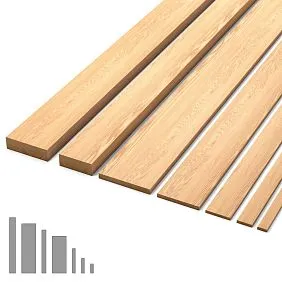
Standard racks have a cross-section from 20x40 mm to 50x70 mm and a length from 2 to 3 meters. However, custom sizes are also possible. When selecting size, the room’s area is considered: in small rooms, large racks visually reduce space, while in spacious rooms, small ones will be lost.
The profile can be rectangular, rounded, or decorative. Sharp edges are more modern and minimalist, while rounded edges are softer and more traditional. Decorative profiles with grooves and bevels are used in classic interiors.
Where to buy in Saint Petersburg
The market for wooden racks in Saint Petersburg is diverse, but the quality of offers varies significantly. It is important to choose manufacturers that guarantee not only material quality but also stable supply, the possibility of additional purchases if needed, and technical support.
Purchase should be accompanied by consultation with a specialist who will help calculate the required material amount, taking into account cutting and reserve, select the optimal mounting method, and recommend finishing materials.
Care and Maintenance
Wooden racks do not require complex maintenance, but certain rules must be followed. Regular dry cleaning with a soft cloth or vacuum cleaner with brush prevents dust accumulation. Wet cleaning is permissible, but without excess water and aggressive cleaning agents.
If racks are treated with oil, it is recommended to renew the coating every 1-2 years — this refreshes the appearance and preserves protective properties. Lacquered surfaces are more durable, but when scratches appear, they require local repair.
In rooms with active use — hallways, children’s rooms — it is recommended to use more durable coatings or hardwood species. In bedrooms and living rooms, basic protection is sufficient.
Economic considerations: investment or expense
Can wooden racks be considered an investment? In a literal sense — no, they do not bring financial profit. But in a broader sense — absolutely yes. Quality natural wood finishing increases property value, making it more attractive to potential buyers or tenants.
Pricing
The cost of wooden racks depends on many factors: wood species, dimensions, degree of processing, order volume. Oak racks will be more expensive than beech, decorative profiles — more expensive than rectangular, custom sizes — more expensive than standard.
But saving on quality will result in higher expenses in the future. Poor-quality racks made from poorly dried wood deform, crack, and require replacement. Cheap MDF analogs, although they look similar, do not possess tactile or operational characteristics of natural wood.
Longevity as an economic factor
QualityWooden planks SPBCorrectly installed and processed, they serve for decades without losing aesthetic qualities. This makes them more cost-effective than cheap materials requiring replacement every few years.
Wood can be restored — sanded, re-toned, and re-coated. This allows changing the interior’s appearance without dismantling or replacing elements, significantly saving money.
Energy efficiency
Wood has low thermal conductivity, making it a natural insulator. A wall covered with wooden racks feels warmer to the touch and helps maintain a comfortable temperature in the room. This is especially relevant for Saint Petersburg with its long heating season.
Ecological and health: why it matters
In an era of growing attention to ecology, choosing finishing materials becomes a question not only of aesthetics but also of health. Modern research confirms: materials surrounding us in daily life affect our well-being, productivity, even our psycho-emotional state.
Natural wood and air quality
Wood is a living material, even when processed and installed in interiors. It continues to participate in gas exchange, absorbing and releasing moisture, regulating microclimate. Unlike synthetic materials, wood does not emit harmful substances — formaldehyde, phenols, volatile organic compounds.
Moreover, some species have bactericidal properties. For example, oak contains tannins that suppress microbial growth. Coniferous species release phytoncides, beneficial for the respiratory system.
Psychological impact
Research in biophilic design shows: the presence of natural materials in interiors reduces stress levels, improves concentration, and enhances overall well-being. The texture of wood, its warm tones, and tactile sensations create psychological comfort.
In office spaces, using wooden elements increases productivity. In residential spaces — improves rest and sleep quality. In medical facilities — promotes faster patient recovery.
Sustainable development
Choosing wooden racks from a responsible manufacturer supports principles of sustainable forestry. Forests are renewable resources; with proper management, they do not deplete but rather grow. Modern technologies allow using wood without waste — material unsuitable for racks is used to produce briquettes, pellets, and technical wood chips.
The carbon footprint of wooden products is significantly lower than that of plastic or metal. Wood absorbs carbon dioxide during growth, and even after processing, it continues to hold it within its structure. This makes wooden products not only safe but also beneficial in the fight against climate change.
Trends and the future: where design is heading
The trend for wooden racks — not a passing fad, but a sustainable trend with deep roots. What directions of development can be anticipated?
Integration of technologies
Modern rails are not just decorative elements. They integrate lighting, acoustic systems, and climate equipment. Wires, sensors, and speakers are hidden between the rails. Externally, this remains natural wood, but functionally transforms into a high-tech system.
The direction of "smart" rails with built-in LEDs, changing color and intensity depending on the time of day or user mood, is developing. Rails with acoustic properties improve sound in a room by absorbing excess reverberation.
Customization and Uniqueness
Mass production is giving way to individual solutions. CNC technologies allow creating rails of unique shapes, with personalized patterns, texts, and ornaments. This opens up limitless possibilities for creating truly original interiors.
3D modeling allows visualizing the result before starting work, experimenting with placement options, material combinations, and finding the ideal solution for a specific space.
Ecological responsibility
Requirements for material eco-friendliness will only become stricter. Buyers are increasingly interested in the origin of wood, presence of sustainable forestry certificates, and the types of stains and coatings used. Producers unprepared for transparency and ecological responsibility will be driven out of the market.
The recycling direction — using old wood to create new products — is developing. Rails made from barn wood, ship planks, or dismantled structures possess a unique patina of time that cannot be imitated.
Frequently Asked Questions: Answering Popular Queries
Can wooden boards be used in bathrooms?
Yes, but with certain conditions. It is necessary to choose moisture-resistant species — larch, teak, or thermally treated wood. High-quality impregnation with water-repellent compounds is mandatory. Ventilation is important — rails should not be mounted flush against the wall; a gap for air circulation is needed. Under these conditions, wooden rails serve excellently even in high-humidity environments, creating a spa salon atmosphere.
How long does installation take?
The time depends on the area and complexity of the structure. A simple accent wall of 10-12 square meters, installed directly on a flat base, takes 1-2 working days. Complex structures with framing, multi-level mounting, and integrated lighting may require a week of work. It is important not to rush — quality installation requires precision and attention to detail.
How do rails behave with changes in humidity?
Wood is hygroscopic — it absorbs moisture when humidity increases and releases it when it decreases. This leads to changes in size: wood expands and contracts. Proper drying and acclimatization minimize these processes, but they cannot be completely eliminated. Therefore, during installation, compensatory gaps are left, allowing the wood to "breathe" without deforming the structure.
What is the optimal rail spacing?
There is no universal answer — it all depends on aesthetic preferences and functional requirements. For decorative walls, popular options range from 30 to 100 mm. Smaller spacing creates a denser, monolithic surface. Larger spacing creates a more airy, lacy effect. For partitions, 50-70 mm is optimal — sufficient for visual zoning while preserving a sense of openness.
Is special care required?
Wooden rails are low-maintenance. Regular dry cleaning and occasional damp wiping are sufficient to maintain cleanliness. It is recommended to renew the oil coating once a year or two — the procedure is simple and can be done independently. Lacquered surfaces are even less demanding, but more difficult to repair if damaged.
Can wooden rails be painted?
Absolutely. Painting opens up additional design possibilities — from pastel Scandinavian tones to bright accents. Water-based paints are used, preserving the wood’s ability to breathe. A primer is required before painting to prevent absorption and ensure even coverage. Techniques such as patination, aging effects, and two-tone painting can be applied.
How difficult is it to dismantle rails if needed?
It depends on the mounting method. Rails mounted with glue are difficult to dismantle, often damaging both the rails and the base. Rails mounted with self-tapping screws are relatively easy to remove and can be reused. Hidden mounting systems allow dismantling without damage. When planning renovation, this should be considered — it may be worth choosing a more expensive, disassemblable mounting system.
How do rails affect room acoustics?
Wooden rails improve room acoustics. They diffuse sound waves, preventing echo and reverberation, especially noticeable in rooms with bare walls. Installing rails with an air gap enhances sound-absorbing effects. In home theaters, music rooms, and conference rooms, rails serve as acoustic finishes, improving sound quality.
Are rails suitable for a child’s room?
Yes, and this is an excellent choice. Natural wood is safe, hypoallergenic, and creates a healthy microclimate. It is important to ensure the coating is non-toxic — use natural oils and waxes. Rails with rounded profiles, free of sharp edges, are safer for active children. Bright, playful compositions can be created by painting rails in different colors, integrating mounts for drawings or toy shelves.
How to combine rails with underfloor heating and heated walls?
Wood has low thermal conductivity, which must be considered. When installing rails on a wall with a heating system, an air gap is required for heat circulation. Mounting is done on a framing system, leaving space between the wall and the rails. This not only does not reduce heating efficiency but also creates a more even heat distribution. The rails themselves emit a pleasant wood aroma when heated, adding additional comfort.
Conclusion: The choice that defines the atmosphere
Interior design is not just a combination of furniture and finishes. It is a space where we spend most of our lives, influencing our mood, well-being, and productivity. Choosing materials for this space is a responsible decision, determining not only the appearance but also the feeling of home.
Wooden planks SPB— it is the choice of those who value naturalness, durability, and aesthetics. It is an investment in quality of life, creating a space that will delight for years, without losing relevance or appeal. In a city where architectural heritage meets modernity, where nature coexists with urbanization, wooden elements become a connecting link, reminding us of natural beauty and harmony.
STAVROS Company, specializing in the production of high-quality solid wood products, offers solutions for the most demanding projects. Decades of experience, modern equipment, and strict quality control at every production stage ensure flawless results. An extensive inventory allows projects to be implemented in the shortest time, while the option for custom production enables the realization of any design ideas. Choosing STAVROS means you are not just selecting a material, but a partner committed to the success of your project, ready to provide professional support at every stage — from selection to installation and subsequent maintenance.
Create spaces where you want to live. Choose materials that last for decades. Trust professionals for whom quality is not a marketing slogan, but a principle of work.