












































































Article Contents:
- The role of baseboards: how tall wooden baseboards change room perception
- Baseboard as an architectural element
- Baseboard profile: from simple to carved
- Color and finish: natural wood or tinting
- Classic interior: furniture and solid oak baseboards
- Material: why oak is a genre classic
- Living room: dining set and baseboards
- Bedroom: bed, dresser and baseboards
- Wall moldings: trims and rosettes matching baseboard tone
- Moldings for creating panels: wall architecture
- Molding colors: white, tinted or matching baseboard color
- Ceiling cornices: completing the composition
- Ceiling Medallions: Focal Point of the Ceiling
- Photo examples: wooden baseboards in classic interiors
- Living room with tall baseboards and moldings
- Bedroom with wooden baseboards and white moldings
- Furniture handles: continuing the baseboard style
- Handle materials: wood, brass, bronze
- Handle shape and style: from simple to carved
- Frequently Asked Questions
- Conclusion: integrity of classic interior

Classic interiors live through details. Expensive solid wood furniture, herringbone parquet, ceiling moldings – all create atmosphere, but without proper baseboards the composition falls apart.Wooden Skirting Boards in Interior Design– is not just floor framing but an architectural detail that sets scale, connects floor with walls, and rhymes with furniture through material, color, and style. A tall solid oak baseboard 120-180 mm high with classic profile (cavetto, flutes, carved elements) visually lowers the ceiling, creates coziness and monumentality characteristic of 18th-19th century classic interiors (Empire, Baroque, Classicism, English style).Classic Furniture for the Living Room– dining tables from solid oak with carved legs, chairs with high backs and velvet upholstery, dressers with brass handles, beds with carved headboards – requires baseboards of the same wood species (oak with oak, beech with beech), same finish (if furniture has oil finish with natural wood color, baseboard also oiled; if furniture is tinted dark wenge or patinated gold, baseboard matches tone).Buy polyurethane molding for walls– moldings for creating panels and frames, ceiling cornices, chandelier rosettes – complements wooden baseboards, creates multi-level architecture (baseboard at bottom frames floor, moldings in middle section create decorative frames, cornice at top frames ceiling – three tiers divide space vertically, adding solemnity and formality).Furniture Handlesfrom solid wood (brackets, mushroom buttons, carved overlays) continue the style of baseboards and furniture (if baseboard is oak, handles also oak, material unity creates interior integrity). In this article we analyze the role of baseboards in classic interior perception (how height, profile, color change room proportions), pairing baseboards with classic furniture (material, finish, stylistic harmony), using polyurethane moldings matching wooden baseboard tone (how to choose color, profile, ornament), examples of wooden baseboards in classic living rooms and bedrooms (photo illustrations of compositions), the role of furniture handles as style continuation. Prepare to create interiors where every detail – from baseboard to door handle – works toward the overall concept, where classicism isn't museum-like but living, comfortable, modern in comfort yet classic in spirit.




The role of baseboards: how tall wooden baseboards change room perception




Baseboard as an architectural element
Baseboard is not a decorative strip along the wall but an architectural element that sets the lower horizontal of a space. In classical architecture (Ancient Greek temples, Roman basilicas, Renaissance palaces) buildings always have a plinth – a massive foundation 1-2 meters high on which walls stand. The plinth visually stabilizes the building, creates a sense of solidity and weight. In interiors, baseboards perform the plinth function: a tall 120-180 mm baseboard visually creates a foundation on which walls stand, making space stable and monumental. Low 40-60 mm baseboards don't perform this function (too small, visually lost, walls appear to grow directly from floor – no foundation, no stability).
Baseboard height determines room vertical proportions. Classical architectural rule: space divides vertically into three parts – foundation (baseboard + lower wall section up to 80-120 cm, traditionally dark or paneled), middle section (main wall area, usually light with wallpaper or paint), upper section (ceiling cornice + ceiling). Tall baseboards strengthen the foundation, make it noticeable and weighty. In rooms with 3.0-3.5 m ceilings, 150-180 mm baseboards occupy 5-6% of wall height, creating visual support without dominating. In rooms with 2.7 m ceilings, the same baseboard occupies 6-7% of height, appears more massive, visually lowers ceiling (creating cozy, intimate effect characteristic of English living rooms and libraries).
Our factory also produces:


Baseboard Profile: From Simple to Carved
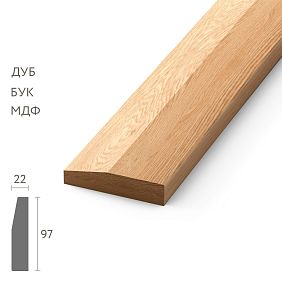
The baseboard profile (cross-sectional shape) defines the interior style. A simple rectangular baseboard with one or two chamfers (edges beveled at a 45-degree angle) is a minimalist, modern, neutral element that does not draw attention and serves as a background. In classical interiors, such a baseboard is inappropriate (too simple, does not create architectural interest, looks visually cheap).
A classic baseboard with a torus (a convex semicircular element along the top of the baseboard, protruding 10-15 mm, creates a play of light and shadow) is a traditional profile for classical, neoclassical, and traditional interiors. The torus references ancient architecture (Ionic and Corinthian columns have similar elements on their capitals and bases), creating relief, volume, and visual complexity. A baseboard with a torus and flutes (vertical grooves running parallel along the baseboard) enhances decorativeness, adding rhythm (repeating grooves create vertical stripes, visually increasing the height of the baseboard).
Carved baseboard (with carved ornaments — dentils, egg-and-dart, acanthus leaves, meander) is the highest level of decorativeness, used in luxurious, palatial, Baroque interiors. Carving is done by hand by a woodcarver (each element is unique, cost 5000-12000 rub/m, long production time) or on CNC machines (high precision, perfect repeatability, cost lower than manual 3500-7000 rub/m). A carved baseboard requires high ceilings (3.5 m and above), spacious rooms (area 30-50 m² and more) — in small rooms with 2.7 m ceilings, a carved baseboard will visually overload the space, feel oppressive.
Get Consultation
Color and Finish: Natural Wood or Staining
The color of the baseboard determines how it interacts with the floor, walls, and furniture. A baseboard in the natural color of wood (oak beige-brown, beech pinkish-cream, ash light yellow — finished with oil or varnish, the texture of annual rings is visible) rhymes with a wooden floor of the same color (oak parquet + oiled oak baseboard — unity of material and color, the floor and baseboard are perceived as one whole). A natural baseboard contrasts with light walls (white, beige, light gray — warm wood against a cold white background creates coziness, homeliness).
A stained baseboard (coated with stain, oil with pigment, or paint, dark color — wenge, walnut, mahogany, black) creates contrast with a natural floor (light oak parquet + dark wenge baseboard — a graphic accent, highlights the floor line, emphasizes the geometry of the space). A dark baseboard rhymes with dark furniture (if the living room has a dining table made of dark walnut, chairs of the same color, a baseboard stained to match the furniture creates unity in the lower tier of the interior — floor, baseboards, furniture legs — all dark, the middle tier — walls, chair seats — light).
A painted baseboard (coated with opaque paint, wood texture not visible, color white, gray, colored) is used in interiors where wood texture is excessive, a calm background is needed. A white baseboard on white walls (baseboard painted with white enamel in the same color as the walls) visually merges with the wall, becomes almost invisible, creates a seamless transition effect from floor to wall (characteristic of Scandinavian, minimalist interiors, rare for classicism, where the baseboard should be a noticeable element).
Classic Interior: Furniture and Baseboards Made of Solid Oak
Material: Why Oak is a Classic
Classic Furniture for the Living Roomtraditionally made from solid oak, beech, ash, walnut — hardwoods that last for decades, withstand loads, do not warp, do not crack. Oak (density 700-800 kg/m³, Brinell hardness 3.7-3.9 — one of the hardest European species) is the leader in popularity. Oak furniture lasts 80-120 years without loss of strength (century-old oak tables, chests of drawers, chairs in excellent condition — the norm in Europe, where durability is valued). Oak texture is expressive (annual rings are clearly visible, medullary rays — light stripes across the grain — create a play of light), color varies from light beige (young oak) to dark brown (old bog oak, which has lain in water for decades).
A solid oak baseboard (height 100-180 mm, thickness 18-25 mm, classic profile with torus or carved) is matched to oak furniture in color and finish. If the furniture is oiled (natural beige-brown color of oak, texture emphasized), the baseboard is also oiled. If the furniture is stained (dark wenge, walnut, mahogany — stain changes the shade of oak while preserving the texture), the baseboard is stained the same color. If the furniture is patinated (patina — gold, silver, green — applied to carved elements, imitating noble antiquity), the baseboard can be patinated similarly (gold patina in the recesses of the torus, on carved elements — rhymes with the furniture).
Beech (density 650-700 kg/m³, Brinell hardness 3.5-3.7, slightly softer than oak) is an alternative to oak, 20-30% cheaper (beech furniture is more affordable than oak, but durability is the same). Beech texture is fine, uniform (without pronounced annual rings, medullary rays), color pinkish-cream (lighter than oak, warmer than ash). A beech baseboard suits beech furniture, creating material unity. Beech stains well (takes stain evenly, without spots, can be stained to resemble oak, walnut, mahogany — visually indistinguishable from expensive species).
Living Room: Dining Set and Baseboards
A classic living room of 25-35 m² with ceilings of 2.8-3.2 m includes a dining area (dining table made of solid oak, size 180×90 cm or 200×100 cm, extendable for 8-12 people, legs carved or turned, tabletop solid, thickness 40-50 mm; chairs six to eight pieces with carved backs, height 100-110 cm, seats soft with upholstery of velvet, linen, or leather, frame solid oak or beech), a lounge area (three-seater sofa, length 200-220 cm, upholstery fabric or leather, frame solid wood, two armchairs matching the sofa, coffee table made of solid wood with carved legs), storage system (sideboard or display cabinet for dishes, height 180-200 cm, width 120-150 cm, solid oak, carved fronts, glass doors with beveled edges).
Baseboard in a classic living room: height 120-160 mm (proportional to high ceilings, large-scale furniture — dining table massive, chairs tall, sideboard large, baseboard must be proportionate, a low baseboard 60-80 mm will get lost against such furniture), profile classic with torus and flutes (rhymes with the style of carved furniture — chairs with carved backs, table with carved legs, baseboard with relief profile creates stylistic unity), material solid oak (same species as furniture — material unity), finish oiled or stained to match the furniture (if the table and chairs are natural oak color oiled, baseboard also oiled; if furniture stained dark walnut, baseboard stained similarly).
Living room color scheme: floor oak herringbone parquet natural beige-brown color (classic parquet, durable, prestigious), walls light beige or cream (wallpaper with floral pattern or smooth paint — light walls enlarge the space, create a background for dark furniture), baseboard oak natural color or stained dark walnut (rhymes with the floor or with the furniture, creates a lower dark line in the interior), ceiling white with plaster cornice (white ceiling visually increases height, plaster cornice creates framing, completes the composition).
Bedroom: Bed, Dresser, and Baseboards
A classic bedroom of 18-25 m² with ceilings of 2.7-3.0 m includes a double bed 180×200 cm with a carved headboard height 120-150 cm (headboard solid oak, carving with floral or geometric patterns, bed frame solid wood, side rails — height 30-40 cm), two bedside tables (height 55-65 cm, width 50-60 cm, one or two drawers, carved fronts, brass or bronze handles), a dresser (height 90-110 cm, width 100-120 cm, four or five drawers, carved fronts, top marble or solid oak), a sliding or hinged wardrobe (height 220-240 cm, width 200-250 cm, solid oak, carved fronts or smooth with routed details, inside shelves and clothing rods).
Baseboard in a classic bedroom: height 100-140 mm (medium or high, proportional to furniture — bed with high headboard, wardrobe large, baseboard must be proportionate), profile classic with torus (rhymes with the carved bed headboard, carved fronts of the dresser and wardrobe), material solid oak or beech (same species as furniture), finish oiled natural color (bedroom — a place of rest, natural wood creates coziness, warmth, calm; staining in dark colors less common, as a dark baseboard in the bedroom can visually weigh down the space, make it less relaxing).
Bedroom color scheme: floor oak parquet or solid oak plank natural light beige color (warm, cozy floor), walls light gray, light blue, light green, beige (calm shades promoting relaxation, sleep), baseboard oak natural color oiled (rhymes with the floor, creates a warm lower line), ceiling white with a small cornice height 80-100 mm (white ceiling visually increases height, small cornice does not feel heavy, creates a light framing).
Wall Molding: Moldings and Rosettes to Match the Baseboard
Moldings for Creating Panels: Wall Architecture
Buy polyurethane molding for walls— moldings (horizontal or vertical strips width 40-120 mm, mounted on walls to create frames, panels, architectural divisions) — complements wooden baseboards, creates multi-level wall architecture. In classical interiors (Baroque, Classicism, Empire, English style) walls are not smooth, but divided into zones by moldings: lower zone (from floor to height 80-120 cm) often dark or with wooden panels, middle zone (from 120 cm to level 200-220 cm) light with wallpaper or paint, upper zone (from 220 cm to ceiling) with ceiling cornice. Moldings create boundaries between zones, frames within zones.
Panels made of moldings on walls: rectangular or square frames made of moldings, symmetrically placed on walls. Example: in a living room with 3.0 m ceilings, on the wall behind the sofa, three molding frames size 100×80 cm each are mounted, placed horizontally on one line at a height of 120 cm from the floor. Inside the frames, wallpaper with a floral pattern or decorative paint (golden, silver — contrasts with the main light beige wall paint), moldings white or painted in a color harmonizing with the baseboard (if the baseboard is natural oak beige-brown, moldings can be white — contrast of warm wood and cold white, classic scheme; or moldings painted beige, close to the color of oak — monochrome scheme, calm, elegant).
Horizontal moldings at a level of 100-120 cm from the floor divide the wall into two parts: lower part (from floor to molding) dark — painted dark paint (dark gray, dark green, burgundy) or covered with dark wallpaper, creates a visual foundation, rhymes with the dark baseboard; upper part (from molding to ceiling cornice) light — light beige, cream, light gray paint or wallpaper, visually increases the height of the room. The horizontal molding at the junction of the dark and light parts of the wall creates a clear boundary, architectural structure.
Color of Moldings: White, Stained, or Matching the Baseboard
White moldings — a classic choice for interiors where walls are light (white, beige, light gray), baseboard natural wood (oak, beech, ash oiled). White moldings contrast with the warm wooden baseboard (cold white + warm wood — classic scheme, creates freshness, lightness, visually enlarges space), stand out against light walls (white moldings on light beige walls create relief, play of light and shadow, but do not contrast sharply, do not overload).
Moldings painted the color of the baseboard (if the baseboard is natural oak beige-brown, moldings are painted with acrylic paint in a beige shade close to the color of oak; if the baseboard is stained dark wenge, moldings are painted dark brown) — create color unity of the lower and middle tiers of the interior. Baseboard and moldings of the same color are visually connected, create a vertical structure (the eye follows from the baseboard up the wall to the moldings, then to the ceiling cornice — vertical movement, visually increases height).
Stained moldings imitating wood (polyurethane moldings with applied stain — brown, walnut, wenge — imitation of wood) are rarely used (polyurethane lacks wood texture, stain gives an even color without annual rings, looks artificial). It is better to paint moldings with opaque paint in a color harmonizing with the baseboard than to imitate wood.
Ceiling Cornices: Finishing the Composition
A polyurethane ceiling cornice (height 80-150 mm, installed at the wall-ceiling junction, creates architectural framing for the ceiling) is the finishing element of the multi-level architecture of a classic interior. The baseboard at the bottom frames the floor, moldings in the middle part of the wall create panels and frames, the cornice at the top frames the ceiling — three tiers divide the space vertically, creating structure and solemnity.
The height of the cornice is selected according to the height of the room and the height of the baseboard. If the baseboard is high (140-180 mm), the cornice should also be high (120-150 mm) — the proportions of the top and bottom should be commensurate; a high baseboard + a low cornice (60-80 mm) will create imbalance, a heavy bottom and a light top — visually uncomfortable. If the baseboard is medium (100-120 mm), the cornice is medium (90-110 mm) — balance, harmony.
The profile of the cornice rhymes with the profile of the baseboard. If the baseboard is classic with a cavetto, the cornice is also classic with a cavetto, torus, and flutes (stylistic unity — the top and bottom of the room are framed by identical elements, creating a symmetrical frame). If the baseboard is carved with ornaments, the cornice is carved with similar ornaments (dentils, egg-and-dart — repeating ornaments enhances decorativeness, creates luxury characteristic of Baroque, palace interiors).
Cornice color: white (classic, contrasts with a natural wooden baseboard, stands out on light walls, visually increases ceiling height) or wall-colored (the cornice is painted the same color as the walls — light beige, cream — visually blends with the walls, creates a calm background, does not dominate).
Ceiling rosettes under the chandelier: focal point of the ceiling
A polyurethane rosette (a round or oval overlay with a diameter of 60-120 cm, mounted on the ceiling in the center of the room, the chandelier is attached through the central hole of the rosette) creates visual support for the chandelier, adds architectural interest to the ceiling, and rhymes stylistically with the baseboard and cornice. A rosette with a classic ornament (plant elements — acanthus leaves, laurel wreaths, roses; geometric elements — concentric circles, radial lines) suits a classic interior with oak wooden baseboards, classic furniture.
The diameter of the rosette is selected according to the size of the room and the chandelier: for a living room of 25-35 m² with a chandelier diameter of 80-100 cm, a rosette with a diameter of 80-100 cm is suitable (the rosette is slightly larger or equal to the diameter of the chandelier, creates a visual base, does not dominate). For a bedroom of 18-25 m² with a chandelier diameter of 60-80 cm, a rosette with a diameter of 60-80 cm is suitable.
Rosette color: white (classic, contrasts with a white ceiling creating relief — a white rosette on a white ceiling stands out due to the shadow cast by the relief of the ornament) or painted in a color that harmonizes with the interior (gold, silver — patina on the rosette relief creates luxury characteristic of palace interiors; beige, cream — calm shades that harmonize with a wooden baseboard of natural color).
Photo examples: wooden baseboards in classic interiors
Living room with high baseboards and moldings
Wooden Skirting Boards in Interior DesignClassic living room: room 30 m², ceilings 3.0 m, floor is herringbone oak parquet of natural beige-brown color, walls are light beige with wallpaper with a plant pattern, furniture includes a solid oak dining table 200×100 cm with carved legs, eight chairs with carved backs and dark green velvet upholstery, a solid oak sideboard 200 cm high with carved fronts and glass doors.
Baseboard: height 140 mm, solid oak, classic profile with a cavetto and two flutes, oil finish in natural beige-brown color (rhymes with the parquet and furniture, creates unity of the lower tier). Wall moldings: width 80 mm, polyurethane, classic profile with a cavetto (rhymes with the baseboard profile), color white (contrasts with the wooden baseboard and furniture, stands out on beige walls). The moldings form four rectangular frames on the walls (two frames on the wall behind the sideboard, two on the opposite wall) each measuring 120×80 cm, placed symmetrically at a height of 120 cm from the floor.
Ceiling cornice: height 120 mm, polyurethane, classic profile with a cavetto and torus, color white (contrasts with the natural wooden baseboard, stands out on the white ceiling, creates framing). Rosette under the chandelier: diameter 90 cm, polyurethane, classic ornament with acanthus leaves and concentric circles, color white. Crystal chandelier diameter 85 cm, six arms, attached through the central hole of the rosette.
Visual effect: the room is perceived as solemn, formal, classic. The high 140 mm baseboard creates a massive foundation, stability. The moldings divide the walls into zones, create architectural interest, relief. The cornice frames the ceiling, visually lowers it, makes the 3.0 m height more cozy, intimate. The rosette under the chandelier creates a focal point on the ceiling, the gaze is drawn to the center, then follows down the walls to the moldings, to the baseboard — vertical movement, structure, order.
Bedroom with wooden baseboards and white moldings
Classic bedroom: room 22 m², ceilings 2.8 m, floor is solid oak plank of natural light beige color, walls are light gray with wallpaper with a subtle plant pattern, furniture includes a double bed 180×200 cm with a carved headboard 130 cm high (solid oak, carving with plant elements, oil finish in natural color), two bedside tables 60 cm high with carved fronts, a chest of drawers 100 cm high with five drawers and carved overlays.
Baseboard: height 120 mm, solid oak, classic profile with a cavetto, oil finish in natural light beige color (rhymes with the floor and furniture, creates a warm lower line). Moldings on the wall behind the bed headboard: width 70 mm, polyurethane, classic profile, color white. The moldings form one large rectangular frame measuring 200×120 cm, framing the bed headboard (the frame is at a height of 80-200 cm from the floor, the bed headboard is inside the frame — an accent composition).
Ceiling cornice: height 100 mm, polyurethane, simple classic profile with one cavetto, color white (bedroom — a place for rest, decor should be restrained, the cornice is not lush, but simple). Rosette under the chandelier: diameter 70 cm, polyurethane, simple ornament with concentric circles without excessive decor, color white. Fabric chandelier with a lampshade diameter 65 cm, three arms, soft diffused light (for the bedroom, not a bright crystal chandelier, but a soft fabric one).
Visual effect: the room is perceived as cozy, calm, conducive to rest. The 120 mm high baseboard creates a foundation, but not a massive one (slightly lower than in the living room, as the ceilings are lower: 2.8 m vs. 3.0 m). The moldings on the wall behind the bed highlight the headboard, create an accent, but do not overload (one frame, not four as in the living room). The cornice is simple, not lush, frames the ceiling delicately. The rosette is small, does not dominate. The color palette is warm (natural oak baseboard, floor, furniture — all beige-brown, warm), walls are light gray (cool, but light, not oppressive), white moldings and cornice add freshness.
Furniture Handles: Continuation of the Baseboard Style
Handle materials: wood, brass, bronze
Furniture Handles— a small detail, but important for the integrity of the interior. In a classic interior with solid oak wooden baseboards, classic oak furniture, furniture handles should be wooden (solid oak, beech, ash — the same material as the baseboards and furniture, unity of material) or metal (brass, bronze, copper — metals that traditionally combine with wood in classic interiors, create a contrast of warm wood and cold metal, visually enrich).
Wooden handles: backplates (arc-shaped handles 80-150 mm long, attached with two screws at a distance of 64-128 mm, solid oak, beech, oil finish or tinting), mushroom knobs (round handles 30-50 mm in diameter, attached with one central screw, solid oak, beech, carved or smooth), carved overlays (decorative elements that are attached to furniture fronts, have a handle for opening a drawer or door, solid oak, carving with plant or geometric ornaments).
Wooden handles made of oak in natural oiled color rhyme with oiled oak baseboards, oak furniture — unity of material and color (handles on the chest of drawers, on the bedside tables, on the sideboard — all made of oak, all oiled, all the same beige-brown color as the baseboard and furniture). Wooden handles tinted in dark wenge or walnut are used if the furniture is tinted (dark handles on dark furniture create a monochrome, the handles do not stand out, do not contrast, serve as a functional element, not a decorative one).
Brass and bronze handles: backplates made of brass or bronze 80-150 mm long (polished or patinated — polished brass is shiny golden, patinated brass is matte with a greenish coating, imitation of noble antiquity), mushroom knobs made of brass 30-40 mm in diameter (polished or with chasing — relief ornament on the handle surface). Brass handles contrast with wooden furniture (cold golden metal + warm wood — a classic scheme, the handles stand out, become an accent, a decorative element). Patinated brass handles create an antique effect (the handles look as if they have been serving for decades, patina — a greenish coating — imitates metal oxidation characteristic of antique furniture).
Handle shape and style: from simple to carved
The shape of the handles is selected according to the style of the furniture and baseboards. If the furniture is classic with carved fronts (chest of drawers with carved overlays, chairs with carved backs), baseboards with carved elements, the handles should also be carved or with ornaments (wooden carved overlays with handles, brass handles with chasing — rhyme with the style of the furniture and baseboards, create unity of decorativeness). If the furniture is neoclassical (simple forms, without excessive carving, fronts are smooth or with light milling), baseboards with a simple cavetto without carving, the handles are also simple (wooden backplates smooth without carving, brass backplates without chasing — restraint, elegance, not luxury).
The size of the handles is proportional to the size of the furniture. On a large sideboard 200 cm high, 150 cm wide, large backplate handles 128-150 mm long are appropriate (small handles 64-96 mm on a large sideboard will get lost, visually disproportionate). On a small chest of drawers 100 cm high, 80 cm wide, medium backplate handles 96-128 mm long or mushroom knobs 40-50 mm in diameter are appropriate (large 150 mm handles on a small chest of drawers will visually overload the furniture, overwhelm it).
Frequently asked questions
What baseboard height is suitable for a classic interior with 2.7 m ceilings?
For 2.7 m ceilings (standard for most apartments in panel and brick houses), the optimal baseboard height in a classic interior is 100-120 mm. A 100 mm baseboard is visually balanced (does not get lost against the wall, but also does not dominate, does not overwhelm the space). A 120 mm baseboard is more monumental (visually lowers the ceiling, creates coziness, intimacy characteristic of classic interiors), but requires that the furniture also be large-scale (high chairs, a large table, a sideboard — if the furniture is small, a 120 mm baseboard will visually outweigh). A 140-180 mm baseboard with 2.7 m ceilings is too high (will occupy 5-7% of the wall height, visually overwhelm the space, make the ceiling low, the room cramped — appropriate only in rooms with ceilings of 3.0 m and higher).
Can wooden baseboards be combined with polyurethane moldings? Will this create a stylistic conflict?
Yes, you can and should. A wooden baseboard at the bottom and polyurethane moldings (moldings, cornices) on the walls and ceiling is a classic combination in modern classic interiors. Wood is used where it is most valuable and noticeable (the floor baseboard around the perimeter of the room is an element you constantly see, which sets the main tone, and rhymes with the wooden floor and furniture). Polyurethane is used where decorative volume is needed without high cost (wall moldings, ceiling cornices are elements that add architectural interest but don't have to be made of wood; polyurethane is 2-4 times cheaper than wood, lighter, and easier to install). There is no stylistic conflict if the colors harmonize (natural oak baseboard in beige-brown + white polyurethane moldings and cornices is a classic scheme, a contrast of warm wood and cool white; or the baseboard and moldings are painted the same color - white, beige, gray - a monochrome scheme).
Is it necessary to use solid oak for baseboards, or can MDF be used?
In a classic interior with classic solid oak furniture, it is advisable to use a solid oak baseboard (unity of material creates prestige, durability, and visual integrity). However, an MDF baseboard painted to match the color of the oak furniture (beige, brown paint imitating the oak shade) or veneered with oak veneer (a thin slice of oak 0.5-0.8 mm thick glued onto an MDF base, creating a wood texture) also works. An MDF baseboard is 2-4 times cheaper than solid oak (650-1200 rub/m vs. 2200-3800 rub/m). Visually, from a distance of 2-3 meters, painted MDF is indistinguishable from wood (there is no texture, but if the baseboard is painted with opaque paint, texture is not needed). Veneered MDF has an oak texture (the veneer is natural), is visually identical to solid wood, and is 40-60% cheaper. If the budget is limited, MDF is a reasonable choice.
How to choose the color of moldings to match a wooden baseboard?
Two main options: white moldings (universal, contrast with the wooden baseboard, stand out on light walls, create a classic scheme of warm wood + cool white) or moldings painted in a color that harmonizes with the baseboard (if the baseboard is natural oak beige-brown, moldings are painted beige, close to the oak color - a monochrome scheme, calm, elegant; if the baseboard is stained dark wenge, moldings are painted dark brown - dark moldings + dark baseboard create color unity, a visual connection between top and bottom). Avoid: staining polyurethane moldings to look like wood (polyurethane does not have a wood texture, staining gives a uniform color, looks artificial, cheap).
How much does a set for a classic interior for one room cost?
Room 25 m² (size 5×5 m, ceiling height 3.0 m, perimeter 20 meters). Set: solid oak baseboard height 140 mm (20 m × 3200 rub/m = 64000 rub), polyurethane moldings width 80 mm for four wall frames (16 m × 650 rub/m = 10400 rub), polyurethane ceiling cornice height 120 mm (20 m × 780 rub/m = 15600 rub), polyurethane rosette diameter 90 cm (4500 rub), wooden bracket handles made of oak for a chest of drawers and a sideboard (8 pieces × 1200 rub = 9600 rub). Total materials: 104100 rub. Labor (baseboard installation 20 m × 550 rub/m = 11000 rub, installation of moldings and cornice 36 m × 620 rub/m = 22320 rub, painting of moldings 10 m² × 220 rub/m² = 2200 rub, installation of handles 8 pcs × 300 rub = 2400 rub). Total labor: 37920 rub. Total cost: 142020 rub for one room (without furniture, only architectural elements). With classic furniture (dining table, chairs, sideboard, chest of drawers - 280000-450000 rub) the full room set is 422000-592000 rub.
Conclusion: The integrity of a classic interior
A classic interior is not assembled from random elements. Every detail - from the height of the baseboard to the shape of a furniture handle - works towards a common idea: to create a space where the traditions of 18th-19th century European architecture live in modern conditions, where 21st-century comfort is combined with the aesthetics of past eras.Wooden Skirting Boards in Interior Design— is not just floor trim, but an architectural element that sets the scale (height 120-180 mm creates monumentality, solidity), style (classical profile with a torus and flutes references ancient architecture, carved elements add luxury), materiality (solid oak, beech, ash rhymes with wooden furniture, wooden floor, creates material unity).
Classic Furniture for the Living Room— dining tables, chairs, sideboards, chests of drawers, beds made of solid oak with carved elements, patina, natural finish - requires a baseboard of the same wood species, the same finish (oak to oak, oiled to oiled, stain to stain). Baseboard and furniture, made from the same material, the same color, create the lower tier of the interior, visually unified, harmonious.
Buy polyurethane molding for walls— moldings for panels and frames, ceiling cornices, rosettes for chandeliers - complements wooden baseboards, creates the middle and upper tiers of architecture (wall moldings divide space into zones, cornices frame the ceiling, rosettes create focal points). Polyurethane moldings are 2-4 times cheaper than plaster, lighter, easier to install, moisture-resistant, and do not yellow for decades. The color of the moldings is chosen to match the wooden baseboard (white moldings + natural oak baseboard - a classic contrast scheme; moldings in the color of the baseboard - a monochrome unity scheme).
Furniture Handlesmade of solid wood or brass continue the style of the baseboards and furniture (wooden oak handles rhyme with oak baseboard and furniture, brass handles contrast with wood, create accents). Handles are a small detail, but important for integrity: correctly chosen handles complete the composition, incorrect ones (plastic, chrome-plated in a classic interior) ruin the style.
Company STAVROS has been creating classic interiors for over twenty-three years, offering a full range of elements from baseboards to furniture. Wooden baseboards made of solid oak, beech, ash - height from 80 to 200 mm (standard 100, 120, 140, 160, 180 mm, custom sizes available), profiles from simple classical (torus, flutes) to carved (dentils, egg-and-dart, acanthus leaves - hand carving or CNC carving), natural oil finish (linseed, tung oil emphasizes texture, natural beige-brown color for oak, pinkish-cream for beech), stained (wenge, walnut, mahogany, black - stain changes the shade while preserving the texture), patinated (gold, silver, green patina on carved elements - imitation of noble antiquity, luxury). Cost of solid wood baseboards: 2200-7500 rub/m depending on species (oak is 15-25% more expensive than beech, ash is 10-15% more expensive than oak), height (the higher, the more expensive - more material, more complex milling), profile (carved are 1.5-2 times more expensive than smooth), finish (patina is 30-50% more expensive than staining).
Polyurethane moldings for walls and ceilings - over 150 molding profiles (width from 30 to 150 mm, simple smooth, classical with torus, Baroque with lush decor), over 80 ceiling cornice profiles (height from 60 to 200 mm, simple, classical, Baroque), rosettes for chandeliers (diameter from 30 to 150 cm, classical with floral ornament, Baroque with lush scrolls, simple with geometric ornament). Polyurethane from European manufacturers (Belgium, Germany, Italy) density 180-250 kg/m³ (high density ensures whiteness, strength, clarity of relief, durability 30-50 years without yellowing), moisture-resistant (can be installed in bathrooms, kitchens), lightweight (a linear meter of molding width 80 mm weighs 0.5-0.7 kg, cornice height 120 mm weighs 0.8-1.2 kg - glued with polyurethane adhesive without screws). Cost of moldings: 320-1450 rub/m, cornices 450-1800 rub/m, rosettes 2200-18000 rub/pc.
Classic furniture made of solid oak, beech, ash - dining tables (extendable, for 6-12 persons, turned or carved legs, massive table tops thickness 40-50 mm, prices from 85000 rub), chairs (carved backs, upholstery from natural fabrics - velvet, linen, leather, frame solid oak or beech, prices from 28000 rub/pc), sideboards and display cabinets (three-four compartments, carved fronts, glass doors with bevel, patination, prices from 180000 rub), chests of drawers (three-five drawers, carved overlays, brass or bronze handles, patina, prices from 95000 rub), beds (high carved headboards 120-150 cm, solid wood bed frame, turned or carved legs, prices from 125000 rub). Furniture finish: natural oil (emphasizes wood texture, natural color), stained (wenge, walnut, mahogany - changes the shade), patinated (gold, silver, green patina on carved elements - luxury, antique effect).
Furniture handles made of solid wood and metal - wooden brackets (length 80-150 mm, solid oak, beech, oil finish or stain, prices from 850 rub/pc), wooden mushroom knobs (diameter 30-50 mm, carved or smooth, prices from 450 rub/pc), brass or bronze brackets (length 80-150 mm, polished or patinated, prices from 1200 rub/pc), brass knobs (diameter 30-40 mm, polished or with embossing, prices from 650 rub/pc), carved overlays with handles (decorative elements, solid oak, carving, prices from 2500 rub/pc).
Comprehensive approach: STAVROS offers to select wooden baseboards, polyurethane moldings, classic furniture, furniture handles so that all elements harmonize stylistically (a unified classic style - neoclassical, English, French, Baroque, Empire), by material (oak to oak, beech to beech, wood + polyurethane + brass - a traditional combination of materials), by color (natural wood + white moldings, stained wood + stained moldings, patinated wood + patinated handles). Designer consultations (selection of elements, calculation of material quantity, development of molding layout schemes, furniture arrangement planning, handle selection), technical support (instructions for installing baseboards and moldings, recommendations for caring for wood, polyurethane, furniture), quality guarantee (on solid wood baseboards 24 months, on moldings 36 months, on furniture 24-60 months, on handles 24 months).
Choosing STAVROS, you choose quality materials (solid wood kiln-dried to 8-10% moisture content, polyurethane from European manufacturers, handcrafted furniture with carving), completeness of assortment (everything for a classic interior - from baseboards to furniture handles - in one place), professional consultations (help in creating a holistic interior where every detail works for the common idea), honest prices without markups. Create interiors where classic is not a museum piece, but alive, where the traditions of European architecture are combined with modern comfort, where every detail - from the height of the baseboard to the shape of a furniture handle - is thought out, verified, harmonious. With STAVROS, a classic interior becomes a reality.


