












































































Article Contents:
- Wooden Furniture Support: Why Solid Wood
- Types of Wooden Legs: A Classification That Actually Helps
- Turned Legs: A Classic That Never Goes Out of Style
- Tapered (Geometric) Legs: The Language of the Mid-20th Century
- Straight Square and Rectangular Supports
- Tall Furniture Legs: A Different Space
- Spherical and Non-Standard Shapes
- Legs for Different Types of Furniture: A Detailed Breakdown
- Chair Legs: Ergonomics First
- Wooden Sofa Legs: Aesthetics and Height
- Coffee Table Legs: Lightness as a Principle
- Furniture Support for Dining Table: Load Calculation
- Bed Legs: Height and Special Role
- How to Choose Furniture Support: An Error-Free Algorithm
- Step 1: Determine the Load
- Step 2: Determine the Height
- Step 3: Choose the Wood Species
- Step 4: Choose the Shape
- Step 5: Determine the Finish
- Installing Wooden Legs: DIY Mounting
- Types of Fastening: What Exists and What to Choose
- Step-by-Step Installation: A Practical Guide
- Common Mistakes When Installing Legs
- Wooden Legs and a Unified Interior System
- Caring for Wooden Furniture Legs: A Little Attention — A Long Lifespan
- About STAVROS: Quality That Speaks for Itself
- FAQ: Answers to the Most Popular Questions

Furniture stands on legs — it sounds trivial, but within that triviality lies a serious truth. PreciselyWooden legsThey determine how a piece of furniture holds its place in space—both literally and visually. They bear the load, set the height, shape the silhouette, and create the mood. The same sofa frame on low, solid supports looks like a monolithic Scandinavian piece. On high, slender legs, it resembles an elegant object from a 1950s Italian showroom. The only difference is in the supports.
This is a detail that's easy to underestimate. That's precisely why it's so often underestimated—and why people lose out. They choose the body with love and care, spend weeks selecting the upholstery, but take the legs 'as they come' or 'to save money'. The result: furniture that could have become the centerpiece of the interior turns into an ordinary, functional item without character.
This article is for those who want to understand furniture supports as both a design element and an engineering solution. For those who build furniture, restore old pieces, or simply update a living room sofa. For everyone who believes: details matter.




Wooden furniture supports: why solid wood
Before discussing types and sizes—a few words about material. The market today offers legs made of metal, plastic, MDF with laminate. Why do solid wood legs deserve a separate conversation?
First—load-bearing capacity. Solid wood, with the right species and cross-section, supports loads comparable to metal at a significantly lower weight. An oak leg with a 60 mm diameter easily holds a full dining table with people. A beech support under a sofa won't deform for years. This isn't advertising—it's physics.
Second—tactility. Wood is warm. Touching a wooden sofa leg versus a metal one is a fundamentally different experience. In interiors where sensations matter, this fact carries weight.
Third—repairability. A scratched wooden leg can be sanded and refinished. Chrome-plated metal with a scratch is either trash or bound for a restoration workshop.
Fourth—compatibility with the interior. Wooden furniture legs made of beech or oak fit organically into any decorative system: alongsidewooden skirting board, solid wood moldingsandwooden furniture handlesthey create a unified material language that reads as thoughtful, cohesive design.




Types of wooden legs: a classification that actually helps
Before buying furniture legs, you need to understand the diversity of this market. There are dozens of shapes and profiles. They can be structured by several parameters.
Our factory also produces:


Turned legs: a classic that never gets old
A turned leg is a product created on a lathe by rotating a workpiece around an axis while simultaneously shaping it with a cutting tool. This is the historically longest method of producing furniture supports: turning dates back millennia, and turned legs stood under the furniture of Egyptian pharaohs.
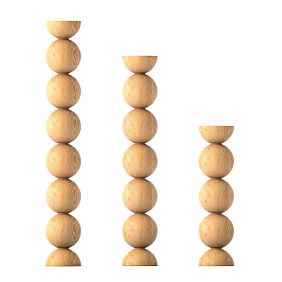
A modern turned furniture leg is a pure form created by rotation. The profile can be simple—a cylinder with slight tapers. It can be complex—a tiered turned column with balls, disks, bobbins. Each profile carries character: a simple cylinder is modern minimalism; a complex multi-tiered one is classic and baroque.
From the STAVROS range, theturned furniture leg MN-145deserves special attention—one of the most popular options due to its versatile silhouette. A laconic profile without excess suits both a Scandinavian sofa and a classic console table. Similarly, theturned leg MN-222works—minimal form, maximum versatility.
For furniture with a decorative accent, turned legs with additional elements are produced:MN-148 and MN-149—with decorative overlays that enhance the silhouette's expressiveness without overloading it.
Get Consultation
Tapered (geometric) legs: the language of the mid-20th century
A tapered leg is a straight cone, narrowing towards the bottom, without additional profiling. This is a silhouette born in the era of Scandinavian design in the 1950s–1960s and still relevant today. Such powerful viability is explained simply: the cone is the perfect balance between visual lightness and structural reliability. The leg tapers downward—that's airiness. At the base—sufficient area—that's stability.
Geometric furniture legs from theSTAVROSrange are represented by several models. MN-186—a laconic cone, a bestseller that works with any style from minimalism to mid-century. MN-146 and MN-192—more compact options for coffee tables, benches, nightstands. MN-206—a cone with an increased cross-section for heavy case furniture.
A wooden tapered leg with natural oil finish on a sofa with sand-colored fabric upholstery—this is an image reproduced again and again in the world's best interior publications. Because it works. Always.
Straight square and rectangular supports
A straight support with square or rectangular cross-section is the complete opposite of a turned profile. No curves, no play of forms. Only pure geometry. This is a furniture leg for those who appreciate architecturality and structure: modern minimalism, Japanese design, constructivism.
A rectangular support bears maximum load with a minimal material-intensive cross-section. A 60×60 mm square made of beech holds a dining table with a margin. An 80×80 mm cross-section is already a support for a massive oak table or a cabinet of significant weight.
Geometrically precise supportsMN-193represent exactly this type: clean lines, precise angles, no decorations. Furniture on such supports is perceived as honest, straightforward, without unnecessary words.
High furniture legs: a different space
High furniture legs are an independent aesthetic idea, not just an enlarged version of a standard support. When furniture is raised high above the floor, the space beneath it becomes visible — and this visually frees up the room, making it lighter and more voluminous. This is especially valuable in small spaces, where every centimeter of visible space contributes to a feeling of spaciousness.
A sofa on legs 25–30 cm high looks radically different than the same sofa on 10 cm legs. It 'floats,' it's light, it's Scandinavian in spirit. A chest of drawers on high supports is no longer just storage; it's a design object.
High wooden legs for sofas and case furniture from the STAVROS range are available in several profiles: turned high (MN-217, MN-221), geometric high (MN-186-1, MN-186-2), modern high (MN-226, MN-237, MN-241). Height from 250 to 710 mm and above — depending on the model.
A separate story — table basesSTL-041 and STL-042: solid frame constructions made of solid wood for dining and writing desks. Here, four legs are combined into a single load-bearing system with stretchers and crossbars — maximum rigidity and engineering solidity.
Spherical and non-standard shapes
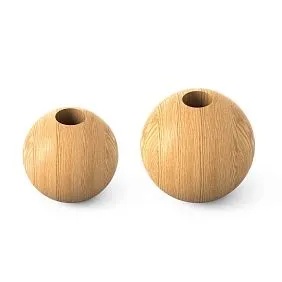
Sphericalleg MN-235— is a special case. A sphere as a support shape is both playfulness and precision. In a child's room, such a leg creates softness and friendliness. In a designer interior — it draws attention to itself as an author's technique. Modern models MN-237, MN-238, MN-241, MN-243 — geometrically expressive supports with non-standard profiles that turn a leg from a load-bearing element into a decorative accent.
Legs for different types of furniture: detailed analysis
The same leg works differently on different furniture. Let's consider the main types of furniture and the logic of choosing a support for each.
Chair legs: ergonomics first
A chair is the most heavily loaded piece of furniture in the home. The load on chair legs during active use is dynamic, with impacts and tilting. These are completely different conditions than the static load of a sofa or table.
Requirements for chair legs: durable wood species (beech, oak), sufficient cross-section (for turned — diameter from 30 mm, for straight — from 30×30 mm), reliable attachment to the seat frame, angle of inclination — the rear chair legs are installed at a slight backward angle for stability.
Height of front chair legs — standardly 450–480 mm from floor to seat. Rear legs — the same height or slightly higher when angled. For children's chairs — proportionally smaller. For bar stools — 650–750 mm.
Key rule: do not skimp on chair legs. They bear the main dynamic load and are the first to break if poorly made. Beech legs of a standard dining chair, when properly installed, last for decades without complaint.
Wooden legs for sofas: aesthetics and height
A sofa is the most noticeable piece of furniture in the living room, and its legs are read at first glance. The load on sofa legs is static and moderate compared to a chair: 4–6 supports share the weight of the structure plus the weight of seated people.
Parameters for sofa legs: height — from 70 to 300 mm depending on the desired style. Low legs (70–100 mm) — a massive, weighty silhouette. Medium (120–180 mm) — a balance between lightness and solidity. High (200–300 mm) — airiness, Scandinavian character.
Wood species for sofa legs: beech — optimal. Light, strong, accepts any finish well. Oak — for heavy sofas and status interiors. Pine — for cottages and country houses in a rustic style.
Diameter of turned sofa legs: 40–60 mm. Cross-section of straight legs — 40×40 — 60×60 mm. Attachment: an M8 or M10 threaded stud, screwed into the lower part of the leg, is screwed into a nut insert installed in the sofa frame. Simple, reliable, detachable mounting.
Legs for a coffee table: lightness as a principle
A coffee table is an item with minimal load and maximum decorative function. Here, legs work primarily on image. The load is small — books, remotes, coffee cups. This frees up hands in choosing the shape: you can take thin, elegant, non-standard profiles without risk of structural problems.
For a coffee table, the following work well: thin tapered legs with a diameter of 20–30 mm at the base, height 30–45 cm, straight square 30×30 or 35×35 mm, modern geometric profiles. Next towooden picture framesanddecor made from solid woodOn the walls, a light coffee table on thin wooden legs creates a sense of a unified organic environment — wood everywhere, and yet nothing feels heavy.
Furniture support for dining table: load calculation
A dining table is a complex case. The load is substantial: tabletop, dishes, food, leaning people — in total, the table bears 100–300 kg during active use. And this load is distributed across four points.
Minimum cross-section of a wooden dining table leg: for round profile — diameter from 60 mm. For square — from 60×60 mm. For rectangular — from 60×80 mm. Wood species — must be hard: beech or oak. Height — standard 710–730 mm (table height from floor plus tabletop thickness).
STL-041 and STL-042 under-table frames with frame construction — an optimal solution for massive dining tables: four legs connected by stretchers form a rigid frame that distributes the load across the entire structure, not just at the attachment points.
Bed legs: height and special role
Bed legs bear one of the most significant loads in the category of household furniture: the combined weight of the frame, mattress, and sleeping people easily reaches 250–400 kg. Moreover, the load is also dynamic — the bed springs with every movement.
The height of bed legs is a question that is often underestimated. Standard: distance from floor to bed base — 500–550 mm. If you choose legs 15 cm high instead of 10 cm — you gain 5 cm of additional storage space under the bed, and that is already noticeable. High legs (200–300 mm) turn the under-bed space into a full-fledged storage area.
Wood species for beds — must be beech or oak. Diameter for turned legs — from 60 mm. Mounting — reliable bolted connection through a metal plate with multiple fixation points.
How to choose furniture supports: an error-free algorithm
Choosing wooden legs is not 'liked it — took it'. It is a sequence of decisions, each influencing the next.
Step 1: determine the load
Load is divided into three levels. Light (up to 50 kg per set of legs): coffee tables, small nightstands, poufs, etageres. Medium (50–150 kg): sofas, armchairs, regular cabinets, small desks. Heavy (150 kg and above): dining tables, beds, massive case goods, wardrobes.
For light loads, any cross-sections are suitable, including thin and elegant ones. For medium — minimum diameter for turned legs 40 mm, square 40×40 mm. For heavy — from 60 mm/60×60 mm, hard wood species mandatory.
Step 2: determine the height
The height of a furniture leg is not just about aesthetics, but also ergonomics. For seating (chairs, sofas, armchairs): final seat height from floor — 420–480 mm. For dining table: final height from floor — 730–760 mm. For writing/desk: 730–760 mm. For coffee table: 380–480 mm. For bed: base height from floor — 500–560 mm.
Leg height is calculated as: desired product height minus thickness of tabletop/seat/frame. For example: dining table, desired height 750 mm, tabletop thickness 40 mm — legs needed: 710 mm.
Step 3: choose the wood species
Beech — a universal choice for 80% of tasks. Dense, strong, lightweight, takes stain and varnish well, available in a wide range of sizes. Oak — for representative tasks: dining tables, beds, visible elements in classic interiors. Characteristic expressive grain under transparent oil — that's beauty in itself.
Step 4: choose the shape
Leg shape defines the character of the furniture. Turned multi-tiered — classic, Provence, country. Simple cone — mid-century, Scandinavian design, modern classic. Straight square — minimalism, loft, Japanese style. Geometric modern shape — authorial design, conceptual interior. Spherical — playful, children's, unconventional. Frame under-table — powerful dining table, workshop, industrial style.
Step 5: determine the finish
Unpainted wooden furniture legs — the most flexible option: complete freedom in choosing the color and texture of the final finish. This is fundamentally important for restoration and when working with existing furniture: you can match the color exactly. Stained and painted legs save time if the color suits you. For those assembling furniture 'from scratch' and knowing the exact color — a good solution. Mixed techniques: leg body — natural oil, lower part — dark stain. Or vice versa. Playing with leg color is one of the simplest ways to add individuality to furniture.
Installing wooden legs: DIY mounting
Mounting furniture legs is a task you can and should tackle yourself. With the right approach, it takes 20–40 minutes for a set of four legs.
Mounting types: what exists and what to choose
Threaded stud (bolt) — the most common option. A steel stud M8 or M10 is glued or screwed into the bottom of the leg. A T-nut insert is installed in the furniture frame or a nut is welded to a metal embed. The leg is screwed into the nut — the connection is rigid and detachable. Dismantling if needed — 30 seconds per leg.
Mounting plate — a metal plate with four holes for screws and a central hole with a nut. The plate is attached to the furniture frame with four screws, the leg is screwed into the central nut. Reliable, universal, suitable for upholstered furniture where there is no rigid wooden frame.
Tenon joint with glue — a classic joinery method: a tenon is turned on the base of the leg, a mortise in the furniture frame. The joint with PVA glue — very strong, but non-detachable. Used in production conditions for chairs and tables.
Through-bolt connection: the bolt passes through a drilled hole in the furniture frame and screws into a threaded insert in the leg body or is secured with a nut from below. Maximum reliability for heavy furniture.
Step-by-step installation: a practical guide
Step one: marking. Flip the item onto a soft surface. Mark the leg attachment points: they should be symmetrical relative to the center and set back from the frame edges by at least 3–5 cm to avoid splitting the wood. Use a tape measure and a square — leg asymmetry discovered after installation can only be corrected by disassembly.
Step two: installing fasteners. If using T-nut inserts — drill a hole of the required diameter (9 mm for M8, 11 mm for M10), insert the nut, and tap it flush with the surface using a hammer. If using a mounting plate — mark and drill four holes for screws, then attach the plate.
Step three: plane check. Before screwing in the legs, ensure all attachment points are in the same plane. Place a long level or a straight batten on the frame — it should lie flat without gaps. If the plane is off — the legs will be crooked, and the furniture will wobble.
Step four: leg installation. Screw the legs in by hand until tight. Do not use wrenches or powerful tools: overtightening can split the wood in the threaded area of the leg.
Step five: verification. Flip the furniture over and place it on a level surface. Check: is there any wobbling? Do all four legs touch the floor? If one is slightly shorter than the others — place an adjustable foot pad under it or wrap a 1–2 mm thick cork shim.
Common mistakes when installing legs
Incorrect thread diameter chosen — an M6 stud for a heavy sofa will shear under the first dynamic load. Minimum M8 for upholstered furniture, M10 for tables and beds.
Incorrect placement of attachment points — too close to the frame edge, in a knot area, or at the end grain. Result — wood splitting when tightening or under load.
Neglecting plane check — three legs stand, the fourth hangs in the air. Or vice versa, three are level, one protrudes slightly — the furniture rocks with every movement.
Installation without acclimatization — legs brought in from outside in winter and installed immediately. When warmed in a heated room, wood changes dimensions — and the fastening may loosen. Let the material adjust to room temperature for 12–24 hours.
Wooden legs and a unified interior system
A furniture leg is not an isolated object. It is part of a system where all wooden elements should speak the same language. If you chose oak legs for a dining table — it's logical thatBalusters of the staircasein the same room, there should be oak elements. If beech legs for a sofa — letWooden cornicesanddoor casingsthem be in a similar tone.
When the space featuresslatted oak partitionsandWooden trimin a unified system with furniture on oak legs — the interior becomes cohesive, architectural. This is not a random assortment of items; it's a space created with a concept. It is precisely this approach that distinguishes professional design from amateur assembly.
On stavros.ru in the sectionsolid wood productsa full range of elements for creating such a system is presented: legs, moldings, handles, frames, decor, staircase components. All from the same material, all within a single philosophy of quality wood.
Caring for wooden furniture legs: a little attention — a long lifespan
Wooden furniture legs do not require complex care, but they deserve attention.
Prevention: every 6–12 months, check the tightness of fasteners. Under load and with temperature changes, threaded connections may loosen slightly. One turn with a wrench — and the leg is firmly seated again.
Moisture protection: furniture legs are the element closest to the floor. After wet cleaning, the floor dries quickly, but if legs stand in a puddle for a long time — the end grain starts absorbing moisture. A simple solution — felt or cork pads on the ends. They protect the floor from scratches and the leg from excess moisture.
Refinishing: worn legs of a sofa or chair are easy to refresh. Sanding with 150-grit sandpaper, dust removal, applying oil or stain — and the legs look like new. Often, this is much more economical than buying a new sofa.
Chip repair: a small chip on a wooden leg is fixed with wood filler of a matching shade, sanding, and recoating. A deep chip or crack in a load-bearing area — is a reason to replace the leg. Do not risk the structural integrity of the furniture.
About STAVROS: quality that speaks for itself
The market for furniture legs is vast — and it's easy to get lost in it. Company STAVROS occupies a position in this market that needs no lengthy explanation: quality solid wood, precise dimensions, wide assortment, and an honest approach to materials.
STAVROS produces wooden furniture legs from select beech and oak, adhering to all requirements for moisture content, geometry, and surface quality. Over 130 models in the catalog cover needs from a budget sofa to an exclusive interior project. Each leg is sanded to a perfectly smooth surface and ready for any finish coating.
The company works with private craftsmen, furniture workshops, designers, and manufacturing enterprises. Custom orders, large batches, non-standard profiles — all within the capabilities of STAVROS. Delivery across Russia and beyond.
buy wooden legs for furniturewith quality guarantee and precise specifications — in the STAVROS catalog, where every item is a product made of real wood, not an imitation.
FAQ: answers to the most popular questions
What is the difference between beech and oak legs — what to choose?
Beech — dense, lightweight, uniform structure, takes staining well. Optimal for 80% of tasks. Oak — heavier, denser, with expressive texture, more expensive. Choose oak if the textural beauty of natural wood and maximum durability are important.
What diameter leg will support a heavy dining table?
For a dining table weighing 50–80 kg plus the load from people — a minimum of 60 mm in diameter for a turned beech leg, 60×60 mm for a straight leg. When using an under-table with stretchers, the cross-section can be smaller due to the rigid frame.
How to choose the height of a sofa leg?
Determine the desired seat height from the floor (standard 420–480 mm). Measure the height of the sofa frame from the floor to the top of the frame without legs. The difference is the required leg height. Add 5–10 mm for fitting into the mounting element.
Can I replace the legs on an old sofa myself?
Yes, if the old legs were attached with M8 or M10 studs — new legs with a similar stud simply screw into the place of the old ones. If the mounting system is different — universal mounting plates need to be installed, which is also easy to do yourself.
Which fastener is more reliable — a stud or a mounting plate?
For rigid wooden frames (tables, chairs) — a stud is more reliable, the load is transferred directly into the body of the leg. For upholstered furniture with soft frames — a mounting plate, distributing the load over a larger area.
Is it necessary to coat the legs with varnish or oil before installation?
Absolutely — and better before installation. After installation, the bottom end of the leg is inaccessible. Treat all surfaces, including the ends, and only then mount. Open ends are the main entry point for moisture.
How many legs are needed for a large sofa (three-seater)?
Standardly 6 legs: two on each side and two in the center. The central ones bear the maximum load — they should be of no smaller cross-section than the corner ones.
How to level furniture if one leg is shorter?
Three methods: adjustable threaded glides (allow compensation for up to 15–20 mm difference), cork or felt pads of the required thickness, trimming the long leg (irreversible but precise method). The first option is the most convenient for furniture standing on an uneven floor.
Where is the best place to buy furniture legs with a quality guarantee?
From a specialized manufacturer of solid wood products, who can confirm the wood species, moisture content, and material grade.Buy wooden furniture legswith clear specifications and a wide selection of profiles — in the STAVROS catalog, where material quality and execution precision require no additional proof.


