Article Contents:
- Fragmentation Error: When Elements Are Not Connected
- Mixed Wood Species as Visual Chaos
- Mixed Tones as a Sign of Poor Planning
- Mixed Sizes as a Disruption of Rhythm
- Systematic Approach: From Floor to Ceiling
- Lower Level: Baseboards and Thresholds
- Middle Level: Handles and Furniture Decor
- Upper Level: Cornices and Moldings
- Wood Species: Choosing the Foundation of the System
- Oak: Versatility and Prestige
- Beech: A Light Alternative
- Ash: Contrast with a Light Tone
- Tone and Finish: Creating a Unified Palette
- Natural Tone: Preserving Authenticity
- Toning: expanding the palette
- Painting: Color is More Important Than Texture
- Stylistic Consistency: From Classic to Minimalism
- Classic Style: Ornaments and Complex Profiles
- Scandinavian Style: Light Wood and Simplicity
- Loft: Roughness and Contrasts
- Eco-Style: Naturalness and Textures
- Assembly Practice: How to Create a System
- Step 1: Determine Area and Height
- Step 2: Choose Wood Species and Tone
- Step 3: Select Element Sizes
- Step 4: Calculate Quantity and Cost
- Step 5: Order Everything from One Manufacturer
- Frequently Asked Questions
- Can different wood species be combined in one interior?
- What's More Important: Matching Tone or Matching Wood Species?
- How Long Do Wooden Interior Elements Last?
- Is it mandatory to use wooden elements on all levels?
- Where to buy coordinated wooden elements?
- Can wooden elements be added gradually?
- Conclusion: integrity through a system

Interior is composed of details. One beautiful chandelier against plastic baseboards looks absurd. Expensive parquet with cheap furniture handles destroys the premium feel. A comprehensive approach is the only way to create a cohesive space whereWooden itemsconnect the floor, walls, ceiling, and furniture into a unified system.wooden handles from solid wood, wooden baseboard around the perimeter, decorative overlays on facades, wooden cornice under the ceiling— when all elements are coordinated by wood species, color, and finish, the magic of completeness arises. We analyze the system of a comprehensive approach to wood finishing.


Error of fragmentation: when elements are not connected
Typical situation: a person renovates in stages, buying elements from different places at different times. The result is an eclectic mishmash where nothing matches.




Mixed wood species as visual chaos
Beech handles in the kitchen. Oak baseboard in the living room. Ash door frames in the bedroom. Each element is high-quality on its own, but together they create dissonance. Beech is two to three shades lighter than oak. Ash has a more contrasting texture than beech. The eye perceives this inconsistency, creating a subconscious feeling of incompleteness.
Correct: all wooden elements from the same wood species. If you chose oak — oak handles, oak baseboards, oak door frames, oak decor. Unity of material creates visual coherence; the space reads as a whole.
Our factory also produces:


Mixed tones as a sign of poor planning
Even if all elements are oak, but one is coated with natural oil (light honey tone), another is stained walnut (dark brown), and a third is bleached (gray-beige) — the result is chaotic. Mixed tones tear the space into pieces; each element lives its own life.
Correct: a unified tonal palette. All wooden elements in the same tone — natural, stained, or painted. Variations within one tonal range are acceptable (natural oak can vary from golden to light brown, which is natural), but not contrasting jumps.
Get Consultation
Mixed sizes as a disruption of rhythm
Baseboard height 60 mm in the living room, 120 mm in the hallway, 80 mm in the bedroom. Handle length 128 mm in the kitchen, 192 mm in the wardrobe, 35 mm buttons in the bathroom. Lack of a unified size rhythm creates visual fragmentation.
Correct: choose 2-3 base sizes and use them consistently. Baseboard — one size for the entire apartment (or two: one for living rooms, another for technical rooms). Handles — one model for all cabinets and dressers (or two: pulls for kitchen and wardrobes, knobs for bathroom).
Systematic approach: from floor to ceiling
Comprehensive wood finishing means wooden elements are present at all levels of the room, creating vertical connectivity.
Lower level: baseboards and thresholds
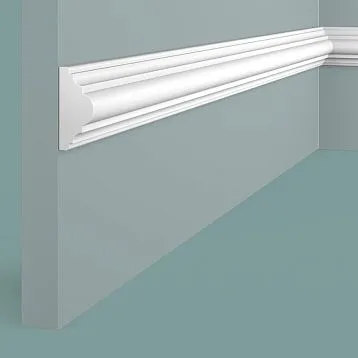
Wooden baseboard— the first element of the comprehensive system. It connects the floor and walls, creating a frame for the room. In a comprehensive approach, the baseboard is not random — it is coordinated with other wooden elements.
Baseboard height is determined by room proportions. Low ceilings (2.5-2.7 meters) require restraint — baseboard 60-80 mm. High ceilings (3.0-3.5 meters) allow monumentality — baseboard 100-140 mm.
Baseboard profile aligns with interior style. Classic profile with chamfers and beads — for traditional interiors. Simple rectangular — for modern. Rounded — for Scandinavian and eco-styles.
Thresholds between rooms are a continuation of the baseboard system. They should be from the same wood species, in the same tone. A threshold is not a technical element but part of the visual composition.
Middle level: handles and furniture decor
Furniture Handles— the second element of the system. They are at hand and eye level, highly noticeable. Their coordination with baseboards is critical.
The wood species is the same. Oak baseboards require oak handles. Beech baseboards require beech handles. Exceptions are possible (e.g., light beech handles and dark oak baseboards), but they must be deliberate, creating a planned contrast, not accidental.
The tone matches or intentionally contrasts. Match: natural oil on both baseboards and handles. Contrast: natural baseboards and handles tinted graphite. But not chaos: natural baseboards, walnut handles in the kitchen, and white handles in the bedroom.
decor for furniture— overlays, rosettes, carved elements — complement the handles, enhancing decorativeness. They are of the same style: if the handles are minimalist geometric, the decor is also restrained. If the handles are carved classic, the decor can be more ornamental.
Upper level: cornices and moldings
Wooden ceiling cornicescomplete the vertical system. They connect the walls and ceiling, creating architectural expressiveness.
The cornice is coordinated with the baseboard in style. If the baseboard is classic with fillets, the cornice should also have a complex profile. If the baseboard is laconic, the cornice is simple, without excess.
The size of the cornice is proportional to the size of the baseboard. An unwritten rule: the cornice is 20-30% larger than the baseboard. Baseboard 80 mm — cornice 100-110 mm. Baseboard 120 mm — cornice 150-160 mm. This creates visual stability, where the top is heavier than the bottom.
Wall moldings — an intermediate element between the baseboard and cornice. They divide the wall into horizontal zones, create panel systems, frame openings. Moldings are of the same species and tone as the other elements, sized between the baseboard and cornice.
Wood species: the foundation of the system
The choice of species determines the entire system. Transitioning from one species to another within one interior is possible, but complex and risky. It's easier to choose one species and build around it.
Oak: versatility and prestige
Oak is the most versatile species for comprehensive finishing. Its hardness (3.7 on the Brinell scale) ensures the durability of all elements. Expressive texture with large annual rings creates visual depth — baseboards, handles, cornices do not look flat, even if painted.
The color range of oak is wide: from light golden (young oak) to dark brown (bog oak). This allows selecting a tone for any interior concept. Tinting oak provides a rich palette without losing texture — the wood 'accepts' pigment evenly, without stains.
OakWooden products for interior— baseboards, handles, cornices, architraves, overlays — create a unified premium-level system. Oak is perceived as an expensive material, even without carving and complex profiles.
Beech: a light alternative
Beech is lighter than oak, with a creamy-pinkish hue and more uniform texture. This makes it preferable for Scandinavian and minimalist interiors where light wood without aggressive grain is needed.
Beech's hardness is higher than oak's (3.8 on the Brinell scale), ensuring wear resistance. But beech is more hygroscopic — it reacts more strongly to humidity changes. For comprehensive finishing, this means: beech elements require a stable indoor climate or enhanced protective treatment.
Beech elements are optimal for bedrooms, living rooms, studies — rooms with a constant climate. For kitchens, hallways, bathrooms, where humidity is variable, oak is better.
Ash: contrast with a light tone
Ash combines light color (close to beech) with expressive contrasting texture (like oak). Ash's annual rings are contrasting — dark lines on a light background. This creates a dynamic visual effect, especially with brushing (removing soft fibers with a brush).
Ash's hardness is the highest among European species (4.0 on the Brinell scale). Ash elements are strong, not afraid of mechanical impacts. This is important for handles (constant touching), baseboards (vacuum/feet impacts), thresholds (abrasion).
Ash is more expensive than beech but cheaper than exotic species. For comprehensive finishing, it's a compromise choice between cost and expressiveness.
Tone and finish: creating a unified palette
The species is chosen. Now we determine the tone and type of finish. This is critical for the visual unity of the system.
Natural tone: preserving authenticity
Natural tone is minimal intervention in the wood's color. Coating with transparent oil or colorless varnish preserves the natural color of the species: golden oak remains golden, pinkish beech remains pinkish.
Advantages: authenticity, natural beauty, tactile warmth. Disadvantages: limited palette (cannot make light beech dark without tinting), color variations between elements (each board differs slightly).
For comprehensive finishing in a natural tone, selecting elements from the same wood batch is critical.BaseboardsBaseboards, handles, cornices must be from boards of similar tone, otherwise color variation will destroy unity.
Staining: expanding the palette
Toning is the application of pigmented oil or stain that changes the color of the wood while keeping the grain visible. Oak can be toned to walnut (dark brown), wenge (almost black), gray (a fashionable Scandinavian shade), or bleached (light gray with white streaks).
Toning eliminates natural color variations. All elements acquire a uniform tone, regardless of the individual characteristics of the boards. This simplifies selection for a comprehensive system — it guarantees identical color for baseboards, handles, and cornices.
Disadvantage: with heavy toning (dark shades), the wood grain is partially hidden. Wenge-toned oak looks almost black, the grain is barely distinguishable. To preserve expressiveness, choose moderate tones: walnut, light cognac, gray without excessive darkening.
Painting: color is more important than grain
Painting with opaque enamel completely hides the wood grain, creating a uniform color. White handles, black baseboards, gray cornices — any RAL color.
Painted elements work in modern interiors, where purity of lines and color without textural noise is important. But painting devalues solid wood — a painted oak handle is visually indistinguishable from a painted plastic one. Overpaying for solid wood is not justified.
Exception: white paint on oak or beech preserves partial visibility of the grain through a thin layer (the 'bleached wood' technique). This is a compromise between white color and preserving a hint of naturalness.
Stylistic consistency: from classic to minimalism
A comprehensive approach requires stylistic unity of all wooden elements.
Classical style: ornaments and complex profiles
Classic requires decorativeness.Baseboard with beads and chamfers, cornice with carved elements,furniture handles with ornament, overlays with floral carving.
All elements should be comparable in their level of decorativeness. Not acceptable: a simple rectangular baseboard and richly carved handles. Correct: profiled baseboard, carved cornice, ornamental handles, decorative overlays — a unified system of classical decor.
Wood species for classic — oak, preferably toned in dark noble shades (walnut, cognac). Light beech is less suitable for classic — it is associated with Scandinavian style.
Scandinavian style: light wood and simplicity
Scandinavia loves light wood species and laconic forms. Beech or bleached oak. Baseboard of a simple rectangular profile without chamfers. Handles are geometric — straight bars or simple knobs. Cornice is minimal or absent (ceiling without decor).
Finish — natural matte oil or white toning. No dark shades, no carving, no complex profiles. Purity of form, lightness of material, functionality without excessive decor.
Loft: roughness and contrasts
Loft allows for a raw look. The baseboard can have an intentionally rough texture, preserved saw marks. Handles are massive, brushed (with pronounced annual ring relief). Cornice is simple or replaced by a beam.
Wood species — oak, toned in dark shades or fumed to graphite. The contrast of dark wood with white or gray walls is a loft classic. Metal elements (black screws on handles, steel corners on baseboards) add industrial flair.
Eco-style: naturalness and textures
Eco-style requires maximum naturalness. Wood with preserved knots, irregularities, micro-cracks. Baseboard with a brushed texture. Handles with untreated sections. Cornice made from a beam of natural shape.
Finish is minimal — wax or light oil without toning. The goal: wood should look like wood, not like polished plastic. Any natural wood species: oak, ash, even pine (it is soft, but cheap and aromatic).
Practice of system assembly: how to compose a system
The theory is clear. Let's move to practice. How to assemble wooden elements for a specific room?
Step 1: Determine the area and height
Measure the room perimeter (for baseboard calculation), the length of cornices (along the ceiling perimeter or only on one wall), count the number of doors (for architraves), the number of furniture pieces with handles (kitchen, dressers, cabinets).
Example: living room 20 m², perimeter 18 meters, ceiling height 2.7 meters, one door, wall under cornice 4 meters.
Step 2: Choose the wood species and tone
Start from the floor or dominant furniture. If the floor is natural oak — the entire system is natural oak. If the furniture is made of tinted ash — the system is ash in the same tone.
If the floor is not wooden (tile, poured), you are free to choose. Focus on the style: classic — tinted oak, Scandinavian — natural beech, loft — fumed oak.
Step 3: Select element sizes
Baseboard: ceiling height 2.5-2.7 m — baseboard 60-80 mm, height 2.8-3.2 m — baseboard 100-120 mm, height 3.3+ m — baseboard 140-160 mm.
Cornice: 20-30% larger than the baseboard. Baseboard 80 mm — cornice 100-110 mm.
Handles: for kitchen cabinets — 128-160 mm brackets (comfortable grip). For dressers and wardrobes — 192-256 mm brackets or 35-50 mm knobs. For bathrooms — 35 mm knobs (compact, moisture-resistant).
Step 4: Calculate quantity and cost
Baseboard: perimeter 18 meters + 10% margin = 20 meters. Oak baseboard 80×16 mm costs approximately 1500-2000 rub/meter, total 30,000-40,000 rub.
Cornice: length 4 meters + margin = 4.5 meters. Oak cornice 100×60 mm costs 2500-3500 rub/meter, total 11,000-16,000 rub.
Handles: kitchen 12 doors + 6 drawers = 18 handles. Oak 128 mm bracket costs 800-1200 rub/piece, total 14,000-22,000 rub.
Total cost of comprehensive finishing for one living room: 55,000-78,000 rub. This is significant, but the result is a finished space with visual unity.
Step 5: Order everything from one manufacturer
Critical: order all elements from one manufacturer, preferably from the same wood batch. This guarantees matching tone, texture, and processing quality. Baseboards from one manufacturer, handles from another, cornices from a third — risk of mismatched tones, even if the species and tone formally match.
Frequently asked questions
Can different wood species be combined in one interior?
Yes, but it's difficult. Combining oak and ash works (both have pronounced texture, similar hardness). Combining oak and beech is riskier (different color, different texture). Combining any hardwood with pine is almost always unsuccessful (pine is soft, light, texture is unremarkable — looks cheap against oak).
What's more important: matching tone or matching wood species?
Wood species is more important. Oak elements in different tones (natural baseboard and handles tinted gray) are perceived as a unified system. Different species in the same tone (oak baseboard and natural beech handles) look disjointed due to texture differences.
How long do wooden interior elements last?
Baseboards and cornices made of oak or beech last 40-50 years without loss of functionality. Handles — 30-40 years. This is longer than the lifespan of most finishing materials. Wooden elements can be restored (sanded, re-oiled), extending their life for decades more.
Is it necessary to use wooden elements on all levels?
Not necessary, but desirable. Minimum coherence: baseboard + handles (two out of three levels). This already creates a sense of system. Adding a cornice or moldings enhances the effect, but is not critical for small rooms.
Where to buy coordinated wooden elements?
Look for manufacturers with a wide range: baseboards, cornices, moldings, handles, overlays — all from the same wood species, with identical tinting options. This guarantees compatibility. Avoid buying from different sources, even if each element is individually high-quality.
Can wooden elements be added gradually?
Yes, if planned from the very beginning. First stage: baseboards. Second stage (in six months to a year): handles. Third stage: cornices. But all stages must be within a single plan for species, tone, style. Not allowed: install natural beech baseboards now, and a year later install tinted oak handles — that's inconsistency.
Conclusion: integrity through system
A comprehensive approach to wood finishing is a transition from the chaos of random purchases to a thoughtful system where each element knows its place and is coordinated with others.Wooden products for interior — Baseboards, Furniture Handles, Crown Molding, Decorative Inserts— cease to be a set of disparate details and become a single organism, where the top is coordinated with the bottom, furniture with architecture, functionality with aesthetics.
This interior doesn't shout about itself or impose. It quietly yet convincingly demonstrates taste, thoughtfulness, and respect for materials and space. Guests may not consciously notice the baseboards and cornices, but subconsciously they perceive a sense of completeness, harmony, and a place where everything is in its right place.
For over twenty years, STAVROS has been offering comprehensive solutions for interior wood finishing. The range includes all necessary elements for creating a coordinated system:Trimming Items(baseboards, cornices, moldings, architraves),Furniture hardware(handles, knobs, brackets),decorative elements(overlays, rosettes, panels).
All products are made from solid oak, beech, or ash, dried to 8-12% moisture content. This eliminates deformation, cracking, and shrinkage after installation. The wood undergoes multi-stage processing on CNC machines and final hand sanding, ensuring perfect geometry and surface smoothness.
STAVROS offers a unified tinting system for all elements. By choosing one of 12 standard tones (natural oak, walnut, wenge, cognac, bleached, gray, and others), you can order baseboards, handles, cornices, and moldings in a single color. This guarantees visual unity of the system without the risk of color variation.
For projects with individual requirements, STAVROS provides a custom tinting service to any shade based on the customer's sample. The company's technicians select pigments, create test samples, and coordinate the result until achieving an exact match with the desired tone.
The company works with designers and private clients, providing consultations on configuration, calculating the required quantity of elements, and logistical support. Delivery is organized to any region of Russia, with packaging ensuring the safety of elements during transportation over thousands of kilometers.
Create interiors where every detail is coordinated, where baseboards echo handles, cornices resonate with moldings, and where material unity creates a sense of thoughtfulness and completeness. A comprehensive approach is an investment in spatial integrity that pays off daily through visual and tactile pleasure from living in a harmonious environment.