Article Contents:
- What is a Baluster: History, Meaning, and Philosophy
- Wood Species: What to Choose and Why It Matters
- Shapes and Profiles: From Classic to Avant-Garde
- Molding in Interior: The Revival of Living Decor
- Balusters and Molding: A Union Born of History
- Interior Styles: What and When is Appropriate
- Classic and neoclassic
- Baroque and Empire
- Provence and Country Style
- Modern Classic and Art Deco
- Technical Parameters: What's Not Usually Spoken Aloud
- Installation of Wooden Balusters: Step by Step
- Surface Preparation and Finishing
- Staircase Components: A Unified System
- Combining Wood and Polyurethane Decor
- Color: How Not to Make Mistakes with Toning
- Mistakes in Selection and Installation: Learning from Others' Experience
- Care for Wooden Balusters and Molded Decor
- Questions and Answers: The Most Important Things
- Trends 2025–2026: What's Relevant Now
- STAVROS: The Company That Understands Wood

There are details that remain silent—and they speak the loudest about taste. A staircase with turned posts, a wall with a light cornice molding, a ceiling with unobtrusive decor—these are not just decorations. This is the language of the interior, its intonation and character. Today we talk about two elements that turn a dwelling from functional into living: wooden balusters and molding. About how they work separately and what magic they create together.


What is a Baluster: History, Meaning, and Philosophy
The word 'baluster' came into Russian from the Italian 'balaustro,' which in turn goes back to the Greek name for the pomegranate flower—'balaustion.' It was the curved pomegranate bud that once gave shape to the first turned columns of ancient porticos. Millennia have passed, styles and eras have changed, butWooden balusterit has remained—surviving Rome, the Renaissance, Baroque, Classicism, and the avant-garde. It never went out of fashion because it was never a fashion. It was and remains an architectural necessity, clothed in beauty.
A baluster is a vertical supporting element of a stair railing. Its task is twofold: on one hand, it holds the handrail and ensures safety; on the other, it shapes the appearance of the staircase as the main visual accent of the interior. When a person first enters a country house or a spacious hall, their gaze inevitably drifts toward the staircase. And if that staircase carries well-chosenwooden balusters—the conversation about the interior has started correctly. Without words, without explanations—simply through form and material.
Wood in this context is a conscious choice. Not because it's cheap or 'the norm,' but because wood is alive. It breathes, changes shade under different lighting, reacts to heat and humidity, and ages with dignity. An oak baluster becomes even better after twenty years: patina, growth rings, the relief of the grain—all this makes it unique. No industrial material can provide what solid wood does.




Wood Species: What to Choose and Why It Matters
Choosing a species is not an aesthetic decision. Or rather, not only an aesthetic one. It's a decision about durability, about load, about how the element will behave in a year, five, twenty years. Oak—dense, heavy, with a pronounced texture—is ideal where monumentality is important. It is not afraid of wear, hardly deforms with humidity fluctuations, and perfectly accepts stains of any tone: from light honey to almost black wenge.
Pine and spruce are lighter, more accessible, but no less worthy with proper treatment. Their resinous structure provides natural resistance to rot, and their light shade allows for creating Scandinavian and Provence interiors without additional toning. Birch is distinguished by a uniform texture and lends itself well to turning—it is often used to make balusters with a thin profile and complex silhouette. Ash combines the strength of oak with a more pronounced, almost graphic grain structure—a luxurious option for modern classic.
Beech — dense, hard, with a fine, uniform texture — has traditionally been prized by cabinetmakers for its behavior under the chisel. It is beech blanks that yield the sharpest relief during turning, which is especially important for items with complex figured profiles. Each wood species carries its own character — and the master's task is to reveal, not suppress, this character.
Our factory also produces:


Shapes and Profiles: From Classic to Avant-Garde
The variety of baluster shapes today is enormous — but amidst this diversity, several enduring archetypes can be identified. A turned baluster with rounded inserts and waists is a classic, rooted in the 17th century. It is organic in interiors with stucco decor, coffered ceilings, and wooden paneling. A square-section baluster with a minimal chamfer is a solution for a contemporary style, where straight lines and restraint are valued.
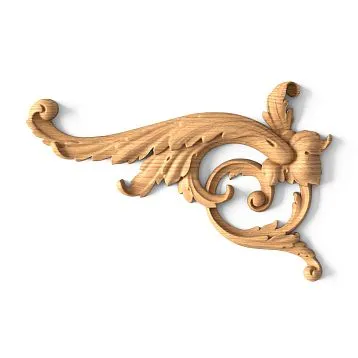
A figured carved baluster is already a work of small sculpture. Acanthus leaves, scrolls, geometric patterns — each element carries semantic weight and refers to a specific artistic tradition. Such items are appropriate in interiors built with a claim to historical authenticity: Classicism, Baroque, Russian Style, Empire. A Scandinavian-type baluster — straight, without excess, with soft transitions of form — sets the tone where functionality and naturalness rule.
A trend of recent years is also interesting: combining turning and hand carving in a single item. The body of the baluster is turned on a lathe, while the top or bottom element is finished by a carver by hand. This allows for unique serial products — reproducible, yet not devoid of individuality. This is precisely the approach embraced by the best Russian manufacturers working with wooden elements for stairs.
Get Consultation
Stucco in the Interior: The Revival of Living Decor
Stucco is one of the oldest forms of decorative art. Its history begins in Ancient Egypt, where gypsum reliefs adorned the tombs of pharaohs. The Greeks brought stucco decor to perfection, the Romans — to luxury, and the Baroque era turned it into a manifesto of power and wealth. For a long time, stucco was the privilege of palaces and cathedrals: too labor-intensive, too expensive, too complex. But the 21st century has changed the rules of the game.
ModernPolyurethane moldingsPolyurethane decor is not an imitation or a compromise. It is a technologically mature material that reproduces the most complex reliefs with a precision unattainable in manual work with gypsum, while possessing properties old masters could only dream of: lightness, flexibility, moisture resistance, and resistance to temperature fluctuations. Polyurethane decor does not crack, crumble, absorb dirt, and is easily painted any color.
Today, stucco decor is not a sign of conservatism or a reference to a 'palatial' past. It is a tool in the hands of a designer who knows how to use it. A cornice above a doorway, a ceiling rosette above a chandelier, a pilaster on a wall between windows, a molding around the perimeter of a room — each of these elements can radically change the perception of space. Add depth, scale, rhythm to it.
Balusters and Stucco: A Union Born of History
Why are these two elements considered together? Not simply because both belong to interior decorative elements. They are connected more deeply — historically, stylistically, functionally. In any classic interior — be it an 18th-century St. Petersburg mansion or an Italian Renaissance palazzo — a staircase with wooden balusters and a ceiling with stucco decor existed within a unified system of coordinates. They corresponded to each other in rhythm, scale, and character of ornament.
Imagine a grand staircase: turned balusters with an acanthus frieze, heavy oak handrails, and overhead — a ceiling cornice with the same acanthus motif and a rosette in the center of the vault. This is not a coincidence — it is a system. Decor works when it is coordinated. When the ornament on the handrails rhymes with the ornament on the cornice, and the profile of the baluster echoes in the profile of the molding — the interior acquires a completeness that is impossible to describe in words, but impossible not to feel.
This is precisely why experienced designers and architects always consider these two elements in tandem. Selecting a staircasebuy wooden balustersthat you want immediately, they simultaneously think about which cornice will go with it on the second floor, which molding will frame the doorway in the hall, which rosette will meet the gaze on the ceiling. An interior is a score, not a set of tools.
Interior Styles: What and When is Appropriate
Classicism and neoclassicism
The Classic style is the native element for both turned balusters and stucco decor. Complex profiles, symmetrical compositions, and rich ornamentation are appropriate here. Balusters with a vase-shaped silhouette, oak handrails with rounded ends, newel posts with relief carving — all this organically combines with ceiling cornices, rosettes, and pilasters made of polyurethane decor. The color palette is white, ivory, gold, dark walnut.Posts for staircaseNeoclassicism is classicism reinterpreted by modernity. The forms are the same, but the solutions are more restrained. Less gilding, more pure white. Fewer scrolls, more clear geometric rhythm. A baluster in a neoclassical interior can be very simple in silhouette, but impeccable in proportions — and it is this impeccability that creates a sense of aristocracy.
Baroque requires boldness. It is a style of excess, opulence, theatricality. Balusters here are richly carved, massive, made of dark wood. Stucco decor features acanthus leaves, volutes, and garlands. The space must make an impression, literally overwhelm with its splendor. If you are ready for this — it is one of the most spectacular results in interior design.
Baroque and Empire
Empire leans towards strictness: symmetry, clear horizontals, military precision of forms. Here, balusters often take the shape of a spear or torch — straight, laconic, solemn. Stucco decor gravitates towards Egyptian and antique motifs: laurel wreaths, palmettes, griffins. All this creates an interior with character — authoritative and yet elegant.
Provence style seems to have little in common with wooden balusters and stucco? Surprisingly — a lot. In a Provençal interior, the baluster is turned from pine or ash, painted white or linen, and slightly aged. Stucco decor is modest, without excess: a simple cornice, a light rosette. Together they create that very atmosphere of a cozy French house, where everything is old, everything is warm, everything is authentic.
Provence and country
Country style works on the same principles, only with a greater emphasis on the naturalness and slight roughness of the material. Balusters here can be intentionally uneven, with visible wood grain, without a glossy varnish finish. Stucco decor is minimal, almost rustic. The main thing is the feeling of craftsmanship and warmth.
Modern Classic and Art Deco
Modern Classic is perhaps the most in-demand style in Russian country house construction over the last decade. It is a balance between historical forms and current technologies. Balusters here are of medium complexity, with a clean profile, stained dark walnut or wenge. Stucco decor is geometrically precise, without excessive ornamentation. Ceiling moldings, window casings, door portals — everything works towards a unified image.
Art Deco is a special story. Here, geometry comes to the fore: straight lines, stepped profiles, metallic accents. A baluster in Art Deco can be square or hexagonal, with clearly defined facets. Stucco decor features zigzag friezes, sunbursts, stylized flowers. The combination of wood and polyurethane decor in this style yields stunning results.wooden balustersTechnical Parameters: What is Not Usually Spoken Aloud
The beauty of a baluster is first and foremost a matter of proportions. The standard height of a baluster for a staircase is from 900 to 1000 mm from the tread level to the top of the handrail. The baluster itself typically occupies 700–800 mm of this height, with the rest taken up by the mounting tenon at the bottom and the mortise element at the top. The diameter or width of the baluster's cross-section depends on its shape: for turned round items — 40–60 mm, for square ones — 40–50 mm.
The installation spacing of balusters is one of the most important parameters, affecting both safety and the visual rhythm of the railing. According to safety standards, the distance between adjacent balusters should not exceed 150 mm — this is a standard adopted based on the calculation that a child cannot fit through the gap. From an aesthetic point of view, the optimal spacing is 120–140 mm: at this distance, the railing looks airy but not sparse.
The choice of wood species is not just a matter of aesthetics. Oak and ash are strong and durable, suitable for load-bearing elements. Beech and maple are ideal for turning and carving. Pine is affordable and easy to work with, but requires careful protection from moisture. Exotic species like wenge or iroko add status, but their processing requires special tools and skills.
The thickness of the handrail is selected to match the diameter of the baluster: a handrail that is too thin on massive posts looks absurd, one that is too thick on delicate balusters looks clumsy. The classic ratio is a handrail approximately 1.2–1.5 times wider than the baluster. It is precisely such proportions that give a sense of balance and completeness.
The quality of the finish determines not only the appearance but also the lifespan of the product. A good primer, several layers of varnish or paint with intermediate sanding, protection of the ends from moisture — these are the stages that distinguish a product for decades from one that will deteriorate in a couple of years. And no, saving on finishing is the worst possible economy.stair railings— is just as important an element of the system as the balusters themselves, and they should be selected as part of a unified ensemble.
Installation of Wooden Balusters: Step by Step
Installing balusters is a process that requires precision and care. An error during the marking stage will result in a skew of the entire railing, which is practically impossible to correct without dismantling. Therefore, one always begins with thorough measurements: the length of the span, the number of steps, the angle of the staircase flight—all of this determines the installation spacing and the angle for trimming the lower end of each baluster.
There are three main methods for attaching balusters to steps and handrails. The first is using a dowel: coaxial holes are drilled in the center of the baluster's lower end and in the step, into which a wooden or metal dowel is inserted. This method is traditional, reliable, and practically invisible from the outside. The second is using a threaded stud: a more modern option that provides a rigid and durable connection. The third is using special stainless steel baluster shoes: used where the step is made of stone or tile and drilling is difficult.
After installation on the steps, the balusters are aligned vertically, their upper ends are trimmed to match the angle of the handrail, and they are fixed into it—again using a dowel or stud. The final stage is filling all gaps with acrylic sealant, sanding the joints, and applying the finish coating: varnish, oil, or wax, depending on the wood species and the desired effect.
Surface Preparation and Finishing
Finishing wooden balusters is not just cosmetic; it's protection. Varnish creates a hard film on the wood surface that protects against mechanical damage, moisture, and dirt. Oil penetrates the fiber structure, nourishes it, and enhances the natural grain. Wax provides a matte, 'living' finish, particularly valued in Scandinavian and Provence-style interiors.
Before applying any coating, the wood is sanded sequentially: from 80 to 220 grit. After the first coat of varnish or oil, the surface is sanded again with fine paper (320–400 grit)—this removes raised fibers and makes the next coat smoother. The final number of coats ranges from two to four, depending on the type of coating and the surface's load.
Staining gives balusters the desired color without hiding the wood grain. Water-based stains are eco-friendly, dry quickly, and provide an even tone. Oil-based stains penetrate deeper, giving a warmer shade. Some craftsmen use chemical fuming—treating the wood with acidic compounds that react with tannins in the fiber structure to produce unique, unreproducible shades.
Stair Components: A Unified System
A professional approach to staircase design involves systems thinking. A baluster is not a separate element; it is part of an ensemble. And for this ensemble to be harmonious, all components must come from the same system, be made from the same wood species, and be finished using the same technique.Staircase Components and Elements— is an entire ecosystem of interconnected parts.
In addition to balusters, this system includes: support and starting newel posts, which define the beginning and end of the railing; handrails, which determine the line and tactile contact with the staircase; baluster shoes and fillets, which conceal fasteners; and wall-mounted handrails for a second railing row. Each of these elements requires the same attention as the baluster itself.
The support post is the largest element of the system. It bears the main load from the handrail and sets the character of the entire railing. A tall, carved post with a capital is Baroque and Classical. A square post with a chamfer is modern classic. A medium-height, turned round post is a universal solution suitable for most styles. The design of a staircase railing usually begins with the choice of post.
Combining Wood and Polyurethane Decor
One of the most productive design techniques is combining wooden structural elements with polyurethane decor. Wood bears the load and provides structure: balusters, handrails, steps, posts. Polyurethane adds ornamentation where wood is technically complex or impractical: ceiling cornices, wall moldings, casings, rosettes, pilasters.
This duo works because both materials accept the same finish well. Paint both the wood and polyurethane elements the same color—you'll get a monolithic interior where structure and decor are indistinguishable. This is how the best classical interiors are designed: snow-white balusters and snow-white cornices, dark walnut steps and dark walnut door portals.
molded decoration made of polyurethane— is not just moldings and cornices. It includes overlays for doors and furniture, decorative shelf brackets, corner pilasters, arch surrounds, wall friezes. By applying polyurethane overlays to wooden elements—for example, on staircase posts or door frames—you can create the impression of intricate carving without labor-intensive handwork. This is a smart and modern solution.
Color: How to Avoid Mistakes with Staining
Choosing a color for wooden balusters is a delicate matter. There are no universal recipes, but there are several working principles. First: the color of the balusters should either match the color of the steps or form a clear, intentional contrast with it. Intermediate solutions—'almost the same, but slightly lighter'—usually look accidental and sloppy.
Second principle: white or light balusters against dark steps is a classic and fail-safe solution. It works in classic, Provence, and modern classic styles. Snow-white turned balusters against dark-toned oak steps create an interior nocturne, calm and refined. Third principle: if you choose a very dark stain for the entire wooden part—add a light accent through walls or molded decor, otherwise the staircase will 'disappear' in the space.
A modern trend is using two shades of wood in one staircase. Steps—dark; balusters and handrail—2–3 tones lighter. Or vice versa: light steps and a dark handrail. This technique adds dynamism and visual complexity to the staircase, making it a focal point. The main thing is that both tones belong to the same color temperature: either both warm or both cool.
Mistakes in Selection and Installation: Learning from Others' Experience
The first and most common mistake is buying balusters separately from the other staircase elements. Manufacturers offer systems where balusters, posts, and handrails are designed as a unified whole: they match in height, width, and profile character. Attempting to combine elements from different manufacturers or collections almost always ends in visual chaos.
The second mistake is economizing on wood species in high-traffic areas. Softwoods in the railing area quickly lose their appearance: scratches, dents, wear. If the budget is limited, it's better to reduce the number of decorative elements rather than sacrifice material quality in areas with constant physical contact.
The third mistake is incorrect installation spacing. Balusters spaced too far apart look like forgotten teeth in a comb—and that's not a metaphor, it's precisely the feeling they create. Spaced too close—they visually overload the railing and increase installation costs without real need. The optimal spacing, as mentioned, is 120–140 mm—this is both safe and beautiful.
The fourth mistake is ignoring molded decor, considering it 'excessive.' Many clients install a magnificent staircase with expensive balusters, only to later discover that the ceiling above it is bare, the walls are empty, and the staircase hangs in space like an exhibit without a display case. A few cornice moldings and one or two decorative elements on the walls around the staircase can transform the situation dramatically.
Care for Wooden Balusters and Molded Decor
Wooden staircase elements require minimal but regular care. Once a year—inspect for mechanical damage and refresh the finish where it has worn. Daily care—wiping with a dry or slightly damp cloth, without aggressive chemicals. For items with an oil finish, applying a thin layer of hard wax every six months is recommended—this restores protection and maintains shine.
Polyurethane decor is significantly simpler to maintain in this regard. It does not swell, crack, or require periodic repainting. Regular wet cleaning with a soapy solution is all that's needed to maintain its appearance. In case of chips and damage, polyurethane is easily restored with putty and paint—the result will be unnoticeable on a painted surface.
One practical tip for those living in homes with wooden staircases: don't neglect humidifiers during the heating season. Overly dry air is the main enemy of wooden elements. It causes cracking, warping, and shrinkage of tenons in mortises, which over time leads to squeaking and play in the railing. The optimal air humidity for wooden structures is 45–60%.
Questions and Answers: The Most Important
Can wooden balusters be installed outdoors?
Yes, provided the right wood species and protective coating are chosen. For outdoor conditions, oak, larch, and Siberian cedar are suitable—species with high natural resin and tannin content. Treatment with special weather-resistant oils or varnishes with UV filters is mandatory. The coating for outdoor balusters needs to be renewed every 1–2 years.
How Many Balusters Are Needed for a Staircase?
Typically, one to two balusters per step, depending on the width of the flight and the chosen installation spacing. For a staircase 900–1000 mm wide, one baluster per step with a spacing of about 130 mm is sufficient. For wide grand staircases from 1200 mm—two balusters per step.
Is it necessary to coordinate the design of balusters with stucco decor?
It's not mandatory but highly advisable. Uncoordinated decor creates a sense of randomness. If balusters and stucco decor are chosen from the same era, the same ornamental vocabulary, and one color—the interior is perceived as a unified whole, not as a collection of randomly assembled details.
How to choose balusters for a modern interior?
Focus on simplicity of form, clean profiles, and material quality. For a modern interior, square or minimalist turned balusters without complex ornamentation work best. Color—light or contrasting dark, without intermediate 'golden' tones.
What is the difference between a solid wood baluster and a laminated one?
A solid wood baluster is a single piece from one block of wood. A laminated one is composite, made from several layers glued under pressure. Laminated technology produces a more stable, less deformation-prone product, which is especially important for long spans. Visually, the difference is minimal—unless examining the end grain up close.
Can wooden balusters be painted white?
Yes, and it's one of the most popular options. For painting, alkyd or polyurethane enamel is recommended—they provide a hard, wear-resistant film. Before painting, priming is essential, as well as filling the pores with wood filler to achieve a smooth surface.
Trends 2025–2026: What's Relevant Now
Interior design is constantly evolving, and wooden staircases are no exception. One of the main trends of the last two years is a return to naturalness. Moving away from glossy varnish finishes in favor of oil finishes that reveal the wood's open grain. Visible fibers, living texture, warm matte sheen—all are back in favor after several years of glossy surface dominance.
The second noticeable trend is the mixing of materials. Metal inserts in wooden balusters, glass panels between wooden posts, combining exposed concrete steps with wooden handrails. This is not a blurring of style boundaries but a deliberate design technique that creates tension and dynamism.
The third trend is personalization through carving. Today, CNC milling has made unique patterns accessible: there's no longer a need to order hand-carving at the price of a work of art—a machine can reproduce any pattern with millimeter precision at a reasonable cost. Personalized balusters with name monograms, family crests, natural motifs—a reality of modern production.
And finally—integrating the staircase into the overall design concept of the home as the main artistic object. The staircase ceases to be a utilitarian passage between floors and becomes the central element of the architectural composition. Lighting, wall decor, and furniture selection are built around it.wooden balustersIn such a concept—balusters are not just a railing but a sculptural installation.
STAVROS: A Company That Understands Wood
Concluding this discussion about wooden balusters and stucco decor, it's impossible not to mention the company that has been bringing all of the above to life in specific products for many years. STAVROS is a Russian manufacturer of wood and polyurethane decor, combining deep respect for traditional craftsmanship with the capabilities of modern production.
STAVROS's range includes a wide selection of staircase balusters made from solid wood: from classic turned forms to products with complex shaped profiles. Each baluster is crafted with attention to detail: clear relief, correct proportions, quality base processing, ready for any finishing coating. In addition to balusters, the company offers a complete set of staircase elements—handrails, newel posts, sub-balusters—as well as an extensive collection of polyurethane decor for walls and ceilings.
STAVROS understands that an interior is a system. That's why the product line is structured so that all elements—from the baluster to the ceiling rosette—can exist in a unified stylistic space. This is convenient for the designer, saves the client's time, and guarantees a result where nothing is superfluous and nothing is missing. When you're looking for where to buy wooden balusters with guaranteed quality and the possibility of comprehensive interior outfitting—STAVROS is the answer that requires no further search.