Article Contents:
- Microclimate and Comfort: Natural Regulation
- Ecological Safety: Breathe with Full Chest
- Strength and Durability: An Investment for Decades
- Psychological Comfort: Connection with Nature
- Aesthetics and uniqueness: distinctive character
- Variety of Wooden Items: From Furniture to Decor
- Furniture from Solid Wood: Functionality and Style
- Kitchenware: Functionality and Safety
- Oak: King of the Forests
- Decorative items: accents and details
- Wood species: choosing the ideal material
- Oak: King of Forests
- Beech: elegant strength
- Spruce: accessible beauty
- Walnut: aristocratic refinement
- Larch: underestimated gem
- Where to Buy Wooden Items: Criteria for Choosing a Reliable Supplier
- Specialized stores and boutiques
- Workshops and manufacturers
- Online stores and marketplaces
- Criteria for Choosing a Reliable Supplier
- How to choose quality wooden items: practical tips
- Assessment of wood quality
- Assessment of Manufacturing Quality
- Functionality and ergonomics
- Caring for wooden items: preserving beauty for years
- Regular Care: Simple Rules
- Protection from External Influences
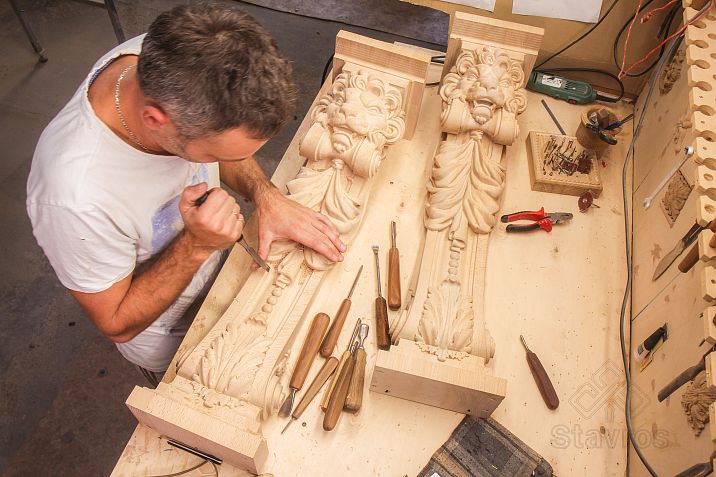
Touching wood is not just a tactile experience—it is contact with living history, with natural wisdom contained in every growth ring. In an age of synthetic materials and mass production, wooden items become not just household items or decorative elements—they transform into true islands of authenticity, testaments to our connection with nature and centuries-old craftsmanship traditions.
Have you ever wondered why wooden items are so appealing? Why, entering a room with wooden furniture, we feel a special comfort and tranquility? The secret lies in the unique properties of wood—a material that breathes, lives, and changes alongside us, creating an incomparable atmosphere of warmth and coziness.
But how to avoid mistakes in selection? How to distinguish a quality item from a counterfeit? And most importantly— where to buy wooden itemsthat will serve for many years, delighting both the eye and the soul? These questions we will thoroughly address in our article, revealing the secrets of choosing ideal wooden items for your home or office.


Unique Properties of Wooden Items: Why They Are Unbeatable
Before delving into— where to buy wooden itemslet us understand why they deserve special attention and what their undeniable advantages are over alternatives made from other materials.




Ecological safety: breathe freely
In today's world saturated with synthetic materials, natural wood remains the benchmark of ecological purity. Unlike particleboard, MDF, and plastic, quality solid wood items do not emit formaldehyde, phenol, and other toxic substances that can accumulate in the body and cause allergic reactions, headaches, and more serious health problems.
Scientific studies confirm: in rooms with wooden furniture, the concentration of harmful substances in the air is 30-45% lower than in rooms furnished with composite materials. This is especially important for families with children, elderly people, and those suffering from allergies or asthma.
Moreover, wood possesses natural antiseptic properties. Some species, for example, oak and larch, contain tannins that inhibit bacterial growth. Studies show that bacteria live significantly less on wooden cutting boards than on plastic counterparts.
Our factory also produces:


Microclimate and Comfort: Natural Regulation
Wooden items actively contribute to forming a healthy microclimate in a room. They possess a unique ability to 'breathe'—absorbing excess moisture from the air and releasing it when humidity is low. This is a natural regulator that maintains an optimal humidity level within the 45-55% range—an ideal indicator for the human body.
On hot summer days, wooden furniture feels pleasantly cool to the touch, and in winter, it retains warmth. This is due to wood's low thermal conductivity: the thermal conductivity of oak is only 0.18 W/(m·K), which is 400 times less than that of aluminum (237 W/(m·K)).
Moreover, wood has natural sound-absorbing properties. A room with wooden furniture and finishes has improved acoustics—sounds become softer, and unpleasant echoes, typical of rooms with predominantly hard reflective surfaces, disappear.
Get Consultation
Strength and Durability: An Investment for Decades
Quality solid wood items are not just a purchase—they are a long-term investment. With proper care, wooden furniture serves for decades, sometimes even centuries, passing down generations as a family heirloom.
An impressive example: an oak table with a 40 mm thick tabletop can withstand a distributed load of up to 300 kg without deformation. The compressive strength of oak wood along the grain reaches 52 MPa, comparable to some concrete grades.
Even if a wooden item sustains damage, it can be restored. Scratches, chips, and wear marks can all be repaired, unlike defects on particleboard or plastic furniture, which must be discarded if severely damaged.
Aesthetics and Uniqueness: An Irreplaceable Character
Each piece made of natural wood is unique, like a fingerprint. Nature does not create two absolutely identical trees, so the grain pattern, tone, texture — all these are individual features that make each item special.
Over time, wood changes its color, acquiring a deeper, richer tone. This natural 'ripening' process gives items a unique charm and depth that cannot be imitated. For example, cherry darkens over time and takes on a rich reddish-brown hue, while maple becomes more golden.
The tactile sensation of touching a wooden surface is incomparable to anything else. Even at the same temperature, wood feels warmer than metal or plastic. This is due to wood's low thermal conductivity and porous structure.
Psychological comfort: connection with nature
Numerous studies in eco-psychology confirm: surrounding oneself with natural materials, particularly wood, positively affects a person's psychological state. Wooden items reduce stress levels, improve mood, and enhance productivity.
Experiments conducted in Japan showed that spending time in rooms with wooden interior elements reduces heart rate and cortisol (stress hormone) levels in the blood by 15-20% compared to rooms dominated by synthetic materials.
This is explained by evolutionary memory: for thousands of years, humans have lived in close connection with nature, and our brains subconsciously perceive natural materials as safe and comfortable.
Variety of wooden items: from furniture to decor
The modern market offers an impressive variety of wooden items — from large furniture to miniature accessories. Let's examine the main categories and their features.
Solid wood furniture: functionality and style
Furniture made of natural wood is the foundation, the cornerstone of interior design. It sets the tone for the entire space, defining its character and atmosphere.
Solid wood tables and chairs are central elements of dining areas or home offices. A solid oak dining table measuring 180×90 cm with a 40 mm thick tabletop becomes not just a place for eating, but a center for family interaction. Such a table withstands a load of up to 300 kg while maintaining its shape and stability for decades.
Solid beech chairs with a seat height of 45-48 cm and a backrest angle of 100-105 degrees provide optimal spinal support, which is especially important during prolonged sitting. The strength of joints made using the "dovetail" technique guarantees no squeaking or loosening even after many years of use.
Solid wood wardrobes and chests are not only functional but also visually appealing. A solid pine wardrobe measuring 200 cm in height, 100 cm in width, and 60 cm in depth offers impressive storage capacity despite relatively compact dimensions. Its weight (around 80-100 kg) ensures structural stability and reliability.
Special attention should be paid to the quality of hardware: soft-close hinges that withstand up to 80,000 opening/closing cycles; full-extension drawer slides on ball bearings with a load capacity of up to 45 kg; height-adjustable shelves that allow optimal use of internal space.
Solid wood beds are a guarantee of healthy sleep and longevity. A wooden bed frame 160 cm wide with 30 mm thick side rails and a central beam can support a load of up to 500 kg, providing reliable support for the mattress and sleepers. The absence of squeaks and warping is a hallmark of quality wooden beds.
An important detail: an orthopedic base made of bent laminated slats 53 mm wide and 8 mm thick, spaced 3-4 cm apart, provides optimal spinal support and extends the lifespan of the mattress.
Kitchen accessories: functionality and safety
The kitchen is a special space where wooden items showcase all their best qualities: eco-friendliness, practicality, and aesthetic appeal.
Solid wood cutting boards are indispensable kitchen helpers. A maple or oak board 3-4 cm thick and 40×30 cm in size has an optimal weight (around 2-3 kg), ensuring stability during chopping. A key advantage of quality wooden cutting boards is their antibacterial properties. Studies show that harmful bacteria live significantly less on wooden surfaces than on plastic ones.
Special grooves around the board edge, 5-7 mm deep, prevent juice and liquid from spilling onto the working surface. Treatment with food-grade linseed or mineral oil creates a water-repellent layer that prevents odor absorption and staining of the wood.
Wooden kitchen utensils — spoons, spatulas, and mashers — do not scratch dish surfaces, do not conduct heat (protecting hands from burns), and do not react with food. A 30 cm long wooden spatula with a 7 cm wide working part and 0.8 cm thickness has an optimal balance of strength and flexibility, making it ideal for mixing and serving.
Wooden bread and salt cellars not only preserve the freshness of food but also become kitchen decor. A beech bread cellar measuring 40×25×15 cm with a tightly fitting lid provides an optimal microclimate for storing bread, preventing both drying out and mold growth.
Decorative Items: Accents and Details
Wooden decorative items are the finishing touches that complete the interior design, making it unique and personalized.
Carved panels and wooden pictures become focal points in interior design. A 60×40 cm panel crafted using deep relief carving (up to 15 mm) creates an impressive three-dimensional effect, especially under proper lighting. Such items often become family heirlooms passed down from generation to generation.
Using different wood species with contrasting tones (dark walnut and light maple, reddish cherry and golden oak) allows creating complex compositions without dyes, preserving the natural beauty of the wood.
Wooden sculptures and figurines are small works of art that can tell a whole story. From miniature figures 10-15 cm tall to imposing sculptures life-sized — the range of sizes and styles is captivating. Each sculpture is unique, especially if hand-carved by a master craftsman.
The "dry brush" technique, where light paint is applied to a dark base, barely touching raised areas, highlights the relief and adds additional expressiveness to the sculpture.
Frames for paintings and mirrors made of natural wood not only frame the image but are themselves works of art. A carved frame 8-10 cm wide with a relief depth of up to 5 mm requires up to 20 hours of handwork by a craftsman and can completely transform even the simplest painting or mirror.
Special beveling of the inner edge of the frame (45-degree angle) creates a "floating" effect for pictures or mirrors, visually lightening the heavy structure.
Wood species: choosing the ideal material
Choosing the wood species is one of the key factors when purchasing wooden items. Each species has unique characteristics that affect the appearance, strength, durability, and cost of the item.
Oak: King of Forests
Oak is rightfully considered one of the most prestigious species for making furniture and interior items. Its exceptional strength (hardness on the Brinell scale 3.7–4.5), durability, and distinctive texture make oak products a desirable acquisition for many.
The color of oak wood ranges from light golden to dark brown with a characteristic "ringed" pattern of annual rings. As oak ages, it darkens, acquiring a noble honey tone. The density of oak (700–800 kg/m³) ensures high resistance to mechanical damage.
Oak furniture is ideally suited for classic interiors, country, rustic, and English classic styles. The service life of quality oak products, with proper care, can exceed 100 years, making them true family heirlooms.
Beech: elegant strength
Beech is a hardwood with uniform structure and a light, slightly pinkish hue. Its wood is characterized by high density (700–750 kg/m³) and hardness (3.5–4.0 on the Brinell scale).
Beech’s texture is more subdued and uniform compared to oak, making it ideal for modern minimalist interiors. At the same time, beech is excellent for toning, allowing it to imitate more expensive wood species.
A distinctive feature of beech is its ability to bend after steam treatment without losing strength. That is why it is often used to make chairs and armchairs with curved elements. A beech solid wood chair with a curved backrest and turned legs with a 4 cm diameter can withstand a load of up to 120 kg while maintaining an elegant, lightweight appearance.
Spruce: accessible beauty
Spruce is the most common and accessible species for making wooden items. Its light yellowish wood with characteristic knots creates an atmosphere of coziness and warmth.
In terms of hardness (1.5-2.5 on the Brinell scale), spruce is inferior to hard deciduous species, making it more susceptible to mechanical damage. However, with proper processing and care, spruce items can last for decades.
The density of spruce (400–520 kg/m³) is significantly lower than that of oak or beech, making spruce furniture lighter and easier to move. A spruce solid wood bed measuring 200×160 cm weighs approximately 60–70 kg, which is 30–40% less than a similar construction made of oak.
Spruce is easy to work with, allowing the creation of items of any complexity. It takes stain and paint well, enabling virtually any color to be achieved while preserving the natural wood texture.
Walnut: aristocratic elegance
Walnut - a species associated with luxury and elegance. Its dark brown wood with purple or reddish tones and beautiful wavy pattern creates a sense of nobility and status.
In terms of hardness (3.5–4.0 on the Brinell scale), walnut is comparable to oak, but has a silkier texture. The density of walnut wood (640–750 kg/m³) provides a good balance between strength and weight of the finished items.
Walnut is easy to work with, allowing for the creation of intricate carved elements and elegant details. It is also less prone to cracking upon drying compared to many other species, which is especially important for thin decorative elements.
Walnut items are traditionally associated with classic styles, baroque, and empire. A walnut solid wood chest 120 cm wide, 90 cm high, and 50 cm deep with carved fronts and brass hardware becomes a true work of art and a focal point in the interior.
Larch: an underestimated gem
Larch is a unique coniferous species, matching the strength of many hardwoods. Its wood has a beautiful amber tone, which over time develops into a noble reddish hue.
Larch's distinctive feature is its exceptional resistance to moisture and decay due to high resin content. The density of the wood (640–700 kg/m³) and hardness (2.5–3.2 on the Brinell scale) ensure the longevity of items even under adverse conditions.
Larch garden furniture with a 40 mm thickness can withstand temperature fluctuations from -40 to +40 degrees and direct exposure to precipitation without deformation or decay for 15–20 years, making it an ideal choice for terraces and pavilions.
Where to buy wooden items: criteria for choosing a reliable supplier
Choosing where to purchase wooden items is no less important than selecting the items themselves. The reliability of the supplier affects not only the quality of the purchased items but also the level of service, warranty support, and many other aspects.
Specialized stores and showrooms
Specialized wooden goods stores — these are places where a wide variety of items in different styles and price categories are presented. Here, you can see the items in person, evaluate their quality, color, and texture.
Advantages of purchasing in specialized stores:
- Ability to see and touch items before purchase
- Professional consultation from specialists
- Guarantee of quality and authenticity of materials
- Ability to order non-standard sizes or configurations
- Delivery and assembly by the store
- Warranty service
When choosing a store, pay attention to:
- Reputation and time on the market (ideally — at least 5 years)
- Brands and manufacturers presented
- Customer reviews on independent platforms
- Delivery, assembly, and warranty conditions
- Possibility of return or exchange in case of defects detected
Specialized stores typically offer items in mid-range and premium price segments, which is explained by high quality standards and service levels.
Workshops and factories
Many workshops and small factories have their own exhibition halls or online stores, where you can purchase their products directly, without intermediaries.
Advantages of buying from the manufacturer:
- Lower prices due to the absence of middlemen markup (saving 20–30%)
- Full information about the manufacturing process and materials
- Opportunity to visit the production facility and see how items are made
- Wide customization options (choice of wood species, sizes, finishes)
- Direct contact with the manufacturer in case of questions or problems
When choosing a manufacturer, pay attention to:
- Production technological equipment (modern CNC machines, drying chambers)
- Used materials and components (quality certificates, origin of wood)
- Quality control system (checking wood moisture content, strength of joints)
- Ecological certifications (FSC, PEFC for wood; ecological certifications for varnishes and paints)
- Portfolio of completed projects and customer reviews
Buying directly from the manufacturer is especially advantageous when ordering comprehensive room furnishings (e.g., kitchens, bedrooms, or living rooms), as you can receive a significant discount on the complete set (up to 15–20% of the total cost).
Online stores and marketplaces
Online stores are becoming an increasingly popular channel for purchasing wooden items. They offer a wide selection, convenient search, and the ability to compare different options.
Advantages of buying from online stores:
- Access to offers from different regions and countries
- Ability to compare prices and features
- Convenience of choosing anytime of day
- Delivery to your door
- Often lower prices due to the absence of costs for maintaining exhibition halls
When choosing an online store, pay attention to:
- Reputation and customer reviews
- Completeness of product information (materials, dimensions, weight, photos from different angles)
- Delivery, assembly, and warranty conditions
- Possibility of return or exchange
- Payment security (presence of a secure connection, option for payment upon receipt)
Online shopping carries certain risks (inability to assess quality in person, potential delivery issues), but choosing a reliable store minimizes these risks.
Criteria for selecting a reliable supplier
Regardless of the fact, where to buy wooden items - in a store, on the production site, or online — it is important to evaluate the supplier's reliability based on the following criteria:
- Transparency of information. A reliable supplier provides complete information about materials, production technologies, delivery conditions, and warranties. They are ready to answer any questions and provide additional information upon request.
- Quality of materials. The supplier must use high-quality wood with proper moisture content (8–12%) and without visible defects. They must be ready to provide information about the wood's origin and quality certificates.
- Production technologies. Modern equipment and traditional woodworking techniques ensure high-quality finished products. A reliable supplier openly explains their production process and the technologies used.
- Ecological safety. A reliable supplier uses environmentally friendly materials and safe lacquers and paints, holds appropriate certifications. They care about the environment and the health of their customers.
- Warranty obligations. The longer the warranty period, the more confident the manufacturer is in the quality of their product. The optimal warranty period for wooden furniture is from 2 years and more.
- Service maintenance. The ability to repair, restore, and replace parts is an important aspect of long-term cooperation. A reliable supplier does not disappear after a sale but remains in contact and is ready to assist when needed.
- Customer reviews. Real customer reviews are a valuable source of information about the reliability of the supplier. Pay attention not only to the number of positive reviews, but also to how the supplier responds to negative reviews and resolves customer issues.
When choosing, where to buy wooden itemsRemember, this is a long-term investment. Saving on quality may result in disappointment and additional expenses in the future.
How to choose quality wooden items: practical tips
Choosing quality wooden items requires attention to detail and understanding of the basic characteristics of wood. Here are practical tips to help you make the right choice.
Assessment of wood quality
Wood quality - the foundation of durability and aesthetic appeal of wooden items. When choosing, pay attention to the following aspects:
The wood moisture content should be 8-12%. Too dry wood (less than 6%) is prone to cracking, while overly wet wood (more than 15%) may warp or deform. Professional manufacturers use moisture meters to control this parameter at all production stages.
How to check: touch the surface of the item - it should feel dry and warm. If possible, ask the seller to measure the moisture content with a moisture meter. Also, pay attention to the smell - freshly cut or insufficiently dried wood has a characteristic "raw" aroma.
Uniformity of structure - an important quality indicator. The wood should have even density and color, without sharp transitions or anomalies. Exceptions are certain species (e.g., Karelian birch), where non-uniformity is a valuable decorative feature.
How to check: carefully examine the surface of the item under good lighting. Pay attention to the uniformity of color and texture. Run your hand over the surface - it should be smooth, without sharp changes in density.
Absence of defects — cracks, knots, resin pockets, signs of insect or fungal damage. Small knots in some items (especially from coniferous species) may be acceptable and even desirable as part of natural texture, but they must be firmly "embedded" in the wood, without signs of loosening.
How to check: examine the item from all sides, paying special attention to joints and corners. Small cracks at the ends of parts (up to 1-2 mm) are permissible for some species, but they should not extend to the front surface. Tap the surface - the sound should be clear, without rattling, which may indicate hidden cracks.
The direction of the grain affects the strength and stability of the item. In countertops, shelves, and cabinet doors, the grain should run along the long side to minimize the risk of deformation. In table and chair legs, the grain should run along the vertical axis for maximum strength.
How to check: visually determine the direction of the grain by the wood pattern. In quality items, the direction of the grain is always considered during construction and corresponds to the functional purpose of each part.
Assessment of manufacturing quality
Manufacturing quality determines not only the appearance but also the longevity of wooden items. Pay attention to:
Joint connections must be strong and neat. Traditional joinery (dowel-and-mortise, "birdsmouth") provides maximum strength and durability. A quality "birdsmouth" joint has tight fitting parts without gaps, with a tenon width of 12–15 mm and a mortise depth of 10–12 mm.
How to check: try slightly rocking or moving connected parts - they should not have play or squeak. Examine the connection points - they should be neat, without gaps or cracks. In quality furniture, joints often become decorative elements, highlighting the craftsman's skill.
Surface sanding should be thorough, without burrs or roughness. Quality sanding implies sequential use of abrasive materials with increasing grit (from 80 to 220 grit), ensuring a perfectly smooth surface.
How to check: run your hand over the surface of the item - it should be absolutely smooth, without roughness. Pay special attention to edges and corners - they should be rounded or beveled for safety and comfort of use.
The finish should be even, without streaks, bubbles, or uncoated areas. The thickness of the lacquer coating should be 80-120 microns (for comparison, the thickness of a human hair is about 100 microns), providing reliable protection without a "plastic" effect.
How to check: examine the surface from different angles under good lighting. Quality coating has even gloss or matte finish without spots or streaks. Run your fingertips over the surface - there should be no sticky or rough sensation.
Hardware should be of high quality and securely fastened. Hinges, handles, and guides - all these elements affect the ease of use and longevity of the item. Quality furniture hinges withstand at least 50,000 opening/closing cycles, which, with average use (10 cycles per day), ensures a service life of more than 13 years.
How to check: test the operation of all movable parts - doors should open and close smoothly, without sticking; drawers should slide out and in easily, without misalignment. Handles and other hardware elements should be securely fastened, without play.
Functionality and ergonomics
Even the most beautiful item will not please if it is inconvenient to use. When selecting, consider:
Dimensions and proportions should correspond to both the room and the anthropometric data of the users. Optimal dining table height - 75-80 cm, work table height - 70-75 cm, chair seat height - 45-48 cm, cabinet depth - 50-60 cm.
How to check: if possible, "try on" the furniture - sit on the chair, place your hands on the table, open the cabinet doors. You should feel comfortable, without needing to adopt unnatural postures.
Ergonomics is especially important for furniture that a person interacts with directly: chairs, sofas, beds. The chair back should have a slight backward tilt (100-105 degrees), the seat - a slight backward tilt (3-5 degrees), ensuring proper load distribution on the spine.
How to check: sit on the chair or sofa and remain in this position for several minutes. You should not feel discomfort or strain in your back. The edge of the seat should not press on the hamstrings.
Functionality is determined by ease of use and suitability for its intended purpose. Drawers should slide out and in easily, doors should open and close smoothly, shelves should withstand the expected load without bending.
How to check: "act out" typical usage scenarios for the item. For example, for a chest of drawers - open and close all drawers, check how convenient it is to retrieve items from the lowest drawer. For a cabinet - ensure that the doors open to a sufficient angle for easy access to all internal space.
Safety is a critically important aspect, especially for children's furniture and items with moving parts. All corners and edges should be rounded (radius of rounding not less than 2 mm), with no protruding elements that could cause injury.
How to check: run your hand over all accessible surfaces, especially edges and corners. They should not be sharp or rough. Check for protruding hardware elements that could snag clothing or cause injury.
Care for wooden items: preserving beauty for years
Proper care for wooden items significantly extends their service life and preserves their attractive appearance. Here are the main principles and practical recommendations.
Regular care: simple rules
Daily care for wooden items requires no great effort but must be regular:
Dust removal should be done with a soft dry cloth, moving along the direction of the wood grain. For hard-to-reach areas, use a soft brush or vacuum cleaner with a brush attachment. Optimal frequency - 1-2 times per week, depending on room conditions.
Important: do not use damp cloths with impregnation for daily care - they may contain components that damage the protective coating of the wood.
Wet cleaning is permissible but with caution. The cloth should be well wrung out, almost dry. After wiping with a damp cloth, immediately dry the surface thoroughly. Never leave water on a wooden surface — this may cause stains and deformation.
For wet cleaning, you can use specialized wood surface cleaners diluted according to instructions. They not only clean but also nourish the wood, preventing drying out.
Special care products for wooden furniture (polishes, waxes, oils) should be applied according to instructions, usually no more than 1–2 times per month. They not only add shine but also create a protective layer shielding the wood from moisture and contaminants.
Choose products appropriate for the type of finish on your furniture:
- For lacquered surfaces - polishes based on carnauba wax
- For waxed surfaces - natural beeswax
- For oil-treated surfaces - use special oils for refreshment
Prevention of contamination - using hot pads, dish mats, and shoe mats significantly reduces the risk of damaging wooden surfaces and simplifies their maintenance.
Practical tip: keep a set of pads and mats in an easily accessible location so their use becomes a habit for all family members.
Protection from external influences
Wooden items are sensitive to various external factors that may negatively affect their condition:
Protection from sunlight is extremely important, as ultraviolet rays cause fading and cracking of wood. Use curtains or blinds to protect furniture from direct sunlight. If this is not possible, apply special UV-filtering compounds to the wood surface.
Interesting fact: some wood species are particularly sensitive to ultraviolet light. For example, cherry wood may darken significantly within just a few months of direct sunlight exposure.
Optimal microclimate for wooden items: temperature 18–22°C, relative humidity 45–60%. Sudden changes in these parameters may cause wood deformation. Use humidifiers during heating season and monitor room ventilation.
Practical tip: purchase a hygrometer (device for measuring air humidity) and place it near valuable wooden items. This will allow you to monitor humidity levels and take timely action.
Protection from mechanical damage - use felt or silicone pads under furniture legs, do not move heavy items across wooden surfaces, avoid striking with hard objects.
Useful recommendation: when moving furniture, always lift it rather than dragging it across the floor. If an item is too heavy, use special pads or furniture rollers.
Protection against chemical exposure — immediately remove spilled liquids (especially alcohol, acetone, solvents), do not use aggressive cleaning agents that may damage the protective coating and the wood itself.
Emergency measure: if an aggressive liquid spills on a wooden surface, immediately blot it (do not rub) with a soft cloth, then wipe with a clean damp cloth and immediately dry. Afterward, treat the area with a special wood care product.