Article Contents:
- Beam as architectural language: from function to aesthetics
- Ceiling beams: geometry of space and visual drama
- Visual contrast: play of light, shadow, and texture
- Decorative beams in various stylistic contexts
- Oak solid wood and other species: material selection for beams
- Zoning through rhythm: how beams organize space without walls
- Mounting decorative beams: technology, reliability, and aesthetics of installation
- Beams and other wooden elements: creating a cohesive composition
- Mistakes to avoid when using beams in interior design
- Beams in different types of rooms: where they work best
- Modern trends: how beams evolve in interior design
- Practical tips: how to choose and install beams in your interior
- FAQ: Answers to popular questions about wooden beams in interior design
- Conclusion: beam as a manifesto of architectural awareness

Space breathes rhythm. An interior acquires character not when elements are added to it, but when these elements begin to interact with each other, creating an invisible architectural score.Wooden beamThis is not decoration, not ornament, and not an attempt to mask ceiling imperfections. It is a point of reference from which the entire logic of the space is built: its height, depth, temperature, mood. It is a zoning tool that works without physical boundaries, and simultaneously — a powerful visual accent capable of changing the perception of even the most mundane space.
When we talk about beams in a modern context, we are not referring to load-bearing structures, although their legacy is undoubtedly present. Ceiling beams today are a deliberate choice in favor of architectural expressiveness — a way to incorporate an additional dimension into the interior that exists not in meters, but in visual drama. That is why they are so popular in various styles: from brutalist loft to refined neoclassicism, from rustic Provence to minimalist Scandinavian aesthetics.



Beam as architectural language: from function to aesthetics
The history of the beam is the history of transitioning from necessity to conscious choice. In traditional architecture, beams were an inseparable part of the structure: they supported floors, distributed loads, formed the building's frame. They were not hidden because there was no technical possibility or need. But precisely this openness of construction later became a powerful aesthetic device, which designers around the world use to create distinctive interiors.
Today, decorative beams imitate this constructive honesty, but their purpose is entirely different. They do not carry load literally, but they carry meaning. A beam on the ceiling is a sign indicating a certain code: rustic authenticity, industrial brutality, classical monumentality, or modern minimalism. Depending on how the wood is processed, its texture, color, size, and rhythm of placement, a beam can tell more about the space than any wall finish.
Interestingly, the visual contrast created by ceiling beams works on multiple levels simultaneously. First, it is a contrast of materiality: wood against a smooth ceiling surface. Second, it is a contrast of volume: a protruding element on a flat plane. Third, it is a tonal contrast: dark against light or vice versa. Finally, it is a contrast of rhythm: the regular repetition of beams creates a visual metric that organizes space, sets its tempo, and makes it immediately readable.
Why is this important? Because the human eye seeks orientation. In an empty, uniform space, we feel disoriented. Beams provide this orientation; they create an invisible coordinate grid, relative to which everything else begins to be arranged logically and organically. That is why even a single beam, placed in the right location, can change the perception of the entire room, making it appear higher, wider, or conversely, more intimate and cozy.




Ceiling beams: geometry of space and visual drama
The ceiling is the fifth wall, often forgotten, as we focus on verticals and horizontals. Yet, it is precisely the ceiling that defines the scale of the space, its 'air,' its capacity to hold not only people and furniture, but also atmosphere. Ceiling beams transform this overlooked plane into an active participant in the interior dialogue.
When beams run along the long side of a room, they visually elongate the space, making it more dynamic and defining the direction of movement. If beams are placed across, they stop this flow, making the room more intimate and compact. And if beams form a grid, cross-shaped, or more complex geometric structure, they create a sense of layering, adding depth and architectural complexity to the interior.
The size of the beam is equally important. A massive oak beam with a 20×20 cm cross-section is a statement, an assertion, almost a manifesto. It speaks of monumentality, weight, connection to the earth and tradition. A light, elegant beam with a small cross-section is more of a hint, a delicate graphic line that does not dominate but merely indicates architectural logic. The choice depends on the role the beam should play in the overall composition: to be the main protagonist or a subtle, yet important, participant in the ensemble.
Ceiling beams work especially effectively in rooms with high ceilings. Here, they perform an important function of 'grounding' the space, making it more human and less monumental. A high ceiling without beams may appear cold and detached. Beams, however, create an intermediate horizontal level that visually connects the ceiling with the floor, walls with the center of the room, architecture with life.
An interesting technique is using beams at different levels. This can be a combination of main load-bearing beams and smaller decorative elements placed perpendicularly. Such a multi-layered structure creates an illusion of complex construction, adding historical depth and volume to the interior. However, it is important not to overload the space: beams should be read as a system, not as chaos.
Beams also interact beautifully with lighting. Built-in lights in beams or pendant chandeliers and LED strips hanging from them create interesting lighting scenarios. Light can highlight the texture of wood, cast shadows on the ceiling, or emphasize certain zones.Decorative brackets for shelvesand other carved elements mounted on beams enhance this visual drama, transforming a simple structure into an artistic object.
Our factory also produces:



Visual Contrast: Play of Light, Shadow, and Texture
Visual contrast is the foundation of any expressive composition. In the case of wooden beams, this contrast can be achieved in many ways. The most obvious and effective is color contrast. Dark, almost black beams against a snowy white ceiling create a graphic, almost Scandinavian image. This solution works well in modern interiors where clean lines and minimalist forms are valued.
The opposite option — light, whitewashed, or pastel-colored beams on a dark or contrasting ceiling — is typical for Mediterranean interiors, Provence, and light coastal aesthetics. Here, beams do not dominate but rather complement the overall atmosphere of lightness and ease.
But color is only one plane of contrast. Wood texture plays an equally important role. A smoothly sanded oak beam with clearly visible annual rings is a completely different visual statement compared to a roughly processed, artificially aged beam with cracks and chips. The first conveys nobility and elegance, the second — authenticity and character.
Oak solid wood is one of the most popular materials for decorative beams, and this is no coincidence. Oak has an expressive, recognizable texture, high density, and strength. Even in decorative applications, where the beam is hollow inside, the oak cladding retains a sense of monumentality and weight. Oak color ranges from light golden to dark brown, almost chocolate, offering wide possibilities for color solutions.
The play of light and shadow created by beams is also an important part of visual contrast. A protruding beam casts a shadow, and this shadow changes throughout the day depending on natural lighting. In the morning, the shadow may be long and soft, during the day — short and sharp, in the evening — almost imperceptible under artificial light. This variability makes the interior alive, dynamic, and sensitive to the time of day and season.
Contrast can be enhanced through additional elements. For example, combining wooden beams withwooden wall plankscreates a complex rhythmic structure in which ceiling horizontals and wall (or diagonal) verticals begin to interact, forming a volumetric architectural composition. This is especially relevant in modern interiors, where geometric complexity and multi-layered design are valued.
Don't forget about contrast in scale. One strong beam combined with several thin ones creates a sense of hierarchy and structure. It's like in music: there is a main theme and variations. The main beam sets the tone, while additional elements develop it, adding nuances and details.
Get Consultation
Decorative Beams in Various Stylistic Contexts
The universality of decorative beams lies in their ability to adapt to the most diverse stylistic directions. They can be rough and brutal, elegant and refined, neutral or expressive. Everything depends on how they are processed, what color, size, and how they are positioned in space.
In the loft style, beams are practically a mandatory element. Here, industrial aesthetics, open structures, and honest materials are valued. Beams can be metal, wooden, or combined. It's important that they appear as if they are actually supporting something, even if it's an illusion. Rough processing, dark tones, combination with brick walls and concrete surfaces — all of this creates the characteristic atmosphere of industrial space reinterpreted for residential use.
Scandinavian style offers a completely different perspective on beams. Here, they are light, often painted white or light gray. Their purpose is not to create contrast but to complement the overall atmosphere of minimalism and light. Beams in Scandinavian interiors are subtle horizontals that structure space without overloading it. They work in conjunction withwooden wall decorand other elements made of natural materials, creating a sense of unity and harmony.
Classic and neoclassical interiors require a more refined approach. Here, beams can be complemented by carved elements, rosettes, cornices.wooden cornicein combination with beams creates a complete architectural composition in which each element is in its proper place. Color can vary from natural wood to noble dark shades of walnut or cherry. Precision in execution, accuracy of proportions, and harmony with other interior elements are important.
Provence and country styles are those in which beams feel most naturally at home. Here, they are part of a rural idyll, a reference to traditional architecture, to houses with open structures and simple, honest materials. In Provence, beams are often painted white or pastel tones but retain the wood texture, traces of time, and slight wear. In country style, they may be darker and more substantial, emphasizing the connection to earth and nature.
The Mediterranean style also actively uses beams. Here, they contrast with bright walls — terracotta, ochre, blue. White beams against a vibrant background create a distinctive southern color palette, reminiscent of Greek islands, Italian villas, and Spanish fincas. This combination of lightness and vibrancy, airiness and richness.
Even in minimalism, where every element counts, beams can find their place. But here, they must be maximally minimalist, without unnecessary decoration, precisely proportioned and positioned. One or two beams, ideally integrated into the room's architecture — and the space gains an additional dimension, without losing its minimalist purity.
Solid Oak and Other Species: Choosing Material for Beams
Choosing material for decorative beams is not only an aesthetic question but also one of durability, eco-friendliness, and practicality. Although modern beams are often hollow inside and consist of cladding, the material of this cladding plays a key role in the perception of the interior.
Solid oak rightfully ranks as the king among wood species for interior elements. Its density, hardness, and expressive texture make oak beams an ideal choice for interiors where monumentality and nobility are important. Oak has a distinctive pattern of annual rings, which creates visual depth and interest. The color range of oak is wide: from light, almost milk-colored, to dark brown, almost wenge. This allows selecting a shade to match any interior concept.
In addition to aesthetic qualities, oak has high resistance to moisture, temperature fluctuations, and mechanical impacts. Even in decorative beams, where the wood does not bear structural load, these properties are important, as they ensure the longevity of the product and its unchanged appearance for decades.
Spruce is a more democratic option, yet it still has its charm. Light, with fine texture, spruce is ideal for Scandinavian and Provence interiors. It is lighter than oak, easier to process, and with proper toning, can imitate more expensive species. However, spruce is less dense and more susceptible to mechanical damage, which must be considered when choosing.
Larch occupies an intermediate position between oak and spruce. It is denser than spruce, has a beautiful reddish hue, and distinctive texture. Larch is resistant to moisture and rot, making it an excellent choice for rooms with high humidity or for country homes where temperature fluctuations are more pronounced.
Beech is another noble species often used for interior elements. Its texture is finer and more uniform compared to oak, and its color varies from pinkish to light brown. Beech polishes and stains beautifully, allowing for beams with perfectly smooth surfaces and deep, rich colors.
For those seeking exotic materials, species such as teak, merbau, and iroko are suitable. These species possess a unique texture and color, high density and oiliness, which provide natural protection against moisture and pests. However, they are significantly more expensive than traditional species and require a special approach to processing.
In addition to solid wood, modern technologies allow the use of glued beams, which have greater geometric stability and are less prone to deformation. Also popular are polyurethane beams that imitate natural wood. They are lightweight, easy to install, and have excellent decorative qualities, although they cannot fully replace the feeling of real wood.
It is important to understand that the choice of material affects not only the appearance, but also the tactile sensations, the smell, and the overall atmosphere of the room. Natural wood breathes, it is alive, it changes over time, acquiring patina and character. This is the very authenticity that is valued.Wooden boards in interiorand other elements made of solid wood.
Zoning through rhythm: how beams organize space without walls
Modern architecture tends toward open layouts, where functional zones seamlessly transition into one another without rigid boundaries. Studios, combined kitchen-living areas, large multifunctional rooms — all of this requires the skill to zone space without physical walls. And it is precisely here that beams prove themselves as a powerful tool for visual zoning.
Rhythm is the repetition of elements at certain intervals. When beams are spaced evenly, they create a visual metric that organizes space, making it orderly and understandable. But a more interesting effect arises when rhythm is intentionally broken. For example, in the living room area, beams may be spaced at 80 cm, while above the kitchen zone, this spacing increases to 120 cm. Such a change in rhythm is subconsciously perceived as a boundary between functional zones, even though there is no physical wall.
Another technique — changing the direction of beams. If in one part of the room beams run parallel to the long wall, and in another — perpendicular to it, this creates a clear visual division. The eye stops at the boundary where the orientation changes, and this automatically divides the space into two zones.
Beams can also form compositional centers. For example, above the dining area, beams may converge toward the center, creating a visual frame that highlights this part of the space. Or conversely, beams may radiate outward from the center, emphasizing radial composition and drawing attention to the key point of the interior.
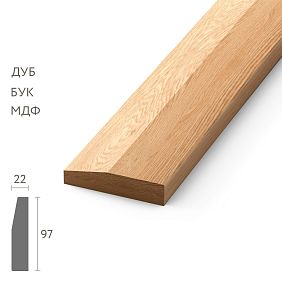
Interestingly, beams work not only at the ceiling level. Vertical beams orDecorative wooden strip, mounted on the wall, create a visual connection between the floor and ceiling, forming a vertical rhythm that complements the horizontal lines of ceiling beams. This combination creates a three-dimensional coordinate grid, within which every interior element finds its place.
Zoning through rhythm is especially effective in high ceilings, where beams can be placed at different levels. For example, main beams run under the ceiling, while additional, lighter elements descend lower, creating an intermediate level. This not only visually divides space but also makes it more intimate and human-scaled.
It is important to understand that zoning through beams is a subtle adjustment, not a crude division. It is a hint, not a declaration. The eye reads these hints and automatically completes the boundaries, making the perception of space more active and engaging. We are not merely present in a room — we read its architectural text, understand its logic, and feel its structure.
In this context, beams work similarly to other architectural elements:Ceiling cornice, moldings, paneling. All of them create visual lines that organize space, making it structured and harmonious. But beams do this on a larger scale, with greater expressiveness and architectural significance.
Mounting decorative beams: technology, reliability, and aesthetics of installation
Mounting decorative beams is a process that requires attention to detail and understanding of the structural characteristics of both the beams themselves and the ceiling to which they are attached. Although decorative beams do not bear structural loads, they must be securely fastened to ensure the safety and longevity of the structure.
There are several main methods of mounting. The first and most common is mounting on a wooden beam previously secured to the ceiling. The beam serves as a base to which the beam is attached using screws or bolts. This method is universal and suitable for most types of ceilings: concrete, wooden, or drywall. It is important to correctly calculate the mounting spacing — usually 40-60 cm, depending on the weight and size of the beam.
For lightweight polyurethane or hollow wooden beams, mounting on special mounting plates or adhesive may be possible. However, this method is less reliable and suitable only for beams of small weight. The adhesive must be specialized, designed for heavy structures, and the ceiling surface must be perfectly prepared.
Mounting beams on a suspended ceiling is the most complex. Here, preliminary preparation is required: installing support beams before installing the ceiling fabric. After the suspended ceiling is installed, holes are drilled through it, through which the beam is attached to the supports. It is important that the holes are accurately marked and carefully drilled, otherwise there is a risk of damaging the fabric.
When mounting beams, it is important to consider not only reliability but also aesthetics. The fasteners should not be visible. For this, hidden mounting systems are used, where screws are driven from inside the beam or masked with decorative caps matched to the wood tone. If the beam runs across the entire room, its ends may extend into the walls, creating an illusion of a load-bearing structure and enhancing the visual effect.
Special attention should be paid to joints if the beam is assembled. The connection must be made so that the joint is not noticeable. For this, corner joints, tongue-and-groove joints, or careful fitting followed by sanding and staining are used. A well-executed joint is invisible even upon close inspection.
If beams intersect, forming a grid or more complex structure, the connection nodes must be planned in advance. Special connecting elements exist that allow creating strong and aesthetically pleasing nodes. Also, it is possible to use a mortise joint, where one beam is inserted into another, creating a single structure.
Mounting beams is not only a technical task but also a creative process. Correctly installed beams appear as if they have always been part of the building's architecture. They do not seem glued or screwed — they appear integrated into the space's structure. And this is the main criterion of quality installation.
It should be noted that beam mounting is often combined with the installation of other elements. For example,Moldings made of polyurethanemay be installed around the ceiling perimeter, creating a frame within which beams are placed. OrWooden baseboardat the lower part of the wall may match in color and texture with ceiling beams, creating a unified composition.
Beams and other wooden elements: creating a unified composition
A beam does not exist in a vacuum. It is part of a broader interior composition, and its interaction with other elements determines the final result. Harmony is achieved when all wooden elements — beams, moldings, baseboards, doors, furniture — are connected by a single logic: color, texture, finish style.
Imagine an interior where dark oak ceiling beams are paired with with matching legs— and the space becomes cohesive. Add hereWooden cornicesanddecorative rose outlets— and the interior achieves classical completeness, where every detail is in its place.
— and they harmonize withwooden wall planks— and create an accent zone behind the bed or sofa. Add lightwide wooden baseboard— and the space becomes light, airy, filled with northern light.
It is important to understand that wood of one species may look different depending on the finish. Oak can be light and golden, or stained to walnut or ebony. Therefore, choosing one species is not enough — you need to choose a single palette of shades and a unified approach to surface treatment: matte, glossy, oil, or wax.
If the beams have a pronounced wood texture, other elements should either support this texture or contrast with it through smoothness. For example, rough beams can pair with smoothfurniture handles made of wood— creating an interesting play of textures.
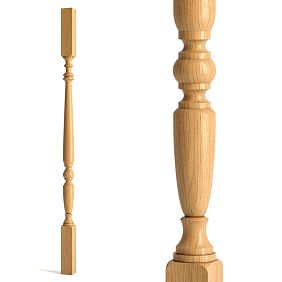
— and delicate details.balusters— (if referring to a staircase in a two-story apartment), delicate details.
Also important is the dialogue with furniture. If the interior has classical furniture with carved elements, the beams can be complemented with carved consoles or appliqués. If the furniture is modern and minimalist, the beams should be as simple as possible, without unnecessary decoration. Exception — eclecticism, where intentional combination of different styles creates dynamism and surprise.
Finally, do not forget about functional elements.
Finally, don't forget about functional elements.Decorative brackets— can support beams, creating an illusion of load-bearing structure.Countertop substructure— can harmonize with beams in shape and texture. Evenstaircase components— balusters, posts — can be executed in the same style as ceiling beams, creating a unified architectural environment.
Errors to avoid when using beams in interior design
Like any expressive element, beams require careful handling. Incorrect use may not only fail to improve the interior, but also spoil it. Let’s consider typical mistakes.
The first and most common mistake — mismatch in scale. Too massive beams in a low room create a heavy feeling, making the ceiling appear even lower. Conversely, thin, unremarkable beams in a high room disappear, failing to fulfill their purpose. Golden rule: the beam’s cross-section height should correspond to ceiling height. For standard 2.7–3 meters, beams with 10–15 cm cross-section are optimal; for high ceilings (3.5 meters and above) — 15–20 cm and more.
The second mistake — excess. Too many beams placed too frequently create a grid effect that visually fragments space, making it chaotic and overloaded. Rhythm should be reasonable: typically, the spacing between beams is 60–120 cm, depending on room size and style.
The third mistake — color dissonance. Beams that do not match in color with ceiling, furniture, or floor appear as foreign elements. It is important to either create a harmonious combination or intentional contrast, but not random mismatch.
The fourth mistake — ignoring interior style. Rough, massive beams in Provence or Baroque style look ridiculous. Similarly, elegant, carved beams in loft style look out of place. Beams must match the overall stylistic concept, support it, and not contradict it.
The fifth mistake — poor execution and installation quality. Uneven joints, visible fasteners, sloppy painting or staining — all of this kills the effect. Beams should appear as if they have always been part of the architecture, not added afterward.
The sixth mistake — lack of connection with other elements. Beams that exist independently, not interacting with lighting, furniture, or decor, appear random. It is important to plan the composition as a whole, so beams become an organic part of it.
Beams in different types of rooms: where they work best
Beams are versatile, but there are rooms where they show off most effectively. The living room is one such place. Here, beams create intimacy, coziness, and architectural significance. They are especially effective in living rooms with high ceilings, helping to 'ground' the space and make it more human. In the living room, beams often combine with a fireplace, creating a classic composition where the horizontal beams harmonize with the horizontal mantel.
Kitchen-living room — another ideal space for beams. Here, they serve a zoning function, visually separating kitchen and living areas without physical partitions. Changing the rhythm or direction of beams indicates a boundary, making the space structured and understandable.
A bedroom with beams acquires a special atmosphere. Here, intimacy, a sense of protection, and coziness are important. Beams, especially when combined with a sloped ceiling (if referring to a mansard), create this feeling. They seem to embrace the space, making it more intimate. In a bedroom, light beams are preferable, as they do not press down but merely indicate architectural structure.
Dining room — a classic place for beams. Here they are often used to hang chandeliers or several light fixtures, creating a compositional focal point above the dining table. Beams in the dining room can be darker and more substantial, emphasizing the solemnity and importance of this space.
Hallway and corridor — beams are used less frequently here, but can be striking, especially if the ceiling is high. A beam running along the corridor visually elongates the space, making it more dynamic. In the hallway, a beam can serve as a base for hooks, shelves, or other functional elements.
Bathroom — an atypical but possible place for beams. Here, the material’s moisture resistance is crucial. It’s better to use larch, teak, or polyurethane beams with a wood finish. Beams in the bathroom create a spa atmosphere, especially when combined with stone and natural materials.
Staircase area, if referring to a two-story apartment or house, is beautifully complemented by beams. Here, they can emphasize verticality, connect floors, and create architectural unity. In combination withstair balustersandhandrailsbeams create a unified composition in which all elements work together.
Modern Trends: How Beams Evolve in Interior Design
Interior design is constantly evolving, and beams are not left out of this process. Modern trends offer new ways to use this classic element.
One current trend is minimalism. Beams become more streamlined, often painted in one color to match the ceiling, creating a relief effect rather than contrast. This makes them less intrusive, yet no less impactful. This is especially characteristic of Scandinavian and Japanese minimalism.
Another trend is functionalization. Beams are increasingly used not only as decoration but also as functional elements: for mounting light fixtures, hanging chairs, shelves, plants. This is especially relevant in small spaces, where every element must be multi-functional.
The third trend is experimenting with shape. In addition to traditional rectangular beams, beams with complex cross-sections, beveled edges, grooves, and carved elements are appearing. Also popular are box beams, inside which hidden lighting creates a floating ceiling effect.
The fourth trend is mixing materials. Wooden beams combine with metal elements, concrete, glass. This creates interesting visual and tactile contrasts, making the interior more complex and layered.
The fifth trend is eco-friendliness. More attention is being paid to the origin of wood, its processing, and the use of natural finishes. Beams made from reclaimed wood, with history and signs of aging, are especially valued. This is part of a broader trend toward mindful consumption and respect for nature.
Practical Tips: How to Choose and Install Beams in Your Interior
If you’ve decided to use beams in your interior, here are some practical recommendations.
Define your goal. What do you want to achieve? Zone the space? Create an accent? Visually alter the proportions of the room? Add a stylistic element? Your answer will determine the type, size, and placement of the beams.
Assess ceiling height. This is a critical parameter. For rooms with ceilings below 2.7 meters, beams should be used cautiously, choosing smaller cross-sections and light tones. For high ceilings, options are broader.
Choose the material. If authenticity is important — solid wood. If practicality and ease of installation are important — polyurethane or hollow wooden beams. If your budget is limited — composite materials with a wood finish.
Plan color and texture. Beams should either harmonize with the overall palette or create a deliberate contrast. Avoid random combinations.
Calculate rhythm. Sketch a ceiling plan and mark the beam locations. Try different layouts: along, across, grid-like. See how beams interact with windows, doors, and furniture.
Think about lighting. Beams are an excellent base for light fixtures. Pendant lights, LED strips, spotlights — all of this can be integrated into beams.
Hire professionals for installation. Beam installation requires precision and experience. Incorrect installation not only ruins the appearance but can also be dangerous.
Link beams with other elements. Think about how beams will interact with baseboards, cornices, doors, and furniture. Create a cohesive composition.
FAQ: Answers to Popular Questions About Wooden Beams in Interior Design
Can beams be used in apartments with low ceilings?
Yes, but with limitations. Choose beams with small cross-sections (up to 10 cm), light tones, and place them thoughtfully without overcrowding the space. One or two beams in the right places can even visually raise the ceiling if they run along a long wall.
Which material is better: natural wood or imitation?
It depends on priorities. Natural wood provides authenticity, tactile sensations, aroma, and the ability to 'breathe'. But it is heavier, more expensive, and requires more complex installation. Imitation (polyurethane, MDF with veneer) is lighter, cheaper, easier to install, but does not provide the feeling of real wood.
Do wooden beams need protective treatments?
Absolutely. Even indoors, wood is exposed to humidity, temperature fluctuations, and may be damaged by insects. Use antiseptics, fire-retardant impregnations, and finish coatings (oil, wax, varnish). This ensures longevity and preserves the appearance.
Can wooden beams be painted?
Beams can be painted to match any style and color scheme. It's important to properly prepare the surface: sand, prime, and use quality wood paint. You can create either a dense, opaque finish or a semi-transparent one that preserves the texture.
How do beams combine with suspended ceilings?
They combine beautifully but require prior preparation. Before installing the suspended ceiling, mounting brackets are installed to which the beams are later attached. This creates an eye-catching combination of smooth ceiling fabric and volumetric beams.
Are beams only for country houses or can they be used in city apartments?
Beams are universal and work excellently both in country houses and city apartments. In urban settings, they are often used in lofts, studios, and apartments with high ceilings. The key is to choose the right scale and style.
How much does installation of decorative beams cost?
The cost depends on the material, size, and complexity of installation. Polyurethane beams are cheaper, solid wood beams are more expensive. On average, considering material and labor, the price per linear meter ranges from 2000 to 10000 rubles, and higher for exclusive solutions.
How to care for wooden beams?
Care is minimal: regular dry or damp dusting, periodic renewal of protective coating (every few years). Avoid aggressive cleaning agents and abrasives. If beams are coated with oil or wax, they can be refreshed by applying a new layer over the old one.
Can beams be installed by oneself?
Theoretically yes, if you have the necessary tools and skills. But for a quality result, it is recommended to hire professionals. Mistakes in installation can lead to beam deformation, collapse, or damage to the ceiling.
Do beams make a room darker?
Not necessarily. Light-colored beams do not affect lighting. Dark beams create contrast, which may visually slightly darken the ceiling, but with proper artificial lighting, this effect is neutralized. Moreover, built-in lighting in beams can even improve the lighting ambiance.
Conclusion: beam as a manifesto of architectural awareness
A wooden beam in a modern interior is not a fashion statement or an attempt to decorate the ceiling. It is a conscious architectural gesture that speaks to understanding of space, respect for materials, and a desire to create not just a beautiful picture, but a complete, thoughtfully designed living environment. Beams set the rhythm, create visual contrast, zone the space, add depth and character. They work at the intersection of function and aesthetics, construction and decoration, tradition and modernity.
In the right hands, ceiling beams become a tool of transformation: they can make a room appear higher or lower, wider or narrower, more intimate or more spacious. They can evoke a rural idyll or an industrial aesthetic, classic elegance or minimalist austerity. They can be monumental or light, dark or light, smooth or textured. But always — expressive, significant, capable of changing the perception of space.
Decorative beams require attention to detail: proper selection of material, color, size, and arrangement rhythm. They require quality installation, thoughtful integration into the overall composition, and connection with other interior elements. But the effort is worth it: the room acquires character, depth, architectural significance, which cannot be achieved by any other means.
If you are looking for a way to make your interior truly memorable, if you value not only beauty but also meaning, if you appreciate natural materials and architectural honesty — pay attention to wooden beams. This is one of those elements that do not become outdated, do not go out of fashion, do not lose relevance. Because they appeal not to trends, but to fundamental architectural principles: proportions, rhythm, materiality, the connection between form and function.
Company STAVROS offers a wide range of decorative elements for creating cohesive, thoughtfully designed interiors. The catalog includesWooden beams, rails, Crown Molding, Baseboards, Moldings, decorative elements, furniture legs, staircase componentsand much more. All items are made from quality materials, carefully processed, and ready for installation. STAVROS is not just a store — it is a source of ideas and solutions for those who create interiors consciously, with respect for traditions and understanding of modern trends. Here you will find everything necessary to transform an ordinary space into an architectural statement, a place that will inspire and delight for many years.