












































































Article Contents:
- Structural Beams: Real Load-Bearing Elements
- Decorative Beams: Simulation Without Load
- Beam Shapes and Profiles: From Simple to Carved
- Stylistic Solutions: From Rustic to High-Tech
- Beam Placement Composition Schemes
- Color and Finishing: From Natural to Painted
- Beam Installation: Installation Technology
- Combination with Other Interior Elements
- Common Mistakes in Beam Usage
- Conclusion

Wooden beamOn the ceiling or wall — an architectural element capable of radically changing the perception of space. In modern interiors, beams serve a dual role — they carry real structural loads in private homes or create a visual sense of monumentality in city apartments. This element, originating from medieval architecture, where massive beams supported castle and estate roofs, is experiencing a new rebirth, becoming a key accent in both classic and ultra-modern interiors.
In this article, we will thoroughly examine the structural and decorative options for using wooden beams in interior design. You will learn about beam types by shape and purpose, materials used, installation methods, stylistic solutions. We will discuss when a beam truly bears load and when it serves merely as a visual element. How to calculate the number and placement of beams for a harmonious composition. What mistakes are made when selecting and installing beams. Each recommendation is based on the practical experience of architects, designers, and builders.
In this article, we will thoroughly examine constructive and decorative applications of wooden beams in interior design. You will learn about beam types by shape and purpose, materials of manufacture, installation methods, and stylistic solutions. We will discuss when a beam actually bears load and when it serves merely as a visual element. How to calculate the number and placement of beams for a harmonious composition. What mistakes are made when selecting and installing beams. Each recommendation is based on the practical experience of architects, designers, and builders.


Structural Beams: Real Load-Bearing Elements
Structural beams are not decoration, but a real part of the building's load-bearing structure. They support the weight of floors and roofs, transferring loads to walls or columns. In private homes, cottages, and reconstructed loft-style historic buildings, such beams are visible, form part of the interior, and define its character.
Load-bearing wooden floor beams are made from coniferous (pine, spruce, larch) or deciduous (oak, beech) species. The beam cross-section is calculated by engineers based on span and load. Typical dimensions — 100x200 mm, 150x250 mm, 200x250 mm. Length reaches six to eight meters; for larger spans, glued beams are used.
Visible structural beams require quality finishing. A sanded surface free of knots and cracks, protective coating with antiseptics against rot and fire retardants against ignition. Final finish — transparent lacquer highlighting wood texture, oil, tinting, or enamel painting. The beam becomes an interior element, its appearance is critical.
Placement of structural beams is determined by structural calculation, not design decision. The spacing between beams (distance from center to center) is typically 60–120 cm, depending on load and floor material. The designer works with what exists — selects beam finishes, coordinates them with overall style, and uses them as a compositional base.
Open beam floors are characteristic of chalet, rustic, and country-style homes. Massive dark beams against a light ceiling create contrast, emphasize room height, and add monumentality. Often, boards of the floor are left visible between beams — resulting in an expressive textured surface.
Beams on trusses — a structure for large spans. Triangular or arched trusses made of wooden elements span rooms 10–20 meters wide without intermediate supports. Such structures look striking in living rooms with double-height spaces, transforming the ceiling into an architectural focal point.
Adding additional beams to reinforce existing floors is common during renovation of old buildings. New beams are installed parallel to existing ones, take part of the load, and allow safe use of the space. If decorated appropriately, they create an authentic interior with history.
Disadvantages of real structural beams — they exist where construction dictates, not design. It is impossible to change their placement, quantity, or direction without interfering with the load-bearing structure. They reduce room height by their thickness. Require regular maintenance — inspection for cracks, renewal of protective coating.




Decorative Beams: Simulation Without Load
Decorative or false beams — elements that imitate real load-bearing beams but do not perform structural functions. They are attached to existing ceilings or walls and serve exclusively for visual effect. This gives the designer complete freedom — choose any number, placement, size, or color of beams.
Hollow decorative beams made from solid wood — classic. P-shaped or L-shaped profiles made from sanded boards 20–40 mm thick create an illusion of massive beams while remaining lightweight. Visually indistinguishable from real beams, but weigh five to ten times less, are easy to install, and can hide utilities inside.
Production of hollow beams — carpentry craftsmanship. Boards from oak, beech, ash, or pine are sanded, polished, and joined into profiles using dowel joints or glue with screws for reinforcement. Standard cross-section sizes — from 80x80 mm to 250x250 mm. Length up to six meters, custom manufacturing is possible.
Polyurethane beams — lightweight alternative to wood. Molded from high-density polyurethane, they accurately imitate wood texture. Weigh even less than wooden beams, are moisture-resistant, do not crack, and do not deform. Ideal for bathrooms, kitchens, and rooms with variable humidity.Polyurethane moldingsOften, such beams are complemented by cornices, moldings, and rosettes, creating a cohesive composition.
Gypsum board beams — budget solution for creative experiments. A metal profile frame is covered with gypsum board, skimmed, and painted. Beams of any shape and size can be created, and lighting can be built-in. Shortcoming — they appear less convincing than wood or quality polyurethane, but suit modern minimalist interiors.
Advantages of decorative beams — absolute design freedom. Place them parallel to visually elongate a room, perpendicular to expand it, or crosswise to create a coffered ceiling. Install one strong beam as an accent or dozens of thin beams for rhythmic pattern. Paint them in contrasting colors or leave them natural wood.
Installation of decorative beams is simple. A hollow beam is slipped over a wooden block previously secured to the ceiling. It is fastened with screws from the inside through the side walls. Joints at corners and along the length are covered with decorative overlays or concealed in grooves. One person with an assistant can install three to five beams per day.
The functionality of decorative beams extends beyond aesthetics. Wires for chandeliers, spotlights, and LED strips are routed inside. Ventilation ducts, heating pipes, and other elements that spoil the ceiling view are concealed. Hooks for hanging chairs, hammocks, and boxing bags are attached to the beams. Shelves and kitchen utensil rods can be suspended without drilling into the ceiling.
Our factory also produces:



Beam shapes and profiles: from simple to carved
The geometry of a beam determines its visual perception, compatibility with interior style, and installation complexity. From a simple rectangular beam to intricately carved profiles — the choice is vast.
Rectangular beams — classic, suitable for any style. The height-to-width ratio ranges from one-to-one (square cross-section) to one-to-three (elongated rectangle). Square beams 100x100 or 150x150 mm appear substantial and suit spacious living rooms with high ceilings. Rectangular beams 80x120 or 100x200 visually appear lighter and are appropriate for medium-sized rooms.
Beams with beveled edges transition toward decorative appeal. Bevels 5–15 mm wide soften the harshness of right angles and add elegance. Light reflections on the beveled edges enrich the play of light and shadow. Such beams suit classical, neoclassical, and Scandinavian interiors.
Beams with profiled edges have complex cross-sections. Protrusions, grooves, and steps create relief and enrich texture. The profile may imitate beams from historic buildings — with notches for laying floors, steps for attaching balusters. Such beams are self-sufficient and require minimal additional decoration.
Carved beams — the highest level of decoration. Vegetal ornaments, geometric patterns, stylized motifs are carved on visible beam faces. The carving may be through (openwork) — the beam becomes delicate and visually light. Or relief — volumetric elements create light play. Carved beams are interior accents, drawing attention and setting a luxurious tone.
Curved beams of non-standard shapes — an avant-garde solution. Curved, wavy, or variable-section beams create dynamism and a modern aesthetic. Manufacturing is complex — requires steam bending, laminated glue, or milling from solid wood. Used in modern, futuristic, and biomorphic interiors.
Composite beams made of multiple elements combine different materials and textures. A wooden beam with metal inserts — loft, industrial. Wood with colored glass inserts — modern, fusion. A beam clad with decorative planks on top — layered texture, contemporary aesthetics.
The beam cross-section must correspond to room proportions. In a room with a 2.7-meter ceiling, beams 80x80 mm are suitable. In a room with a 4-meter ceiling, the same beams would be lost — at least 150x200 mm are needed. General rule — beam cross-section is 3–5% of ceiling height.
Get Consultation
Stylistic solutions: from rustic to high-tech
Wooden beamsUniversal, yet each interior style uses them differently — shape, finish, placement vary significantly.
Rustic and country styles require massive beams from rough-sawn wood. Intentional surface irregularities, preserved knots, cracks, and axe marks — all contribute to authenticity. Color — natural, from light brown to dark walnut, or tinted in muted brown-gray tones. Beams are placed parallel with a 1–1.5-meter spacing, may cross to form a grid.
Classic style prefers restrained elegance. Beams from noble woods — oak, ash — with smooth, sanded surfaces, finished with dark lacquer or oil. Profile may be simple rectangular or slightly profiled. Placement is symmetrical, often with a central beam along the room’s axis and side beams parallel. A coffered ceiling with beams forming squares or rectangles — the classic of classics.
Mediterranean style uses beams as a striking contrast. White ceilings and walls are offset by dark, almost black beams. Or vice versa — light whitewashed beams against terracotta plaster. Placement is free, beams may run in one direction or crosswise. Decorative consoles — elements mimicking beam supports on walls — are often added.
Scandinavian style loves light wood. Beams from bleached pine or birch, painted white or gray with a visible wood grain texture. Medium cross-section, simple rectangular profile. Placement is minimalist — three to five parallel beams or one to two accent beams. Complements white ceilings and light walls, creating an airy space.
Loft and industrial require brutality. Beams from old wood with patina, or new wood artificially aged. Dark, saturated color. Often beams combine with metal elements — steel struts, bolts, brackets. Load-bearing steel I-beams may be visible, wooden beams complement them. Placement is chaotic or strictly industrial — with equal spacing, like on a factory floor.
Provence and shabby chic use beams in pastel tones. White, cream, pale blue, lavender beams with worn, chipped paint effects create a romantic atmosphere. May be decorated with botanical paintings, floral motifs. Complements textile draperies, hanging planters with flowers.
Modern minimalism allows beams only if absolutely minimalist. Ideally smooth rectangular beams painted in neutral colors — white, gray, black. Placement is geometrically precise, often beams integrate into lighting systems, becoming light lines.wooden planks on the wallOften such ceilings are complemented by beams, creating a unified texture.
High-tech rarely uses wooden beams, but experiments are possible. Beams painted metallic — silver, bronze, copper. Or wooden beams combined with LED lighting, glass inserts, chrome elements. Strict geometry, high-tech materials, futuristic forms.
Beam arrangement composition schemes
Beam placement on the ceiling — an art of composition. The scheme determines visual perception of space, interior harmony, and functionality.
Parallel placement — most common. Beams run parallel to one wall with equal spacing. Spacing varies from 40 cm (frequent rhythm, fragmented pattern) to 2 meters (sparse placement, accent on each beam). Beam direction affects perception — along the long side, the room appears longer; along the short side, it appears wider.
Cross-grid arrangement creates a coffered ceiling. Beams in two perpendicular directions form squares or rectangles. Classic solution for high spaces, adding grandeur. Cells between beams are often recessed or painted in contrasting colors, enhancing volume. Grid spacing — from 80 cm to 2 meters depending on room scale.
Radial arrangement — beams radiate from a central point. Looks striking in round or polygonal rooms, alcoves, rotundas. Creates dynamism, directing the gaze toward or away from the center. Difficult to implement, requires precise angle calculations and custom manufacturing of beams of different lengths.
Asymmetric placement — creative approach for modern interiors. Beams of different lengths, cross-sections, and angles create an original composition. May emphasize architectural features — sloped ceilings, dormer windows, multi-level structures. Requires professional design intuition; otherwise, it becomes chaos.
Zoning placement — beams define functional zones. In studios, beams over the kitchen separate it from the living area, beams over the dining table define the dining zone, beams over the bed in a bedroom create a sleeping zone. Beams do not necessarily cover the entire ceiling — may be local, within one zone.
Multi-level compositions use beams at different heights. Main beams are attached directly to the ceiling, additional beams descend 10–30 cm lower, the third level even lower. Creates a volumetric structure, visually complex ceiling. Such a solution is justified only in rooms with ceilings over 3.5 meters.
The number of beams is calculated based on room dimensions and desired effect. For a 20-square-meter room with a dense rhythm (60 cm spacing), you will need five to seven beams. With a sparse rhythm (150 cm spacing), two to three beams suffice. A single strong accent beam also works if it is truly expressive — with a cross-section of at least 200x250 mm.
Color and finish: from natural to painted
Beam finish determines their character, integration into the interior, and durability. From transparent coating preserving the natural wood appearance to dense paint radically altering perception.
Natural wood under transparent lacquer — classic, highlighting the material’s nobility. Wood grain, growth rings, subtle tonal variations create a lively surface. Lacquer can be matte — restrained elegance — or glossy — emphasizing texture and providing shine. Yacht lacquer offers maximum moisture protection, suitable for bathrooms and kitchens.
Wood oil is a modern lacquer alternative. It penetrates into the wood, protects from within, and does not form a film on the surface. Wood retains its natural matte finish, feels pleasant to the touch, and “breathes.” Oil needs renewing once a year or two, but the finish is easy to repair — simply apply a new layer to worn areas.
Staining changes the wood’s color while preserving visible texture. Stains based on water, alcohol, or oil dye wood from light honey tones to dark wenge and ebony. You can stain pine to look like oak, beech to resemble walnut, achieving desired colors while preserving the wood’s character. Protective coating — lacquer or oil — is applied over the stain.
Painting with opaque paint or enamel hides wood texture and provides any color. White beams — a universal solution, refreshing interiors and visually lightening the structure. Black — dramatic contrast, modern graphic appeal. Grey — restrained elegance. Colored (blue, green, terracotta) — bold accents requiring support from other interior elements.
Patina creates an effect of noble antiquity. A base coat of paint (often dark) is applied to the beam, partially sanded on protruding parts, and contrasting patina (silver, gold, copper) is rubbed into recesses. This results in a multi-layered surface with history. Popular in classic, Provence, and shabby chic interiors.
Artificial aging imitates century-old wood. Brushing (removing soft fibers with a brush) emphasizes texture. Creating scratches, wormholes, and minor chips mimics natural aging. Treatment with stains, wax, or patina yields deep, saturated color. Such beams look authentic in rustic, country, and vintage interiors.
Combined finish combines different techniques. The main beam surface — natural wood under oil — while edges are stained in contrasting tones. Or the beam body is painted, and decorative carving is highlighted with gold leaf. Contrasting finishes enrich the beam, making it visually complex.
Wood protection is mandatory regardless of decorative finish. Antiseptic treatment prevents rot, mold, and fungal damage. Fire-retardant treatment reduces wood flammability, critical for rooms with fireplaces, stoves, or kitchen zones. Hydrophobic treatment protects against moisture in bathrooms, kitchens, and on terraces.
Beam installation: installation technology
Correct installation ensures beams last decades, won’t detach, deform, or look different from intended. Technology differs for structural and decorative beams.
Installation of structural load-bearing beams is a professional builder’s task. Beams are laid on load-bearing walls with at least 15 cm overhang from each end. Beam ends are treated with antiseptic and wrapped with roofing felt for waterproofing. Beams are leveled using a level, with shims added if needed. Beams are secured to walls with anchors, metal brackets, or built-in parts. A floor is installed on top, and the ceiling is finished — beams remain visible from below.
Installation of decorative hollow beams from solid wood begins with installing a support beam. A beam 50x50 or 60x60 mm in cross-section is attached to the ceiling along the future beam’s line. Marking is done with a laser level or chalk line — the line must be perfectly straight. The beam is secured with screws or anchors spaced 40–60 cm apart.
The hollow beam is slipped over the beam, tightly fitted. From the inside, through the side walls, the beam is screwed to the support beam with 50–70 mm long screws spaced 30–40 cm apart. It’s important to screw the screws at an angle so they enter the beam, not pass by. Screw heads are countersunk into the wood, remaining hidden inside the cavity.
Beam joints along length are made at a 45-degree angle — a beveled cut makes the joint less noticeable. If the beam spans the entire room, no joint may be needed. If a longer span is required, the joint is placed in the least noticeable location. Beam ends at corners are joined at a 45-degree angle, as inof wooden floor skirting board.
Decorative consoles or brackets, mimicking beam supports, are mounted to walls. This is purely a visual element, not bearing any load.Decorative bracketsFrom solid carved wood, they are screwed to the wall, and the beam rests on them end-on. This creates the impression that the beam rests on brackets, as in historical architecture.
Installation of polyurethane beams is similar to wooden beams but simpler due to their low weight. Special polyurethane glue is used; the beam is glued to the ceiling. Additional fixation is provided by screws through a beam inside. Polyurethane is easy to cut, saw, and sand — fitting to place does not require professional tools.
Wiring inside beams is done before installation. Electrical wires, internet cables, and ventilation tubes are installed inside hollow beams. Holes are drilled at required locations for wire exits — under chandeliers, lights, and outlets. After beam installation, wires are pulled to connection points.
Built-in lighting is installed after beam installation. Spotlights are recessed into the lower beam surface, LED strips are glued inside with light directed downward or sideways. The beam becomes a light line, creating interesting effects.
Installation errors lead to problems. Uneven support beam installation — the beam runs wavy, visibly noticeable. Weak fastening — the beam detaches from the ceiling, sags, and dust enters the gap. Poor joints — gaps spoil the appearance. Use a level, quality fasteners, and work carefully.
Combination with other interior elements
Beams do not exist in isolation — they are part of an architectural ensemble, requiring harmonious integration with other elements.
Wooden cornicesorCeiling MoldingOften accompany beams. A cornice around the ceiling perimeter frames the space, and beams within this frame create structure. The material and color of cornices must harmonize with beams — same wood species, coordinated finish.
Wooden baseboardRepeats the material of beams below, creating vertical continuity. Beams on the ceiling, baseboards on the floor, possiblyCasingsOn doors made of the same wood — the interior achieves material unity. Wood texture repeated across different elements creates rhythm.
Classic FurnitureHarmonizes with beams in traditional interiors. Wooden furniture with carvedlegsComplements carved beams.Classic FurnitureMade from the same wood species as beams, creating a unified ensemble.
Wooden planks on wallsVertical beams continue the theme. Lath panels made of the same material connect the ceiling and walls. You can create a complex three-dimensional composition — beams horizontally, laths vertically, all made of one type of wood with a unified finish.
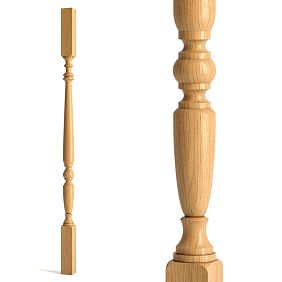
Columns and posts vertically duplicate beams. If beams run from wall to wall, installing decorative columns at the support points creates a logical structure.balusters for staircasesOf the same style as the beams, stairs are integrated into the overall concept.
decorative elementsMade of wood — outlets, covers, consoles — enrich beams.decorative rose outletsAt beam intersections and in the centers of coffered ceilings, accents are added. Carved covers on beams enhance decorative appeal.
Textiles support the beam style. Heavy drapes made of natural fabrics (linen, cotton, velvet) harmonize with massive wooden beams. Light, transparent fabrics in Scandinavian interiors match light, slender beams.
Lighting enhances the drama of beams. Underlighting creates shadows on the ceiling, emphasizing volume. A chandelier suspended from a beam becomes a compositional center. Chain or wrought-iron fixtures in rustic interiors echo the texture of rough wood.
Typical mistakes when using beams
Even beautiful beams can spoil the interior if errors are made in selection, quantity, placement, or finish.
First mistake — mismatch with interior style. Rough rustic beams in a minimalist apartment with chrome fixtures — dissonance. Elegant white beams in a brutal loft — weakness. Beam style must match the overall concept, not contradict it.
Second mistake — incorrect quantity. One thin beam in a spacious living room disappears, failing to create an effect. Ten massive beams in a 20-square-meter room overwhelm and overload the space. Balance of quantity and size is critical.
Third mistake — poor color choice. Dark beams on a dark ceiling merge, losing expressiveness. Light beams on a white ceiling are almost invisible. Contrast is needed — light beams on a dark background or vice versa. Or textural contrast — natural wood on a smooth painted surface.
Fourth mistake — ignoring ceiling height. In a room with a 2-meter ceiling, forty massive beams with a 200x200 mm cross-section visually reduce the ceiling by 20 cm, making it appear even lower. For low ceilings, thin beams 80x80 mm or even omitting beams is appropriate.
Fifth mistake — chaotic placement without composition. Beams of different lengths, at various angles, without logic create visual noise. If no thoughtful concept exists, choose a simple symmetrical arrangement.
Sixth mistake — poor installation. Gaps between beams and ceiling, uneven lines, visible screws spoil the impression. Professional installation is invisible — the beam appears as an integral part of the architecture.
Seventh mistake — ignoring proportions. A beam 20 cm wide and 5 cm high looks like a board on edge, not a beam. The cross-section proportions should be close to square (1:1) or moderately rectangular (1:1.5).
Eighth mistake — incompatibility with furniture. Luxurious carved beams in an interior with cheap particleboard furniture create a stylistic mismatch. Beams set the level; everything else must match.
Ninth mistake — neglecting lighting. Beams without underlighting in a dark room disappear. Plan how light will interact with beams — fall on them, reflect, create shadows.
Tenth mistake — cutting corners on quality. Cheap polyurethane beams with poor wood imitation look artificial and spoil the interior. If budget is limited, better to have fewer but quality beams than many cheap ones.
Conclusion
Wooden beamIn interior design — a powerful designer tool capable of radically changing the perception of space. Structural beams carry real load, define the architecture of private homes, and add authenticity. Decorative beams offer creative freedom — any quantity, placement, or finish transforms a plain ceiling into an architectural masterpiece.
Choosing between structural and decorative beams depends on the task. Building a house — design open beam ceilings, which will become the style foundation. Updating an apartment’s interior — decorative beams transform the space without altering the structure. Renovating a loft — use existing beams and add decorative ones.
Material determines character and longevity. Solid oak or beech — premium, natural, decades of service. Polyurethane — lightness, practicality, variety. Combined solutions combine material advantages.
Beam style must match the overall interior concept. Rustic requires massiveness and rough texture, classic — restrained elegance, minimalism — clean lines, loft — brutality. Do not mix incompatible styles; maintain stylistic unity.
Composition of beam placement — art of proportions. Parallel beams elongate or widen space. Cross-grid creates coffered ceilings. Asymmetry works in creative interiors. Quantity and spacing of beams are calculated for specific rooms.
Color and finish determine perception. Natural wood under transparent coating — classic, preserving material beauty. Staining changes color while preserving texture. Painting allows any shade. Patina and aging create vintage effects.
Installation requires professionalism. Structural beams — builder’s task, critical load-bearing capacity. Decorative beams are easier to install but require care, precise marking, and quality fastening. Installation errors are visible and spoil the result.
Beam functionality extends beyond aesthetics. Inside, they conceal utilities, house lighting, and support hanging elements. Beams zone space, correct proportions, and mask ceiling defects.
If you plan to use wooden beams in interior design, pay attention to the company STAVROS — a manufacturer of high-quality solid wood products with years of experience.
STAVROS offersdecorative wooden beamsIn various sizes and profiles from solid oak and beech. Hollow I-beams with cross-sections from 100 to 250 mm, up to 6 meters long. Custom beam manufacturing is possible for specific projects.
In addition to beams, STAVROS offers accompanying architectural elements.
In addition to beams, STAVROS offers accompanying architectural elements.Ceiling Moldingfor ceiling framing.Wooden Skirting Boardsto match the beams.Decorative brackets— consoles for simulating beam supports.
Wooden planks— complement wall beams.decorative elements— outlets and covers enrich the composition.Moldings made of polyurethane— a lightweight alternative to wood for budget projects.
Consultative support helps make the right choice. STAVROS specialists will calculate the required number of beams, select the optimal cross-section and color, and recommend a layout scheme. Years of project implementation experience — guarantee of professional recommendations.
STAVROS product quality is certified. Premium wood, kiln-dried, modern equipment, quality control at every stage. Beams do not deform, crack, or lose their geometry for decades.
Choosing STAVROS, you get not just wooden beams, but a comprehensive solution for creating a harmonious interior. Wide assortment, professional quality, individual approach, delivery across Russia. Everything needed to bring your design concept to life.
STAVROS — your reliable partner in creating interiors with character and soul!


