












































































Article Contents:
- Material Alliance: The Philosophy of Proper Role Division
- Wood: The Realm of Tactility and Load
- Polyurethane: The Empire of Lightness and Height
- Complementarity: How Materials Enhance Each Other
- Areas of Responsibility: A Practical Map of Material Distribution
- Entrance Hall and Foyer: The First Impression
- Living Room: The Balance of Comfort and Representativeness
- Bedroom: The Territory of Tactile Comfort
- Kitchen: The Pragmatics of Materials
- Bathroom: The Realm of Moisture-Resistant Polyurethane
- Staircase: Synthesis of Materials in a Single Structure
- Transitional Elements: The Art of Joining Different Textures
- Color coordination
- Scale and proportions
- Using Intermediate Elements
- Unity of Decorative Style
- The Staircase Question: Balusters as a Mandatory Safety Element
- Safety Standards: What the Law Requires
- Baluster Material: Why Wood
- Baluster Styles: From Classic to Modern
- Baluster Installation: Precision as a Guarantee of Safety
- Convenience of a Single Supplier: Why It's Important to Order Everything in One Place
- Stylistic Compatibility
- Time-saving
- Unified Calculation System
- Technical Support
- Quality warranty
- Practical Tips: How to Implement the Wood and Polyurethane Duo
- Stage One: Planning and Design Project
- Stage Two: Material Selection
- Stage Three: Purchase and Delivery
- Stage 4: Installation
- Stage Five: Final Finishing
- Frequently Asked Questions About Combining Wood and Polyurethane
- Won't Polyurethane Look Cheap Next to Wood?
- Can wooden elements be painted the same color as polyurethane ones?
- How to care for combined finishes?
- How much does combined finishing for a 20 sq.m. room cost?
- Is it mandatory to use both wood and polyurethane, or can one get by with just one?
- Can wood be combined with other materials besides polyurethane?
- Where to find professionals for installing combined finishes?
- Is such finishing eco-friendly?
- Conclusion: Harmony of Opposites

Imagine two materials. One is as ancient as civilization itself—warm, living, breathing, with a texture shaped by decades of growth. The other is a product of modern technology—lightweight, flexible, capable of taking any form. What could they possibly have in common? Yet it is precisely in their union that the magic of modern interior design is born, where each material finds its place, fulfills its role, and complements its partner. Wood and polyurethane are not competitors but allies, creating a space where functionality meets beauty, tradition meets innovation, and tactility meets visual lightness.
Why is it that now, in 2026, this duo is becoming the fundamental choice for those creating a home seriously and for the long term? Because the era of total styles is over. No one wants to live in a museum-like reconstruction of classicism, where everything is made from a single material according to strict canons. Yet the cold technocracy of pure modernism has also repelled with its soullessness. The modern approach is conscious combination, where each material is used where it is most effective.wall finishing materialsare no longer chosen on an 'either-or' basis but are combined on a 'both wood and polyurethane' principle, creating layers, depth, and interest.
Union of Materials: The Philosophy of Proper Role Division
When planning your home's finish, the first instinct is to choose one material and use it everywhere. It's simpler, more logical, and seems more cohesive. But in practice, this approach either breaks the budget (if expensive wood is chosen for everything) or makes the interior flat and soulless (if cheap plastic or polymer is used everywhere). It's wiser to divide responsibilities, to understand where a material performs at its best and where it is excessive or inappropriate.




Wood: The Realm of Tactility and Load
Wood is a material for contact. Where a person touches a surface with their hand or foot, where the material is subjected to mechanical loads, wood is irreplaceable. The floor is an obvious zone. Hundreds of steps daily, furniture being moved, dropped objects, pet claws. A solid oak or ash wooden floor withstands all this for decades, gradually acquiring a noble patina.
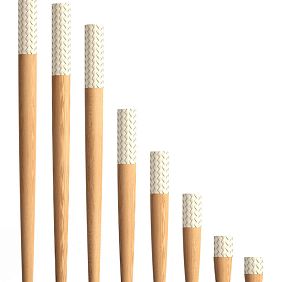
The staircase is another high-load, constant-contact zone. Steps, which you ascend and descend many times a day, must be strong, non-slip, and pleasant to the touch. Wooden steps made from hardwoods (oak, beech, ash) are the quality standard. Handrails, which you grasp with your hand—also wood. Warm, smooth, reliable.buy balustersmade from solid wood is not a luxury but a necessity for those who value safety and durability.
Furniture, especially that which you constantly interact with (tables, chairs, dressers)—also wood's territory. A wooden tabletop you run your hand over, wooden armrests on a chair, wooden drawer handles—all create a tactile comfort that no polymer can replace.
Baseboards near the floor are a risk zone. They get hit by vacuum cleaners, mops, and kicked by feet.Wooden baseboardmade from solid oak or beech will withstand all this without deformation or chipping. It doesn't fade, crumble, or warp from moisture (with proper treatment).
Our factory also produces:


Polyurethane: The Empire of Lightness and Height
Polyurethane is a material for visual perception. Where an element is high up, far from hands, where visual expressiveness matters more than tactility, polyurethane performs perfectly. Ceiling cornices, moldings on the upper part of walls, ceiling rosettes—all these are elements you see but don't touch. Why make them from heavy wood or plaster when polyurethane provides the same visual effect at a fraction of the weight and price?
Height is the enemy of weight. A heavy wooden cornice near the ceiling requires powerful fastening and creates a load on the walls. If the walls are made of drywall or aerated concrete, installing heavy elements becomes problematic. A polyurethane cornice weighs 5-7 times less than a wooden one of the same width. It is glued with special adhesive without additional mechanical fasteners. This not only simplifies installation but also removes limitations based on wall type.
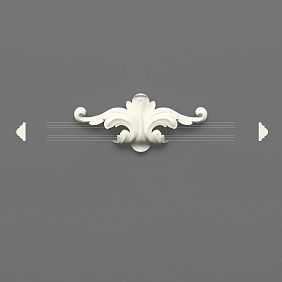
Sculptural wall decorationmade from polyurethane offers the widest selection of ornaments, profiles, and shapes. Casting technology allows for the most complex reliefs, which in wood would require hand carving and cost astronomical sums. Polyurethane democratizes classical architectural stucco, making it accessible.
Wet zones are another territory for polyurethane. In bathrooms, toilets, kitchens (especially near sinks and stoves), humidity is above normal. Wood in such conditions requires thorough protection and can swell or warp. Polyurethane is completely moisture-resistant. It is unafraid of steam or direct contact with water. Cornices, moldings, decorative overlays made of polyurethane in the bathroom are a sensible solution.
Get Consultation
Complementarity: How Materials Enhance Each Other
The most interesting part begins when wood and polyurethane meet in the same space. Warm wood makes the cold polymer feel more alive. Lightweight polyurethane emphasizes the solidity and massiveness of wood. This is not a conflict but a dialogue, where each speaks its own language, yet together they create a harmonious symphony.
A classic example: a living room with a wooden floor, wooden baseboards, wooden furniture—and polyurethane cornices near the ceiling, moldings on the walls, decorative overlays above doors. The lower part of the space is wooden, tactile, warm. The upper part is polyurethane, light, visually expressive. The transition between them is smooth, logical, natural.
Another example: a staircase. Steps, risers, handrails—wood. Decorative elements on the wall along the staircase—moldings made of polyurethane, creating panels and frames. The staircase as a structure is massive, reliable, wooden. The wall along it is decorated, structured, polyurethane. Together they create an ensemble where every element is in its place.
Areas of Responsibility: A Practical Map for Material Distribution
Theory is good, but practice requires specifics. Let's go through the house room by room and determine where wood, where polyurethane, and where they meet.
Hallway and Hall: First Impression
Floor — wooden parquet or solid wood plank. The hallway is a high-traffic and high-dirt area (shoes from outside, sand, moisture). Hardwood with a quality protective coating handles this load. An alternative is wood-look porcelain tile, but then the tactile warmth is lost.
Baseboards — wooden, matching the floor color or contrasting. The baseboard height in the hallway can be increased (10-12 cm instead of the standard 6-8 cm) — this protects the wall from dirt during cleaning.
Walls — combined finish. The lower third (up to a height of about 1 meter) can be finished with wooden panels or painted a practical dark color. This protects the wall from stains. The upper two-thirds — light, with polyurethane moldings creating vertical or horizontal panels.
Ceiling — white, with a polyurethane cornice around the perimeter. If the hall has a high ceiling (3 meters and above), you can add a central polyurethane rosette for a chandelier.
Doors — wooden, with polyurethane decorative overlays (if you need to add volume and classic style to simple doors).
Living Room: Balance of Comfort and Formality
Floor — wooden, parquet or solid wood plank. The living room has less traffic than the hallway, so you can choose lighter and softer wood species (ash, light oak).
Baseboards — wooden, matching the floor. If the walls are light and the floor is dark, the contrast will emphasize the geometry of the space.
Walls — here polyurethane fully shines. Moldings create frame panels, inside which you can have paint, wallpaper, or fabric. The height and proportions of the panels depend on the ceiling height and room area. The classic scheme: vertical rectangles from the baseboard to the ceiling cornice, 60-100 cm wide, placed symmetrically.
Ceiling — white or light, with a perimeter cornice and a central rosette. If the living room area is large (from 30 sq.m), you can add coffers or flat molding panels dividing the ceiling into zones.
Fireplace (if present) — the mantel can be wooden (carved, solid) or polyurethane (imitating stone or classic stucco). A wooden mantel creates a feeling of warmth and coziness. A polyurethane one — classic grandeur.
Furniture — wooden (sofas and armchairs with wooden frames, coffee table, dressers, shelves). Polyurethane is not used here — furniture requires the strength and tactility of wood.
Bedroom: Territory of Tactile Comfort
Floor — wooden, definitely warm to the touch. Stepping barefoot onto a cold floor is unpleasant, so in the bedroom, soft wood species (beech, ash) with an oil finish, which preserves the warmth of the wood, are preferable.
Baseboards — wooden, laconic. In the bedroom, excessive decorativeness is not needed; harmony and calm are important.
Walls — minimal decor. Polyurethane moldings are used sparingly: perhaps framing the headboard of the bed, subtle panels on an accent wall. An excess of stucco in the bedroom creates visual noise and hinders relaxation.
Ceiling — simple, white, with a narrow cornice or none at all. If the ceiling is high and you want to add a classic element, you can use a rosette of modest diameter.
Bed — wooden, preferably solid wood. This is an investment in quality sleep — wood "breathes," regulates humidity, and does not emit harmful substances. The headboard can be simple wooden or with soft upholstery on a wooden frame.
Kitchen: Pragmatics of Materials
Floor — here wood gives way to porcelain tile or ceramic tile. The kitchen floor is exposed to water, grease, high temperatures (dropped hot items). Wood in such conditions requires complex maintenance. But if you really want wood, choose thermowood or wood with a particularly durable varnish coating.
Baseboards — better plastic with a cable channel (practical) or polyurethane (moisture-resistant). Wooden baseboards in the kitchen risk damage from moisture during wet cleaning.
Walls (backsplash) — ceramic tile, glass, stone. Wood and polyurethane are not used here — this is an area of direct contact with water and grease.
Walls (dining area, if it's in the kitchen) — you can use polyurethane moldings to create decorative panels if the kitchen is large and has a dedicated dining area.
Ceiling — simple, white. A polyurethane cornice can be used, but the profile should be simple, without deep recesses (where grease and cooking dust accumulate).
Furniture — kitchen cabinet fronts can be made of solid wood (expensive but beautiful and eco-friendly option) or MDF with a coating. Handles on the fronts — wooden, creating a tactile accent.
Bathroom: Kingdom of Moisture-Resistant Polyurethane
Floor — ceramic tile, porcelain tile, natural stone. Wood on the bathroom floor is exotic, requiring special wood species (teak, larch) and complex maintenance. For most, this is impractical.
Baseboards — polyurethane, moisture-resistant. Wooden baseboards in the bathroom quickly deteriorate from constant humidity.
Walls — ceramic tile, porcelain tile, mosaic. But polyurethane decor can be used in an area removed from direct contact with water: a cornice under the ceiling, moldings on the wall opposite the bathtub or shower.
Ceiling — a polyurethane cornice around the perimeter will add a touch of classicism even to a bathroom. The key is to choose moisture-resistant paint for painting the cornice.
Furniture (vanity unit, shelves) — preferably made from moisture-resistant materials (plastic, glass, metal) or wood with special protection. Furniture handles can be wooden (provided they have a high-quality lacquer finish) — this will add warmth to a cold bathroom.
Staircase: a synthesis of materials in a single structure
The staircase is a unique zone where wood and polyurethane meet in close proximity, creating a unified structure.
Treads and risers — wood, solid oak or beech. Tread thickness not less than 40 mm (for interfloor stairs). Wood hardness is critical — treads are subject to constant load.
Balusters — wooden, made from the same material as the treads, or from a softer, easily workable species (beech, ash, pine for budget solutions). Balusters can be turned (classical shapes: ball, pear-shaped baluster, twisted elements) or milled (modern, laconic profiles).
Handrails — wooden, mandatory. This is an element of constant hand contact; it must be warm, smooth, pleasant. Handrail diameter 40-50 mm is optimal for hand grip.
Stringer or carriage (load-bearing elements) — wood, solid or laminated timber. This is the load-bearing frame; compromises are unacceptable here.
Wall along the staircase — polyurethane moldings creating panels or frames. You can frame an area for pictures or photographs with moldings. Polyurethane decor visually lightens a massive wooden staircase structure.
Ceiling above the staircase (if present) — polyurethane cornice around the perimeter. If the height is significant, a rosette for a light fixture is possible.
Transitional elements: the art of joining different textures
When wood meets polyurethane, it's important for the transition to be logical, visually harmonious. You cannot simply glue a polyurethane molding onto a wooden wall panel without considering the details. Transitional elements, color and texture solutions are needed to unite the different materials into a single whole.
Color coordination
The simplest way to unite wood and polyurethane is color. White polyurethane against light wood (whitewashed oak, light ash) creates tonal proximity. The materials are different, but the color palette is unified — light, airy, calm.
Contrast solution — white polyurethane and dark wood (wenge, stained oak, walnut). This creates a graphic, expressive interior. Polyurethane moldings are clearly legible against the dark background of wooden wall panels or furniture.
Monochromatic solution — both wood and polyurethane are painted the same color. For example, wooden panels and polyurethane moldings are painted grey. The materials are different, but the color is unified. The difference manifests in texture: the wood shows its fiber structure (even under paint), polyurethane is absolutely smooth.
Scale and proportions
Wooden elements (baseboards, panels, furniture) usually have a certain mass, solidity. Polyurethane elements (cornices, moldings) can be either massive or light. It's important to maintain scale correspondence.
If a wooden baseboard is 10 cm high, a polyurethane ceiling cornice should not be narrow (3-4 cm) — this creates imbalance. Optimal: cornice 8-12 cm, visually comparable to the baseboard.
If there are large wooden wall panels 80-100 cm wide, the polyurethane moldings framing them should be sufficiently wide (6-10 cm) to be read as a significant element, not as a thin, random line.
Using intermediate elements
Sometimes a direct joint between wood and polyurethane looks abrupt. Intermediate elements help. For example, between a wooden wall panel and a polyurethane molding, you can lay a thin strip of a contrasting color (painted or metal). This creates a visual buffer, making the transition smoother.
Another technique is to use wooden and polyurethane elements on different levels so they do not directly touch. Wooden panels run from the floor to a height of 1 meter. Above that — a painted wall. And only then, under the ceiling — a polyurethane cornice. Between the wood and polyurethane, there is a zone of neutral painted surface that acts as a transition.
Unity of decorative style
Wooden elements can be carved, with ornaments. Polyurethane ones can be too. It's important that the stylistic features of the ornaments match. If the wooden balusters of the staircase have classical turned forms (balusters with a ball, vase-shaped elements), the polyurethane moldings on the walls should also be classical (with beads, reeds, coves). Mixing styles (for example, baroque wooden carved panels and minimalist rectangular polyurethane moldings) creates visual dissonance.
The staircase issue: balusters as a mandatory safety element
A staircase in a private house is not only a means of communication between floors but also a source of increased danger. Falling down stairs is one of the most common household injuries. And balusters are the first line of defense, turning an open stair flight into a safe space.
Safety standards: what the law requires
Building codes clearly regulate requirements for stair railings. Railing height — not less than 90 cm from the tread level (for residential buildings), 110 cm (for public buildings). Distance between balusters — no more than 10-12 cm (depending on region and standard). This is critical for child safety: a child should not be able to squeeze between the balusters.
The strength of baluster fastening is also regulated. The railing must withstand a horizontal load of at least 100 kg (simulating a person falling onto the railing). This is achieved by high-quality fastening of balusters to the treads and secure fixing of the handrail.
When you decidebuy balustersWhen choosing balusters for your staircase, remember: this is not just decor, it is a structural element responsible for your safety and the safety of your loved ones.
Baluster material: why wood
Balusters can be made from various materials: wood, metal, glass, plastic, or combinations. However, for a residential home where coziness and tactile comfort are important, wood remains the optimal choice.
Wooden balusters are warm to the touch. In winter, when metal elements are cold and unpleasant, wood maintains a comfortable temperature. In summer, when metal heats up, wood remains pleasant.
Wood is durable and repairable. If damaged (chip, crack), a wooden baluster can be restored: sanded, the defect filled, and refinished. Plastic or glass ones would need to be replaced entirely.
Wood is eco-friendly. In a home where you live for years, it's important that materials do not emit harmful substances. Solid wood with a natural oil or varnish finish is absolutely safe.
Baluster styles: from classic to modern
The shape of balusters defines the staircase style. Classic turned balusters with balls, vases, elongated elements suit traditional interiors. They are made on a lathe, each baluster is the result of precise work.
Milled balusters with flat facets, geometric profiles — for modern interiors. They can have square or rectangular cross-sections, with small decorative cutouts.
Carved balusters with ornaments, floral motifs — for luxurious, palatial interiors. They are made on CNC milling machines or by hand (exclusive models). This is the most expensive, but also the most expressive option.
Combined balusters — a mix of different shapes and materials. For example, the lower and upper parts are turned elements, the middle is a flat insert with carved ornamentation. Or a wooden base with metal decorative inserts.
Baluster installation: precision as a guarantee of safety
Proper baluster installation is an art requiring precision. All balusters must be strictly vertical. Any deviation creates visual discomfort and reduces structural strength.
The distance between balusters should be uniform along the entire staircase length. Typically, this is 10-15 cm (between baluster centers). At staircase turns, on landings, the spacing may change, but within a single straight flight, it must be identical.
Attachment to the tread is done through a drilled hole in the baluster base. A dowel (wooden peg) or metal pin is inserted into the hole, which goes into the tread. Additionally, the baluster may be secured with adhesive (carpenter's PVA or polyurethane). Important: after installation, the baluster must not wobble; play is unacceptable.
The handrail is attached to the top ends of the balusters. A groove is pre-milled in the handrail, into which the baluster ends fit. The joint is reinforced with adhesive and screws (screwed from below, through the baluster into the handrail, so they are not visible from the outside).
Convenience of a single supplier: why it's important to order everything in one place
When you combine wood and polyurethane in finishing, a logistical question arises: where to buy it all? You can visit different stores, look for wooden elements from one supplier, polyurethane ones from another. Or you can find a company that offers a comprehensive solution.
Stylistic compatibility
When all decorative elements are from one manufacturer, they are stylistically coordinated. Molding profiles, overlay ornaments, baluster shapes are designed to complement each other. You won't encounter a situation where a wooden baseboard profile conflicts with a polyurethane cornice because they are from different stylistic systems.
Time saving
One trip (or one order via the website) — and everything needed is purchased. No need to spend days searching, comparing, driving around the city. You get a comprehensive proposal that accounts for all your needs.
Unified calculation system
A professional supplier will help calculate the required amount of materials. How many linear meters of moldings for creating wall panels? How many balusters for the staircase considering the standard spacing? What length handrails are needed? Specialists will make the calculation, account for trimming waste, and propose an optimal package.
Technical support
Have questions about installation? Need advice on material compatibility? A single supplier has a support service that knows the product inside out, can provide qualified advice, and help solve problems.
Quality warranty
When all products are from one manufacturer, it's easier to track quality and resolve any issues. Found a defect? Size didn't fit? The single supplier will promptly replace the product, refund money, or offer an alternative.
Practical tips: how to implement the duo of wood and polyurethane
Theory is wonderful, but practice requires concrete actions. Here is a step-by-step plan on how to implement combined wood and polyurethane finishing in your home.
Stage one: planning and design project
Draw (or order from a designer) a plan of each room indicating all decorative elements. Where will the wooden wall panels be? Where will the polyurethane moldings be? What height baseboards? What width cornices? This will help visualize the result and avoid mistakes.
Define the style. Classic, neoclassical, modern, art deco? The style determines the choice of molding profiles, baluster shapes, and decorative proportions.
Calculate the budget. Wood is more expensive than polyurethane, that's a fact. But by combining materials, you optimize costs: wood where it's truly needed, polyurethane where you can save without losing quality.
Stage two: material selection
Wood species for flooring, staircase, baseboards. Oak — versatile, hard, durable, mid-range price. Beech — slightly softer, lighter, cheaper. Ash — hard, beautiful grain, more expensive than oak. Exotic species (teak, merbau, wenge) — for exclusive projects.
Collection of polyurethane moldings. Browse the catalogs, select molding profiles, cornice shapes, and rosette designs. Pay attention to the profile width—it should match the scale of the room.
Coatings. For wood: oil (preserves the natural appearance, requires periodic renewal), varnish (creates a durable coating, can be matte or glossy), wax (decorative coating, usually applied over oil). For polyurethane: acrylic or latex paint, always matte or semi-matte (gloss will create a plastic effect).
Stage three: purchasing and delivery
Order materials from the supplier. Clarify production timelines (if something is made to order), delivery times, and payment terms. Be sure to order an extra 10-15% for cutting and possible defects.
Organize storage on-site. Wood should be stored in a dry room, horizontally, with spacers between elements (for ventilation). Polyurethane is less finicky but also dislikes direct sunlight and temperature fluctuations.
Fourth stage: installation
Start with basic elements: floor, staircase (if present). Then baseboards. Next, wall decor (panels, moldings). Finish with ceiling elements (cornices, rosettes).
Don't rush. Quality installation takes time. It's better to spend an extra day on precise marking and careful cutting than to redo crooked joints later.
Hire professionals for complex work. If you have no experience working with wood, it's better to entrust the installation of stairs and balusters to specialists. This is a safety issue.
Stage five: final finishing
Painting polyurethane. Primer (if elements are not factory-primed), two to three coats of paint with intermediate drying. Thoroughly paint the recesses of the relief.
Wood treatment. Sanding (if needed), application of oil or varnish. Oil is applied in two to three coats with intermediate drying and light sanding. Varnish—two to three coats, the final coat should be perfectly smooth, without drips.
Sealing joints. All joints between elements (molding to molding, baseboard to wall, cornice to ceiling) are filled with acrylic putty, sanded, and touched up. A perfect joint is an invisible joint.
Frequently asked questions about combining wood and polyurethane
Won't polyurethane look cheap next to wood?
No, if chosen correctly and painted with quality. After professional painting with matte paint, polyurethane moldings are indistinguishable from plaster or even wooden ones from a distance of more than a meter. The key is a matte finish. Gloss creates a plastic shine, matte creates a noble texture.
Can wooden elements be painted the same color as polyurethane ones?
Yes, and often necessary. This creates color unity with texture differences. Wooden panels and polyurethane moldings painted the same gray color look like parts of a unified system, but the wood grain (visible even under paint) distinguishes them.
How to care for combined finishes?
Wood is wiped with a dry or slightly damp cloth; oil coating is renewed periodically (once a year or two) if the wood is oiled. Polyurethane is wiped with a damp cloth, not afraid of water and household chemicals (non-abrasive). Overall, care is simple and does not require special products.
How much does combined finishing for a 20 sq.m room cost?
Depends on the volume of decor and material choices. Minimum option (wood laminate floor, wooden baseboards, polyurethane ceiling cornice): 80-120 thousand rubles (materials + labor). Medium option (solid wood floor, wooden baseboards, polyurethane wall moldings, cornice, rosette): 150-250 thousand rubles. Premium option (oak parquet, carved wooden wall panels, rich polyurethane moldings): 300-500 thousand rubles and above.
Is it necessary to use both wood and polyurethane, or can you get by with just one?
You can get by, but you lose the advantage of combining. Only wood—expensive and not always practical (why have a heavy wooden cornice under the ceiling?). Only polyurethane—cheaper, but you lose the tactile comfort, naturalness, and nobility of wood. The combination provides the optimal balance of quality, aesthetics, and price.
Can wood be combined with other materials besides polyurethane?
Of course. Wood pairs beautifully with stone (natural and artificial), metal, glass, leather, textiles. Polyurethane in this article is considered the optimal partner for wood in the context of architectural decor, but no one forbids broader combinations.
Where to find professionals for installing combined finishes?
Look for companies specializing in classic interiors, working with wood and moldings. Review portfolios, ask for contacts of previous clients, check reputation. A good craftsman is expensive, but the result justifies the cost. A cheap amateur will ruin expensive materials, and redoing it will cost even more.
Is such finishing eco-friendly?
Wood is an absolutely eco-friendly material. Polyurethane is a synthetic polymer, but modern compositions are safe and do not emit harmful substances after curing. Water-based paints (acrylic, latex) are also eco-friendly. Overall, combined finishing is safe for health, suitable for homes with children, allergy sufferers, and sensitive individuals.
Conclusion: Harmony of Opposites
Wood and polyurethane are the yin and yang of interior finishing. Different in origin, properties, and perception, together they create something greater than each separately. Wood provides warmth, tactility, connection to nature, and a sense of solidity. Polyurethane provides lightness, flexibility of forms, visual expressiveness, and practicality. Together they create an interior that works on all levels: functional, aesthetic, emotional.
By 2026, as the approach to home finishing became more conscious, with people no longer chasing fleeting trends and instead focusing on long-term value, the combination of wood and polyurethane has become the choice of sensible, practical individuals who still appreciate beauty. This is not a compromise between quality and price, but a synthesis of the best properties of both materials.
Creating such an interior means thinking systematically, understanding the functional zones of materials, skillfully integrating them, and envisioning a cohesive picture where every element is in its rightful place. This requires knowledge, experience, high-quality materials, and professional execution. But the result is worth the effort: a home where beauty meets practicality, tradition meets innovation, and every detail serves the inhabitants, creating a space for living, not for show.
For over twenty years, STAVROS has been crafting wood and polyurethane products for those who value quality, beauty, and a sensible approach to home finishing. The range includes a full spectrum for combined finishing: wooden skirting boards, moldings, solid oak, beech, and ash cornices; balusters for all styles of staircases, from simple turned to intricate carved designs; polyurethane moldings—cornices, moldings, rosettes, overlays, pilasters; and staircase components—treads, risers, handrails, newel posts.
All STAVROS products are manufactured using European technologies from quality raw materials, with multi-stage control at every step. The wood undergoes kiln drying to 8-10% moisture content, is processed on precision equipment, sanded, and coated with protective compounds. Polyurethane moldings are cast from high-density two-component polyurethane, feature sharp relief and stable geometry, and are ready for painting without additional preparation.
The company's website features catalogs of all products with detailed technical specifications, dimensions, and interior photographs. Professional consultants will help select stylistically matching elements, calculate the required material quantities, and recommend optimal solutions for your budget and objectives. STAVROS works with private clients, designers, and construction companies across Russia. Delivery to any region, flexible discount system, quality guarantee.
Choosing STAVROS means not just purchasing materials, but acquiring a comprehensive solution for creating an interior where wood and polyurethane work in harmony, complementing each other to create a space you'll want to live in. A space where every detail is in its place, where functionality does not contradict beauty, and where modern technology serves timeless values—coziness, comfort, and quality of life.


