Article Contents:
- Where polyurethane surpasses wood and plaster: an honest analysis
- Upper zones: where polyurethane is invisible and effective
- Facades: polyurethane vs. climate
- Contact zones: where wood is irreplaceable
- Material combination: intelligent saving system
- Overlays and rosettes: small forms of big decor
- Painting polyurethane: how to hide its plastic nature
- Common mistakes when using polyurethane decor
- Questions and answers: all about the sensible application of polyurethane decor
- STAVROS: where to buy polyurethane decor with an understanding of its correct application

Polyurethane decor divides designers into two camps — some consider it a budget savior, others a compromise that kills the authenticity of classical interiors. The truth lies in the middle: polyurethane is appropriate where its advantages — lightness, moisture resistance, price — solve specific tasks inaccessible to wood or plaster. Ceiling rosettes at a height of 3 meters, cornices under 4-meter ceilings, facade decor in rain and snow, molding in the bathroom — here polyurethane is not a compromise, but a rational choice. A plaster rosette with a diameter of 80 cm weighs 15-20 kg, requires reinforced fastening to the ceiling, and can fall if installed incorrectly. A polyurethane one weighs 2-3 kg, is glued in 10 minutes, and lasts for decades. Wooden facade decor darkens, cracks, and requires restoration after three years. Polyurethane does not change color, does not deform, and can be washed with a hose. But the same polyurethane at eye level in the tactile contact zone — on furniture facade overlays, door trims, panels in the lower third of the wall — reveals its plastic nature at the first touch. The rule here is simple:Buy polyurethane decorationspolyurethane for upper inaccessible zones and wet rooms, wood for contact zones.
Combining materials by accessibility zones creates visual unity with reasonable economy. Ceiling cornices, moldings in the upper third of the wall, rosettes under chandeliers — polyurethane, painted white or patinated gold. Baseboards, door trims, furniture overlays, boiserie panels in the lower third of the wall — solid oak or beech with natural texture. From a distance, all elements are perceived as a unified system of classical decor. Up close, wood provides tactile confirmation of quality, while polyurethane works visually at a distance. The price of such a combined solution is 40-60% lower than fully wooden decor while maintaining visual integrity.of polyurethane decor— does not mean giving up quality, it means using each material where its properties provide maximum advantage.


Where polyurethane surpasses wood and plaster: an honest analysis
High ceilings from 3.2 meters make installing heavy decor problematic. A plaster cornice 200 mm wide and 2 meters long weighs 8-12 kg, requires two installers on ladders, special plaster glue plus anchors for safety. Installation time for one plank is 30-40 minutes. A polyurethane cornice of the same dimensions weighs 1.5-2 kg, is glued by one person in 10 minutes with acrylic glue without anchors. For a 30-square-meter room with a ceiling perimeter of 22 meters, the time saved on installation is 4-6 hours, and the savings on labor costs are 8-15 thousand rubles.
Wet rooms — bathrooms, toilets, kitchens, swimming pools — destroy wood and damage plaster. A wooden baseboard in a bathroom darkens from moisture in six months, begins to warp, and requires replacement after a year. Plaster molding in a humid environment absorbs water, loses strength, and can fall off the wall. Polyurethane is absolutely moisture-resistant — the chemical structure of the material prevents water from penetrating inside.of polyurethane decorfor the bathroom is the only rational solution, where the alternative is only ceramic tile with relief molding, costing 5-7 times more.
Facade decor is exposed to all climatic impacts — rain, snow, frost, ultraviolet light, temperature fluctuations from minus 30 to plus 40 degrees. Wooden facade decor requires protection with yacht varnishes, coating renewal every 2-3 years, otherwise the wood grays, cracks, and rots. Plaster facade decor absorbs moisture; in winter, water in the pores freezes, expands, and destroys the material — after 3-5 years, plaster elements crumble. Polyurethane does not absorb water, is not afraid of frost, and does not fade in the sun. Facade polyurethane decor lasts 25-30 years without maintenance and can be painted with facade paints in any color.
Complex carved forms in wood require the manual work of a carver or expensive milling on 5-axis CNC machines. An hour of a carver's work costs 2000-3000 rubles; a carved wooden overlay measuring 20×30 cm can cost 5000-8000 rubles. A polyurethane overlay of the same size and complexity costs 300-800 rubles — it is cast in a mold that reproduces the original carving with micron precision. For an interior requiring 20-30 carved overlays on furniture, doors, and walls, the savings amount to 100-200 thousand rubles.
Transporting fragile decor carries the risk of damage. Plaster elements break if dropped; wooden ones can split upon impact. Polyurethane is elastic, does not break when dropped from human height, and does not crack during transportation. This is critical for delivery to regions — plaster decor requires wooden crates, multi-layer packaging, and cargo insurance. Polyurethane decor is packaged in shrink film and cardboard and shipped by regular delivery services without special requirements.




Upper zones: where polyurethane is invisible and effective
Ceiling cornices at the junction of the wall and ceiling are at a height of 2.4-3.5 meters — outside the tactile contact zone. From the floor, it is impossible to distinguish what material the cornice is made of — polyurethane, plaster, or wood. The difference lies only in the relief, casting quality, and painting. A high-quality polyurethane cornice with a clear profile, painted matte white or patinated gold, is visually indistinguishable from plaster. Savings amount to 60-70% of the cost with an identical visual effect.
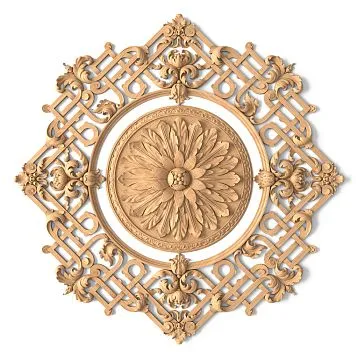
Rosettes on the ceiling under chandeliers or light fixtures with diameters from 40 to 120 cm are decorative elements viewed from below upward from a distance of 2.5-3 meters. The detailing of carving, depth of relief, play of light and shadow — all this polyurethane reproduces with high precision. A plaster rosette with a diameter of 80 cm costs 8000-15000 rubles plus 3000-5000 for installation due to its weight. A polyurethane one of the same size costs 1500-3000 rubles plus 500-1000 for installation. Savings of 10-16 thousand on one rosette.
Moldings in the upper third of the wall — from 180 cm and above — create architectural frames, friezes, and panels. This is decor visible from a distance of 2-4 meters, with tactile contact excluded. Wooden moldings here are excessive — their main advantage, natural texture, is not discernible from such a distance. Polyurethane moldings 80-150 mm wide create the same visual effect for a third of the price.
Domes and coffers on ceilings — complex architectural elements creating volume and theatricality. Plaster domes are made to individual projects, require reinforcement, weigh hundreds of kilograms, and take weeks to install. Polyurethane domes are ready-made modular systems assembled like a constructor in 1-2 days. A dome with a diameter of 1.5 meters in plaster costs from 150 thousand rubles with installation; in polyurethane, from 40 thousand turnkey.
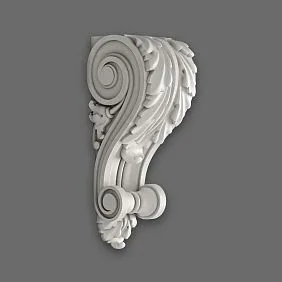
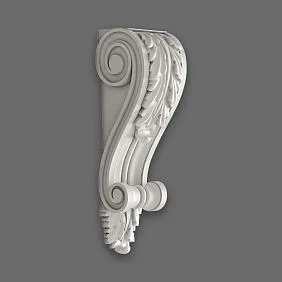
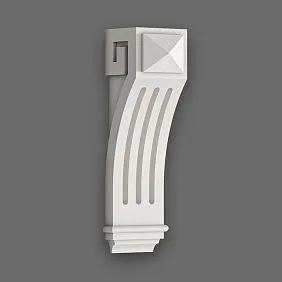
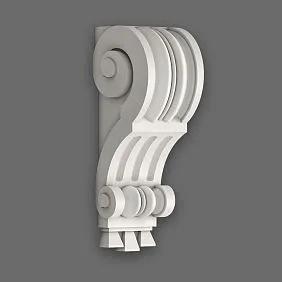
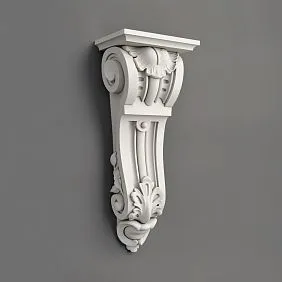
Corbels and brackets under cornices, between beams, in ceiling corners — decorative elements imitating load-bearing structures. In classical architecture, corbels were wooden or stone and actually bore loads. In modern interiors, they are purely decorative. A polyurethane corbel 30 cm high supports up to 50 kg, which is enough for a decorative shelf. A wooden corbel of the same size is 3-4 times more expensive without functional advantage.
Our factory also produces:

Facades: polyurethane vs. climate
Window trims — architraves, window cornices, and apron moldings — give the facade a finished look characteristic of classical architecture. Wooden facade architraves last 5-7 years, then require repainting or replacement. Polyurethane ones last 25-30 years and are painted with facade acrylic paints every 10-15 years to refresh the color. For a house with 15 windows, savings on facade decor maintenance over 20 years amount to 200-300 thousand rubles.
Eaves under the roof, 200-400 mm wide, create a transition from the wall to the roof and protect the top of the wall from running water. Wooden eaves are made from planed boards, require painting, darken over the years, and develop cracks. Polyurethane eaves are lightweight strips that are attached with facade adhesive and dowels; they do not deform or change color. Installing polyurethane eaves on a 10×12 meter house takes 1 day compared to 3-4 days for wooden ones.
Pilasters and columns on the facade are vertical elements that visually support the eaves and divide the facade into sections. Stone or brick pilasters require masonry and increase the weight of the facade. Wooden pilasters are heavy, expensive, and sensitive to moisture. Polyurethane pilasters, 2-3 meters high, weigh 5-10 kg, are attached with facade adhesive, and look like stone after painting with facade paint. A 2.5-meter polyurethane pilaster costs 5000-8000 rubles, while a wooden one costs 25000-40000; the effect is identical.
Keystones above windows and doors, corner rusticated stones, decorative consoles under balconies — all these elements of classical architecture are available in polyurethane. They are lightweight, easy to install, and do not require reinforcement of facade structures. For the reconstruction of historical facades where the original decor is lost, polyurethane copies allow restoring the building's appearance for a reasonable cost.
Plinth panels with stone-like relief, brick-like patterns, or classical ornaments protect the lower part of the facade from mechanical damage and visually weigh down the building's base. Polyurethane panels, 15-25 mm thick, create a three-dimensional relief indistinguishable from real stone masonry from a distance. A panel measuring 50×100 cm costs 1500-3000 rubles; installation is simple — using facade adhesive and dowels.
Get Consultation
Contact zones: where wood is irreplaceable
Floor skirting boards at 0-15 cm from the floor — a zone of constant contact with vacuum cleaners, mops, feet, and furniture. Polyurethane skirting is softer than wood; an impact leaves a dent that is difficult to repair. Wooden skirting made of oak or beech is harder; impacts leave minimal marks that are easily filled with a wax pencil. Tactilely, wood is warm and pleasant; polyurethane is plastic and cold. In living spaces where the naturalness of materials is important, wooden skirting boards are the right choice.
Door architraves are at eye and hand level, often touched when passing through the door. Touch instantly reveals the material — wood is hard, warm, with a characteristic texture; polyurethane is resilient, cool, and smooth. For classic interiors where materiality is important, wooden architraves made of oak, 80-120 mm wide, create a sense of real architecture. Polyurethane architraves are suitable for budget projects or damp areas where wood is undesirable.
Furniture overlays on cabinet fronts, drawers, and doors — decor constantly seen from a close distance of 30-50 cm, sometimes touched by hand. Wooden overlays made of solid oak, carved or milled, create a sense of expensive handmade furniture. The wood grain, open pores, medullary rays — all visible up close — create visual and tactile value. Polyurethane overlays reveal their plastic nature upon close inspection — too smooth a surface, lack of natural texture, characteristic shine.
Boiserie panels on the lower third of the wall, from floor to a height of 90-120 cm — a traditional element of classic interiors. These panels are seen from a distance of 1-2 meters, sometimes touched with the back when leaning against the wall. Wooden panels made of solid wood or MDF with veneer create a sense of solidity and respectability. Polyurethane panels look cheaper, especially up close. A compromise — frames made of wooden moldings, with painted walls or wallpaper inside, without polyurethane filling.
Countertops, windowsills, stair railings — surfaces of constant tactile contact. Here, polyurethane is categorically inappropriate. Wood, stone, artificial stone, metal — materials that match the function. Polyurethane is too soft, dents from hot objects, scratches with knives, looks cheap. This is a zone where saving on material kills the quality of the interior.
Combining materials: a system of reasonable economy
Vertical zoning by height is the basis of the combined approach. The lower part of the room from floor to 120 cm — wood: skirting boards, panels, lower moldings. The middle from 120 to 180 cm — painted walls without decor or with wooden frames. The upper part from 180 cm to ceiling — polyurethane: moldings, cornices, rosettes. Visually, all wooden and polyurethane elements are painted the same color — white, cream, gold — creating the illusion of a single material.
Horizontal zoning by function — formal rooms get more wood, auxiliary rooms get more polyurethane. Living room, study, dining room — here, wooden skirting boards, architraves, boiserie panels on the lower third of the wall. Polyurethane only in ceiling cornices and rosettes. Bedrooms, children's rooms, corridors — more polyurethane is possible here, including architraves and moldings in the middle zone. Bathrooms, toilets, kitchens — polyurethane everywhere except ceramic tiles.
Stylistic zoning — classical elements in wood, modern ones in polyurethane. If the interior is neoclassical, where classical forms are simplified and minimalist, polyurethane is more acceptable. Simple moldings without carving, laconic cornices, geometric panels — polyurethane reproduces all this authentically. If the interior is palatial classical with abundant carving, patina, gilding, wood should dominate in visible zones, polyurethane only in high, inaccessible areas.
Color unification of different materials through uniform painting creates visual integrity. All decorative elements — wooden and polyurethane — are painted the same color with the same paint. Matte white is a universal solution that hides material differences. Patination with gold or silver over a white base — for palatial interiors. Toning in gray, beige — for neoclassical. Color unites what is materially different.
The manufacturer matters — high-quality, high-density polyurethane with clear relief detail is more expensive than cheap, porous polyurethane but looks incomparably better. Cheap polyurethane gives itself away with large pores on the surface, blurred carving details, and excessive lightness. Quality polyurethane with a density of 300-350 kg/m³ has a fine-grained structure, clear details, sufficient weight, creating a sense of solidity.Buy Molded DecorationIt is necessary to buy from trusted manufacturers where quality control guarantees compliance with stated characteristics.
Overlays and rosettes: small forms of big decor
Decorative overlays sized from 10×10 to 50×50 cm — universal elements used on walls, ceilings, furniture, and doors. Round rosettes with diameters from 8 to 40 cm — for decorating ceilings around light fixtures, for door panel decor, for creating medallions on walls. Oval cartouches with scrolls — for framing house numbers, decorative inscriptions, family coats of arms. All this is available in polyurethane at prices from 150 to 2000 rubles per element, depending on size and complexity.
Applying overlays on furniture transforms simple fronts into classic ones. A smooth cabinet door gets a carved overlay 20×30 cm in the center — instantly the front becomes decorative. A dresser pediment is adorned with an oval cartouche — the dresser gains stylistic belonging to classicism. Overlays are glued with polyurethane adhesive or liquid nails; after painting to match the front color or in a contrasting color, they are perceived as wood carving. Here, the choice of material — polyurethane or wood — is determined by budget and authenticity requirements.
Overlays on doors create decorative panels, turning a flat door leaf into a classic panel door. Four rectangular overlays or frames made of moldings on a door create the illusion of a frame-and-panel construction. A round rosette in the center of the upper panel adds a classic detail. After painting, doors with overlays in white or a color look like expensive classic doors, even though the base is a simple smooth leaf costing 3000 rubles plus 1000 rubles for overlays.
Overlays on walls create decorative panels, accent compositions, frames for mirrors and paintings. Four corner overlays with scrolls at the corners of a rectangular frame made of moldings enhance the classic composition. A central large rosette or cartouche on an accent wall becomes a focal point. Overlays with plant motifs — grapevines, acanthus leaves, flowers — create natural decorativeness characteristic of Baroque and Art Nouveau styles.
Overlays on the ceiling between beams, in corners, around ventilation grilles mask technical elements, turning them into decor. A ventilation grille framed by a carved frame of overlays ceases to be a technical element and becomes part of the ceiling's decorative system. Overlays in ceiling corners where cornices meet enhance classicism and create corner completeness.
Painting polyurethane: how to hide its plastic nature
Priming is mandatory before painting polyurethane. Acrylic primer is applied with a brush or roller in one coat, dries in 2-4 hours, and creates an adhesive layer for the paint. Without primer, paint may absorb unevenly, causing spots. Primer also fills micro-pores on the polyurethane surface, making it smoother.
Matte paint is preferable to glossy for hiding the artificiality of polyurethane. Gloss emphasizes the plastic nature of the material, creating a characteristic shine. Matte or semi-matte acrylic paint with 5-10% gloss creates a noble surface visually close to painted wood or plaster. Paint is applied in two coats with a brush, working into all relief recesses; intercoat drying time is 4-6 hours.
Patination adds depth and an aged effect. Base coat — white or cream paint. After drying, patina — gold, silver, brown — is rubbed into the relief recesses. Patina is applied with a brush or sponge; excess on raised areas is wiped off with a damp cloth. Patina emphasizes the relief, makes carving more expressive, and creates the illusion of multi-layered old decor that has been repainted over decades.
Artificial aging through craquelure — a decorative technique creating cracks on the paint surface. A base coat of paint is applied, then craquelure varnish, then a top coat of paint in a different color. As it dries, the top coat cracks, revealing the base color in the cracks. The effect of an old, repeatedly repainted surface. Suitable for Provence, shabby chic, vintage interiors.
Wood imitation through texturing — a technique creating the illusion of wood grain on smooth polyurethane. Base coat — light wood color paint: beige, ochre. Over this, a brown or dark beige glaze is applied. While the glaze is wet, a special brush or comb is drawn through it, creating stripes that imitate tree rings. After drying, it is coated with matte varnish. From a distance, it looks like natural wood; up close, the imitation is visible.
Common Mistakes When Using Polyurethane Decor
Over-saturation with decor is a typical mistake, where polyurethane molding is used excessively due to its low price. Moldings on all walls, rosettes on every light fixture, overlays on all surfaces — this creates visual noise and kills the sense of proportion characteristic of quality interiors. The rule: less is more, but more precise. One accent wall with boiserie is better than four overloaded ones. One large ceiling rosette is better than five small ones.
Mismatch of decor scale to room size — narrow 40-60 mm moldings in a room with 3.5-meter ceilings look skimpy and get lost in the space. Wide 200 mm cornices in a 12-square-meter room with 2.4-meter ceilings feel oppressive and overloaded. The scale of the decor must match the scale of the room — the higher the ceilings and the larger the area, the larger the decorative elements can be.
Stylistic incompatibility — baroque carved elements in a minimalist interior, industrial grilles in a classic living room.polyurethane decorationPolyurethane decor is available in any style, but the choice must correspond to the overall interior concept. Simple, laconic profiles for neoclassical and modern styles. Carved, abundant decor for baroque and rococo. Clear geometric shapes for art deco and contemporary classic.
Poor-quality installation — visible gaps in joints, uneven gluing, asymmetrical placement of elements ruin the effect of even high-quality decor. Polyurethane forgives fewer mistakes than wood because it is lighter and is held only by adhesive without mechanical fastening. Joints must be carefully filled with putty, sanded, and painted — seams should be invisible. Symmetry must be maintained with centimeter precision — the human eye sees even small deviations.
Incorrect painting — thick layers of paint clog relief details, creating blurred decor. Contrasting colors without patination create sharpness and unnaturalness. Glossy paint on polyurethane emphasizes plastic appearance. Correct painting — thin layers of matte paint with brush detailing of all recesses, possible patination to emphasize relief, final coating with matte or semi-matte varnish for protection.
Questions and Answers: All About the Reasonable Use of Polyurethane Decor
In which cases is polyurethane preferable to wood?
Polyurethane is preferable in high areas (ceiling cornices, rosettes), in damp rooms (bathrooms, kitchens), on facades where lightness, moisture resistance, and climate resistance are required. Wood is preferable in areas of tactile contact (baseboards, trims, furniture overlays) where the naturalness of the material is important.
Can polyurethane and wooden decor be combined in one room?
Yes, and it should be done for reasonable savings. The upper part of the room (cornices, upper zone moldings, rosettes) — polyurethane. The lower part (baseboards, panels, lower moldings) — wood. Everything is painted in a single color, creating visual integrity. Savings of 40-60% while maintaining a quality appearance.
How to choose quality polyurethane decor?
Quality polyurethane has a density of 300-350 kg/m³, a fine-grained structure without large pores, clear relief detailing, and an even white primer coating. Cheap polyurethane is porous, carving details are blurred, weight is insufficient, and the primer is uneven. Check visually and by touch — quality polyurethane is denser, heavier, and more pleasant to the touch.
How much does it cost to decorate a room with polyurethane decor?
For a 20-square-meter room with 2.7-meter ceilings: ceiling cornice around the perimeter 18 meters — 3600-5400 rubles for materials plus 4500-7000 for installation. Ceiling rosette with a diameter of 60 cm — 1200-2000 rubles plus 500-1000 for installation. Two boiserie frames on the wall made from 12 meters of molding — 2400-3600 for materials plus 3000-5000 for installation. Total 15000-24000 rubles turnkey.
Can polyurethane decor be painted any color?
Yes, polyurethane can be painted with any interior or facade paints. For interiors, acrylic paint is used; for facades, facade acrylic paint. Priming before painting is mandatory. Matte or semi-matte paint is preferable to glossy. Patination, artificial aging, and imitation of wood texture are possible.
Polyurethane
Care is simple — dry dusting with a soft cloth or feather duster once a month. If the decor is painted with washable paint, it can be wiped with a damp cloth and mild detergent. Polyurethane does not require special maintenance, does not darken, does not deform, and lasts for decades unchanged.
How long does polyurethane decor last?
With proper installation and care, polyurethane decor lasts 25-30 years without loss of shape or properties. The material does not deform from humidity and temperature, does not crack, rot, or fade in the sun (facade grade). The only thing that may require updating is the paint if it gets scratched or fades over time.
What is the difference between interior and facade polyurethane?
Facade polyurethane has increased density, UV resistance, and frost resistance down to minus 50 degrees Celsius. Interior polyurethane is designed for indoor use at temperatures of plus 10-30 degrees. Using interior polyurethane on a facade is not allowed — it will deteriorate from climatic exposure in 2-3 years. Facade polyurethane can be used indoors, but it is unnecessarily expensive.
STAVROS: whereBuy polyurethane decorationswith an understanding of their correct application
STAVROS offers a wide range of polyurethane decor for reasonable application in classic and contemporary interiors. Overlays sized from 10×10 to 50×50 cm with floral ornaments, geometric patterns, carved cartouches — from 180 to 2500 rubles per element. Rosettes with diameters from 10 to 120 cm for ceilings, doors, walls — from 250 to 8000 rubles depending on size and carving complexity.
The quality of polyurethane is high — density of 320-350 kg/m³ ensures clarity of the smallest relief details. Molding by pressure casting in precision molds reproduces original carvings with accuracy up to 0.1 mm. The surface is primed with white acrylic primer, ready for painting or installation in white. The absence of large pores and cavities guarantees an aesthetic appearance after painting.
Moldings and cornices of all profiles — from minimalist flat to carved baroque — width from 40 to 200 mm, length 2.0 meters. Price from 280 to 950 rubles per strip. Flexible moldings for curved surfaces from 650 rubles. Corner elements for joining carved moldings from 220 to 900 rubles. The entire range is in stock in Saint Petersburg, delivery on the day of order.
Facade polyurethane decor includes trims, cornices, pilasters, keystones, consoles, rustication elements. Increased density 380-420 kg/m³, frost resistance F100 (100 freeze-thaw cycles), UV resistance. Price is 20-30% higher than interior decor due to the special polyurethane formulation, but durability is 30-40 years compared to 5-10 years for wooden facade decor.
Consultations on application help choose the right combination of polyurethane and wood for a specific project. Managers calculate the required number of elements, recommend where to use polyurethane for savings without compromising style, and where wood is indispensable for quality perception. Samples are sent for assessing material quality and relief detailing.
Wooden furnitureWooden furniture from STAVROS complements polyurethane decor in areas of tactile contact. Dressers, consoles, tables made of solid oak with carved elements create natural materiality, which polyurethane lacks. The combination of polyurethane ceiling decor with wooden furniture and wooden baseboards creates a harmonious interior where each material is applied where its properties are most effective.
The STAVROS installation team performs turnkey polyurethane decor installation — layout, gluing, joint puttying, painting, patination. Installation cost starts from 200 rubles per linear meter for moldings, from 500 rubles for a rosette, from 300 rubles for an overlay. Installation time for a 20-square-meter room with cornices, a rosette, and boiserie frames is 2-3 days turnkey with painting.
Painting is performed with professional acrylic paints with preliminary priming. Matte white paint is the standard solution. Patination in gold, silver, bronze — for palace interiors. Painting in any color according to RAL or NCS — for colored interiors. Artificial aging, crackle, wood imitation — upon request for an additional fee.
STAVROS understands: polyurethane decor is not a replacement for wood and plaster, but an additional tool, effective in certain application areas. High ceilings, wet rooms, facades, budget projects — here polyurethane is rational. Areas of tactile contact, premium interiors, furniture — here wood is irreplaceable. Reasonable combination of materials by zones creates a quality interior for adequate money.