












































































Article Contents:
- Types of Architectural Elements for Stage
- Columns and Pilasters: Vertical Dominants
- Moldings and Cornices: Horizontal Elements
- Arches and Portals: Spatial Framing
- Balustrades and Railing: Decorative Guardrails
- Consoles and Brackets: Decorative Supports
- Friezes and Timpani: Finishing Elements
- Materials for Manufacturing Stage Decorations
- Solid Natural Wood: Classicism and Quality
- MDF: a technological alternative
- Polyurethane: Lightness and Practicality
- Gypsum and Glass Fiber: Specialized Materials
- Combined Solutions
- Stage Design Styles
- Classicism: strictness and harmony
- Baroque: Opulence and Dynamism
- Empire Style: Imperial Grandeur
- Modern: Elegance and Natural Forms
- Contemporary Minimalism: Simplicity and Purity of Form
- Technologies for Manufacturing Architectural Decorations
- Manufacturing Columns and Pilasters
- Manufacturing Moldings and Cornices
- Manufacturing Arches
- Finishing
- Installation of Stage Decorations
- Types of Installation
- Mounting methods
- Safety
- Lighting of Architectural Decorations
- Principles of Lighting Architectural Decor
- Color of Lighting
- Modern Technologies
- Maintenance and Storage of Stage Decorations
- Operational Maintenance
- Storage
- Economic Aspects
- Project budgeting
- Return on Investment
- Frequently Asked Questions
- How Much Do Stage Columns Cost?
- What material is better for stage decorations?
- How long does it take to make decorations?
- Can the same decorations be used for different events?
- Is fire-retardant treatment needed?
- How to transport large decorations?
- Is it difficult to assemble decorations on stage?
- Can damaged decorations be repaired?
- What styles of decoration are popular now?
- Do decorations affect the acoustics of the hall?
- STAVROS: masters of architectural stage decorations
- Experience and expertise
- Production Capabilities
- Highest quality materials
- Artistic finishing
- Understanding the specifics of the stage
- Full cycle of work
- Product assortment
- Flexibility and individual approach
- Pricing Policy
- Work geography
- Clients and reputation
- Service and support
- Warranties and liability
- Environmental and social responsibility
- Innovations and traditions
- Conclusion: your stage deserves the best

A concert or theater stage is a space where visual impact is as important as auditory. The audience experiences the performance through all senses, and the quality of stage design directly affects the emotional impact.Buy stage decorationToday, there are various types: from simple backdrops to complex architectural structures, but it is precisely classical architectural elements — columns, pilasters, moldings, cornices — that create the monumentality, solemnity, and visual power that transform an ordinary stage into a majestic space for art.
Architectural stage decoration works on multiple levels simultaneously. Practically, it structures space, creates depth, defines zones, frames action. Symbolically, architectural elements carry cultural codes: ancient columns are associated with classical culture and eternal values, baroque pilasters with luxury and theatricality, minimalist modern forms with contemporaneity and freshness. Aesthetically, high-quality architectural decoration creates visual pleasure, demonstrates the level of the venue, and forms reputation.
Carved wooden architectural elements have unique advantages over other materials. Natural wood is warm, noble, expressive under any lighting. Carved decoration creates play of light and shadow, volume, textured richness. Wooden structures are strong, durable, repairable. Moreover, wood is relatively lightweight, which is critical for stage constructions that are often assembled and disassembled.


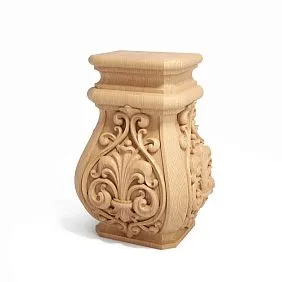
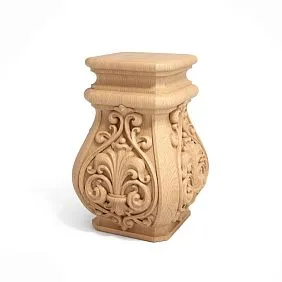
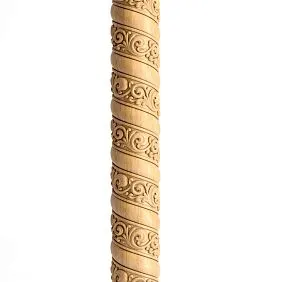
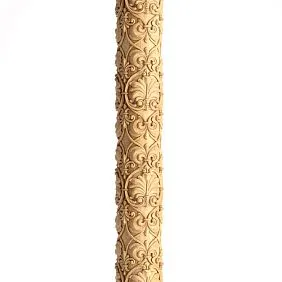
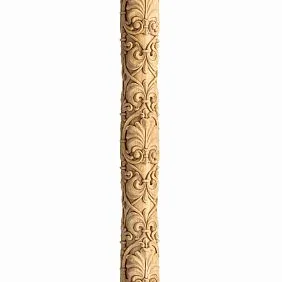
Types of architectural elements for stage
Stage architectural decoration is classified by function, size, stylistic features, and construction specifics. Understanding typology allows correctly selecting elements for a specific design concept.




Columns and pilasters: vertical dominants
Columns and pilasters are the main architectural elements of classical stage design. They create vertical accents, define the scale of space, and form the architectural structure.
Columns are round, volumetric vertical elements. A classical column consists of three parts: base (foundation), shaft (central cylindrical part), and capital (decorative carved element).Scene decoration elementsIn the form of columns, they create monumentality, solemnity, and classical beauty.
Columns differ by orders — systems of proportions and decorative design developed in ancient architecture:
Doric order — the oldest and most strict. A Doric column has no base, a shaft with vertical grooves (flutes), and a simple capital consisting of a round cushion (echinus) and a square slab (abacus). Doric creates a sense of strength, masculinity, and severe grandeur. It is used for decorating dramatic performances, formal concerts, and patriotic events.
Ionic order — more elegant. An Ionic column has a profiled base, a shaft with flutes, and a capital decorated with characteristic volutes (scrolls). Ionic creates a sense of harmony, elegance, and refinement. It is suitable for classical concerts, chamber plays, and social events.
Corinthian order — the most ornate. The Corinthian capital is richly carved with decorative elements: acanthus leaves, volutes, rosettes, creating a luxurious composition. Corinthian is associated with wealth, abundance, and festivity. It is ideal for operas, balls, gala concerts, and ceremonial events.
Composite order — a combination of Ionic and Corinthian, even more decorative. It is used to create the most luxurious impression.
Pilasters — flat vertical projections that replicate the proportions and decoration of columns, but are rectangular in cross-section rather than round. Pilasters are attached to walls or scenery, creating the illusion of columns without additional volume. On stage, pilasters are preferable to full columns when space is limited, weight-saving is required, or when flat scenery needs to be decorated.
Advantages of pilasters: lighter than columns, easier to install, occupy less space, and cheaper to manufacture. Visually, pilasters create a similar effect to columns in terms of architectural structuring of space.
Our factory also produces:


Moldings and cornices: horizontal elements
Moldings and cornices — horizontal profiled strips with decorative carving or relief. They frame space, create horizontal divisions, and complete vertical structures.
Cornices — projecting horizontal elements that crown walls, portals, and columns. A cornice visually completes a vertical structure, creating architectural closure. Carved cornices with modillions (decorative brackets), teeth, and ornaments add classical monumentality.
On stage, cornices are used to frame portals (stage space), crown decorative walls, and complete colonnades. A large cornice above a stage portal creates a solemn frame, drawing attention to the action area.
Moldings — narrower profiled strips. Moldings frame panels, create framed compositions, and divide planes into segments. Carved moldings with vegetal ornaments and geometric patterns enrich flat decoration, creating visual complexity.
Architraves — horizontal beams resting on columns or pilasters. The architrave is the lower part of the entablature (horizontal finish of a colonnade). The architrave creates visual connection between columns, uniting them into a structural and compositional system.
Get Consultation
Arcs and portals: space framing
Arcs and portals — curved or rectangular frames for openings, creating architectural accents and structuring space.
Arcs — curved coverings for openings. The shape of the arch determines the style: semicircular (Roman) — classic antiquity and Renaissance, pointed (Gothic) — medieval period and upward aspiration, horseshoe (Moorish) — Eastern exoticism, three-lobed (Byzantine) — Orthodox solemnity.
An arch on stage creates a portal framing the action space. A large carved arch with columns, pilasters, and decorative overlays becomes a visual dominant on stage.Decorations for concert stageWith an arch, they create a solemn, festive atmosphere.
Portals — rectangular frames. A portal is formed by vertical elements (columns, pilasters, moldings) and a horizontal finish (cornice, architrave). A stage portal is a classical element of theatrical architecture, framing the stage mirror (the space visible to the audience).
A carved portal with classical proportions, richly decorated capitals, and ornamented cornice creates the impression of an ancient temple, palace, or triumphal arch. This sets the audience's expectation for something significant, elevated, worthy of such framing.
Balustrades and railings: decorative barriers
Balustrades — decorative barriers consisting of balusters (turned or carved vertical posts) and railings. Balustrades are used to decorate balconies, staircases, and raised areas on stage.
Balusters — shaped posts supporting railings. A classical baluster has a turned form with alternating thickening and narrowing, creating a rhythmic silhouette. Carved balusters are decorated with ornaments, vegetal motifs, and geometric patterns.
A balustrade on stage creates an aristocratic atmosphere. A balcony with a carved balustrade is a classic setting for operas and dramatic performances (recall Juliet’s balcony). A staircase with a balustrade adds solemnity and visual luxury.
Handrails — the upper horizontal part of a railing. Carved handrails with ornaments and decorative appliqués complement balusters, creating a unified composition.
Consoles and brackets: decorative supports
Consoles and brackets — projecting elements, either real or decorative, supporting horizontal structures: cornices, balconies, shelves.
Consoles — large supporting elements, often adorned with carving. Console shapes may be S-shaped (volutes), leaf-shaped, zoomorphic (with depictions of lions, griffins). A carved console is a standalone decorative object, drawing attention.
On stage, consoles are used for visual support of balconies, bay windows, cornices. They create a sense of solidity and add architectural detail.
Brackets — smaller supporting elements. Carved brackets decorate cornices, creating rhythmic sequences (modillions). A cornice with modillions is a characteristic feature of classical architecture.
Pediments and tympanums: finishing elements
Pediment — a triangular or curved finish to a facade, portal, or wall. Tympanum — the field within the pediment, often decorated with relief, carving, or painting.
The pediment above a stage portal creates an architectural finish, monumentality, and classical rigor. A carved tympanum with heraldry, allegorical figures, and ornaments becomes the visual climax of the decoration.
The shape of the pediment determines the style: triangular — classicism, segmental (arched) — baroque, broken (with a break in the center) — baroque and mannerism, segmental (full circle arch) — classicism.
Materials for making stage decorations
The choice of material determines the visual qualities, weight, strength, durability, and cost of the decorations.Buy stage decorationCan be made from various materials, each with its own characteristics.
Solid natural wood: classicism and quality
Natural wood — a traditional and most valuable material for architectural decorations. Wood possesses unique qualities making it optimal for stage use.
Advantages of wood:
-
Visual expressiveness — natural texture, warmth of the material, elegance. Wood looks expensive, presentable, authentic under any lighting. Spotlights reveal the texture, creating a lively play of light on the wooden surface.
-
Carvability — wood is ideal for creating carved decoration. Fine artistic carving, complex ornaments, detailed capitals — all of this is achievable in wood.
-
Optimal weight — wood is strong but relatively light. A wooden column is stronger than plaster but lighter than stone. For stage constructions that are assembled and disassembled, weight is critical.
-
Strength and durability — properly made wooden decorations serve for decades. Theatrical decorations from the 19th century are still in use in historic theaters.
-
Repairability — damaged elements of wooden decoration are easily repaired: cracks are glued, chips are filled with putty, scratches are touched up.
-
Acoustic properties — wood does not resonate on most frequencies and does not create acoustic distortions. This is important for concert venues where acoustics are critical.
Wood species for stage decorations:
Spruce — a light coniferous species. Spruce is accessible, easy to work with, has a beautiful texture with contrasting annual rings. Used for frames, structural elements, large decorations where optimal strength-to-weight ratio is required.
Linden — a soft deciduous species, ideal for carving. Linden is uniform, without pronounced texture, easy to cut, allows creating delicate details. Linden is used to carve column capitals, decorative appliqués, ornaments, carved panels.
Beech — a hard, dense species. Beech is strong, well-suited for turning on lathes. Used for balusters, turned columns, elements subjected to load.
Oak — the strongest domestic species. Oak is heavy, hard, durable. Used for structural elements bearing load: column frames, beams, handrails. Oak’s expressive texture creates visual strength and solidity.
Birch — an accessible light-colored species. Birch is easy to work with, paint, and tone. Used for elements in the mid-price segment.
MDF: a technological alternative
MDF (fine wood particle) — pressed wood dust. MDF is a uniform material without knots, voids, or cracks.
Advantages of MDF:
-
Ideal machinability — uniform material allows creating intricate relief patterns on CNC machines with jewel-like precision. Any complexity of carved ornamentation is reproduced perfectly.
-
Geometric stability — MDF does not warp, crack, or change shape with variations in humidity and temperature. This is important for decorations used under varying conditions.
-
Ability to produce large formats — MDF panels are manufactured up to 3×2 meters. Large-format decorative panels are produced without seams.
-
Affordable cost — MDF is cheaper than solid wood, allowing budget optimization while maintaining visual quality.
-
Paintability — MDF accepts paint perfectly, creating an even coating of any color.
Limitations of MDF:
-
Lack of natural texture — MDF is uniform and lacks wood grain. For elements where wood texture is important, MDF is not suitable.
-
Susceptibility to moisture — when wet, MDF irreversibly swells. Requires protection with moisture-resistant coatings.
-
Greater weight compared to solid wood — MDF density is higher than most wood species.
MDF is optimal for large panels with milled relief, elements for painting, decorations where wood texture is not required.
Polyurethane: lightness and practicality
Polyurethane — a synthetic polymer from which decorative elements are cast. Polyurethane columns, moldings, and cornices imitate carved wood or stucco.
Advantages of polyurethane:
-
Minimal weight — polyurethane is several times lighter than wood. This is critical for large decorative elements.
-
Moisture resistance — polyurethane does not fear moisture, does not rot, and does not deform.
-
Ease of installation — lightweight polyurethane elements are attached with adhesive, requiring no heavy fasteners.
-
Affordable price — polyurethane products are cheaper than wooden ones.
Disadvantages of polyurethane:
-
Artificial appearance — polyurethane looks plastic, especially under professional lighting. The absence of natural texture is noticeable.
-
Brittleness — polyurethane easily breaks and crumbles under impact.
-
Limited repairability — a broken polyurethane element is difficult to repair properly.
Polyurethane is a budget solution for non-professional venues and temporary decorations. For professional stages where quality matters, wood is preferable.
Gypsum and fiberglass: specialized materials
Gypsum — a traditional material for theatrical stucco. Gypsum decorations are cast in molds, creating complex relief patterns. Gypsum is heavy and brittle, requiring careful handling. Used for stationary decorations, capitals, decorative appliqués.
Fiberglass — a composite material (glass fiber + polymer resin). Fiberglass is strong, lightweight, and moisture-resistant. Used for large structures requiring strength with minimal weight: columns, arches, sculptural elements.
Combined Solutions
Optimal approach — combination of materials, where each is used for its intended purpose.Scene decoration elementsOften created in combination: a lightweight wood frame (pine) provides strength, a veneer or MDF cladding creates a smooth surface, carved appliqués from solid wood (linden, oak) provide artistic expression. This optimizes weight and cost while preserving visual quality.
Stage decoration styles
The choice of stage decoration style is determined by the nature of the event, repertoire, production concept, and hall architecture.
Classicism: strictness and harmony
Neoclassicism is oriented toward classical models, values symmetry, proportionality, and noble restraint. Neoclassical stage decoration uses columns of proper orders, pediments, cornices with modillions, and symmetrical compositions.
Color palette is restrained: white, ochre, terracotta, noble gray. Carved decoration is minimalistic: meanders, ovals (egg-shaped elements), palmettes (stylized palm leaves), laurel wreaths.
Neoclassical decoration creates an atmosphere of rationality, harmony, and timeless values. Suitable for classical concerts, dramatic performances, ceremonial events, and formal occasions.
Baroque: opulence and dynamism
Baroque values luxury, abundance of decoration, dynamic forms, contrasts. Baroque decoration is rich with carved ornaments: acanthus leaves, grape clusters, putti (cherubic angels), cartouches (decorative shields), volutes.
Curved, dynamic forms. Twisted columns, broken cornices, oval openings create a sense of movement and theatricality. Abundant gilding, contrasting colors (gold on red, green, blue backgrounds) enhance the effect of luxury.
Baroque decoration creates a festive, solemn, emotionally rich atmosphere. Ideal for operas and ballet performances, gala concerts, and celebratory events.
Empire: Imperial Grandeur
Empire style combines the classical rigor of forms with luxurious decoration and military symbolism. Empire decoration uses massive columns, laurel wreaths, eagles, trophies, and military paraphernalia.
The color palette is grand: gold, red, blue, green, white. Carved decoration is strict and monumental: geometric ornaments, Egyptian motifs (sphinxes, lotuses), classical forms.
Empire decoration creates an atmosphere of triumph, power, imperial grandeur. Suitable for patriotic events, ceremonial occasions, historical performances.
Modern: elegance and natural forms
Modern design values smooth lines, stylized plant forms, asymmetry, refinement. Modernist decoration uses winding stems, stylized flowers, flowing forms, and avoids sharp angles.
Carved decoration is organic and naturalistic: irises, lilies, grapevines, dragonflies, peacocks. The color palette is refined: pastel tones, green, lavender, gold.
Modernist design creates an elegant, artistic, romantic atmosphere. Suitable for chamber concerts, literary evenings, and early 20th-century plays.
Contemporary minimalism: conciseness and purity of forms
Contemporary decoration values functionality, purity of lines, minimal decoration. Yet even a minimalist stage can use architectural elements — slender columns without capitals, simple geometric portals, strict horizontal divisions.
Natural materials: light wood, concrete, metal. Neutral colors: white, gray, natural wood. Accent points: one column, one architectural element as a visual focal point.
Minimalist decoration creates a restrained, conceptual atmosphere, focusing attention on content without distracting decoration. Suitable for modern drama, experimental productions, chamber concerts.
Manufacturing technologies for architectural decorations
Qualitydecorations for concert stageis determined by manufacturing technologies, precision of execution, and craftsmanship of artisans.
Manufacturing columns and pilasters
The column shaft is made from solid wood or constructed as a lightweight structure. A solid column is turned on a lathe from a timber block. To create fluting (vertical grooves), milling is used. A lightweight column is a timber frame covered with bent plywood or bent MDF. This reduces weight by 3-5 times while maintaining strength.
The capital is the most complex part, requiring artistic carving. The capital blank is assembled from several layers of wood to achieve the required thickness. Rough shaping of the form is done on a CNC milling machine using a 3D model. Final refinement, carving of fine details, and adding liveliness are done manually by a master carver.
The base is the lower part of the column. It is turned on a lathe or milled. The base profile corresponds to the chosen order.
A pilaster is simpler to manufacture than a column. The flat body is cut from MDF or assembled from boards. The capital and base are cut separately and then mounted onto the body. Pilasters are lighter and more technologically efficient than columns, making them a preferred choice for many stage projects.
Manufacturing moldings and cornices
Moldings and cornices are manufactured in two ways:
Four-sided milling — classic technology. The blank (timber or board) passes through the machine, whose knives form the profile on all four sides. For carved moldings, the profile is created in multiple passes using different milling cutters.
CNC milling — modern technology for complex reliefs. Moldings with ornament are milled on a CNC machine, layer by layer, creating a relief pattern. This allows creating unique ornaments of any complexity.
Long moldings (up to 6 meters) are manufactured from several segments, joined by end-to-end butt joints with a bevel (at a 45° angle) or straight joints with subsequent filling.
Manufacturing arches
An arch is made from bent plywood (plywood bent according to a template and glued in multiple layers) or assembled from radial segments (many trapezoidal elements forming a curve). Bent plywood arches are stronger and more aesthetically pleasing, while segmented arches are simpler to manufacture.
Carved decoration of the arch (archivolts — the frame of the arch, keystone — the central element) is cut separately and mounted onto the arch. Applied carved elements enrich the arch, transforming a simple structure into an architectural artwork.
Final finishing
Sanding removes tool marks and creates smoothness. Sequential processing with sandpaper P80 → P120 → P180 → P240 creates a perfectly smooth surface.
Priming — application of the first coating layer that seals pores and equalizes absorbency. Acrylic primer is the standard for theatrical decorations.
Painting — application of base color. For stone or marble imitation, multi-layer painting is used. For preserving wood texture, transparent toning compounds are applied.
Patination creates an aging effect. Dark patina (bituminous varnish, dark paint) is applied into relief recesses, simulating accumulated dirt and oxidation. After application, excess is wiped off, leaving patina only in recesses. This adds depth, volume, and elegance.
Gilding — the pinnacle of decorative finishing. Leaf (gold imitation) or sheet gold is applied over glue-mordant. Gilding creates luxury characteristic of classical styles. Used for column capitals, carved cornice ornaments, decorative appliqués.
Varnishing — final protective coating. Varnish protects paint from abrasion, moisture, and dirt, creating the desired gloss level (matte, satin, glossy). For theatrical decorations, fast-drying varnishes are used to speed up production.
Installation of stage decorations
Installation of architectural elements on stage requires understanding of construction, safety rules, and specifics of stage space.
Types of installation
Fixed installation — decorations are rigidly attached to stage structures (platforms, walls, trusses) for long-term use. Used for permanent stage design, repertory theaters, concert halls.
Removable installation — decorations are installed for the duration of an event and then dismantled. Used for touring productions, corporate events, temporary setups. Requires modular construction and thoughtfully designed mounting systems.
Mobile installation — decorations on wheeled platforms (trucks) that are rolled onto the stage and moved during performance. Used for quick scene changes and dynamic productions.
Methods of mounting
Mounting to stage floor — floor-level elements (columns, arches, walls) are mounted to the stage floor. Methods: heavy bases (heavy base ensures stability), floor bolts (decorations are bolted into special sockets in the floor), bracing (inclined supports extending from decoration to floor).
Mounting to trusses — upper elements (portals, arches, cornices with carved moldings) are suspended from trusses (horizontal pipes under latticework). Methods: ropes with slings, chain suspensions, rigid mounting to truss system.
Free-standing structures — decorations that stand independently due to their own stability. Used for lightweight elements with wide bases. Requires calculation of center of gravity and provision of stability margin.
Safety
Stage decorations must meet safety requirements. Main requirements:
Strength — decorations withstand expected loads with safety margin. Safety factor not less than 3–5 (actual strength 3–5 times higher than calculated load).
Stability — decorations do not tip over under accidental impacts (actor brushing against, drafts, music vibrations). Tall elements (columns, arches) are additionally secured with guy wires and fasteners.
Fire safety — all wooden elements are treated with fire-retardant compounds reducing flammability to class G1 (slightly flammable). Treatment is certified and documented with a passport. Decorations without certification are not permitted for use.
Safety of movement — actors must not be injured by sharp edges, protrusions, or rough surfaces. All edges are rounded, protruding elements are positioned outside actor movement zones.
Lighting of architectural decorations
Qualitystage decor buy— this is only half the success. The other half is proper lighting, revealing the beauty of the decor and creating the desired atmosphere.
Principles of lighting architectural decor
Side lighting — reveals relief of carving. Light falling at 30–60° angle from the side creates play of light and shadow on carved details, emphasizing volume and depth. Side lighting is the basis for lighting carved columns, cornices, capitals.
Contour lighting — creates silhouette. Light source is placed behind the decoration, creating a glowing outline. Effective for columns, arches, portals. Contour lighting creates graphic effect and drama.
Fill lighting — evenly illuminates the decoration. Used for general lighting when visibility without dramatic effects is needed. Soft diffused light for neutral scenes.
Accent lighting — highlights individual elements. Narrow beam from a spotlight is directed at a column capital, carved cartouche, central portal element. Accent lighting creates visual hierarchy and directs viewer attention.
Color of lighting
Colored lighting radically changes perception of decor. Warm light (yellow, orange, golden) creates coziness, solemnity, luxury. Cool light (blue, cyan, violet) creates detachment, drama, mystique. Green light creates anxiety, discomfort, fantasy. Red light — passion, aggression, anxiety.
White neutral light preserves the natural colors of decorations and does not distort materials. White light is the base for classical productions and concerts where authenticity is important.
Dynamic color changes in lighting create drama and develop the action. Transition from warm to cool light reflects changes in mood, time of day, and emotional state.
Modern technologies
LED projectors with adjustable color (RGB, RGBW) allow changing the lighting color programmatically, without changing filters. This opens up vast possibilities: the same decoration looks different under different lighting.
Light projections onto decorations create effects: projecting fire onto columns creates the illusion of fire, projecting clouds creates the impression of air movement, projecting patterns enriches the decoration.
Stage decoration maintenance
Scene decoration elementsrequires proper care to maintain appearance and functionality.
Operational maintenance
Dust cleaning — regular dry cleaning with soft cloth or vacuum cleaner with soft attachment. Carved elements are cleaned with soft brushes reaching into recesses.
Wet cleaning — if necessary, with slightly damp (not wet) cloth. Avoid excessive wetting, especially for unprocessed areas.
Inspection of fasteners — before each installation, check the strength of fasteners, absence of cracks or loosening. Timely detection of problems prevents emergency situations.
Repair of damage — scratches are touched up, chips are sanded and painted, detached elements are reattached. Timely minor repairs prevent damage from spreading.
Storage
Storage room — dry, ventilated, with temperature 15-25°C and humidity 40-60%. Avoid damp cellars or unheated warehouses. Moisture deforms wood, peels coatings, and causes mold.
Vertical storage — panels, boards, pilasters are stored vertically with support, not leaning against walls at an angle (this causes deformation). Shelving with vertical compartments is the optimal solution.
Horizontal storage — long elements (columns, beams, moldings) are stored horizontally on shelves with supports every 1-1.5 meters. Avoid hanging by one end (bending causes deformation).
Packaging — small carved elements are packed in boxes with soft padding (foam, bubble wrap). Each element is wrapped separately to prevent mutual damage.
Marking — each element is marked (name, project number, set affiliation). This simplifies decoration assembly and prevents confusion.
Economic Aspects
Project budgeting
Pricedecorations for concert stagedepends on many factors: scale (number and size of elements), materials (solid wood is more expensive than MDF, MDF is more expensive than polyurethane), carving complexity (hand-carved is more expensive than milled), finishing (gilding is more expensive than painting, painting is more expensive than single-color coating), urgency (urgent production requires an additional payment of 30-50%).
Typical budgets: minimal decoration (2-4 pilasters, portal, main moldings) — 150,000–300,000 rubles; medium decoration (colonnade, carved portal, cornices, balustrade) — 500,000–900,000 rubles; full decoration (many columns, carved arches, rich decoration) — 1,200,000–2,500,000 rubles and more.
Return on investment
Quality decorations are a long-term investment. Wooden decorations last 15–25 years with proper care. Over this period, they are used in hundreds of events. The cost is amortized across each event, becoming insignificant.
Quality decoration enhances venue status, allows ticket price increases, attracts more prestigious events. Investment in decoration pays off through increased revenue.
Savings on decorations result in ongoing problems: cheap decorations look cheap, spoil the impression, wear out quickly, require replacement. Investment in quality pays off through longevity, absence of problems, and professional results.
Frequently asked questions
How much do stage columns cost?
Cost depends on size, material, and complexity. An MDF pilaster 2.5 meters high with a simple capital — from 25,000–35,000 rubles. A solid wood pilaster with carved capital — from 45,000–65,000 rubles. A full-scale 3–4 meter high column with carved Corinthian capital — from 80,000–150,000 rubles. A set of 4–6 columns with capitals, bases, and entablature — 400,000–800,000 rubles.
What material is best for stage decorations?
For professional stages, solid wood is optimal: visual quality, durability, repairability. MDF is a rational choice for large panels and elements to be painted. Polyurethane is a budget solution for non-professional venues. Combination of materials optimizes the price-to-quality ratio.
How long does it take to make decorations?
Simple elements (pilasters, MDF moldings) — 3–4 weeks. Medium complexity (columns with carved capitals, portals) — 6–8 weeks. Complex with rich carving, hand finishing, gilding — 10–14 weeks. Orders should be placed 3–4 months before the event. Rush production is possible with an additional fee, but is limited by technological processes (drying and finishing require time).
Can I use the same decorations for different events?
Yes, universal classic elements (columns, pilasters, portals) can be used for different events. By changing lighting color, drapery, and additional elements, you create different atmospheres. A modular decoration system allows combining elements to create various compositions. This optimizes investment.
Is fire-retardant treatment required?
Yes, it is mandatory for all wooden decorations used in public places. Fire-retardant treatment reduces flammability to class G1, and the treatment is certified with a passport. Decorations without a fire safety certificate are not permitted for use. The treatment lasts 1-3 years, and re-treatment is required afterward.
How to transport large decorations?
Large elements (columns, arches) are transported in special packaging that prevents damage. Long elements are transported horizontally on platforms. Carved capitals and decorative inserts are packed in crates with soft padding. Professional decorative workshops provide packaging and delivery services.
Is it difficult to assemble decorations on stage?
Professionally manufactured decorations are designed with installation in mind. Elements are marked, and an installation diagram and instructions are provided. Simple decorations (pilasters, portals) can be installed by a team of 2-3 people in 3-4 hours. Complex ones (colonades, multi-element structures) require 6-10 hours. Manufacturers often provide installation services by their own specialists.
Can damaged decorations be repaired?
Wooden decorations are easily repairable. Cracks are glued, chips are filled with wood putty, loose elements are reattached, scratches and wear are touched up. Broken elements are replaced. Professional workshops offer decoration restoration services. Timely repairs extend the service life.
What styles of decoration are popular now?
Classic styles (classicism, baroque, empire) remain relevant for traditional theaters, concert halls, and formal events. Minimalist modern solutions are popular for experimental venues, corporate events, and fashion concerts. Eclecticism — mixing styles — is a recent trend, allowing the creation of unique, memorable solutions.
Do decorations affect the acoustics of the hall?
Yes, significantly. Rigid flat surfaces reflect sound, creating reverberation. Relief carved surfaces scatter sound, improving acoustics. Wood is acoustically favorable — it does not resonate on most frequencies, scatters waves, and creates a warm, natural sound. When designing decorations for concert halls, an acoustician must be involved to ensure decorations do not worsen the sound.
STAVROS: masters of architectural stage decorations
Creating High-Qualitystage decor buy— a task requiring a unique combination of competencies. It requires understanding of classical architecture, mastery of woodworking technologies, experience working on stage, artistic taste, and engineering skills. Few manufacturers possess all the necessary qualities.
The STAVROS company represents a rare phenomenon in the market — a manufacturer for whom creating architectural elements is not merely a business, but a deep professional calling based on years of experience, accumulated competencies, respect for classical traditions, and understanding of stage-specific applications.
Experience and competencies
STAVROS specializes in manufacturing high-quality solid wood items. The company createsScene decoration elementswhich become not just functional decorations, but works of applied art capable of lasting for decades.
STAVROS’s experience includes participation in large-scale museum-level projects. The reconstruction of the Alexandrovsky Palace — a project where quality requirements are maximal, where every detail is checked by expert restorers — demonstrated the company’s capabilities. Re-creating historical interiors of the 18th-19th centuries required deep understanding of the era’s styles, mastery of traditional woodworking techniques, and the ability to produce museum-quality items.
This experience is directly applicable to creating stage scenery. Columns, pilasters, and cornices for a theater stage require the same precision of proportions, the same quality of carving, and the same meticulousness of finishing as museum reconstructions. STAVROS possesses all the necessary competencies.
Production capabilities
STAVROS’s production base is equipped with state-of-the-art machinery. CNC milling centers with working areas up to 3×2 meters create relief elements of any complexity. Multi-axis machining centers perform 3D processing, unavailable to conventional machines. CNC lathes create ideal round parts — column shafts, balusters, turned elements.
But STAVROS’s greatest wealth is its masters. Carpenters with decades of experience, intuitively feeling wood. Carvers who master tools virtuosically, capable of creating the finest Corinthian capitals and the most complex cornice ornaments. Technologists who control quality at every stage. For all of them, work is not just a job, but an opportunity to create something meaningful.
Materials of the highest quality
STAVROS works with the best materials. Solid oak, beech, ash, lime — each species is selected according to the element’s purpose. Wood undergoes kiln drying to 8-10% moisture, ensuring stability. High-grade MDF is used for elements where precision milling and geometric stability are critical.
STAVROS does not economize on materials, understanding that attempting to save on raw materials results in defects, complaints, and reputation loss. The company purchases wood from trusted suppliers, controls quality upon arrival, and rejects defective material.
Artistic Finishing
Artistic finishing — STAVROS’s strongest side. The company’s masters master the entire arsenal of classical techniques for theatrical and interior finishing:
Marble painting — recreating the texture of natural marble varieties. Carrara, verde antico, porphyry, breccia — each type of marble has a characteristic vein pattern. STAVROS masters master painting techniques that create convincing imitations.
Patination — creating an effect of noble antiquity. Multi-colored patination (gold, silver, bronze patina) creates depth in tonal transitions, an illusion of centuries-old age and nobility.
Gilding — applying gold leaf or gold paint. Gilding of column capitals, carved cornice ornaments, decorative inserts creates the luxury characteristic of classical styles. STAVROS masters gilding techniques on poliment (traditional method, giving mirror-like gloss) and on mordant (simplified method, suitable for large areas).
Toning — imparting desired shade to wood while preserving its texture. Stains and pigmented oils allow light-colored wood to darken, imitate valuable species, and create the desired color while preserving the wood grain.
Understanding the specifics of the stage
Withstand multiple assembly/disassembly cycles — structures are designed as disassemblable, with thoughtfully engineered connections capable of cyclic loads.
Be of optimal weight — decorations must be strong but not excessively heavy. STAVROS uses lightweight constructions: frames made of light wood, veneer cladding, carved elements from linden.
Look good under stage lighting — decorations are designed with theatrical lighting in mind. Carved relief is made sufficiently deep to create expressive chiaroscuro under spotlights.
Comply with fire safety regulations — all wooden elements are treated with fire-retardant compounds, and a fire safety certificate is issued.
Comply with fire safety regulations — all wooden elements are treated with fire-retardant compounds, and a fire safety certificate is issued.
Full cycle of work
STAVROS offers the full cycle of work from concept to installation:
Design — if the client needs assistance during the development stage, STAVROS specialists will create a design concept, sketches, visualizations, and mockups. The company’s artists understand design history, grasp proportions, and sense scale.
Engineering — the engineering department creates technical documentation: drawings, detailing, strength calculations, assembly schematics. Transportation, disassemblability, and connection systems are carefully planned.
Production — manufacturing of all elements with quality control at every stage. Incoming material inspection, operational control of technological processes, final inspection of finished items.
Finishing — artistic finishing according to the selected concept. Priming, painting, mural painting, patination, gilding, varnishing — the entire range of services.
Packaging and delivery — professional packaging preventing damage during transport. Organization of delivery to any point in Russia and abroad.
Installation — if needed, STAVROS’s installation team will install the decorations on stage, train technical staff for operation, and hand over documentation.
Extensive product range
STAVROS’s extensive range includes everything needed for stage decoration:
Columns and pilasters — in various orders (Doric, Ionic, Corinthian, Composite), heights from 2 to 6 meters, with carved capitals and profiled bases. Available as full-scale volumetric columns or lightweight pilasters.in the company’s catalogclassic samples, tested over centuries for proportionality.
Cornices and moldings — decorative trim pieces with carved ornamentation, various profiles and sizes. From simple profiled to richly ornamented with modillions, teeth, and plant motifs. Length up to 6 meters without joints.
Arches and portals — ready-made solutions and custom manufacturing. Semi-circular, pointed, and horseshoe-shaped arches of various sizes. Portals with columns, pilasters, and carved entablatures.
Balustrades — sets of carved or turned balusters and handrails. Various heights, densities of baluster installation, and stylistic variations.
Consoles and brackets — decorative support elements of various sizes and shapes. From miniature consoles for small cornices to large brackets for supporting balconies.
Decorative appliqués — rosettes, ornaments, cartouches, carved panels for enriching flat surfaces. Hundreds of samples in various styles and sizes.
Carved panels — large-format elements with relief decoration for wall, portal, and decorative structure cladding.
Custom items — any elements according to the client’s sketches. STAVROS does not limit itself to the catalog — the company develops and produces unique elements for specific projects.
Flexibility and individual approach
STAVROS works equally comfortably with standard and custom solutions. Standard catalog items are available quickly at fixed prices — the optimal solution for typical tasks, limited budgets, and tight deadlines.
UniqueDecorations for concert stageCustom items are developed individually. STAVROS artists study the concept, create sketches, and coordinate details. Engineers design optimal technical solutions. Production manufactures elements according to all client preferences.
Such flexibility is rare on the market. Most manufacturers either work only with catalog items (not accepting custom orders) or only with custom projects (not offering ready-made solutions). STAVROS offers both options, allowing the client to choose the optimal path.
Pricing policy
STAVROS’s pricing policy is transparent and honest. The cost is calculated based on actual expenses: materials (solid wood is priced by volume and species), labor intensity (each operation has a standard time), processing complexity (hand carving is priced higher than machine carving), finishing (simple painting is cheaper than patination, patination is cheaper than gilding).
No hidden markups, vague wording, unexpected additional charges. The client receives a detailed estimate, understanding exactly what they are paying for. The estimate is fixed in the contract; changes are possible only upon modification of the technical specifications by mutual agreement.
STAVROS prices correspond to quality — we are not the cheapest manufacturer on the market. However, the price-to-quality ratio is optimal. You can find cheaper options, but they will be of lower quality: simpler materials, simplified processing, lack of artistic attention to detail. You can also find more expensive options, but the extra cost will not yield proportional quality improvement.
Investment in STAVROS decorations pays off through longevity (wooden decorations last 15–25 years), visual perfection (quality builds the reputation of the venue), and the absence of problems (no need for constant repairs, replacements, or finishing touches).
Work Geography
STAVROS’s geographical reach covers the entire Russian Federation. The company ships products to Vladivostok and Kaliningrad, Murmansk and Sochi, to major cities and regional centers. Experience in packaging fragile carved elements guarantees safe delivery by any mode of transport.
For large-scale projects, STAVROS specialists can be dispatched for installation, staff training, and supervision. The installation crew will install the decorations, adjust fixings, check stability, and train theater or concert venue technical staff on proper operation.
STAVROS works not only with Russian clients. Export geography includes countries of the near and far abroad. STAVROS products adorn theaters, concert halls, cultural centers in various countries. International experience confirms that STAVROS quality meets global standards.
Clients and Reputation
STAVROS’s reputation is based on real achievements. The company’s clients include state and private theaters, concert halls, cultural centers, event agencies, and design studios. STAVROS works can be seen on professional stages, in historical interiors, and in museum reconstructions.
Satisfied clients recommend STAVROS to colleagues. Word-of-mouth in the professional community is the best advertising. When a theater artist recommends a manufacturer to colleagues, it is the highest quality endorsement.
STAVROS values every client. A small order from a private theater-studio is executed with the same care as a large-scale project for a federal stage. Order size does not determine attitude — for STAVROS, every project is an opportunity to create something meaningful, to help realize an artistic vision.
Service and Support
STAVROS service is at a high level. Managers are competent, polite, and ready to advise on all matters: selection of elements, calculation of required quantities, stylistic matching, installation specifics, maintenance and operation.
Communication is prompt: phone, email, messengers. The client can always get information on the progress of work, ask questions, clarify details. Regular production reports and photos of intermediate stages — the client controls the process and is confident about meeting deadlines.
After completing a project, STAVROS does not disappear. Consultations on operation, recommendations for maintenance, assistance in resolving arising issues — the company remains in touch. If, years later, repairs, manufacturing of additional elements, or modifications to structures are needed — STAVROS will perform the work, preserving the original style and quality.
Warranties and liability
STAVROS provides a warranty on its products. The warranty period depends on the type of item and operating conditions, but is at least 12 months. The warranty covers defects in materials and manufacturing, discovered during normal operation.
But the main warranty is the company’s reputation. STAVROS has been working in the market for many years, earning a reputation as a reliable partner, quality manufacturer, and responsible executor. The company values its reputation, understanding that in the professional community, reputation is the primary asset, built over years, and can be lost in one unsuccessful project.
Therefore, STAVROS does not cut corners on quality, does not miss deadlines, does not compromise on product standards. Each project is executed so that the client remains satisfied, recommends STAVROS to colleagues, and returns for future projects.
Environmental and Social Responsibility
STAVROS recognizes responsibility toward society and nature. The company’s environmental policy includes:
Sustainable forestry — wood is purchased from suppliers operating within legal frameworks, not using illegal timber from valuable forests.
Safe materials — water-based paints, varnishes, adhesives, or with minimal volatile organic compounds. Safety for production staff and end users.
Waste minimization — optimized cutting, recycling of technological waste, using offcuts for small elements.
Energy efficiency — modern low-energy equipment, LED lighting in production areas.
Social responsibility is demonstrated through decent working conditions, fair pay, and opportunities for professional development for employees. STAVROS is not just a factory — it is a team of professionals who take pride in their work, develop professionally, and create value.
Innovation and Tradition
STAVROS combines respect for tradition with openness to innovation. Traditional wood carving craftsmanship, classical architectural orders proportions, time-tested wood processing technologies — this is the foundation upon which the company’s work is built.
But tradition does not mean rejecting development. STAVROS implements modern technologies: CNC equipment accelerates production and increases precision; 3D modeling allows visualizing projects before production begins; modern materials (adhesives, paints, varnishes) surpass traditional ones in properties.
The synthesis of tradition and innovation is STAVROS’s formula for success. The company creates items that look like classic pieces crafted by master artisans of old, yet possess characteristics unattainable in past eras: dimensional accuracy, geometric stability, durable finishes.
Conclusion: Your Stage Deserves the Best
A stage is not just a performance area. It is a temple of art, a space where the magic of transforming reality occurs, where artists and audiences together create a unique world. Stage design is not a secondary detail — it is a crucial element that defines the atmosphere, influences perception, and creates context for what unfolds.
Buy stage decorationQuality architectural decorations are an investment that pays off many times over. They serve for decades, work in hundreds of productions, build the reputation of the venue, create conditions for creativity, delight audiences. Saving on decorations leads to constant problems, disappointments, and the need for replacement. Investing in quality brings peace of mind, confidence, and professional results.
Quality architectural decorations are an investment that pays off many times over. They serve for decades, work in hundreds of productions, build the reputation of the venue, create conditions for creativity, delight audiences. Saving on decorations leads to constant problems, disappointments, and the need for replacement. Investing in quality brings peace of mind, confidence, and professional results.
Choosing STAVROS for creatingscene decoration elementsBy choosing STAVROS, you are selecting quality proven over time and prestigious projects. You are choosing a company for which creating decorations is not just a business, but a calling. A company where masters work, passionate about their craft, proud of their results, pouring their soul into every piece.
STAVROS is a synthesis of traditional craftsmanship and modern technologies. It is respect for classical architectural orders and readiness for innovative solutions. It is high-quality natural materials and artistic finishing worthy of museum exhibitions. It is experience working with the most demanding clients and attention to every client regardless of project scale.
Contact STAVROS — and your stage will attain the visual splendor it deserves. Consultants will help select optimal solutions, calculate costs, answer all questions. Artists will develop a decoration concept, taking into account the specifics of your venue, repertoire character, and budget constraints. Production will manufactureDecorations for concert stageon time and with quality guarantee.
STAVROS is not just a manufacturer, but a partner in creating a space for art. The company’s specialists are genuinely invested in the success of your productions, understand the importance of your work, and share responsibility for the outcome. For STAVROS, the success of your theater or concert venue is a professional source of pride, client satisfaction is the highest reward, and creating beauty is the meaning of existence.
VisitSTAVROS products catalog, featuring columns, pilasters, cornices, arches, and other architectural elements designed to make your stage a model of visual perfection. See samples of classical orders, evaluate carving quality, feel the nobility of natural wood.
Contact STAVROS today — and begin creating a stage space worthy of great art. A space where every performance will be framed by visual splendor. A space that audiences will remember, talk about, and return to.
STAVROS — masters of architectural decorations, creating spaces for art where classical beauty serves modern theater. Entrust us with creating decorations for your stage — and we will create visual design that surpasses expectations, becomes the pride of your venue, and serves art for decades.
Your stage deserves the best. STAVROS creates the best.
Contacts and consultations: visit the official STAVROS website, explore the fullproduct catalog, contact consultants to discuss your project. STAVROS is ready to bring to life the most ambitious stage design concepts, creating decorations that will become a visual legend of your venue!


