Article Contents:
- Types of Wall Decorative Elements
- Wall-mounted decorative elements
- Moldings and profiles
- Panels and Wall Murals
- Architectural elements
- Relief decoration
- Materials for Wall Decorations
- Polyurethane: Universality and Practicality
- Natural Wood: Nobility and Warmth
- MDF: Technological Alternative to Solid Wood
- Gypsum: Classic Molded Decoration
- Polystyrene and Foam Board: Budget Solutions
- Styles of Wall Decoration with Decorative Elements
- Classic historical styles
- Modern styles
- Application of Wall Decor in Different Rooms
- Living room: representative space
- Bedroom: private space
- Office: Work Space
- Dining Room: Space for Meals
- Entryway: First Impression
- Bathroom: Challenging Conditions
- Installation of Wall Decorative Elements
- Wall Preparation
- Adhesive mounting
- Mechanical Fastening
- Joint sealing
- Finishing
- Care for Wall Decor
- Frequently Asked Questions
- How Much Does Wall Decor Cost?
- Which is Better: Polyurethane or Wood?
- Can Decoration Be Installed by Yourself?
- How to choose a decoration style?
- Is Polyurethane Decor Suitable for Humid Areas?
- How to Combine Moldings of Different Widths?
- Is It Necessary to Paint Polyurethane Decor?
- How Long Does Wall Decor Last?
- Can Decor of Different Styles Be Combined?
- How to Care for Polyurethane Decor?
- STAVROS: Experts in Wall Decor
- Extensive Assortment
- Quality of Materials and Production
- Artistic Competence
- Affordable prices
- Ease of Ordering and Delivery
- Installation Support
- Warranties and Service
- Ecological responsibility
- Clients and Projects
- Individual approach
- Conclusion: Create Your Dream Interior with STAVROS

Walls occupy the largest area in an interior, and their decoration defines the character of the entire space. Ordinary painting or wallpaper creates a background but does not add volume, depth, or artistic expressiveness.Wall Decorative ElementsTransforming a flat surface into an architectural masterpiece, adding visual complexity, creating play of light and shadow, forming the individual character of the interior. The modern market offers a wide range of decorative solutions: from budget plastic panels to exclusive carved wooden structures, from minimalist moldings to luxurious stucco.
Wall decoration solves multiple tasks simultaneously. Aesthetically, it creates visual appeal, demonstrates the owner's taste, and establishes the style of the room. Functionally, decoration conceals wall defects, masks material joints, and protects vulnerable areas from damage. Psychologically, the presence of quality decor creates a sense of interior completion, coziness, and stability. Architectural elements on walls structure space, create visual accents, guide the gaze, and influence the perception of room proportions.
Polyurethane and wooden decorative elements occupy a special place among finishing materials. They combine artistic expressiveness with practicality, longevity with affordability, variety of designs with ease of installation. Understanding the capabilities of modern decorative materials allows creating interiors of any complexity and style.


Types of wall decorative elements
Wall decorative elements are classified by material, construction features, functional purpose, and style. Understanding the typology helps correctly choose solutions for specific design tasks.




Wall-mounted decorative elements
Wall coverings for purchaseAvailable in various types — these are three-dimensional elements mounted on the base wall surface, creating relief and decorative accents.
Decorative rosettes — round or multi-faceted elements with central symmetry. Rosettes are placed on walls as standalone accents or as part of compositions. Diameter varies from miniature 50–80 mm to large 300–500 mm. The pattern may be floral (floral motifs, leaves), geometric (stars, rosettes, spirals), or classical (antique ornaments).
Vertical wall coverings — elongated elements creating vertical accents. They visually increase the height of the room and structure the wall plane. Used for framing panels, creating vertical divisions, and imitating pilasters.
Horizontal wall coverings — extended elements creating horizontal divisions. Used to divide walls into tiers, create a classic three-part structure (panel-fill-frieze), and frame panels.
Corner elements — specialized wall coverings for decorating corners. Corner coverings visually soften the rectangular structure of the wall, create a framing effect, and add completeness to the composition.
Cartouches — decorative elements in the form of shields, scrolls, or frames. Cartouches are placed on walls as standalone ornaments or frame monograms, emblems, or text.
Our factory also produces:


Moldings and profiles
Moldings — profiled items designed for framing, creating framed compositions, and dividing planes.
Wall moldings — universal profiles for wall decoration. Used to create panels, frame wallpaper, divide color zones, and mask material joints. Moldings vary in width from narrow 20–30 mm to wide 150–200 mm.
Baseboards — moldings for decorating the junction between wall and floor. Floor baseboards not only cover the technological gap but also become decorative elements framing the room perimeter. Baseboard heights range from classic 70–100 mm to high 150–250 mm, popular in modern design.
Ceiling cornices — moldings for decorating the junction between wall and ceiling. Cornices visually complete the wall, create a soft transition to the ceiling, and may conceal lighting (hidden lighting behind the cornice).
Door and window casings — profiled frames for openings. Casing adds architectural expressiveness to the opening, conceals the installation joint, and creates visual harmony with the overall interior style.
Get Consultation
Panels and wall murals
Panels — large-format elements covering walls partially or fully.
Boiserie — classic wall panels covering the lower part of the wall (usually up to 1–1.5 meters). Boiserie creates a noble classical atmosphere, protects the wall in the most vulnerable zone, and visually structures the room. A classic boiserie construction includes panels with lattices framed by moldings.
3D panels — relief panels creating volumetric textures. The pattern may be geometric (waves, honeycombs, rhombuses, squares), floral (leaves, flowers), or abstract. 3D panels create visual dynamics, play of light and shadow, and a modern character of the interior.
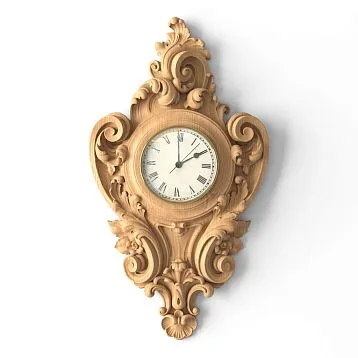
Carved panels — panels with artistic carving. Carving may be relief (projecting decoration) or pierced (openwork, through). Carved panels are the pinnacle of decorative art, creating luxury, individuality, and cultural value.
Decorative wall murals — large mounted compositions becoming the visual center of the wall. Murals may depict floral ornaments, geometric compositions, or narrative scenes.
Architectural elements
Three-dimensional architectural details creating a three-dimensional structure on the wall.
Pilasters — flat vertical protrusions imitating columns. A pilaster consists of a base, shaft, and capital. Pilasters create vertical divisions on the wall, a classical architectural structure, and monumentality.
Half-columns — columns protruding halfway from the wall. They create a more powerful volume than pilasters but occupy less space than full columns.
Brackets and consoles — projecting support elements. They may physically support shelves, cornices, or serve purely decorative purposes. Carved consoles with floral or zoomorphic motifs are a classic element of historical interiors.
Capitals — upper decorative parts of pilasters and half-columns. The capital determines the order (Doric, Ionic, Corinthian) and sets the style of decoration.
Relief Decoration
Stucco — three-dimensional decorative elements imitating hand-carved plasterwork.
Ceiling rosettes — round decorative elements framing chandeliers. Although rosettes are mounted to the ceiling, they visually connect with walls through cornices and overall composition.
Decorative mascarons — appliqués in the form of faces, masks, human or animal heads. Mascarons are mounted on walls as standalone accents or crown brackets, doorways.
Decorative garlands — elongated elements in the form of hanging flowers, fruits, ribbons. Garlands create baroque opulence, festivity, and dynamism.
Ornamental friezes — horizontal bands with repeating ornamentation. The frieze frames the room under the ceiling, creating a classical wall finish.
Materials for wall decorations
Material selection determines visual qualities, weight, strength, durability, cost, and installation complexity of decorative elements.
Polyurethane: universality and practicality
Polyurethane — a synthetic polymer from which decorative elements are manufactured by casting or extrusion. Polyurethane became a revolution in decoration, making classical stucco accessible to a wide audience.
Advantages of polyurethane:
Low weight — polyurethane is 5–7 times lighter than plaster, 10–15 times lighter than wood. This is critical for wall decor: lightweight elements are simply mounted with adhesive, do not exert load on walls, and are safe (they do not injure upon detachment).
Water resistance — polyurethane is completely unaffected by moisture, does not rot, does not deform, does not develop mold. This allows using polyurethane decor in bathrooms, kitchens, pools, saunas — places where wood and plaster are unsuitable.
Strength — polyurethane is elastic, does not break under impact, does not crumble, withstands mechanical loads. Polyurethane molding will survive dozens of accidental furniture impacts that would destroy plaster.
Geometric stability — polyurethane does not warp, crack, or change dimensions with temperature and humidity fluctuations. Mounted decor retains perfect geometry for decades.
Ease of installation — polyurethane elements are mounted using special adhesive, requiring no heavy fasteners, complex tools, or special skills. A homeowner can install polyurethane moldings over the weekend.
Paintability — polyurethane perfectly accepts any paints (acrylic, latex, alkyd), primers, decorative coatings. Any color can be created, wood, stone, metal can be imitated, patina or gilding can be applied.
Affordable cost — polyurethane elements are 3–5 times cheaper than wooden analogs, 2–3 times cheaper than plaster. This makes classical styling accessible within a limited budget.
Design variety — casting technology allows reproducing any shapes.Wall coverings for purchaseAvailable in hundreds of designs: from classic baroque ornaments to modern geometric forms.
Limitations of polyurethane:
Artificiality — polyurethane appears less natural than wood or plaster. An experienced eye can distinguish polymer from natural materials. However, modern manufacturing technologies and quality painting minimize this drawback.
Flammability — polyurethane burns, releasing toxic gases. Modified polyurethane with flame retardants (fire retardants) or fire-resistant coatings must be used.
Sensitivity to ultraviolet radiation — under direct sunlight, polyurethane yellows and loses strength. UV-resistant coatings must be applied or placement on sun-exposed walls must be avoided.
Natural wood: nobility and warmth
Wood — traditional and most valuable material for wall decoration. Wood possesses unique qualities making it unparalleled for creating elite interiors.
Advantages of wood:
Naturalness and eco-friendliness — wood is safe for health, does not emit harmful substances, creates a healthy microclimate. Natural wood breathes, regulates humidity, releases phytoncides.
Visual expressiveness — natural wood texture, material warmth, nobility create visual richness unattainable with synthetic materials. Each wooden item is unique due to its unique texture pattern.
Tactile pleasantness — wood feels warm to the touch, is pleasant to the touch. Touching a wooden surface brings positive emotions, creating psychological comfort.
Suitability for carving — wood is ideal for artistic carving. Fine detailing, complex ornaments, deep relief — all this is achievable in wood.Carved panels for wallsMade from natural wood — the pinnacle of decorative art.
Durability — properly manufactured and treated wooden decor serves for decades and centuries. Wooden panels in historical interiors have survived for centuries.
Repairability — damaged wooden elements are easily repaired: scratches are sanded, chips are filled with putty, cracks are glued, and the finish is renewed.
Prestige — natural wood is associated with quality, abundance, good taste. Wooden decor enhances the interior's status, demonstrating the owner's level.
Wood limitations:
High cost — wooden decor is 3-5 times more expensive than polyurethane. Cost is determined by material price, labor-intensive processing, and master qualifications.
Greater weight — wood is heavier than polyurethane, requires more reliable fasteners, and creates load on walls.
Sensitivity to humidity — wood reacts to humidity changes: swells when moistened, dries out when drying. Requires a stable microclimate or special treatment.
Installation complexity — wooden elements require precise fitting, professional installation, and reliable fasteners.
MDF: Technological alternative to solid wood
MDF (fine wood particle) — pressed wood dust. MDF is a homogeneous material combining some wood advantages with technological efficiency and accessibility.
Advantages of MDF:
Stability — MDF does not warp, crack, or lose its geometry when humidity and temperature change (within reasonable limits).
Homogeneity — absence of knots, voids, and inconsistencies allows creating ideal surfaces and precise milling.
Machinability — MDF mills perfectly on CNC machines, creating intricate reliefs with jewel-like precision.
Affordable cost — MDF is cheaper than solid wood but more expensive than polyurethane.
Paintability — MDF accepts paint perfectly, creating an even coating of any color.
Limitations of MDF:
Lack of natural texture — MDF is uniform and lacks wood grain. To imitate texture, painting or veneering is required.
Fear of moisture — when wet, MDF irreversibly swells. Not suitable for humid spaces without special protection.
Greater weight than polyurethane — MDF is heavier than polymer but lighter than solid wood.
Gypsum: Classic mold decor
Gypsum — traditional material for creating moldings. Gypsum elements are cast in molds or hand-molded.
Advantages of gypsum:
Naturalness — gypsum is eco-friendly, safe, breathable, and regulates humidity.
Ability to create any shapes — gypsum molding reproduces delicate details and complex forms.
Prestige — gypsum molding is associated with classic palace interiors, creating a sense of luxury.
Gypsum limitations:
Heavy weight — gypsum is heavy, requires strong fasteners, and creates load on walls.
Brittleness — gypsum easily breaks, crumbles, and cracks under impact.
Installation complexity — gypsum elements require professional installation and careful sealing of joints.
Fear of moisture — gypsum absorbs moisture, softens, and develops mold. Not suitable for humid spaces.
High cost — gypsum molding is more expensive than polyurethane, comparable in price to wooden decor.
Polystyrene and foam plastic: Budget solutions
Foamed polymers — the cheapest materials for decor. Lightweight, easy to install, affordable, but with significant drawbacks.
Advantages:
Minimum cost — 5-10 times cheaper than polyurethane.
Lightweight — minimal weight simplifies installation.
Easy to process — cuts with a regular knife.
Disadvantages:
Brittleness — easily breaks, crumbles, bends.
Cheap appearance — looks obviously plastic, spoils the interior.
Short service life — yellows, deforms, breaks down within 5-7 years.
Flammability — releases highly toxic gases when burning.
Foam decor — a compromise solution for temporary housing, temporary interiors, limited budgets. For permanent, high-quality interiors, choose polyurethane or wood.
Wall decoration styles
Decor style selection is determined by the overall interior concept, architectural features of the room, and the owner's personal preferences.
Classical historical styles
Classicism — symmetry, proportionality, noble restraint. Classical decoration uses strict moldings, pilasters with proper proportions, rosettes with geometric ornaments.Wall Decorative Elementsare arranged symmetrically, creating an orderly structure.
Walls are divided into panel (lower part, usually 1/3 of height), filling (middle part), and frieze (upper part under the cornice). Each part is framed by moldings. The color palette is restrained: white, cream, light gray, soft blue, pastel green.
Baroque — opulence, dynamism, abundance of decoration. Baroque decoration is rich with applied plant ornaments, cartouches, garlands, and masks. Forms are curved and dynamic. Gold leaf and contrasting colors (gold on dark red, emerald, blue) create luxury.
Walls are covered with paneling featuring carved openings, framed by wide cornices with modular elements, decorated with large rosettes and consoles. Baroque decor creates a festive, theatrical, excessive atmosphere — suitable for grand rooms, living rooms, dining rooms.
Rococo — lightness, elegance, playfulness. Rococo decor uses asymmetrical forms, shells, scrolls, delicate plant ornaments. The color palette is pastel: soft pink, blue, pistachio, pearl gray. Gold leaf is delicate and non-dominant.
Rococo creates a boudoir, intimate atmosphere — suitable for bedrooms, ladies' rooms, small living rooms. Decor is elegant but not overloaded, creating a sense of lightness.
Empire — imperial grandeur, monumentality, military symbolism. Empire decor uses massive moldings, pilasters with gilded capitals, friezes with ornaments (laurel wreaths, torches, trophies). The color palette is grand: gold on white, red, blue, green.
Empire creates an atmosphere of triumph and power — suitable for offices, libraries, grand reception rooms. Requires spacious rooms with high ceilings — looks inappropriate in small rooms.
Modern — smooth lines, stylized plant forms, asymmetry. Modern decor uses climbing stems, stylized irises, lilies, dragonflies, flowing forms.Wall coverings for purchaseIn the modern style, you can use characteristic smooth contours and avoid sharp angles.
The color palette is refined: lilac, green, gold, pearl. Modern creates a refined, artistic atmosphere — suitable for creative personalities, art lovers.
Modern Styles
Minimalism — extreme simplicity, functionality, purity of lines. Minimalist decor uses simple moldings without ornamentation, geometric appliqués, strict profiles. Colors are neutral: white, gray, black, natural wood.
Decor is minimal; each element is functional or creates a deliberate accent. Excessiveness and overloading are not allowed. Minimalism suits small spaces, modern apartments, where visual lightness is important.
Scandinavian style — lightness, naturalness, coziness. Scandinavian decor uses light wood (pine, birch), white color, simple forms. Moldings are minimalist, without unnecessary details. Panels are often painted white or light gray.
Scandinavian style creates a calm, light atmosphere — ideal for northern regions with limited light, small spaces, families with children.
Loft — industrial aesthetics, combination of rough and refined elements. Loft seems incompatible with classical decor, but thoughtful use creates an interesting contrast. White polyurethane moldings against brick walls, carved wooden panels next to concrete surfaces — contrast of textures enriches the loft.
Decor in loft is measured, point-like, creating accents but not dominating. Colors: white, gray, natural wood, black.
Neoclassicism — modern interpretation of classical forms. Neoclassical decor uses traditional elements (moldings, pilasters, rosettes), but in simplified, lightened forms, with a modern color palette. Proportions are classical, but scale is smaller, detailing is simpler.
Neoclassicism combines the elegance of classicism with modern functionality — ideal for city apartments, where one desires classical nobility without palace opulence.
Eclecticism — a mixture of styles, epochs, cultures. An eclectic interior allows combining baroque rosettes with minimalist moldings, wooden panels with modern 3D elements. The key is a sense of proportion, unifying idea, color and scale harmony.
Eclecticism requires refined taste, but with the right approach, it creates a unique, multi-layered, individual interior.
Wall decor application in different rooms
Living room: representative space
The living room is the main room of the house where guests are received and family evenings are held. The decor of the living room creates the first impression of the house, demonstrating the owners' taste.
Accent wall — highlighting one wall with decorative elements. Usually, the wall behind the sofa or opposite the entrance is accentuated. Methods: panels with carving or relief, molding composition creating frames, large appliqués, 3D panels.
TV wall framing — a TV mounted on the wall can be framed with moldings, creating the effect of a painting or portal. This integrates modern technology into a classic interior.
Boiserie — classical panels on the lower part of walls create a noble atmosphere. Boiserie is especially suitable for spacious living rooms with high ceilings.
Ceiling cornice and rosette — a cornice frames the room along the perimeter, and a rosette under the chandelier creates a visual center. A wide cornice with hidden lighting creates the effect of a floating ceiling.
Bedroom: private space
The bedroom requires a calm, cozy atmosphere. The decor should promote relaxation and not be excessive.
Wall behind the headboard — the main accent of the bedroom. Options: panel with soft upholstery framed by moldings, carved wooden panel, molding composition creating a frame around the headboard.
Symmetrical framing — symmetry calms and creates harmony. Symmetrically placed pilasters, appliqués, moldings on both sides of the bed and bedside tables create order.
Subdued colors — pastel tones are appropriate in the bedroom: white, cream, soft blue, dusty rose, lavender, gray-green. Avoid bright, stimulating colors.
Office: Work Space
The office requires an atmosphere conducive to concentration, but also one that conveys solidity and respectability.
Boiserie from dark wood — a classic solution for the office. Panels made of oak or walnut, painted in dark tones, create a sense of solidity and seriousness.
Pilasters and moldings — vertical pilasters structure walls, creating architectural rigidity. Moldings frame bookshelves, diplomas, maps.
Symmetry and order — the office tends toward symmetrical compositions, orderly arrangement of elements, strict forms.
Dining room: space for meals
Dining room — a space for family meals and entertaining guests. Decor creates a festive yet cozy atmosphere.
Classic decor — the dining room is traditionally decorated in a classic style: boiserie, cornices, ceiling rosette, symmetrical arrangement of elements.
Vertical accents — pilasters at corners or in the middle of walls visually increase height, creating monumentality.
Decor of the buffet zone — if there is a buffet or sideboard in the dining room, the area around it is accentuated: moldings, appliqués, consoles.
Entryway: first impression
Foyer — the first room seen by visitors. Decor creates an impression of the house from the threshold.
Doorway framing — door casings, appliqués around the door, consoles above the door create a grand entrance.
Mirror in a frame — a mirror is functionally necessary; framing it with moldings or carved frame turns it into a decorative element.
Boiserie — panels protect the lower part of walls from dirt, moisture, and mechanical damage, while simultaneously creating decor.
Bathroom: challenging conditions
The bathroom is a space with high humidity and temperature fluctuations. Moisture-resistant materials are required.
Polyurethane decor — ideal for bathrooms due to absolute moisture resistance. Moldings, appliqués, cornices made of polyurethane will withstand any humidity.
Mirror framing — frame made of polyurethane moldings or carved wooden frame (coated with moisture-resistant lacquer) around the mirror.
Wall decor — panels, moldings, and overlays are combined with tiles to create interesting compositions.
Decor protection — wooden elements require multi-layer waterproof varnish. Polyurethane can be painted with waterproof paints.
Installation of wall decorative elements
Installationof carved panels to the walland other elements require understanding of technologies, care, and proper materials.
Wall Preparation
Leveling — walls must be flat. Irregularities create gaps between decor and walls, distorting geometry. Permissible deviations no more than 2-3 mm per meter.
Cleaning — surface must be clean, dry, and degreased. Dust, dirt, and grease stains reduce adhesive bond strength.
Priming — priming improves adhesion and strengthens surface. Priming is mandatory for porous walls (gypsum board, plaster).
Marking — precise marking is performed before installation: horizontal lines (using level or laser level), verticals (using plumb bob or level), and positions of elements. Accurate marking ensures even installation.
Adhesive mounting
Main method for polyurethane and lightweight wooden elements.
Adhesive — for polyurethane, special polymer adhesives (liquid nails, polyurethane or MS polymer-based construction adhesive) are used. For wood — carpentry PVA, polyurethane, or epoxy adhesive.
Application — adhesive is applied to the back of the element in dots, lines, or as a full layer (depending on element size). For moldings — wavy line along the length. For overlays — dots around perimeter and center. For panels — comb-shaped trowel creates even layer.
Pressing — element is pressed against wall, position is adjusted, and pressed firmly. Fixation time (until adhesive sets) 5–15 minutes — must be able to adjust alignment.
Fixation — large heavy elements are additionally secured with painter’s tape or supports until adhesive dries.
Excess removal — excess adhesive is immediately wiped off with a damp cloth or cut off with a knife after drying.
Mechanical fastening
For heavy wooden elements, MDF panels.
Self-tapping screws — screwed in from the front side into recess (flushed), holes are covered with wooden plugs (stoppers) or spackled.
Backside mounting — panels are mounted with self-tapping screws from the back to the frame or with hidden fasteners (clamps).
Combined — adhesive + mechanical fastening provide maximum reliability for large elements.
Joint sealing
Joints between elements are filled to create a unified surface.
Acrylic sealant — elastic, paintable, matched to element color. Applied from caulking gun into gap, smoothed with wet finger or trowel.
Spackling — wood putty (for wooden elements) or acrylic (for polyurethane) is applied with trowel, then sanded after drying.
Corner trimming — moldings in corners are cut at 45° (beveled) with a circular saw or chisel. Precise trimming ensures neat joints.
Final finishing
Painting — polyurethane elements are usually painted. Process: priming (improves paint adhesion), 2–3 coats of acrylic or latex paint. Wooden elements are painted, stained, or varnished.
Patina — for creating an aged effect. Dark patina (bitumen varnish, dark paint) is applied into recesses, excess is wiped off, leaving patina only in relief.
Gilding — for creating luxury. Leaf or gold leaf is applied over adhesive mordant. Gilding is used for accent elements: capitals, rosettes, ornaments.
Care for wall decor
Proper care extends the life of elements and preserves their appearance.
Regular cleaning — dust is removed with soft dry cloth or vacuum cleaner with soft attachment. Deep recesses are cleaned with soft brush.
Wet cleaning — with a slightly damp (not wet) cloth if necessary. Polyurethane withstands moisture, wood requires caution — avoid excessive wetting.
Coating renewal — lacquered wooden elements are relacquered periodically (every 5-7 years). Colored polyurethane elements are repainted when appearance is lost.
Repair of damage — chips on polyurethane are filled with acrylic putty, on wood — with wood putty. After sanding, they are touched up. Cracks on wood are glued.
Moisture protection — in bathrooms and kitchens, regularly check the condition of the coating, and renew it if damaged.
Frequently asked questions
How much does wall decor cost?
Cost varies widely. Polyurethane moldings — from 200-500 rubles per meter (simple) to 1000-2000 rubles (complex profiles). Polyurethane appliqués — from 300-800 rubles per piece (simple outlets) to 2000-5000 rubles (large compositions). Wooden moldings — from 800-1500 rubles per meter. Carved wooden panels — from 8000-15000 rubles per square meter. MDF panels with milling — from 3000-6000 rubles per square meter.
Which is better: polyurethane or wood?
It depends on the task and budget. Polyurethane is optimal for: limited budget, humid rooms (bathroom, kitchen), DIY installation, large volumes of decor. Wood is preferable for: prestigious interiors, where naturalness is important, elements with natural texture (unpainted), luxury objects. Combination of materials optimizes the price/quality ratio.
Can decor be installed by oneself?
Simple elements (moldings, appliqués) made of polyurethane can be installed by a homeowner. Required: marking, adhesive, level, miter saw for cutting angles, sealant for joints. Complex elements (panels, large compositions), wooden decor, installation on uneven walls is better entrusted to professionals.
How to choose a decoration style?
Base your choice on the overall interior style. Classic interiors require traditional elements (classicism, baroque). Modern interiors — minimalist forms (minimalism, neoclassicism). Consider room size: high ceilings allow large decor, low ceilings require restraint. Base your choice on personal preferences — decor should please you and create comfort.
Is polyurethane decor suitable for humid rooms?
Yes, polyurethane is ideal for bathrooms, kitchens, and pools due to its absolute moisture resistance. It does not rot, does not deform, does not develop mold. The main thing — quality installation, sealing joints, moisture-resistant paint.
How to combine moldings of different widths?
Wide moldings (100-150 mm) are used for main framing: panels, accent frames. Medium (50-80 mm) — for auxiliary framing. Narrow (20-40 mm) — for small frames, detailing. Rule: more significant elements are framed with wider moldings.
Is it necessary to paint polyurethane decor?
It depends on aesthetic preferences. White polyurethane can be left as is — it looks like classic white molding. Painting allows: choosing any color, imitating wood, stone, metal, patina, gilding, creating individuality.
How long does wall decor last?
Polyurethane — 15-25 years with proper care. Wooden — 30-50 years and more (historical examples — centuries). MDF — 15-20 years. Gypsum — 30-50 years. Longevity depends on material quality, installation, usage conditions, and care.
Can you combine decor of different styles?
In eclectic interiors — yes, but requires a sense of measure and a unifying idea. Rules: maintain scale (elements should be proportionate), coordinate color (overall color palette unifies different elements), avoid overloading (better to have less, but harmonious). In strictly styled interiors (classicism, minimalism), mixing styles is inappropriate.
How to care for polyurethane decor?
Minimal care: regular dry dusting, periodic wet cleaning. Polyurethane is low-maintenance and does not require special products. If the coating is damaged — repaint. If chips occur — fill with acrylic putty and touch up.
STAVROS: experts in wall decor
Creating High-Qualitywall decor buy— a task requiring understanding of materials, technologies, styles, and architectural harmony. The market is full of offers from mass producers offering standard products. But to create an individual, high-quality, long-lasting interior, you need a partner combining production capabilities with artistic understanding, technological precision with respect for traditions.
The STAVROS company represents a unique phenomenon in the market of decorative materials — a manufacturer for whom creating beauty is not just a business, but a calling, based on long experience, deep competencies, love for materials and craftsmanship.
Extensive assortment
STAVROS offers a full range of solutions for wall decoration:
Polyurethane appliqués — hundreds of designs in various styles, sizes, and complexity. From miniature outlets with a 50 mm diameter to large compositions. Classic ornaments (baroque, rococo, classicism, empire), modern geometric shapes, ethnic motifs.Polyurethane appliqués catalogincludes vertical and horizontal elements, corner appliqués, cartouches, decorative compositions.
Moldings and profiles — polyurethane trim items of all profiles and sizes. Wall moldings (from narrow 20 mm to wide 200 mm), baseboards and ceiling moldings, cornices, door casings, corner elements, flexible moldings for curved surfaces.
Carved wooden elements — exclusive decor made from solid wood. Carved appliqués, panels, pilasters, consoles, handcrafted rosettes. Made from oak, beech, ash, walnut, linden — species selected based on the element's purpose.
MDF panels — large-format elements with routed relief. 3D panels with geometric and floral patterns, panels with classic ornaments, bouillons, custom solutions.
Architectural elements — columns, pilasters, capitals, brackets, consoles made of polyurethane and wood. Elements of all classical orders, modern interpretations.
Custom manufacturing — any elements according to the client’s or designer’s sketches. STAVROS does not limit itself to catalogs — the company develops unique solutions for specific projects.
Quality of materials and manufacturing
STAVROS works with premium materials. Polyurethane is produced from primary raw materials from European suppliers, ensuring density, strength, and durability. Cheap polyurethane from recycled materials is lighter, more brittle, and yellows faster — STAVROS does not use compromise materials.
Wood undergoes kiln drying to 8-10% moisture content, guaranteeing stability. High-grade MDF without formaldehyde, safe for health.
Production is equipped with modern equipment. CNC routers create relief elements with jewel-like precision. Polyurethane molds are manufactured with the highest detail, ensuring clarity of the finest elements.
Multi-level quality control: incoming material inspection, operational control of technological processes, final inspection of finished products. Each item is checked for dimensional accuracy, absence of defects, and surface quality.
Artistic expertise
STAVROS — not just a manufacturer, but a team that understands architecture, styles, proportions, harmony. The company’s specialists will help:
Choose a style — analyzing the interior, they will recommend a decor style matching the overall concept.
Calculate proportions — they will select element sizes appropriate to the room’s scale. Large decor in a small room will overwhelm, while small decor in a large room will disappear.
Create a composition — they will develop the arrangement of elements, creating a harmonious composition, visual accents, architectural structure.
Select combinations — they will propose combinations of moldings, appliqués, panels, creating cohesion and stylistic unity.
STAVROS’s artistic consultations are free for clients — the company is interested in successful results, beautiful interiors, and satisfied customers.
Affordable prices
STAVROS’s pricing policy is honest and transparent. Cost is determined by real expenses: materials, production, logistics. No hidden markups, unexpected additional charges.
STAVROS’s polyurethane products cost comparably to mass producers, but quality is superior: dense polyurethane from primary raw materials, clear detailing, quality surface finishing, precise dimensions.
STAVROS’s wooden products are more expensive than polyurethane ones, but cheaper than specialized carvers, thanks to technologically advanced production, optimized processes, and absence of middleman markups.
STAVROS regularly runs promotions, offers discounts on bulk orders, and loyal clients. Follow offers on the website.
Simple ordering and delivery
OrderWall coverings for purchaseat STAVROS it’s simple:
-
Selecting elements — in the catalog on the website, by photo, or with manager consultation.
-
Calculating quantity — managers will help calculate the required number of elements, accounting for trimming allowance.
-
Ordering — via the website, by phone, email. Contract is signed, invoice is issued.
-
Production — standard elements are shipped from the warehouse within 1-3 days. Custom items are manufactured to order within agreed timelines.
-
Delivery — within Moscow and its region by own transport. Across Russia via transport companies. Packaging ensures preservation.
STAVROS delivers across Russia. Client geography — from Kaliningrad to Vladivostok. Packaging and logistics experience guarantee that elements arrive intact and undamaged.
Installation support
STAVROS does not abandon clients after sales. The company provides:
Installation instructions — detailed guides with photos, diagrams, adhesive recommendations, tools, and operation sequence.
Installation consultations — managers and technicians answer questions and help resolve arising issues.
Expert recommendations — for those not ready to install themselves, STAVROS recommends proven installers in various regions.
Installation services — for Moscow and its region, STAVROS provides professional installation by its own crews or partners.
Warranties and Service
STAVROS guarantees product quality. Warranty period for polyurethane items — 12 months, for wooden items — 12–24 months depending on type. Warranty covers material and manufacturing defects.
But the main guarantee is reputation. STAVROS has been operating in the market for many years, accumulating thousands of satisfied clients. The company values its reputation, understanding that in the professional community, reputation is the primary asset built over years of quality work.
STAVROS does not disappear after sales. Years later, if additional elements are needed (to expand decoration, replace damaged ones), the company will manufacture identical elements, preserving style and quality.
Ecological responsibility
STAVROS understands responsibility toward nature. Environmental policy includes:
Safe materials — polyurethane without toxic additives, wood from legal sources, water-based or low-VOC adhesives and paints.
Waste minimization — production optimization, recycling of technological waste.
Energy efficiency — modern low-energy consumption equipment, LED production lighting.
By purchasing decor from STAVROS, you make not only an aesthetic but also an environmentally responsible choice.
Clients and Projects
STAVROS clients — private individuals, interior designers, construction companies, developers. The company’s products decorate private apartments and homes, restaurants and hotels, offices and public spaces throughout Russia.
STAVROS participates in projects of various scales: from decorating a single room to comprehensive decoration of suburban residences. Experience working with prestigious projects (reconstruction of the Alexandrovsky Palace) confirms that STAVROS handles tasks of any complexity.
STAVROS portfolio — hundreds of successful projects, satisfied clients, beautiful interiors. Photos of works on the website demonstrate capabilities and inspire your own projects.
Individual Approach
For STAVROS, every client is important. A small order for an urban apartment is executed with the same care as a large-scale project for a suburban house. STAVROS managers are attentive, patient, ready to explain, assist, and support.
STAVROS understands that renovation is stressful for most people. The company strives to make interaction as comfortable as possible: prompt responses, clear explanations, keeping promises, readiness to resolve issues.
Conclusion: Create your dream interior with STAVROS
Walls are the canvas on which your home’s interior is created. Ordinary paint creates a background, but does not make the interior unique, expressive, or individual.Wall Decorative ElementsThey transform walls into architectural masterpieces, adding volume, depth, artistic value, creating the visual complexity and beauty that distinguish a thoughtfully designed interior from a random collection of furniture and finishes.
Choosing decor is choosing between mass-produced and individual, cheap and quality, temporary and long-lasting. You can buy cheap polystyrene decor that will crumble within five years. You can choose high-quality polyurethane from STAVROS, which will serve for decades, preserving beauty and functionality. You can settle for standard elements from a construction hypermarket. Or you can create a unique composition with STAVROS specialists who understand proportions, styles, and harmony.
STAVROS is a partner in creating your dream interior. The company offers not just products, but a comprehensive solution: the widest range of ready-made elements, the possibility of custom manufacturing, artistic consultations, material and production quality, affordable prices, convenient logistics, installation support, warranties, and service.
Contact STAVROS today — and begin transforming your interior. Visitcatalog of decorative inlayswhere hundreds of designs are available for any stylistic direction — from classic baroque to modern minimalism, from luxurious empire to Scandinavian simplicity.
Each item in the catalog is accompanied by detailed photos, technical specifications, size indications, and price. You will see howdecorative insertlooks from different angles, evaluate the relief detail, imagine how it will fit into your interior. A convenient filter system allows selecting elements by style, size, price range, and ornament type.
Not sure where to start? Call STAVROS consultants — they will ask a few clarifying questions about your space, stylistic preferences, budget, and then suggest optimal options. Consultation is free, no obligations — only useful information to help you make the right decision.
Want to see samples in person? Visit the STAVROS showroom in Moscow, where ready-made exhibitions with various wall decoration options are displayed. You can touch the material, assess the surface quality, feel the weight of elements, and see howpolyurethane panelsthey look on real walls under different lighting.
Live in another city? No problem. STAVROS ships orders across all of Russia. Careful packaging ensures each element arrives intact. Delivery times are transparent, and tracking is in real time. You always know where your order is.
Ordering is simple: select items on the website, add to cart, place order via the form or call a manager. Payment is convenient — bank transfer, credit card, cash on delivery (for Moscow and surrounding area). No hidden fees — the price on the site is final, inclusive of everything.
STAVROS is not just a store for decorative materials. It’s a team of like-minded people for whom creating beautiful interiors is not just a job — it’s a passion. Every STAVROS employee genuinely loves what they do, takes pride in the company’s products, and celebrates clients’ successful projects.
When you buyWall Decorative Elementsat STAVROS, you’re not just buying a product. You’re acquiring years of accumulated expertise. You’re getting quality proven by thousands of completed projects. You’re gaining confidence that the result will exceed expectations — that ten years from now, your decor will still look as beautiful as the day it was installed.
Your walls are an opportunity. An opportunity to express your individuality, create an atmosphere that inspires, delights, and soothes. An opportunity to transform an ordinary home into a space that reflects your personality, your values, your understanding of beauty.
Don’t postpone transformation. Every day spent in a beautiful, harmonious interior is a day filled with positive emotions, comfort, and aesthetic pleasure. Start creating your dream interior today.
Visit the STAVROS website, explorePolyurethane appliqués catalog, choose the elements you like, place your order. In a few days, you’ll start installation. A few more days later, your walls will transform, gaining depth, dimension, and expressiveness. And you’ll enjoy the result for many years.
STAVROS — masters of wall decoration, creating beauty that becomes part of your life. Entrust us with your wall design — and we’ll create visual perfection that will delight you every day, impress your guests, and increase the value of your home.
Wall decorations from STAVROS — an investment in beauty, comfort, and quality of life. An investment that pays off every day you spend in a space created with love, taste, and professionalism.
Start today. Transform your space. Create an interior worthy of you.