Article Contents:
- Types of Decorative Elements for the Room
- Wall Decor: The Art of Vertical Surfaces
- Ceiling Decor: The Fifth Wall
- Furniture Decor: Details Matter
- Architectural Elements: Space Structure
- Decorative Items: Finishing Touches
- Styles of Room Decoration with Carved Decor
- Classic Styles: Heritage of Centuries
- Ethnic and regional styles
- Modern styles
- Decorating Different Types of Rooms
- Living Room: Formal Space
- Bedroom: Intimate Space
- Office: Work Space
- Children's Room: Space for Growth
- Dining Room: Space for Meals
- Materials and Manufacturing Technologies
- Wood Species for Carved Decor
- Manufacturing Technologies
- Finishing and Coating
- Installation of Decorative Elements
- Mounting Wall Elements
- Mounting Ceiling Elements
- Installing Architectural Elements
- STAVROS: Masters of Room Decoration
- Extensive Assortment
- Quality of Materials and Production
- Custom Manufacturing
- Artistic Consultation
- Affordable Prices and Transparency
- Delivery and Installation
- Warranties and Reputation
- Conclusion: Create Your Dream Room

A room is not just a space with four walls, furniture, and windows. It is a personal space reflecting the owner's character, tastes, preferences, and life values. Standard wall coloring and ordinary furniture create a functional space, but they do not give it individuality, soul, or that special atmosphere that turns a room into a home.Decorative elements for roomscan radically change the perception of the interior, add depth, volume, artistic value, create an atmosphere in which one wants to be, to live, to create.
Decorating a room is the art of transforming an indifferent space into a unique living environment. Properly selected decorative elements work on multiple levels simultaneously. Aesthetically, they create visual appeal, demonstrate taste, and establish style. Functionally, decor zones the space, hides layout flaws, and highlights strengths. Psychologically, the presence of quality decor creates a sense of completion, comfort, and security. Each element becomes part of a composition telling a story about those who live here.
Carved wooden decor occupies a special place among all types of interior ornaments. Natural wood possesses unique qualities: warmth, nobility, and the living energy of natural material. Carving transforms wood into a work of art, where every line, every swirl, every ornament is created with craftsmanship and love for the craft.Wooden room decorationscan transform the simplest interior, add status, individuality, that special magic only handmade work can create.


Types of decorative elements for rooms
Decor for rooms is classified by many parameters: material of manufacture, functional purpose, stylistic approach, size, method of placement. Understanding the typology helps correctly choose elements for specific design tasks.




Wall decor: the art of vertical surfaces
Walls occupy the largest area in a room, and their decoration determines the overall impression of the interior.Carved interior decorfor walls includes many options.
Carved panels — large-format elements that can cover a significant part of the wall or the entire wall. Panels with artistic carving create a visual center of the room, becoming the main accent of the space. The pattern can be floral (flowers, leaves, grapevines), geometric (repeating patterns, mandalas, arabesques), or narrative (hunting scenes, pastoral motifs, historical scenes).
Plates and rosettes — individual decorative elements mounted on the wall, creating volumetric accents. Rosettes usually have central symmetry, plates can be elongated vertically or horizontally. These elements are used to decorate monochromatic walls, frame mirrors, or create compositions.
Moldings and frames — trim items that frame space, creating structure on the wall. With moldings, panels are formed, zones are highlighted, wallpaper or painted areas are framed. Carved moldings add visual complexity, creating play of light and shadow.
Boiserie — a classical system of wall panels covering the lower part of the wall to a height of 1–1.5 meters. Boiserie creates a noble atmosphere, protects the wall from mechanical damage, and visually structures the room. Traditional construction includes molding frames and carved or smooth panels.
Decorative niches and shelves — functional elements that simultaneously serve as decoration. Carved niches with arched finishes, shelves with delicate brackets add volume to the wall, creating spaces for displaying collections, books, decorative items.
Our factory also produces:


Ceiling decor: the fifth wall
The ceiling is often called the fifth wall, and its decoration is no less important than the decoration of vertical surfaces.Decorative elements for roomson the ceiling create a sense of completion for the interior.
Ceiling rosettes — round decorative elements framing chandeliers or central lights. Carved wooden rosettes add luxury, creating a visual center on the ceiling. Sizes vary from compact 40–50 cm to large 100–150 cm in diameter.
Beams and coffered ceilings — volumetric elements creating architectural structure on the ceiling. Wooden beams can be smooth or carved, painted in ceiling color or contrasting. Coffer ceilings with recessed sections framed by carved borders — a sign of an elite interior.
Ceiling cornices — elements decorating the junction between wall and ceiling. Carved cornices create a smooth transition, hide technical gaps, and can be used for placing hidden lighting.
Central compositions — complex decorative structures including several elements: rosettes, moldings, plates. Create an impressive effect in high rooms with classical interiors.
Get Consultation
Furniture decor: details matter
Furniture becomes a work of art when adorned with carved decor.Wooden room decorationsfor furniture includes various elements.
Carved facades — doors of cabinets, chests, buffets with artistic carving. Can be executed in relief carving (projecting ornament) or pierced (openwork, through patterns).
Furniture plates — individual carved elements mounted on smooth facades, transforming ordinary furniture into exclusive pieces. Allow updating old furniture or adding individuality to new pieces.
Carved legs and supports — elegant turned or carved legs for tables, sofas, chairs, beds. The shape of the legs determines the style of the furniture: cabriole for baroque and rococo, straight fluted for classicism, massive balusters for country style.
Crown mouldings and cornices — upper decorative elements of cabinets, shelves, bookcases. Carved cornices crown furniture, creating architectural completeness.
Carved backs — backs of chairs, armchairs, beds with artistic carving. Especially striking are bed backs, becoming the visual center of the bedroom.
Architectural elements: spatial structure
Architectural details create a three-dimensional structure of the room, transforming it into an architectural composition.
Columns and pilasters — vertical elements that can be functional (supporting structures) or decorative. Carved capitals, fluted shafts, profiled bases add monumentality even to small rooms.
Arches and portals — frames for openings, creating architectural accents. A carved wooden arch between rooms, a portal around a fireplace, a niche frame — all of these structure space and create visual connections.
Crown mouldings and friezes — horizontal elements framing the room at different levels. A carved frieze under the ceiling, a cornice above doors and windows create a classical architectural composition.
Consoles and brackets — projecting support elements, either real or decorative, supporting shelves, cornices, window sills. Carved consoles with floral motifs, zoomorphic details — classic of historical interiors.
Decorative items: finishing touches
Individual decorative objects complement the interior composition, create accents, add individuality.
Carved frames — for mirrors, paintings, photographs. A carved wooden frame turns an ordinary mirror into a work of art, becoming an independent wall decoration.
Panels and triptychs — carved or inlaid panels placed on walls as works of art. May depict landscapes, ornaments, abstract compositions.
Carved boxes and chests — functional storage items that simultaneously serve as decoration for a dresser, vanity table, or desk.
Figurines and sculptures — three-dimensional wooden figures placed on shelves, mantelpieces, window sills. From miniature figurines to large-scale sculptures.
Decorative vases and planters — carved wooden containers for flowers and plants, creating harmony with natural materials.
Room decoration styles using carved elements
The choice of decorative style is determined by the overall interior concept, room purpose, and personal preferences of the owners.
Classical styles: heritage of centuries
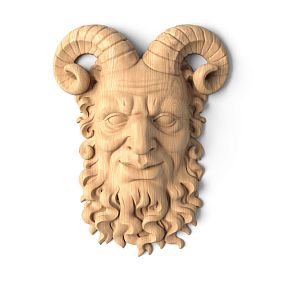
Baroque — luxury, opulence, abundance of decoration. BaroqueCarved interior decoris characterized by dynamic forms, floral ornaments, garlands, cartouches, mascarons. Carving is deep, expressive, often gilded or patinated. Suitable for spacious rooms with high ceilings — living rooms, grand bedrooms, offices.
Rococo — refined delicacy, asymmetry, playfulness. Rocaille carving uses shells, scrolls, small floral motifs. Forms are elegant, airy, often asymmetrical. Color palette is pastel with gold accents. Rococo creates a boudoir atmosphere — ideal for bedrooms, ladies’ rooms, small living rooms.
Neoclassicism — strictness, symmetry, harmony of proportions. Neoclassical carving uses ancient motifs: meanders, palmettes, rosettes, laurel wreaths. Forms are correct, symmetrical, proportional. Decoration is present but restrained, not overwhelming space. Neoclassicism is universal — suitable for any room, creating an atmosphere of noble restraint.
Empire — imperial grandeur, monumentality. Empire carving includes military symbols: eagles, trophies, torches, laurel wreaths. Forms are massive, strict, symmetrical. Often uses gilding on dark backgrounds. Empire creates an atmosphere of power and triumph — suitable for offices, libraries, grand reception rooms.
Modern — flowing lines, stylized natural forms, asymmetry. Modern carving depicts climbing stems, stylized irises, lilies, dragonflies. Lines are fluid, avoiding sharp angles. Color palette is refined: lilac, green, gold. Modern creates an artistic, refined atmosphere.
Ethnic and regional styles
Russian style — use of traditional carving motifs: floral ornaments, geometric patterns, birds, animals.Wooden room decorationsIn Russian style, often made from pine, birch, linden, painted in bright colors or left with natural texture. Suitable for country houses, cottages, creating an atmosphere of coziness and connection to roots.
Eastern styles — Arabic interlace, mandalas, latticework (mashrabiya), inlay. Eastern carving is distinguished by rich geometric patterns, complex line interweavings, abundance of small details. Creates an exotic, luxurious atmosphere.
Scandinavian style — simple forms, light-colored natural wood (pine, birch), minimal carving. Decoration is minimalist and functional, emphasizing the beauty of natural wood. Creates a bright, calm atmosphere.
Alpine chalet — massive wooden elements from rough-hewn timber, simple, expressive carving. Beams, panels, furniture from dark wood create an atmosphere of a mountain home, security, and harmony with nature.
Modern Styles
Minimalism — extreme simplicity, functionality.Decorative elements for roomsIn minimalist style, items are simple in form, without excessive carving. Wood is valued for its texture, color, natural beauty, not for complex processing. Decoration is minimal, and every element is functional.
Eclectic style — emphasis on natural materials, connection with nature. Wood is used with minimal processing, preserving its natural shape, texture, even bark. Decoration is created not by carving, but by the natural beauty of the material.
Loft — industrial aesthetics with wooden elements. Rough wooden beams, unprocessed planks, solid wood furniture contrast with concrete, brick, and metal. Carving is practically absent or minimal.
Neoclassicism — modern interpretation of classicism. Traditional forms are used, but simplified, lightened, in modern color palettes.Carved interior decorIt is present, but in moderation, not overwhelming the space.
Eclecticism — mixing of styles, eras, cultures. Baroque carved frame against a minimalist wall, classical moldings in a loft interior. The key is a sense of proportion, unifying color palette, thoughtfully designed composition.
Decorating Different Types of Rooms
Living Room: Formal Space
The living room is the main room of the house, where guests are received, family evenings are held, and holidays are celebrated.Wooden room decorationsIn the living room, they create the first impression of the house, demonstrating the owners' taste.
Accent Wall — highlighting one wall with decorative elements. Usually, the wall behind the sofa, opposite the entrance, or around the fireplace is accentuated. Options: full wall carved panel, composition of moldings and appliqués, wainscoting on the lower part with decorative panels above.
Ceiling — carved rosette around the chandelier, beams or coffers, cornice along the perimeter. A decorated ceiling transforms the living room into a formal space.
Furniture — carved set (sofas, chairs, tables, benches) or individual accent pieces. Carved coffee table, sideboards with carved facades, fireplace surround with carving.
Fireplace — fireplace surround framed by carved columns, pilasters, and cornice, becomes the center of the living room. Above the fireplace, a carved panel or mirror in a carved frame is placed.
Bedroom: Intimate Space
The bedroom requires a calm, relaxing atmosphere.Decorative elements for roomsThey should promote rest, not be excessive.
Headboard — the main accent of the bedroom. Carved headboard turns the bed into a work of art. Forms range from classic symmetrical to modern abstract.
Nightstands and chests of drawers — carved facades, appliqués, legs. Furniture in the same style as the headboard creates a harmonious ensemble.
Wall behind the bed — panels, moldings, appliqués creating a frame for the headboard. Symmetrical placement of elements calms and creates harmony.
Ceiling — restrained decoration: simple cornice, small rosette. Avoid heavy elements that press down and hinder relaxation.
Makeup table — carved mirror frame, decorated legs, drawers with carved appliqués. Creates a zone of beauty and self-care.
Office: Work Space
The office requires an atmosphere conducive to concentration, but also solidity and respectability.
Wainscoting — classic solution for the office. Panels of dark wood (oak, walnut) create a serious, professional atmosphere.Carved interior decorOn panels, it adds status.
Work desk — heavy desk with carved legs, appliqués on drawer facades. The desk is the center of the office and should be representative.
Bookshelves — carved cornices, pilasters, framing sections, carved doors with glass. A library creates an atmosphere of scholarship and culture.
Chair — carved chair for work and visitor chairs. Carved backs, padded armrests, sturdy legs.
Ceiling — coffered ceiling with carved beams, substantial cornice. Creates monumentality and seriousness.
Children's room: space for growth
Children's room requires a safe, developmental, and playful environment.
Safety — carved elements without sharp edges or protruding details. Quality processing, durable finish, eco-friendly materials.
Thematic decor — carved panels with images of fairy tale characters, animals, plants. Inlays in the shape of stars, clouds, flowers.Wooden room decorationscreate a magical atmosphere.
Functionality — carved shelves for toys and books, storage drawers, hooks for clothes. Decor not only adorns but also helps maintain order.
Taste development — presence of quality wooden decor from childhood forms aesthetic taste, understanding of beauty of natural materials.
Dining room: space for meals
Dining room — place for family dinners and festive gatherings. Decor creates a festive yet cozy atmosphere.
Wall panels — protect from dirt, create classic elegance.
Buffet or sideboard — carved furniture for storing tableware, becoming a visual centerpiece of the dining room. Carved fronts, cornice, supports.
Dining table — heavy table with carved legs, possibly with carved edge. Chairs with carved backs in a unified style.
Ceiling — rosette above the table, highlighting the dining area. Cornice around the perimeter.
Materials and Manufacturing Technologies
Wood species for carved decor
Oak — king of carved decor. Dense, strong, with expressive texture. Ideal for elements requiring fine detailing. Color from light to dark brown. Resistant to moisture, pests, wear.
Beech — dense, with fine texture, pinkish hue. Easily carved, suitable for smooth shapes. Less moisture-resistant than oak, requires protective treatment.
Ash — strong, elastic, with contrasting texture. Good for modern interiors where natural pattern expressiveness is valued.
Walnut — noble, with beautiful dark texture. Easily carved, suitable for fine carving. Expensive material for luxury interiors.
Linden — soft, easily carved, ideal for delicate openwork carving. Light, almost white, easily stains. Traditional material for Russian carvers.
Birch — affordable, with pleasant light color. Medium hardness, easily carved. Democratic option for Scandinavian and country styles.
Manufacturing Technologies
Hand carving — traditional technique where master carver creates ornament with knives, chisels, gouges. Hand carving is unique, each piece is one-of-a-kind. Expensive technology requiring high skill.
CNC milling — modern technology where a computer-controlled machine carves relief according to a digital model. Advantages: precision, repeatability, speed, affordable price. Disadvantage: less individual than handwork.
Combined technology — optimal option: CNC machine creates the main shape, master carver performs final detailing. Combines machine precision and handwork liveliness.
Finishing and coating
Natural finish — transparent varnish or oil preserving and highlighting wood texture. Matte, satin, or glossy finishes depending on desired effect.
Staining — stains, pigmented oils changing wood color while preserving texture. Allows light wood to darken, imitating valuable species.
Patina — creating effect of noble antiquity. Dark patina in recesses of relief, light surface on protrusions. Creates depth, highlights carving details.
Gilding — application of gold leaf or gilding. For accent elements: rosettes, capitals, inlays. Creates luxury and grandeur.
Staining — a covering paint that hides the wood texture. For modern interiors where color matters more than texture. White, gray, black, and colored options.
Installation of decorative elements
Mounting wall elements
Adhesive mounting — for lightweight elements (inlays, outlets, moldings). Special carpentry glue or liquid nails provide secure fixation.
Mechanical mounting — for heavy elements (panels, large inlays). Self-tapping screws are screwed in from the front into recessed holes, which are covered with wooden plugs or spackled.
Combined — adhesive + mechanical fastening for maximum reliability.
Mounting ceiling elements
Lightweight elements — adhesive applied to a primed ceiling.
Heavy elements — metal anchors embedded into the ceiling, to which the decor is attached. Especially important for outlets, which must support the weight of chandeliers.
Installation of architectural elements
Columns and pilasters — mounted to the floor and ceiling/walls. For decorative (non-load-bearing) elements, mechanical fasteners and adhesive are sufficient.
Arches and doorways — installed in openings, mechanically and adhesively mounted to walls. Require precise fitting.
STAVROS: decorators for rooms
Creating High-Qualitycarved interior decorationRequires understanding of materials, mastery of techniques, artistic taste, and experience. The company STAVROS represents a unique phenomenon in the market — a manufacturer for whom creating decorative elements is not merely a business, but a calling based on love for wood, respect for carving traditions, and understanding of modern requirements for quality and functionality.
Extensive assortment
STAVROS offers a full range of solutions for room decoration:
Wood and MDF items — carved panels, inlays, moldings, outlets, architectural elements made from solid natural wood (oak, beech, ash, walnut) and MDF with routed relief.
Relief decoration — polyurethane elements for those who value practicality and accessibility. Wide selection of designs, from classic to modern.
Furniture — ready-made carved furniture and custom-made furniture. From individual pieces to complete sets for living rooms, bedrooms, offices, dining rooms.
Furniture hardware — carved handles, inlays, decorative elements for updating existing furniture or creating exclusive pieces.
Decor collections — ready-made designer solutions in a unified style for decorating entire rooms or apartments.
Alldecorative elements assortmentis presented in a convenient catalog on the company's website.
Quality of materials and manufacturing
STAVROS works exclusively with selected wood, dried to a moisture content of 8–10%. This guarantees product stability, absence of warping, cracking, or deformation.
Production is equipped with modern equipment: CNC routers for precise processing, powerful exhaust systems for safety, painting booths for high-quality finishing.
STAVROS masters — professionals with years of experience. Carvers master traditional hand-carving techniques. CNC machine operators program complex reliefs. Finishers create perfect coatings.
Multi-level quality control: incoming material inspection, operational process control, final inspection of finished items. Each element is checked for dimensional accuracy, absence of defects, surface quality, and coating quality.
Custom manufacturing
STAVROS is not limited to a catalog. The company develops and producesDecorative elements for roomsbased on custom sketches.
Process: the client provides an idea, photo, sketch, or simply describes the desired outcome. STAVROS artists develop detailed sketches and coordinate with the client. Designers create technical documentation. Production manufactures the item. The client receives a unique decor fully matching their vision.
Custom manufacturing is more expensive than standard, but not excessively so. STAVROS optimizes processes and uses effective technologies, enabling the company to offer exclusive solutions at reasonable prices.
Artistic Consultation
STAVROS helps not only to manufacture elements but also to select, arrange, and place them correctly. The company’s specialists:
Will select a style — analyzing the interior, recommending a decor style.
Will calculate proportions — determining optimal sizes of elements for a specific room.
Will create a composition — developing a layout of elements that creates a harmonious picture.
Will select color and finish — recommending a shade and type of coating matching the overall color scheme.
Consultations are free for STAVROS clients — the company is interested in a successful result, a beautiful interior, and a satisfied customer.
Affordable prices and transparency
STAVROS’s pricing policy is honest. The cost is determined by real expenses: materials, labor intensity, complexity, and finishing. No hidden markups.
The client receives a detailed estimate, understanding exactly what they are paying for. The price is fixed by contract, and changes are possible only upon modification of the technical specifications, agreed upon in advance.
STAVROS’s prices are optimal: not the cheapest on the market, but offering a favorable price-to-quality ratio. You can find cheaper options, but they will have different quality. You can also find more expensive options, but additional cost will not provide proportional improvement.
Delivery and installation
STAVROS delivers throughout Russia. Careful packaging ensures items remain intact during transport. For Moscow and its region — by company-owned transport. For other regions — via freight companies.
Installation: STAVROS provides detailed instructions for self-installation. For those who prefer professional installation, the company recommends trusted craftsmen or (for Moscow and its region) provides its own installation team.
Warranties and reputation
STAVROS guarantees quality. The warranty period for wooden items is 12–24 months depending on the type and conditions of use.
But the main guarantee is reputation, built over years of quality work. Thousands of satisfied clients, hundreds of successful projects, dozens of grateful reviews.
STAVROS remains in contact after the sale. Consultations regarding operation, assistance in resolving issues, manufacturing additional elements years later — the company is a long-term partner.
Conclusion: create your dream room
A room is more than just a space. It is your personal space, reflecting your character, taste, and values.Wooden room decorationstransform an impersonal space into a unique environment, where every detail is thought out, every element carries meaning, and creates an atmosphere.
Carved decor is not a luxury for the chosen few. It is an accessible opportunity to transform your interior, add individuality, and create an atmosphere where it’s pleasant to live. Modern technologies and experienced manufacturers like STAVROS make qualityCarved interior decoraccessible to a wide audience.
Do not postpone transformation. Visitthe STAVROS catalog, explore the possibilities, choose elements that resonate with your soul. Contact consultants, discuss ideas, receive recommendations. Order decor and begin creating a room where every day brings joy, aesthetic pleasure, and a sense of home.
STAVROS — masters of creating beautiful interiors, where natural wood, carving art, and modern technologies create living spaces worthy of you. Entrust us with transforming your room — and we will create beauty that will delight you for many years.