












































































Article Contents:
- Historical Heritage and Modern Interpretations
- Evolution of Styles and Forms
- Functional Purpose of Modern Gables
- Psychological Impact of Architectural Forms
- Materials for Manufacturing Decorative Gables
- Traditional Materials
- Innovative solutions
- Stylistic Directions in Gable Design
- Classical styles
- Regional Characteristics
- Manufacturing and installation technologies
- Traditional methods
- Modern Technologies
- Design Features of Gables
- Proportions and scale
- Structural Solutions
- Regional application specifics
- Northern Regions
- Southern Regions
- Modern Trends in Gable Design
- Minimalism and Functionality
- Ecology and sustainability
- Integration with modern technologies
- Lighting and Illumination
- Security Systems
- Economic Aspects of Using Decorative Gables
- Impact on property value
- Long-Term Savings
- Features of Choosing an Executor
- Portfolio and Work Experience
- Technological Equipment
- Industry Development Prospects
- New Materials
- Digital technologies
- Popular Questions and Answers
- Conclusion
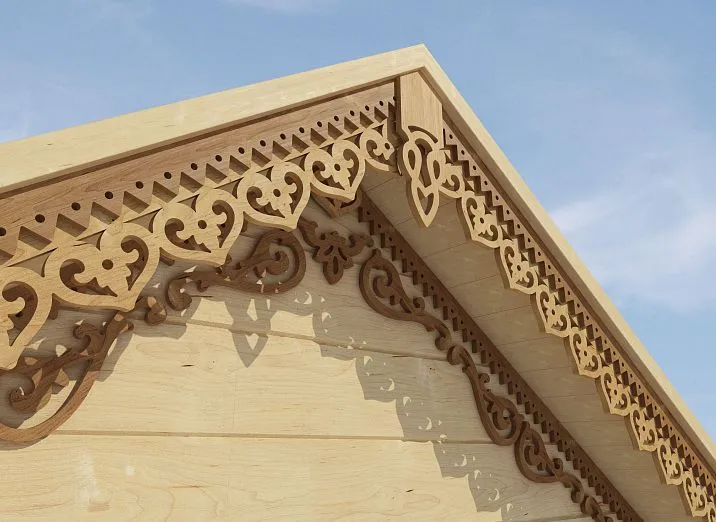
When we talk about the beauty of a building, the first thing that comes to mind is its facade. And among all the elements of facade decoration, a special place is occupied by decorative gablewhich can radically transform the external appearance of any building. This architectural element, with a history of thousands of years, remains one of the most expressive ways to give a building individuality and style.
What does a decorative gable represent in modern architecture? It is not just decoration — it is a whole design philosophy, where every line and every pattern carries a certain meaning and emotional weight. Unlike their ancient predecessors, modern gables can be made from the most diverse materials and in various stylistic solutions.


Historical Heritage and Modern Interpretations
The origins of gables go back to deep antiquity. Even in ancient Greece, architects understood the importance of finishing the facade with a triangular element, which not only protected the building from bad weather but also served as a platform for placing sculptural compositions. Ancient Greek masters created Facade Decorationwhich told entire stories about gods and heroes.
In Russian architectural tradition, decorative gables acquired special significance. They became an indispensable part of wooden architecture, where master carvers created true works of art. Each region of Russia had its own characteristics in gable decoration — from restrained northern motifs to luxurious patterns of central regions.
Modern architects and designers do not forget about this rich heritage. They reinterpret traditional forms, adapting them to the requirements of modern construction. Today's decorative gable can combine classical proportions with innovative materials and manufacturing technologies.




Evolution of Styles and Forms
Over centuries of architectural development, the form of gables has undergone significant changes. The classical triangular gable has been supplemented with numerous variations: semicircular, segmental, broken, stepped. Each era brought its own characteristics to the decoration of this element.
The Baroque period gifted the world with pediments richly decorated, where every square centimeter of surface was meticulously crafted by artisans. Classicism, on the contrary, leaned toward the strictness of lines and restraint in design. Modernism contributed its own touch, proposing asymmetrical forms and botanical motifs.
Our factory also produces:


Functional Purpose of Modern Pediments
Many consider that decorative gable Performs an exclusively aesthetic function. However, this is far from the truth. Modern pediments are multifunctional elements that solve an entire complex of tasks.
Above all, the pediment protects the upper part of the wall from atmospheric influences. A properly designed and installed element diverts rainwater, prevents ice formation in winter, and protects against wind loads. This is especially important for buildings located in regions with harsh climates.
In terms of energy efficiency, pediments also play an important role. They can serve as an additional element of thermal insulation, especially if insulation material is installed within the structure. This allows reducing heat losses through the upper part of the building and, consequently, lowering heating costs.
Get Consultation
Psychological Impact of Architectural Forms
It is not advisable to underestimate the psychological impact of decorative pediments on people. Studies show that architectural forms can influence our mood and well-being. A harmoniously executed pediment creates a sense of completeness, stability, and beauty.
The triangular shape of a traditional pediment is associated with reliability and upward striving. It symbolizes the pursuit of perfection and lofty ideals. That is why pediments are so often used in church architecture and public buildings.
Materials for Manufacturing Decorative Pediments
Choice of material for decorative pediment — is one of the key decisions that affects not only the appearance of the element, but also its durability, maintenance cost, and design possibilities.
Traditional Materials
Wood remains one of the most popular materials for manufacturing pediments. This is explained not only by its accessibility and relative ease of processing, but also by its unique aesthetic qualities. A wooden pediment can be executed in various techniques — from simple plank construction to intricate artistic carving.
Modern wood processing technologies allow significantly extending the service life of wooden elements. The use of special impregnations, varnishes, and paints protects the material from moisture, ultraviolet radiation, fungal damage, and insects.
Natural stone is another traditional material used to create pediments. Stone elements are distinguished by exceptional durability and attractive appearance. However, their use requires serious structural solutions due to the significant weight of the material.
Thermo-modification of oak wood allows obtaining new color shades without using chemical dyes. The thermo-treatment process alters the wood structure at the molecular level, imparting new properties.
Modern industry offers numerous innovative materials for manufacturing facade decoration elements. Polyurethane, glass fiber concrete, composite materials — each has its advantages and areas of application.
Polyurethane pediments are characterized by lightness, moisture resistance, and the ability to imitate various textures. They require no special maintenance and retain their appearance for decades. Thanks to modern molding technologies, polyurethane elements can have the most complex shapes and detailing.
Glass fiber concrete is a material of the new generation that combines the strength of concrete and lightness due to glass fiber reinforcement. Such pediments withstand significant loads, do not crack due to temperature fluctuations, and can be painted in any color.
Stylistic Directions in Pediment Design
Each architectural direction has its own features in the design of decorative pediments. Understanding these features allows creating a harmonious building image that corresponds to the chosen style.
Classic styles
Classicism in pediment design is characterized by strict lines, correct proportions, and restrained decoration. Here, it is not so much the ornamentation that matters, but the flawless execution and adherence to canons. A classical pediment may be supplemented with columns, pilasters, cornices, but all elements must be in harmony with each other.
Baroque pediments are the complete opposite of classical ones. Here, an abundance of decoration, complex curved forms, and play of light and shadow are welcomed. Baroque decorative gable may include botanical ornaments, cartouches, volutes, and other decorative elements.
Regional characteristics
Russian style in pediment design has its own recognizable features. This is primarily rich wood carving, including botanical motifs, geometric patterns, images of animals and birds. Russian masters created true masterpieces of wooden architecture, where each element had symbolic meaning.
Scandinavian style leans toward simplicity and functionality. Scandinavian pediments are usually made of natural wood in natural tones. Decoration is minimal, with emphasis on material quality and precision of execution.
Manufacturing and Installation Technologies
Modern manufacturing technologies decorative pediments allow creating elements of any complexity with high precision and quality of execution.
Traditional methods
Hand-carved woodwork is an art passed down from generation to generation. Each master has their own style, techniques, and secrets. Handcrafted work allows creating truly unique items, but requires significant time and high skill from the craftsman.
Casting in plaster and concrete — a more accessible method of manufacturing pediments. It allows replicating successful samples while maintaining high detail quality. Modern molding materials enable producing items with very precise rendering of the smallest details.
Modern technologies
CNC machining — a high-tech method of manufacturing wooden and composite pediments. Computer control ensures high precision of processing and the ability to create elements of complex geometry. At the same time, the manufacturing time is significantly reduced compared to manual methods.
3D printing opens new possibilities in creating facade decoration. Although this technology has not yet gained widespread use in architecture, it is already possible to create prototypes and small decorative elements using 3D printers.
Pediment Design Features
Design decorative pediment — is a complex process requiring consideration of numerous factors: from the architectural style of the building to the climatic conditions of the region.
Proportions and Scale
Correct proportions — the foundation of an attractive pediment. The element must correspond to the scale of the building, not being too large or too small relative to the facade. Classical proportions, developed over centuries, remain relevant today, although modern architects sometimes deliberately violate them to achieve a certain artistic effect.
The height of a pediment is usually 1/8 to 1/4 of the facade height. The width is determined by the architectural solution of the building and can vary within wide limits. It is important to remember that the pediment should visually complete the facade composition, rather than compete with it.
Constructive Solutions
Modern decorative gable must not only look beautiful but also securely attach to the load-bearing structures of the building. For this purpose, special mounting systems are developed, taking into account the material of the pediment, its dimensions and weight, as well as the nature of the loads it will experience during operation.
Special attention is paid to junctions where the pediment meets the wall and roof. These areas must be carefully sealed to prevent moisture from entering the structure. Often, special strips, flashing, and sealants are used.
Regional application specifics
Geography leaves its mark on the features of application decorative pediments. Different requirements are imposed on materials and constructive solutions in different climatic zones.
Northern regions
In harsh northern climates, frost resistance of materials takes particular importance. Sharp temperature fluctuations, heavy snowfalls, strong winds — all this creates additional loads on facade decoration. Therefore, in northern regions, preference is given to materials with high performance characteristics.
Wooden pediments in northern conditions require especially careful protective treatment. Special impregnations resistant to low temperatures, as well as paints and varnishes retaining elasticity in freezing conditions, are used.
Southern regions
In southern regions, the main enemy facade decoration — is intense ultraviolet radiation and high temperatures. Materials must retain their properties when heated to 60-70 degrees and not fade under sunlight.
The problem of thermal expansion is especially relevant. Large pediments may significantly change their geometric dimensions when heated, which must be considered when designing the mounting system.
Modern trends in pediment design
Modern architecture dictates its requirements for the design of decorative pediments. Today, several main directions in the design of these elements are relevant.
Minimalism and functionality
One of the bright trends of modernity — striving for simplicity and functionality. Modern pediments often have minimalist forms without excessive decoration. Beauty is achieved through correct proportions, quality materials, and flawless execution.
A minimalist approach does not mean the absence of expressiveness. Play of volumes, interesting material texture, thoughtful lighting — all this allows creating a memorable image without using traditional decorative elements.
Ecological and sustainable design
Environmental themes are becoming increasingly relevant in modern architecture. This also applies to decorative pedimentsmaterials of natural origin, as well as those that can be recycled after the end of their service life.
Sustainable development also implies the durability of structures. Modern gables are designed for long-term service, reducing the need for replacement and repair.
Integration with modern technologies
Modern decorative gables can be integrated with various building technological systems. This opens up new opportunities for functional use of these elements.
Lighting and illumination
Properly organized illumination can dramatically change the perception of a gable at night. Modern LED systems allow creating an eye-catching illumination with minimal energy consumption.
Integrated lighting can be incorporated during the gable design stage. In this case, lighting elements become an organic part of the architectural solution, rather than an addition to it.
Security systems
В Facade Decoration can integrate security system elements: surveillance cameras, motion sensors, alarm systems. With a thoughtful approach, these technical elements do not disrupt the gable's aesthetics, remaining practically unnoticed.
Economic aspects of using decorative gables
Usage decorative pediments — this is not only an aesthetic issue, but also an economic one. Properly selected and well-made elements can become a profitable investment.
Impact on property value
A beautiful facade with quality decorative elements significantly increases the attractiveness of a building in the real estate market. Statistics show that homes with thoughtful architectural decoration sell faster and at higher prices than similar properties without decoration.
This is especially relevant for private homes and cottages. Buyers are willing to pay extra for an attractive exterior, understanding that self-decorating a facade would require significant funds and time.
Long-term savings
Quality facade decoration elements when properly selected materials and manufacturing technology are used, they serve for decades without requiring major repairs or replacement. This makes initial investments economically justified.
Modern materials such as polyurethane or glass fiber concrete require virtually no maintenance. This allows saving on regular repairs and decoration updates.
Features of selecting an executor
Quality decorative pediment depends largely on the professionalism of the executor. When choosing a contractor, attention should be paid to several key points.
Portfolio and work experience
A serious company is always ready to provide examples of its work. A portfolio allows not only to assess the quality of execution, but also to evaluate the stylistic preferences of the craftsmen, their ability to work in various directions.
Experience working with specific materials and technologies is also very important. Each material has its own processing and installation characteristics, knowledge of which comes only with practice.
Technological equipment
Modern Production facade decoration requires appropriate equipment. The presence of CNC machines, modern molding lines, and quality tools — all this affects the quality of the finished product.
It is also important to have an in-house design department capable of developing a project taking into account all the specific features of a particular object.
Industry Development Prospects
Production sphere decorative pediments continues to develop. New materials are appearing, technologies are improving, and aesthetic preferences are changing.
New materials
The development of new composite materials opens up additional opportunities for designers and architects. Materials of the new generation combine lightness, strength, durability, and the ability to imitate various textures.
Biocomposites — materials based on natural fibers — are of particular interest. They are environmentally friendly, have an attractive appearance, and good operational characteristics.
Digital technologies
The introduction of digital technologies fundamentally changes approaches to design and production facade decorationBIM technologies allow creating accurate three-dimensional models, optimizing structures, and calculating loads.
Virtual and augmented reality allow the client to see how the building with decorative elements will look before production begins. This significantly reduces the risk of errors and misunderstandings.
Popular questions and answers
Which material is better to choose for a decorative gable?
The choice of material depends on many factors: climatic conditions, architectural style of the building, project budget. Wood is suitable for traditional styles, polyurethane for modern solutions, stone for prestigious buildings.
How long does a decorative gable last?
The service life depends on the material and manufacturing quality. Wooden elements, with proper care, last 15-25 years, polyurethane ones up to 50 years, stone ones for centuries.
Can a gable be installed on an already built building?
Yes, it is possible. There are special mounting systems that allow installing decorative gables on existing facades without significant intervention in the building's structure.
Does the gable require special care?
Modern materials usually do not require complex maintenance. Wooden elements require periodic treatment with protective compounds, while other materials only need periodic cleaning from dirt.
Does the gable affect the building's energy efficiency?
When properly designed, the gable can positively influence energy efficiency, providing additional protection against atmospheric effects and reducing heat loss.
Conclusion
decorative gable — it is not just architectural decoration, but an important element that shapes the building's image and affects its perception. In modern construction, gables perform multiple functions: from protective to representative.
A properly designed and high-quality gable can dramatically transform a building, giving it individuality and style. Modern materials and technologies allow creating elements of any complexity with high-quality execution.
Choosing facade decoration — it is a responsible decision that affects the building's appearance for many years. Therefore, it is important to consult professionals with experience working with various materials and styles.
Company STAVROS — a time-tested partner in creating high-quality architectural decoration. Years of experience, modern technologies, and high qualifications of specialists allow STAVROS to create facade decoration elementsthat not only decorate buildings but also serve for many years, delighting owners with their beauty and reliability. By contacting STAVROS, you can be sure of receiving products of the highest quality, meeting all modern requirements and standards.


