Article Contents:
- Philosophy of Decorative Ornaments: From Utility to Art
- History of Decor: From Necessity to Aesthetics
- Psychology of Decor: How Details Influence Perception
- Interior Styles and the Role of Decor
- Types of Decorative Ornaments: Anatomy of Elegance
- Carved Overlays: The Heart of Decor
- Corner Elements: Completing Compositions
- Central Overlays and Rosettes
- Door Decor: Portals, Casings, Overlays
- Furniture Decor: From Facades to Legs
- Materials and Technologies: From Blank to Installation
- Solid Wood: Species Selection
- Carving Technology: Hand vs Machine
- Finishing: From Primer to Patina
- Installation: From Adhesive to Fasteners
- Composition and Styling: How to Create Harmony
- Principle of Repetition: A Unified Language of Forms
- Principle of Contrast: Play of Opposites
- Symmetry and Asymmetry
- Scaling to Fit the Room
- Practical Scenarios: Decor for Different Zones
- Living Room: The Focal Point
- Bedroom: Elegant Restraint
- Entryway: First Impression
- Kitchen: Decor in a Utilitarian Space
- Bathroom: Decor in a Humid Environment
- Frequently Asked Questions
- Can Decorative Elements Be Installed Independently?
- How Much Do Decorative Ornaments Cost?
- How to Choose a Color for Decorative Elements?
- How to care for wooden decorative elements?
- Where to buy quality decorative elements?
- Can wood be combined with other materials?
- Can Decorative Elements Correct Room Flaws?
- Conclusion: Investing in Atmosphere

When you enter a home where every detail is thoughtfully considered, where walls aren't merely painted but adorned with elegant elements, where furniture isn't utilitarian boxes but works of art—you feel the difference instantly. This isn't just a dwelling. It's a space with character, with soul, with history. And the secret to such an atmosphere doesn't lie in expensive furniture or luxurious chandeliers. The secret is in the details. In those very decorative ornaments that transform a faceless interior into a work of art.
What are decorative ornaments? They are not paintings on walls or vases on shelves. They are architectural decor — carved overlays, corner elements, rosettes, consoles, capitals — everything that integrates into the structure of a space, becoming its organic part. These are elements that originated from the palace architecture of past centuries, when every interior detail was hand-carved by master cabinetmakers. Today, technology has changed, but the essence remains:decorative ornamentation elementcapable of transforming a space, setting a style, creating a mood.
Why are decorative ornaments experiencing a renaissance right now, in the era of minimalism and lofts? Because people are tired of blandness. White walls, Scandinavian simplicity, industrial austerity — all of this is wonderful, but the soul demands more. It craves the warmth of natural wood, the complexity of relief, the play of light and shadow on carved surfaces.decorative home ornamentsrestore humanity and individuality to interiors, which mass-produced, standard solutions so often lack.
In this article, we will walk the entire path — from understanding what interior decor is and why it's needed, to specific solutions for walls, ceilings, doors, and furniture. You will learn how to choose the right elements, how to install them, how to integrate them into an existing interior, how to create a composition that looks not like applied decor, but like an original architectural concept. And most importantly — you will understand thatBuy decorative ornamentsis not an expense, but an investment in the space you live in, in the atmosphere that influences your mood every day.


The Philosophy of Decorative Ornaments: From Utility to Art
Why decorate an interior at all? Aren't functional elements enough — walls, ceiling, floor, furniture?




The History of Decor: From Necessity to Aesthetics
Historically, decorative elements arose not for beauty, but from functional needs. Moldings at wall and ceiling joints concealed cracks from building settlement. Carved overlays on furniture fronts reinforced the structure, preventing solid wood from cracking. Column capitals distributed the load.
But human nature is such that the utilitarian inevitably transforms into the aesthetic. If a molding is to be made, let it not be just a strip, but a profiled one with an elegant relief. If an overlay, let it be carved, with an ornament. Thus, function gave birth to form, and form became art.
In the eras of the Renaissance, Baroque, and Rococo, decor reached its apogee. Palaces were covered with an incredible number of carved elements — on walls, ceilings, furniture, even floors. Every surface became a canvas for the sculptor and carver.Decorative Art Jewelryfrom that era demonstrated status, education, and belonging to the elite.
The 20th century, with its modernism, rejected excess. 'Ornament is a crime,' proclaimed Adolf Loos. Decor disappeared from interiors, giving way to clean lines and functionality. But by the beginning of the 21st century, the pendulum swung back. People realized: a space without decor is cold, soulless. And decor returned — more restrained than in the Baroque, but no less significant.
Our factory also produces:


The Psychology of Decor: How Details Influence Perception
Why do we feel comfortable in one space and uneasy in another, even if both are functionally adequate? It's about the richness of details.
Empty space (bare walls, minimal furniture) creates a feeling of temporariness, like in a hotel or rental apartment. The brain finds no anchor points, the gaze has nothing to latch onto. This can be refreshing for a short time but is exhausting in the long run.
Overloaded space (excess decor, unrestrained carving on every surface) is overwhelming, creates visual noise, and is tiring. The brain tries to process too much information at once.
Balance is the key.Wall decorative ornamentsshould be focal accents, not a continuous carpet. They create visual anchors — places where the gaze returns, finding both peace and interest.
The relief of decorative elements creates a play of light and shadow, adding depth to the space. Flat walls are two-dimensional. Walls with moldings, overlays, panels are three-dimensional, alive, dynamic. They change throughout the day as the sun moves, with the switching on of artificial light. This creates a feeling that the space breathes.
The naturalness of the material (wood, not plastic or polystyrene) is perceived subconsciously. Wood is warm to the touch, has texture, a scent (barely perceptible but present). The brain recognizes the natural and reacts positively to it — this is evolutionary memory of the natural habitat.
Get Consultation
Interior Styles and the Role of Decor
Each style dictates its own rules for using decorative ornaments.
Classic style
Baroque, Rococo, Classicism, Empire, Neoclassicism — all these styles are unthinkable without abundant decor.decorative interior ornamentshere is the foundation, not an addition. Walls are divided into panels by moldings, ceilings are adorned with rosettes and cornices, doors are framed by portals with capitals, furniture is covered with carved overlays.
Ornamentation of classical styles: plant motifs (acanthus leaves, grapevines, rosettes), geometric patterns (meanders, egg-and-dart, bead-and-reel), anthropomorphic elements (cherubs, atlantes, caryatids).
Modern styles
Minimalism, Scandinavian, high-tech seem to reject decor. But that's not true. They reject excess, but welcome focal accents. One large carved element on a smooth wall is more powerful than continuous carving. A simple molding dividing a wall into two zones (dark lower, light upper) creates structure without overload.
Eclecticism
Mixing styles is the most fertile ground fordecorative interior ornaments. A classic carved overlay on modern furniture, a Baroque rosette on a loft interior wall — contrast creates tension, and tension creates interest.
Types of Decorative Trims: The Anatomy of Elegance
What exactly falls into the category of interior decorative trims? Let's break down the main types of elements.
Carved Appliqués: The Heart of Decoration
Decorative Accents for Furniturebegin with carved appliqués. These are flat or three-dimensional elements made from solid wood with a carved ornament, which are glued onto a surface — a cabinet front, door, wall panel, or fireplace portal.
Sizes and Shapes
Appliqués come in various sizes — from miniature 50×50 mm to impressive 600×300 mm and larger. The shape varies:
-
Rectangular — versatile, suitable for any application
-
Square — for centering compositions
-
Oval and round — for accents, rosettes
-
Figural — following the contour of the ornament (leaves, flowers, monograms)
Types of Ornaments
Decorative ornaments patternsare classified by theme:
Floral — the most popular. Acanthus leaves (characteristic of Corinthian order, Baroque), oak leaves and acorns (symbol of strength, used in English classicism), grapevine with clusters (Empire style, wine decor), roses and lilies (Rococo, Romanticism), palmettes and lotuses (Oriental style).
Geometric — more strict, suitable for restrained interiors. Meander (continuous broken line, ancient motif), interlace (interwoven ribbons, Celtic style), egg-and-dart (egg-shaped elements with arrows, Ionic order), bead-and-reel (chain of round elements, framing).
Mixed — a combination of floral and geometric elements, supplemented with cartouches (decorative shields), ribbons, cornucopias.
Carving Technique
The depth of carving determines expressiveness. Low relief (5-8 mm) — restrained, suitable for modern interiors. Medium relief (10-15 mm) — classic, universal. High relief (20-30 mm) — dramatic, Baroque, creates strong shadows.
The edges of the appliqué can be figural (following the contour of the ornament) or straight (the appliqué is a rectangle within which the ornament is carved). Figural edges are more elegant but more expensive to produce. Straight edges are simpler to install, suitable for fitting into molding frames.
Corner Elements: Completing Compositions
When creating a frame from moldings on a wall, the corners are a critical area. You can simply miter the moldings at 45° and join them, but this is technical, not decorative.Buy wall decorationsin the form of corner elements means turning a utilitarian joint into an artistic accent.
A corner element is an appliqué specifically designed for installation in the corner of a molding frame. On the back, it has a recess that matches the molding profile, so the element fits precisely, without gaps. The front side is decorated with an ornament, which can be:
-
Symmetrical (identical relative to the corner diagonal) — for formal compositions
-
Asymmetrical (different patterns on the vertical and horizontal parts) — for dynamic compositions
-
Complex (central motif plus radiating elements) — for luxurious interiors
The size of the corner element is selected to match the width of the molding. For an 80 mm molding — an 80×80 mm element. For a 120 mm molding — a 120×120 mm element. An overly large element on a narrow molding looks bulky; an overly small one on a wide molding gets lost.
Central Appliqués and Rosettes
If you need to create an accent not in a corner, but in the center of a composition — central appliqués are used. These are large (from 200×200 mm to 600×600 mm) symmetrical elements that are installed:
-
In the center of a wall panel (between moldings)
-
Above a door or fireplace (as a keystone of an arch)
-
On the ceiling around the chandelier (rosette)
-
On the furniture front (central medallion of the cabinet)
Ceiling decorationA rosette around the chandelier is a classic technique that solves two problems at once: it conceals the mounting hole and wiring traces, creates a visual frame for the light fixture, making it the center of the composition.
Rosettes can be round, oval, or polygonal. The pattern is radially symmetrical (rays, petals, concentric circles). The size is selected according to the scale of the chandelier: the diameter of the rosette should be 1.5-2 times larger than the diameter of the chandelier base.
Door decor: portals, architraves, overlays
Door decorative trimtransforms a utilitarian opening into an architectural element.
Overlays on the door leaf
A flat, smooth door is boring. But stick carved overlays on it, imitating a paneled construction, and it transforms. A typical scheme: four rectangular frames (the top two are smaller, the bottom two are larger), with corner elements in each frame, small overlays (100×150 mm) in the center of the top ones, and large ones (200×300 mm) in the center of the bottom ones. Paint it the same color as the door — you get the effect of a carved door for a fraction of the cost of a real one.
Framing the opening
Architraves (vertical strips on the left and right, horizontal on top) are the basic framing. But add corner elements at the joints, a central overlay above the door, carved corbels (brackets) under the top strip — and the opening becomes a portal.
Furniture decor: from fronts to legs
Furniture without decor is just boxes. Furniture with decor is works of art.
Cabinet fronts
Overlays on cabinet fronts create volume, turning flat MDF or chipboard panels into an imitation of massive carved furniture.Decorative embellishment of the objectis a way to customize mass-produced furniture, to make it unique.
A typical scheme: a frame made of molding (width 40-60 mm) around the perimeter of the front, corner elements at the corners of the frame, and an overlay in the center. Everything is painted in one color (or contrasting ones — the frame is dark, the overlay is gold).
Countertops and cornices
The top of a cabinet, chest of drawers, or kitchen set often remains a bare end. Install a cornice (a protruding profiled molding) — and the furniture gains completeness and architectural character. The cornice can be simple or with carved corbels supporting the overhang.
Legs and supports
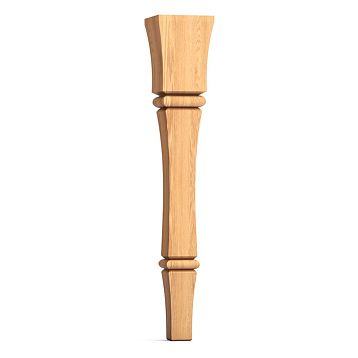
Carved legs for tables, chairs, sofas are a separate category of decor. But if the furniture is modern, on simple legs, add carved overlays to the upper part of the legs (at the attachment points to the body) — this will create the illusion of a carved construction.
Materials and technologies: from blank to installation
Qualitydecorative interior wall ornamentsis determined by two factors: material and manufacturing technology.
Solid wood: choice of species
Oak
The king among species. Density 700-750 kg/m³, Brinell hardness 3.7-4.0. Oak is incredibly strong, not afraid of moisture (tannins in oak have antiseptic properties), durable (products last for centuries). The texture is expressive — large pores, contrasting annual rings. Color ranges from light yellow (young oak) to dark brown (bog oak).
OakWooden decorative items for decorating the houseare prestigious, status symbols, but also expensive. Oak is the choice for elite interiors, where not only beauty but also the demonstration of quality is important.
Beech
A worthy alternative to oak. Density 680-720 kg/m³, hardness 3.6-3.8. Beech is slightly softer than oak, but similar in strength. The texture is fine, uniform, without pronounced pores — ideal for fine carving with small details. Color is light pink or beige.
Beech takes stains well, absorbing them evenly (unlike oak, where pores absorb more, creating contrast). It can imitate walnut, mahogany, cherry. The price is 20-30% lower than oak, making beech the optimal choice for classic interiors on a limited budget.
Ash
Density 650-690 kg/m³, hardness 3.4-3.6. Lighter and softer than oak, but strong and elastic. The texture is expressive, with contrasting fibers. Color is light, grayish-white. Well-suited for modern interiors where wood texture is needed without the heaviness of dark tones.
Linden, alder
Softwood species (density 450-550 kg/m³), easy to carve, but less durable. Used for decor that does not experience mechanical stress (wall overlays, ceiling elements). Advantage — low price, ease of processing (very thin, lacy elements can be carved). Disadvantage — prone to dents and scratches.
Carving Technology: Manual vs. Machine
Manual Carving
A traditional technique where the carver manually cuts the ornament using chisels and knives according to a sketch or template. Each piece is unique, with individual characteristics (micro-irregularities, depth variations), creating liveliness and soul. Manual carving is expensive (master's work hour costs from 1,500 to 5,000₽) and is used for exclusive projects.
Machine Carving (CNC)
A CNC milling machine cuts the ornament according to a digital model. Accuracy up to 0.1 mm, 100% repeatability, speed dozens of times higher than manual. The digital model is created once (by a designer-modeler) and then replicated for any number of products.
Modern machines allow creating the most complex three-dimensional reliefs, which would be incredibly labor-intensive to carve manually. At the same time, the surface quality after milling is high—requiring minimal sanding.
STAVROS uses high-precision 5-axis CNC milling centers, ensuring perfect geometry, carving cleanliness, absence of chips and tears. Alland frames create a home atmosphere, making it truly cozy and individual. This is an investment in beauty, which pays off every day through aesthetic pleasure from admiring the beautiful.undergo quality control at every stage of production.
Finishing: From Primer to Patina
Carving is just the beginning. Finishing determines how the finished element will look.
Sanding
After carving, the surface is sanded with sandpaper ranging from 120 grit (coarse, removes large irregularities) to 320-400 grit (finish, creates smoothness). Deep areas of the carving are sanded manually with special attachments, flat areas—with a sander.
Primer
Primer evens out the wood's absorbency, preventing uneven staining (ends and pores absorb more paint than dense areas). Acrylic primer is applied with a brush or spray, dries in 2-4 hours.
Painting and Toning
Finishing options:
-
Clear varnish—preserves wood texture, emphasizes the pattern. Matte varnish—restrained, noble. Glossy—festive, but shows defects.
-
Toning with oil or stain—deepens the color but preserves the texture. From light tones (honey, walnut) to dark (wenge, ebony).
-
Opaque enamel—hides the texture, creates a uniform color. White enamel—classic for palace interiors. Colored—for accents.
-
Patination—artificial aging. Contrasting paint is rubbed into the carving recesses (dark on a light background, gold on a colored one). The effect—as if the item has survived centuries, paint has worn off the raised parts, remaining in the depths.
-
Gilding—luxurious finish. Genuine gold leaf (sheets 0.0001 mm thick) is glued onto special adhesive. Imitation—imitation gold leaf (brass foil) or gold paint. Gold emphasizes every carving swirl, creating a royal shine.
Installation: From Adhesive to Fasteners
How are decorative elements attached?
Adhesive Installation
The main method for overlays, corner elements, rosettes. Uses woodworking PVA (for interior work), polyurethane adhesive (for damp rooms), epoxy (for maximum strength). Adhesive is applied to the back of the overlay in a zigzag or dots, the overlay is pressed onto the surface, secured with weight or clamps during polymerization time (2-12 hours depending on adhesive).
Combined Installation
For large heavy elements, adhesive is supplemented with mechanical fasteners. Thin finish nails (length 30-50 mm, diameter 1-1.5 mm) are driven through the overlay into the base at an angle, heads are countersunk 2-3 mm, holes are filled with wood filler, after drying—sanded. Nails are invisible but ensure reliability.
Hidden Fasteners
For elements that may require disassembly (e.g., for repainting), a hidden fastener system is used. On the back of the overlay—metal loops or grooves, on the wall—corresponding hooks or strips. The overlay is hung like a picture. Advantage—reversibility. Disadvantage—visible gaps between overlay and wall (1-2 mm).
Composition and Stylistics: How to Create Harmony
Buying individualBuy wall decorationsis simple. More difficult—to compose them into a holistic system.
Repetition Principle: Unified Language of Forms
If several types of decorative elements are used in the interior (wall appliqués, door appliqués, furniture appliqués), they should speak the same language. This is achieved through repetition:
-
Ornament (the same motif—say, acanthus leaves—is repeated everywhere)
-
Scale (the proportions of the elements are similar—if a wall appliqué is 300×200 mm, a furniture appliqué is 150×100 mm, then the aspect ratio is the same)
-
Carving style (depth of relief, character of lines—smooth or angular)
-
Color (all elements in the same color palette or a contrasting pair)
Repetition creates rhythm—the visual music of the interior. The brain recognizes the pattern, calms down, and enjoys the harmony.
Contrast principle: the play of opposites
Harmony does not mean uniformity. Contrast enlivens. Types of contrast:
-
Size (large elements + small)
-
Color (white moldings on a dark wall, gold appliqués on a white door)
-
Texture (smooth surfaces + carved)
-
Stylistic (classical carving in a modern space)
Contrast creates focal points—places where the eye is drawn first. Without contrast, the interior blends into a homogeneous mass.
Symmetry and asymmetry
Classical interiors are built on symmetry. If there is a panel with an appliqué on the left wall—there is the same one on the right, mirrored. If there is a rosette above the door—there is one above the window too. Symmetry creates formality, solemnity, order.
Modern interiors allow asymmetry. An accent wall with decor, the others smooth. One large appliqué instead of several small ones. Asymmetry is dynamic, unexpected, modern.
The choice depends on the interior style and your temperament. Lovers of order and tradition will choose symmetry. Rebels and innovators—asymmetry.
Scaling to the Room
The size of decorative elements should correspond to the scale of the room. In a small room (15-20 m²), large appliqués 600×400 mm will be overwhelming, visually consuming space. Medium (200×150 mm) and small (100×80 mm) elements are appropriate here.
In a spacious hall (40-60 m²) with high ceilings, small appliqués will get lost and look skimpy. Large (400×300 mm and larger), massive ones with deep relief are needed.
Rule: the size of the main decorative element in centimeters is approximately equal to the area of the room in meters divided by 10. For a 20 m² room—appliqués about 20 cm on the longer side. For a 50 m² hall—about 50 cm.
Practical scenarios: decor for different zones
How to applyand frames create a home atmosphere, making it truly cozy and individual. This is an investment in beauty, which pays off every day through aesthetic pleasure from admiring the beautiful.in specific areas of the house?
Living room: the focal point
Living room—a formal space where decor is most appropriate. Main zones:
Accent Wall
Wall behind the sofa or opposite the entrance. Divided by moldings into 2-4 panels (rectangular sections). In the corners of the panels—corner elements. In the center of each panel—an appliqué (or the panel remains empty but framed). The background inside the panels can be painted in a contrasting color, wallpapered with a pattern, or upholstered with fabric.
Fireplace
The fireplace portal is an ideal place to concentrate decor. The vertical posts of the portal are decorated with carved pilasters or appliqués. The horizontal beam (mantel shelf)—with a carved frieze. Above the mantel shelf—a large central appliqué or a mirror in a carved frame.
Ceiling
Rosette around the chandelier. If the ceiling is high (3+ meters), coffers can be created—square or rectangular recesses framed by moldings with corner elements. Along the perimeter of the ceiling—a cornice (a wide molding with carved consoles every 1-1.5 meters).
Bedroom: elegant restraint
The bedroom requires softer, more unobtrusive decor. An excess of carving can interfere with relaxation.
Headboard
Wall behind the bed—the focal point of the bedroom. A panel can be created from moldings sized to the bed (panel width = bed width, height 1200-1500 mm from the floor). In the center of the panel—one large appliqué or several small ones symmetrically. Alternative—a soft wall panel (tufted upholstery) in a molding frame.
Furniture
Cabinet and bedside table fronts are adorned with overlays. Restrained, unobtrusive, matching the furniture tone or half a tone lighter/darker.
Entryway: first impression
The hallway is the first thing guests see. Here, decor sets the tone for the entire house.
Entry door
If the door is smooth on the inside, enhance it with overlays that mimic panels. Frame the opening with a portal featuring capitals, if ceiling height allows.
Walls
The lower third of the walls (up to 900-1000 mm) is framed with moldings to create panels. This is practical (protects walls from dirt, moisture, and mechanical damage from shoes, bags) and beautiful.
Kitchen: decor in a utilitarian space
The kitchen is a functional zone, but that doesn't mean decor is out of place here.
Furniture facades
Flat kitchen cabinet fronts can be enhanced with overlays. Particularly effective on upper cabinets (at eye level). A cornice along the top line of the cabinets creates completeness, hiding the gap between cabinets and ceiling.
Backsplash
The area between the countertop and upper cabinets. If the backsplash is made of tile or glass, frame it at the top and bottom with thin moldings (can be made of paintable, moisture-resistant MDF). This creates a frame and structures the zone.
Bathroom: decor in a humid environment
Traditionally, decor was not used in bathrooms due to humidity. But modern protective coatings (yacht varnish, moisture-resistant enamels) allow the use of wooden elements even in the bathroom.
Mirror
Framing a mirror - moldings with corner elements, coated with moisture-resistant varnish. This turns a utilitarian mirror into a decorative object.
Panels
If the walls are painted (not tiled), you can create panels from moldings in the upper, dry part (from 1500 mm to the ceiling), where there is no direct contact with water.
Frequently asked questions
Can decorative elements be installed independently?
Yes, basic installation of overlays and moldings is accessible even to non-professionals. You'll need: a miter saw (or a miter box for a hand saw), glue, finishing nails, putty. The difficulty lies in precise 45° angle joints. Practice on scraps before cutting the final pieces.
For complex compositions (portals with capitals, coffered ceilings) it's better to invite a specialist. A mistake in calculations will lead to asymmetry, gaps, and spoiled material.
How much do decorative ornaments cost?
Price depends on size, complexity of carving, and wood species. A simple 100×80 mm beech overlay - from 300₽. A complex carved 300×200 mm oak overlay - from 2,500₽. Corner elements - from 500₽ to 5,000₽. Large central overlays - from 3,000₽ to 15,000₽.
Guideline: for decorating a standard 20 m² living room (one accent wall, a ceiling rosette, door framing) you'll need decor worth 30,000 - 60,000₽ depending on complexity.
How to choose a color for decorative elements?
Three main strategies:
-
Monochromatic - decor in the color of the walls. Creates volume through relief, not color. Elegant, restrained.
-
Contrast - decor in a contrasting color (white on dark, gold on colored). Draws attention, makes the decor the star of the interior.
-
Natural wood - transparent finish that preserves the texture. Warm, eco-friendly, suitable for eco-styles, country, Scandinavian.
Gilding and patination - for classic luxurious interiors. Modern styles lean towards monochrome or natural wood.
How to care for wooden decorative elements?
Dust is removed with a dry or slightly damp soft cloth. For carved elements with complex relief - a soft brush or a vacuum with a brush attachment.
Varnished and painted elements can be wiped with a damp cloth and mild detergent (non-abrasive!). Avoid excess moisture - after wet cleaning, wipe dry.
Elements with natural oil finish require periodic coating renewal (every 1-3 years depending on usage) — applying a new layer of oil.
Where to buy quality decorative elements?
decorative accessories storesThere are two types: intermediaries who resell finished products from various manufacturers, and direct manufacturers.
Buying from the manufacturer offers advantages: product freshness (not sitting in intermediary warehouses), full product range (the manufacturer has the entire catalog, intermediaries only have what they've managed to stock), possibility for custom orders (manufacturers can create elements in non-standard sizes or with modified patterns), price without intermediary markup.
STAVROS is a direct manufacturer with a full production cycle: from wood procurement to final finishing. All decorative elements are in stock, delivery across Russia and CIS countries.
Can wood be combined with other materials?
Not only possible, but recommended. Wood harmoniously combines with:
-
Metal (steel or brass inlays in carvings, forged elements alongside wooden ones)
-
Stone (marble or granite surfaces framed by wooden moldings)
-
Glass (mirrors, stained glass in wooden carved frames)
-
Fabric (soft wall panels in wooden frames)
Combining materials creates rich textures, making the interior multi-layered and interesting.
Can decorative elements correct room imperfections?
Yes, decor is a powerful tool for spatial correction.
Low ceilings appear visually higher with vertical wall panels (moldings divide walls into vertical sections, guiding the eye upward). A ceiling cornice installed 10-15 cm below the actual ceiling and painted the same color creates the illusion of a higher ceiling.
Narrow long rooms (hallways) are corrected with horizontal moldings on long walls (dividing walls into horizontal zones, visually shortening them) and accent decor on end walls (attracts attention, distracting from the length).
Uneven walls are concealed with overlay panels (moldings are attached level, creating a new, even plane, with gaps between wall and panel filled).
Conclusion: Investment in atmosphere
decorative interior ornaments— is not luxury, not excess, not a relic of the past. It's a tool for creating an atmosphere that affects you every day. A home where every detail is considered, where walls speak the language of forms and reliefs, where furniture is adorned with carvings — this is not just a place to live. It's a space that inspires, calms, and energizes.
ChoosingWall decorative ornaments, you're choosing individuality. Your home won't resemble thousands of other standard apartments with smooth white walls. It will become unique — a reflection of your taste, your story, your understanding of beauty.
Qualityelements of decorative ornamentationdetermines the longevity of this beauty. Cheap polystyrene will yellow in a couple of years, warp from temperature changes, and detach from adhesive. Solid wood, processed according to all standards, will last for decades, becoming part of your home's history, possibly passed down to future generations.
Company STAVROS specializes in manufacturing architectural decor from solid wood for over 20 years. During this time, more than 5,000 unique projects have been created — from private residences to public spaces, from classic palace interiors to modern eclectic apartments.
The entire range — carved overlays, corner elements, rosettes, consoles, cornices, capitals — is made from grade A solid oak and beech (without knots, cracks, defects) using high-precision European CNC milling centers. This guarantees perfect geometry, clean carving, and element consistency.
The STAVROS catalog includes over 300 ready-made models of decorative elements — from simple geometric to complex Baroque with deep multi-level carving. All elements are grouped into collections (sets of stylistically matching overlays, moldings, corner elements), simplifying the creation of harmonious compositions.
In addition to serial production, STAVROS accepts custom orders. If the catalog doesn't have the needed element — it will be created specifically for you based on a photo, sketch, or description. Minimum order quantity for custom elements — 10 identical pieces.
Final finishing is done manually by finishing specialists: sanding, priming, painting, patination, gilding — according to your preferences. You can order elements with white primer (for self-painting) or with complete finishing (ready for installation).
Delivery to Moscow and St. Petersburg — courier to your door. Across Russia — via transport companies with packaging that ensures safety (each element in individual protective film, large items in wooden crates).
Technical support after purchase: installation consultations, calculation of required element quantities for your project, selection of matching elements from different collections, recommendations for finishing and maintenance.
Choosing STAVROS means choosing more than just decor. You're choosing a partner in creating your dream interior — a company that understands the value of details, masters technologies and traditions, and combines handcraftsmanship with modern innovations. Your home deserves the best. AndBuy decorative ornamentsSTAVROS class — means giving it that best.