












































































Article Contents:
- What are decorative slatted panels and why they work in interior design
- Types of slatted panels by material
- MDF slatted panels for painting
- Wooden slatted panels made of solid oak
- Types of slatted panels by construction
- Rigid panels on MDF backing
- Flexible slatted panels on fabric backing
- Panels made of half-round battens
- Where decorative slatted panels are used
- Living Room
- Bedroom
- Entry Hall
- TV Area
- Ceiling
- Furniture fronts
- Commercial spaces
- What slatted panels provide besides decoration
- Zoning without partitions
- Masking utilities and base defects
- Acoustic Effect
- Visual Space Correction
- Creating a premium texture
- How to choose decorative slatted panels for a specific task
- Why wooden slatted panels and MDF are not the same thing
- Installation of slatted panels: what to consider in advance
- Methodology of measurement works
- Mounting methods
- When a frame is needed
- Acoustic layer
- Direction of slats
- Slatted panels in interior: styles and combinations
- Scandinavian Style
- Minimalism
- Loft
- Japandi
- Neoclassicism
- Mistakes when choosing slatted panels
- Decorative wooden wall slats: a separate perspective
- Acoustic slatted panels: not only beautiful but also quiet
- Slatted panels for furniture: when the facade becomes art
- Where to buy decorative slatted panels for interior
- FAQ: answers to popular questions about slatted panels
- About the Company STAVROS

There are things in interior design that immediately put everything in its place. Not through loud colors, not through expensive stone, and not through intricate moldings—but through rhythm. It is the rhythm of vertical and horizontal lines that transforms an ordinary room into a space with character. Decorative slatted panels are precisely that tool of architectural plasticity that changes the perception of an interior without major renovations, extra effort, or compromises in taste.
But before you start choosing—pause. Because slatted panels come in different types: by material, by construction, by application logic. And a mistake at this stage is costly—both literally and figuratively. That is why this article is written not as an advertising leaflet or a dry reference guide, but as an honest conversation with someone who wants to understand the topic from start to finish.


What are decorative slatted panels and why do they work in interior design
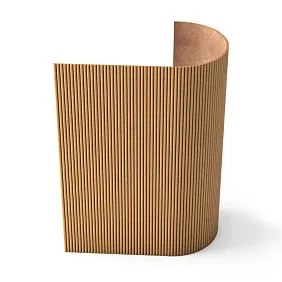
To be precise, slatted panels are finishing elements consisting of parallel wooden or MDF slats, fixed on a single backing or assembled into a single panel structure. They are mounted on walls, ceilings, and furniture facades, creating a three-dimensional pattern through alternating protrusions and recesses.
It sounds simple. But it works much deeper.
The secret lies in how the human eye perceives a regular vertical rhythm. A wall with vertical slats visually 'stretches' the space upward. Horizontal panels, on the contrary, widen the room. The gaps between the slats create chiaroscuro—and the wall ceases to be flat. It begins to live: changing depending on the angle of lighting, time of day, and position of the light source.
It is precisely this effect of volumetric slatted wall panels that has made them a true trend not only in residential but also in commercial spaces—restaurants, hotels, offices, showrooms. Where first impressions matter, slatted wall panels have long become an essential element of the design language.
Add to this the practical side: the panels conceal uneven substrates, mask utilities, improve room acoustics, and create a surface ready for painting or varnishing. This is no longer just decor—it's an engineering solution with an aesthetic result.




What types of slatted panels are there by material?
Material is the first and main question when choosing. It determines what the finished surface will look like, how long it will last, and how organically it will fit into the interior style.
Our factory also produces:
MDF slatted panels for painting
MDF is not a compromise or a 'budget option.' It is a conscious choice for a specific task.
MDF slatted panels for painting have an absolutely smooth surface, devoid of wood grain. The geometry of the profiles is perfectly aligned, the edges are clean, and the entire structure is ready for the application of any paint and varnish material—from matte paints to glossy enamels. This makes MDF panels indispensable in minimalist interiors, where the wall must function as a single color field without textural noise.
Want to paint the panels the same shade as the walls? No problem. Want to highlight them with a contrasting color—with pleasure. It is precisely this variability that places MDF panels on par with designer tools, not just finishing materials.
The density of MDF ensures shape stability: the panels do not warp, do not crack with proper use, and maintain precise geometric lines for many years. For interiors in modern, contemporary, Scandinavian, and neoclassical styles—this is the ideal solution.
If you are interested in Paintable lath panelsthen MDF is the first candidate to consider.
Get Consultation
Solid oak wooden slat panels
Oak is a different story. Here we're not talking about a neutral background, but about a living material with its own character.
Solid oak wooden slat panels embody everything valued in natural wood: unique texture, warm hue, tactile depth. Each slat is a separate living object with a unique grain pattern. No two are identical. This is precisely what creates the effect of expensive finishing—not monotonous, but rich in detail.
Реечные панели из дуба можно обрабатывать маслами, морилками, белым и чёрным лаком, воском — в зависимости от желаемого результата. Открытый пор даёт ощущение натуральности, плотная лакировка — брутальной элегантности. Дуб стоек к механическим нагрузкам, не деформируется в условиях стабильного климата и со временем лишь благородно стареет.
Such panels are especially appropriate in loft, Japandi, Scandinavian interiors, and in classic and neoclassical solutions with a warm color palette.
It's important to understand: wood and MDF are not 'better' or 'worse.' They are different tools for different tasks. More on this in a separate section below.
What types of slat panels exist by construction
A question no less important than the material is the constructive solution. It is the construction that determines where and how panels can be mounted, and what effect they will achieve on a specific surface.
Rigid panels on MDF backing
This is the classic and most common construction. Slats—wooden or MDF profiles—are fixed on a rigid MDF base with equal spacing. The panel is a monolithic element of specified dimensions.
Rigid slatted panels are ideal for flat surfaces: walls, ceilings, TV zones, accent niches, furniture fronts. They provide precise geometric patterns, handle installation loads well, and allow work with large areas. Installation is possible with adhesive, finishing nails, or screws on guides.
If the space allows working with flat surfaces, a rigid construction will be the optimal solution.
Flexible Slat Panels on Fabric Backing
Where rigidity becomes a limitation, flexibility comes into play. Flexible slatted panels are assembled on a fabric base: slats are fixed with a gap sufficient to bend the entire structure along an arc.
This allows mounting panels on columns, arches, rounded corners, and any radius surfaces. The result is a smooth transition of the slat along the curve without joints, without pattern breaks, without technical tricks. It is flexible slatted panels that make it possible to create volumetric installations of complex geometry—something that previously required custom-made individual fabrication.
Panels made of half-round molding strips
This is a separate and very interesting type of construction. The slats have a semicircular cross-section—unlike a rectangular profile. This shape creates soft, 'warm' chiaroscuro: no sharp edges, no angularity. Light flows smoothly along the rounded surfaces, forming delicate shadows.
Panels made of semicircular battens are appropriate where a non-architecturally strict rhythm is needed, but a cozy, almost tactile texture is desired. Bedroom, children's room, study—spaces where softness is wanted.
Where decorative slatted panels are used
There are significantly more application scenarios than it seems at first glance. Slats have long gone beyond the 'accent wall in the living room'—although this scenario remains one of the most effective.
Living Room
Living room—a classic space for slatted panels. An accent wall behind the sofa, TV zone design, a niche for a built-in wardrobe—all this instantly changes the feel of the room. Wall slatted panels create depth where there was just a painted plane before. It's important to choose the direction: vertical will visually raise the ceiling, horizontal—will widen the room.
Bedroom
Slatted panels behind the bed headboard are one of the most exquisite and yet simple ways to create a spa atmosphere in the bedroom. Vertical oak slats with oil treatment behind the bed give a visual effect of an expensive hotel. At the same time, installation takes literally a few hours. Slatted panels for the bedroom are often used for ceiling solutions as well—especially in combination with hidden lighting.
Entryway
This is where the first impression of the apartment is formed. Slatted panels in the hallway are an opportunity to set the tone for the entire interior from the very first seconds. A narrow corridor with vertical slats visually elongates, and the dark shade of the panels creates a sense of more space than there actually is.
TV area
Slatted panels for the TV zone solve several tasks at once: they create an architectural background for the screen, hide cables and wiring, and form a niche for equipment. The option with dark wooden slats covering the entire height of the wall is an absolute classic of modern interior design.
Ceiling
Slatted panels for the ceiling are a direction that many undeservedly ignore. And in vain. Horizontal slats on the ceiling create an additional visual layer, allow hiding lighting in the gaps between the slats, and smooth out geometric imperfections of the floor slabs. The effect is like in a designer restaurant.
Furniture facades
Slatted panels for furniture are a whole direction. Facades of wardrobes, cabinets, kitchen units, and bar counters with slatted decor look expensive and non-trivial. The combination looks especially impressive: matte MDF facades plus slatted oak inserts. Functionally - standard, aesthetically - at the level of designer projects.
Commercial spaces
Restaurants, hotels, offices, showrooms - slatted panels for commercial interiors have long become the language of premium design. They create an atmosphere, manage acoustics, and zone space without capital partitions. Slatted panels on the wall in the dining area of a restaurant or in a hotel lobby are not a tribute to fashion, but a conscious professional decision.
What do slatted panels offer besides decoration
A conversation about slatted panels would be incomplete if limited only to aesthetics. This material has quite specific functional advantages that make it especially attractive to practical people.
Zoning without partitions
Want to separate the living room and kitchen without building a wall? Or create a conditional 'rest area' in the bedroom? Slatted panels for space zoning are the perfect tool. A separate slatted 'screen' or a fragment of a wall with panels visually marks the boundaries of zones without losing light and air.
Masking communications and base defects
Walls are rarely perfect. Pipes, wiring, unevenness, traces of old plaster - all this can be easily hidden behind a slatted surface. During installation on guides, a space is formed between the wall and the panel, which can be used to accommodate any communications. Decorative slatted panels for masking communications are one of the most popular scenarios in renovation.
Acoustic effect
One of the least obvious but very important advantages is the impact on room acoustics. The textured surface of the slats scatters sound waves, reducing echo. If sound-absorbing material is additionally placed behind the panels, the effect is multiplied. Acoustic slatted panels are used in meeting rooms, home theaters, recording studios, and simply in open-plan living rooms where sound 'travels' throughout the space.
Visual Space Correction
Low ceiling? Narrow hallway? An overly elongated room? Slatted panels are one of the most effective tools for visual correction. Vertical rhythm raises the ceiling. Horizontal lines widen the room. Diagonal solutions add dynamism. This isn't magic—it's the laws of perception skillfully used by designers.
Creating a premium texture
Sometimes an interior simply lacks depth. The walls are painted, the furniture is arranged—yet a feeling of incompleteness still lingers. Volumetric wall panels made of slats solve this problem: they add that very layer of texture that turns a 'normal renovation' into a thoughtful interior.
How to choose decorative slatted panels for a specific task
Here is a practical cheat sheet to keep on hand when choosing:
| Task | Recommended solution |
|---|---|
| Painting to match the wall color or a contrasting shade | MDF slatted panels for painting |
| Natural texture, warm tone, premium feel | Solid oak slatted panels |
| Even walls, ceilings, furniture fronts | Rigid panels on MDF backing |
| Columns, arches, rounded corners | Flexible slatted panels on fabric base |
| Cozy soft chiaroscuro | Panels made of semi-round battens |
| Concealing utilities | Installation on a frame with a gap |
| Acoustic improvement | Panels with sound absorber laid behind slats |
| Space zoning | Separate slatted partition or accent wall fragment |
Always start by asking: 'What exactly do I want from this wall?' — and the answer itself will lead you to the right type of panel.
Why wooden slatted panels and MDF are not the same thing
This is one of the most frequent questions, and it is absolutely legitimate. Externally — similar. In terms of installation principle — similar. But the difference between them is significant, and it's important to understand it before, not after purchase.
Texture and visual depth. MDF is a homogeneous material without a pronounced pattern. This is its advantage when painting: the surface takes color evenly, without stains or streaks. Oak is a living material, each slat is unique. Its texture will be visible even under varnish. This makes the surface 'rich' but excludes the possibility of uniform color coating.
Tactility. MDF under the hand is smooth, neutral. Oak is warm, slightly rough, 'alive'. This nuance is especially important where panels are physically contacted: bed headboard, panels in the hallway at hand level.
Durability. Oak is historically one of the most durable and resistant materials. With proper care, it lasts for decades. MDF is less resistant to mechanical impacts and humidity, although under normal operating conditions in residential premises, this factor is not critical.
Coloring. MDF is ideal for painting. Oak is for oils, stains, varnishes, waxes. These are fundamentally different approaches to finishing.
Sense of value. This is subjective but important. Natural wood in interiors is associated with quality, nature, and durability. MDF is perceived as a technological and modern material—but not as 'warm.' Some projects require the former, others the latter.
The conclusion is simple: there is no 'best' material. There is the right choice for a specific project.
Installation of slatted panels: what to consider in advance
Even the most beautiful panels can ruin the impression if the installation is done carelessly. Several key points to consider before starting work.
Requirements for the base
Rigid panels are installed on a flat, stable base. The wall must be plastered or at least leveled to a state where the panel fits tightly. Variations of more than 3–5 mm along the length of the panel are already noticeable after installation.
If the wall has serious irregularities—the optimal approach is installation on guides or a frame. This adds a few centimeters to the wall thickness but provides a perfectly flat finish surface.
Methods of mounting
Slatted panels can be installed in three main ways:
-
Mounting adhesive—fast, clean, suitable for flat walls without load on the panels.
-
Finish nails—point fastening, minimally noticeable when installed correctly.
-
Self-tapping screws on guides—the most reliable option, especially when installing heavy panels or over large areas.
When a Frame is Needed
Installation on a frame made of metal profiles or wooden beams is necessary in three cases: the wall is very uneven, utilities or sound-absorbing material need to be placed behind the panels, or the panels are being installed on the ceiling.
Acoustic Layer
If you want not only a visual but also an acoustic effect, sound-absorbing material is laid between the wall and the panel: mineral wool, polyethylene foam, or specialized acoustic mats. This is especially relevant for home theaters, meeting rooms, and open living rooms.
Slat Direction
The orientation of the slats sets the visual vector of the space. Before installation, it's worth 'trying out' the direction in a photo or 3D model to ensure the effect meets expectations.
Slatted Panels in Interior Design: Styles and Combinations
Different interior styles require different approaches to slatted decor. Several characteristic examples.
Scandinavian style
Light oak panels with oil impregnation, vertical rhythm, neutral wall background. Everything is concise, without excess. It is here that wooden slatted panels look organic and natural—as if they have always been here.
Minimalism
MDF for painting, the same shade as the wall or a contrasting dark tone. Panels as an architectural element, not an accent. No texture—only rhythm and form.
Loft
Dark oak slats with brushing, rough texture, metal fastening details intentionally left visible. Brutal, confident, convincing.
Japandi
A hybrid of Japanese and Scandinavian approaches. Thin slats, fine spacing, neutral palette. Japandi-style panels create an almost meditative rhythm. Half-round beading is particularly appropriate here — for its soft form and delicate play of light and shadow.
Neoclassicism
Wide slats with clear profiles, painted white or champagne color. MDF is the ideal material for this solution. Combines well with moldings, cornices, and classic furniture.
Mistakes when choosing slatted panels
This topic deserves a separate and honest conversation. Mistakes when choosing slatted panels occur regularly — and most of them can be prevented if you know what to look for.
First mistake: choosing based only on photos. A photograph conveys color but does not convey tactility, nor does it show how the panels look under the real lighting of your space. Always request samples and view them in person.
Second mistake: ignoring the material. 'As long as it looks similar' is a dangerous position. MDF and oak are fundamentally different materials with different application scenarios. Substituting one for the other can lead to visual disappointment.
Third mistake: ignoring wall geometry. A curved wall under a rigid panel means gaps, misalignments, and cracks. First assess the base, then choose the structure.
Fourth mistake: ignoring lighting. Slatted panels and light are an inseparable pair. Dark panels in a poorly lit room absorb space rather than create depth. Consider where and how the light falls.
Fifth mistake: applying rigid panels on curved surfaces. A rigid panel does not bend. Attempting to 'bend' it leads to cracks and deformation. For arches and columns — only flexible slatted panels.
Mistake six: confusion between decorative and acoustic function. Ordinary slatted panels improve acoustics only slightly. If you have a serious acoustic task, you need a sound absorber behind the panels. Don't count on 'it will work out on its own'.
Decorative wooden wall slats: a separate perspective
If we talk about wooden slatted panels as an independent direction, it's not just finishing, it's a philosophy. Wood in interiors has always been synonymous with warmth, solidity, and natural beauty. Decorative wooden wall slats carry all of this, plus the ability to adapt to any style through the choice of wood species, treatment, and orientation.
Oak is not the only option, but one of the most versatile and popular. Its texture is expressive enough to serve as a standalone decor, but not so aggressive as to compete with other interior elements.
Solid wood slatted panels are especially valuable in the long term: they can be updated, repainted, refinished. Unlike most finishing materials, wood does not lose value over time; with proper care, it only gains in nobility.
Acoustic slatted panels: not only beautiful but also quiet
The acoustic function of slatted panels deserves separate discussion because it's a topic that is underestimated during selection and overestimated after installation.
The slatted surface itself scatters sound. This is not isolation; it's diffusion. Sound waves reflecting off a flat wall create an echo. The textured surface with protruding slats 'breaks up' the waves into many small reflections, and the echo disappears. This is called acoustic diffusion.
If a sound-absorbing layer is placed behind the panels, the effect changes fundamentally: part of the sound energy is absorbed, not just scattered. This is acoustic absorption.
For home theaters, studios, meeting rooms, children's rooms with intense noise backgrounds, the combination of slatted panels and a sound absorber behind them provides a tangible and measurable result. Acoustic slatted panels in this context are one of the smartest technical solutions in finishing.
Slatted Panels for Furniture: When the Facade Becomes Art
Furniture facades with slatted decor are a trend actively developing in parallel with wall solutions. Cabinets, chests, bar counters, wardrobe systems — slatted panels for facades add volume and a handcrafted feel where one usually sees only a flat surface.
The technique of mixing materials is especially effective: a solid MDF facade plus a central slatted insert of oak. Or fully slatted cabinet doors with a thin spacing of slats — like blinds, but more voluminous and richer in feel.
Slatted facades do not require handles — fingers fit into the gaps between the slats, and this in itself is a functional element. Minimalistic, smart, beautiful.
Where to Buy Decorative Slatted Panels for Interiors
The question 'where to buy' is no less important than 'what to choose'. The market for slatted panels is broad today, but the level of quality, geometric precision, and supply stability vary greatly from manufacturer to manufacturer.
It is important to choose a supplier who:
-
offers a real range of materials and constructions;
-
can provide samples before ordering;
-
provides clear technical specifications for each item;
-
has a stable product base, not a one-time shipment.
Rafter panelsThe STAVROS assortment includes:
-
MDF panels for painting with a smooth, even surface and precise geometry;
-
solid oak panels with natural texture and the possibility of custom processing;
-
rigid constructions on MDF substrate for walls and ceilings;
-
flexible slatted panels on a fabric base for curved surfaces;
-
panels made of semi-round battens for soft chiaroscuro.
This is not an abstract catalog — these are specific products with clear application scenarios and precise characteristics.
FAQ: answers to popular questions about slatted panels
Can MDF slatted panels be painted any color?
Yes. The MDF surface accepts any water-based, alkyd, and acrylic paints. Primer is recommended before painting. Color can be selected from any RAL, NCS, or Pantone catalog.
Do oak slat panels need any treatment?
Preferably. Natural wood without a protective coating is vulnerable to moisture and mechanical impact. Oil, wax, or varnish — depending on the desired level of gloss and texture.
Can slat panels be installed independently?
Yes, if you have basic tool-handling skills. Glue installation is the simplest method. Installation on guides will require more precise marking.
Are slat panels suitable for wet areas?
MDF is not recommended for bathrooms and high-humidity areas without special treatment. Oak, with proper impregnation, handles humidity significantly better, but it also requires a protective coating.
What spacing between planks is optimal?
Depends on the task and room size. Small spacing — dense rhythm, more texture, less 'air'. Large spacing — more space between slats, a lighter visual effect. In small rooms, smaller spacing works better.
Are slat panels and cats compatible?
Wooden slats can become an object of interest for animals. MDF panels for painting are more resistant in this regard. Installation at a height above 50–70 cm from the floor minimizes risks.
How many panels are needed for one wall?
Measure the wall area in square meters and compare it with the dimensions of the panel you have chosen. Add 10–15% extra to the calculated quantity for cutting and joining.
How to care for slatted panels?
MDF under paint — wipe with a dry or slightly damp cloth. Oak panels with oil impregnation can be refreshed with a layer of oil once every 1–2 years. Varnished surfaces — standard care without aggressive chemicals.
About the company STAVROS
Finally — a few words about the manufacturer, because behind every product there is a team that creates it.
STAVROS is a Russian manufacturer of solid wood and MDF products for interiors. The company specializes in the production of slatted panels, moldings, decorative elements made of oak and other wood species. The range includes both residential solutions for apartments and houses, as well as commercial projects for restaurants, hotels, and offices.
STAVROS products are distinguished by precise geometry, stable material quality, and the choice between MDF base for painting and natural solid oak. This is not mass-produced goods — every item in the catalog is created with an understanding of how it will look and function in a real interior.
If you are looking for a supplier you can trust and who has real experience in slatted decor — STAVROS is worth considering first.
The right choice of decorative slatted panels is not an accident. It is the result of understanding the material, construction, and task. This very understanding is the goal of this article.


