Article Contents:
- What is modern molding and how does it differ from classic
- Key characteristics of modern molding
- Polyurethane panels: the technological foundation of contemporary modern style
- Why polyurethane is the ideal material for modern style
- Types of decorative elements in modern style
- Relief panels: accent through texture
- Moldings: lines that shape space
- Appliques and rosettes: point accents
- Pilasters and half-columns: vertical dominants
- How relief works: the physics of light and shadow
- Light direction: key to perceiving relief
- Color and its influence on the perception of relief
- Application scenarios: where and how to use modern panels and moldings
- Living room: accent wall behind the sofa
- Bedroom: bed headboard as an art object
- Hallway: first impression through relief
- Kitchen: moisture-resistant decor in the work area
- Bathroom: modern style in a water space
- Installation of polyurethane panels: technology without complications
- Surface preparation: the foundation of quality installation
- Marking: accuracy determines the result
- Installation: adhesive and precision
- Painting: The Final Touch
- Stylistic combinations: modern and other directions
- Modern + minimalism
- Modern + Scandinavian style
- Modern + loft
- Modern + art deco
- Questions and answers: everything you need to know before purchasing
- How much do polyurethane panels and modern moldings cost?
- Can panels be installed on uneven walls?
- How to care for polyurethane panels?
- Are polyurethane panels safe for children's rooms?
- Can panels be painted in dark colors?
- How long does panel installation take?
- Can panels be dismantled and reused?
- Are polyurethane panels suitable for facades?
- STAVROS: architecture of details, created for you
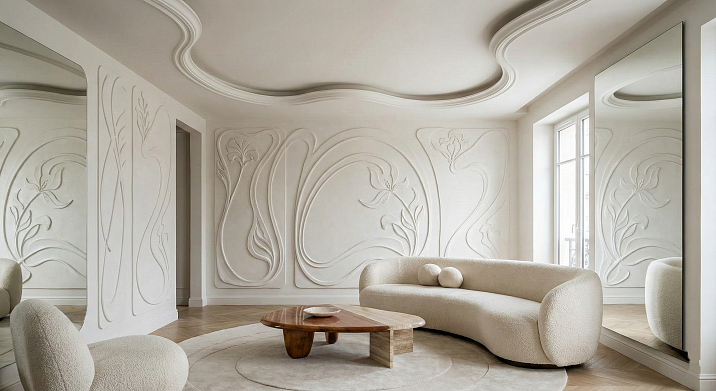
Classic is beautiful. But let's be honest: it's not for everyone. Baroque swirls, gilding, multi-tiered cornices with acanthus leaves — that's luxury, monumentality, theatricality. But what if you need a different atmosphere? Light, airy, modern, yet not flat? What if you want volume, relief, play of light on walls, but without historical reminiscences? This is where the territory ofdecorative panelsand Art Nouveau moldings begins.
Art Nouveau is not an attempt to abandon decoration. It's a reinterpretation of its nature. Instead of imitating historical styles — a search for new forms. Instead of heavy ornamentation — flowing lines, geometric purity, abstract compositions. Instead of bulky plaster —polyurethane wall panels, lightweight, technological, creating visual complexity without physical weight.




What is Art Nouveau molding and how does it differ from classic
When people say 'molding,' most imagine something palatial: rosettes with putti, cornices with scrolls, pilasters with capitals. This is the legacy of Baroque, Rococo, Classicism — styles where decoration demonstrated wealth, power, belonging to the elite.
Art Nouveau was born in the late 19th century as a rebellion against this excess. Architects and designers of that era (Gaudí, Mackintosh, Hoffmann) proclaimed: beauty lies not in copying the past, but in creating something new. Ornaments are inspired by nature — but do not literally copy plants, instead stylizing them into abstraction. Lines flow, curve, create rhythm — but without the symmetrical predictability of classicism.
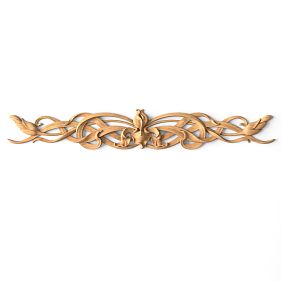
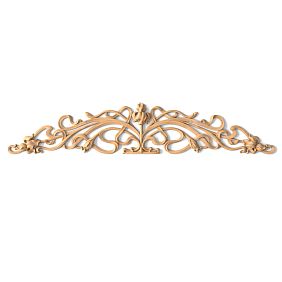
Modern Art Nouveau molding inherits this philosophy.Polyurethane moldingin the Art Nouveau style — these are not straight dry profiles or Baroque scrolls. These are smooth curves, asymmetrical compositions, geometric patterns with soft angles. Forms that create visual dynamics without overwhelming the space with details.




Key characteristics of Art Nouveau molding
Fluidity of lines. Art Nouveau avoids hard angles and straight lines. Lines flow, transition into one another, create a wave-like rhythm. A molding may start thin, gradually widen, then narrow again — organically, like a plant stem.
Geometric abstraction. If classicism reproduces recognizable plant motifs (acanthus leaves, rosettes, grapevines), Art Nouveau creates geometric patterns: circles, ovals, trapezoids, complex polygons. They form rhythmic compositions perceived as abstract art.
Asymmetry as a principle. Classical interiors are strictly symmetrical: the left side mirrors the right. Art Nouveau allows and even encourages asymmetry. A panel on one wall may be large, on another — smaller. Molding may not run centrally but shift, creating dynamic tension.
Minimalism of details. Art Nouveau is not afraid of emptiness. Large smooth surfaces, which in classicism would be considered 'empty,' in Art Nouveau become a backdrop for small but expressive accents. One large panel with relief — and the entire wall is resolved.
Integration with architecture. Art Nouveau molding is not applied to walls as decoration — it becomes part of the architecture. A panel forms a niche. Molding transitions into a door frame. Decoration and construction merge into a single whole.
Our factory also produces:
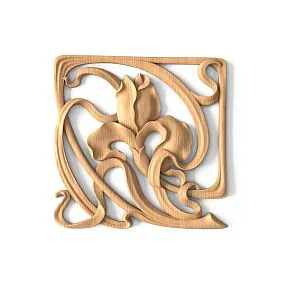
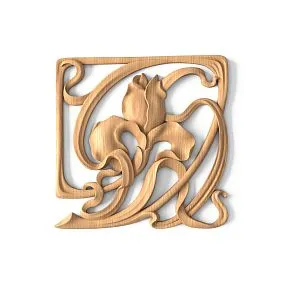


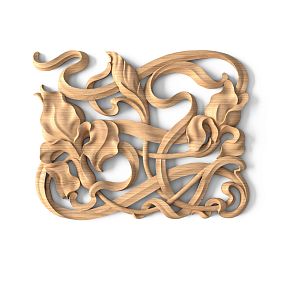
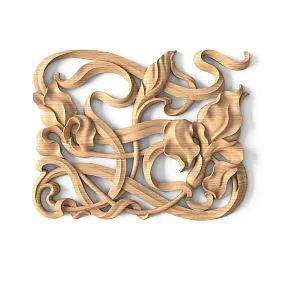

Polyurethane panels: the technological foundation of modern Art Nouveau
Historical Art Nouveau worked with plaster, wood, metal. Today, polyurethane has been added to this arsenal — a material that perfectly matches the philosophy of the style. Lightweight yet strong. Flexible yet stable. Technological yet expressive.
Polyurethane wall panels— these are not just flat plates. These are volumetric elements with relief depths from 5 to 50 mm, creating play of light and shadow. Relief can be geometric (concentric circles, radial lines, hexagonal honeycombs), plant-inspired (stylized leaves, waves, abstract scrolls), abstract (chaotic indentations creating texture).
Get Consultation
Why polyurethane is the ideal material for Art Nouveau
Freedom of form. Casting technology allows creating reliefs of any complexity. While in plaster, complex relief requires hours of manual work by a master craftsman, in polyurethane it's enough to make a mold once — and replicate with perfect accuracy.
This opens possibilities for geometric experiments. A panel with relief in the form of a three-dimensional hexagonal lattice, where each hexagon is recessed to different depths? Easy. Molding with a wave-like profile that smoothly changes height along its length? Possible.
Critical lightness. A panel measuring 600×600 mm with 30 mm relief depth made of plaster weighs 8-10 kg. A similar one made of polyurethane — 0.8-1.2 kg. A tenfold difference. This means: installation without special fasteners, without load on walls, possibility of installation even on drywall structures.
Lightness is important aesthetically. Modern design strives for visual weightlessness. When decor is physically light, it appears weightless—as if floating on the wall, not pressing down with mass.
Absolute moisture resistance. Polyurethane does not absorb water and does not deform under high humidity. Panels can be installed in bathrooms, kitchens, pools—anywhere where plaster would quickly deteriorate. This expands the application area: modern design is not limited to dry living rooms; it penetrates any space.
Universal paintability. Polyurethane accepts any paint: acrylic, latex, oil-based. You can create a matte, silky, glossy, or metallic finish. It can be painted the same color as the wall (the panel is perceived only by its relief) or in a contrasting color (the panel becomes a bright accent).
Durability. Polyurethane does not age, yellow, or crack. A panel installed today will look the same in 20 years as on the day of installation. This aligns with the modernist idea of formal longevity.
Types of decorative elements in the Art Nouveau style
Art Nouveau molding is not just panels. It is a systemdecorative elementsthat work together to create a cohesive architectural image.
Relief panels: accent through texture
A panel is a rectangular or square element with a three-dimensional pattern on its front surface. Standard sizes: 300×300, 500×500, 600×600, 1000×250 mm. Relief depth: 10-50 mm.
Geometric panels create rhythm through shape repetition. Square 500×500 mm panels with concentric circles deepening toward the center are mounted in a 3×3 grid. This creates a composition of 9 elements, each independent yet together forming a unified field. Light falling at an angle creates a gradient of shadows—from light edges to dark centers.
Abstract panels mimic natural textures. A panel with relief resembling tree bark (vertical cracks, scaly structure) adds organic quality to a minimalist interior. A panel with wave-like relief (like frozen water waves) creates a sense of movement on a static wall.
3D panels are elements with complex geometry where the relief creates volumetric shapes. Panels with protruding pyramids, panels with recessed spherical segments, panels with diagonal ribs—all are variants of 3D panels that turn a wall into a sculptural object.
Moldings: lines that shape space
Polyurethane moldingin the Art Nouveau style is a linear element (strip 2-2.5 m long) used to create frames, divide planes, and frame panels.
Thin moldings (width 20-40 mm) create graphic lines. They form frames on walls: rectangular, vertical, horizontal. The molding is painted in a color contrasting the wall (dark molding on a light wall or vice versa)—and the wall gains structure without being overloaded with massive decor.
Medium moldings (width 50-80 mm) with a smooth wave-like profile create soft transitions. Such molding can be used as a border at 1 m height from the floor, dividing the wall into two zones: lower (darker, more saturated) and upper (lighter, more neutral). This is a classic Art Nouveau technique—zoning without rigidity.
Wide moldings (width 100-150 mm) with geometric relief (a row of recessed circles, linear ornament) are used to create accent strips. A horizontal strip at eye level running along the entire room perimeter—and the space gains a clear horizontal coordinate that visually expands the area.
Appliqués and rosettes: point accents
An appliqué is a small decorative element (size 100-300 mm) mounted locally to create an accent. In Art Nouveau, appliqués are used sparingly but expressively.
Corner appliqués are placed at the corners of frames created by moldings. Instead of a direct joint of two moldings—an appliqué in the shape of a smooth transition, stylized leaf, or abstract curl. This softens the geometry, adding a handmade feel.
Central appliqués are placed in the center of a panel or frame as a focal point. An appliqué in the form of a stylized rose, abstract sun, or geometric medallion—a small but noticeable detail that draws the eye.
Rosettes are rarely used in Art Nouveau (they are more of a classical element), but if used—they are in a simplified form. A simple circle with radial lines, without lavish ornamentation—for a chandelier in a bedroom or living room.
Pilasters and half-columns: vertical dominants
A pilaster is a vertical element imitating a column but not load-bearing (purely decorative). In Art Nouveau, pilasters lack classical capitals and bases—they are simply vertical forms with a smooth profile.
Pilasters with wave-like cross-sections create vertical lines that visually raise the ceiling. Two pilasters on either side of a doorway—and the opening gains architectural significance without becoming a pompous portal.
Half-columns with geometric relief (vertical fluting, spiral lines) are used to zone large spaces. A half-column at the junction of two functional zones (living room-kitchen in a studio) visually divides the space while maintaining openness.
How relief works: the physics of light and shadow
The main thing in modernist molding is not the ornament, but the play of light. Relief creates shadows; shadows change throughout the day as the sun moves, and the wall lives, transforms, tells a visual story.
Light direction: the key to perceiving relief
Side lighting (from windows, wall sconces, floor lamps) creates the most expressive shadows. Relief with a depth of 20 mm under side lighting casts a shadow 40-50 mm long—the relief is perceived as twice as deep as it actually is.
A panel with concentric circles, illuminated by side light, transforms into a composition of light and dark rings. The effect is enhanced if the circles are recessed in steps (first by 10 mm, second by 20 mm, third by 30 mm) — creating a gradient shadow, from gray to almost black.
Frontal light (ceiling-mounted, chandelier above the panel) creates soft shadows, the relief is perceived more delicately. A panel with a wavy relief under frontal light appears as a light texture, not dominating but complementary.
Grazing light (source at floor or ceiling level, light runs along the wall) — the most dramatic option. Each convexity casts a long shadow, each recess becomes a dark void. A panel with geometric relief under grazing light appears almost three-dimensional, as if objects are protruding from the wall.
Color and its influence on the perception of relief
Monochromatic coloring (panel matching the wall color) — the relief is perceived only through shadows. This creates a restrained, elegant effect. A white panel on a white wall — a classic of minimalism with modern elements. The relief is present, but it is delicate, not loud.
Contrast coloring (panel darker or lighter than the wall) — the relief is enhanced by color. A dark gray panel on a light gray background — the relief is perceived through both shadows and color contrast. The effect is more powerful but requires caution to avoid overwhelming the space.
Metallic coloring (silver, gold, copper, bronze) — the relief begins to play with highlights. A panel with golden paint under side light sparkles on the convexities, dark in the recesses. This is a luxurious option for interiors where modern style combines with art deco.
Gradient coloring (smooth transition from one color to another) — the relief enhances the gradient. A panel painted from dark blue at the bottom to light blue at the top, with relief in the form of horizontal waves — the waves emphasize the color transition, creating visual movement.
Application scenarios: where and how to use modern panels and moldings
Theory is good, but let's get to practice. Where exactly, in which rooms, for what purposes to use modern decorative panels and moldings?
Living room: accent wall behind the sofa
The wall behind the sofa is a natural focal point of the living room. The gaze automatically goes there because it is the center of the composition. Making this wall expressive is task number one.
Option 1: composition of panels. Five square panels 500×500 mm with geometric relief (concentric squares, recessed towards the center) are mounted in a row at a height of 80-180 cm from the floor. The panels are painted to match the wall color (light gray), the relief is perceived through shadows. The composition creates horizontal dynamics, visually expands the wall.
Option 2: large panel + moldings. One large panel 1000×1500 mm with abstract relief (waves, stylized as frozen fabric) is placed in the center of the wall. Around it — a frame of thin moldings (width 30 mm), painted in a contrasting color (dark gray on a light gray background). The panel — accent, the frame — framing, the wall — a finished composition.
Option 3: vertical strips of panels. Three vertical strips, each 600 mm wide, composed of panels 600×300 mm (5-6 panels in a row). Panels with vertical relief (flutes, linear recesses). The strips are separated by 200 mm gaps. Effect: the wall is divided into vertical segments, the ceiling visually rises, rhythm is created.
Bedroom: headboard as an art object
The headboard area — the place you look at before sleep and after waking up. It should be aesthetically perfect, but not stimulating (the bedroom is a place of rest).
Option 1: panel across the entire width of the bed. Panel sized 1800×1200 mm (width of a double bed) with soft wavy relief (horizontal smooth waves, depth 15 mm). The panel is painted in a calm color (beige, gray-blue, dusty pink). The relief creates texture, but not aggressive — comfortable for perception.
Option 2: composition of small panels. Nine square panels 400×400 mm with different geometric reliefs (circles, squares, rhombuses, hexagons) are mounted in a 3×3 grid above the headboard. The panels are painted in a gradient (from light at the top to slightly darker at the bottom). Effect: visual complexity, but harmonious, not chaotic.
Option 3: symmetrical pilasters + panel. Two thin pilasters on the sides of the bed (height 2 m, width 80 mm, smooth wavy profile), between them — a panel 1400×1000 mm with a central medallion (stylized flower, abstract rosette). The pilasters create vertical coordinates, the panel — a horizontal accent, the composition is symmetrical but not rigid.
Hallway: first impression through relief
The hallway is the face of the house. A person enters — and forms an impression in 3 seconds. A decorative panel on the wall opposite the door — a way to immediately declare: every centimeter here is thought out.
Option 1: narrow vertical panel. Panel 400×2000 mm with vertical relief (a row of recessed ovals, running from bottom to top) is mounted in the center of the wall opposite the entrance door. The panel is a contrasting color (dark on a light background). Effect: vertical dominance, the gaze is drawn upward, the hallway appears taller.
Option 2: horizontal strip of panels. A row of rectangular panels 250×1000 mm with horizontal relief (linear flutes) is mounted at a height of 120-150 cm along the entire perimeter of the hallway. The panels are painted to match the wall color, the relief is perceived through shadows. Effect: the hallway gains a horizontal coordinate, visually expands.
Option 3: accent at the mirror. A frame of moldings around the mirror (molding width 60 mm, smooth profile) + four corner appliqués at the corners of the frame (stylized leaves). The frame is painted in gold or silver color. Effect: the mirror becomes an art object, the hallway gains character.
Kitchen: moisture-resistant decor in the work area
The kitchen is a room with high humidity, splashes, temperature fluctuations. Plaster moldings here will quickly deteriorate. Polyurethane panels are an ideal solution.
Option 1: panel above the dining area. A large panel 1200×800 mm with relief in the form of abstract swirls (stylization of coffee beans, fruits, gastronomic motifs) is placed on the wall above the dining table. The panel is painted in a contrasting color (e.g., dark green on a white background). Effect: the dining area stands out, becomes the center of the kitchen.
Option 2: vertical moldings instead of tiles. The backsplash is decorated not with tiles, but with moisture-resistant panels with smooth or finely textured coating (relief depth 3-5 mm for easy cleaning). The panels are mounted vertically, separated by thin moldings. Painted in a neutral color. Effect: a modern alternative to tiles, unique texture.
Option 3: molding frame around the range hood. The kitchen range hood is framed with moldings (wide profile 80-100 mm, geometric relief), creating a portal. The moldings are painted to match the kitchen cabinet color or a contrasting one. Effect: the hood is integrated into the design, does not look like a technical element.
Bathroom: Modernism in the Space of Water
The bathroom is a place where modernism feels at home. Flowing lines, organic shapes, the play of light on water—all of this resonates with modernist aesthetics.
Option 1: Panel behind the bathtub. The wall behind the bathtub is decoratedwith polyurethane wall panelswith a wavy relief (imitating water waves, depth 20-30 mm). The panels are painted in sea shades (turquoise, blue, aquamarine). Effect: the wall becomes an extension of the water element, the bathroom gains integrity.
Option 2: Vertical pilasters by the mirror. Two thin pilasters (width 60 mm, height 2 m) frame the mirror above the sink. The pilasters have a smooth, wavy profile and are painted in a contrasting color (dark gray on a light background). Effect: the mirror gains an architectural frame, the bathroom looks well-thought-out.
Option 3: Molding frame around the shower. The shower cabin door is framed with moldings (width 40 mm, smooth or with minimal relief for easy maintenance). The moldings are painted in a metallic color (chrome, silver). Effect: the shower integrates into the design and does not look like a foreign element.
Installation of Polyurethane Panels: A Hassle-Free Technology
One of the main advantages of polyurethane decor is the simplicity of installation. No special skills, complex equipment, or teams of craftsmen are needed. A person with basic repair skills can handle it independently.
Surface Preparation: The Foundation of Quality Installation
Cleaning. The wall must be clean, free of dust, grease stains, and old wallpaper. If the wall is painted, check the paint adhesion: stick a piece of painter's tape and rip it off sharply. If the paint peels off, it needs to be removed.
Leveling. Polyurethane wall panels are flexible and compensate for minor unevenness (up to 3-5 mm). However, significant unevenness (pits, bumps deeper/higher than 5 mm) must be leveled with putty. Otherwise, the panel will lay with gaps, and the relief will be distorted.
Priming. A mandatory step. Deep-penetration acrylic primer is applied in 1-2 coats, drying time 6-12 hours. Primer improves adhesive bonding and prevents peeling.
Marking: Accuracy Determines the Result
Find the center. If the composition is symmetrical (panel centered on the wall, moldings on the sides), mark the vertical axis of symmetry. Measure the wall width, divide it in half, and draw a vertical line with a pencil or chalk.
Mark the boundaries. Place the panel against the wall (without gluing), mark its boundaries with a pencil. Check the horizontality and verticality with a level. If the panel hangs crooked by 2-3 degrees, it will be noticeable.
Account for seams. If installing several panels side by side, determine the width of the seams between them. Standard: 3-5 mm (the seam is almost invisible but functional). Can be increased to 10-15 mm if the seam becomes a decorative element (painted in a contrasting color).
Installation: Glue and Precision
Glue selection. Use polyurethane glue (e.g., for polyurethane foam products) or acrylic mounting adhesive like 'liquid nails.' Do not use solvent-based glue—it can damage the polyurethane.
Applying glue. Apply glue to the back of the panel in a zigzag pattern (for a 500×500 mm panel—4-5 strips of glue) or in dots (for a 300×300 mm panel—6-9 dots). Do not apply glue to the edges of the panel (it may squeeze out when pressed).
Pressing. Place the panel against the wall exactly according to the markings, press firmly over the entire area for 30-60 seconds. The glue sets quickly, but full polymerization takes 2-3 hours. During this time, secure the panel with painter's tape (apply strips of tape from the panel to the wall).
Seams. After the glue dries (after 24 hours), the seams between panels are filled with acrylic sealant (if a seamless effect is desired) or left as is (if the seam is decorative).
Painting: the final touch
Priming the panel. Panels are sold pre-primed, but additional priming (especially if painting in a dark color) improves the result. Use acrylic primer, apply with a brush or roller.
Painting. Use high-quality paint (acrylic latex for interiors). Apply in 2-3 coats for even coverage. Paint textured areas with a brush, smooth areas with a roller. Drying time between coats: 2-4 hours.
Decorative effects. To enhance the relief, you can use the dry brush technique: base color (e.g., light gray), then with a dry brush and minimal paint (dark gray), go over the raised parts of the relief. This creates a patina, aged effect.
Stylistic Combinations: Modernism and Other Directions
Modernism does not exist in a vacuum. It combines beautifully with other styles, creating hybrid interiors.
Modernism + Minimalism
Minimalist foundation (white walls, simple furniture, no excessive decor) + accent modernism panels on one or two walls.Molding in a Minimalist Interiorshould be as concise as possible: thin moldings forming geometric frames, panels with shallow relief (10-15 mm), monochrome painting.
Effect: minimalism gains architectural expressiveness without losing purity and airiness. The panel adds texture but does not create visual noise.
Modern + Scandinavian style
Scandinavian light palette (white, light gray, beige) + wooden elements (floor, furniture) + polyurethane panels with organic reliefs (waves, stylized branches, abstract natural forms). Panels are painted in light tones, the relief is read by shadows.
Effect: the interior retains Scandinavian lightness and connection with nature but gains an additional visual layer—the play of light on the relief.
Modern + loft
Industrial foundation of the loft (brickwork, concrete, metal structures) + polyurethane panels with rough textures (imitation of concrete, rusty metal, cracked earth). Panels are painted in industrial colors (graphite, rust, dark blue).
Effect: the loft gains additional brutality but with an element of artistry. Panels soften the harshness of industrial materials, adding a layer of craftsmanship.
Modern + Art Deco
Art Deco and Modern are related (both emerged in the early 20th century) but differ in emphasis. Art Deco gravitates towards geometry, metallic accents, and luxury. Combination: geometric Modern panels (with clear rhythm, symmetrical forms) + metallic painting (gold, copper, chrome) + luxurious furniture.
Effect: an interior at the intersection of two styles, where Modern provides the architectural foundation, and Art Deco provides the shine and drama.
Questions and answers: everything you need to know before purchasing
How much do Modern polyurethane panels and moldings cost?
Prices depend on size, complexity of relief, and manufacturer. Panels: 800-3000 rubles per piece (size 500×500 mm). Moldings: 300-1200 rubles per linear meter. Overlays: 200-800 rubles per piece. This is 3-5 times cheaper than gypsum analogs and 5-10 times cheaper than wooden carved elements.
Can panels be mounted on uneven walls?
Yes, but with limitations. Polyurethane compensates for irregularities up to 5 mm. If the wall has pits 10+ mm deep, they need to be leveled with putty. Otherwise, the panel will not fit tightly, and gaps will form.
How to care for polyurethane panels?
Minimal care: wiping with a damp cloth to remove dust. If the panel is painted with washable paint, mild detergents can be used. Polyurethane does not absorb dirt, does not fade, and does not require restoration.
Are polyurethane panels safe for children's rooms?
High-quality polyurethane is certified for use in residential premises, including children's rooms. It does not emit toxins and does not cause allergies. Check for compliance certificates when purchasing.
Can panels be painted in dark colors?
Yes, polyurethane accepts any paints. But note: dark panels (black, graphite, dark blue) are visually heavier than light ones, creating a more dramatic effect. Use them as accents; do not cover all walls with dark color.
How long does it take to install panels?
Depends on the area and complexity of the composition. One panel 500×500 mm is installed in 15-20 minutes (preparation, applying adhesive, pressing, fixing). A composition of 9 panels—2-3 hours. Plus time for surface preparation (1-2 days considering primer drying) and painting (1 day considering layer drying).
Can panels be dismantled and reused?
Theoretically yes, but with caveats. If the panel was glued with acrylic adhesive, it can be carefully removed, and adhesive residues can be cleaned off. But during dismantling, there is a high risk of damaging the relief. The drywall base may be damaged. Reuse is possible but not guaranteed.
Are polyurethane panels suitable for facades?
Yes, there are special facade panels made of polyurethane, reinforced with fiberglass, resistant to UV radiation, frost, and moisture. They are more expensive than interior ones (1.5-2 times) but last for decades outdoors.
STAVROS: architecture of details, created for you
When it comes to choosingdecorative elementsFor interiors, material quality and precision of execution become critical. A cheap panel with blurred relief, uneven edges, and loose low-density polyurethane is money down the drain. It won't create the desired effect and will only spoil the impression of the interior.
For over twenty years, STAVROS has been manufacturing and supplying architectural decor that meets the highest standards.Wall PanelsMade of polyurethane with a density of 280-320 kg/m³, featuring relief depth up to 50 mm and detailing down to 1 mm — these are the materials that transform walls into works of art.
The STAVROS catalog features over 100 modern-style panel models: from geometric minimalist to abstract organic. Square, rectangular, round, oval panels — any shape for any task. Sizes range from compact 300×300 mm to large-scale 1200×2400 mm. Relief depth from delicate 5 mm to dramatic 50 mm.
Polyurethane moldingsFor walls, presented as a collection of 80+ profiles: thin graphic, medium wavy, wide geometric. Standard length is 2-2.5 meters, but custom non-standard lengths can be manufactured. Flexible moldings for curved surfaces with a bending radius from 1 meter.
Overlays, rosettes, pilasters, brackets — the full rangewall decor made of polyurethaneFor creating complete compositions. All elements are designed in a unified style, complement each other, and form harmonious ensembles.
STAVROS offers not just materials, but professional support at all stages. The company's designers consult on selecting panels for specific interiors, choose element combinations, and create visualizations. Technologists provide recommendations on installation, painting, and maintenance. Logisticians ensure on-time delivery with adherence to transportation conditions.
The professional tinting service allows obtaining panels in any color from the RAL catalog or according to the customer's sample. Matte, satin, glossy, metallic finishes — any painting option. Decorative effects like patina, aging, gradient — for exclusive projects.
Own production in the Moscow region guarantees stable quality and availability of popular models in stock. Quality control at all stages: from raw material acceptance to finished product packaging. Product warranty — confirmation of confidence that every panel, every molding is made flawlessly.
STAVROS showrooms in Moscow and St. Petersburg are spaces where you can see panels in person, assess the quality of relief, touch the material, compare different painting options. Exhibitions demonstrate finished compositions — how panels work in an interior, how they combine with moldings, how light plays on the relief.
Working with STAVROS, you get a partner who understands: an interior is not a set of elements, but an integral environment where every detail matters. Who provides materials of the highest quality and expert knowledge so that your interior becomes exactly as you envisioned it.
Entrust the creation of a modern interior to STAVROS — and get a space where lightness combines with expressiveness, modernity with beauty, technology with soul. Because decor created with precision and love for detail transforms not only walls but also life in that space.