Article Contents:
- Phenomenon of Popularity: Why Decorative Planks Have Conquered the World of Design
- Aesthetic Revolution in Interior Art
- Technological Progress as a Catalyst for Development
- Variety of Forms, Sizes, and Stylistic Solutions
- Geometric Diversity: From Simple to Complex
- Color and Texture Solutions
- Special Effects and Innovative Finishes
- Stylistic Directions and Design Concepts
- Minimalism: beauty of simplicity
- Scandinavian Style: Harmony with Nature
- Loft: industrial aesthetics
- Neoclassicism: A Modern Interpretation of Traditions
- Functional Advantages and Practical Applications
- Space Zoning Without Walls
- Acoustic Room Correction
- Integration of Engineering Systems
- Technological Aspects of Production and Quality
- Modern MDF Processing Methods
- Quality control systems
- Installation and Mounting: Professional Secrets
- Preparation Work and Planning
- Mounting Systems and Their Features
- Final Processing and Finishing
- Economic Efficiency and Long-Term Benefits
- Cost Analysis and Return on Investment
- Impact on property value
- Innovations and development prospects
- Digital technologies in design
- Smart Materials and Functional Finishes
- Ecological innovations
- Conclusion
Interior design is the language through which spaces speak. And if you are looking for a way to make your home speak the language of modern elegance, then decorative interior MDF planks will be your reliable ally in this creative process. Imagine a material capable of transforming an ordinary wall into a work of architectural art, turning a regular room into a space where every line has meaning, and every shadow tells a story.
What makes these elements so popular among professional designers and ordinary homeowners? The answer lies in their unique combination of aesthetic appeal, practical functionality, and remarkable versatility. This is not just a decorative material—it is a tool for creating atmosphere, a means of expressing individuality, and a way to imbue interiors with a character that will delight for years to come.






Phenomenon of Popularity: Why Decorative Planks Have Conquered the World of Design
Our factory also produces:


Aesthetic Revolution in Interior Art
MDF decorative slats have brought about a true revolution in understanding what a modern interior can be. They became a response to the need for people to create spaces that are not only functional but also emotionally rich. In an era when standard layouts and conventional solutions dominate residential construction, MDF material they offer a way to personalize space without major renovation.
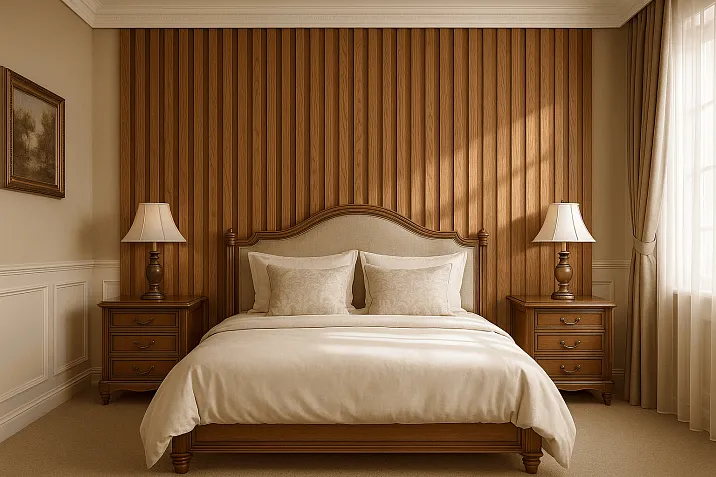
Perception psychology shows that vertical and horizontal lines affect our perception of room size differently. Vertical slats visually increase ceiling height, creating a sense of airiness and spaciousness. Horizontal compositions expand the space, making narrow rooms appear more proportionate.
The play of light and shadow created by slat structures adds depth and dynamism to interiors. Throughout the day, as the angle of sunlight changes, the surface 'comes alive' and transforms, creating a constantly changing lighting environment. This is especially important in urban apartments, where natural lighting is often insufficient.
Get Consultation
Technological progress as a catalyst for development
Modern MDF production technologies have enabled the creation of a material that surpasses natural wood in many parameters. Density of 700-900 kg/m³ ensures structural strength and stability, while uniform structure eliminates defects typical of natural wood — knots, cracks, uneven density.
The manufacturing process of slats includes precise sizing with tolerances of ±0.1 mm, ensuring perfect geometry of finished products. Such precision is unattainable when working with solid wood, which is subject to natural deformation. Moisture stabilization at a level of 6-9% prevents warping and cracking during use.
The ecological nature of modern MDF production is confirmed by E0 or E1 class certificates, meaning minimal formaldehyde emissions — at the level of natural wood. This makes MDF interior planks safe for use in residential spaces, including children's rooms.
Variety of forms, sizes, and stylistic solutions
Geometric diversity: from simple to complex
The world of decorative slats offers an amazing variety of shapes and profiles. Rectangular cross-sections remain a genre classic due to their versatility and ability to fit any interior style. The size range from 10×20 mm to 60×80 mm allows selecting optimal proportions for each specific project.
Beveled profiles create interesting lighting effects, while semi-circular cross-sections add softness and elegance to interior compositions. Complex multi-step profiles imitate classical architectural elements, allowing the creation of luxurious interiors in neoclassical style.
Element lengths vary from 1200 to 6000 mm, providing flexibility in design. Standard length of 2700 mm corresponds to the height of most residential rooms, allowing the creation of seamless vertical compositions without joints.
Color and texture solutions
The color palette of modern decorative slats covers the entire spectrum from classic wood tones to avant-garde color solutions. The imitation of natural wood species — oak, ash, walnut, wenge — is achieved with photographic accuracy thanks to modern digital printing technologies.
Matte surfaces create a sense of naturalness and warmth, glossy surfaces add modernity and visually expand space. Textured finishes imitate not only various wood species but also other materials — stone, metal, fabric.
Monochromatic solutions in neutral tones — white, gray, beige — serve as a universal background for any interior. Bright colors are used to create accent compositions and space zoning. Two-tone and gradient solutions add dynamism and modernity.
Special effects and innovative coatings
Patina finishes create an effect of noble aging, especially popular in interiors of classic and vintage styles. The technique of artificial aging includes applying several layers of different shades followed by partial removal of the top layers.
Metallic coatings contain metal particles that create a distinctive sheen and play of light. Bronze, copper, and steel shades are especially effective in loft and industrial design interiors.
Antibacterial coatings with silver nanoparticles ensure hygienic safety of surfaces, which is especially important in children's rooms and medical facilities. Self-cleaning coatings with photocatalytic properties break down organic contaminants under the influence of light.
Stylistic directions and designer concepts
Minimalism: beauty of simplicity
Minimalist design finds its MDF decorative interior slats ideal embodiment of its principles. Clean lines, absence of decorative excesses, functional beauty — all of this characterizes minimalist slat compositions.
Monochromatic solutions in white and gray tones create a calm, soothing atmosphere. Strict geometry and symmetry of compositions highlight the architectural qualities of the space. Gaps between slats are calculated with mathematical precision to create an ideal rhythm.
Integration of lighting into minimalist slat systems is done as delicately as possible. Hidden LED strips create a glowing surface effect without disrupting the overall concept of simplicity and purity.
Scandinavian style: harmony with nature
Scandinavian design philosophy reflects its core principles—proximity to nature, functionality, and coziness—in light wood tones of planks. Birch, pine, and beech in natural light shades create the atmosphere of a northern home.
Horizontal compositions are characteristic of Scandinavian style, as they evoke the log walls of traditional northern houses. Wide gaps between planks allow surfaces to 'breathe' and create a sense of naturalness.
Combining planks with natural materials—stone, wool, linen—strengthens the connection to nature. The ecological MDF class E0 fully aligns with Scandinavian principles of environmental care.
Loft: Industrial Aesthetic
Loft style uses MDF planks as a softening element for the rough industrial environment. Dark wood tones or metallic surface imitations harmonize with brick walls and concrete ceilings.
Intentionally rough surface treatment, visible fastening elements, contrasting material combinations—all are characteristic of plank use in loft settings. Asymmetric compositions and irregular rhythms emphasize the free, creative nature of the style.
Integration of industrial lighting—track systems, pendant lights in metal fixtures—creates an authentic loft atmosphere.
Neoclassicism: Modern Interpretation of Traditions
Neoclassical interiors use decorative planks to create a modern version of traditional wall panels—boiserie. Complex multi-step profiles, noble tones of oak and walnut, and golden accents create a palace-like luxury atmosphere.
Panel proportions are calculated according to classical architectural canons. The height of lower panels is 1/3 of the room’s height, creating harmonious proportions and emphasizing connection to historical traditions.
Combining planks with moldings, cornices, and rosettes creates a rich decorative composition characteristic of neoclassical style.
Functional Advantages and Practical Applications
Space zoning without walls
One of the main advantages of decorative MDF planks —the ability to zone space without erecting load-bearing walls. This is especially relevant in modern studio apartments and open-plan spaces.
Changing the direction, density, or color of planks creates visual boundaries between functional zones. The kitchen is separated from the living room by horizontal planks, while the sleeping area is defined by vertical compositions. The overall volume of space remains intact.
Semi-transparent plank structures allow light and air to pass through without creating a sense of enclosure. This is especially important in small spaces, where every square meter counts.
Acoustic Room Correction
Plank structures have pronounced sound-absorbing properties. Gaps between planks create resonant cavities that effectively absorb sound waves of specific frequencies. The sound absorption coefficient reaches 0.6–0.8 in the speech range.
To enhance the acoustic effect, sound-absorbing material—mineral wool, acoustic foam, special membranes—is placed behind the planks. A layer thickness of 50–100 mm ensures effective sound absorption across the entire frequency range.
Plank systems are especially effective in rooms with poor acoustics—large halls, open-plan offices, restaurants. They not only improve acoustic comfort but also create stylish interior design.
Integration of Engineering Systems
The space behind plank structures is ideally suited for housing various engineering communications. Electrical cables, low-voltage networks, heating and air conditioning pipes integrate easily into the overall design concept.
Removable elements at locations of outlets, switches, and junction boxes ensure access for maintenance. This is especially important in commercial interiors, where maintenance requirements for engineering systems are more stringent.
Smart home systems find ideal placement for sensors, controllers, and actuators within plank structures. Concealed installation does not disrupt interior aesthetics and ensures efficient operation of automated systems.
Technological Aspects of Production and Quality
Modern MDF Processing Methods
The production of high-quality decorative planks requires the use of advanced technologies and precision equipment. The process begins with preparing raw material — wood fibers of a specific fraction and moisture content. Sorting fibers by size ensures uniformity of the final material's structure.
Plank forming occurs under a pressure of 25–40 MPa at a temperature of 200–230°C. Pressing time is calculated to the second to ensure complete polymerization of the binder. Modern CNC presses automatically control all process parameters.
Thickness calibration is performed on multi-spindle grinding machines with an accuracy of ±0.05 mm. Such precision ensures ideal geometry of the planks and simplifies their installation. Quality control includes checking density, moisture content, and strength at each production stage.
Quality control systems
Modern production facilities implement total quality control systems covering all stages of the technological process. Automated systems control temperature, pressure, humidity, and material feed rate with precision unattainable by humans.
Laboratory control includes tests for strength, moisture resistance, formaldehyde emission, and dimensional stability. Each product batch is accompanied by a quality certificate specifying the actual material characteristics.
Product tracing allows tracking the path of each item from raw material to the end consumer. RFID tags or QR codes contain complete information about composition, production date, and test results.
Installation and mounting: professional secrets
Preparation and planning
Installation success MDF plank finishing Success of installation depends 80% on the quality of preparatory work. Foundation survey includes checking wall geometry, identifying irregularities, and determining the foundation material. Deviations exceeding 5 mm per meter require leveling.
Layout design of planks is performed considering architectural features of the room. Symmetrical layout emphasizes correct geometry, while asymmetrical layout can correct proportion deficiencies. 3D modeling allows evaluating the result before starting work.
Material calculation is performed with a 10–15% reserve factor, accounting for trimming waste and possible defects. Fasteners are selected depending on the foundation type and mounting method.
Fastening systems and their features
Clamp systems provide concealed fastening without visible elements on the surface. Clamps are milled into the end of the plank to a depth of 8–15 mm depending on material thickness. Milling accuracy is critical — deviations exceeding 0.2 mm will complicate installation.
Guide profiles are installed at 400–600 mm intervals strictly level. Adjustable brackets allow compensating for foundation irregularities up to ±15 mm. Horizontal and vertical alignment is checked using a laser level.
Adhesive fastening is used on perfectly flat surfaces. Polyurethane adhesives provide a connection strength of 8–12 MPa while maintaining elasticity. Open time ranges from 5–15 minutes depending on air temperature and humidity.
Final finishing and refinement
After completing installation, final refinement of joints and junctions is performed. Ends of planks at trimming locations are processed with fine-grit sandpaper to remove burrs and chips. Protection of ends with special compounds prevents moisture penetration.
Joint seams are filled with elastic sealant matching the material color. Excess sealant is removed before polymerization using a damp cloth. Well-executed seams are virtually invisible and do not disrupt the overall surface perception.
Final surface cleaning includes removing dust, fingerprints, and adhesive residue. Special care products for MDF create a protective film and enhance the material’s decorative qualities.
Economic efficiency and long-term advantages
Cost analysis and return on investment
Initial costs for decorative interior MDF planks range from 800–2500 rubles per square meter of finished surface depending on project complexity and material quality. This is comparable to the cost of other decorative finishes, offering superior aesthetic and functional qualities.
Installation work costs 40–70% of material cost when using professional crews. Complexity of geometry and quality requirements affect labor costs. DIY installation reduces overall expenses but requires skills and specialized tools.
Operational costs are minimal due to material durability and low maintenance needs. Regular care is limited to dry or damp cleaning. Service life of quality planks is 15–25 years without loss of decorative qualities.
Impact on property value
Quality decorative plank finishing increases property market value by 8–15% depending on segment and region. In the luxury segment, the effect is more pronounced due to high appreciation of individuality and style.
Commercial properties with stylish finishes rent for 20–30% more than standard spaces. Prestigious appearance attracts reputable tenants willing to pay for a high-quality working environment.
The liquidity of property with quality finishing is higher due to broad appeal to potential buyers. Unique design becomes a competitive advantage in a saturated real estate market.
Innovations and Development Prospects
Digital Technologies in Design
Virtual and augmented reality revolutionize the process of designing interiors with decorative planks. Clients can "walk through" their future interior even before work begins, evaluating various layout and color options.
Parametric design automates the creation of complex geometric compositions. Algorithms generate multiple layout options, optimizing them according to specified criteria — aesthetics, functionality, material cost.
Artificial intelligence analyzes user preferences and offers personalized solutions. Machine learning based on large datasets of completed projects helps predict the popularity of various design solutions.
Smart Materials and Functional Coatings
Integration of electronics transforms decorative planks into "smart home" elements. Built-in sensors monitor temperature, humidity, air quality, and lighting. Information is transmitted to the building's central control system.
Chromogenic coatings change color depending on temperature, lighting, or user command. Liquid crystals embedded in the coating structure respond to electrical signals by altering optical properties.
Self-healing coatings contain microcapsules with repair compounds. When damaged, the capsules rupture, releasing substances that polymerize and fill cracks or scratches.
Ecological Innovations
Biodegradable binders based on plant proteins and resins gradually replace synthetic formaldehyde-based compositions. Soy and casein adhesives provide strong bonding while ensuring full ecological safety.
Carbon-neutral production is achieved through the use of renewable energy sources and CO₂ utilization. Modern factories use biomass to generate heat and electricity, closing the carbon cycle.
Recycling technologies enable the production of new planks from manufacturing waste and dismantled structures. A closed-loop material cycle minimizes environmental impact.
Conclusion
A journey into the world MDF decorative interior planks opens up incredible possibilities for modern interior design. This material has become a catalyst for a creative revolution, breaking down the boundaries between functionality and beauty, between accessibility and exclusivity.
The evolution from simple decorative planks to complex architectural systems reflects the general trend in construction technology — striving for greater functionality while preserving aesthetic appeal. Modern decorative planks are not just a material; they are a philosophy of creating spaces where every element has meaning and purpose.
Technological excellence in production ensures consistent material quality and predictable characteristics. The ecological safety of modern MDF materials meets the strictest international standards, making them suitable for any type of space.
Design possibilities of decorative planks are virtually limitless. From minimalist monochromatic compositions to complex multi-colored installations — every project can receive a unique solution reflecting the client's individuality and the designer's professionalism.
Functional advantages include space zoning, acoustic correction, and integration of engineering systems. This makes decorative planks not only aesthetically pleasing but also practical solutions for modern interiors.
Economic efficiency is demonstrated by a reasonable balance between initial costs and long-term benefits. Impact on property value, durability, ease of maintenance — all of this makes investments in quality finishing justified and profitable.
Innovative development directions promise even more opportunities in the future. Smart materials, digital design technologies, ecological innovations — all of this is already changing perceptions about the possibilities of interior finishing.
Future prospects for the decorative plank market are linked to increasing demands for quality of life and individualization of consumer preferences. People increasingly value uniqueness and personalization of their living spaces.
The professional community of designers and architects highly values the potential of MDF decorative planks for creating outstanding interiors. The material has become an indispensable part of the modern designer's toolkit, enabling the realization of the most daring creative ideas.
The future of interior design is inseparably linked to materials that combine beauty, functionality, eco-friendliness, and accessibility. MDF decorative interior planks already embody these principles, laying the foundation for tomorrow's interiors.
The company STAVROS, with its rich experience and relentless pursuit of perfection, continues to be a leader in the production of high-quality decorative materials. Every STAVROS product embodies advanced technologies, flawless quality, and boundless creative expression potential, providing a material foundation for interiors that inspire, delight, and serve faithfully for many years, becoming an indispensable part of their owners' lives.