Article Contents:
- Why modernity needs wood
- Biophilic design: scientific justification
- Texture contrast: enhancing perception
- Thin slats: rhythm and structure
- Vertical slats: visual height enhancement
- Horizontal Laths: Expanding Space
- Diagonal and herringbone: dynamics
- Material and finish
- Geometric overlays: accents without ornaments
- Round and oval rosettes
- Square and rectangular overlays
- Linear overlays: direction and rhythm
- Natural textures: the beauty of imperfection
- Brushed wood: revealing structure
- Thermally treated wood: color depth
- Oil and wax: natural protection
- Style mixing: where combinations work
- Scandinavian minimalism + wooden accents
- Industrial loft + warm wood
- Japanese minimalism + natural wood
- Modern classic + geometric decor
- Practical solutions: furniture and decor
- Kitchen: wooden facades and geometry
- Living room: accent wall made of slats
- Bedroom: wooden headboard
- Bathroom: wood and humidity
- Processing technologies: from machine to hand
- CNC processing: geometric precision
- Hand finishing: uniqueness of detail
- Eco-friendly coatings: oil and wax
- Integration mistakes: what to avoid
- Stylistic Dissonance
- Tree redundancy
- Incorrect processing
- Scale mismatch
- Frequently Asked Questions
- Can wooden decor be used in a small apartment?
- How to combine different wood species in one interior?
- Does wooden decoration require special care?
- Is using solid wood eco-friendly?
- Which wooden elements are trending in 2026?
- Is integrating wooden decor expensive?
- Conclusion: the balance of nature and technology
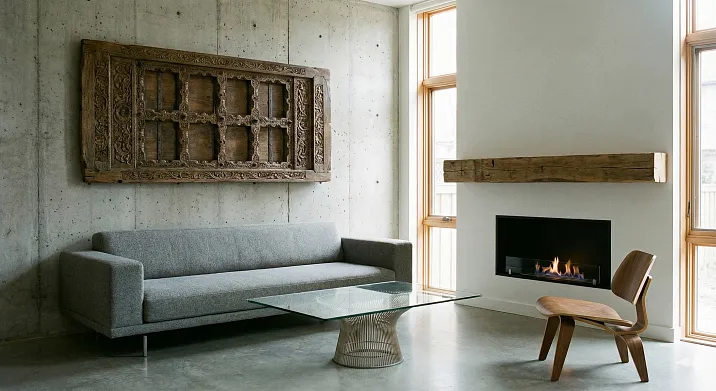
Modern interior and wood — does it sound like a contradiction? Minimalism and carving, laconic forms and natural texture, metal with glass and solid oak — it seems these worlds exist in parallel, never intersecting. But it's precisely at the intersection of opposites that the most expressive solutions are born, whereSolid wood decorative elementscease to be attributes of exclusively classic styles and organically integrate intomodern furniture, creating a balance between technological sophistication and natural warmth, between geometry and organic forms.
How does this work? Not through mechanical mixing of styles, where a carved Baroque overlay is glued onto a minimalist facade, creating stylistic dissonance. But through thoughtful integration, where wooden decor is adapted to modern aesthetics: thin slats instead of massive panels, geometric overlays instead of floral ornaments, natural textures without excessive processing, matte surfaces instead of glossy ones.interior decorationin a modern context is not mere decoration, but a functional element that structures space, creates rhythm, and adds tactility.
Let's examine specific combination examples that work in real interiors of 2026, whereModern collectionoffers solutions that connect woodworking traditions with current design trends. From the mix of Scandinavian minimalism and natural wood to the combination of industrial loft with wooden accents — let's analyze what makes these combinations harmonious, not eclectic.


Why modernity needs wood
A modern interior in its pure form is concrete, glass, metal, plastic. Cold materials that create technological sophistication, graphic quality, and strictness. They are efficient, durable, hygienic — but lack warmth. Humans cannot exist in an absolutely sterile environment; the psychology of perception demands balance: if everything around is industrial, the brain begins to seek connection with nature, organic forms, and naturalness.
Solid wood decorative elementsfulfill this function. They introduce tactility to smooth surfaces, warmth to cold palettes, and the uniqueness of texture to the uniformity of industrial materials. Wood breathes, it has a grain pattern that never repeats twice, it ages, develops patina, creating history — something concrete or steel do not do.




Biophilic design: scientific justification
Biophilic design is a concept that asserts: humans are evolutionarily attuned to perceive natural elements, and their presence in interiors improves psychological state, reduces stress, and increases productivity. Natural wood is one of the key biophilic elements. Its texture, smell, and tactility activate brain areas responsible for comfort and safety.
In a modern interior dominated by synthetic materials, even a small amount of wood creates the effect of nature's presence. A wooden handle on a metal kitchen cabinet door, a wooden tabletop on a metal table frame, wooden slats on a concrete wall — pinpoint accents that change the perception of the entire space.
Our factory also produces:


Texture contrast: enhancing perception
Material perception is enhanced by contrast. Smooth glass next to rough wood, cold metal next to warm solid wood, uniform concrete next to textured wood — these pairs create visual tension that makes the interior expressive. If all materials are uniform, the interior becomes monotonous, boring, and emotionless.
Modern Furnitureoften combines materials: metal frames with wooden elements, glass facades with wooden handles, plastic seats on wooden legs. This is not eclecticism, but conscious use of contrast to create richness of perception.
Get Consultation
Thin slats: rhythm and structure
Wooden slats — a simple element that has become a symbol of modern interiors in recent years. Thin solid wood planks installed with equal spacing vertically or horizontally create rhythm, structure space, make a flat wall three-dimensional, without overloading the interior.
Vertical slats: visually increasing height
Vertical slats on a wall create visual upward movement, making a room appear taller. Planks 2-4 cm wide, installed with 5-10 cm spacing, form a grid that lets light through without creating a solid surface. Behind the slats, there can be a contrasting wall (dark slats on a light wall or vice versa), hidden lighting that creates light strips between the planks.
Vertical slats are used for zoning: they separate the living room area from the dining area, the bedroom from the workspace in a studio, creating a visual boundary without a physical wall. This preserves the openness of the space, light passes through the slats, but the zones are distinguished.
Horizontal boards: expanding space
Horizontal slats create a visual movement in width, making narrow spaces appear wider. They function as a modern interpretation of panels but without bulkiness: light and airy, they add texture without consuming space.
Horizontal slats are often used on accent walls: behind the sofa in the living room, behind the bed headboard in the bedroom, on the wall with the TV. They create a background that doesn't distract but structures, making the wall not empty but organized.
Diagonal and herringbone: dynamics
Diagonal placement of slats or installation in a herringbone pattern creates dynamics, movement that attracts the eye. This is a more complex solution requiring precise installation, but the result is visually richer than just verticals or horizontals.
Furniture decorSlats can be used not only on walls but also on furniture facades: cabinet doors finished with thin slats create texture, hide contents, but do not make the facade solid.
Material and finish
Solid oak or beech slats, treated with oil or wax, preserve the natural wood texture, tactility, and scent. This is an eco-friendly solution that aligns with the trend toward naturalness. Slats can be tinted in dark or light shades, painted white, gray, or black to integrate into a specific interior color scheme.
A matte surface is a mandatory condition for modern style. Gloss, shine—attributes of classic or kitsch—are inappropriate in minimalism. Matte wood absorbs light, creates depth, nobility that corresponds to modern aesthetics.
Geometric overlays: accents without ornaments
Classical carved overlays—floral ornaments, scrolls, acanthus—do not fit into a modern interior. But the principle of overlays as a decorative element creating relief on a flat surface is relevant. The solution is geometric overlays, where the form is abstract, laconic, without ornamental excess.
Round and oval rosettes
A round rosette is a simple geometric form that can be used as an accent on a furniture facade, on a wall, or on a ceiling. In a modern interpretation, a rosette is not a flower with petals but concentric circles, radial lines, a geometric pattern that creates a visual center without narrative.
A rosette on a cabinet door instead of a handle, a rosette on an accent wall as an art object, a rosette on the ceiling around a light fixture—usage options where geometry works as modern decor.
Square and rectangular overlays
Square overlays installed on a facade with a certain rhythm create a modular grid that structures the surface. Rectangular overlays, oriented vertically or horizontally, enhance direction, making the facade not flat but textured.
interior decorationGeometric overlays can be painted the same color as the facade, creating tonal relief where the form is read through light and shadow, not color contrast. Or contrasting: dark overlays on a light facade, creating graphic quality characteristic of modern style.
Linear overlays: direction and rhythm
Thin linear overlays—strips 1-2 cm wide, installed parallel with equal spacing—create a linear rhythm that makes the surface dynamic. This is similar to slats but on a smaller scale, at the level of furniture facades, not walls.
A cabinet door with vertical linear overlays looks modern, structured, not boring. A dresser with horizontal overlays on drawer fronts creates a rhythm that unites disparate drawers into a single composition.
Natural textures: beauty of imperfection
Modern style does not require perfect smoothness. Moreover, the trend in recent years is preserving the natural wood texture, its imperfections, knots, cracks, color unevenness. This is the philosophy of wabi-sabi, the Japanese aesthetic of the beauty of the imperfect, which has penetrated Western design and become part of the modern approach.
Brushed wood: revealing structure
Brushing is a processing technique where soft wood fibers are removed with a metal brush, revealing hard annual rings, creating relief. A brushed surface is tactile, inviting touch, feeling the texture. Inmodern furniturebrushed wood is used for countertops, facades, handles—elements that come into contact with the hand.
A brushed oak countertop on a metal frame is a classic combination where wood texture contrasts with metal smoothness. Brushed kitchen cabinet facades create tactile richness that smooth MDF or plastic cannot provide.
Thermally treated wood: depth of color
Thermal treatment—high-temperature wood processing without oxygen—changes the wood color to darker, deeper, chocolate or coffee, without using stains or paints. This is an eco-friendly way to obtain dark wood while preserving naturalness.
Thermally treated wood has increased stability, reacting less to humidity, making it suitable for kitchens, bathrooms, spaces with variable climate. In modern interiors, thermowood is used for contrast: dark elements against light walls, dark furniture in a light space.
Oil and wax: natural protection
Coating with oil or wax preserves open wood pores, tactility, the ability to breathe. This is the opposite of varnish, which creates a film, seals the wood, makes it feel plastic. Oil penetrates the wood, emphasizes texture, gives a slight matte sheen that is noble, not flashy.
Solid wood decorative elementsWood treated with oil is the standard for modern interiors where naturalness, eco-friendliness, and connection with nature are valued. Oil allows wood to age beautifully, patinate, change shade over time, adding history and life to the interior.
Style Mixes: Where Combinations Work
Scandinavian Minimalism + Wooden Accents
Scandinavian style features white walls, light wood, minimal furniture, and maximum light. Wooden elements here are organic: light birch or pine slats on white walls, wooden furniture legs, wooden shelves. This is not decoration for decoration's sake, but functional elements simply made of wood, preserving naturalness.
A wooden dining table top, wooden chairs with minimalist geometry, wooden mirror frames—these elements create warmth without overloading the interior. The color palette is light and natural: white, gray, beige, light brown.Modern collectionoffers elements that perfectly fit the Scandinavian aesthetic: laconic forms, light wood, matte surfaces.
Industrial Loft + Warm Wood
Loft—brick walls, concrete ceilings, metal structures, exposed utilities. Cold, brutal, industrial. Wood in a loft plays the role of a softening element that makes the space livable, not turning it into a factory workshop.
A massive wooden beam on the ceiling, a wooden table on metal legs, wooden shelves on metal brackets, wooden kitchen fronts against a brick wall—these combinations work because wood contrasts with industrial materials, creating a balance between cold and warmth.
Wood in a loft is often rough, with preserved traces of time: knots, cracks, unevenness. This is not polished furniture, but brutal constructions where wood is a building material, not a piece of jewelry.Solid wood decorative elementsin a loft may be intentionally aged, brushed, patinated to match the overall aesthetic.
Japanese Minimalism + Natural Wood
The Japanese approach to interior design is a philosophy of emptiness, where every element matters, where there is nothing superfluous, where form is simple but perfect. Wood in a Japanese interior is a key material, but not decorative—structural.
Tatami mats, sliding shoji partitions, low tables, sleeping platforms—all these are wooden constructions where wood is not adorned but presented in its natural form. Surfaces are smooth but not polished, matte, with preserved texture.
A modern interpretation of Japanese style uses wooden slats for zoning, wooden wall panels, wooden furniture of minimalist forms. The color palette is restrained: natural wood, white, black, gray.interior decorationis selected so as not to disrupt the balance, not to create excess, preserving emptiness as a value.
Modern Classic + Geometric Decor
Modern classic is simplified classical forms, where proportions and symmetry are preserved, but ornamental excess is removed.Modern Furniturein this style may have classical silhouettes—a chest of drawers on legs, a table with an apron, an armchair with armrests—but without carving, without gilding, with minimal decor.
Geometric overlays on furniture fronts, linear moldings on walls, simple cornices without ornaments—this is decor that structures but does not overload. The color palette can be classic—white, cream, gray—or contrasting—black with white, dark wood with light walls.
This style works in apartments with classic layouts, high ceilings, where full minimalism would be too cold, and traditional classicism—excessive. Modern classic is a golden mean, where the comfort of classicism meets the purity of modernity.
Practical Solutions: Furniture and Decor
Kitchen: Wooden Fronts and Geometry
A modern kitchen often features smooth fronts without handles, opening with a push, built-in appliances, minimal visible details. But a fully glossy, plastic kitchen can be too sterile. Wooden elements bring warmth.
Upper fronts—smooth, white or gray, without handles. Lower fronts—made of solid oak, brushed, with natural texture, with wooden bracket handles. Countertop—wood or artificial stone, but with a wooden cutting board integrated into the countertop. Backsplash—porcelain stoneware or glass, but framing—wooden slats.
This mix of materials creates a balance between functionality and coziness, between technological sophistication and naturalness. The kitchen remains modern but not cold.
Living Room: Accent Wall of Slats
The wall behind the sofa or TV is a traditional accent zone. Instead of wallpaper or paint—wooden slats installed vertically with a spacing of 7-10 cm. Behind the slats—a contrasting dark-colored wall, hidden lighting that creates light stripes.
Living room furniture is modern: a low sofa on metal legs, a coffee table with a glass top on a wooden base, a shelving unit with a metal frame and wooden shelves. Wooden slats on the wall link disparate wooden furniture elements into a single composition, creating a background that unifies.
Bedroom: Wooden Headboard
A bed headboard is a functional and decorative element. In a modern bedroom, the headboard can be made of wooden slats, solid wood with natural texture, or geometric panels.
A wooden headboard from floor to ceiling, with built-in lighting, shelves for books and decor — this is not just a bed back, but an accent wall that structures the bedroom. The rest of the furniture is minimalist: bedside tables on legs, a wardrobe with smooth fronts, but the wooden headboard sets the tone, making the bedroom warm and lived-in.
Bathroom: wood and moisture
Wood in the bathroom — seemingly incompatible. But modern processing technologies make wood resistant to moisture. Heat treatment, oil impregnation, the use of moisture-resistant species (teak, larch) allow wood to be used even in wet areas.
A wooden countertop under the sink, wooden shelves, wooden slats on the wall — these elements bring warmth to cold tiles and chrome plumbing. It is important to properly treat the wood, ensure ventilation, and prevent water stagnation on wooden surfaces.
Processing technologies: from machine to hand
Furniture decoris created by a combination of technologies. CNC machines cut geometry with micron precision, mill slats, create perfectly repeating elements. But the finishing is manual: sanding, brushing, oil application, quality control.
CNC processing: geometric precision
Geometric overlays, slats of the same width, rosettes with concentric circles — these elements require the precision that only a machine provides. A CNC milling machine cuts solid oak or beech according to a given program, creating parts that are identical to within tenths of a millimeter.
This is critical for modern style, where geometry must be flawless. Unevenness, misalignment, deviation in size — this destroys the aesthetics. The machine eliminates errors that are inevitable with manual work.
Manual finishing: uniqueness of the part
After the machine, the part undergoes manual processing: it is sanded by hand, technological marks are removed, it is checked for defects, parts with unacceptable knots or cracks are rejected. This is a quality guarantee that fully automated production cannot provide.
Manual brushing, if applied, creates a unique relief where each part is slightly different from the other. This is a fine line between serial production and uniqueness, where technology provides repeatability, and the master's hand provides individuality.
Eco-friendly coatings: oil and wax
Natural-based oils and waxes — linseed oil, carnauba wax — penetrate the wood, protect it, highlight the texture, but do not create a film. The wood remains breathable, tactile, alive. This is an eco-friendly choice, in line with 2026 trends for naturalness, safety, conscious consumption.
Oil coating can be renewed: wipe the surface with fresh oil once a year, and the protection is restored. This does not require professional skills, unlike varnish coating, which, if damaged, requires complete re-sanding and re-varnishing.
Integration mistakes: what to avoid
Stylistic dissonance
A carved Baroque overlay on a minimalist facade — this is not a mix of styles, but a stylistic cacophony. Classic ornaments and modern geometry are incompatible without a transitional element that connects them. If you want a mix — use simplified classical forms in a modern interpretation, but not a literal transfer of Baroque into minimalism.
Excess of wood
Wood on the floor, on the walls, on the ceiling, all furniture wooden — this is overload, monotony, where wood loses value, becomes a background, not an accent. Wood works in contrast with other materials. If everything is wooden — there is no contrast, no expressiveness.
Incorrect processing
Glossy varnish on wood in a modern interior — a mistake. Gloss is an attribute of classicism, kitsch, the 90s, but not modern minimalism. Matte surfaces, oil, wax — this is the standard. If wood shines — it looks cheap, plastic, unnatural.
Mismatch in scale
Massive wooden beams in an apartment with 2.7-meter ceilings — this is visual pressure that makes the room lower, darker. Wooden decor should match the scale of the space: in small rooms — thin slats, small overlays, light wood. In large ones — massive elements, dark wood, large forms are possible.
Frequently asked questions
Can wooden decor be used in a small apartment?
Yes, but considering the scale. Thin slats, small overlays, light wood species do not overload the space. Wood on one accent wall, wooden furniture legs, a wooden countertop — point accents that add warmth without visually eating up square meters.
How to combine wood of different species in one interior?
Either one species in all wooden elements, or contrasting species with a deliberate concept: light oak on the walls, dark walnut in the furniture. But not three or four species of different colors and textures — this is chaos. Rule: maximum two wood species in one room, with a clear contrast or with similar shades.
Does wooden decoration require special care?
Minimal. Wiping with a dry or slightly damp cloth from dust, renewing the oil coating once a year — that's all. Wood treated with oil is not afraid of normal household humidity, scratches on it are less noticeable than on varnish, and are easily repaired locally without complete re-sanding.
Is it eco-friendly to use solid wood?
Yes, if the wood is certified (FSC, PEFC), then its harvesting is carried out with forest restoration, without harming the ecosystem. Solid wood is a renewable resource, unlike plastic or metal, which require energy-intensive production. Wood accumulates carbon, purifies the air during growth, and even after cutting, in the form of furniture, continues to store this carbon.
Which wooden elements are relevant in 2026?
Reiki - vertical, horizontal, diagonal. Geometric overlays - circles, squares, linear elements. Brushed textures - revealed wood grain. Matte oil-wax finishes. Natural colors without staining or toning in restrained shades - gray, graphite, dark chocolate, bleached oak.
Is it expensive to integrate wooden decor?
Depends on the scale. A few wooden slats on an accent wall, wooden furniture handles, a wooden countertop - these aren't astronomical sums. Full wall paneling with wood, custom solid wood furniture - more expensive. But wood is a long-term investment; it doesn't need replacing after 5 years like laminate or MDF, it serves for decades, preserving and even increasing aesthetic value.
Conclusion: the balance of nature and technology
Solid wood decorative elementsandModern Furniture— these are not opposites that need reconciling through compromise. They are partners that enhance each other: wood brings warmth, tactility, and a connection to nature into a technological space, while modern form frees wood from ornamental excess, allowing it to be itself, a material with unique texture, not a canvas for a carver.
Integrating wooden decor into a modern interior requires a sense of proportion, an understanding of scale, and respect for the material. It's not mechanically adding wooden elements hoping they'll automatically make the interior cozier. It's thoughtful design where each wooden element has a function - structural, compositional, tactile - and where wood doesn't compete with other materials but complements them.
interior decorationWood in 2026 is slats that zone space, geometric overlays that create relief without ornaments, natural textures preserved and highlighted by treatment, matte surfaces that are noble and tactile. It's not nostalgia for classicism, but a new aesthetic where wood is valued for its materiality, for the uniqueness of each piece, for its eco-friendliness, for its ability to age beautifully.
Modern collectionSTAVROS offers elements designed precisely for such integration: laconic forms, geometric purity, quality of processing that meets modern standards. It's not simplified classicism, but an independent aesthetic where wood exists in a modern context, where production technologies are combined with woodworking traditions.
Style mixes that work - Scandinavian minimalism with wooden accents, industrial loft with warm wood, Japanese philosophy of emptiness with natural textures, modern classicism with geometric decor - all are based on balance: between cold and warmth, between technology and nature, between geometry and organic forms. Wood in these mixes is not a decorative addition, but a structural element that shapes the character of the space.
Company STAVROS is a manufacturer ofof decorative elements made of solidoak and beech, operating at the intersection of tradition and technology. Over twenty years of experience in woodworking, modern production with CNC machines, manual finishing of each detail, eco-friendly coatings, a wide range from classic carved elements to modern geometric forms - all this allows STAVROS to offer solutions for any interiors, for any tasks, for any styles.
Furniture decorSTAVROS products are not mass production of standard parts. They are collections developed by designers who understand modern trends, master classical proportions, and know wood as a material with character, requirements, and possibilities. Each element undergoes quality control, each detail is sanded by hand, each product is packaged to reach the customer in perfect condition.
STAVROS works with architects and designers, providing them with tools for project implementation: catalogs of elements, the possibility of custom manufacturing from drawings, consultations on wood species selection, processing methods, and installation. Works with furniture factories, supplying legs, handles, overlays, frames - components from which furniture is assembled. Works with private clients, helping to select elements for renovation, for interior updates, for creating unique details that will make a home one-of-a-kind.
ChoosingSolid wood decorative elementsandmodern furnitureBy choosing STAVROS, you choose quality tested by time, eco-friendliness confirmed by certificates, aesthetics corresponding to current trends, functionality thought out to the smallest detail. It's not buying decorative elements; it's an investment in an interior that will delight for years, that won't become outdated in a season, that will become a backdrop for life, worthy of hosting important events, meetings, and memories.
Unexpected combinationsof decorative elements made of solidandmodern furniture— these are not experiments for experiment's sake. It's the logic of modern design, which doesn't abandon traditional materials but reinterprets them, adapts them to a new aesthetic, connects them with technologies, creating spaces where it's comfortable to live, work, and relax. STAVROS helps create such spaces by providing materials, knowledge, experience, support - everything needed for wood in a modern interior to sound natural, organic, and convincing.