Article Contents:
- The Philosophy of Framing: Why Is It Needed?
- Evolution of Styles: From Classicism to Minimalism
- Classic Framing: Grandeur and Symmetry
- Neoclassic: Reserved Elegance
- Minimalism: Geometry and Clean Lines
- Modern Classicism: Synthesis of Traditions and Innovations
- Materials for Framing: Selection and Characteristics
- Solid Wood: Tradition and Nobility
- Polyurethane: Practicality and Variety
- MDF and Eco-veneer: Budget Classicism
- Aluminum and Composite Profiles: Modern Technologies
- Framing Elements: Components of the System
- Pilasters: Foundation of Composition
- Sill: Horizontal Finishing
- Corner elements and outlets
- Jamb and Soffit
- Mounting Technologies: From Classic to Innovations
- Traditional Mounting with Nails and Screws
- Adhesive Mounting: Fast and Clean
- Hidden Mounting: Invisible Fixation
- Telescopic Systems: Adjustable Width
- Color and Texture Solutions
- Classic Whiteness: Timeless
- Contrasting Solutions: Graphics and Accent
- Natural Wood: Warmth and Texture
- Metallic and patinated finishes
- Framing Without Doors: Open Portals
- Symmetrical Framing: Classic Approach
- Asymmetrical Framing: Modern Interpretation
- Minimalist Portals: Shadow Lines
- Maintenance and Operation: Preserving Beauty
- Cleaning and refreshment
- Repair of damage
- Frequently Asked Questions
- Can I Install Framing Myself?
- Which material is better — wood or polyurethane?
- Is a Sill Needed Above the Door?
- How to Combine Framing with Baseboards?
- How much does the door frame cost?
- Can the frame be painted in another color?
- Conclusion: Harmony in Details
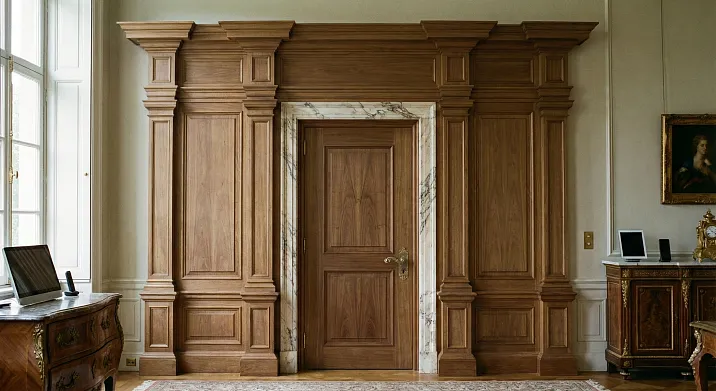
A door opening is not just a technical element dividing rooms. In 2026, when interior design redefines the role of every detail,door frame trimit becomes a full-fledged tool for creating architectural harmony. A properly designed opening integrates the door into the overall interior composition, creates visual accents, corrects spatial proportions, and emphasizes the stylistic concept.




The philosophy of framing: why is it needed
Many perceive the door as a utilitarian element — open, close, pass through. But in a thoughtfully designed interior, every detail contributes to creating an atmosphere, andDoor Frame Installationplays a key role here. Mullions, moldings, and sills transform a technical opening into an architectural element that connects the door with walls, ceiling, and the overall style of the space.
In historical interiors, framing was always mandatory. Palaces, estates, mansions — everywhere door openings were meticulously designed, emphasizing the status of the room. In 2026, this tradition returns, but in a thoughtful, modern form.decorative door openingThe opening is now not merely a nod to classicism, but a means of creating a cohesive, structured space.
The practical function of framing is equally important. Mullions conceal technical gaps between the door frame and the wall, mask installation irregularities, and protect corners from damage. In rooms with high ceilingsDoor Frame Installationvisually reduces the scale of the door, making proportions more comfortable for perception.




Evolution of styles: from classicism to minimalism
Our factory also produces:


Classic framing: grandeur and symmetry
Classic approach todoor framinginvolves using profiled mullions, a horizontal sill at the top, sometimes a base at the bottom. Vertical elements frame the opening on the sides, creating a symmetrical composition. The sill crowns it, adding completeness and grandeur.
In classical interiors, framing is richly decorated — carved rosettes in the corners, ornamental friezes, consoles under the sill, profiled mullions with deep relief. All of this creates an impression of respectability and taste.buy door framesChoosing classic style means selecting items made of solid wood or high-quality polyurethane with meticulous detailing.
An important point — proportions. The width of the mullion should correspond to the scale of the door and the height of the room. For standard doors in rooms with ceilings 2.7–3 meters high, an optimal mullion width is 7–12 centimeters. For tall doors in grand halls, mullions can reach 15–20 centimeters.Sandrok moldingsThey form a unified system, where each element complements the other.
Get Consultation
Neoclassicism: Reserved Elegance
Neoclassical approach simplifies decoration while preserving architectural logic.Door Frame InstallationHere, it is concise but expressive. Mullions have a clear profile without excessive ornamentation, the sill has a simple geometric shape, corner elements are minimal or absent.
Color solutions in neoclassicism are often monochromatic — white framing on light walls, creating subtle play of light and shadow. Or contrasting — dark framing on a light background, emphasizing the geometry of the opening.decorative door openingFraming in neoclassicism — it is a balance of tradition and modernity.
In 2026, tall doors reaching the ceiling (2300–2700 mm) are popular, visually elongating the space. Such doors require appropriate framing — tall vertical mullions and a horizontal element just below the ceiling.Buy door opening framingFor tall doors, elements must be considered with increased height.
Minimalism: geometry and purity of lines
Minimalistdoor frame trim— this is flat, wide planks without profiling, creating a geometrically clear frame around the opening. No rosettes, sills, decorative elements — only straight lines and right angles. Such framing emphasizes the modernity of the interior, its structure, and minimalism.
A popular technique — framing painted in contrasting colors. Black mullions on white walls, graphite on light gray — this creates the graphic quality characteristic of modern interiors.Moldings and door opening framingMinimalist style doors are maximally simple in form but flawless in execution.
Another 2026 trend — recessed doors 'level with the wall,' where the frame is either absent or presented as a shadow seam — a narrow gap between the door and the wall. This creates an effect of a seamless surface, where the door is almost invisible.Framing a Doorway Without a DoorIn this case, it can be executed with hidden aluminum profiles.
Modern Classic: Synthesis of Traditions and Innovations
Modern classic is a compromise between historical forms and current aesthetics.Door Frame InstallationHere, classical elements — casings and sills — are used in simplified, streamlined forms. Profiles are crisp, ornamentation is minimal, proportions correspond to modern standards for tall doors.
The color palette leans toward neutral, warm tones — beige, beige-gray, warm gray. The classic whiteness is softened to the hue of ivory or parchment.decorative door openingThe opening is painted in these tones, creating an atmosphere of coziness and elegance.
Materials for Framing: Selection and Characteristics
Solid Wood: Tradition and Elegance
Natural wood — a classic material fordoorway framingOak, ash, beech, pine — each species has its own texture, density, and color. Wooden casings can be painted, stained, varnished, or oiled, preserving the natural beauty of the material.
Wooden skirting board purchaseThis means investing in a durable, eco-friendly material with a unique aesthetic. Wooden framing creates a sense of warmth and coziness, especially valuable in residential interiors. In 2026, warm stains — honey oak, walnut, dark walnut — are trending, harmonizing with natural materials and textiles.
It is important to understand that wood is a living material, reacting to changes in humidity and temperature. High-quality wooden casings are made from dry wood (moisture content 8–12%) and coated with protective compounds.Window and Door FramingWooden casings require proper installation with consideration for thermal expansion gaps.
Polyurethane: Practicality and Variety
polyurethane moldingsA modern alternative to wood, combining affordability with aesthetics. Polyurethane casings are lighter than wooden ones, moisture-resistant, do not crack or deform. They can be painted in any color, imitate wood or stone, or remain smooth for painting.
Buy polyurethane wall moldingsforDoor opening framingA practical solution for rooms with unstable microclimate — hallways, kitchens, bathrooms. Polyurethane withstands temperature and humidity fluctuations, maintaining its original appearance.
An important advantage — variety of profiles. From simple flat strips to intricate carved casings — polyurethane allows reproduction of any shapes.Moldings made of polyurethaneThey are easily mounted using special adhesive, requiring no complex fastening.installing polyurethane moldingAccessible even for non-professionals.
MDF and Eco-veneer: Budget Classic
MDF casings with eco-veneer or PVC film — an affordable solution imitating natural wood. Modern eco-veneers realistically replicate oak, ash, walnut textures and do not fear sunlight, unlike earlier versions. For families with children or rental housing, this is a practical choice.
buy door framesMDF casings can be supplied as part of a door set — many manufacturers offer coordinated collections where casings, thresholds, and door panels are executed in a unified style. This guarantees color and texture harmony.
Aluminum and Composite Profiles: Modern Technologies
For modern interiors in loft, high-tech, industrial styles, aluminum profiles — thin, strong, with minimalist design — are relevant. They are used for framing glass sliding systems, recessed doors, panoramic openings. Matte black aluminum — one of the main trends of 2026.
Composite materials combine various components — wood fibers, polymers, mineral fillers — creating products with enhanced characteristics. They are moisture-resistant, do not deform, withstand mechanical loads.decorative polyurethane elementsAnd composite profiles — materials of the future, combining practicality with aesthetics.
Framing Elements: Components of the System
Casings: The Foundation of Composition
A casing is a vertical strip framing the door opening on the sides. Casings can be flat, profiled, carved, or telescopic.framing the doorway with a casing— the basic level of decoration, without which the opening looks unfinished.
Profiled casings have convex or concave relief, creating play of light and shadow. Flat casings are wide, smooth strips, suitable for minimalist interiors. Carved casings with ornamentation are chosen for classical and ethnic styles.Window and Door Framingmust be coordinated in profile and style.
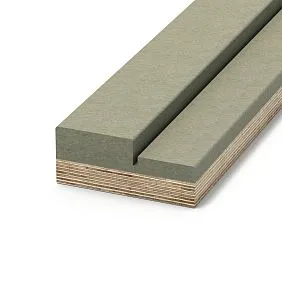
Telescopic casings — a modern solution allowing adjustment of the frame width depending on wall thickness. They consist of several interlocking parts, simplifying installation and making the frame universal.Buy door opening framingTelescopic casings — a practical solution for renovation.
Casing: horizontal finish
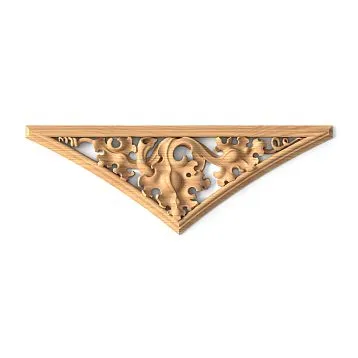
A casing is a horizontal element above the door, completing the composition. In classical interiors, a casing is mandatory — it creates architectural completion and emphasizes the solemnity of the entrance.Buy a Door Sondrikcan be ready-made or assembled fromcrown moldingsand moldings.
Sundial above the doorcan be simple — a straight profiled block, or complex — with brackets, consoles, and frieze. In neoclassicism, moderately decorated casings are preferred, while in classicism — rich compositions.Cornice elementsinclude cornice, frieze, consoles, and corner rosettes.
Corner Elements and Rosettes
Corner rosettes — decorative elements placed at the junctions of vertical casings and horizontal casing. They conceal corner joints, adding richness and detail to the composition. In classical interiors, rosettes are carved with plant motifs — acanthus leaves, roses, scrolls.
decorative rose outletscan be standalone elements or part of a single carved frame. In neoclassicism, rosettes are simplified to geometric forms — squares, rhombuses, stylized flowers. In minimalism, corner elements are usually absent — joints are mitered at 45 degrees, creating a perfectly flush frame.
Fills and jambs
A jamb is an additional strip that extends the door frame for thick walls. Jambs are the inner surfaces of the opening between the frame and the wall.Decorative molding for door openingsincludes jamb finishing — they can be plastered and painted, clad with panels, or left exposed in a loft style.
For classical interiors, jamb finishing in the same tone as the casing is appropriate. For modern interiors — contrasting jamb coloring, emphasizing the depth of the opening.Framing Doorway Openingsmay include molding decoration of jambs, creating a multi-layered composition.
Installation technologies: from classic to innovations
Traditional installation with nails and screws
The classic method of attaching wooden casings — finish nails without heads or screws, driven into the solid wood and covered with putty. This method is reliable but requires care — any mistake leaves a mark.buy door framesCutting from solid wood and professionally installing it — a task requiring experience.
An important point — preparing corners. Casings join at a 45-degree angle, requiring precise cutting with a miter box or circular saw. Even a millimeter of inaccuracy creates a noticeable gap. In classical interiors, where corner rosettes are used, joints can be straight — the rosette conceals the connection.
Adhesive installation: fast and clean
polyurethane moldingsis attached with special adhesive or liquid nails. This is faster and simpler than nailing, and leaves no visible marks.installing polyurethane moldingis accessible even to non-professionals — a flat surface, properly mitered corners, and quality adhesive suffice.
Adhesive is applied to the back of the casing in zigzag or dots, the casing is pressed against the wall for 30–60 seconds. Modern adhesives set quickly, ensuring secure attachment. Excess adhesive is immediately wiped away with a damp cloth.Buy polyurethane wall moldingsand install them with adhesive — a solution for those doing DIY renovation.
Hidden mounting: invisible fixation
Modern hidden mounting systems allow installing casings without visible nails, screws, or glue. On the back of the casing, there are grooves or clips that attach to special brackets previously mounted on the wall. Such a system allows easy disassembly and replacement of the casing if needed.
Door Frame InstallationOn hidden mounts, it looks flawless — no nail heads, spackle, or glue marks. This is relevant for expensive classic interiors, where every detail matters. Indeed, such systems are more expensive than traditional ones and require precise preparation of the base.
Telescopic systems: adjustable width
Telescopic casings consist of several parts that fit into each other like a telescope. This allows adjusting the casing width depending on wall thickness — from 8 to 20 centimeters and more. Telescopic systems simplify installation, especially with non-standard wall thicknesses.
Buy door opening framingTelescopic casings — means getting a universal solution suitable for most situations. It's important only to correctly select the adjustment range. Telescopic casings are especially relevant when working with dados — additional strips that expand the door frame.
Color and texture solutions
Classic whiteness: timeless
Whitedoor frame trim— classic, never going out of fashion. White color is universal, visually increases space, harmonizes with any wall and door color palette. In classic interiors, white casings create a sense of purity and grandeur, in modern interiors — they add minimalism.
Variations of white — ivory, pearl, cream — create a warmer atmosphere.— everything must correspond to the chosen era.These shades harmonize with natural wood, textiles, and natural materials. For cold Scandinavian interiors, pure white is relevant; for cozy Provencal interiors — ivory.
Contrasting solutions: graphics and accents
One of the main trends of 2026 — contrastingDoor Frame Installation. Black casings on white walls, dark blue on light gray, graphite on beige — this creates graphic contrast, emphasizes geometry, and turns the opening into a visual accent.
Contrasting framing works as an architectural frame, highlighting the door from the general background. This is relevant in minimalist and modern interiors, where every detail contributes to creating a clear structure.decorative door openingAn opening in contrasting color — a bold, yet effective solution.
Natural wood: warmth and texture
Wooden framing in natural color or stained — a choice for interiors valuing natural materials. Warm tones of oak, walnut, beech create a cozy atmosphere, especially when combined withwooden skirting boardandwooden cornices.
Warm stains — honey oak, caramel, amber — harmonize with natural textiles, ceramics, stone.buy wooden skirting boardAnd casings in the same shade — guarantee color harmony.with a classic profile creates a sense of solidity, reliability.And door framing form a unified decorative system.
Metallic and patinated finishes
For luxurious classic interiors, metallic finishes — gilding, silvering, bronze patina — are relevant.Framing Doorway OpeningsWith gold accents, it creates an atmosphere of palace grandeur. Silver finishes add cold elegance, bronze — noble antiquity.
Patination — artificial aging — gives the framing historic character, creating the impression that it has existed for more than a century.Decorative stuccoWith patina, it fits organically into vintage, Provencal, and shabby chic interiors.Buy moldingsIt can already come with patina or be applied manually.
Framing openings without doors: open portals
In modern layouts, openings without doors are often used — between living room and dining room, kitchen and hallway, bedroom and closet.Framing a Doorway Without a DoorSuch an opening requires special attention, since the opening is always visible from both sides.
Symmetrical framing: classic approach
An opening without a door is framed on both sides with casings, creating a symmetrical composition. Vertical elements on the sides, horizontal lintel on top — such a structure turns the opening into an architectural portal.Decorative door frame trimIt can be supplemented with pilasters, columns, carved elements.
In classical interiors, wide openings are framed especially grandly — with heavy casings, high cornices on consoles, and corner rosettes. This creates the feeling of a formal entrance, emphasizing the importance of the space beyond the opening.buy door framesFor a grand opening — it means choosing richly decorated elements.
Asymmetric framing: modern interpretation
In modern interiors, asymmetric framing is popular — when one side of the opening is decorated more actively than the other, or casings of different widths, or the cornice is offset from the center. This creates dynamism, breaks classical symmetry, and adds modernity to the interior.
Door Frame InstallationIt can be executed on only one side — the side of the more formal room, while the other side of the opening remains undecorated. Or different materials are used — wood on one side, polyurethane on the other, creating an interesting contrast.
Minimalist portals: shadow lines
The most modern solution — an opening without traditional framing, where the boundary between the wall and the opening is marked by a shadow line — a narrow slit. This creates graphic effect, emphasizes geometry, and makes the interior visually cleaner.Moldings and door opening framingHere, hidden profiles replace them.
To create a shadow line, special aluminum or plastic profiles are used, recessed into plaster. They create a perfectly straight edge of the opening and protect corners from damage.Buy door opening framingOf modern type — it means choosing minimalist solutions.
Maintenance and operation: preserving beauty
Cleaning and Refreshing
polyurethane moldingsIt is low-maintenance — wiped with a damp cloth, does not fear household chemicals. Wooden framing requires careful care — with a dry or slightly damp cloth, without excess water. Painted casings can be repainted as needed, refreshing the interior.
For deep cleaning of carved elements, a soft brush or vacuum cleaner with a brush attachment is used.Buy decorative elementsHigh-quality — it means obtaining items that are easy to clean and retain their appearance for a long time.Wall moldingDoor and window framing are cleaned similarly.
Repair of damage
Mechanical damage — chips, cracks — are repaired with acrylic putty, which is sanded and painted after drying. Minor defectsdoorway framingCan be easily fixed by oneself. In case of serious damage, the element is replaced entirely.
Polyurethane molding photoThis demonstrates that properly installed and painted framing can serve for decades.Molding priceIt pays for itself through longevity — with proper care, elements are practically eternal.
Frequently asked questions
Can the framing be installed by oneself?
Yes, especially if talking about polyurethane casings on adhesive.installing polyurethane moldingIt is accessible to a non-professional. Wooden framing requires skills in working with tools — a circular saw, a nail gun.
Which material is better — wood or polyurethane?
Wood is more noble, eco-friendly, and has natural texture. Polyurethane is more practical, cheaper, and does not fear moisture. The choice depends on budget, style, and conditions of use.You can buy ready-made stucco matching the Baroque style. Calculate the quantity: linear meters of cornices and moldings, number of rosettes, pilasters, consoles, corner elements. Add a ten to fifteen percent allowance for trimming.Polyurethane — practical, wooden casings — prestigious.
Is a cornice needed above the door?
In classical interiors — mandatory, it creates architectural completeness. In modern interiors — optional, it is possible to limit oneself to vertical casings.Sash Rail for DoorIt adds grandeur and visually reduces the height of the opening, which is relevant for tall doors.
How to combine framing with baseboards?
Wooden baseboardThe cornice and casings should match in color and style. Ideally — from the same collection or material.wooden baseboards for floorThe cornice and door framing create a unified decorative system.
How much does door framing cost?
Molding priceDepends on material and complexity. Polyurethane thresholds — from 200-500 rubles per linear meter, wooden — from 500 to 3000 rubles. DIY installation is free, professional installation — from 500 rubles per opening.
Can the frame be painted in another color?
Yes,polyurethane moldingsPainted and stained wood can be repainted easily. The surface is degreased, primed, and a new layer of paint is applied. This allows refreshing the interior without replacing the frame.
Conclusion: harmony in details
door frame trimIt is not just a decorative element, but a way to create architectural harmony in the interior.Door Frame Installation, decorative door openingopening,buy door framesorBuy door opening framingAll these solutions lead to one goal: creating a cohesive, thoughtfully designed space.
Modern technologies —polyurethane moldings, Wooden cornicestelescopic systems, hidden mounting — make classic decor accessible and practical.Buy polyurethane wall moldingsorWooden skirting board purchasecan be used for any budget and style.
Company STAVROS offers a full range of elements for creating a perfectdoorway framing — Casings, Crown Molding, Moldings, decorative elements, Baseboardsand much more. Experienced consultants will help select elements for any project, and delivery to Moscow, Saint Petersburg, and all of Russia will make the purchase convenient. Create interiors where every detail contributes to overall harmony — choose STAVROS!