Article Contents:
- The phenomenon of oak in the history of architecture and design
- Cultural heritage of oak wood
- Evolution of imitation technologies
- Technology for creating oak texture on MDF
- Multi-stage reproduction process
- High-resolution printing and embossing
- Premium-grade protective coatings
- Varieties of oak textures and their characteristics
- Classic European Species
- American oak varieties
- Special treatment and patination
- Application in various stylistic directions
- Classic interior and neoclassicism
- Modern style and minimalism
- Scandinavian design
- Technical aspects of installing oak strips
- Features of working with wood imitation
- Foundation Preparation
- Joint and corner processing
- Psychological impact of oak texture
- Associative series and emotional perception
- Impact on perception of space
- Combination with other materials
- Harmony with natural materials
- Combinations with modern materials
- Maintenance and operation
- Recommendations for daily care
- Protection against damage
- Economic aspects of selection
- Cost comparison with natural oak
- Long-Term Economic Efficiency
- Innovations in production technology
- Digital technologies for creating textures
- Ecological innovations
- Regional preferences and trends
- European traditions
- American trends
- Future of wood imitation technologies
- Prospective developments
- Economic Aspects of Using Picture Frame Molding
- Conclusion
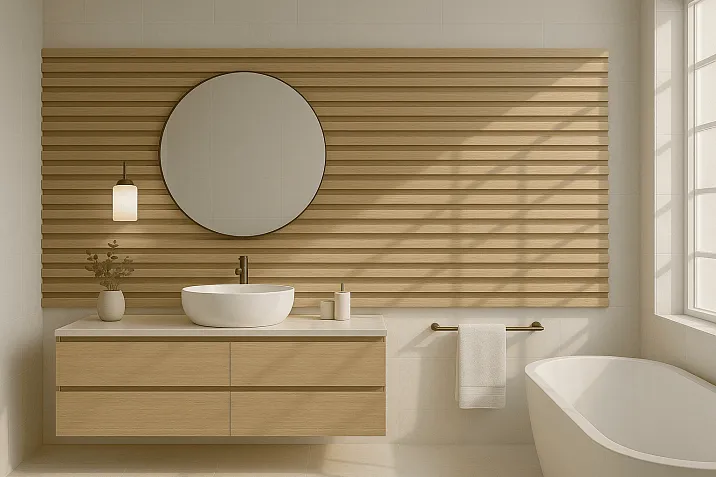
Oak is not just wood. It is a symbol of strength, reliability, and aristocratic elegance, which has adorned royal palaces and noble estates for centuries. Today MDF decorative strip oak Allows everyone to experience this tradition, bringing the beauty and nobility of the legendary wood species into modern interiors.
What happens when centuries-old woodworking traditions meet innovative 21st-century technologies? A material is born that combines the best qualities of natural oak with the advantages of modern production, opening new horizons for designers and architects.


The Phenomenon of Oak in Architectural and Design History




Cultural Heritage of Oak Wood
For millennia, oak has held a special place in the culture of European peoples. From the sacred groves of ancient Celts to the grand halls of Versailles — this tree species has always been associated with strength, longevity, and high status. The characteristic texture of oak wood, with prominent growth rings and medullary rays, became an aesthetic standard for generations of craftsmen.
In Russian architectural tradition, oak also played an important role. Oak floors in boyar palaces, carved oak panels in estates, furniture made from marine oak — all of this shaped perceptions of luxury and durability. MDF planks With oak texture, they continue this tradition, making noble beauty accessible to modern consumers.
Our factory also produces:


Evolution of Imitation Technologies
The desire to reproduce the beauty of oak in more accessible materials has a long history. Already in the 18th century, master carpenters used techniques of marine treatment and patination to imitate valuable species on simpler wood. Modern digital printing and embossing technologies have perfected this art.
Today's MDF interior planks With oak imitation, they reproduce not only the visual but also the tactile characteristics of natural wood so accurately that distinguishing them from the original requires very careful examination.
Get Consultation
Technology for Creating Oak Texture on MDF
Multi-stage Reproduction Process
Creating a high-quality oak imitation on MDF surface is a complex technological process involving several critically important stages. It all begins with studying samples of natural oak of various ages and growing conditions. Each species has its own characteristics: French oak has a denser texture, American oak has a more contrasting pattern, and Russian oak is characterized by a special warmth of tones.
Digital scanning of real wood samples occurs at up to 2400 dpi resolution, allowing the capture of the finest texture details. Special algorithms analyze the obtained data and create seamless patterns that can be scaled to any product size.
High-resolution Printing and Embossing
Modern digital printing technologies allow applying oak texture images to MDF material with precision down to individual wood fibers. Special UV-curable inks are used, which do not fade under sunlight and maintain color vibrancy throughout the product's lifespan.
The embossing process creates a three-dimensional surface texture that mimics the natural irregularities of oak wood. Pressing pressure reaches 150 tons per square meter, enabling the creation of indentations up to 0.3 mm deep — exactly the depth variations characteristic of natural oak.
Premium-grade Protective Coatings
Finish Coating Decorative MDF oak veneer consists of several layers of special lacquers and protective compounds. The base layer ensures adhesion and levels the surface, intermediate layers create color depth and accentuate the texture, and the topcoat protects against mechanical damage and moisture.
Modern coatings have hardness up to 3H on the pencil scale, exceeding the hardness of many natural wood lacquers. At the same time, they retain elasticity necessary to compensate for minor deformations of the substrate.
Varieties of Oak Textures and Their Characteristics
Classic European species
French oak is considered the standard of nobility among oak species. It is characterized by a fine-grained texture with delicate color transitions from light golden to warm brown. Finishing MDF rails With French oak imitation, it is ideal for classical and neoclassical interiors.
English oak has a more contrasting texture with clearly defined medullary rays. The color palette ranges from light yellow to rich brown with golden highlights. Such a texture is especially effective in rooms with quality lighting, where the interplay of light and shadow accentuates all nuances of the pattern.
American Oak Varieties
White American oak is characterized by a light color palette and a calm, even texture. Growth rings are moderately pronounced, creating a sense of noble restraint. This variant is ideal for modern interiors in minimalist or Scandinavian design styles.
Red American oak has a warmer color palette dominated by reddish and brown tones. The texture is more pronounced and dynamic, making it suitable for creating accent elements in interior design.
Special treatment and patination
Weathered oak is a special variety that imitates wood long exposed to water. This material acquires a characteristic dark gray or almost black color with silver streaks. Decorative MDF rails With weathered oak imitation, they create an atmosphere of an old castle or vintage loft.
White oak is obtained through special processing that lightens the wood while preserving its characteristic texture. This finish gives interiors lightness and airiness, visually enlarges the space, and pairs well with modern design styles.
Application in various stylistic directions
Classic interior and neoclassicism
In classical interiors MDF planks With oak texture, they are used to create traditional wall panels – boiserie. Panel height is usually 1/3 of the room’s height, corresponding to classical proportions. The upper part of the wall is painted in light tones or covered with delicate-patterned wallpaper.
Neoclassical interiors allow for a freer interpretation of traditions. Planks can be arranged not only horizontally but also vertically, creating a modern reading of classical canons. Combining dark oak with white or cream-colored walls creates an elegant contrast.
Modern style and minimalism
In minimalist interiors, oak texture serves as a source of warmth and coziness, softening the rigidity of geometric forms. MDF slat for interior With light oak imitation, it creates a delicate accent without disrupting the overall space concept.
Vertical plank placement emphasizes ceiling height and creates a sense of upward movement. Gaps between elements should be minimal – 2-3 mm – ensuring visual continuity of the surface while preserving the characteristic plank texture.
Scandinavian design
Scandinavian design philosophy especially values the naturalness and eco-friendliness of materials. Light oak shades – from almost white to honey – perfectly fit the concept of northern minimalism. Wall MDF rails With oak texture, they create a sense of connection with nature, which is the foundation of Scandinavian style.
Horizontal plank placement evokes associations with traditional Scandinavian log houses. Matte finish is preferable over glossy, as it better conveys the naturalness of wood and avoids glare under northern lighting.
Technical aspects of installing oak planks
Features of working with wood imitation
Installing planks with oak texture requires special attention to the direction of the grain. Unlike solid color finishes, where minor misalignments are unnoticed, oak texture demands precise alignment of elements. Each plank must be oriented so that the grain direction matches the overall concept.
When installed vertically, growth rings should be horizontal, mimicking the natural arrangement in the tree trunk. When laid horizontally, it is important to ensure seamless transitions between planks to create the impression of a single solid piece.
Foundation preparation
The quality of oak imitation is especially demanding regarding the flatness of the base. Even minor irregularities can distort the perception of texture and reveal the artificial origin of the material. Deviations from flatness must not exceed 1 mm per linear meter.
The base color is also important when working with semi-transparent finishes. A dark substrate may alter the color perception of light oak shades, so it is recommended to use light primers or intermediate layers.
Joint and corner processing
Joining planks with oak texture requires special skill. At connection points, it is necessary to ensure alignment of the pattern, achieved through precise fitting and use of special cutting techniques. Professional installers use templates and guides to ensure an ideal result.
Corner joints are made at a 45° angle with mandatory pattern alignment. In some cases, special corner elements are used, manufactured taking into account the specific characteristics of the oak texture.
Psychological impact of oak texture
Associative series and emotional perception
Oak texture subconsciously associates with reliability, stability, and nobility. These associations have been formed over centuries and are deeply rooted in collective consciousness. MDF decorative strip oak It activates these positive emotions, creating a sense of comfort and security.
Studies show that the presence of oak texture in interiors reduces stress levels and promotes concentration. This makes such finishing particularly suitable for office spaces and home offices.
Influence on the perception of space
Dark oak tones visually reduce space, but make it more cozy and intimate. Light tones, on the contrary, expand the space and add airiness. Vertical planks create a sense of height, horizontal planks – of length.
The orientation of fibers also affects perception. Vertically oriented texture creates a sense of growth and development, while horizontal texture conveys stability and calmness. These nuances are considered when designing interiors of different functional purposes.
Combination with Other Materials
Harmony with natural materials
MDF panels for walls It pairs beautifully with natural stone, creating eco-style or country interiors. Especially striking are combinations of dark oak with light limestone or travertine. The contrast of textures highlights the beauty of each material.
Combining with brick creates an atmosphere of English country or industrial loft, depending on the chosen oak shade and finish. Weathered oak with red brick creates a rugged, masculine atmosphere.
Combinations with modern materials
Glass and metal combined with oak texture create an interesting contrast between tradition and modernity. Chrome elements accentuate the nobility of dark oak, while matte steel harmonizes with light shades.
Concrete and oak texture create a modern interpretation of industrial style. The roughness of concrete texture is softened by the warmth of wood grain, creating a balanced composition.
Maintenance and operation
Daily care recommendations
A surface with oak imitation requires gentle care to maintain its original appearance. Daily dry cleaning with a soft cloth or vacuum cleaner with a soft brush removes surface dirt without damaging the protective coating.
Wet cleaning is performed using special care products for laminated surfaces. It is important to avoid excessive moisture and immediately remove any moisture to prevent water from entering the joints between planks.
Protection from Damage
Quality coating of decorative MDF planks With oak texture, it has high resistance to mechanical damage. However, to extend its service life, it is recommended to avoid impacts from hard objects and use protective pads in areas of intensive use.
Ultraviolet radiation may over time alter the color characteristics of the coating. In rooms with large windows, it is recommended to use protective films or blinds to limit direct sunlight exposure.
Economic aspects of selection
Cost comparison with natural oak
Natural oak panels cost 5-8 times more than quality MDF planks with oak imitation. However, in many aspects, the artificial material's performance exceeds natural oak: absence of knots, cracks, uniform color and texture.
Savings become even more significant when considering installation costs. MDF planks are easier to process and install, reducing labor costs and overall project cost by 30-40%.
Long-term Economic Efficiency
The service life of quality planks with oak imitation is 15-20 years in interior conditions. Stability of dimensions and color eliminates the need for expensive maintenance typical of natural wood.
The possibility of local repair of individual elements allows maintaining an ideal appearance without full replacement of finishing. This is especially important in commercial spaces with high usage intensity.
Innovations in production technology
Digital texture creation technologies
Modern artificial intelligence systems analyze thousands of natural oak samples to create unique texture patterns. Machine learning algorithms allow creating infinite variations of the pattern, eliminating repetitions within a single room.
HDR printing technology not only reproduces the color characteristics of oak but also its optical properties — the ability to absorb and reflect light at different angles. This creates a more realistic imitation of natural material.
Ecological Innovations
New generations of dyes and coatings are water-based without volatile organic compounds. This not only improves the ecological characteristics of the product but also ensures better color reproduction and coating durability.
Biodegradable protective coatings based on plant components gradually replace synthetic analogs, meeting modern ecological responsibility requirements.
Regional preferences and trends
European traditions of ceiling molding are the most well-known and influential worldwide. The French school gave the world the elegance of Rococo and the grandeur of Classicism. Italian masters created unparalleled Baroque moldings, which continue to inspire designers around the globe.
In European countries, preference is given to classic oak shades with natural color palettes. French appreciate subtle tonal transitions, Germans prefer contrasting textures, and Italians favor warm honey tones.
Scandinavian countries lean toward light, almost bleached oak variants, which harmonize with the philosophy of northern minimalism and maximum use of natural light.
American trends
In the USA, more contrasting and expressive oak texture variants are popular. American designers often use artificial aging and patination to create vintage effects.
Canadian preferences lean toward natural tones with minimal processing, reflecting local woodworking traditions and closeness to nature.
Future of wood imitation technologies
Promising developments
Nanotechnology research opens new possibilities for creating ultra-precise imitations of natural wood. Nanoparticles can replicate not only the appearance, but also tactile sensations, scent, and even the acoustic properties of natural wood.
Integrating sensors into the material structure will allow creating "smart" surfaces capable of responding to changes in temperature, humidity, and lighting, adapting their appearance to environmental conditions.
Personalization and Individualization
3D printing technologies will allow creating unique oak textures for each specific project. Clients will be able to choose not only color and main pattern, but also individual features – knot placement, ring characteristics, contrast level.
Virtual and augmented reality will help designers and clients visualize the result accurately even during the design stage, eliminating errors and ensuring full alignment with expectations.
Conclusion
A journey into the world Decorative MDF oak veneer Opens before us an amazing panorama of modern design possibilities. This material has become a bridge between centuries-old traditions and innovative technologies, allowing everyone to experience the noble beauty of oak without compromising on quality or functionality.
The technological evolution of MDF production has reached a level where imitation is indistinguishable from the original not only visually, but also tactilely. Modern printing and embossing methods reproduce every fiber and nuance of natural oak wood with remarkable precision.
The psychological impact of oak texture confirms its universal appeal. Regardless of cultural differences and personal preferences, people instinctively gravitate toward this texture, finding in it a source of calm and confidence.
Economic efficiency makes oak finishing accessible to a wide range of consumers. At the same time, the quality and durability of modern materials often surpass natural analogs, making MDF selection not only practical but also forward-thinking.
Environmental aspects of production are continuously improving, responding to growing demands for sustainable development. Use of renewable resources and eco-friendly technologies makes this material a choice for conscientious consumers.
Innovative development directions promise even more possibilities in the future. Integration of smart technologies, texture personalization, new functional properties – all this defines the industry’s development vector for decades ahead.
Design possibilities of the material are practically limitless. From classic interiors to ultra-modern concepts – oak texture finds its place in any stylistic concept, enriching it and adding depth.
Professional approach to design and installation remains key to achieving outstanding results. Understanding material characteristics, adhering to technical requirements, and using quality components ensure creating interiors that will delight owners for years.
STAVROS Company, with its rich experience and unwavering pursuit of perfection, continues to remain a leader in creating materials that not only imitate natural beauty but also surpass it in many practical characteristics. Every STAVROS product is the result of deep understanding of woodworking traditions and masterful application of modern technologies, creating products capable of enhancing any interior and becoming a source of pride for their owners.