Article Contents:
- Neoclassicism: Lightened Classicism for Modern Spaces
- Modern Classicism: Balance of Traditions and Current Trends
- Crown Molding Profiles: From Reserved to Expressive
- Moldings and Bагеты: Structuring Planes
- Portals: Framing Openings and Accents
- Molding Painting: Techniques and Effects
- Patina: Effect of Noble Age
- Installation and Setup: Professional Approach
- Company STAVROS: Quality and Reliability
- Conclusion: Moldings as a Tool for Creating Style
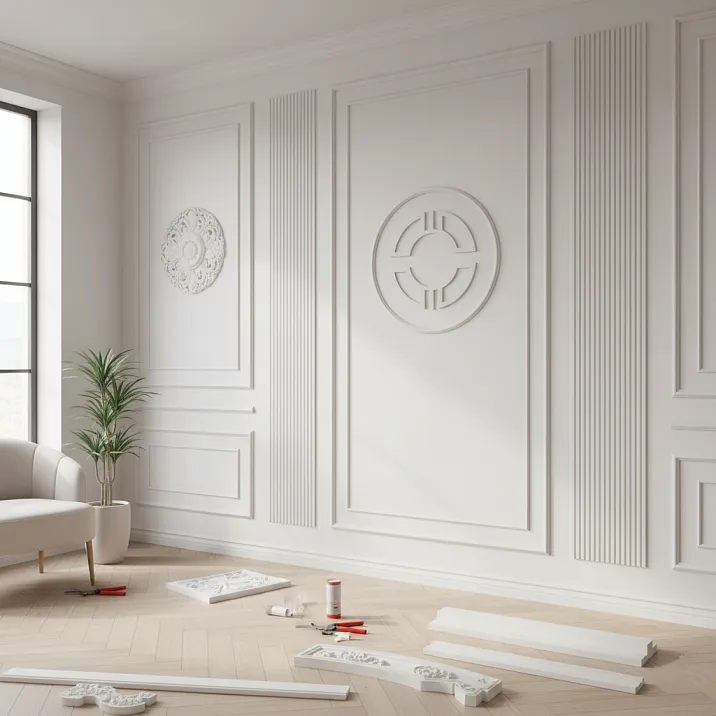
Neoclassicism and modern classicism are not mechanical copies of historical interiors, but their reinterpretation through the prism of contemporary life. There is no place here for bulky gilded baroque scrolls, multi-tiered Empire ceiling structures, or excessive Rococo ornamentation. Instead — restrained elegance, clear proportions, delicate profiles, minimalist forms.Decorative MoldingsIn these styles, moldings work as structural elements organizing space, not as decorative ends in themselves. They create architectural plasticity, add depth to flat surfaces, and form visual boundaries without physical partitions.
Profile solutions — crown moldings, moldings, bагеты, portals — become tools for creating a proportional, balanced environment. Molding is selected not by the principle "the more luxurious, the better," but according to the scale of the room, ceiling height, and overall stylistic concept. Painting moldings in wall color creates monochromatic surfaces, where relief is read through light and shadow, not color contrast. Patina adds nobility, hints at history, and creates the impression that the interior has existed for more than a decade.


Neoclassicism: Lightened Classicism for Modern Spaces
Neoclassical style emerged as a response to the modern person's desire to live in beautiful, but not museum-like, spaces. Classical interiors of the 18th-19th centuries require corresponding scales — high ceilings of 3.5 meters, spacious rooms of 30 square meters, large windows. In a typical apartment with 2.7-meter ceilings and 18-square-meter rooms, classical moldings appear inappropriate, oppressive, and create a sense of overload. Neoclassicism solves this problem, preserving recognizable classical language but simplifying, lightening, and adapting it to the realities of modern housing.
The main principle of neoclassicism — less decoration, more structure. Moldings are present but do not dominate. Crown moldings are thin, 5–10 cm high instead of classical 15–30 cm. The profile is simple — one or two rounded edges without complex multi-tiered compositions. Wall moldings create frames but do not cover the entire surface. Framing composition may include three to five rectangles on the wall instead of the classical division into many small panels. Inside the frames — painted surface in matching or slightly lighter tone, without large-patterned wallpaper, without gilding, without carved appliqués.
The color palette of neoclassicism is restrained. White, all shades of beige from cream to sand, gray tones from light pearl to graphite, muted pastels — dusty rose, gray-blue, olive. Moldings are usually painted in wall or ceiling color, creating a monochromatic surface where relief is read through play of light and shadow. This is a more refined solution than contrasting white moldings on colored walls — such an approach remains for full classical style.
Symmetry is preserved as a fundamental principle. Furniture is arranged symmetrically relative to the room's central axis. Molded frames on the wall mirror each other to the right and left of the fireplace or TV. Crown moldings run around the entire perimeter of the room, creating a finished frame. But unlike strict classicism, minor deviations are allowed — asymmetrical arrangement of decor within a symmetrical structure, one accent element instead of pairs.
Materials in neoclassicism allow for modern equivalents. Instead of handcrafted plaster moldings requiring professional installation,polyurethane moldings— lightweight, durable, moisture-resistant, easy to install. The detailing of modern polyurethane allows reproduction of the most delicate profiles and ornaments. After quality painting, polyurethane is visually indistinguishable from plaster, yet it does not create load on structures, does not require reinforced fastening, is easily cut and fitted.
Lighting in neoclassicism plays a key role in perceiving moldings. Directional ceiling lights, spotlights, track systems create side lighting that reveals the relief of crown moldings and moldings. Hidden backlighting behind crown moldings illuminates the ceiling, creating a floating surface effect. The central chandelier remains, but it does not have to be classical in shape — modern interpretations with simple geometric forms, minimal decoration, matte shades are possible.




Modern Classicism: Balance of Traditions and Current Trends
Modern classicism goes further than neoclassicism toward simplification and geometrization. If neoclassicism still uses plant ornaments, rosettes, capitals, modern classicism almost completely rejects them. Only pure geometry remains — straight lines, right angles, simple profiles, clear proportions. This is classicism filtered through minimalism, preserving structure and symmetry, but discarding ornamentation.
Molding in modern classicism is maximally laconic. Crown moldings are simple profiles — one rounded edge, one bevel, creating a thin shadow line at the junction of wall and ceiling. Crown molding height is three to seven centimeters, no more. Wall moldings — flat strips 4–8 cm wide with minimal relief. Bагеты around mirrors, pictures, panels — narrow, one to three centimeters, creating a thin frame separating the object from the background, but not competing with it.
Door and window openings portals are simplified to the extreme. Instead of classical pilasters with bases and capitals — simple vertical strips framing the opening. Instead of an entablature with frieze and crown molding — a horizontal strip slightly wider than the sides, creating a T-shaped composition. A fireplace portal, if present, consists of rectangular elements without carving or ornamentation. Functional minimum, sufficient for creating an architectural frame, but no more.
Wall panels — an important element of modern classicism.Moldingscreate a rectangular grid on the wall, dividing it into panels. Panel sizes vary — from large 1x1.5 meters to medium 50x70 cm. Inside the panels — painted surface, decorative plaster with fine texture, geometric-patterned wallpaper or plain without pattern. Three-dimensional panels with geometric relief — rhombuses, squares, honeycombs — a modern trend combining classical structure with current texture.
Colors of modern classicism lean toward achromatic palette. White, gray in all ranges from light to anthracite, black as accent. Warm tones — beige, cream, taupe — are used to soften the cold palette. Moldings are painted in surface color — white crown moldings on white ceiling, gray moldings on gray wall. Contrasting solutions are possible, but delicate — not white on black, but light gray on dark gray, creating a subtle, refined transition.
Furniture in modern classic style combines classic silhouettes with modern materials and finishes. A sofa with a carriage-stitch upholstery, but on straight metal legs. A dining table with classic proportions, but with a ceramic granite top. A cabinet with paneled doors, but without carving, with a simple framed structure.Solid wood furnitureor quality veneer maintains a connection with tradition, but the forms are simplified, and decoration is minimal.
Textiles lose the multi-layeredness of classic interiors. No valances, swags, tassels, or fringe. Curtains — plain, dense fabrics with noble texture, possibly mounted on a hidden valance, creating an effect of fabric flowing from ceiling to floor. Color — matching the walls or contrasting, but pure, without ornamentation. Pillows on the sofa — two to four pieces of the same size and color instead of a scattered assortment. Rug — solid color or simple geometric pattern, defining a zone but not covering the entire floor.
Our factory also produces:
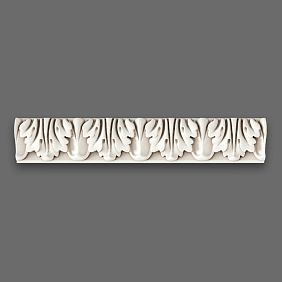


Crown molding profiles: restrained to expressive
Crown molding — the first decorative element of molding noticeable in the interior. It completes the vertical wall plane, transitioning to the horizontal ceiling. A properly selected crown molding harmonizes the room’s proportions, visually raises or lowers the ceiling, adds elegance or monumentality. For neoclassicism and modern classicism, there are profiles specifically designed to meet the requirements of these styles — restraint, clear lines, proportionality.
A thin crown molding, 3–5 cm high — the minimal solution for modern classicism. The profile includes one rounded edge or one bevel, creating a subtle shadow line. Such a crown molding is almost invisible, delicately indicating the boundary without drawing attention. Suitable for rooms with low ceilings — 250–270 cm, where a larger crown molding would visually lower the ceiling.Ceiling MoldingSuch profiles are universal, fit any interior, do not conflict with modern furniture and technology.
A medium crown molding, 6–10 cm high — standard for neoclassicism. The profile is two- or three-level, including combinations of rounded edges, straight sections, and small protrusions. This creates a pronounced relief that beautifully plays with side lighting. A medium crown molding suits ceilings 270–320 cm high, creating a sense of completion without being overloaded. It is sufficiently noticeable to structure the space, but does not dominate.
A high crown molding, 11–15 cm high — choice for spacious rooms with ceilings over 3 meters. The profile is complex, including several levels creating a stepped structure. This is close to a classical crown molding, but without excessive ornamentation. A high crown molding visually lowers the ceiling, which may be useful in excessively high rooms where a sense of a well is felt. It creates monumentality, suitable for formal living rooms, halls, offices.
Crown molding with a shelf — a practical solution, where the upper part of the crown molding is a horizontal plane 5–10 cm wide. On this shelf, hidden LED lighting can be installed, directed upward toward the ceiling. The light reflected from the ceiling creates soft, diffused lighting around the room’s perimeter, visually raising the ceiling, making it appear to float. Crown molding with a shelf is both functional and decorative, perfectly fitting into the concept of modern classicism, where every element must have purpose.
Flexible crown molding solves the problem of curved walls, bay windows, and arched openings. Polyurethane crown moldings have a certain flexibility, allowing them to wrap around radii of 1 meter. For sharper curves, there are special flexible crown moldings that can be bent to any contour. This opens up possibilities for decorating complex architectural forms without resorting to expensive custom-made crown moldings.
Corner elements of crown moldings — internal and external corners — are critical for proper installation. Ready-made corner elements eliminate the need for precise 45-degree trimming of crown moldings, which requires professional tools and skills. The corner is inserted at the junction of two straight sections, creating a neat connection. For neoclassical interiors, where precision and neatness are valued, ready-made corners are the optimal solution.
Get Consultation
Moldings and picture frames: structuring planes
Molding — a decorative strip used for framing, dividing, and creating frames on walls and ceilings. In neoclassicism and modern classicism, moldings function as structural elements organizing the plane. A wall without moldings is simply a painted surface. A wall with a thoughtfully designed molding system is an architectural composition with its own logic, hierarchy, and rhythm.
Narrow moldings, 2–5 cm wide, create thin lines dividing the wall into zones. They can run horizontally at the height of chair backs, dividing the wall into a dark lower and light upper section. They can also create vertical stripes, visually raising the ceiling. Narrow moldings are delicate, do not dominate, and function as graphic elements, drawing structure onto the wall.
Medium moldings, 6–10 cm wide — the basis for creating framed compositions. They form rectangles on the wall, within which other finishes — wallpaper, a different paint tone, decorative plaster — are placed.Wooden panelsThe size of the frames varies depending on the room’s scale. In a spacious living room — three large rectangles horizontally. In a standard room — two medium ones. It is important to maintain proportions — frames should not be too small or too large relative to the wall.
Wide moldings, 11–20 cm wide, are used to create expressive frames — around fireplaces, televisions, mirrors, large paintings. They create a massive frame, making the object stand out from the wall plane and emphasizing its significance. A wide molding can be simple — a flat strip with beveled edges — or complex — with several relief levels.
Picture frames — narrow profiles for framing paintings, mirrors, panels. In classical interiors, picture frames are often gilded with rich ornamentation. In neoclassicism and modern classicism, picture frames are maximally simple — a narrow strip 1–3 cm wide with a slight rounded edge or bevel. Color — matching the wall, contrasting, or metallic — matte gold, silver, bronze. Picture frames create a thin boundary between the object and background, do not compete with the content, but indicate its significance.
Combining moldings of different widths creates complex compositions. A wide frame of 10 cm molding, inside which a narrow frame of 3 cm molding, with a painted surface or wallpaper in the center. This creates depth, multi-levelness, visually enriching the plane. But it is important not to overdo it — more than three levels of moldings create overload, characteristic of historical classicism, but alien to neoclassicism.
Horizontal moldings divide the wall into upper and lower parts. The traditional height of division — 90 cm — one meter from the floor, so-called "chair height," protecting the wall from damage by chair backs. In modern interiors, this height can vary — 70 cm for visual space expansion, 120–140 cm for creating a higher panel. The lower part is usually darker than the upper, but reverse solutions are possible.
Portals: framing openings and accents
Portal — architectural framing of an opening or significant object. In neoclassicism and modern classicism, portals are simplified compared to historical classicism, but retain structural logic — vertical elements on the sides, horizontal element on top. This creates a frame, making the opening stand out from the wall plane, turning it into an architectural event.
A door portal in modern classicism consists of simple rectangular elements. Side stiles — vertical molding strips 8–12 cm wide, running from floor to top of the opening. Top lintel — horizontal strip of the same or slightly wider width. The molding profile is simple — flat strip with bevel or one rounded edge. No capitals, bases, carved appliqués. Clean geometry, creating a frame without distracting from the door itself.
An arched portal requires flexible or radius elements. For a semicircular arch, special radius moldings are manufactured, replicating the contour. Side stiles are straight, the top part is semicircular. Joining straight and radius elements requires precision, possibly using connecting appliqués to mask the seam. An arched portal creates a softer, more classical form compared to a rectangular one.
A fireplace portal — the central element of the living room, requiring special attention. In neoclassicism, the portal may be minimalist — two vertical stiles from a wide molding 15–20 cm wide, a horizontal fireplace mantel. Above the mantel — a mirror or panel in a simple frame. The entire portal is painted white or light gray, creating a bright spot on the wall. An alternative — portal made ofof wooden elementspainted or with natural finish, creating warmth and tactile quality.
A television portal — modern application of a classical technique. The television is framed by moldings, creating the impression that it is built into an architectural niche. A frame of moldings 10–15 cm wide surrounds the screen, additional moldings may create side "shelves" for decoration or technology. This integrates modern technology into a classical interior, making it part of the architecture, rather than a foreign element.
A mirror portal transforms a mirror into an architectural element. A large mirror in a wall between windows, framed by wide moldings, becomes a false window, visually expanding the space and adding light. A mirror above a console in the entryway in a molded portal creates a focal point, organizing the entry zone. The portal may repeat the mirror’s shape — rectangular for rectangular, arched for arched — or contrast — a rectangular portal around a circular mirror.
A niche portal frames an indentation in the wall, transforming it into an exhibition space. A niche with shelves for books, framed by a molded portal, becomes a library nook. A niche with lighting for sculpture or vase, framed by a portal — a home museum. The portal turns the niche from a random architectural feature into a deliberate compositional element.
Molding Painting: Techniques and Effects
Polyurethane molding is supplied primed and ready for painting. The choice of paint, application technique, and finishing treatment determine the final appearance. Proper painting transforms inexpensive polyurethane into an element visually indistinguishable from plaster molding, creating the desired atmosphere — from museum-like formality to modern lightness.
Matte paint is the standard for neoclassicism and modern classicism. A matte surface does not reflect light, appears noble, emphasizes form through chiaroscuro rather than gloss. Latex or acrylic paints with a matte finish are used. Paint is applied with a roller or spray in two to three layers with intermediate drying. Deep relief areas are brushed to ensure paint reaches all recesses.
Glossy painting is rarely used, primarily for creating contrasting accents or in rooms styled as art deco, where gloss was part of the aesthetic. Glossy molding on a matte wall creates an interesting effect but requires a flawless surface — any defect on gloss is visible. Water-based enamels providing a hard glossy finish are used.
Monochromatic painting in wall or ceiling color — the main technique of neoclassicism. Molding blends with the surface in color, standing out only through relief. Under side lighting, cornices and moldings cast shadows, creating volume. Under diffused light, molding is almost invisible, creating an effect of a unified textured surface. This is an elegant solution requiring precise color selection — molding must match, not contrast.
Contrast painting — white molding on colored walls — is a more traditional solution, characteristic of full classicism. In neoclassicism, it is allowed but with a caveat — contrast must be soft. Not white on dark blue, but cream on gray-blue. Not glaring white on black, but light gray on graphite. Soft transitions instead of harsh contrasts.
Two-color molding painting creates additional depth. The main field of the molding is painted one color, protruding parts or recesses — another. This emphasizes the profile, making the relief more expressive. The technique requires care — first, the entire molding is painted in the base color, then after drying, protrusions are touched up with the second color using a brush or sponge.
Metallic paints — gold, silver, bronze — are used sparingly as accents. Not all molding in gold, as in baroque, but individual elements — capitals of pilasters, central rosettes, friezes. Metallic can be bright and shiny for a dramatic effect, or muted and matte for restrained luxury.decorative rose outletsWith a metallic finish, they become jewelry accents on ceilings or walls.
Patina: The Effect of Noble Age
Patina — a technique of artificial aging, creating the impression that molding has existed for not just one year. This adds depth, nobility, and historicity to the interior. In neoclassicism, patina is applied delicately, creating a light layer of time, not imitating a century-old appearance. Several patina techniques exist, each producing its own effect.
Dark patina in recesses — a classic technique. Molding is painted in a light base color — white, cream, light gray. After drying, dark paint — umber, sepia, black, heavily diluted — is rubbed into the recesses of the relief. Paint remains in recesses, wiping off on protrusions. This creates an effect as if dust and dirt have accumulated over years in recesses. This adds volume, makes the relief more expressive, and adds a sense of age.
Light patina on a dark background — the reverse effect. Molding is painted in a dark color, protruding parts are slightly lightened — wiped with a cloth, a semi-transparent light paint is applied. This creates an effect of wear, as if years of touch and cleaning have worn the paint off protrusions. This is a more modern technique, creating contrast without excessive ornamentation.
Gold or silver patina adds luxury. On a light base, gold or silver paint, heavily diluted, is applied to recesses or protrusions. Metallic appears as a subtle shimmer, not a solid coating. This can be warm gold, cool silver, reddish copper, greenish bronze. Metallic patina is especially effective under artificial lighting.
Multi-layer patina combines several techniques. A light base layer, dark patina in recesses, gold patina on protrusions. This creates a complex, multi-dimensional surface rich in nuances. But it is important not to overdo it — overly complex patina looks artificial and theatrical. In neoclassicism, better understated than overdone.
Wax patina uses special decorative waxes with metallic pigment. Wax is rubbed into the molding surface, polished with a soft cloth. This produces a light metallic sheen, similar to patina on real bronze or copper. Wax patina is tactile, pleasant to the touch, creating the impression of a valuable material.
Dry brush technique creates a light color unevenness. A brush with a small amount of paint of another tone is lightly brushed over the molding surface. Paint settles unevenly, creating subtle variations in tone. This adds liveliness, making the surface not flat and monochromatic, but rich in nuances.
Installation and mounting: professional approach
Installation quality determines the final appearance of molding. Perfectly made items, but poorly installed with crooked joints, visible gaps, and glue marks — will ruin the impression. Professional installation requires preparation, precision, and use of proper materials and tools.
Surface preparation is the first critical stage. Ceilings and walls must be flat, clean, and dry. Irregularities over three millimeters are leveled with plaster. Old wallpaper is removed, painted surfaces are degreased. The base is primed to improve adhesive bond of glue. Poor preparation is a cause of molding peeling off later.
Marking determines the position of elements. For cornices, a horizontal line is drawn at the desired height from the ceiling. For moldings, frame outlines are marked on the wall with diagonal checks — they must be equal for rectangularity. Precise marking is critical for symmetrical compositions — a shift of a few centimeters is immediately noticeable.
Trimming elements requires precision. Cornice and molding joints in corners are cut at 45 degrees to create a mitered angle. A miter box — a device that fixes the cutting angle — and a sharp saw with fine teeth are used. The cut must be clean, without chips. Polyurethane is easy to cut but requires care. For complex angles — not 90 degrees — a miter saw with adjustable angle is used.
Adhesive for polyurethane molding — special polyurethane or acrylic mounting adhesive of the "liquid nails" type. Adhesive is applied to the back of the element in a zigzag or dots depending on weight. Molding is pressed against the surface and held for 30 seconds — 3 minutes according to adhesive instructions. For heavy elements, additional self-tapping screws are used, screwed into hidden places, removed after adhesive dries, and holes are spackled.
Joint sealing — the final stage before painting. Gaps in corners and between elements are filled with acrylic sealant or spackle. Excess is wiped off immediately with a damp sponge. After drying, joints are sanded with fine sandpaper until smooth. The goal is to create the impression of a monolithic surface, where joints are invisible. This requires patience and care.
Final painting is performed after complete drying of adhesive and spackle — usually after one day. Surface is dusted, primed if necessary. Paint is applied in two to three layers with intermediate drying. First layer — primer, may be white regardless of final color. Subsequent layers — finish, providing the desired shade and texture. When painting in wall color, use the same paint as for walls to ensure perfect color match.
Company STAVROS: Quality and Reliability
STAVROS — manufacturer of decorative molding with 23 years of experience.Polyurethane molding STAVROSIncludes hundreds of cornice, molding, pilaster, rosette, and decorative panel profiles. Wide assortment allows selecting elements for any style — from strict modern classicism to lavish neoclassicism.
Production on modern equipment ensures high precision of dimensions and relief detail. High-quality polyurethane is used, which does not shrink, does not deform under temperature and humidity changes. All items are primed and ready for painting with any paint. Quality control at all stages guarantees that only flawless items reach the client.
Large warehouse program allows shipping orders on the day of request. No need to wait for production — popular items are always in stock. This saves time and allows meeting repair deadlines. Delivery across Russia from one piece — whether you need one cornice for a room or a hundred moldings for a cottage, service quality is the same.
Professional consultations help select the right profiles. What height of cornice suits 2.6-meter ceilings? What width of moldings to choose to create wall frames? How to calculate material quantity? STAVROS specialists will answer these and any other questions, help avoid mistakes, and optimize expenses.
Comprehensive solutions — the opportunity to order all decorative molding elements for a project from one supplier.Ceiling cornices, Wall moldings, pilasters, decorative panels— all from one collection, harmoniously matching in style and profiles. This guarantees interior unity and eliminates the need to select elements from different manufacturers.
Additional assortment includesWooden decor elements — Moldings from solid wood, Decorative Inserts, carved rosettes. Combining polyurethane and wooden molding creates multi-layered depth, enriching the interior with diverse textures.Classic Furniture— complements the molding, creating a cohesive ensemble.
Conclusion: molding as a style-creation tool
Decorative stucco— in neoclassicism and modern classicism — not mere decoration, but an architectural tool. It structures space, creates proportions, adds depth to flat surfaces. Profile solutions — cornices, moldings, picture frames, doorways — are selected based on room scale, ceiling height, and overall concept.
Neoclassical and modern classic molding is characterized by restraint, minimalism, and clear lines. It is not lavish multi-tiered palace cornices, but delicate profiles that create structure without overloading. Painting in wall and ceiling colors creates monochromatic harmony, where relief is perceived through light and shadow. Patina adds nobility, hints at age, and creates depth.
Quality installation is critical — perfect joints, invisible seams, straight lines determine the final impression. STAVROS offers not only high-quality products but also expert consultations, assistance in selection and quantity calculation. Twenty-three years of experience, thousands of completed projects, satisfied clients across Russia — a reputation built on reliability and quality.
Invest in details — it is precisely they that create style, transform renovation into interior design, and space into a home. Molding provides the architectural foundation upon which everything else is built. Correctly selected profiles, quality installation, and thoughtful painting transform a standard apartment into a unique space worthy of living.