Article Contents:
- Russian wooden architecture: the roots from which beauty grows
- Structural features: beauty from function
- Symbolism of carving: the language read by ancestors
- Carving techniques: from blind to through
- House carving today: reviving traditions with modern technologies
- Carved window frames: a classic that never goes out of style
- Cornices and soffits: lace under the roof
- Pediments and ridge decorations: the crown of the composition
- Modern interpretation: polyurethane molding in Russian style
- Polyurethane moldings with carved motifs
- Combination of wood and polyurethane: balancing tradition and practicality
- DIY decor: create wooden lace yourself
- DIY project 1: Decorating ready-made elements
- DIY project 2: Milling with a handheld router
- DIY project 3: Assembling a wooden garden house
- Frequently asked questions: Russian-style decor without mistakes
- Conclusion: revive traditions with STAVROS

What connects an ancient izba in Kizhi with a modern country house in the Moscow region? Not the wall material—modern houses are often brick or aerated concrete. Not the technologies—log houses were assembled without a single nail, modern frame houses use metal anchors. What unites them is the soul, encoded in the details: carved window frames, lacy soffits under the cornice, wooden lace on the pediments.Wooden-style decor—is not an imitation of the past, but a living tradition adapted to the 21st century, wheredecor of wooden architecturecombines with the practicality of modern materials, where carved solid wood elements are complemented bywith polyurethane moldingscreating a symbiosis of history and innovation.
Why is the Russian style in demand again? Because people are tired of faceless globalization, of box-like houses that could be anywhere—in Moscow, Berlin, Tokyo. They crave roots, identity, connection to the land of their ancestors. A carved window frame is not just decoration; it's a code, a message from the past, a symbol of home protection, a talisman against evil forces (according to ancient beliefs). Modern people may not believe in magic, but they feel it: a house with carved frames is alive, animated, unlike plastic stamped constructions.



Russian wooden architecture: the roots from which beauty grows
Russian wooden architecture is a phenomenon of global scale. In an era when Europe built with stone (castles, fortresses, cathedrals), Russian masters created wooden structures rivaling stone ones in complexity, beauty, and monumentality. The Kizhi Pogost—the twenty-two-domed Church of the Transfiguration, built in 1714 without a single nail, only an axe and craftsmanship. Wooden fortresses that withstood sieges. Izbas that served generations. Why wood? Because there were many forests, little stone, wood is easier to process (axe, saw, adze), and wood is warmer (low thermal conductivity, critical for northern climates).




Structural features: beauty from function
The Russian izba was built using log cabin technology: logs were laid horizontally, joined at the corners with locks (in a cup, in a paw), forming a box. The roof is gabled or hipped, resting on walls via a matitsa (central ceiling beam). No nails—only wood pressing wood through gravity and friction. Such structures lasted centuries (preserved wooden churches from the 17th-18th centuries are proof).
Decoration appeared where the structure required protection or emphasis:
Window surrounds (nalichniki) protected the joint between the wall logs and the window frame from moisture, wind, and cold. The wide boards of the surround covered the gap, but plain boards are dull—they were decorated with carving, transforming a utilitarian element into a work of art.
Eave boards (podzory, pricheliny)—boards under the roof eaves, covering the ends of the logs from rain. Rectangular eave boards turned into lacy openwork, where each curl was cut through, creating openings and a play of light.
The roof ridge—the top edge where the slopes meet. Here, a carved ridge board (okhlupen) was mounted—a board with openwork ornamentation or a sculptural figure (horse, bird), crowning the house, visible from afar.
Function gave birth to form, form became art—that is the essence of traditional architecture.
Our factory also produces:



The symbolism of carving: a language read by ancestors
Carving on a house is not a random set of patterns, but an encoded system of symbols, understandable to people of the past.
Sun (solar signs)—a circle with rays, a rosette, a rhombus. A symbol of life, warmth, fertility. Placed on window surrounds, gables, gates. It was believed that the sun on a house drives away evil forces (evil spirits fear light).
Water (wavy lines, meander)—a symbol of a river, rain, the source of life. Water cleanses and renews. Wavy lines on eave boards—a wish for rain for the harvest, but not a flood.
Plants (grapes, wheat, oak leaves)—a symbol of fertility, wealth, strength. A grapevine with clusters—abundance, harvest. Oak leaves—longevity, the power of the clan.
Birds (rooster, duck, swan)—mediators between worlds (earth-sky). Rooster—a symbol of the sun (sings at dawn, calling forth light), protector of the house from evil spirits. Swan—fidelity, purity.
Horse—the most common motif on roof ridges. Horse—a solar animal, carries the sun across the sky (in Slavic mythology). A horse on the roof—protection, movement, life.
Modern people don't necessarily need to know these symbols, but they are subconsciously read: carving with solar signs is perceived as positive, joyful, open.
Get Consultation
Carving techniques: from blind to openwork
Blind carving (relief)—the ornament is carved from the board with chisels to a depth of 5-20 mm, the background remains solid. The relief creates a play of light and shadow, the pattern is read as three-dimensional. Blind carving is stronger than openwork (no through holes that weaken the structure), suitable for load-bearing elements (posts, beams).
Openwork (pierced) carving—the ornament is sawn through, the background is removed, leaving lace. Openwork carving is light, lacy, visually airy. Suitable for decorative elements (eave boards, window surrounds) where strength is not critical. Openwork carving is more complex to make (requires a fine saw, precise movements), more expensive.
Applied carving — elements are cut separately (rosettes, scrolls), then applied to the base (door, wall, pediment), creating layering and volume. Applied carving allows combining techniques: the base is smooth or with blind carving, with openwork overlays on top.
Contour carving—the ornament is incised with thin lines (depth 2-3 mm), the background remains smooth. Contour carving is graphic, similar to engraving, suitable for small details, inscriptions.
House carving today: reviving traditions with modern technologies
House Carvingin the 21st century—not a museum exhibit, but a living direction of architectural decor. Country houses, bathhouses, gazebos are decorated with carved elements, recreating the atmosphere of a Russian estate. But technologies have changed: instead of hand carving with an axe—CNC machines, instead of unstable solid boards—laminated panels, instead of short-lived pine (which cracks, turns blue)—treated wood with protection from moisture, UV, insects.
Carved window surrounds: a classic that never goes out of style
A window surround is a frame around a window, consisting of several elements:
Upper part (kokoshnik, ochelie)—the board above the window, the most decorated part. The main ornament is placed here: a solar sign in the center, plant curls on the sides, rosettes in the corners. The kokoshnik can be rectangular, triangular (like a gable), semicircular (arched).
Side planks (vertical posts)—frame the window on the sides, connect the kokoshnik to the lower part. The ornament is repetitive (vertical lines, fluting, plant tendrils).
Lower part (windowsill board)—under the window, less decorated (function—to divert water from the wall). Can be smooth or with a simple geometric pattern.
Shutters (if present)—cover the window from the outside, protect from cold, break-ins. Shutters are carved, with openwork patterns or blind carving.
Carved Mouldingsare made from laminated pine panels—boards are glued together in width and length, forming a panel of the required size. Advantages of panels over solid boards: stability (does not warp, does not crack from humidity changes), absence of knots and resin pockets (which squeeze out resin in the sun, ruining the paint). The panel is milled on a CNC machine according to a program, pattern accuracy 0.5 mm. After milling—hand sanding (removing burrs, smoothing transitions), impregnation with protective compounds (antiseptic, fire retardant), priming.
Window surrounds are supplied white (primed), ready for painting. Color—any of your choice: white (classic of the Russian north), red (traditional for the Volga region), blue, green, natural under varnish (modern interpretation). Installation—with screws through the surround into the wall (dowels), holes are filled, painted over.
Cornices and eave boards: lace under the roof
Eave board (prichelina)—a horizontal board under the roof overhang, covering the ends of the rafters. In traditional architecture, eave boards are openwork (pierced carving), creating the effect of wooden lace. The ornament is repetitive: wavy lines, plant tendrils, geometric shapes (rhombuses, triangles).
Modern soffits are made from laminated pine panels 20-30 mm thick (for strength to withstand wind load), milled on CNC machines, and impregnated with moisture-resistant compounds (the soffit is constantly exposed to rain, snow). Painting is done with alkyd or acrylate paints resistant to UV, frost, and moisture. The color is contrasting to the walls (white soffits on dark walls, dark on light) or matches the roof.
Wooden carved cornicecan be used not only on the facade but also inside the house (along the top of walls, as a transition to the ceiling), creating unity between exterior and interior decor.
Pediments and ridge caps: the crown of the composition
A pediment is the triangular or trapezoidal part of a wall under the roof. In wooden architecture, pediments are often filled with carved boards (barge-board), forming a pediment frame. The ornament on pediment boards is more complex than on window surrounds: large rosettes, solar symbols 300-500 mm in diameter, plant shoots intertwining into a symmetrical composition.
The roof ridge is crowned with a ridge pole — a carved board or sculpture. The traditional motif is a horse (hence the term 'ridge'), but birds, dragons, and abstract forms are possible. The ridge pole is visible from afar (at a height of 6-8 meters from the ground), must be large-scale and recognizable. It is made from oak or larch (species resistant to moisture, rot), coated with yacht varnish or left natural (silvering over time, creating an antique effect).
Modern interpretation: polyurethane molding in Russian style
Wood is the ideal material for facade decor, but it has limitations: weight (an oak window surround 1200×400 mm weighs 8-10 kg), installation complexity at height, need for regular maintenance (repainting every 5-7 years).Polyurethane moldingssolves these problems: lightweight (5-7 times lighter than wood), moisture-resistant (does not rot or swell), requires no maintenance (painted once — lasts 15-20 years). But how does polyurethane fit into the wooden style?
Polyurethane moldings with carved motifs
Modern production allows creating polyurethane moldings with ornaments imitating traditional carving. Molds for casting moldings are made from master models (wooden carved samples, scanned with a 3D scanner or cast manually). Liquid polyurethane is poured into the mold, hardens, replicating every relief detail with precision to fractions of a millimeter.
Moldings with plant scrolls, geometric ornaments, solar symbols are mounted on the facade instead of wooden ones (or as an addition). Visually indistinguishable from wood after painting, but more practical. Used:
Around window perimeters (instead of wooden surrounds or as a complement to them — wooden surround on the window frame, polyurethane decor around).
Along the cornice line (instead of wooden soffits or as motif duplication — wooden soffits at the eave, polyurethane moldings on the wall under the eave).
On pediments (framing the pediment field with polyurethane molding with an ornament creating a frame).
On house corners (pilasters with carved capitals imitating wooden posts of traditional log houses).
Combination of wood and polyurethane: balance of tradition and practicality
The optimal strategy is combining materials based on zoning principle:
Wood — for elements visible up close, where texture, tactility, authenticity are important: window surrounds on the first floor (details can be examined), entrance door with carved decor, porch with carved posts.
Polyurethane — for elements at height, where texture is not visible, where lightness and durability are important: soffits under the roof (height 6-8 meters), pediment decor, cornices along the top of second-floor walls, corner pilasters.
Unity is created through painting: all elements (wooden and polyurethane) are painted in the same colors, with the same paint, same number of coats. After painting, the material difference is visually erased (from a distance of 3-5 meters polyurethane is indistinguishable from wood).
DIY decor: create wooden lace yourself
Wooden decor by hand— does not necessarily mean complex chisel carving (though that is possible with desire and training). Modern technologies allow creating decor with minimal skills.
DIY project 1: Decorating ready-made elements
Buy ready-made carved overlays (rosettes, scrolls, strips) made from solid wood, paint them in your chosen color, glue them onto the house facade, door, gate, fence. This is the simplest way to add individuality to a house without complex work.
What you need: carved overlays (choose from catalog by size, ornament), exterior paint (alkyd or acrylate), wood primer, brushes, wood glue (waterproof PVA or polyurethane), screws (for additional fixation of large elements).
Process: sand the overlays with 180-220 grit sandpaper (if not pre-sanded at the factory), prime, paint (two coats with 6-12 hour drying between coats), glue to the chosen spot (apply glue to the back of the overlay, press, secure with tape or weight for 24 hours). Large overlays (diameter over 150 mm) additionally secure with finishing nails (drive in, countersink, fill holes with putty, paint over).
DIY project 2: Milling with a handheld router
If you have a handheld wood router (a tool costing 5000-15000 rubles), you can create simple ornaments on boards: grooves, wavy lines, geometric patterns. The router allows removing wood to a set depth (3-10 mm), creating relief.
What you need: a hand router, a set of router bits (straight, round-nose, ogee), pine or linden boards (softwoods that are easy to rout), templates (can be drawn by hand or printed), clamps (to secure the board to the workbench).
Process: draw the ornament on the board with a pencil (or tape a printed template), secure the board with clamps, rout along the lines (move the router slowly, evenly, without jerking), sand (remove burrs), paint or varnish.
DIY Project 3: Assembling a Wooden Garden House
Wooden Decorative Housesfor the garden — birdhouses, bird feeders, decorative mills, wells — create an atmosphere of fairy tales, childhood, and connection with nature. The houses are made from boards 15-20 mm thick, joined with screws or nails, and decorated with carved elements (window trims, soffits under the roof).
What you need: pine boards (planed, dry), screws or nails, wood glue, exterior paint, carved overlays (optional, for decoration), saw (hand or jigsaw), screwdriver.
Process: sketch the house (dimensions, roof shape, window placement), cut the boards to size, assemble the frame (walls, roof), glue the joints, secure with screws, glue on carved overlays (around windows, under the roof), paint. Install the house in the garden on a post (birdhouse), on a tree (feeder), or on the ground (decorative well).
Frequently Asked Questions: Russian-style decor without mistakes
Is Russian style suitable for a brick or stone house?
Yes, Russian style is not about the wall material, but about the decor. A brick house with carved window trims, soffits, and a porch with carved pillars is perceived as Russian. The key is proportions (the house should not be too modern, flat, or urban), color (natural tones — brown, red brick, white plaster, green or red roof), and the presence of wooden decor.
How much does it cost to decorate a house with carved elements?
Example: a house 10×10 meters, 8 windows, one entrance, a gable.
-
Carved window trims (8 sets of 4 elements) — 8000 rub/set × 8 = 64000 rub
-
Entrance group (portal with columns, canopy with soffits) — 50000 rub
-
Soffits under the roof eaves (40 linear meters) — 2000 rub/m × 40 = 80000 rub
-
Gable decor (carved boards, ridge beam) — 30000 rub
-
Installation, painting — 80000-120000 rub
-
Total: 304000-344000 rub
For comparison: polyurethane decor — 150000-200000 rub (savings due to cheaper material, ease of installation). Combined option (wood on the first floor, polyurethane on the second) — 220000-270000 rub.
How to care for wooden facade decoration?
Inspect once a year (in spring) for cracks, peeling paint, damage. Touch up locally (with a brush, matching paint). Full repainting every 5-7 years (sand off old paint with 120-180 grit sandpaper, prime, paint two coats). If an element is damaged (cracked, rotten) — replace (unscrew, install new, paint).
Can carved trims be installed on plastic windows?
Yes, carved trims are mounted not on the window frame, but on the wall around the window. The window type (wooden, plastic, aluminum) is not important. The trim creates a frame, hiding the mounting foam, slopes, and visually connecting the window to the facade.
Where to buy carved elements for the house?
From wooden decor manufacturers, online stores, construction markets. Selection criteria: material (laminated panels are more stable than solid wood), carving precision (CNC routing is more precise than manual), presence of protective impregnation (antiseptic, fire retardant), primer (ready for painting). Possibility of custom manufacturing to individual sizes and sketches.
Is it necessary to coordinate facade decor with architectural services?
Depends on location. If the house is in a historical zone, protected area, or a dacha association with bylaws — approval may be required (color, style, decor dimensions). If it's a private house on your own plot outside special zones — approval is not required (decor does not change the house structure or create hazards). Check with your local administration.
How to protect wooden decor from insects and rot?
Impregnation with antiseptics (formulations containing biocides that kill fungi, mold, and repel wood-boring insects). Apply the impregnation to clean, sanded wood with a brush or by dipping (two-three coats with 2-4 hours drying between coats). After impregnation — prime (improves paint adhesion), then paint (paint creates an additional barrier against moisture and UV). Protection lasts 7-10 years, then renewal is necessary.
Conclusion: Revive Traditions with STAVROS
Wooden-style decoris not nostalgia for the past, but a living tradition adapted to modernity. Carved window trims, lacy soffits under the roof, and wooden lace on gables transform a faceless building into a house with soul, history, and character. AndPolyurethane moldingscomplements traditional decor while solving practical tasks: lightness, durability, ease of installation, affordability.
STAVROS is a leading Russian manufacturer of elements for wooden architecture and architectural decor with over twenty years of history. STAVROS creates products for those who understand: a home is not just a box of walls, but a space filled with meaning, beauty, and connection to roots.
Carved window trims and house carving elementsfrom STAVROS — laminated pine board (stability, no knots), CNC machining (pattern accuracy 0.5 mm), hand sanding (surface smoothness), protective impregnation (antiseptic, fire retardant), primer (ready for painting). The catalog features over 50 trim models: classic (floral swirls, solar symbols), modern (geometric patterns, minimalist lines), custom (unique compositions based on client sketches). Standard sizes (for windows 1200×800, 1500×900 mm) or custom (any dimensions, shapes).
Carved soffits and cornicesfrom STAVROS — through-cut carving (wooden lace), deep relief carving (three-dimensional ornaments), combined (technique combinations). Thickness 20-30 mm (strength for facade application), length 2.0-2.4 meters (standard planks), 45-degree corner joining (smooth transitions). Possibility of radius elements (for round windows, arches).
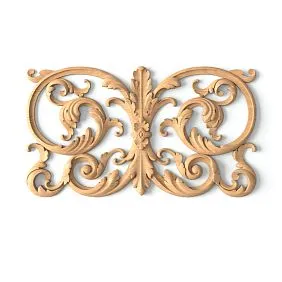
Carved overlays and decorative elementsfrom STAVROS — rosettes (diameter 80-300 mm), scrolls, cartouches, corner elements, floral tendrils. All made from solid pine, linden (for fine carving), oak (for large elements), undergoes hand sanding, ready for installation. Applications: facade decor (on walls, gables, gates), interior decor (on doors, furniture, panels).
polyurethane moldingsfrom STAVROS — moldings with patterns imitating traditional carving, cornices, pilasters, rosettes. Polyurethane density 300-350 kg/m³ (relief clarity), white primer (ready for painting), moisture resistance, frost resistance (operating range -50 to +50 degrees), UV stability (does not fade or yellow). Assortment includes over 200 profiles from simple to complex Baroque, including adaptations for Russian style (floral swirls, geometric patterns).
House outfitting service: order all decorative elements from a single source. STAVROS designers will create facade decor sketches, calculate quantities of trims, soffits, overlays, moldings, and estimate costs. You'll receive a kit ready for installation with instructions, fasteners, and painting recommendations.
STAVROS partner professional crews perform turnkey decor installation: mounting trims, soffits, cornices, overlays, protective impregnation, painting in chosen colors. Work duration for a 10×10 meter house — 10-14 days. Material warranty 5 years, workmanship warranty 3 years.
Choosing STAVROS means choosing quality natural wood, verified by centuries of tradition. You choose modern processing technologies that make Russian style accessible, practical, and durable. You choose a partner who understands: a home is not just walls and a roof, but a space filled with history, beauty, and ancestral spirit.
Revive wooden architecture traditions in your home. Create a facade that will evoke admiration from passersby, pride from owners, and joy from children. With STAVROS materials and craftsmanship, your home will transform into a work of art where every detail tells a story!