Article Contents:
- Philosophy of Exterior Decoration
- Historical Roots and Modern Interpretations
- Psychology of Perceiving Decorated Facades
- Variety of Materials for Outdoor Decoration
- Natural Stone: Eternity in Every Element
- Wood: Warmth of Nature in Architecture
- Polyurethane: Revolution in Facade Decoration
- Stylistic Directions in Wall Decoration
- Classicism: Grandeur and Proportion
- Baroque and Rococo: Luxury and Elegance
- Ceiling Molding: Framing the Upper Surface
- Modern minimalism: beauty of simplicity
- Functional Aspects of Outdoor Decoration
- Protective Properties of Decorative Elements
- Microclimate characteristics
- Manufacturing and installation technologies
- Modern Production of Decorative Elements
- Features of Installation in Various Climatic Conditions
- Planning and Designing Decorative Finishing
- Analysis of Architectural Features of the Building
- Compositional principles
- Features of Decorating Various Facade Elements
- Windows: Frames for Architectural Views
- Entrance Groups: Grandeur of Welcome
- Building Corners: Accents and Transitions
- Seasonal Aspects and Care for Decoration
- Preparation for the Winter Period
- Spring Maintenance and Inspection
- Economic Aspects of Decoration
- Budget Planning
- Impact on property value
- Regional Characteristics and Traditions
- Russian Style in Modern Interpretation
- European Influences
- Innovative Technologies in Decoration
- Digital design
- Smart materials
- The Future of Facade Decoration
- Ecological trends
- Economic Aspects of Using Picture Frame Molding
- Frequently Asked Questions
- Which material is better to choose for facade decoration?
- How much does facade decoration cost?
- How Long Does Facade Decoration Last?
- Can you install decorative elements yourself?
- Is Permission Required for Facade Decoration?

The exterior appearance of a building tells a story even before we step over its threshold.decor for exterior wallsIt is a powerful tool of architectural expression capable of radically transforming any structure. From a modest country house to a majestic mansion — properly selected decorative elements create a unique atmosphere and highlight the owner's individuality.
Modern architecture is experiencing a revival of interest in facade decorative finishes. The era of faceless boxes is fading, giving way to a creative approach to exterior design. Every wall becomes a canvas for realizing design ideas, whereOutdoor decorationit plays the role of artistic brushstrokes.
What drives modern architects and designers in their desire to adorn building exteriors? The answer lies in the deep human need for beauty and harmony. The exterior decoration of a house reflects the inner world of its inhabitants, their tastes, preferences, and life philosophy. Thoughtfully executeddecor for exterior wallsnot only decorates, but also protects the structure from the effects of natural factors.


Philosophy of Exterior Decoration




Historical Roots and Modern Interpretations
The decoration of building exteriors traces its roots to deep antiquity. From Egyptian hieroglyphs to Greek friezes, from Gothic rosettes to Baroque cartouches — each era has left its mark in the art of facade decoration.Architectural facade decorationModern times have absorbed the best traditions of the past, adapting them to the requirements of our era.
Today's masters do not merely copy historical samples, but creatively reinterpret them. Classical motifs acquire a new sound thanks to modern materials and technologies. Polyurethane molding reproduces the finest details of historical samples, while also possessing excellent performance characteristics.
The question naturally arises: why has the decoration of building exteriors regained popularity? The answer is simple — people are tired of the monotony of standard construction. The soul demands beauty, and the eye craves aesthetic pleasure.Outdoor home decorationit becomes a means of self-expression in architecture.
Our factory also produces:
Psychology of Perceiving Decorated Facades
Scientific research confirms: beautifully decorated buildings have a positive effect on people's mental state. Harmonious proportions, elegant details, and thoughtful composition create a sense of comfort and aesthetic satisfaction.Outdoor decoration elementsThey operate on a subconscious level, forming a positive perception of the surrounding space.
The color palette of decorative elements affects the mood of observers. Warm tones create a sense of coziness and hospitality, while cool tones emphasize strictness and respectability. The play of light and shadow on relief surfaces adds dynamism and liveliness to the facade.
The size and scale of decorative elements also matter. Large details are perceived from a distance and create an overall impression of the building. Small elements are designed for close inspection and add intimacy to the perception.
Get Consultation
Variety of Materials for Outdoor Decoration
Natural Stone: Eternity in Every Element
Natural stone remains the unrivaled material for creating a prestigious exterior appearance. Marble, granite, travertine, sandstone — each variety has a unique texture and color palette. Stone carving allows creating artworks that will delight the eye for centuries.
However, working with natural stone requires highly skilled craftsmen and significant financial investment. The weight of the material creates additional load on load-bearing structures. That is why many homeowners turn to modern alternatives.
Outdoor wooden decorationIt offers another approach to facade decoration. Wood possesses an incomparable texture and warmth, creating a sense of connection with nature.
Wood: The Warmth of Nature in Architecture
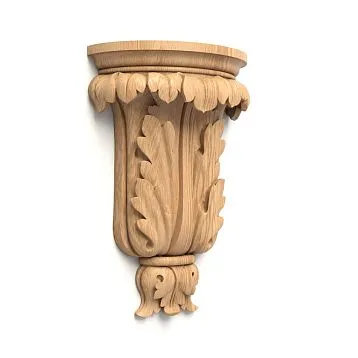
Wooden decorative elements bring a special atmosphere to architecture.Facade decoration made of woodIt can be executed in various styles: from Russian terem to Scandinavian minimalism. Carved casings, cornices, consoles, and brackets create a unique appearance of the building.
Modern wood processing technologies allow significantly extending the service life of wooden elements. Special impregnations protect against moisture, insects, and ultraviolet radiation. Thermal treatment of wood gives it additional stability and a beautiful tone.
The choice of wood species depends on climatic conditions and stylistic preferences. Larch and oak are distinguished by high resistance to external influences. Pine and spruce are more affordable but require quality protective treatment.
Polyurethane: A Revolution in Facade Decoration
Facade decoration made of polyurethaneIt has brought a true revolution to the field of exterior decoration. This material combines lightness, strength, water resistance, and the ability to reproduce the finest details. Polyurethane elements are not afraid of temperature fluctuations, do not fade in the sun, and are not affected by mold.
The production technology allows creating elements of any complexity and configuration. From simple moldings to complex capitals and rosettes — polyurethane opens boundless creative possibilities.Facade molding decorationIt is practically indistinguishable from plaster, but significantly surpasses it in operational characteristics.
Installation of polyurethane elements does not require special equipment and can be performed by a small crew. Elements easily fit to size and can be painted in any color if needed.
Stylistic directions in wall decoration
Classicism: grandeur and proportionality
Classic style never goes out of fashion. Strict geometric forms, clear lines, restrained color palette create a sense of stability and respectability.Facade DecorationIn classical style, it includes columns, pilasters, entablatures, pediments, and other architectural elements.
Proportionality is a key principle of classicism. The sizes of all elements must correspond to each other according to certain mathematical laws. The golden ratio, modular system, canons of classical orders — all of this is taken into account when creating a harmonious composition.
The color palette of the classical style leans toward neutral shades. White, cream, light gray, beige create a sense of nobility and elegance. Contrasting accents are used very sparingly.
Baroque and Rococo: luxury and elegance
Baroque decoration impresses with its opulence and theatricality. Scrolls, volutes, cartouches, garlands, mascarons create an atmosphere of solemnity and splendor.Facade decoration for a houseIn baroque style, it requires careful planning to avoid overloading the composition.
Rococo, as a development of baroque, is characterized by greater lightness and elegance. Asymmetric scrolls, plant motifs, pastoral scenes create a sense of playfulness and coquettishness. This style is especially suitable for private homes and small mansions.
The color palette of baroque and rococo can be very diverse. From pastel shades to rich, saturated colors — the choice depends on the overall project concept and the owner's personal preferences.
Modern: natural forms and asymmetry
The modern style brought to architecture the cult of natural forms. Plant ornaments, flowing lines, asymmetrical composition create a sense of organicness and naturalness.Outdoor decoration for a dachaIn modern style, it is especially popular among lovers of original design.
Floral motifs are the hallmark of modernism. Stylized flowers, leaves, branches intertwine in whimsical compositions. Fauna is also reflected in decoration: butterflies, dragonflies, birds become ornamental elements.
The color palette of modernism is often borrowed from nature. Green shades of foliage, golden tones of autumn, delicate hues of flowers create a harmonious unity with the surrounding landscape.
Modern minimalism: beauty of simplicity
A minimalist approach to facade decoration is based on the principle 'less is more'. Concise forms, clear lines, absence of unnecessary details create a sense of modernity and functionality.Buy outdoor decorationIn minimalist style — it means choosing quality of execution over quantity of elements.
Geometric forms dominate in minimalist decoration. Rectangles, squares, circles are used in pure form, without additional embellishments. Contrast of sizes and shapes creates visual interest.
The color palette of minimalism leans toward monochromatic. White, gray, black in various shades and combinations create a stylish and elegant composition.
Functional aspects of outdoor decoration
Protective properties of decorative elements
decor for exterior wallsIt performs not only an aesthetic, but also a protective function. Projecting elements divert rainwater from the wall surface, preventing its penetration into the structure. Eaves, sills, window sills play an important role in protecting the building from moisture.
Decorative elements can conceal technical utilities, ventilation openings, material joints. This not only improves the building's appearance, but also protects vulnerable areas from atmospheric precipitation.
Facade insulation is often combined with decoration. Thermopanels with decorative coating simultaneously improve the thermal insulation properties of walls and give them an attractive appearance.
Ceiling moldings can influence the microclimate of a room, creating additional air cavities and promoting better air circulation. Cornices and moldings can conceal ventilation systems, ensuring necessary air exchange without compromising interior aesthetics.
A well-designed decoration can influence the microclimate around the building. Projecting elements create shaded zones, reducing wall heating in hot weather. This is especially important for southern facades.
Perforated decorative panels can perform the function of natural ventilation, ensuring air circulation within the facade structure. This prevents condensation and mold formation.
The color of decorative elements also affects the thermal regime of the building. Light shades reflect sunlight, dark shades absorb heat. This must be considered when choosing a color solution.
Manufacturing and Installation Technologies
Modern production of decorative elements
Facade decoration manufacturerIt uses advanced technologies to create high-quality products. Computer modeling allows creating elements of any complexity with precision down to the millimeter. CNC machines ensure ideal surface processing quality.
Casting into silicone molds allows reproducing the finest details of historical samples. This technology is especially relevant for polyurethane items. Each element undergoes careful quality control before delivery to the customer.
Modern materials allow creating decor that does not fall short in beauty compared to natural stone, but significantly surpasses it in performance characteristics. The service life of quality polyurethane items can reach 50 years.
Features of installation in various climatic conditions
The climatic features of the region significantly influence the choice of materials and installation technology. In northern areas with harsh winters, special attention is paid to the frost resistance of materials and fasteners.Facade decoration for exterior finishingmust withstand multiple freeze-thaw cycles.
In southern regions, the critical factor becomes resistance to ultraviolet radiation. Materials must retain their color and structure under intense sunlight. Special UV stabilizers protect decorative elements from fading.
Humid marine climate requires special attention to the corrosion resistance of fasteners. Using stainless materials becomes a mandatory condition for the longevity of the structure.
Planning and designing decorative finishes
Analysis of architectural features of the building
Each building is unique, and decorative finishing should highlight its individual features. The proportions of the facade, placement of windows and doors, wall material — all this affects the choice of decorative elements.Facade decoration for exterior finishing of a housemust harmoniously fit into the overall architectural concept.
The scale of the building determines the size of decorative elements. Large buildings require appropriately sized details; otherwise, the decor will simply 'disappear' on the facade. Small houses, on the contrary, require a delicate approach to decoration.
The style of the building sets the overall direction of decorative finishing. Attempts to mix incompatible styles usually result in an unharmonious outcome. It is better to choose one style and consistently adhere to it.
Compositional Principles
Creating a harmonious composition requires adherence to certain principles. Symmetry or asymmetry must be justified by the overall concept. Rhythm, proportions, contrast, nuance — all these artistic expressive means are applicable to facade decoration.
The main facade usually receives the most elaborate decorative treatment. Side facades may be treated more modestly, but should not clash with the main one. The rear facade often remains practically undecorated.
Vertical zoning of the facade helps create a sense of elegance and refinement. The foundation, main wall section, and cornice must be clearly defined and connected by decorative elements.
Features of decorating various facade elements
Windows: frames for architectural views
Window openings naturally attract attention and require special attention when decorating.Facade decoration for windowscan dramatically change the perception of the entire facade. Sills, sills, window sills create a complete composition around each window.
The style of window decoration should match the overall style of the building. Classic profiled sills suit traditional architecture. Minimalist frames without ornamentation better suit modern styles.
The size of window decoration should be proportional to the size of the window itself. Too bulky sills may 'overwhelm' a small window, while too thin ones will disappear against a large opening.
Entrance groups: grandeur of reception
The main entrance to the building deserves special attention when decorating.Decor for an outdoor doorcreates the first impression of the house and its owners. Porticos, eaves, columns, pilasters emphasize the importance of the entrance.
The scale of the entrance group should correspond to the size of the building. A small house does not require a monumental portico, while a large mansion requires appropriate entrance decoration.
Functionality must combine with beauty. The eave must reliably protect from rain and snow, steps — be convenient and safe, railings — provide secure support.
Building corners: accents and transitions
Corner parts of the building often receive insufficient attention, although they form the overall silhouette of the structure. Rustication, pilasters, corner chains emphasize the building's constructive logic and add weight to it.
Corner decoration should be coordinated with wall decoration. Too active corner decoration may disrupt the overall harmony of the composition. Delicate emphasis on corners, on the contrary, adds architectural expressiveness to the building.
Seasonal aspects and facade decor maintenance
Preparation for the winter period
The Russian climate, with its harsh winters, imposes special requirements on facade decor. Snow loads, ice formations, and temperature fluctuations test materials for durability.Facade decoration for exterior house finishing purchaseshould take these features into account.
Horizontal surfaces of decorative elements are especially prone to snow accumulation. Proper design includes slopes for water runoff and prevents snow from accumulating in critical amounts.
Downspouts must be integrated with decorative elements. Concealed downspouts do not disrupt the architectural composition and effectively drain water from the roof and eaves.
Spring maintenance and inspection
Spring inspection allows identifying damage incurred during the winter. Cracks, delamination, and mechanical damage require immediate remediation to prevent further deterioration.
Cleaning decorative elements from winter soiling restores their original appearance. Soft pressure washing removes accumulated dirt without damaging the material surfaces.
Preventive painting and impregnation with protective compounds extend the service life of decor. Modern coatings provide reliable protection for 10-15 years.
Economic aspects of decoration
Budget planning
The cost of facade decor can vary within very wide limits.Facade decoration priceIt depends on the material, manufacturing complexity, volume of work, and other factors. Proper budget planning allows achieving maximum effect at reasonable costs.
Phased implementation of the project makes it more financially accessible. One can start with the most prominent elements — the main facade and entrance area — and gradually decorate the rest of the building.
Material selection significantly affects the overall project cost. Polyurethane products offer optimal price-to-quality ratio, enabling creation of luxurious exterior appearance at reasonable costs.
Impact on property value
Quality decorative facade treatment significantly increases the property's market value. A beautiful exterior creates a positive first impression and distinguishes the house from standard constructions.
Architectural uniqueness attracts buyers willing to pay a premium for individuality. Properly executed decor becomes an investment that pays off upon property sale.
Regional characteristics and traditions
Russian style in modern interpretation
Traditional Russian architecture is rich in decorative elements. Carved casings, lattices, and cornices created a unique appearance of wooden houses.outdoor decoration storeoffers a modern interpretation of these traditional elements.
Geometric and plant ornaments of Russian carving are adapted for modern materials. Polyurethane elements allow reproducing complex carved patterns with high precision and detail.
The color palette of a traditional Russian house leans toward natural tones. Brown, green, and red hues create a sense of harmony with nature and national traditions.
European influences
Proximity to European culture significantly influenced the development of Russian architecture. Classical orders, Baroque plasticity, and modern curves — all of these found reflection in domestic architecture.
German precision, French elegance, Italian theatricality — each European school contributed to the formation of Russian architectural traditions. Modern masters creatively reinterpret this heritage.
Innovative technologies in decor
Digital Design
Modern technologies have fundamentally changed the approach to facade decor design. 3D modeling allows seeing the result even before work begins.catalog of facade decorationincludes detailed three-dimensional models of all elements.
Virtual reality allows "walking around" the future building and evaluating the decor from different perspectives. This helps avoid errors and make necessary adjustments during the design phase.
Parametric design allows quickly adapting standard elements to specific dimensions and requirements. Changing one parameter automatically recalculates the entire geometry of the element.
Smart Materials
Advancements in materials science bring new possibilities to architecture. Self-cleaning coatings reduce maintenance costs. Photocatalytic materials purify air from harmful impurities.
Thermochromic coatings change color depending on temperature, creating a dynamic, "living" facade. LED elements transform decor into architectural lighting.
Future of facade decoration
Ecological trends
Growing attention to ecology influences the choice of materials for facade decoration. Recycled materials, biodegradable coatings, energy-efficient production technologies are becoming important factors in selection.
"Green" facades with living plants integrate decoration with nature. Vertical greening not only beautifies buildings but also improves microclimate, purifies air, and reduces energy consumption.
Personalization and customization
Mass customization of architecture has become accessible thanks to digital technologies. Each owner can create a unique decorative solution reflecting their individuality and preferences.
Artificial intelligence helps generate decoration variants based on user preferences. Machine learning analyzes successful projects and suggests optimal solutions.
Frequently asked questions
What material is better to choose for facade decoration?
Material selection depends on multiple factors: budget, climatic conditions, architectural style, personal preferences. Polyurethane offers optimal price, quality, and durability ratio. Natural stone is more prestigious but more expensive and heavier. Wood creates a warm, cozy atmosphere but requires regular maintenance.
How much does facade decoration cost?
Cost depends on facade area, decoration complexity, selected materials, and scope of work. Simple decoration with polyurethane elements may cost from 2000 rubles per square meter. Complex projects with natural stone cost 10-20 times more.
How long does facade decoration last?
Service life depends on material and operating conditions. Quality polyurethane decoration lasts 30-50 years. Natural stone is practically eternal. Wooden elements, with proper care, last 15-25 years.
Can decorative elements be installed by oneself?
Simple elements (moldings, window casings) can be installed independently if tools and skills are available. Complex structures require professional installation. Incorrect installation may result in damage to decoration and walls.
Is permission required for facade decoration?
For private homes, permission is usually not required if decoration does not alter building dimensions. For multi-apartment buildings and buildings in historic centers, coordination with architectural authorities may be required.
Moderndecor for exterior wallsFacade decoration is a complex art requiring deep knowledge in architecture, materials science, technology, and design. Properly executed decorative finishing can transform any building, making it unique and memorable. STAVROS Company, with its rich experience and innovative approaches, remains a leader in producing high-quality decorative facade elements. Our products combine traditional beauty with modern technologies, enabling clients to create truly outstanding architectural masterpieces.