












































































Article Contents:
- What are flat balusters and why they change the game rules
- Historical note: from porch to interior
- Why the hallway needs a special approach
- Typical mistakes in hallway decoration
- How flat balusters solve hallway problems
- Slavic patterns: language of symbols and images
- Geometric ornaments: order and harmony
- Plant motifs: connection with nature
- Solar symbolism: energy of light
- Zoomorphic images: totems and amulets
- Practical aspects of using flat balusters in the hallway
- Accent wall: focus of attention
- Decorative Panels: Art on the Wall
- Functional solutions: beauty and utility
- Combining materials: texture play
- Material and finish selection: from oak to exotic
- Traditional species: proven reliability
- Exotic species: luxury and exclusivity
- Finishing options: from natural to painted
- Stylistic directions: from ethnic to fusion
- Russian style: returning to roots
- Scandinavian style: minimalism and light
- Eclecticism: bold mixing
- Minimalism: essence without excess
- Technical nuances: installation and maintenance
- Surface preparation: foundation for success
- Mounting methods: reliability and aesthetics
- Maintenance and servicing: preserving beauty
- Inspiring ideas: real projects
- Project 'Russian Estate'
- Project 'Scandinavian Minimalism'
- Project 'Eclectic Loft'
- Project 'Eastern Fairy Tale'
- Frequently Asked Questions
- Are flat balusters suitable for a small hallway?
- Can balusters be used in wet areas?
- How much does it cost to decorate a hallway with flat balusters?
- Can balusters be made according to a custom design?
- How to combine balusters with modern furniture?
- Is Special Care Required?
- Can balusters be installed by oneself?
- STAVROS: traditions and quality in every item
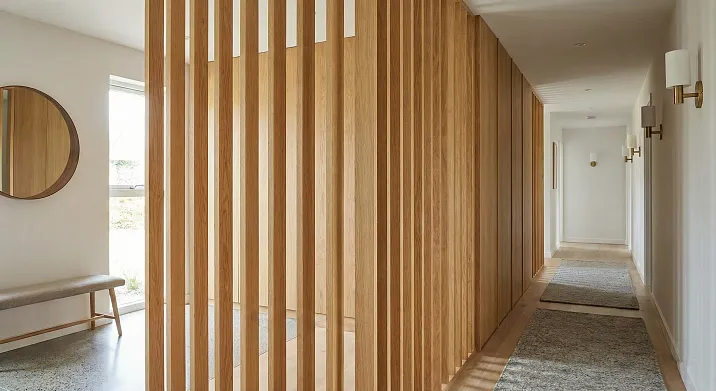
The entryway is the first thing a guest sees upon stepping into your home. It is here that the crucial first impression is formed, setting the tone for the entire space. But how often do we encounter the problem: a narrow, dark, unremarkable hallway lacking individuality. Standard layouts, white walls, generic furniture — all of this creates a sense of blandness, dullness, and absence of character. Yet, the entryway holds immense potential for implementing bold design ideas capable of transforming the space beyond recognition.
Today we will discuss a unique solution that can radically change the appearance of the hallway and entryway — the use offlat balustersasdecorative hallway finishingThese unique elements of Slavic architectural heritage open up boundless opportunities for creating unique interiors filled with depth, history, and originality.




What are flat balusters and why they change the game rules
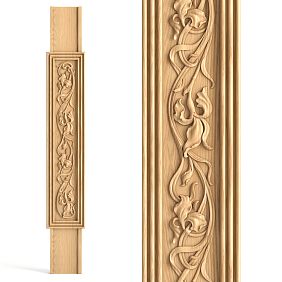
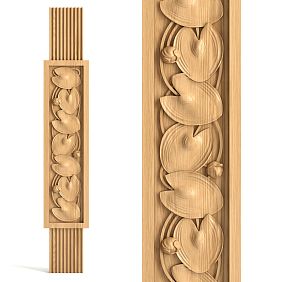
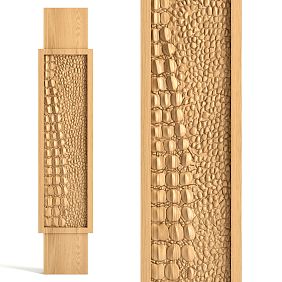
When it comes to balusters, most immediately picture classic turned posts of stair railings — voluminous, round in cross-section, symmetrical. But there exists a completely different direction —balusters for wall decoration, flat, carved, filled with patterns and symbolism. This is not merely a functional railing element, but a full-fledged piece of decorative-applied art.
Unlike traditional voluminous balusters, flat ones are boards of various widths and heights, adorned with through or relief carving. Their thickness is usually 20 to 40 millimeters, allowing for delicate compositions that let light pass through and create incredible shadow play. It is precisely this feature that makes them ideal for wall finishing in hallways and entryways.
Wood fills the space with warmth and coziness, andSlavic patternsconnect the present with deep-rooted traditions.




Historical note: from veranda to interior
Flat balusters are an inherently Slavic invention, appearing long before European architecture brought classical forms to our lands. Initially, they were used to fence verandas, terraces, and porches — not so much as decorative elements, but as practical protection against weather and falls.
The first samples were simple vertical boards installed with small gaps. But Slavic masters would not be themselves if they stopped at utility. Gradually, simple boards began to be adorned with cutouts, and then true carving emerged — geometric ornaments, solar symbols, plant motifs, images of birds and animals.
Each region of Russia developed its own unique style. Northern masters leaned toward strict geometry — rhombuses, squares, triangles, creating rhythmic compositions. In the south, they preferred lush plant motifs — grapevines, flowers, leaves. In central regions, solar symbols were popular — circles, rosettes, stars, symbolizing celestial bodies and life energy.
Over time, flat balusters moved from exterior structures into the house. They began to be used for creating decorative partitions, decorating doorways, and wall finishing. Today, this unique element is experiencing a new rebirth, becoming a key tool in the hands of designers striving to create interiors with character, history, and soul.
Our factory also produces:



Why the hallway needs a special approach
Hallways and entryways are zones of particular complexity for designers. Here, several problems converge: lack of natural lighting, limited space, high traffic, need to place functional elements (cabinets, coat racks, shoe racks). Yet, it is precisely the hallway that sets the tone for the entire house, forms the first impression, and creates the mood.
Get Consultation
Common mistakes in entryway decoration
Many make the same mistakes when decorating a hallway. The first and most common one — attempting to make the space as neutral as possible, "so it doesn't distract." Result: a bland white box devoid of character and individuality. The second mistake — overloading with small details in an attempt to "bring life" to the space. Numerous pictures, photographs, shelves with souvenirs create visual chaos, further reducing the already small space.
The third mistake — choosing inappropriate finishing materials. Dark tones in a small hallway make it even smaller and gloomier. Too light, sterile-white surfaces create the feeling of a hospital corridor. Wallpapers with large patterns "press down," small patterns cause eye strain. Decorative plaster without any texture looks flat and dull.
The fourth mistake — ignoring verticals. Many focus on flooring and furniture, forgetting about walls. But it is precisely the vertical elements that visually raise the ceiling, create a sense of space and airiness. And herecorridor decorative finishusing flat balusters becomes an ideal solution.
How flat balusters solve corridor problems
Using flat balusters in corridor decoration solves several tasks at once. First, they create a vertical structure, visually raising the ceiling and making the space more proportionate. The rhythmic placement of carved elements creates dynamism without overloading the interior.
Secondly, the openwork structure of carved balusters allows light to pass through, which is critically important for dark corridors. If installed on the wall opposite the light source, it will not 'consume' space but instead create an interesting play of light and shadow, filling the corridor with depth and volume.
Thirdly, natural wood brings warmth and coziness, which are so lacking in typical entryways. The texture of wood, its natural grain, tactile sensations — all of this creates an atmosphere of a lived-in, vibrant space, unlike cold artificial materials.
Fourthly,carved panels for the corridormade from flat balusters become a striking accent, drawing attention and defining the interior's character. This is not background decoration, but a full-fledged art object that sets the style of the entire house.
Slavic patterns: the language of symbols and images
Speaking about flat balusters, one cannot avoid the topic of ornaments and patterns with which they are decorated.Slavic patternsThis is not just beautiful decoration. It is a whole language of symbols, images, wishes, which our ancestors used to protect the home and attract prosperity.
Geometric ornaments: order and harmony
The oldest Slavic patterns are geometric. Rhombuses, squares, triangles, zigzags, meanders — each element carried a specific meaning. A rhombus with a point in the center symbolized a sown field, promising harvest and abundance. Swastika patterns (long before their negative reinterpretation in the 20th century) symbolized the movement of the sun across the sky, the eternal cycle of life, renewal and rebirth.
Triangles pointing upwards were associated with the masculine principle, fire, activity. Those pointing downwards — with the feminine principle, water, fertility. Alternating triangles created an image of harmony, balance between masculine and feminine, sky and earth, fire and water.
Meander — a continuous broken line — symbolized the flow of time, the path of a person, their fate. It was believed that such a pattern protected against evil forces, entangling them in endless turns and preventing them from entering the house. Zigzags symbolized lightning, celestial fire, divine power that purifies and protects.
Plant motifs: connection with nature
With the development of agriculture in Slavic ornamentation, plant motifs began to occupy an increasingly prominent place. Oak symbolized strength, power, longevity. Birch — purity, delicacy, femininity. Rowan protected against evil spells. Kalina symbolized love and family happiness.
Vine — one of the most popular ornaments — symbolized abundance, fertility, joy of life. Interwoven stems with leaves and clusters created complex, lush compositions that adorned festive clothing, household items, and architectural elements.
Floral motifs carried wishes for beauty, love, prosperity. Lily symbolized purity and innocence. Rose — passion and beauty. Cornflower — simplicity and modesty. Poppies — memory of ancestors. Each flower had its own meaning, and an experienced craftsman could "write" an entire message by combining various plant elements into one composition.
Solar symbolism: energy of light
A special place in Slavic ornamentation is occupied by solar symbols — images of the sun, stars, celestial bodies. Circle with radiating rays, rosette, spiral, kolovrat — all these elements symbolized the sun, the source of life, warmth, light. It was believed that solar symbols attracted positive energy into the home, protected against dark forces, and brought joy and prosperity.
Eight-pointed star symbolized the completeness of being, unity of earthly and heavenly worlds. Six-pointed — harmony between masculine and feminine principles. Five-pointed — five elements (fire, water, earth, air, ether) or five stages of human life (birth, youth, maturity, old age, death and rebirth in children).
Spiral symbolized development, movement from simple to complex, from center to periphery. Double spiral symbolized unity of opposites, yin and yang in Slavic worldview. Triple spiral — past, present, and future, an unbreakable connection of time.
Zoomorphic images: totems and amulets
Slavic masters often depicted stylized figures of birds and animals on balusters. Horse symbolized the sun, movement, travel. Deer — nobility, purity, connection with the forest. Bear — strength, protection, lord of the forest. Wolf — bravery, loyalty, hunting luck.
Birds occupied a special place. Rooster symbolized vigilance, protection against evil, which fears the first crow of the rooster. Swan — fidelity, beauty, purity. Falcon — sharpness, speed, martial prowess. Duck — fertility, feminine principle. Dove — peace, love, family happiness.
The bird Sirin — a mythological creature with a female face and bird's body — was especially revered. It was believed that its song brought happiness and joy. Depicting Sirin on balusters invited prosperity and harmony into the home.
Practical aspects of using flat balusters in the corridor
Theory is great, but how to bring all these ideas to life in a real interior? Let's consider specific ways to use flat balusters for decorating a hallway and entryway.
Accent wall: focus of attention
The most effective way — creating an accent wall frombalusters for wall decoration. Choose one wall — usually the wall opposite the entrance, which the guest sees as they step over the threshold. Prepare its surface by leveling and painting it in a neutral color. Then install a composition of flat balusters.
Balusters can be arranged vertically, creating a rhythmic structure that visually raises the ceiling. The distance between elements can be varied: from dense placement, creating almost a solid surface, to sparse arrangement, where each baluster becomes a standalone art object. It's important to maintain rhythm: equal intervals create a sense of order and calm, while changing intervals introduce dynamics and movement.
The composition can be enhanced with lighting. A LED strip installed above or below will create an eye-catching play of light and shadow, highlighting the depth of the carving and emphasizing patterns. At night, such lighting will turn the wall into a true light art object.
Decorative panels: art on the wall
If full wall covering seems too bold a solution, you can create a decorative panel using several balusters. Select elements that, when arranged together, form a unified composition — a complete pattern, a symmetrical ornament, or a narrative scene.
The panel can be placed at any height. The classic option — at eye level, approximately 140–160 centimeters from the floor. This placement makes the panel most noticeable and allows you to appreciate all the carving details. However, other options are possible: high placement (under the ceiling) visually raises the space, while low placement (at waist level) creates an intimate, cozy atmosphere.
The panel can be framed withmolding, which will give the composition a sense of completion and clear structure. The molding will highlight the panel, separate it from the surrounding space, and turn it into an independent work of art. The frame color can match the balusters, creating a unified monochromatic composition, or contrast with them, emphasizing the structure.
Functional solutions: beauty and utility
Flat balusters can be used not only as pure decoration but also in functional elements. A decorative partition, zoning the hallway space — for example, separating the entry zone from the wardrobe zone — can be made from carved balusters. Such a partition does not 'consume' space like a solid wall, yet still creates a clear division of zones.
Carved balusters can be integrated into furniture. Facades of built-in cabinets adorned with delicate elements will turn a utilitarian item into an art object. A bench back in the entryway made from carved balusters will become a striking accent. Shoe cabinet doors decorated with Slavic patterns will emphasize the interior's style.
Another option — using balusters as decorative consoles or brackets. Install a shelf above a chest of drawers or console table, supported by carved elements. This is not only beautiful but also functional: you can place a key holder, a vase with flowers, or figurines on the shelf.
Combining materials: playing with textures
Wooden panelsFlat balusters combine beautifully with other materials, creating interesting compositions. Wood and metal — a classic combination, where the warmth of wood contrasts with the cool gleam of metallic elements. You can enhance the baluster composition with metallic inlays, rivets, or forged elements.
Wood and glass — another successful combination. Transparent or matte glass inserts between carved elements create a play of transparency and opacity, light and shadow. Colored glass will add vibrancy to the composition, creating color accents.
Wood and stone (or its imitation) — a combination that emphasizes connection with nature. Stone cladding or decorative "stone" plaster on part of the wall, combined with carved wooden elements, creates a sense of an old, sturdy house with history.
Wood and textile — a rarer, but very effective combination. Fabric panels stretched between carved balusters create a soft, cozy atmosphere. This can be natural linen, coarse canvas, or richly colored velvet — the choice depends on the overall interior style.
Material and finish selection: from oak to exotic
Flat balusters are made from various types of wood, and the choice of material significantly affects the appearance, durability, and cost of the item.
Traditional species: proven reliability
Oak — the king among wood species. Oak balusters are distinguished by exceptional strength, noble texture, and beautiful color — from light straw to dark brown. Oak is practically immune to deformation, does not fear moisture, and lasts for decades. The only downside is its high price, justified by its superior characteristics.
Ash — a worthy alternative to oak. Strong, elastic, with a beautiful grain pattern, ash is ideal for carving. Its color palette is diverse: from light yellow to pinkish-brown. Ash is slightly softer than oak, which makes it easier to work with, yet still strong enough for long-term use.
Beech — a universal material. Its dense, uniform structure allows for creating the finest carving details. Beech is easy to stain, opening up wide possibilities for color solutions. The only nuance — beech is sensitive to moisture, so it requires quality protective treatment.
Birch — a more affordable option. Light, with a fine textured pattern, birch creates a light, airy impression. It is well-suited for carving, though it requires certain skills due to its tendency to splinter. Birch is ideal for painting and staining.
Pine — a budget solution without compromise on appearance. Coniferous wood with a distinctive resinous aroma, pine is easy to work with and resistant to mold. The downside — uneven structure with pronounced annual rings and knots, which sometimes creates difficulties during fine carving.
Exotic species: luxury and exclusivity
For those seeking unconventional solutions, balusters made from exotic wood species are available. Teak — moisture-resistant wood with a golden-brown hue and oily texture. Mahogany — a noble species with a reddish-brown color and silky surface. Wenge — dark, almost black wood with contrasting veins.
Exotic species bring a touch of luxury and exclusivity to the interior. Their unusual color and texture create striking accents, attract attention, and highlight status. But it's important to remember: exotic materials require professional handling and installation, and they are significantly more expensive than traditional species.
Finishing options: from natural to stained
The choice of finishing treatment determines the final appearance of balusters. Natural finishing — applying transparent oil or varnish — preserves and enhances the natural beauty of the wood, its texture and color. This is the ideal choice for valuable species with striking grain patterns.
Staining — applying colored oils or stains — allows you to change the wood’s tone, making it darker, brighter, or more noble. You can imitate expensive species: stained birch may resemble walnut, and pine may resemble oak. It is important to choose high-quality products that penetrate into the wood’s structure, rather than forming a superficial film.
Painting — applying opaque paint — completely hides the wood’s texture, creating a uniform color. This allows for bold color solutions: white, gray, even black or bright-colored balusters. Painting requires especially careful surface preparation, as paint will accentuate even the slightest imperfections.
Patination — artificial aging using special compounds — creates an antique effect. Patina accumulates in carved recesses, emphasizing relief and creating depth. Patinated balusters appear as if they have adorned your home for many years, filling the space with history.
Gilding or silvering — applying metallic pigments — transforms balusters into luxurious art objects. This solution suits baroque, rococo, and art deco interiors. Gilded elements create a festive, celebratory atmosphere, highlighting the owner’s status and taste.
Stylistic directions: from ethnic to fusion
carved panels for the corridorFlat balusters can be adapted to various stylistic directions.
Russian style: returning to roots
Authentic Russian style means maximum use of traditional forms and ornamentation. Balusters with geometric patterns, solar symbols, and plant motifs. Natural wood, either uncolored or lightly stained. Combined with other elements of folk culture: painted chests, handwoven rugs, wrought lighting fixtures.
In Russian style, richness of detail is important. Carving can be very complex, multi-layered, and dense. Every square centimeter of surface carries both symbolic and decorative weight. The color palette is warm and cozy: tones ranging from light honey to dark brown, complemented by red, green, and gold.
Scandinavian style: minimalism and light
Scandinavian interpretation implies simplification of forms, lightening of color, and creation of airiness. Balusters with simple geometric patterns, painted white or light gray. Minimal details, maximum light and air. Sparsely arranged elements, creating rhythm without overwhelming the space.
In Scandinavian style, wood often combines with white walls, light flooring, and simple functional furniture. Carved balusters become the main decorative accent, drawing attention precisely due to their uniqueness against the overall restraint of the interior.
Eclecticism: bold mixing
An eclectic approach allows combining incompatible elements, creating unique, original interiors. Slavic balusters can coexist with industrial metal elements, modern abstract paintings, vintage furniture. It is important to maintain balance so that eclecticism does not turn into chaos.
The key to success — a unifying element. This can be color (all elements are in one palette), texture (wood of different forms and eras), or theme (all elements are somehow related to a specific idea). An eclectic interior requires boldness and refined taste, but the result is worth it — the space becomes lively, dynamic, and full of energy.
Minimalism: essence without excess
It seems carved balusters and minimalism are incompatible. But this is not the case. A minimalist approach implies using a limited number of elements, each carrying maximum semantic and aesthetic weight. One or two balusters with simple, restrained patterns, mounted on a plain wall — and already you have a striking accent that does not disrupt the overall philosophy of the style.
Color — monochromatic: white, black, gray, natural light wood. Forms — geometric, clear, without excess. Placement — thoughtfully arranged, adhering to principles of symmetry or intentional asymmetry. In a minimalist interior, every element counts, and a carved baluster can become the very 'jewel' that brings life and interest to the space.
Technical nuances: installation and maintenance
The beauty of balusters will be fully revealed only with proper installation and careful maintenance.
Surface preparation: the foundation of success
Before installing balusters, the wall must be carefully prepared. The surface must be perfectly flat — any irregularities will be noticeable after installation. If the wall is uneven, it must be leveled with plaster or drywall. Cracks, chips, and dents must be filled and sanded.
After leveling, the wall is primed — this improves adhesion and prevents peeling. Then, a finish is applied: paint, decorative plaster, wallpaper. The background color is chosen based on the balusters’ color. For light elements, a contrasting dark background is suitable; for dark elements, a light background. You can also choose similar tones, creating subtle tonal variations.
Mounting methods: reliability and aesthetics
There are several ways to mount balusters on the wall. The simplest method is using liquid nails or a special wood adhesive. This method is suitable for lightweight, small elements. The adhesive is applied to the back of the baluster, pressed against the wall, and secured until it dries.
For heavier or larger elements, mechanical fastening — screws or dowels — is used. Screws are driven in from the front, then covered with decorative caps matching the wood color. Dowels — wooden pins — are inserted into pre-drilled holes, creating an invisible fastening.
If balusters form a continuous composition, the frame method can be used. First, a frame made of wooden beams or metal profile is mounted to the wall, then the balusters are installed onto it. This method allows creating a gap between the wall and decorative elements, enhancing the play of light and shadow.
Maintenance and care: preserving beauty
wooden itemsRequire regular but simple maintenance. The main task is protection from dust, moisture, and mechanical damage. Dust is removed with a soft dry cloth or a specialized dust brush. Occasionally, you can wipe with a slightly damp cloth, but it is important to immediately dry thoroughly.
If the balusters are coated with oil, they need to be refreshed periodically — usually once every 1-2 years. Oil is applied in a thin layer, allowed to absorb, then polished with a soft cloth. This restores the protective layer, refreshes the color, and highlights the wood's texture.
Lacquered surfaces are more forgiving. They require only wiping with a damp cloth, using mild, non-abrasive cleaning agents if needed. If the lacquer has dulled or been scratched, a new layer can be applied after lightly sanding the old finish.
Painted balusters may require periodic repainting, especially in areas of active contact. Minor scratches and chips are easily touched up. If the paint has faded or changed tone, the elements can be fully repainted, either by removing the old finish or applying new paint over it (if the paint type permits).
Inspiring ideas: real projects
Theory and technical details are important, but nothing inspires as much as real examples of successful projects. Let’s consider a few ideas for using flat balusters in hallway and entryway design.
Project 'Russian Estate'
Country house in classic Russian style. Spacious entryway with high ceilings. One wall is fully covered with a composition of flat balusters featuring traditional Slavic ornaments. Oak elements are coated with natural oil, preserving the wood’s natural color and texture.
Balusters are arranged vertically with small gaps, through which the background — a wall painted in warm beige — is visible. A warm-toned LED strip light installed below creates an eye-catching backlight, especially beautiful at night. The composition is complemented by traditional elements: a heavy wooden bench with carved legs, a wrought-iron coat rack, and floor mats with folk patterns.
Project 'Scandinavian Minimalism'
Modern-style city apartment. A small entryway required visual expansion and brightening. The solution — three vertical flat balusters with simple geometric patterns, painted white and mounted on the wall opposite the entrance.
Balusters are spaced sparsely, creating rhythm without overcrowding the space. The white color blends with wall tones, but the relief of carving creates play of light and shadow, adding depth. Light laminate flooring and minimalist furniture (narrow console and mirror in a simple frame) complement the concept. Despite modest dimensions, the entryway looks stylish, modern, and cozy thanks to the warmth of natural wood.
Project 'Eclectic Loft'
Studio apartment in loft style. The entryway is not separated by a wall but is part of the open space. Zoning was achieved using a delicate screen of flat balusters with intentionally rough finish — the wood is stained dark, with areas showing worn and aged effects.
The screen does not reach the ceiling, leaving space above. This preserves the feeling of a single volume while clearly defining the entry zone. Through the carved openings, the main part of the studio is visible, creating intrigue and visually expanding the space. Industrial loft elements (concrete walls, metal beams, exposed utilities) contrast with the warmth and ornamentation of carved wood, creating an unexpected yet harmonious combination.
Project 'Eastern Fairy Tale'
Private home with Eastern motifs in interior design. The entryway is designed as a gallery leading to main rooms. Walls are adorned with panels of flat balusters, but the ornaments are not traditional Slavic patterns, but stylized Eastern ones — geometric patterns reminiscent of Arabic lattice, stylized floral motifs.
Balusters are painted in rich colors: dark blue, emerald, gold. Gilded elements create a sense of luxury. Lighting — recessed fixtures creating soft, diffused light that highlights the depth of carving. Textiles (area rugs, decorative cushions on benches) support the Eastern theme. The result is a space filled with exotic charm, yet cozy and welcoming.
Frequently asked questions
Are flat balusters suitable for a small hallway?
Yes, and even more so — they can be an ideal solution for a small space. The key is choosing the right scale and quantity of elements. For a small hallway, it’s better to select 2-3 balusters with not overly large patterns, painted in light tones. Vertical placement visually raises the ceiling, and the delicate structure does not 'consume' space.
Can balusters be used in humid areas?
Wood and moisture are not the best friends, but usage is possible with proper treatment. Choose moisture-resistant wood (larch, teak) and ensure quality protective coating — several layers of marine varnish or special oil for humid areas. Good ventilation is also essential to prevent stagnant moisture.
How much does it cost to finish a hallway with flat balusters?
Cost depends on many factors: wood species, carving complexity, element size, finish type, installation method. Approximate range: from 5000 to 50000 rubles per square meter of finished composition. Budget option — pine balusters with simple patterns. Premium — oak or exotic wood, complex multi-layer carving, handcrafted work, patina or gilding.
Can balusters be made according to an individual sketch?
Absolutely. Many workshops and manufacturers offer custom baluster production. You can propose your own ornament, combination of existing patterns, even an image of a specific scene. Custom approach allows creating a truly unique space reflecting your individuality, family history, and personal values.
How to combine balusters with modern furniture?
The key is maintaining balance. If the furniture is very modern, minimalist, geometric, choose balusters with simple patterns, painted in neutral colors. If the furniture has classic features (carved elements, curved lines), you can use more ornate balusters. A unifying element can be color, material, or line rhythm.
Is special care required?
No, maintenance is simple and does not require special skills or tools. Regular dry dusting, periodic wiping with slightly damp cloth, and refreshing protective coating every 1-3 years (depending on finish type) — this is sufficient to maintain beauty for many years.
Can balusters be installed by oneself?
Yes, if you have basic woodworking and tool skills — quite possible. The key is thoroughly preparing the surface, accurately marking installation locations, and choosing the right mounting method. For complex compositions or large elements, it’s better to consult professionals — they will complete the work faster, better, and with warranty.
STAVROS: traditions and quality in every item
Creating a genuine interior with character and history requires not only taste and imagination, but also access to high-quality materials and products. STAVROS is your reliable partner in bringing the boldest design ideas to life.
STAVROS offers a wide range ofcarved decor elementsMade of solid wood: flat balusters with traditional Slavic patterns and modern geometric ornaments, decorative appliqués, moldings, panels, and trim elements. Each piece is crafted with impeccable quality, attention to the finest details.
The company works with the finest wood species: oak, ash, beech, birch, and pine. Only proven protective finishes are used, safe for health and ensuring the longevity of the products. Custom elements can be manufactured according to your sketches — you propose the idea, and STAVROS craftsmen bring it to life in wood.
The company’s specialists will help you select optimal solutions for your interior, calculate the required amount of materials, and advise on installation and maintenance. STAVROS is not just a decor supplier. It is a team of professionals for whom every project is an opportunity to create something unique, beautiful, and meaningful.
By choosing STAVROS, you receive a guarantee of quality, professional support, an extensive selection, and the opportunity to realize any ideas — even the most unconventional ones. Your home deserves the best — entrust its design to STAVROS professionals!


