Article Contents:
- Evolution of furniture decor from Classicism to Modernism
- Classicism - strictness and harmony
- Empire - imperial opulence
- Biedermeier - cozy simplicity
- Historicism - eclectic forms
- Modernism - organic forms
- Wooden furniture decor - warm structure, handcrafted work, texture
- Wood species for furniture decor
- Carving techniques for furniture decor
- Finishing of wooden decor
- Polyurethane furniture decor - imitation of carving, simple installation
- Technological advantages
- Production and assortment
- Installation and painting
- Decorative elements: appliqués, moldings, rosettes, cornices
- Plates and panels
- Moldings and friezes
- Cornices and Molding
- Cornices and plinths
- Columns and pilasters
- Advantages of combining materials
- Zonal division
- Stylistic unity
- Economic feasibility
- Application in furniture of different styles
- Classic Furniture
- Baroque and Rococo furniture
- Modern furniture
- Contemporary furniture
- Conclusion - merging aesthetics and technology

Furniture decor is the art of transforming utilitarian items into applied art pieces, where every line and every ornament carry not only aesthetic but also symbolic meaning. For centuries, master furniture makers have created unique decorative systems, embodying in wood the philosophy of the era, cultural codes, and concepts of beauty and harmony. Carved appliqués, profiled cornices, turned columns, relief panels transformed a simple cabinet into an architectural structure, a commode into a jewel box, a chair into a throne.
The history of furniture decor demonstrates the evolution of artistic styles, technological capabilities, and social demands. Antiquity created an order system - columns, capitals, and cornices of furniture replicated architectural forms in miniature. The Middle Ages filled furniture with religious symbolism - Gothic spires, pointed arches, carved scenes from the Holy Scripture. The Renaissance revived ancient motifs, enriching them with humanist content. Baroque reached the peak of ornamentation - lavish volutes, garlands, putti covered every square centimeter of surface. Classicism returned the strictness of lines while preserving the nobility of decoration.
Modern technologies have expanded the material possibilities of furniture decor.Wooden furniture decorationIt preserves the traditions of artisanal carving, embodies the nobility of natural material, and the uniqueness of each piece.Polyurethane furniture decorIt offers a practical alternative - precise reproduction of classical forms, moisture resistance, ease of installation, and affordability. The choice of materials is determined by the furniture style, usage conditions, budgetary possibilities, and personal preferences.
Properly selected decor transforms standard built-in furniture into individual artworks, fills space with stylistic definition, and creates visual completeness of the interior. It can be rich and ornate for classical styles, or minimalist and restrained for modern directions. The character of ornamentation, scale of elements, and density of placement create different perceptions of the same furniture.



Evolution of furniture decoration from Classicism to Modern
Furniture art has developed over centuries in close connection with architecture, visual arts, and the philosophy of the era. Each style created a unique decorative system reflecting the era's views on beauty, comfort, and functionality.




Classicism - strictness and harmony
Classicism of the 17th-18th centuries rejected the excessive ornamentation of previous styles in favor of strict symmetry, mathematically precise proportions, and classical motifs. Furniture acquired architectural strictness - straight lines, clear divisions, classical elements. Decoration was placed in strictly defined areas, emphasizing constructive logic.
French Classicism, known as the Louis XVI style, created refined furniture with slender straight legs resembling columns with fluting. Backs of chairs and armchairs acquired strict geometric forms - oval, rectangular, shield-shaped. Decoration included rosettes, garlands, laurel wreaths, ribbons, executed in wood carving or bronze inlays. Marquetry - wooden mosaic from various species - created elegant ornaments on fronts of commodes and secretaire.
English Classicism was characterized by greater restraint and practicality. Masters Thomas Chippendale, George Hepplewhite, Thomas Sheraton created furniture that became the standard of English taste. Decoration included classical motifs - palmettes, meanders, urns, but in a more restrained interpretation. Popular was inlay with brass threads, low-relief carving, marquetry from contrasting woods.
Russian Classicism of the time of Catherine II and Alexander I created monumental furniture with rich decoration. Carved gilded elements - griffins, sphinxes, lyres, laurel wreaths - adorned ceremonial furniture of palaces. Bronze inlays, marble tops, inlay with mother-of-pearl and metal were widely used. Furniture embodied imperial grandeur, solemnity, and ceremonial splendor.
Our factory also produces:


Empire - imperial opulence
Empire of the early 19th century became the peak of Classicism development, embodying Napoleonic ambitions. Furniture acquired monumental forms, heavy proportions, rich decoration with military and Egyptian symbolism. Applied bronze elements covered facades - winged Victories, eagles, swords and shields, Egyptian sphinxes, pyramids, hieroglyphs.
Empire furniture decoration included columns and pilasters with capitals, cornices with modillions, friezes with relief images. Legs of tables and chairs were executed in the form of griffins, lion paws, ancient Egyptian figures. Dark red wood contrasted with gilded bronze, creating a luxurious effect. Marble, malachite, porphyry tops added monumentality.
Get Consultation
Biedermeier - cozy simplicity
Biedermeier from 1815-1848 became a reaction to the imperial opulence of Empire. The bourgeoisie created a style of cozy domestic furniture without excessive ornamentation. Simple forms, light wood species - birch, pear, cherry. Decoration is minimal - modest inlays, turned columns, simple cornices. Comfort and functionality are more important than grandeur.
Historicism - eclectic forms
The mid-19th century brought a fascination with historical styles - neo-Gothic, neo-Baroque, neo-Rococo. Furniture makers reproduced forms of past eras, often mixing elements of different styles into one piece. Machine production allowed mass production of complex decoration, making luxurious furniture accessible to the middle class. Factory-made carved inlays replaced the handwork of master carpenters.
Modern - organic forms
Modern at the turn of the 19th-20th centuries revolutionized furniture decoration, abandoning symmetry and historical references. Smooth curved lines, asymmetrical compositions, plant motifs - irises, lilies, seaweed - created organic decoration. Furniture became sculpture, where each line flowed into the next without breaks.
Modern decoration included stained glass in cabinet doors, metal hardware of complex forms, inlay with mother-of-pearl, bone, colored wood species. Carving reproduced natural forms with botanical precision - leaf veins, stem curves, flower petals. Female profiles with flowing hair adorned bed backs, cabinet doors, mirror frames.
Decor of wooden furniture - warm structure, handcrafted work, texture
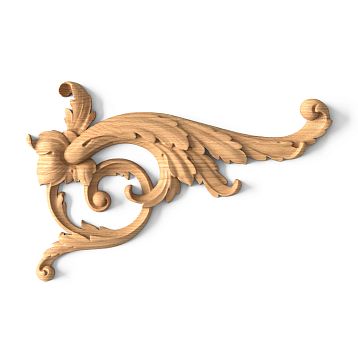
Natural wood remains the standard material for making furniture decoration.Wooden elementsThey embody the traditions of artisan craftsmanship, the nobility of natural material, the uniqueness of each piece. Living texture, tactile warmth of solid wood, possibility of detailed carving create unique value of wooden decoration.
Wood species for furniture decoration
Oak - classic choice for decorating elite furniture. Density of 700-800 kg per cubic meter ensures strength and durability. Expressive coarse-grained texture creates additional decorative effect. Color range from light honey to dark chocolate allows selecting tone to match any concept. Oak inlays serve for centuries, preserving clarity of the finest carving details.
Walnut - elite material for exclusive furniture. Dark brown color with purple tones, wavy texture with beautiful reflections create luxurious appearance. Wood is sufficiently hard for precise carving while retaining flexibility. Walnut inlays become works of decorative art, emphasizing the elite status of furniture.
Linden - material chosen by carvers for creating complex ornaments. Soft uniform wood without pronounced texture is ideal for detailed work on acanthus leaves, volutes, rosettes. Linden does not crack when drying, does not warp. Masters create delicate inlays from linden with meticulous work on each element.
Beech combines sufficient softness for carving with good strength. Fine uniform texture ensures clean carving without chips. Rose-colored tone creates warm color. Beech stains excellently, taking any shade, or is painted with enamel to create white elements of classic furniture.
Mahogany and other exotic species were used for elite furniture of the 18th-19th centuries. Red wood with noble dark color, high density, resistance to deformation. Decoration from exotic species emphasized the owner's status and furniture cost. Modern analogs - sapelli, meranti - create visually similar effect.
Carving techniques for furniture decoration
Relief carving creates volumetric ornaments on inlays, facades, cornices. Relief depth of 5-20 mm creates expressive play of light and shadow. Acanthus leaves, volutes, garlands, rosettes are carved sequentially - rough background removal, forming the main relief, detailing, final finishing. Each element is individually worked on.
Openwork carving creates delicate inlays with open spaces. Ornament transforms into wooden lace - interwoven plant motifs, geometric patterns, stylized flowers. Technique requires virtuoso skill - elements must be strong yet elegant. Openwork inlays are especially effective against contrasting cabinet door backgrounds.
Contour carving creates graphic decoration by cutting contours of different depths and widths. Technique is less labor-intensive than relief carving, suitable for geometric ornaments, stylized plant motifs. Contour carving is popular for furniture in Scandinavian style, where restrained decoration is valued.
Carved relief creates full-scale sculptural elements - consoles, brackets, animal paw legs, decorative columns. The carver processes the blank from all sides, creating a three-dimensional object. Carved relief requires not only craftsmanship but also sculptural talent.
Modern CNC machines perform rough material removal and form the main relief according to a 3D model. Final finishing - detailing, smoothing transitions, enhancing line definition - remains the artisan's task. Combined technology optimizes cost while preserving handcrafted quality.
Wooden Decor Finishing
Sanding reveals the beauty of texture and creates surface smoothness. Sequential processing with progressively finer sandpaper grades - from P100 to P320 - removes tool marks. Carved elements require hand sanding - abrasive access into all ornament recesses is critical for quality.
Staining with dyes emphasizes texture and alters wood color. Light woods are stained to resemble valuable species - lime stained like walnut, beech like mahogany. Gradient staining - dark tones in carved recesses, light tones on raised areas - enhances visual depth. Water-based, alcohol-based, and oil-based dyes create various effects.
Lacquering protects wood and highlights texture. Transparent lacquers on various bases - nitrocellulose, polyurethane, acrylic - create protective films with varying gloss levels. Matte lacquers preserve natural appearance, semi-gloss add subtle sheen, glossy create mirror-like surfaces.
Gilding transforms decor into luxurious elements of palace furniture. Classical gilding covers carving with ultra-thin gold leaf. Imitations - gold paints, patina - create visually similar effects at lower cost. Partial gilding - only raised ornament elements - creates elegant contrast.
Patination creates an effect of noble antiquity. A light base color is covered with dark paint, which partially wears off from raised areas. Recesses remain dark, raised areas lighten - mimicking aged patina. Popular for Provence, shabby chic, and vintage style furniture.
Polyurethane Furniture Decor - Carving imitation, easy installation
Modern polyurethane has revolutionized productiondecorative insertsThe precision casting method reproduces any shape with jewel-like accuracy, creating items visually indistinguishable from wooden carved counterparts after painting.
Technological Advantages
The phenomenal lightness of polyurethane overlays simplifies mounting on any surface. A 200x400 mm overlay weighs 50-100 grams versus 300-500 grams for wood. Lightness is critical for installation on thin MDF or particleboard facades - heavy wooden overlays may deform the base. Polyurethane decor can be mounted on any material without risk.
Absolute water resistance makes polyurethane decor ideal for kitchen and bathroom furniture. Water absorption coefficient less than 1% eliminates swelling and deformation. Material withstands direct contact with water and steam, does not develop mold. Kitchen facades with polyurethane decor last decades in humid conditions.
Perfect repeatability is a key advantage of casting technology. All overlays in a batch are absolutely identical to the micron. When decorating symmetrical furniture - cabinets with two doors, chests with multiple drawers - polyurethane overlays ensure flawless symmetry. For handcrafted wooden overlays, minor deviations are inevitable.
Complex shapes do not affect cost. A simple rosette and a complex cartouche with multiple details cost the same when comparable in size. For wood, carving complexity is critical - labor intensity increases exponentially. Polyurethane makes complex historical forms accessible to a broad audience.
Impact resistance ensures longevity. Elastic polyurethane slightly deforms upon impact, absorbing energy, then restores its shape. Accidental door impacts leave no damage. Fragile wood carving chips under impact, especially on thin raised elements.
Production and assortment
Creating a master model is the first stage of production. The sculptor creates a prototype overlay from clay, plasticine, or polyurethane foam. All ornament details are refined considering that casting allows reproduction of elements down to fractions of a millimeter. For reproducing historical decor, museum samples and archival drawings are used.
Silicone molds precisely reproduce all surface nuances of the master model. Elastic silicone penetrates the finest ornament recesses, capturing the most delicate details. Mold lifespan - 500-1000 castings. For complex overlays, the mold may consist of multiple parts.
Two-component polyurethane system casting fills the mold with foaming mass. Inside, a porous light structure forms, while the surface develops a dense 2-3 mm thick layer with perfectly detailed relief. Each ornament detail is reproduced with micron precision.
Variety of forms is measured in thousands of options. Classic overlays reproduce historical styles - Baroque volutes, neoclassical rosettes, Empire garlands. Modern organic forms with floral motifs. Contemporary abstract compositions. Corner elements, central panels, extended borders - complete furniture decor assortment.
Installation and Painting
Installation with special adhesive takes minutes. Adhesive is applied to the back of the overlay, the element is pressed onto the facade, held for 30 seconds. Excess adhesive is removed with a damp sponge. For securing large elements, thin brads are used in inconspicuous places.
Painting does not require priming. Acrylic paints are applied directly onto polyurethane with brushes or spray. Two coats create a dense finish. Traditional white color is universal for classic furniture. Painting to match facade color makes overlays barely noticeable as relief. Contrasting colors transform decor into bright accents.
Patination creates an antique effect. A base cream color is covered with brown paint, which wears off from raised areas. Recesses remain dark - mimicking old furniture. Imitative gilding is performed with gold paints on raised ornament elements.
Decorative elements: overlays, borders, rosettes, cornices
Furniture decor includes diverse elements, each serving a specific function within the furniture composition.
Wall Plaques and Panels
Decorative Inserts- universal elements for decorating facades. Placed at the center of cabinet doors, on the front plane of chest drawers, on bed backs. Size varies from miniature 50x50 mm to large 300x500 mm. Shape - round rosettes, oval medallions, rectangular panels, shaped cartouches.
Overlay ornamentation is determined by furniture style. Classical acanthus leaves, laurel wreaths, palmettes. Baroque volutes, garlands, putti. Empire lyres, torches, swords. Modern irises, poppies, female profiles. Contemporary abstractions. Central overlay on a door becomes the compositional center of the facade.
Corner overlays are placed at the corners of door panels, drawers, panels. Triangular, quarter-circular, or complex-shaped elements visually enhance corners, creating compositional completeness. Four identical corner overlays at the corners of a rectangular panel form a frame, structuring the plane.
Borders and friezes
Extended horizontal elements with floral or geometric ornamentation frame facades around the perimeter. Borders are placed along the top and bottom edges of doors, creating a visual frame. Width 20-50 mm, length cut to facade size. Ornament - interwoven floral motifs, geometric meanders, beads and ovals.
Friezes decorate the front strip under a chest's countertop, above cabinet doors. Extended ornament creates horizontal rhythm. Classic furniture features friezes with garlands, modern furniture with flowing floral motifs, contemporary furniture with geometric patterns.
Rosettes and medallions
Round or oval elements with central symmetry are placed at the centers of panels, at the intersection of compositional axes. Diameter 50-200 millimeters depending on the furniture scale. Classical rosettes reproduce flowers - roses, daisies, sunflowers with radially arranged petals.
Oval medallions often include relief images - profiles in an antique style, pastoral scenes, allegorical figures. Placed at the center of doors, on chair backs, on cabinet pediments. The medallion becomes the main decorative accent, drawing attention with its motif.
Crown moldings and bases
Crown moldings crown tall furniture - cabinets, buffets, secretaire. Profiled elements 50-150 millimeters wide create an architectural finish. Classical crown moldings include the cyma, cornice, and gusset - the same profiles as in architectural moldings. Moldings, denticles, and Ionic elements decorate the crown moldings of rich furniture.
Bases form the visual foundation of tall furniture. Profiled elements 100-200 millimeters high create a transition from floor to body. The base may be simple rectangular or complexly profiled with fluting, carving. For classical furniture, high bases are characteristic, visually lifting the body.
Columns and pilasters
Vertical elements at the corners of cabinets, buffets, secretaire create an architectural structure. Half-columns 50-80 millimeters in diameter with fluting, capitals, and bases imitate classical orders. Pilasters - flat vertical protrusions 60-100 millimeters wide with capitals and bases - structure the facade.
Turned columns without fluting decorate Biedermeier, Victorian, eclectic furniture. Twisted baroque columns create dynamic decoration. Modernist furniture features organic columns with complex cross-sections resembling plant stems.
Advantages of combining materials
A thoughtful combination of wooden and polyurethane decoration creates an optimal balance of aesthetics, functionality, and budget.
Zonal division
Facade elements accessible for tactile contact are made of wood. Door overlays at eye level, carved handles, countertop decoration - natural wood creates tactile value. Less accessible elements - crown moldings under the ceiling, bases at floor level - are made of practical polyurethane.
For wet zones - kitchens, bathrooms - polyurethane decoration is used exclusively. For dry rooms - bedrooms, offices, living rooms - a combination of wooden and polymer elements is used. This approach optimizes cost while ensuring durability.
Stylistic unity
Wooden and polyurethane elements must match in ornamentation character, scale, and level of detail. Classical oak overlays harmonize with classical profiled polyurethane crown moldings. Uniform white paint or uniform toning makes material differences imperceptible.
Economic feasibility
Full decoration of furniture with carved wood costs 5-10 times more than a combined solution. Key elements - central overlays, visible decoration - are made of wood. Secondary elements - borders, corner elements, crown moldings - are made of polyurethane. Significant savings are achieved while maintaining the impression of expensive furniture.
Application in furniture of different styles
Different styles require a specific character of decoration corresponding to the aesthetics of the era.
Classical furniture
Neoclassicism uses strict symmetrical compositions with classical motifs. A central rosette or medallion on a door is flanked by side overlays. Corners are emphasized with corner elements. Crown moldings and bases are profiled with classical moldings. Columns with fluting and capitals at corners. Color is white, cream, or toning to valuable woods with partial gilding.
Empire requires rich decoration with military symbolism. Lyres, torches, swords and shields, laurel wreaths, eagles decorate facades. Bronze or bronze-imitating overlays on dark red wood. Columns with capitals, pediments over cabinets, rich crown moldings. Furniture embodies imperial grandeur.
Baroque and Rococo furniture
Baroque implies maximum decoration. Ornate volutes, garlands with flowers and fruits, putti, maskaroni cover facades. Asymmetrical dynamic compositions. Gilding is mandatory - full or partial. Curved body shapes require flexible overlays replicating surface curvature.
Rococo lightens baroque opulence. Elegant asymmetrical compositions with rocaille - irregularly shaped shells. Pastoral motifs, amours, floral garlands. Pastel colors - pink, blue, pistachio with silvering and gilding. Decoration is lighter and more elegant than baroque.
Modern furniture
Modernism uses organic asymmetrical forms. Stylized irises, poppies, water lilies with smooth curved stems. Female profiles with flowing hair. Abandonment of symmetry, flowing lines, expression of forms. Natural wood with inlay accents, complex metal hardware.
Contemporary furniture
Minimalism rejects ornamentation in favor of clean forms. Decoration is extremely minimalist - simple geometric overlays without ornamentation. Rectangles, circles create surface graphics. Colors are monochromatic - white, black, gray. Amount of decoration is minimal.
Neoclassicism adapts classical forms to modern proportions. Decoration retains classical motifs but becomes more minimalist. Sizes are smaller, ornamentation simpler. Colors are light - white, gray, beige. Partial gilding only on key elements.
Conclusion - merging aesthetics and technology
Furniture decoration embodies the dialogue between tradition and innovation, where centuries-old craftsmanship meets modern technologies.Wooden furniture decorationPreserves the values of craftsmanship, the uniqueness of handwork, the nobility of natural materials. Each carved inlay carries a part of the master's soul, becoming a piece of applied art.
Polyurethane furniture decorDemocratizes beauty, making classic forms accessible to a wide audience. Precise reproduction of historical prototypes, practicality, durability at an affordable price. Polyurethane decor transforms standard furniture into unique pieces.
Polyurethane moldingsAfter quality staining, it visually indistinguishable from wooden carving. Patination, gilding, multi-layer finishes create an illusion of antiquity. Budget savings do not mean sacrificing aesthetics — modern materials ensure worthy quality.
Combining materials optimizes the balance between beauty and cost. Key visible elements from noble wood, secondary ones from practical polyurethane. This approach creates the impression of expensive furniture at reasonable investment. Professional design finds harmony, where each material is used for its purpose.
STAVROS Company offers a full range of furniture decor made from natural wood and polyurethane. Carved elements by hand based on historical models and original sketches. European-quality polyurethane systems with detailed ornamentation. Professional consultations will help select decor matching the furniture style, usage conditions, and budgetary possibilities.
Create furniture where perfection is evident in every line, where traditions find new life in innovative materials, where beauty becomes accessible to everyone. Transform standard items into unique pieces, infuse interiors with individuality, bring dreams of beauty to life. Choose decor — choose the path from the ordinary to art. Choose STAVROS — choose quality proven by time, craftsmanship embodied in material, beauty designed for perfection.