Article Contents:
- Philosophy of decoration: when walls begin to speak
- Psychology of Perceiving Architectural Decor
- Cultural codes in ornamental art
- Material basis of beauty: evolution of technologies
- From stone to polymers: technological revolution
- Polyurethane: material of the third millennium
- Art of choice: navigating the world of decorative possibilities
- Typology of decorative elements
- Bio-tech: Organic forms of the future
- Practical wisdom: from idea to realization
- Project planning: the art of foresight
- Supplier selection: partnership for years to come
- Installation: where perfection is born
- Decorative systems: harmony in details
- Ceiling systems: the crown of architectural composition
- Wall compositions: the art of structuring space
- Architectural elements: monumentality in details
- Color solutions: palette of emotions
- Classic Solutions: Eternal Relevance of White
- Contrasting Solutions: Playing with Opposites
- Metallic finishes: luxury and brilliance
- Technological innovations: looking toward the future
- Smart materials: decoration with intelligence
- Ecological technologies: decoration in harmony with nature
- 3D technologies: personalization on a new level
- Operation and maintenance: preserving beauty for years to come
- Protection against damage: precautions
- Repair and restoration: returning original beauty
- Preventive measures: preventing problems
- Economic Aspects: Investments in Beauty and Comfort
- Project budget formation
- Economic efficiency of various materials
- Financial planning and phased implementation
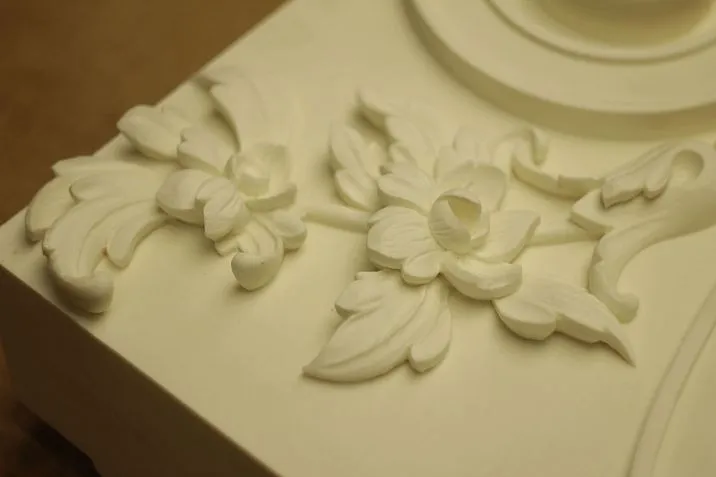
There is magic that can transform the most ordinary dwelling into a true temple of beauty. This magic lives in details — in elegant curves of ceiling cornices, in the nobility of classical moldings, in the grandeur of columns supporting arched vaults. When the soul craves beauty, and the eye seeks harmony, it is time buy decorative moldings to breathe life into your home and inhale the breath of eternity.
Architectural decoration is the language spoken by palaces and cathedrals, aristocrats' mansions, and modern penthouses. It is a universal code of beauty that transcends time and space. Every line of carved ornamentation carries the story of humanity's pursuit of perfection, and each element reflects cultural traditions and artistic quests of generations of masters.
The modern world has granted us a remarkable opportunity: to make the luxury of classic decoration accessible to everyone. Revolutionary polyurethane manufacturing technologies have allowed us to preserve the exquisite detail of historical samples while simultaneously solving issues of weight, durability, and cost. Now, it is possible to create a palace-like atmosphere in any interior — from a modest city apartment to a country residence.


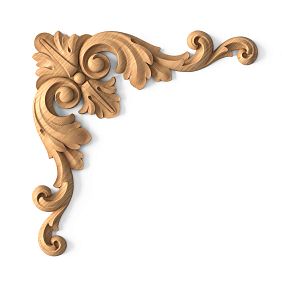

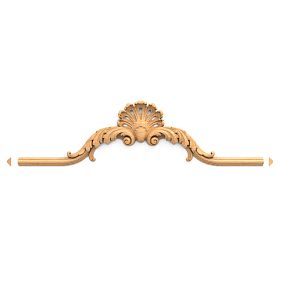
Philosophy of decoration: when walls begin to speak
Decorative moldings are not merely interior embellishments. They are a means of materializing a dream, embodying in stone and polymer the human aspiration for beauty. Each element carries deep symbolic meaning, reflects the worldview of its era, and tells the story of tastes and preferences of its time.




Psychology of Architectural Decoration Perception
Why does the human eye respond so beautifully to the beauty of molded ornaments? The secret lies in the very nature of our perception. The brain seeks familiar patterns, harmonious proportions, and natural forms in the surrounding space. Floral motifs in decoration awaken genetic memories of our connection to nature. Geometric ornaments satisfy our need for order and structure.
Rhythmic repetitions of elements create a sense of stability and calm. Symmetrical compositions evoke a feeling of security and confidence. Vertical lines of columns and pilasters lift the gaze toward the sky, expanding the soul's space. Horizontal cornices and friezes structure the space, making it understandable and comfortable for perception.
The color of molded decoration also plays a crucial role in psychological impact. Traditional white symbolizes purity, light, spirituality. It creates a sense of spaciousness and airiness, visually enlarging the room. Warm cream and golden tones add coziness and luxury. Contrasting color solutions create a dramatic effect and emphasize the architectural logic of space.
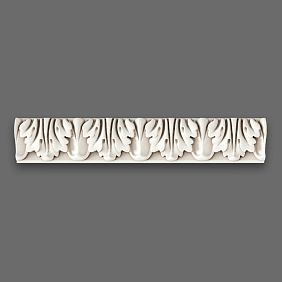
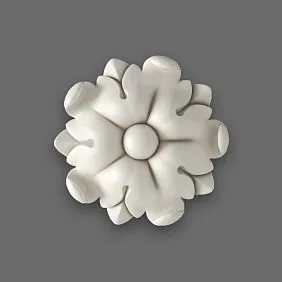
Our factory also produces:



Cultural codes in ornamental art
Each historical era developed its own unique decorative language. Antiquity gifted the world with canonical proportions and floral motifs — acanthus, grapevine, laurel wreath. These symbols carried deep meanings: acanthus signified rebirth and immortality, grapevine — abundance and joy of life, laurel — glory and victory.
The Middle Ages brought Christian symbolism into architectural decoration. Gothic ornaments abound with images of lilies (symbol of purity), roses (symbol of love), oak leaves (symbol of strength and constancy). Geometric patterns reflected concepts of divine order in the universe.
The Renaissance revived interest in classical heritage, but reinterpreted it through the prism of humanist ideals. Ornaments became more naturalistic, human figures, mythological creatures, and complex allegorical compositions appeared.
Baroque and Rococo took decorative art to its absolute peak. Every surface was covered with exquisite ornaments, creating a sense of festivity and theatricality. These styles reflected the pursuit of luxury, the display of wealth and power.
Get Consultation
Material basis of beauty: evolution of technologies
The history of decorative moldings is a history of constant search for the ideal material that combined beauty, durability, and accessibility. Each era found its own solutions, but only modern technologies could create the material of dreams.
From stone to polymers: technological revolution
Ancient masters carved decoration from marble and limestone. This material possessed unparalleled durability and nobility, but required enormous labor and financial investment. Stone decoration was accessible only to the wealthiest and most influential clients.
The emergence of plaster significantly democratized molding art. This soft and pliable material allowed the creation of the most complex forms, quickly reproducing successful samples. Plaster moldings adorned palaces and mansions of the 18th-19th centuries, becoming a symbol of refined taste.
However, plaster had significant drawbacks: heavy weight, brittleness, sensitivity to moisture. These problems limited application areas and required special skills for installation and maintenance.
A revolution occurred with the advent of polyurethane — a high-tech polymer that successfully combined all the best qualities of traditional materials, eliminating their drawbacks. Polyurethane products are several times lighter than plaster, completely moisture-resistant, resistant to temperature fluctuations, and yet allow reproduction of the finest ornament details with museum-grade precision.
Polyurethane: material of the third millennium
Modern polyurethane for architectural decoration is the result of decades of scientific research and technological development. Its composition includes carefully selected polyols and isocyanates, special additives enhancing resistance to ultraviolet radiation, flame retardants, and biocides for protection against microorganisms.
The density of quality polyurethane ranges from 600-900 kg/m³, ensuring an optimal balance of strength and weight. The material has a microporous structure providing excellent thermal and acoustic insulation properties. The water absorption coefficient does not exceed 1%, making polyurethane practically impervious to moisture.
The production technology is based on precision casting into silicone molds. High pressure and controlled temperature ensure perfect filling of all mold details and uniformity of the material's structure. The polymerization time is strictly controlled to achieve optimal physical and mechanical properties.
The surface of finished products has smoothness comparable to polished marble. At the same time, the material excellently accepts any type of paint and coatings — from simple water-emulsion to elite decorative compositions with metalized, patinated, or pearlescent effects.
Art of selection: navigating the world of decorative possibilities
Solution buy decorative moldings This is only the first step in an exciting journey to create a unique interior. The modern market offers such a variety of forms, styles, and solutions that the eyes are overwhelmed by the abundance of possibilities.
Types of Decorative Elements
The world of architectural decoration can be conditionally divided into several main categories, each of which solves its own tasks within the overall interior composition.
Linear elements form the structure of space. Ceiling cornices create a transition from walls to ceiling, visually increasing the height of the room. Skirting boards protect the lower part of walls and give the interior a finished look. Moldings are used to create decorative panels, frame paintings and mirrors, and zone the space.
Central elements become compositional accents. Ceiling rosettes are traditionally placed in the center of the ceiling for chandelier mounting, but modern designers use them much more broadly — to create decorative medallions on walls, zone space, and create rhythmic compositions.
Architectural elements impart monumentality and classical elegance to interiors. Columns and pilasters create vertical rhythm, support arches and entablatures. Capitals define stylistic affiliation — Doric for strict classicism, Ionic for elegance, Corinthian for luxury.
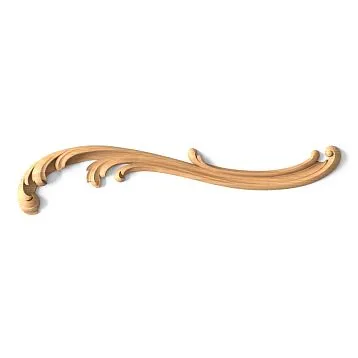
Decorative moldings and panels solve the task of accent decoration. They can imitate wood or stone carving, reproduce historical ornaments, or create original compositions.
Stylistic Directions: From Classic to Avant-Garde
Choosing a style is choosing a worldview, a way to express your individuality and aesthetic preferences. Each direction in architectural decoration has its own philosophy, its own language of forms, its own emotional tone.
The classical style embodies ideals of harmony and perfection. Strict proportions based on mathematical relationships, plant ornaments borrowed from nature, noble restraint of color palettes — all this creates a sense of timelessness and immutability of beauty.
The Gothic style reaches toward the sky. Vertical lines, pointed arches, intricate stone carvings create a sense of spiritual uplift. Plant ornaments are stylized and symbolic; geometric patterns symbolize divine order.
The Renaissance returns the human being to the center of the universe. Ornaments become more naturalistic, human figures appear, complex allegorical scenes emerge. Proportions remain mathematically precise, but acquire a human scale.
Baroque and Rococo are celebrations of ornamentation. Every surface is covered with refined ornaments, creating a sense of continuous movement and change. Asymmetry becomes an artistic technique, and gilding becomes a symbol of luxury.
Classicism of the 18th-19th centuries simplifies and systematizes Baroque opulence. Interest returns to ancient models, but now reinterpreted through the prism of rationalist philosophy. Ornaments become stricter, compositions — symmetrical.
Modern styles strive for functionality and minimalism. Decorative elements have clear geometry and minimal relief. The main task — to create spatial structure without overloading it with details.
Practical wisdom: from idea to realization
Practical Wisdom: From Idea to Realization
Transforming the dream of a beautiful interior into reality — a task requiring not only artistic taste but also practical knowledge. Each stage of the process — from planning to final finishing — has its subtleties and secrets.
Project planning: the art of foresight
A successful project begins with a careful analysis of initial data. Architectural features of the room — ceiling height, room dimensions, window and door placement — all this affects the choice of types and scale of decorative elements.
Functional purpose of rooms also plays an important role. Grand areas — living rooms, halls, dining rooms — can afford more grandiose decoration. Private spaces — bedrooms, offices — require a more restrained approach. Wet areas — bathrooms, kitchens — require materials especially resistant to moisture.
Lighting dramatically affects the perception of molded decoration. Natural light highlights the material's authenticity and clarity of form. Artificial lighting allows creating dramatic effects, accentuating individual elements, and changing the mood of the interior depending on the time of day.
Budget constraints require prioritization. Maximum effect at minimal cost is achieved through the correct selection of key elements. Ceiling cornices create the overall spatial structure. Window and door frames radically change the perception of openings. A central ceiling rose becomes a compositional accent of the entire room.
Supplier selection: partnership for years
The quality of the final result largely depends on the correct choice of decorative element suppliers. Company reputation, work experience, portfolio of completed projects — all these are criteria that cannot be ignored.
The product range must be sufficiently wide to implement projects of any complexity. The presence of basic collections ensures accessibility and quick delivery. The ability to manufacture non-standard items opens up creative and individualization opportunities.
Material quality and manufacturing precision — the foundation of decorative longevity. Professional suppliers provide detailed technical specifications, quality certificates, and warranties for products.
The level of service largely determines the convenience of cooperation. Professional consultations help make the right choice. Designer services and 3D visualization allow you to see the result before work begins. Logistics capabilities ensure timely delivery to any point in the country.
Installation: where perfection is born
Even the highest-quality decorative elements can disappoint if installed improperly. Installing moldings — this is an art requiring knowledge of technology, experience, and attention to detail.
Surface preparation — a critically important stage. The base must be flat, strong, clean, and dry. Minor irregularities are compensated by adhesive compounds, but only within limited limits. Significant defects require preliminary leveling.
Marking must be done with jewel-like precision. Even minor deviations from horizontal or vertical lines will be noticeable to the naked eye. Professional installers use laser levels and precision measuring tools.
The choice of adhesive depends on the type of base and operating conditions. For dry rooms, water-based acrylic adhesives are suitable. For wet zones, polyurethane or MS-polymer compounds are used. The open working time of the adhesive must correspond to the size of the installed elements.
Joining elements requires special skill. Gaps must be minimal and uniform. Corner joints are made using special shaped elements or by precise cutting at an angle. The quality of joints determines the overall impression of the work.
Decorative systems: harmony in details
Creating a truly harmonious interior requires a systematic approach to selecting decorative elements. Each component must correspond to the overall stylistic concept and complement and enhance other elements of the composition.
Ceiling Systems: The Crown of Architectural Composition
The ceiling is the fifth wall of a room, which has a significant impact on the perception of space. A properly designed ceiling can visually increase the room's height, create a sense of spaciousness and airiness.
Ceiling cornices form the transition from walls to the ceiling and serve as the foundation of the entire composition. Simple profiled cornices 80-150 mm wide are suitable for modern interiors with ceiling heights of 2.7-3.0 m. Complex multi-profile cornices up to 300 mm wide create a classic atmosphere in rooms with high ceilings.
Integrating lighting transforms cornices into functional lighting elements. Hidden LED strips create a floating ceiling effect, visually expanding the space. Control over brightness and color temperature allows creating various lighting scenarios.
Ceiling outlets serve as compositional centers. Their size should match the room's scale — 400-600 mm diameter for rooms 20-30 m², 800-1200 mm for larger spaces. The complexity of the ornament depends on the interior style and mounting height.
Coffered ceilings create a sense of architectural depth without actually lowering the height. A modular system allows adapting the coffer sizes to specific room parameters. Built-in lighting in each coffer ensures even illumination of the entire ceiling area.
Wall compositions: art of structuring space
Walls provide maximum opportunities for creative self-expression. Decorative panels, moldings, and trim — all these elements work together to create a unified artistic concept.
Decorative panels transform flat walls into relief surfaces. Classic rectangular panels create a strict rhythm. Arched forms add softness and elegance. Combined compositions allow zoning space and creating visual accents.
Panel height is determined by room proportions. Panels 1200-1500 mm high are suitable for rooms with standard ceilings. In high-ceilinged rooms, panels up to 2000-2500 mm can be used, creating a colonnade effect.
Moldings of various profiles allow creating compositions of any complexity. Simple rectangular sections suit modern styles. Profiled elements with classical moldings create a historical style.
Flexible moldings open up possibilities for creating curved compositions. Arched openings, oval medallions, wavy forms — all of this becomes accessible thanks to special polyurethane compounds with increased elasticity.
Architectural elements: monumentality in details
Columns, pilasters, and arches bring a sense of monumentality and classical elegance to interiors. These elements require especially careful planning and execution.
Column proportions are determined by classical architectural canons. The height of a column should be 8-10 diameters for the Doric order, 9-11 diameters for the Ionic, and 10-12 diameters for the Corinthian. These ratios have been tested over centuries and ensure harmonious perception.
Bases and capitals must correspond to the chosen order. Doric capitals are characterized by strictness and minimalism. Ionic capitals are adorned with characteristic volutes. Corinthian capitals impress with rich vegetal decoration featuring acanthus leaves.
Hollow column constructions allow concealing engineering utilities — electrical wiring, low-voltage cables, pipes. This is especially relevant during room reconstructions, when new networks need to be laid without damaging finishes.
Pilasters — flat elements imitating columns — are suitable for rooms with limited space. They create vertical rhythm, visually raise ceilings, but do not occupy useful space.
Color solutions: palette of emotions
Color in architectural decoration is not only an aesthetic category but also a powerful psychological tool. A properly chosen color palette can radically change the perception of space, create the desired mood, and emphasize the stylistic concept.
Classic solutions: timeless relevance of white
White color is a classic that never goes out of fashion. It symbolizes purity, light, spirituality. White molding on a white background creates an effect of a single relief surface, where beauty lies in the play of light and shadow on volumetric forms.
Shades of white can significantly differ in temperature. Cool whites with a bluish undertone create a sense of freshness and modernity. Warm whites with cream or yellowish tones add coziness and tradition.
Surface texture affects color perception. Matte finishes absorb light and create a soft, velvety impression. Slightly matte finishes add a subtle sheen, emphasizing relief. Glossy surfaces create bright highlights and accents.
Contrasting solutions: play of opposites
Contrasting molding colors create striking accents and emphasize the architectural structure of the interior. Dark elements on a light background look graphic and modern. Light molding on dark walls creates a precious inlay effect.
The degree of contrast should correspond to the character of the interior and personal preferences. Soft contrasts within 2-3 tones create delicate transitions. Sharp contrasts — black on white, dark blue on gold — produce a dramatic effect.
Color contrast can be not only tonal but also temperature-based. Warm molding tones on a cool background and vice versa create dynamic compositions that attract attention and enliven the interior.
Metallic finishes: luxury and shine
Gold, silver, and bronze tones transform molding into precious interior decoration. These colors are associated with luxury, success, and high status. They are especially effective under artificial lighting, creating a play of highlights and reflections.
Techniques for applying metallic finishes are diverse. Paints with metallic pigments — the simplest method. Patination — applying ultra-thin metallic sheets — creates the most realistic effect. Spraying metallic powders allows achieving color transitions.
Patination adds a noble antiquity to metallic finishes. Dark accents in recesses of relief contrast with light protrusions, creating an effect of natural aging. Various patina compounds provide greenish, brownish, and grayish tones.
Technological innovations: looking toward the future
The architectural decoration industry is in a state of constant development. New materials, manufacturing technologies, and processing methods open up entirely new possibilities for creativity and functionality.
Smart materials: decoration with intelligence
Integrating electronic components into decorative elements creates fundamentally new possibilities. Built-in LED systems transform moldings into lighting sources. Motion sensors automatically activate lighting when people approach.
Color-changing systems allow decoration to adapt to different situations and moods. RGB controllers enable selection of any shade from millions of options. Programmable scenes automatically adjust lighting depending on the time of day.
Climate sensors embedded in decorative elements monitor microclimate parameters — temperature, humidity, CO2 content. This information is used by smart home systems to optimize heating, ventilation, and air conditioning performance.
Ecological technologies: decoration in harmony with nature
Ecological responsibility is becoming an increasingly important factor when selecting construction and finishing materials. Manufacturers of architectural decoration actively implement green technologies and eco-friendly materials.
Biodegradable additives in polyurethane accelerate its disposal after the end of its service life. The material retains all its operational properties for decades, but decomposes more quickly under natural conditions after disposal.
Recycling production waste reduces environmental impact. Scrap and technological defects are ground and used as fillers for new products. Closed production cycles minimize waste volume.
Using renewable energy sources at production facilities reduces the carbon footprint of products. Solar power stations, wind generators, and biogas installations provide environmentally clean energy.
3D technologies: personalization at a new level
Additive technologies open up limitless possibilities for creating unique decorative elements. Any ornament or shape can be embodied in the material with precision down to tenths of a millimeter.
3D scanning of historical samples allows creating accurate digital copies of rare items. Virtual ornament libraries become a source of inspiration for designers and architects.
Parametric modeling enables creating families of interrelated elements. Changing one parameter automatically adjusts the entire product line, ensuring stylistic unity.
Rapid prototyping reduces the time to develop new products from months to days. Clients can see a physical prototype of future decoration and make necessary adjustments before launching mass production.
Operation and maintenance: preserving beauty for years
High-quality architectural decoration can serve for decades, preserving its original beauty and functionality. However, this requires following certain rules of operation and maintenance.
Regular maintenance: simplicity and efficiency
Polyurethane molding does not require special maintenance or complex servicing procedures. Regular dry cleaning with soft cloth or vacuum cleaner with soft attachment removes dust and maintains aesthetic appearance.
Wet cleaning is performed as needed using mild household cleaning solutions. Avoid abrasive materials and aggressive chemicals that may damage the surface or coating.
Special attention should be paid to hard-to-reach areas — recesses of relief, joints between elements where dust may accumulate. Soft brushes of various sizes help clean the smallest ornament details.
Repair and restoration: returning original beauty
Minor damage — scratches, chips — can be easily repaired using repair compounds. Acrylic putties are suitable for filling small defects. After drying, the damaged area is sanded and painted to match the original coating.
More serious damage may require partial replacement of elements. Modular construction of most decorative systems allows replacing a damaged fragment without dismantling the entire composition.
Updating the coating is recommended every 10-12 years to maintain a fresh appearance. The surface is lightly sanded to improve adhesion, primed, and painted with a new coating. This is an excellent opportunity to change the interior color scheme.
Preventive measures: preventing problems
Controlling the room's microclimate prevents many potential problems. Sudden temperature and humidity fluctuations may cause deformation and peeling of coatings. Optimal parameters: temperature 18-24°C, humidity 40-60%.
Protection against mechanical damage is especially important for protruding elements. Care should be taken when moving furniture. Sharp objects, children's toys, sports equipment should be kept away from decorative elements.
Timely correction of minor defects prevents them from developing into serious problems. Small cracks, coating peeling, weakened fasteners are easier to fix at an early stage than after significant damage has occurred.
Economic aspects: investments in beauty and comfort
Solution buy decorative moldings Should be considered not as an expense, but as a long-term investment in the quality of life and property value. Properly chosen and professionally installed decor pays for itself many times over.
Project Budgeting
The cost of decorative finishing consists of several components: materials, delivery, installation, preparatory work, finishing. Materials typically account for 50-60% of total costs with professional installation and up to 80% with self-installation.
Pricing for decorative elements depends on the complexity of the items, order volume, and delivery conditions. Simple profiled elements cost from 500 rubles per linear meter. Complex ornamental items may cost several times more.
Cost optimization is achieved through proper planning and prioritization. Ceiling cornices and window/door casings provide the maximum decorative effect at minimal investment. Additional elements are added as opportunities arise.
Economic Efficiency of Various Materials
Polyurethane decor demonstrates optimal price-to-quality ratio. Initial costs are 2-3 times lower than for gypsum molding of comparable quality. Ease of installation further reduces overall project cost.
Long-term economic efficiency of polyurethane is even more impressive. The material requires no special care, regular restoration, or frequent coating renewal. Service life is 25-30 years without loss of aesthetic or functional qualities.
Impact on property value is an important economic factor. Quality decor increases the market value of a property by 15-25%. For an apartment valued at 15 million rubles, this means an increase of 2.3-3.8 million rubles with decor costs of 300,000-500,000 rubles.
Financial Planning and Phased Implementation
Large decorative projects can be implemented in stages, distributing financial load over time. The first stage includes basic elements — cornices, skirting boards, main casings. Subsequent stages add outlets, panels, architectural elements.
Seasonal price fluctuations allow cost optimization. The winter period is characterized by reduced demand and, consequently, more attractive prices. Planning purchases during off-seasons can save 15-20%.
Loyalty programs from major suppliers provide additional opportunities for savings. Accumulative discounts, special offers for regular customers, bundled solutions with discounts — all help optimize the project budget.
In today’s world, where beauty and functionality go hand in hand, architectural decor is experiencing a true renaissance. New materials and technologies make the luxury of classic interiors accessible to a broad circle of people striving for perfection in every detail of their homes.
Choosing buy decorative molding — this is not just purchasing finishing materials. It is an investment in the quality of life, in creating a space that will delight the eye and inspire the soul for many years. Each decorative element carries a piece of history, cultural traditions, and artistic heritage of humanity.
Modern technologies have allowed preserving the full beauty and elegance of historical samples while simultaneously solving issues of practicality and durability. polyurethane decorative elements Combined the best qualities of traditional materials with innovative properties of high-tech polymers.
The path from idea to realization requires knowledge, patience, and attention to detail. But the result exceeds all expectations — an interior filled with harmony and beauty becomes a daily source of inspiration and pride in one’s home.
STAVROS embodies the best qualities of the modern architectural decor industry: long-standing experience, top-quality products, innovative manufacturing technologies, professional approach to every project. By combining craftsmanship traditions with achievements of modern science and technology, STAVROS creates items that become true masterpieces of decorative art. Choosing STAVROS products, clients receive a guarantee of quality, reliable service, and confidence that their home will be adorned with authentic masterpieces of architectural decor that will delight multiple generations of the family.