












































































Article Contents:
- Polyurethane as interior decor material: an accessibility revolution
- Production technology: from master model to batch
- Performance characteristics: what's important to know
- Wall decor: from accent points to full paneling
- Appliques: individual accents
- Panels and frames: wall structuring
- Friezes and borders: horizontal divisions
- Pilasters and Half-columns: Vertical Accents
- Ceiling decor: the fifth wall of the interior
- Cornices: the boundary of two worlds
- Rosettes: framing light
- Coffers: ceiling architecture
- Beams: imitation of structural elements
- Decor in different rooms: application specifics
- Living room: grandeur and representativeness
- Bedroom: Intimacy and Coziness
- Office: Solidity and Focus
- Dining room: solemnity and hospitality
- Bathroom: moisture resistance and functionality
- Selection and purchase: criteria and recommendations
- Quality criteria: what to pay attention to
- Where to buy: offline or online
- Quantity calculation: how not to make a mistake
- Frequently Asked Questions
- Can polyurethane decor be installed independently?
- How long does polyurethane decor last?
- How to paint polyurethane decor?
- Is polyurethane decor compatible with underfloor heating and heated walls?
- Can polyurethane decor be used in the kitchen?
- How Does Decor Affect Room Acoustics?
- Can decor be painted in dark colors?
- How to combine polyurethane decor with wooden decor?
- Conclusion: interior as a work of architecture

Space speaks. Silently, but eloquently. Walls tell about the owner's taste, the ceiling defines the scale of perception, details reveal the level of refinement.Polyurethane Decor— is the alphabet with which space writes its message. A wall applique is an exclamation mark emphasizing an accent. A ceiling rosette is a period completing the composition. Moldings are lines structuring chaos. Once, stucco was a privilege of palaces, created manually by plaster masters who shaped gypsum for weeks. Today, technology has made the impossible possible.polyurethane decoration— reproduces any complexity of classical ornaments but is installed in hours, not months. Light as foam but strong as stone. Moisture-resistant, durable, perfectly detailed. Polyurethane has democratized architectural beauty, opening it to everyone who values harmony of forms. How to use this material so that the interior gains depth, character, completeness? Where are large accents appropriate, where are delicate details? How to combine wall and ceiling decor to create a unified architectural whole? Let's examine in detail.

Polyurethane as interior decor material: an accessibility revolution
Why has polyurethane displaced traditional materials in the mass market? Plaster is a classic, but it is heavy (load on floors), fragile (crumbles from impacts), hygroscopic (absorbs moisture, gets moldy in bathrooms and kitchens), and expensive to install (requires professional craftsmen). Wood is noble but 10-20 times more expensive, heavy, requires humidity control, and is susceptible to bio-damage (beetles, fungus). Foam plastic is cheap but primitive (coarse-grained structure, looseness, zero strength, deforms from heat).
Polyurethane decor for interiorsPolyurethane combines the best of all materials while eliminating their drawbacks. Lightweight — density of 180-350 kg/m³ versus 800-1200 kg/m³ for plaster. A 40×40 cm overlay made of plaster weighs 2-3 kg, while one made of polyurethane weighs 0.2-0.3 kg. This reduces the load on structures and simplifies installation (adheres without reinforcing the base). Strength — polyurethane is elastic, absorbs impacts without chips or cracks. An accidental bump from furniture won't destroy the overlay, unlike a plaster one which would crumble. Moisture resistance — polyurethane does not absorb water, can be used in bathrooms, kitchens, and pools without risk of deformation. Durability — geometric stability for decades, does not deform from temperature and humidity fluctuations. Detailing — modern forms reproduce the finest ornament details with an accuracy of up to 0.1 mm, providing relief clarity comparable to hand carving.




Production technology: from master model to mass production
polyurethane decor for the interior to purchasePolyurethane means obtaining a product created using advanced technology. The process begins with a master model — a reference sample, which is created manually by a sculptor (for historical and authorial ornaments) or by 3D printing (for modern geometric forms). The master model is detailed down to the smallest elements — every acanthus leaf, every curl is worked out with jewelry precision.
A silicone mold is taken from the master model — a flexible matrix into which polyurethane will be poured. Silicone reproduces all details with micron precision, including the finest pores and texture. The mold withstands hundreds of castings without loss of clarity.
Casting is performed by pouring two-component polyurethane into the mold. The components are mixed immediately before pouring, initiating the polymerization chemical reaction. The mixture fills the mold, penetrating the finest recesses of the relief. Pressure (some technologies use a centrifuge or vacuum) ensures dense filling without air bubbles. After 15-30 minutes, the polyurethane hardens, and the product is extracted from the mold.
Finishing includes removing sprues (material feed points), sanding the ends, and priming with white acrylic primer. The product is ready for installation and painting.
Our factory also produces:


Performance characteristics: what's important to know
Temperature range: from -40°C to +80°C. Polyurethane does not deform within this range, allowing its use in unheated spaces (cottages, verandas) and near heat sources (radiators, fireplaces). Moisture resistance: does not absorb water, material moisture does not exceed 2-3% even with constant contact with water. Used in bathrooms, saunas (at temperatures up to 80°C), and pools. Bio-resistance: polyurethane is inert to mold, fungus, bacteria, and insects. Does not rot, is not a nutrient medium for microorganisms. Eco-friendliness: high-quality polyurethane does not emit harmful substances, is safe for health, and hypoallergenic. Used in children's rooms, bedrooms, and medical facilities. Fire safety: polyurethane belongs to flammability groups G2-G3 (moderately flammable), does not support combustion, and does not spread flame in a fire.
Get Consultation
Wall decor: from accent points to full paneling
Polyurethane decor for interior wallsThis is the most extensive category of application. The wall is a canvas on which decor creates a composition.
Overlays: accent pieces
Overlays are compact elements ranging in size from 5×5 cm to 80×100 cm with relief ornamentation. These are point accents installed in key locations of the composition. In the center of a panel formed by moldings — a central overlay creates a focal point, attracting the eye. Symmetrical installation of two overlays on either side of the central axis (e.g., on either side of a mirror or painting) — creates balance. A row of 3-5 overlays along a horizontal line (above a door, below the ceiling) — forms a frieze, a visual horizontal.
Overlay ornaments cover all styles. Classical — acanthus leaves, rosettes, laurel wreaths, egg-and-dart. Baroque — putti (winged infants), mascaron (human or animal faces), garlands, cartouches. Art Nouveau — stylized irises, lilies, dragonflies, flowing lines. Geometric — meanders, chevrons, rhombuses, circles. Abstract — scrolls, volutes, spirals.
Overlay sizes are chosen depending on the room's scale. For compact rooms of 10-15 m² — overlays sized 10-20 cm. For standard rooms of 15-25 m² — overlays sized 20-40 cm. For spacious rooms of 25-40 m² — overlays sized 40-80 cm. A large overlay in a small room will overwhelm the space; a small one in a spacious room will get lost and go unnoticed.
Panels and frames: structuring the wall
Polyurethane wall decorThis includes moldings that create panels — rectangular or square sections on the wall, framed by moldings. The classic paneling system (boiserie) divides the wall into tiers and sections, each with its own finish.
Paneling scheme for a living room with a ceiling height of 2.70 m: from the floor to a height of 90 cm — panels 80 cm high (from the top of the baseboard to the horizontal molding), inside the panels — wallpaper or contrasting paint. From 90 cm to 200 cm — the main field, smooth paint or wallpaper, where paintings, mirrors, and furniture are placed. From 200 cm to the ceiling — the upper tier, light paint or matching the ceiling color. A horizontal molding at 200 cm separates the main field from the upper tier.
Vertical division of the main field into sections creates rhythm. A wall 4 m long is divided into 3 sections, each 120-130 cm wide, using vertical moldings. Inside the sections — alternating finishes (a section with wallpaper, a section with paint, a section with wallpaper). This creates vertical striping, which visually elongates the space upward.
Frames around functional elements — a wall-mounted TV is framed by molding, creating a visual 'picture' and integrating the technology into a classic interior. A mirror receives an architectural frame instead of a traditional one. A painting or panel is highlighted with a molding frame, enhancing its significance.
Friezes and borders: horizontal divisions
A frieze is a horizontal strip with ornamentation running along the wall at a certain height. The classic frieze placement is at 2/3 of the wall height (approximately 180 cm from the floor with a 270 cm ceiling). The frieze visually divides the wall into two parts — the lower (from floor to frieze) and the upper (from frieze to ceiling). The lower part is usually darker or more saturated in color, the upper part is lighter. This division creates visual stability (dark bottom — foundation, light top — lightness).
A border is a narrow strip (3-10 cm high) with a simple ornament or none. A border separates wallpaper from paint, different wallpapers from each other, creating a clear boundary without the visual weight of a frieze.
Friezes and borders are especially relevant in rooms with disproportionate height. In a room with a low ceiling (2.3-2.4 m), a frieze is installed at 200 cm. Above the frieze — paint matching the ceiling color or a tone lighter than the main wall. Visually, the ceiling starts from the frieze, making the room seem taller. In a room with an excessively high ceiling (3.5 m and above), a frieze is installed at 250-280 cm with rich ornamentation. Above the frieze — dark paint or wallpaper with an active pattern. The ceiling visually 'lowers' to the frieze level, making the room more intimate.
Pilasters and half-columns: vertical accents
Pilasters — flat vertical projections imitating columns but attached to the wall. Half-columns — halves of columns, also attached to the wall.Wall Decoration with PolyurethaneThis includes polyurethane pilasters ranging in height from 150 to 280 cm and width from 8 to 25 cm.
A pilaster consists of three parts: capital (upper part with ornamentation — Ionic with volutes, Corinthian with acanthus, Doric simple), shaft (vertical central part, smooth or with fluting — vertical grooves), base (lower part, transition from shaft to wall).
Application of pilasters: in room corners — pilasters visually mark wall boundaries, create architectural framing of the space. On either side of door and window openings — pilasters turn the opening into a portal, giving it solemnity. At intervals of 120-150 cm along the wall length — pilasters create rhythm, divide the wall into sections, between which panels or paintings are placed.
Pilasters require high ceilings (from 2.8 m) and spacious rooms (from 25 m²). In compact rooms, they will create visual overload and 'eat up' space.
Ceiling Decoration: The Fifth Wall of the Interior
The ceiling is a forgotten surface in most interiors. A white expanse that goes unnoticed. But the ceiling is the fifth wall, which defines the perception of a room's scale.polyurethane wall decoris complemented by ceiling elements, creating a unified architectural system.
Cornices: The Boundary of Two Worlds
A ceiling cornice is a molding at the junction of the wall and ceiling. Functions of a cornice: visual completion of the wall (a clear boundary where the vertical ends and the horizontal begins), masking defects (the wall-ceiling joint is rarely perfect; a cornice covers unevenness, cracks, gaps), a base for hidden lighting (an LED strip is installed behind a wide cornice, creating soft diffused light reflected from the ceiling).
The size of the cornice depends on the ceiling height and room area. For low ceilings (2.3-2.5 m) in compact rooms (12-18 m²) — cornices 40-70 mm wide with a simple profile, white or matching the ceiling color. For standard ceilings (2.6-2.8 m) in medium-sized rooms (18-25 m²) — cornices 80-110 mm wide with medium relief. For high ceilings (3.0 m and above) in spacious rooms (25-40 m²) — cornices 120-180 mm wide with rich ornamentation.
The cornice profile is chosen according to style. Classical — beads, flutes, dentils (tooth-like elements), egg-and-dart. Baroque — lush ornamentation, acanthus leaves, scrolls, multi-tiered relief. Modern — simple geometry, minimal relief, clear lines.
Rosettes: Framing the Light
A ceiling rosette is a round or oval element installed on the ceiling around a chandelier. Functions of a rosette: visually increasing the scale of the light center (a 60 cm diameter chandelier with a 90 cm diameter rosette creates a 90 cm diameter light center, which is three times larger in area), masking the mounting (cable, hook, mounting plate remain behind the rosette), enhancing light and shadow effects (the rosette's relief creates a play of shadows when the chandelier is on).
The rosette size is chosen in proportion to the chandelier. The rosette diameter should be 1.5-2 times larger than the chandelier diameter. A 50 cm diameter chandelier requires a rosette 75-100 cm in diameter. If the rosette is smaller than the chandelier — imbalance; if the rosette is too large (3-4 times larger than the chandelier) — it overwhelms the light fixture.
Rosette ornamentation: radially symmetrical, pattern radiates from the center to the edges. Classical rosettes — laurel wreaths, acanthus, rosettes. Baroque — lush garlands, putti, multi-tiered relief. Modern — simplified concentric circles, geometric elements.
Coffers: Ceiling Architecture
A coffer is a rectangular or square recess on the ceiling, formed by the intersection of moldings. A coffered ceiling is a grid of coffers covering the entire ceiling or part of it.Decorative elements for the wall made of polyurethaneare complemented by ceiling elements for coffers.
Scheme for a coffered ceiling in a 5×4 m room with a 3.2 m ceiling: the ceiling is divided by moldings into 100×100 cm squares (resulting in 20 squares — 5 rows of 4 squares). Inside each square — contrasting paint (if the ceiling is white, inside the coffers is light gray) or a rosette 40-50 cm in diameter. The moldings forming the coffers are 60-80 mm wide with medium relief.
Effect of a coffered ceiling: monumentality, classical luxury, visual complexity. The play of light and shadow in the coffer recesses creates volume; the ceiling does not look flat. Coffers visually increase the ceiling height (due to the depth of relief and light/shadow), although physically the height is reduced by the thickness of the moldings (6-8 cm).
Coffers require high ceilings (from 3.0 m) and spacious rooms (from 25 m²). In compact rooms with low ceilings, coffers will create a feeling of oppression.
Beams: Imitation of Structural Elements
Decorative beams are hollow rectangular-section elements imitating load-bearing floor beams. Polyurethane beams are lightweight (a 2 m long beam with a 15×10 cm cross-section weighs about 2 kg) but look like massive wooden ones (visual weight due to texture, painting).
Beams are installed on the ceiling in one of the following ways: parallel to the short wall at intervals of 80-120 cm (visually widen the room), parallel to the long wall (visually elongate), crosswise, forming a grid (creating coffers, but more massive than molding ones).
Beam painting: imitation of wood (brown, dark brown tones with wood grain detailing), contrasting (white beams on a dark ceiling, black on a light one), monochrome (beams matching the ceiling color — relief is revealed only by light and shadow).
Beams are suitable for country, rustic, loft (industrial), Scandinavian styles. In classical interiors, beams are inappropriate (there, coffers made of moldings are used).
Decor in different rooms: specifics of application
polyurethane decor for walls and ceilingsis chosen considering the room's function.
Living room: grandeur and hospitality
Living room — a public space where active decor is appropriate. Ceiling: wide cornice (100-150 mm) around the perimeter, central rosette 80-100 cm in diameter, coffers possible (if ceiling height is from 3.0 m). Walls: panel system (division into sections by moldings), pilasters in corners and along walls (at 120-150 cm intervals), large appliqués (40-60 cm) in panel centers. Accent wall behind the sofa: large molding frame 200×150 cm, inside — contrasting paint or decorative plaster, in the center — a medallion 50 cm in diameter or a composition of appliqués.
Style: classical (symmetry, restraint, white or cream coloring), baroque (opulence, gilding, multi-tiered relief), neoclassical (simplified classical forms, light palette, minimal gilding).
Bedroom: Intimacy and Coziness
Bedroom — an intimate space, decor should be restrained, calming. Ceiling: medium-width cornice (70-100 mm) with a simple profile, rosette 60-80 cm in diameter (if there is a central chandelier). Walls: panels behind the bed headboard (one large panel or 2-3 medium ones), symmetrically placed appliqués on either side of the bed, pilasters in room corners (if ceiling height is from 2.8 m).
Color: monochrome scheme (decor matching wall color, revealed only by light and shadow) or delicate contrast (white decor on pastel walls — light gray, beige, blue).
Style: neoclassical, Provence (floral motifs, pastel palette), modern classic (minimal decor, simple forms).
Office: solidity and concentration
Study — a workspace where decor creates an atmosphere of seriousness, concentration. Ceiling: cornice 80-120 mm wide with a classical profile, coffers possible (if area from 20 m² and height from 3.0 m). Walls: vertical paneling (panels from baseboard to cornice), pilasters framing bookcases, appliqués above the door and on the accent wall behind the desk.
Color: dark noble tones (dark blue, dark green, burgundy) for walls, contrasting white or cream decor. Gilding possible (on protruding parts of the relief).
Style: classic study (English style with dark wood, leather, moldings), neoclassical.
Dining room: solemnity and hospitality
The dining room is a space for receiving guests, celebrations, and family meals. The decor should create a solemn yet warm atmosphere. Ceiling: wide cornice (100-140 mm), a large-diameter central rosette (90-120 cm) above the dining table. Walls: panel system with alternating wallpaper and paint inside the panels, a frieze at a height of 180-200 cm encircling the room, overlays in the corners of the panels.
Color: warm palette (cream, beige, light yellow) for walls, white or gilded decor.
Style: classic, Empire (formality, gilding, symmetry), Provence (light tones, floral motifs).
Bathroom: moisture resistance and functionality
The bathroom is a wet area where moisture resistance of the decor is critical. Polyurethane is ideal — it does not absorb water, does not deform, and does not develop mold. Ceiling: cornice with a width of 60-90 mm of a simple profile, a rosette with a diameter of 40-60 cm is possible. Walls: panels with a height of 80-100 cm (from the floor to the horizontal molding), inside the panels — tiles, above — paint or moisture-resistant wallpaper.
Decor painting: with moisture-resistant acrylic paint in 2-3 layers (additional surface protection).
Style: neoclassical, Provence, modern classic (minimal decor, clean lines).
Selection and purchase: criteria and recommendations
Where and howpolyurethane decor for the interior to purchaseto get quality and service?
Quality criteria: what to pay attention to
Material density: high-quality polyurethane has a density of 200-350 kg/m³. Easy to check — the element should feel heavy for its size (a 30×30 cm overlay weighs 200-300 g), pressing with a finger should not leave dents. Loose, lightweight material (density below 150 kg/m³) is a sign of low quality; such decor will quickly deform.
Clarity of relief: small details of the ornament (leaves, curls, grooves) should be clearly defined, without blurriness or cavities. Run your finger over the relief — transitions from convexities to depressions should be sharp and contrasting. Blurred, unclear relief is a sign of a worn-out mold or low-quality material.
Geometry: straight elements (moldings, planks) should be perfectly straight without bends or twists. Place a 2 m long molding against the wall — gaps should not exceed 1-2 mm. Symmetrical elements (rosettes, overlays) should be symmetrical — place on paper, trace, fold in half — the contours should match.
Primer quality: the surface should be evenly coated with white primer without gaps, stains, or drips. The primer should adhere firmly — scratch with a fingernail, the primer should not peel off.
Where to buy: offline or online
Specialized decor and molding stores in major cities (Moscow, St. Petersburg) offer the opportunity to see elements in person, assess the relief, size, and quality. Consultants will help select elements for a specific project, calculate the quantity, and provide installation recommendations.
Manufacturers' online stores (typically, the assortment is wider than in retail outlets, prices are 10-20% lower due to the absence of intermediaries) are convenient for ordering with delivery to regions. The manufacturer's website features detailed photos, drawings with dimensions, and material descriptions. Possibility to order custom products based on sketches.
Construction hypermarkets offer a basic assortment of popular elements (cornices, rosettes, simple overlays) in the mass segment. Prices are average, quality is average (material density 180-220 kg/m³), selection is limited.
Quantity calculation: how to avoid mistakes
For cornices: ceiling perimeter (sum of lengths of all walls) plus 10% for trimming. Room 5×4 m: perimeter (5+4)×2 = 18 m, with a margin 18×1.1 = 19.8 m. With a cornice plank length of 2 m, 10 planks are needed.
For wall panels: draw a wall diagram indicating panel sizes, calculate the total length of moldings forming the frames, plus 15% for trimming and joints.
For overlays and rosettes: according to the number of planned elements (panel centers, corners, one rosette above the chandelier).
Adhesive: for 10 linear meters of molding — 1 tube of 310 ml adhesive, for 10 medium-sized overlays (20-30 cm) — 1 tube.
Frequently asked questions
Can polyurethane decor be installed independently?
Yes, installation is feasible for DIY with basic tools (handsaw or miter saw, miter box, level, tape measure, spatula) and carefulness. Cornices and moldings are glued with polyurethane adhesive or liquid nails, overlays and rosettes — similarly. Surface preparation (leveling, priming) and precise marking are critical. Trimming moldings for corners requires attention but can be mastered in 1-2 attempts. For complex projects (coffers, pilasters), it is recommended to hire professionals.
How long does polyurethane decor last?
With proper installation and use — for decades. Polyurethane does not deform, crack, or lose shape. Painting is refreshed as needed (every 7-10 years), but the material itself remains unchanged. Manufacturers' warranty — 5-10 years, but actual service life is 30-50 years or more.
How to paint polyurethane decor?
Acrylic water-based paint is used. The decor is primed with acrylic primer (if painting in a color other than white is planned), then painted with a brush (for detailed relief coverage) in 2-3 layers with intermediate drying of 3-4 hours. For gilding — base white painting in 2 layers, then gold paint is applied with a sponge only to the raised parts. For patination — white painting, then gray or brown paint is applied with a sponge and partially wiped off, remaining in the recesses.
Is polyurethane decor compatible with underfloor heating and heated walls?
Yes, polyurethane is thermally stable up to +80°C. The surface temperature with heated walls is 30-35°C, which is far from the limit. The decor will not deform or peel off. The adhesive must be heat-resistant (polyurethane mounting adhesive is such).
Can polyurethane decor be used in the kitchen?
Yes, polyurethane is moisture-resistant, does not absorb grease or odors, and is easy to clean. In the kitchen, the decor is painted with moisture-resistant, washable paint in 2-3 layers. Grease stains are removed with a mild soapy solution. The decor is installed away from direct contact with the stove (grease splashes, high temperature).
How does decor affect the acoustics of a room?
The textured surface scatters sound, slightly improving acoustics compared to smooth walls, which reflect sound like a mirror, creating echo. The effect is small but noticeable in rooms with high ceilings. The decor does not solve serious acoustic problems but adds comfort to the sound environment.
Can the decor be painted in dark colors?
Yes, polyurethane accepts any acrylic paint of any color. Dark coloring (black, dark blue, dark green) creates a dramatic effect, especially on a contrasting light wall. Important: dark decor makes it visually heavier, more massive. In small rooms, it can create a feeling of oppression.
How to combine polyurethane decor with wooden decor?
Harmoniously. Polyurethane can imitate wood through painting (brown tones with wood texture). Or a contrast of materials is used — white polyurethane decor on walls and ceiling, wooden elements (baseboards, trims, furniture) in a dark tone. Such a combination creates richness of textures, tactile diversity.
Conclusion: Interior as a Work of Architecture
Polyurethane decor for interiorstransforms a faceless space into an architecturally meaningful environment, where every element has a purpose, where there are no accidents, where beauty serves life. Wall decor structures walls, creates panels, frames, accents, turning a plane into a multi-layered composition. Ceiling decor completes the vertical, frames light, creates monumentality or delicacy depending on the scale.
Polyurethane as a material has solved all the problems of traditional stucco — lightweight, durable, moisture-resistant, long-lasting, affordable, easy to install. A variety of forms — from classical ornaments to modern geometric elements — allows for the realization of any stylistic concept. Competent selection of sizes, profiles, and color solutions adapts the decor to any room — from a compact bedroom to a spacious hall.
The application of decor in different rooms takes into account the specifics of the function — formality in the living room, intimacy in the bedroom, solidity in the study, solemnity in the dining room, functionality in the bathroom. Each room gets its own character, its own atmosphere, but all are connected by a unified style, a unified architectural language.
STAVROS is a leading Russian manufacturer of polyurethane decor with a 24-year history, creating world-class products on its own full-cycle production facilities.
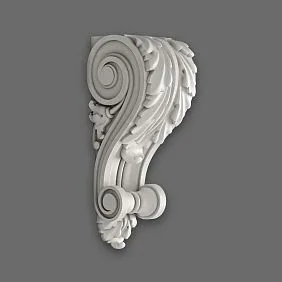
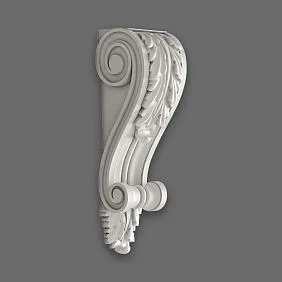
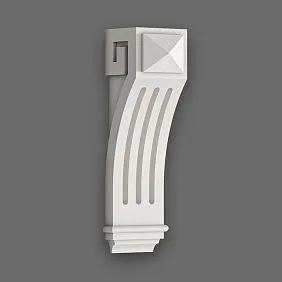
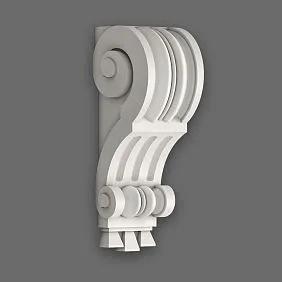
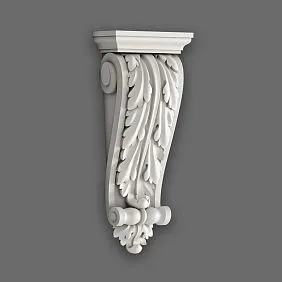
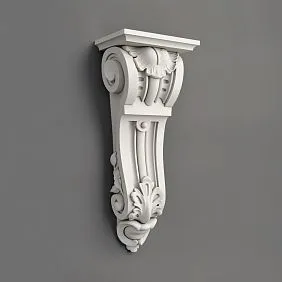
The STAVROS assortment includes over 1500 itemspolyurethane decorfor interiors: overlays sized from 5×5 cm to 100×120 cm in dozens of styles (classical, Baroque, Rococo, Art Nouveau, Art Deco, modern geometric), medallions with diameters from 20 to 120 cm in round, oval, polygonal shapes, ceiling rosettes with diameters from 30 to 150 cm for chandeliers of any scale, cornices with widths from 40 to 200 mm of all profiles (simple, classical, Baroque, modern), moldings for panels, frames, trims with widths from 10 to 150 mm, pilasters and half-columns with heights from 150 to 300 cm, consoles and brackets sized from 10×15 cm to 40×60 cm, corner elements for all molding profiles, elements for coffered ceilings (beams, frames, overlays).
STAVROS production is located in Russia, using European raw materials — polyurethane from leading chemical concerns (BASF, Bayer, Huntsman), ensuring a density of 220-350 kg/m³, clarity of relief, and durability. Equipment — latest-generation injection molding machines with computer control, silicone molds taken from handmade master models or 3D prints. Quality control — multi-level, at every stage of production, guaranteeing the absence of defects, perfect geometry (deviation no more than 0.5 mm per meter of length).
The STAVROS stock program ensures the availability of popular items for immediate shipment. An order placed today is shipped tomorrow. Delivery in Moscow and the Moscow region — by courier 1-2 days, in St. Petersburg and the Leningrad region — by courier 2-3 days, to Russian regions — by transport companies 3-10 days.
Packaging — professional, guaranteeing safety during transportation. Elements are wrapped in bubble wrap, placed in rigid cardboard boxes, voids are filled with cushioning material. The percentage of damage during delivery is less than 0.3% — a result of quality packaging.
STAVROS consulting support helps at all stages: designers will develop a concept for decorating the room considering style, proportions, budget, offer composition options, select elements, create 3D visualization. Technical specialists will calculate the amount of materials, give recommendations on installation, selection of adhesive and paint. The STAVROS website features video instructions for installing decor, a photo gallery of completed projects, and a material calculation calculator.
STAVROS installation services are available in Moscow, St. Petersburg, and major regional cities. Experienced craftsmen will perform installation professionally, with a 12-month warranty on work. The cost of installing overlays — from 150 rubles per element, moldings — from 200 rubles per linear meter, cornices — from 250 rubles per linear meter, rosettes — from 500 rubles per element. Painting — from 100 rubles per linear meter or element. A complex order (materials + installation + painting) — with a discount of up to 15%.
Custom manufacturing is available for exclusive projects. Need an overlay with a unique ornament? Reproduction of a historical element? Non-standard size? STAVROS will create a master model (handmade sculpting or 3D printing), make a silicone mold, cast the product. Minimum order from 10 elements, production time 6-10 weeks, cost from 5000 rubles per element.
STAVROS warranty — 5 years for interior decor, 3 years for facade decor. If during the warranty period the product has deformed, cracked, changed geometry (with proper use and installation) — STAVROS will replace it free of charge. The warranty is formally documented, confirmed by certificates of conformity.
ChoosingPolyurethane DecorChoosing STAVROS, you choose European-level quality at Russian prices, the widest assortment of styles and forms, professional support at all stages, the reliability of a proven manufacturer with a 24-year history. You create interiors where the architecture of walls and ceilings is thought out to the smallest detail, where every element works for overall harmony, where beauty is not decorative but constructive, where the home becomes a work of art. STAVROS is your partner in creating spaces that amaze with impeccable architecture. Quality that is visible. Beauty that inspires. Reliability that is trusted.


