Article Contents:
- Interior Decor in Moscow: Market, Trends, Opportunities
- Shopping Geography: Where to Find Quality Decor
- Wooden Balusters: The Foundation of a Beautiful Staircase
- Anatomy of a Baluster: What Makes Perfection
- Wood Species for Balusters: What to Choose
- Baluster Styles: From Classic to Avant-Garde
- Round Handrail: Comfort and Aesthetics in One Element
- Size Matters: Which Diameter to Choose
- Surface treatment: from sanding to finishing
- Connection and Fastening: Invisible Reliability
- Wooden Baseboard: The Finishing Touch of Interior
- Practical Function: Protection and Concealment
- Aesthetic Function: Framing the Space
- Shapes and Profiles: From Simple to Complex
- Combination with Other Elements: Creating an Ensemble
- Purchase process: step-by-step algorithm for success
- Step 1: Measurements and Calculations
- Step 2: Determining Style and Material
- Step 3: Choosing a Supplier
- Step 4: Quality Assessment
- Step 5: Placing the Order and Delivery
- Installation: DIY or Hiring Professionals
- DIY Installation: Pros and Cons
- Professional Installation: What It Offers
- Care and maintenance: extending decor life
- Regular Cleaning
- Periodic Coating Renewal
- Protection from Unfavorable Factors
- Answers to Popular Questions: FAQ on Interior Decor
- Company STAVROS: Your Reliable Partner in the World of Interior Decor

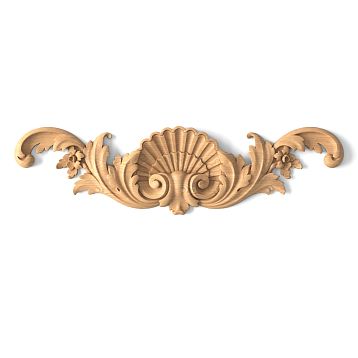
Moscow is a city of contrasts, where historic mansions stand alongside futuristic skyscrapers, where history intertwines with modernity at every turn. And if you've decided to create an interior that reflects this unique atmosphere of the capital, you cannot do without qualityinterior decor moscowyou cannot do without. But how not to get lost in an ocean of offers? Where to find genuine quality, not cheap imitations? How to choose balusters that will last for decades, not fall apart within a year?
Today, we will embark on an exciting journey through the world of interior decor in the capital, learn where to buy round molding and wooden balusters, understand the nuances of material selection, and discover the secrets of professionals. Because creating a truly beautiful interior is not just about buying parts; it's an art that requires knowledge, taste, and an understanding of quality.
Why Moscow specifically? Because the capital offers unique opportunities: the best manufacturers are concentrated here, the most experienced craftsmen work here, and the widest range of materials is presented. Here you can find both classic solutions and avant-garde design experiments. Moscow is a place where woodworking traditions meet innovative technologies, where craftsmanship coexists with industrial production.




Interior decor in Moscow: market, trends, opportunities
The Moscow interior decor market is striking in its diversity and scale. From large shopping centers with dozens of showrooms to intimate workshops where each item is handmade. From mass producers to exclusive design studios. Such diversity is both a blessing and a curse. On the one hand, you will definitely find what you are looking for. On the other hand, it's easy to get confused and make the wrong choice.
What is popular in capital interiors today? An interesting trend is observed: a return to natural materials, to wood, to classic forms. After decades of plastic and synthetics dominating, Muscovites are rediscovering the magic of wood, the warmth of wood under the palm, the beauty of natural texture. Wooden stairs, solid wood balusters, carved panels, natural moldings — all of this is experiencing a real renaissance.
At the same time, the modern approach to interior design involves not blind copying of historical styles, but their creative reinterpretation. Classic balusters can coexist with minimalist lamps. Carved wooden elements — with concrete walls in a loft style. Antique decor — with ultra-modern furniture. Moscow dictates its own rules: be bold, but stay within the bounds of good taste.




Shopping geography: where to look for quality decor
If you wantbuy interior decorIn Moscow, several paths open up before you. Construction hypermarkets offer a mass assortment at affordable prices. Here you can find standard solutions, typical sizes, basic shapes. For a small renovation at a dacha or in a utility room, this option is quite acceptable.
Specialized interior decor showrooms are the next step. Here the assortment is wider, the quality is higher, the consultants are more competent. You can touch samples, evaluate the texture of the wood, consult with a specialist. Many showrooms work with several manufacturers, which gives you the opportunity to compare offers and choose the optimal one.
Design studios and showrooms offer exclusive solutions. Here you can order the manufacture of elements according to individual sketches, receive a comprehensive service from design to installation. Prices, naturally, are higher, but the result is corresponding — a unique interior that will not be repeated anywhere else.
Manufacturers with their own retail outlets are the optimal option in terms of price-quality ratio. You buy directly, without trade markups, receive a manufacturer's warranty, and can order non-standard sizes. At the same time, quality is controlled at all stages of production.
Our factory also produces:



Wooden balusters: the foundation of a beautiful staircase
A staircase in a house or apartment is not just a functional element connecting floors. It is an architectural dominant that sets the tone for the entire interior. And the key role in its appearance is played by balusters — the vertical posts that support the handrail and form the visual image of the structure.
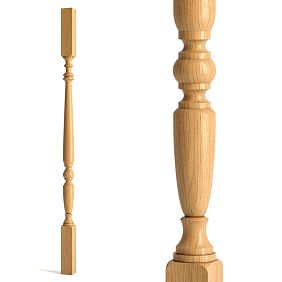
wooden balusters moscowMoscow offers an enormous variety of forms, sizes, and wood species. From simple cylindrical to complex carved with many decorative elements. From classic turned to modern square. From laconic Scandinavian to lush Baroque style. The main thing is to understand what you really need, which baluster will suit your interior specifically.
Get Consultation
Anatomy of a baluster: what perfection consists of
A professional baluster is not just a turned stick. It is a carefully thought-out structure where each element has its own name and function. Understanding the anatomy of a baluster will help you communicate competently with sellers and craftsmen, and formulate your wishes precisely.
Base (or foot) — the lower part of the baluster that attaches to the step or sub-baluster rail. The base is usually wider than the central part, which provides stability and creates a visual support. In classic balusters, the base is often decorated with flutes, beads, and other decorative elements.
Body (or central part) — the main element of the baluster, which determines its style and character. This is where the main decor is located: vases, balusters, twisted elements, carved ornaments. The body can be cylindrical, conical, or of a complex shape with alternating thin and thick sections.
Neck — a transitional element between the body and the top. It usually has a smaller diameter and is often decorated with thin flutes or rings.
Top (or capital) — the upper part of the baluster on which the handrail rests. The top can be simple — in the form of a cylinder or truncated cone, or complex — with decorative elements repeating the motifs of the base.
When you decidebuy wooden balusters in MoscowWhen choosing, pay attention to the proportions of all these elements. A harmonious baluster is one where the base, body, and top relate to each other in a certain proportion, creating visual balance.
Wood species for balusters: what to choose
The choice of wood species is one of the key points. The material determines the strength, durability, appearance of the balusters, and their ability to withstand loads and external influences.
Oak is the undisputed favorite for making balusters. Its dense structure provides phenomenal strength, and its expressive texture makes each baluster unique. Oak perfectly withstands loads, is not afraid of moisture, and does not lose its shape over time. Oak balusters are an investment for centuries. The only downside is the high price and difficulty of processing.
Ash is only slightly inferior to oak in strength, but has a lighter shade and a slightly more pliable structure. Ash is excellent for turning, allowing the creation of balusters with thin, graceful elements. Its light tone is ideal for modern interiors, Scandinavian style, and spaces where light and air are valued.
Beech is the golden mean between price and quality. This species has a uniform structure without a pronounced texture, which facilitates processing and painting. Beech balusters turn out smooth, with an even surface and a pleasant pinkish tint. Beech holds its shape well and does not crack with proper drying.
Birch is an excellent option for those looking for a compromise between quality and affordability. Birch is easy to process, takes paint well, and can imitate more expensive species. Its light, almost white shade fits perfectly into minimalist and Scandinavian interiors.
Pine is the most budget-friendly option. Soft, light, with a pleasant resinous aroma. Pine balusters are suitable for dacha stairs, verandas, and outbuildings. For living spaces with high loads, it is better to choose harder species.
Larch deserves special attention if we are talking about outdoor stairs or rooms with high humidity. Natural resins make larch resistant to rot, fungus, and insects. It is stronger than pine, more durable than birch, and yet more affordable than oak.
When you are looking forwooden balusters in MoscowWhen purchasing, be sure to clarify the wood species and check quality certificates. Unfortunately, the market has unscrupulous sellers who pass off cheaper species as more expensive ones.
Baluster styles: from classic to avant-garde
The shape of the baluster defines the style of the entire staircase, and consequently, the character of the interior. What is currently trending in Moscow?
Classical turned balusters are a timeless solution that looks equally good in historical mansions and modern townhouses. The alternation of balls, vases, balusters, and rings creates a rhythmic composition. Such balusters are versatile; they suit almost any interior where elegance and restraint are valued.
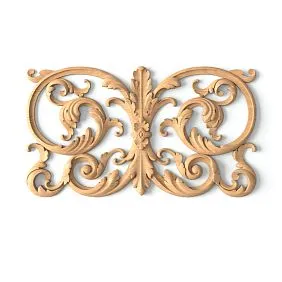
Carved balusters are a choice for those unafraid of luxury. Floral patterns, twisted elements, and figured carving transform the baluster into a sculptural work. Such elements require an appropriate setting—opulent interiors, high ceilings, quality finishes.
Square balusters (or beams) are a minimalist solution popular in modern interiors. Simple vertical posts with square or rectangular cross-sections create a strict, graphic pattern. No curls or decorations—just purity of lines and geometry of forms.
Flat balusters are an interesting solution where flat boards are used vertically instead of three-dimensional posts. They can feature carving, perforation, or painting. This technique allows for creating complex decorative compositions with less material cost.
Combined balusters—a mix of wood with other materials. Wooden elements can alternate with metal rods, glass inserts, or stone details. This creates a modern, eclectic look where tradition meets innovation.
Round handrail: comfort and aesthetics in one element
The handrail is that part of the staircase we constantly interact with. We hold onto it when ascending and descending, lean on it, slide our palm along its smooth surface. And ifround handrail buy Moscowoffers a wide range, making the right choice isn't as simple as it seems.
A round handrail is a classic form, tested over centuries. Why has the round shape become the standard? Because it fits perfectly in the palm, has no sharp edges, and is comfortable to grip. The human hand instinctively wraps completely around a round object, ensuring reliability and safety.
Size matters: which diameter to choose
The standard diameter for a round handrail is from 40 to 50 mm. This is the optimal size suitable for most people. A handrail with a diameter of 40-45 mm is convenient for people with smaller hands, women, and children. A diameter of 45-50 mm is a universal option, comfortable for everyone.
But there are also non-standard solutions. Handrails with a smaller diameter (35-40 mm) are used in children's institutions or as an additional second handrail on the wall. Handrails with a larger diameter (55-60 mm) are found in public buildings or interiors where monumentality is required.
An important point: the diameter must be consistent along the entire length of the handrail. Variations in thickness are unacceptable—this is not only unattractive but also unsafe.
Surface treatment: from grinding to finishing
A round wooden handrail requires perfect finishing. The surface must be absolutely smooth, without the slightest roughness, knots, or cracks. Any defect will be felt by the palm and can lead to splinters.
Professional finishing includes several stages of sanding with a gradual reduction in abrasive grit. Final sanding is done with sandpaper of 320-400 grit, ensuring a velvety smoothness.
Then comes the protective coating. Options:
Varnish creates a durable film on the surface, protects against moisture and dirt, and emphasizes the wood grain. For handrails, wear-resistant polyurethane varnishes are used. You can choose glossy, semi-matte, or matte finishes.
Oil penetrates the wood structure, preserving its natural appearance and tactile qualities. An oiled handrail feels nicer to the touch than a varnished one; it's warmer, more natural. Requires periodic reapplication of the coating.
Oil-wax is a combined coating that combines the advantages of oil and wax. Provides good protection and a pleasant silky surface.
Staining is used if you need to change the wood color. Stain penetrates the wood structure, coloring it from within and emphasizing the grain. After staining, a protective coating must be applied.
Connection and fastening: invisible reliability
Staircases are rarely straight; more often they have turns, curves, landings. How to connect the handrail at turns so that the joint is invisible and the structure is reliable?
Professional installers use special connecting elements—fittings. These can be 90-degree angle connectors for landing turns, smooth curves for spiral staircases, straight couplers for extending length.
A quality fitting is practically invisible after final finishing. It replicates the handrail profile, has the same diameter, and is coated with the same composition. Only upon close inspection can the connection point be noticed.
The handrail is attached to the balusters from the inside, through holes in the top part of the balusters. The fasteners (usually screws or dowels with glue) remain hidden, preserving the aesthetics of the structure.
Wooden baseboard: the finishing touch of the interior
Often, the baseboard is perceived as a secondary detail, given attention as an afterthought. A huge mistake!Wooden skirting Moscowcan become the element that unites all interior details into a single harmonious composition.
A wooden baseboard is not just a strip covering the joint between the floor and the wall. It is an architectural element that serves several functions at once: practical, aesthetic, and compositional.
Practical function: protection and concealment
The baseboard protects the lower part of the wall from mechanical damage, dirt, and moisture during floor washing. It covers the expansion gap between the floor and the wall, which is necessary to compensate for the thermal expansion of the flooring.
In modern interiors, the baseboard often serves as a channel for laying cables—electrical, internet, telephone. Special baseboard models have an internal cavity and a removable front strip, which allows hiding wires and preserving the aesthetics of the room.
Aesthetic function: framing the space
The baseboard is a frame for the floor, like a frame for a painting. It creates a visual boundary, completes the composition, and emphasizes the transition from horizontal to vertical. A properly chosen baseboard can visually increase ceiling height, expand the space, and add nobility to the interior.
Baseboard height matters. Standard sizes range from 50 to 100 mm. Low baseboards (50-70 mm) are suitable for rooms with low ceilings; they do not steal space and look neat. High baseboards (80-150 mm) are appropriate in spacious rooms with high ceilings; they give the interior monumentality, reminiscent of classic palace interiors.
Shapes and profiles: from simple to complex
The simplest baseboard is a rectangular strip without any decoration. A minimalist solution for modern interiors where conciseness is valued. Such a baseboard does not attract attention to itself; it works as a pure function.
A rounded baseboard has a rounded top edge, making it softer and more pleasant to perceive. This is a universal option that suits most interior styles.
A profiled baseboard has a complex cross-section with grooves, protrusions, and chamfers. Such a baseboard creates a play of light and shadow, adding volume and expressiveness to the interior. The more complex the profile, the more classic the overall impression.
A carved baseboard is the highest level of craftsmanship. Its front surface can feature ornaments, plant motifs, and geometric patterns. Such a baseboard is an art object in itself; it requires appropriate surroundings—quality finishes, thoughtful design, and good furniture.
Combination with other elements: creating an ensemble
The baseboard should harmonize with other wooden elements of the interior: doors, trims, stairs, furniture. It is ideal when all elements are made from the same wood species and have the same finish. This creates visual unity in the space.
If there is a wooden staircase with balusters and handrails in the house, it is logical to choose a baseboard made from the same wood species. An oak staircase—an oak baseboard. Ash balusters—an ash baseboard. Such a solution connects different levels of the house into a single composition.
The color of the baseboard can be chosen in different ways. The classic approach is a baseboard that matches the floor color, creating a visual expansion of the floor surface. The modern approach is a contrasting baseboard (e.g., white against a dark floor), which emphasizes the geometry of the room and makes the interior graphic.
Purchase process: step-by-step success algorithm
So, you've decided to buy interior decor in Moscow. Where to start to avoid mistakes and get exactly what you need?
Step 1: Measurements and calculations
Before going to the store, it is necessary to take precise measurements. For a staircase, you need to know: the flight height, the number of steps, the opening width, and the configuration (straight, turning, spiral). This data will allow you to calculate the required number of balusters, the length of handrails, and the footage of other elements.
For baseboards, measure the perimeter of all rooms where installation is planned. Do not forget to subtract the width of door openings. Buy baseboards with a 5-10% surplus for cutting and possible defects.
Step 2: Determining style and material
At this stage, it is important to clearly understand what result you want to achieve. What interior style? What wood species do you prefer? What budget is allocated for the project? Answers to these questions will narrow the search and help avoid scattering attention on unsuitable options.
It is useful to create a mood board—a collage of liked interior images. This will help sellers and consultants better understand your preferences and suggest suitable solutions.
Step 3: Choosing a supplier
Study the market, read reviews, visit several showrooms. Pay attention not only to prices but also to the assortment, quality of samples, staff competence, delivery conditions, and guarantees.
A good sign is having in-house production. This means the company controls quality at all stages, can manufacture non-standard sizes, and promptly resolves issues with replacements or additional components.
Step 4: Quality assessment
Never buy decor based solely on photographs. Be sure to view samples in person, touch them, assess the texture, color, and finish. What to pay attention to:
-
Wood moisture content. Properly dried material has a moisture content of 8-12%. Higher moisture content will lead to deformations after installation.
-
Absence of defects. Cracks, knots, resin pockets, signs of rot—all these are indicators of low quality.
-
Quality of processing. The surface should be perfectly smooth, corners sharp, dimensions precise.
-
Coating. Varnish or oil should be applied evenly, without drips, bubbles, or missed spots.
Step 5: Order placement and delivery
Ensure the contract specifies all essential terms: exact name and quantity of items, wood species, dimensions, coating color, manufacturing and delivery timelines, cost, payment terms, warranty obligations.
Discuss delivery terms. Wooden elements require careful transportation. Long handrails and balusters must be transported horizontally, protected from mechanical damage. Skirting boards are packed in bundles with spacers between elements.
When receiving the goods, be sure to check completeness and quality in the presence of the supplier's representative. If defects are found — draw up a report and demand replacement.
Installation: DIY or with professionals
You have two options: install everything yourself or hire professional installers. What to choose?
DIY installation: pros and cons
Advantages:
-
Savings on installer services
-
Full control over the process
-
Satisfaction from doing the work yourself
-
Ability to work at a comfortable pace
Disadvantages:
-
Requires tools and skills to use them
-
Risk of mistakes that can be costly
-
More time to complete the work
-
No installation warranty
Installing skirting boards yourself is a quite feasible task for someone with basic skills. You will need: a miter saw (or a miter box with a handsaw), measuring tools, a level, adhesive, fasteners (nails or screws), putty for sealing joints.
Installing balusters and handrails is a more complex task requiring precision and experience. Specialized tools are needed here: a drill with spade bits, a screwdriver, clamps, a sander. Mistakes in marking or fastening can lead to the handrail not sitting flat, balusters standing at different angles, and the structure becoming wobbly.
Professional installation: what it offers
Experienced installers will do the work quickly, with quality, and with a guarantee. They know all the intricacies of the process, have the necessary tools, and can work with any materials and structures. If problems arise (e.g., uneven walls or a non-standard staircase configuration), a professional will find a solution.
The cost of installation is typically 20-40% of the material cost. This is a reasonable price for peace of mind and confidence in the result. Moreover, most suppliers offer an extended warranty if installation is performed by their specialists.
Care and Maintenance: Extending the Life of the Decor
Wooden interior decor, with proper care, lasts for decades, preserving its beauty and functionality. What needs to be done?
Regular cleaning
Dust is the main enemy of wooden surfaces. It not only spoils the appearance but also acts as an abrasive, gradually wearing away the protective coating. Wipe balusters, handrails, skirting boards with a soft dry or slightly damp cloth at least once a week.
For varnished surfaces, use special furniture polishes. They not only clean but also create an additional protective film and add shine. For oiled surfaces, products based on natural oils are suitable.
Periodic coating renewal
Even the highest quality coating wears out over time, especially on handrails and steps that experience constant friction. Varnished surfaces require renewal every 5-7 years. The old varnish is removed by sanding, after which a fresh coating is applied.
Oiled surfaces require more frequent but simpler renewal. Apply a fresh coat of oil to a pre-cleaned surface once every year or year and a half. This restores protection and refreshes the appearance.
Protection from adverse factors
Wood does not like sudden temperature and humidity fluctuations, direct sunlight, or contact with water. Maintain a stable microclimate in the room: temperature 18-24°C, humidity 40-60%. Use curtains or blinds to protect from direct sun. When washing floors, ensure water does not get on the wooden skirting board in large quantities.
Answers to popular questions: FAQ on interior decor
Which wood species is best for balusters in a residential house?
For a residential house with a normal microclimate, oak, ash, or beech are optimal. Oak is the most durable and long-lasting, but also the most expensive. Ash offers an excellent price-to-quality ratio. Beech is a more budget-friendly option but requires high-quality treatment. Pine is suitable for a dacha or secondary rooms.
How many balusters are needed per step?
The standard is one baluster per step, but variations are possible. Two balusters per step provide additional safety, especially if there are children in the house. For step widths over 1 meter, installing two balusters is recommended. The distance between baluster centers should not exceed 15 cm (according to building codes).
Can wooden decor be painted white?
Yes, it's possible and even trendy. White color visually lightens the structure, expands the space, and suits Scandinavian and classic styles. Use special paints for wood—acrylic or alkyd. Before painting, the wood must be primed so the paint applies evenly and doesn't absorb in spots.
How does solid wood skirting board differ from veneered?
Solid wood skirting is made from a single piece of wood. It is stronger, more durable, and can be sanded and repainted multiple times. Veneered skirting has a base of inexpensive wood or MDF, covered with a thin layer of valuable wood veneer. It is cheaper but less durable, fears moisture, and cannot be deeply restored.
How to choose the color of wooden decor?
Start from the overall color scheme of the interior. Dark wood (wenge, stained oak, walnut) adds solidity, suits classic interiors, but visually reduces space. Light wood (ash, birch, pine) refreshes, expands, and suits small rooms and modern styles. Medium tones (natural oak, beech) are universal and suit most interiors.
How long does wooden interior decor last?
With proper use and care—decades. Oak balusters can last 50-100 years or more. Skirting boards made from quality wood with good coating last 20-30 years. The main conditions for longevity: proper wood drying during manufacturing, quality protective coating, stable indoor microclimate, and regular maintenance.
Can wooden decor be used in humid rooms?
With limitations. For bathrooms and saunas, it's better to choose moisture-resistant species (larch, teak) and special impregnations. Ordinary wood in damp rooms quickly loses its appearance, can warp, and become moldy. If you really want wood in the bathroom—use it sparingly, in areas not directly exposed to water, and ensure good ventilation.
Where to buy quality interior decor in Moscow?
There are many options: specialized salons, manufacturers with retail outlets, online stores with showrooms. It's important to choose trusted suppliers with a good reputation, real reviews, and quality guarantees. Pay attention to the availability of certificates, the ability to view samples, and the qualifications of consultants.
Company STAVROS: your reliable partner in the world of interior decor
When it comes to buying quality interior decor in Moscow, one name is mentioned more often than others—STAVROS. And this is no coincidence. The company has earned a reputation as a reliable manufacturer and supplier of wooden interior elements, trusted by both private clients and professional designers.
STAVROS offers a complete range of solutions for creating beautiful and functional interiors. In the company's assortment, you will find everything you need: from classic balusters and handrails to exclusive carved elements, from simple skirting boards to complex moldings and cornices, from ready-made solutions to custom-sized products.
A special pride of STAVROS is product quality. The company uses only select wood that has undergone proper drying in chambers with controlled temperature and humidity. This guarantees the stability of product geometry, absence of deformation after installation, and a long service life. Each batch undergoes multi-stage quality control.
STAVROS production is equipped with modern equipment: CNC lathes and milling machines, sanding lines, painting booths. This allows creating elements of any complexity with the highest precision. At the same time, the possibility of manual finishing is preserved—experienced craftsmen finish each product, giving it a perfect appearance.
The STAVROS catalog features wooden balusters of all popular shapes and styles: classic turned, carved with floral ornaments, minimalist square, combined with metal. Wood species for every taste and budget: from affordable pine to premium oak. Any baluster can be ordered in the desired color—from natural wood to white, from stained to tinted.
Round handrails from STAVROS are the benchmark for processing quality. Perfectly smooth surface, precise geometry, reliable connecting elements. All handrails undergo multi-stage sanding and are coated with wear-resistant compounds. You can choose a ready-made option or order a handrail of non-standard length.
Solid wood skirting boards are another area where STAVROS demonstrates mastery. Simple and profiled, low and high, with cable channels and without—the choice is vast. All skirting boards are manufactured with precise adherence to dimensions, ensuring easy installation and perfect joining.
In addition to wooden products, STAVROS offers polyurethane stucco decor—a modern material that perfectly complements wood. Polyurethane elements are lightweight, moisture-resistant, easy to install, yet look no worse than plaster stucco. Combining wooden balusters with polyurethane overlays, moldings, and rosettes allows creating rich, expressive interiors.
STAVROS is not just a store; it's a comprehensive approach to interior creation. The company offers measurement services, designer consultations, development of custom solutions, manufacturing based on customer sketches, delivery in Moscow and the region, and assistance in selecting installers. You get not just a product, but a complete turnkey solution.
An important advantage of STAVROS is transparency of work and accountability to the client. All terms are fixed in the contract, products come with a warranty, and deadlines are strictly adhered to. If questions or problems arise—the support service responds promptly and finds a solution.
The STAVROS office and showroom in Moscow is a place where you can see and touch the entire diversity of the assortment, communicate with specialists, and receive professional consultation. Experienced managers will help select elements for your style and budget, calculate the required quantity, and suggest optimal configuration options.
Choosing STAVROS means choosing quality, reliability, and professionalism. You get products that will last for decades, preserving beauty and functionality. You invest in your home, creating an interior that will delight you and your loved ones for many years.
STAVROS is where wood speaks the language of art, where craftsmanship reaches the level of perfection, where every interior detail becomes part of a harmonious whole. This is a company that understands the value of quality and knows how to create it. Turn to STAVROS—and your home will acquire that unique character that distinguishes a truly thoughtful interior from a faceless standard.