












































































Article Contents:
- Ceiling decor: the fifth wall as a canvas
- Ceiling cornices: boundary and light
- Ceiling rosettes: the center of composition
- Coffers: volume on the ceiling
- Wall decor: the plane becomes three-dimensional
- Wall moldings: frames and panels
- Pilasters: vertical division
- 3D panels and boiserie
- Opening decor: doors and windows as portals
- Casings: simple framing
- Portals: monumental framing
- Keystones and corbels
- Fireplace zone decor: fire in a frame
- Fireplace Portal Frames
- Corbels and pilasters by the fireplace
- Furniture decor: upgrade with overlays
- Decorating cabinets and dressers
- Decorating tables and chairs
- Current decor trends for 2026
- Trend 1: Minimalism with Accents
- Trend 2: Colored Molding
- Trend 3: Mixing styles
- Trend 4: Sustainability and durability
- Frequently Asked Questions
- How much does it cost to decorate a 20 m² room with moldings?
- Can Moldings Be Painted in Dark Colors?
- How to combine moldings with concrete and metal?
- How long does polyurethane stucco last?
- Can You Install Moldings Yourself?
- Conclusion: Decor as Philosophy of Space

Have you ever noticed that some interiors stay with you for life, while others—cookie-cutter apartments with million-dollar renovations—slip from memory five minutes after you leave? What's the difference? Not in the cost of furniture, not in square footage, not in brands. The difference lies in architectural expressiveness—that elusive spatial structure created not so much by the designer as by decorative elements: relief boundaries between planes, vertical and horizontal divisions, accents that draw the eye. It is precisely herepolyurethane molding decorbecomes a tool for transforming space—not just decoration, but an architectural language that turns a standard box into a place with character, history, atmosphere.
The year 2026. The world of interior design is experiencing a paradoxical moment: on one hand, technology (smart homes, screens instead of paintings, transforming furniture), on the other—a return to classical values (materiality, tactility, architectural depth).Polyurethane molding decorfinds itself at the intersection of these trends: the production technology is modern (polyurethane casting in high-precision silicone molds, relief detailing of 0.2-0.3 mm, material density of 320-380 kg/m³ ensures strength and durability of 30-50 years), while the aesthetics are timeless (order systems of antiquity and the Renaissance, Baroque and Classicism ornaments, Art Deco and Minimalist geometry). Polyurethane allows for the realization of any style—from palatial opulence (multi-tiered cornices with acanthus leaves, rosettes 120 cm in diameter, columns with Corinthian capitals) to modern simplicity (smooth cornices with a single curve, minimalist moldings 20 mm wide, geometric rosettes without ornamentation).
This article is a guide to decorating interiors with polyurethane moldings in 2026. We'll go through the zones: ceiling (cornices, rosettes, coffers—how to turn the fifth wall into an architectural object), walls (moldings, panels, pilasters—creating vertical and horizontal divisions, volume on flat surfaces), openings (doors and windows—framing with portals, casings, turning functional holes into accents), fireplaces (portals, corbels, friezes—the fire zone as the compositional center), furniture (decorating with overlays—upgrading simple items to status pieces). We'll analyze 2026 trends (what's current now, what's fading, what's just emerging), show combinations with other materials (wood, metal, concrete, glass—how moldings work in mixes), and provide specific solutions with dimensions, prices, installation timelines. The goal is to inspire you, give you tools, show thatpolyurethane molding decoris available not only to palace owners but also to ordinary people who want to make their home a place they want to return to.

Ceiling decor: the fifth wall as a canvas
The ceiling is the most underrated surface in interior design. Floors are decorated (parquet, tiles, carpets), walls are decorated (wallpaper, paint, panels, paintings), but the ceiling often remains a white void. Meanwhile, the ceiling accounts for 20-30% of the visual field (when you sit on the sofa, lie in bed, or dine at the table—the ceiling is in direct view).Polyurethane decor moldingtransforms the ceiling into an architectural object, adding height to the room (paradox: a decorated ceiling appears higher than a bare one), structure, and completeness.




Ceiling cornices: border and light
A ceiling cornice is the first thing that changes the perception of space. Without a cornice, the ceiling and walls merge at the corner—the boundary is blurred, the transition is abrupt. With a cornice, a relief boundary emerges (cornice width from 40 to 300 mm, relief from 5 to 50 mm)—the ceiling separates from the walls, is fixed as a distinct plane, and the room becomes structured.
Types of cornices by visual effect:
Narrow smooth (40-70 mm, minimal relief 3-8 mm)—for low ceilings 2.4-2.6 meters (does not take away height, maintains lightness), for minimalist interiors (Scandinavian style, contemporary, modern). Price 280-520 rubles/meter, installation with adhesive, installation of an 18 m² room takes 3-5 hours by one person.
Medium ornamental (80-140 mm, relief 12-25 mm, ornament of egg-and-dart, dentils, meander)—for medium ceilings 2.7-3.0 meters, for classic interiors (neoclassical, American classic, modern classic). Visually lower the ceiling by 8-12 cm but add status and elegance. Price 520-980 rubles/meter, installation with adhesive, installation of a 22 m² room takes 5-8 hours.
Wide baroque (150-280 mm, relief 25-50 mm, ornament of acanthus leaves, garlands, cartouches)—for high ceilings 3.2+ meters, for luxurious interiors (Baroque, Rococo, palace style, hotels, restaurants). Visually lower the ceiling by 15-25 cm but create monumentality and theatricality. Price 950-1850 rubles/meter, installation with adhesive + screws (heavy), installation of a 40 m² hall takes 12-18 hours by a team.
Cornices with lighting—trend 2026:
The cornice is installed with a gap of 50-120 mm from the ceiling (attached to the wall, not touching the ceiling), an LED strip (warm or cool white, RGB for colored lighting) is placed in the gap, and light is directed upward onto the ceiling. Effect: the ceiling appears to float (glows from within, seems not to rest on the walls), space visually expands (a light ceiling appears 10-15 cm higher than a dark one visually), atmosphere is soft (diffused light without harsh shadows). Cost: cornice with a shelf for lighting 680-1350 rubles/meter, LED strip 180-450 rubles/meter (depends on brightness and quality), power supply 850-1800 rubles, dimmer 1200-3500 rubles (for brightness adjustment). Example: room 20 m², perimeter 18 meters, cornice 680 rubles/meter × 18 = 12240 rubles, LED strip 250 rubles/meter × 18 = 4500 rubles, power supply 1200 rubles, total 17940 rubles—the ceiling floats, the room appears 20% more spacious.
Our factory also produces:


Ceiling rosettes: the center of the composition
Ceiling rosette—a circle, oval, or polygon with a relief ornament, installed in the center of the ceiling under a chandelier. Dual function: practical (concealing the chandelier mounting point, wires, ceiling defects) and decorative (creating a focal point, enhancing the visual weight of the chandelier, centering the composition).
Dimensions and proportions:
Room up to 15 m² (bedroom, study)—rosette 35-55 cm in diameter (larger will feel oppressive, smaller will get lost). Price 850-2400 rubles.
Room 16-25 m² (living room, dining room)—rosette 60-80 cm. Price 2600-4800 rubles.
Room 26-40 m² (large living room, hall)—rosette 85-110 cm. Price 5000-8500 rubles.
Room 41+ m² (banquet hall, mansion foyer)—rosette 115-150 cm. Price 9000-15000 rubles.
Ornament style:
Smooth geometric (radial fluting, concentric circles, minimal relief 5-12 mm)—for modern interiors (minimalism, art deco, contemporary). Neutral, do not draw attention, emphasize the chandelier, not themselves.
Classic (egg-and-dart around the circle, dentils, meander, acanthus leaves in one tier, relief 12-25 mm)—for neoclassical, American classic, modern classic. Elegant, balanced, not overloaded.
Baroque (two-three tiers of relief, multi-tiered acanthus, garlands, roses, cupids, relief 25-50 mm)—for Baroque, Rococo, palace interiors, high-end hotels, restaurants. Lush, theatrical, dominate the composition.
Combination of rosette and cornice:
The rosette and cornice should belong to the same stylistic group (if the cornice has egg-and-dart, the rosette should also have egg-and-dart; if the cornice is smooth, the rosette should also be simple geometric). The ornament does not have to be identical but should rhyme (similar motifs, comparable relief density). Mistake: a lush baroque rosette + a minimalist smooth cornice (stylistic conflict, looks like an accident, not a design).
Get Consultation
Coffers: volume on the ceiling
A coffer—a decorative cell on the ceiling formed by the intersection of beams (real wooden or molding imitating them). A coffered ceiling—a grid of moldings (vertical and horizontal beams form squares or rectangles 70×70 cm, 90×90 cm, 100×120 cm), inside each square either a smooth surface (painted the same color or contrasting) or an applied rosette (small, diameter 25-40 cm).
Visual effect:
Ceiling lowering (coffers consume 8-15 cm of height—beams protrude downward by 50-120 mm, visually the ceiling appears 10-15 cm lower). Suitable only for high rooms 3.0+ meters.
Plane division (a bare ceiling—one plane, coffered—rhythm, structure, volume, the ceiling becomes an architectural object).
Status (coffers are associated with palaces, libraries, meeting halls—a symbol of solidity, conservatism, tradition).
Application:
Studies (coffered ceiling of dark wood or moldings painted in graphite, plus built-in lights in the cells—atmosphere of an English club, seriousness, concentration).
Living rooms (coffers made of white or cream moldings, with small rosettes 30-35 cm in diameter with gold patination inside the cells — luxury, neoclassicism, European aesthetics).
Dining rooms (coffers form a frame around the central table area, with a large central rosette for the chandelier — emphasis on the center, visual organization of space).
Cost:
Moldings for beams (width 80-140 mm, cell perimeter length): 480-920 rubles/meter.
Small rosettes for cell centers (diameter 25-40 cm): 650-1850 rubles/piece.
Installation (complex marking, corner cutting, joining): 450-780 rubles/meter of moldings.
Example: ceiling 20 m² (4×5 meters), grid 90×90 cm, 24 cells, total beam perimeter 110 meters, 24 small rosettes. Materials: moldings 110 m × 680 rubles = 74,800 rubles, rosettes 24 pcs × 1200 rubles = 28,800 rubles, total 103,600 rubles. Installation: 110 m × 580 rubles = 63,800 rubles. Total cost 167,400 rubles — expensive, but the ceiling becomes a work of art, lasts 40+ years.
Wall decor: a plane becomes volume
Walls are the largest surface in an interior (wall area in a 20 m² room with a 2.7 m height is 48 m², floor and ceiling area are 20 m² each — walls 48 m², the rest 40 m², walls dominate). Bare walls (paint, wallpaper, plaster) are planes.Polyurethane stucco decortransforms planes into volume, creates relief, divisions, rhythm, architectural depth.
Wall moldings: frames and panels
Wall molding is a narrow profiled strip (width 20-150 mm, thickness 8-30 mm), mounted on a wall horizontally, vertically, or diagonally. Function: framing zones, creating panels, horizontal division of the wall.
Decorative panels with moldings:
Marking: rectangular or square zones are marked on the wall (panels 60×100 cm, 80×120 cm, 100×150 cm), molding is mounted along the perimeter of each panel (molding width 40-90 mm). Inside, the panel is painted a contrasting color (wall white, panel gray; wall cream, panel dark beige), wallpapered with contrasting wallpaper (wall smooth paint, panel patterned wallpaper), or upholstered with fabric (velvet, silk, linen — tactility, luxury).
Effect: the wall becomes structured (not a bare plane, but an architectural object with frames, relief), space visually compresses horizontally (panels break up the wall — the room seems cozier, more intimate; suitable for large rooms 25+ m² that need to be made less institutional).
Application: living rooms (panels on the wall behind the sofa, 3-5 panels 80×120 cm, inside damask or geometric wallpaper, moldings white, wall light gray — accent wall, focal point of the composition), bedrooms (panels on the wall behind the bed, 2-3 panels 100×150 cm, inside dark-colored velvet or leather, moldings gold or silver — headboard without a headboard, decorative frame), hallways (panels along a long wall, 8-12 panels 60×90 cm, inside paint a shade darker than the wall — rhythm, movement, hallway doesn't feel like a tunnel).
Horizontal wall division:
Molding at a height of 90-120 cm from the floor divides the wall into the lower third and upper two-thirds (a classic technique, called dado rail or chair rail — historically protected the wall from chair backs). The lower part is painted a dark color (graphite, dark blue, burgundy — practical, hides dirt), the upper part a light color (white, cream, light gray — visually raises the ceiling). The molding is the boundary, a visual accent.
Effect: the wall ceases to be monotonous (two colors instead of one, the boundary between them is relief — volume, dynamism), the room seems taller (dark bottom settles, light top rises — the ceiling is visually raised by 5-10 cm).
Application: dining rooms (lower part of walls dark, easy to clean from splashes, upper part light, room doesn't feel oppressive), studies (dark bottom, light top, molding wooden or painted to look like wood — English club atmosphere, solidity), hallways (visually expands narrow space, light top reflects light, hallway is brighter).
Pilasters: vertical articulation
Pilaster — a flat vertical projection on a wall, replicating the structure of a column (base at the bottom, shaft in the middle, capital at the top), but not cylindrical, but rectangular (width 70-250 mm, projection from wall 25-90 mm, height from floor to ceiling or to frieze level). Function: creating verticals (visually raise the ceiling, wall seems taller), dividing the plane (wall is divided into sections, rhythm emerges), imitation of the order system (pilasters at room corners, beside doors, windows, fireplaces — classical architectural grammar).
Application:
Living rooms: two pilasters on either side of a fireplace (height 2.8 meters, width 120 mm, Corinthian capitals with acanthus leaves, bases 15 cm high) + cornice above the fireplace (portal is complete, fireplace becomes an architectural object, the center of composition). Cost: two pilasters 18,000-38,000 rubles per pair, installation 6,000-12,000 rubles, cornice above fireplace 2 meters × 950 rubles = 1,900 rubles, installation 1,200 rubles, total 27,100-53,100 rubles.
Hallways: pilasters at corners (each corner flanked by a pilaster, hallway becomes not a tunnel, but an enfilade of sections, visually wider and more interesting). Four pilasters (two at each end of the hallway) height 2.6 meters, width 90 mm, Ionic capitals. Cost: two pairs 36,000-76,000 rubles, installation 12,000-24,000 rubles, total 48,000-100,000 rubles.
Bedrooms: two pilasters on either side of the bed headboard (visual frame, bed becomes an altar, the center of the bedroom). Height 2.7 meters, width 100 mm, simple Doric capitals. Cost: pair 14,000-28,000 rubles, installation 5,000-9,000 rubles, total 19,000-37,000 rubles.
Three-dimensional panels and boiserie
Boiserie — French term for wooden wall panels (historically 17th-18th centuries, palaces of Versailles, Fontainebleau). Modern interpretation: polyurethane panels (ready-made rectangular elements 40×60 cm, 60×90 cm, 80×120 cm, thickness 15-35 mm, relief 8-25 mm — geometric ornament, cartouches, floral motifs) mounted on the wall close together or with intervals, forming a continuous decorated surface or a rhythmic composition.
Application:
Studies: lower half of walls (from floor to height 120-150 cm) clad with panels (imitation of wooden boiserie, painted dark walnut, mahogany, graphite), upper half — light paint or wallpaper. Effect of respectability, academicism, conservatism. Panel cost: 1,200-3,500 rubles/m², installation 450-850 rubles/m². Study 18 m², lower wall area 22 m², panels 22 m² × 2,200 rubles = 48,400 rubles, installation 22 m² × 650 rubles = 14,300 rubles, total 62,700 rubles.
Living rooms: accent wall (behind sofa, behind TV) fully clad with panels (wall area 12 m², panels with geometric relief, painted the same color as the wall, but relief creates play of light and shadow — volume, dynamism). Cost: 12 m² × 1,800 rubles = 21,600 rubles, installation 12 m² × 550 rubles = 6,600 rubles, total 28,200 rubles.
Opening decor: doors and windows as portals
A door and a window are functional elements (passage, light source). But visually, they are holes in the walls, breaks in the plane.Polyurethane stucco decortransforms holes into portals — framed, finished, architectural objects.
Casing: simple framing
Casing is a molding around the perimeter of a door or window opening (width 40-150 mm). Function: masking the gap between the frame and the wall (a 15-30 mm gap after door installation is covered by the casing), decorative framing (the opening becomes a frame, an accent).
Types:
Simple (width 40-80 mm, minimal relief, one or two beads) — for modern interiors, minimalism. Price 220-480 rubles/meter, one door requires 5.5-6 meters (two sides at 2.1 meters + top 1 meter), total 1210-2880 rubles per door.
Figurative classical (width 70-120 mm, relief 10-20 mm, egg-and-dart, dentils, fluting) — for neoclassical, classicism. Price 380-850 rubles/meter, per door 2090-5100 rubles.
Wide decorative (width 100-150 mm, relief 15-30 mm, acanthus leaves, cartouches) — for Baroque, palace interiors. Price 650-1350 rubles/meter, per door 3575-8100 rubles.
Portals: monumental framing
A portal is two pilasters or columns on the sides of the opening + a cornice or pediment on top (a full order composition). Function: to transform the opening into an architectural work, a center of attention, a symbol of transition from one space to another.
Contents:
Two pilasters (height from floor to top of opening plus 20-40 cm, width 80-180 mm, Corinthian or Ionic capitals, bases 12-20 cm high). Cost per pair: 12000-38000 rubles.
Cornice above the opening (width 100-200 mm, length equals the width of the opening plus 20-40 cm on each side — the cornice is wider than the opening, overhangs). Cost: 2-3 meters × (650-1350 rubles/meter) = 1300-4050 rubles.
Pediment (optional, triangular or segmental, above the cornice, height 30-80 cm, width equals the length of the cornice). Cost: 3500-12000 rubles.
Application:
Arched openings between the living room and dining room (a portal frames the arch, two pilasters on the sides, a cornice above the arch, a triangular pediment completes the composition — solemnity, classicism, European aesthetics). Portal cost: pilasters 25000 rubles, cornice 2200 rubles, pediment 6500 rubles, installation 8000 rubles, total 41700 rubles.
Entrance doors (main entrance to a house, apartment — portal outside or inside, two columns on the sides of the door, cornice above the door, pediment — status, first impression). Cost: columns pair 35000 rubles, cornice 2800 rubles, pediment 9000 rubles, installation 12000 rubles, total 58800 rubles.
Keystones and consoles
Keystone — a decorative element at the apex of an arch (trapezoidal, wedge-shaped, sculptural with a mascaron or cartouche, height 80-250 mm). Function: completion of the arch, accent at the highest point, symbol of strength (historically, the keystone held the arch vault).
Consoles — elements of visual support, installed on the sides of the arch at the level of the springing (points where the curve transitions to verticals, console height 80-220 mm). Function: creating the impression that the consoles support the arch (in reality, the arch is supported differently, consoles are decorative).
Combination:
Arched opening (width 120 cm, height 220 cm, semicircular arc) + flexible molding along the arc (width 70 mm, frames the arch) + keystone at the apex (height 15 cm, width 12 cm, cartouche ornament with rosette) + two consoles on the sides at the level of the springing (height 18 cm, S-shaped volutes). Cost: flexible molding 4 meters × 720 rubles = 2880 rubles, keystone 1850 rubles, consoles 2 pcs × 1200 rubles = 2400 rubles, installation 4500 rubles, total 11630 rubles. The arch becomes a work of art, the focal point of the interior.
Fireplace zone decor: fire in a frame
A fireplace (real wood-burning, gas, or electric bio-fireplace) — a natural focal point of the composition (fire attracts attention on a biological level, millennia of evolution).Polyurethane stucco decorenhances this effect, turning the fireplace into an architectural object dominating the room.
Fireplace Entrances
Fireplace portal — framing of the fireplace firebox (two vertical posts on the sides of the firebox, a horizontal shelf on top, a base at the bottom). Historically, portals were made of marble, granite, wood (expensive, heavy, time-consuming). Polyurethane portals imitate stone or wood (texture, relief, color), but cost 5-10 times less, are installed in a day, and weigh 8-15 times less (stone portal 150-400 kg, polyurethane 15-35 kg).
Portal composition:
Two vertical posts (height from floor to mantel shelf 100-140 cm, width 10-25 cm, thickness 8-15 cm, relief imitation of fluting, rustication, carving). Cost per pair: 8000-22000 rubles.
Mantel shelf (horizontal board above the firebox, width equals the width of the fireplace plus 20-40 cm on each side, depth 12-30 cm, thickness 5-10 cm). Function: decorative (clocks, candlesticks, vases, photo frames are placed on the shelf) and practical (protects the wall above the fireplace from heat). Cost: 6000-18000 rubles.
Base (lower part of the portal, under the firebox, height 8-20 cm, creates a plinth, raises the fireplace). Cost: 3000-8000 rubles.
Frieze (optional, decorative panel between the posts and the shelf, relief of acanthus leaves, garlands, cartouches). Cost: 4000-12000 rubles.
Total portal cost: 21,000-60,000 RUB + installation 8,000-18,000 RUB = 29,000-78,000 RUB (stone portal 150,000-500,000 RUB, saving 5-8 times).
Fireplace consoles and pilasters
If the portal is excessive (small fireplace, minimalist interior), the decor is simplified: two consoles on the sides of the firebox (height 20-35 cm, S-shaped or acanthus, visually supporting the mantel) + mantel (no posts, wall-mounted, decorative consoles under the shelf). Cost: consoles 2 pcs × 1,800 RUB = 3,600 RUB, shelf 7,000 RUB, installation 3,500 RUB, total 14,100 RUB.
Or two pilasters on the sides of the fireplace (height from floor to ceiling, fireplace built between pilasters, pilasters create verticals, visually raise the ceiling, fireplace becomes part of the architectural composition). Cost: pilasters pair 18,000-38,000 RUB, installation 6,000-12,000 RUB, total 24,000-50,000 RUB.
Furniture decor: upgrade with overlays
Simple furniture (IKEA, Hoff, Fix Price) is functional but bland.Decorative polyurethane moldingtransforms simple items into decorated, status, individual ones.
Decorating cabinets and dressers
Smooth cabinet, dresser, and sideboard fronts (MDF, painted white, gray, black) + polyurethane overlays (rosettes, cartouches, leaves, corner elements, size 5×5 cm to 25×35 cm, thickness 5-15 mm) glued onto fronts (Moment Crystal glue, holds firmly), painted to match the front color or in contrast (front white, overlays gold patinated; front graphite, overlays silver).
Effect: IKEA cabinet for 25,000 RUB + 12 overlays at 250 RUB each = 28,000 RUB + one hour of work (gluing, painting) looks like an 80,000 RUB cabinet (Provence, neoclassical, shabby chic style). Saving 52,000 RUB, visual effect identical.
Application: bedrooms (dressers with rosette overlays on drawers, sliding wardrobes with cartouche overlays on doors), living rooms (sideboards with decorated fronts), children's rooms (overlays in shapes of flowers, stars, animals — furniture becomes playful, fairy-tale).
Decorating tables and chairs
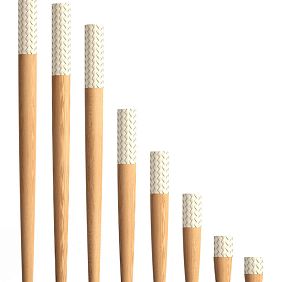
Table and chair legs (simple cylindrical or rectangular, boring) are replaced with polyurethane decorative legs (balusters, fluted, carved, height 8-35 cm, diameter 4-12 cm, conical shape, cylindrical with relief). Cost of a set of 4 legs: 280-1,450 RUB. Installation: remove old legs, screw on new ones (20-40 minutes per table).
Effect: IKEA Lack table (990 RUB, straight metal legs) + polyurethane balusters (set 580 RUB) = table for 1,570 RUB looks like a 6,000 RUB table (Provence, shabby chic, classic).
Current decor trends for 2026
What's relevant now? What's fading? What's just emerging?
Trend 1: Minimalism with Accents
Not bare minimalism (empty walls, no decor), but minimalism with pinpoint accents. Walls white or gray smooth, ceiling white, but there is a cornice (narrow smooth 50 mm, creates a border, structures), there is a rosette (small geometric 40 cm, centers the chandelier), one accent wall with molding panels (3-5 panels, inside contrasting color). Molding minimal but present — creates completeness, structure, without overload.
Trend 2: Colored Molding
Traditionally molding is white (painted white, cream, light gray — neutral, matches any walls). Trend 2026: molding in wall color (wall graphite, cornice graphite, moldings graphite — molding blends with wall by color but stands out with relief, play of light and shadow — volume without contrast) or contrasting (wall light gray, cornice black, moldings black — graphic quality, clarity, modern aesthetics). Colored cornices and moldings are sold factory-painted (RAL colors, palette 200+ shades) or painted after installation (acrylic paint any color).
Trend 3: Style combination
Not pure Baroque (overloaded, museum-like), not pure minimalism (cold, impersonal), but a mix: the foundation is minimalist (smooth walls, simple furniture, neutral colors), with classical accents (ornamental cornice with Ionic motifs, classical rosette with acanthus, fireplace portal with pilasters). The result: a contemporary interior, but with history, soul, and depth.
Trend 4: Eco-friendliness and durability
Demand for durable materials (30-50 years of service without replacement — polyurethane fits), non-toxic (polyurethane inert, does not emit formaldehyde, phenols — safe for bedrooms, children's rooms), repairable (molding can be repainted 5-10 times over its life, updating color without replacing elements). Trend against disposability (vinyl stickers last 2-3 years, yellow, peel off, thrown away — not eco-friendly).
Frequently asked questions
How much does it cost to decorate a 20 m² room with molding?
Basic set (cornice around perimeter + baseboard + one rosette): materials 8,000-16,000 RUB, installation 6,000-12,000 RUB, total 14,000-28,000 RUB. Extended (+ wall moldings 5 panels + door trims): materials 18,000-34,000 RUB, installation 12,000-22,000 RUB, total 30,000-56,000 RUB.
Can molding be painted in dark colors?
Yes, polyurethane can be painted with acrylic paints of any colors (black, graphite, dark blue, burgundy, green — any shade). Technique: two coats of paint with 4-hour interval, roller for smooth areas, brush for ornament.
How to combine molding with concrete and metal?
Molding (classic element) + concrete (modern industrial material) + metal (chrome, black steel, brass) = eclecticism, style mix. Example: loft living room (concrete wall, white ceiling with smooth 60 mm polyurethane cornice, metal furniture, fireplace with polyurethane portal painted graphite). Works when molding is minimalist (smooth profiles, simple geometry), not Baroque (ornate ornamental molding + concrete = conflict, doesn't combine).
How long does polyurethane molding last?
30-50 years with proper installation (on quality adhesive, on prepared surface, painted with acrylic paints). Interior molding 40-50 years (not subject to moisture, temperature fluctuations, mechanical impacts). Exterior 30-40 years (with adhesive + screws installation, painted with exterior paint, paint renewal every 7-10 years).
Can plasterwork be installed independently?
Yes, installation is accessible to non-professionals (unlike gypsum molding requiring plastering skills). Needed tools (miter saw or miter box, level, adhesive gun, spatula, painter's tape), materials (polyurethane or acrylic mounting adhesive, white sealant), time (18 m² room — 6-10 hours for a beginner). Savings: professional installation 15,000-28,000 RUB, DIY cost of adhesive and sealant 2,500-4,500 RUB (saving 12,000-24,000 RUB).
Conclusion: decoration as the philosophy of space
Decorative polyurethane molding— is not just decoration, but a philosophy of space. It is a tool for creating architectural depth (flat walls become three-dimensional and structured), visual proportions (cornices raise ceilings, moldings divide walls, pilasters create vertical lines), focal points (rosettes center compositions, portals transform fireplaces and doors into works of art), and atmosphere (classical molding creates elegance, Baroque opulence, minimalist modernity). Decorating with polyurethane molding is affordable (price 180-1850 rubles per meter for linear elements, 100-15000 rubles for individual pieces — 3-6 times cheaper than gypsum and wooden analogs), quick to install (a 20 m² room can be decorated in 1-2 days compared to a week for gypsum), durable (30-50 years of service without cracks, deformations, or peeling), and stylistically versatile (from palace Baroque to Scandinavian minimalism — 1900+ element models).
Trends for 2026 show the direction: minimalism with accents (not bare walls, but structured with cornices and moldings, without overload), colored molding (in wall color or contrasting, not just white), mixing styles (classical elements in modern interiors, concrete + molding, metal + ornament), eco-friendliness and durability (materials for 30-50 years, repaintable, non-toxic). Polyurethane meets all trends: technological (casting in high-precision molds, density 320-380 kg/m³, detailing 0.2-0.3 mm), durable (frost resistance minus 60°C, heat resistance plus 80°C, moisture resistance 100%, UV stability), eco-friendly (inert, does not emit toxins, safe), versatile (paintable in any colors, compatible with any materials).
Company STAVROS — the leader of the Russian market for decorative polyurethane molding, operating since 2002 (24 years of experience, over 215,000 completed orders, geography from Kaliningrad to Vladivostok), own production in the Moscow region (factory 8500 m², 45 Hennecke Germany injection molding machines, capacity up to 20,000 meters of linear products per day), European raw materials (polyurethane systems BASF Germany, density 320-380 kg/m³, durability 30-50 years, frost resistance, moisture resistance, UV stability), high-precision molds (silicone Wacker Germany, relief detailing 0.2-0.3 mm — every acanthus leaf, every egg-and-dart, every dentil is reproduced perfectly, symmetrically). STAVROS assortment: 1940+ items, covering all styles and tasks (ceiling cornices 450 models width from 30 to 300 mm for any interiors from minimalism to Baroque, wall moldings 410 models for panels and frames, floor skirting boards 300 models height from 40 to 300 mm, ceiling rosettes 175 models diameter from 20 to 150 cm, columns and pilasters 102 sets of all orders, consoles 92 models, keystones 72 models, decorative overlays 155 items for furniture and walls, facade products 190 positions, flexible moldings 52 models for arches, fireplace portals 35 ready-made sets).
Choose STAVROS — choose decorative polyurethane molding, tested for 24 years (reviews 97% positive, material has proven durability, stability, beauty), high-quality (European polyurethane, detailing 0.2-0.3 mm, three-layer snow-white primer, ready for painting), diverse (1940+ items — you will find elements for any style from loft to palace, for any room from a 25 m² studio to a 600 m² mansion, for any budget from 8000 to 2,000,000 rubles), affordable in price (180-1850 rubles per meter linear, 100-15000 rubles individual pieces — 3-6 times cheaper than gypsum and wooden analogs). Your interior deserves decor that lasts for decades, creates architectural depth, turns a house into a place you want to return to, space into a work of art, square meters into atmosphere — STAVROS molding creates all this, affordably, quickly, beautifully, forever.


