












































































Article Contents:
- Material Revolution: How Polyurethane Transformed Facade Decor
- From Stone and Plaster to Polymers
- Production technology
- Physical and Mechanical Properties
- Typology of Facade Elements: From Cornices to Balustrades
- Cornices and Belts: Horizontal Articulation
- Opening Trims: Accents on Windows and Doors
- Pilasters and Columns: Vertical Accents
- Rustication and Quoins: Imitation of Stone Masonry
- Balustrades and Railings: Functional Decor
- Decorative Panels and Cartouches: Artistic Accents
- Geometric Stability and Absence of Deformations
- Economic efficiency
- Project Implementation Speed
- Universality of application
- Resistance to climatic influences
- Facade Decor Installation: Professional Technology
- Preparation stage
- Adhesive Joining
- Mechanical Fastening
- Element joints
- Finishing
- Facade Decor Trends in 2026
- Neoclassicism in Private Housing Construction
- Minimalism with Accents
- Combination of Textures and Materials
- Color solutions
- STAVROS: A Reliable Partner for Facade Projects
- Facade Collections
- Custom production
- Comprehensive Approach
- Logistics Across Russia

The facade of a house is its face, the first impression formed by every passerby. You can invest millions in quality wall materials, insulation, windows, but if the appearance remains flat and inexpressive — the house gets lost among its neighbors, fails to be memorable, and doesn't inspire admiration. Architectural expressiveness is created by details: cornices, window trims, pilasters, balustrades, decorative elements that transform a simple box into an architectural work.facade decoration made of polyurethanemade such expressiveness accessible — the technological material allows for the realization of any architectural ideas without the astronomical costs and technical complexities of traditional materials.
In 2026, polyurethane facade decor has firmly established itself as the standard in private housing construction. Architects design with its application, builders know the installation technologies, and clients understand the advantages. It is no longer an exotic choice or a compromise — it is a conscious choice for those who value the combination of aesthetics, durability, and economic feasibility. Suburban neighborhoods are filled with houses with expressive facades, urban development gains architectural diversity, and historical environments are restored using modern materials visually indistinguishable from historical ones.


Material Revolution: How Polyurethane Transformed Facade Decor




From Stone and Plaster to Polymers
For centuries, architectural decor was created from stone and plaster. Stone carving required the work of experienced craftsmen, took months, and cost fortunes. Plaster stucco was more accessible but had a critical flaw — hygroscopicity. Plaster absorbs moisture; in frost, the water in its pores freezes and expands, destroying the material. Facade plaster stucco required constant maintenance, painting with protective compounds, and regular repairs. After 10-15 years, elements had to be replaced.
Concrete solved the moisture resistance problem but added others. The weight of concrete elements is enormous — a three-meter-long cornice weighs 80-120 kilograms. Installation requires special equipment, reinforced fastening, and sometimes additional wall reinforcement. The detailing of concrete products is limited — fine ornamental elements are impossible in concrete, and the surface becomes rough.
Polyurethane combined the virtues of all its predecessors while eliminating their shortcomings. The material does not absorb moisture — its water absorption coefficient is close to zero. It is not afraid of frost — freeze-thaw cycles occur without consequences. The weight is minimal — the same three-meter cornice weighs 3-5 kilograms, and one person can install it without equipment. Detailing is limitless — the finest nuances of ornamentation, inaccessible to stone, plaster, or concrete, are reproduced in polyurethane.
Our factory also produces:

Production technology
Modern facade polyurethane is produced by reaction injection molding. Two liquid components — polyol and isocyanate — are mixed in precise proportions. A chemical polymerization reaction begins, releasing heat and forming a foamy structure. The mixture is poured into a mold where, under pressure, the final shaping of the product occurs.
The key point is material density. For facade decor, polyurethane with a density of 300-450 kg/m³ is used. This is several times lighter than wood and dozens of times lighter than stone or concrete, yet the material retains high strength and rigidity. The surface layer has increased density — up to 700 kg/m³ — which ensures resistance to mechanical impacts.
Molds for casting are made from silicone or polyurethane based on master models. The master model can be hand-carved by a sculptor, milled on a CNC machine from a 3D model, cast from another material, or taken from a historical building. The quality of the mold determines the quality of all subsequent castings — a good mold transfers details with an accuracy of fractions of a millimeter.
After extraction from the mold, the product undergoes quality control. Geometry, absence of cavities and deformations, and clarity of relief are checked. Quality elements are packaged and shipped to the customer. Defective ones are sent for recycling — polyurethane can be crushed and used as filler in other productions.
Get Consultation
Physical and mechanical properties
The compressive strength of facade polyurethane is 15-25 MPa, which is comparable to the strength of softwood. The flexural strength is 8-12 MPa, allowing elements to withstand wind loads, snow mass, and accidental mechanical impacts without deformation or failure.
Impact toughness is several times higher than that of gypsum. Dropping tools, impacts from ladders during facade maintenance, or stones from lawnmowers—polyurethane decor withstands all this without visible damage or with minimal dents that are easily repaired.
Operating temperature range is from minus 60 to plus 80 degrees Celsius. This means the decor functions in any climatic zone of Russia—from the subtropics of the Krasnodar region to the permafrost of Yakutia. The material does not become brittle in cold or soften in heat.
The coefficient of linear expansion of polyurethane is comparable to that of concrete and brick. This means that during temperature fluctuations, the decor expands and contracts synchronously with the wall to which it is attached. No stress occurs at attachment points, and no cracks or detachment form.
Typology of facade elements: from cornices to balustrades
Cornices and belts: horizontal articulation
Outdoor facade decoration using polyurethanebegins with cornices—horizontal elements that separate one tier of a building from another, finish walls under the roof, and emphasize entrance groups.
The plinth cornice separates the plinth from the main wall plane. It protects the joint from direct moisture ingress while creating an architectural transition between different materials or finishing colors. The projection width is typically 80-150 millimeters, with a profile height of 100-200 millimeters.
Interfloor belts divide the facade horizontally, creating the scale characteristic of classical architecture. They run at the level of floor slabs between stories, visually emphasizing the building's structural logic. The profile can be simple—a rectangular section with a chamfer—or complex, with carved details and ornamentation.
The crowning cornice finishes the wall under the roof. This is the most expressive element that defines the building's silhouette. A classical cornice consists of several parts: supporting (consoles, modillions), main (frieze with ornament), and projecting (drip edge, protecting the wall from water running off the roof). The projection width reaches 300-500 millimeters, with a total height of 400-800 millimeters.
Opening surrounds: accents on windows and doors
Windows and doors are the most noticeable elements of a facade. Their framing defines the building's character, creates rhythm, and adds detail.
Architraves are vertical and horizontal strips framing the opening around the perimeter. Simple architraves have a rectangular section with chamfers or profiling. Complex ones include carved details, rustication, and ornamental inserts. The width of an architrave is 80-200 millimeters, depending on the opening size and building scale.
Pediments are decorative elements above windows, imitating a small roof. They give the opening completeness, protect from rain, and create a play of light and shadow. Classical pediments rest on consoles on either side of the window. Modern ones can be simplified—a horizontal strip with a profile, projecting 50-100 millimeters above the opening.
Keystones are decorative elements at the top of arched openings or in the center of a pediment. They imitate the central stone of an arch, which in stone masonry holds the entire structure. In polyurethane, this is a purely decorative element, but it adds authenticity to classical facades.
Window sills are horizontal elements at the bottom of a window. In addition to their decorative function, they divert water away from the wall, protecting it from moisture. Polyurethane window sills have a shape that ensures water runoff—an inclined top plane and a projecting drip edge underneath.
Vertical elements create grandeur, emphasize the height of the building, and organize the rhythm of the facade.
Vertical elements create the facade's rhythm, emphasize entrance groups, and frame the corner parts of a building.
Pilasters are flat vertical projections imitating columns. They consist of three parts: base (lower expanded part), shaft (central part, often with vertical flutes), and capital (upper decorative part with ornament). The height of a pilaster corresponds to the floor height—from 2.5 to 4 meters. Width is 150-300 millimeters, projection depth is 50-120 millimeters.
Half-columns are a more voluminous version of pilasters, projecting half or more of the column's diameter. They create a strong architectural effect, emphasize the grandeur of entrance groups, and frame terraces and balconies.
Columns are fully round vertical elements. In polyurethane, they are usually made hollow, fitting over a metal frame. Column diameter is 200-400 millimeters, height up to 4-5 meters. For greater heights, a column consists of several sections joined during installation.
Rustication and quoins: imitation of stone masonry
Rustication is a decorative technique imitating masonry made of large stone blocks with emphasized joints. It creates a sense of massiveness and monumentality characteristic of palace architecture.
Corner rustication frames building corners, visually strengthening them. Rustication alternates in height—wide, narrow, wide—creating rhythm. Each rust projects 20-50 millimeters from the wall plane, creating a play of light and shadow.
Horizontal rustication belts divide the wall into tiers. Continuous rustication of the ground floor is especially effective—the entire surface is covered with rustication, imitating masonry of roughly worked stone.
Quoins are flat slabs imitating stone masonry without projecting joints. They create wall texture, adding visual interest with less volume than rustication.
Balustrades and railings: functional decor
Balustrades are rows of shaped posts (balusters) connected by railings. They are used as railings for balconies, terraces, porches, and as purely decorative elements on roof parapets.
Polyurethane balusters have a classical shape—expanding base, narrowed central part, expanded upper part. Height is 600-900 millimeters, diameter 80-150 millimeters. They are installed on a metal frame, which ensures the railing's strength.
Decorative balustrades on roof parapets do not bear load but create completeness in the architectural composition. They are characteristic of classical mansions and palace buildings.
Decorative panels and cartouches: artistic accents
Pediments, wall spaces between windows, and areas under cornices can be decorated with decorative panels — relief compositions with ornamentation or narrative images.
Floral panels reproduce classical motifs — grapevines, acanthus leaves, floral garlands. They are painted in the facade color or highlighted with contrast, creating elegant accents.
Cartouches — oval or shield-shaped elements with framing of scrolls and decoration. The center may have a smooth surface for placing the house number, owner's initials, construction date. Or a relief composition — a coat of arms, monogram, decorative pattern.
Geometric stability and absence of deformations
Economic Efficiency
Pricepolyurethane facade decor3-5 times lower than stone or concrete decor of similar complexity. A 10-meter cornice made of artificial stone costs 80-120 thousand rubles. A visually identical polyurethane one — 20-30 thousand rubles. Savings of 4 times.
But a direct price comparison doesn't show the full picture. Installing heavy decor requires construction equipment — lifts, high-strength scaffolding, special fasteners. This adds another 40-60% to the material cost. Polyurethane is installed manually, without machinery, using standard adhesive and anchors. Installation cost — 20-30% of the material price.
Transporting heavy decor is a separate expense item. A truck carries 2-3 tons of stone elements. The same quantity of polyurethane elements — 150-200 kilograms — fits in a minibus. Savings on delivery can reach tens of thousands of rubles, especially for remote regions.
The durability of polyurethane decor means the costs for it are one-time. Once installed, it serves for decades without repair or replacement. Plaster decor requires renewal every 10-15 years. Over 30 years of house operation, plaster will need to be replaced twice, tripling the total costs.
Project implementation speed
Time is money, especially in construction. Each month of delay means expenses for housing rent, loans, lost profit from using the house.
Polyurethane decor is supplied ready for installation. No need to wait for manufacturing — popular elements are available in large quantities in warehouses. Custom elements are produced in 1-2 weeks. Stone decor is manufactured in 1-3 months depending on complexity and order volume.
Polyurethane installation takes days, not weeks. The facade of a typical two-story house with an area of 200 square meters is decorated in 3-5 working days by two installers. Installing stone decor on the same house will take 2-3 weeks involving machinery and a crew of 4-5 people.
This allows completing construction faster, moving into the house earlier, starting operation and recouping investments. For commercial objects — hotels, restaurants, offices — rapid commissioning is critically important for business.
Universality of Application
Polyurethane decor is installed on any base — brick, concrete, aerated concrete, wood, frame structures with cladding. No wall reinforcement, load-bearing capacity checks, or additional reinforcement are required. The low weight of elements allows installing them even on lightweight structures that couldn't withstand heavy decor.
This opens possibilities for decorating frame houses, SIP panel buildings, structures with ventilated facades. Where stone decor is impossible for structural reasons, polyurethane works flawlessly.
The decor is suitable for new buildings and for reconstructing old ones. When updating the facade of a historical building where additional loads on the foundation and walls cannot be created, polyurethane is the optimal solution. It allows recreating lost stucco, adding missing elements without compromising structural integrity.
Resistance to climatic effects
Russia is a country of climatic contrasts. From +40 in summer to -50 in winter, from arid steppes to humid coasts, from windless valleys to windy plateaus. Facade material must work everywhere.
Polyurethane does not absorb water. Water absorption coefficient is less than 1% by volume. This means even with prolonged water contact, the material doesn't soak up moisture, doesn't swell, doesn't lose strength. Decor on a seaside house facade, where humidity is constantly high, retains properties just as in dry continental climate.
Frost resistance exceeds 200 freeze-thaw cycles. One cycle is material freezing at sub-zero temperature and subsequent thawing. In real operating conditions, 30-50 cycles occur per winter. This means the decor will last at least 4-6 winters, and in practice — much longer, as laboratory tests are conducted under extreme conditions.
Ultraviolet radiation destroys many polymers — they fade, become brittle, crack. High-quality facade polyurethane contains UV stabilizers that protect the material from solar radiation. Decor on a southern facade receiving maximum sunlight retains properties for decades.
Facade decor installation: professional technology
Preparation Stage
Quality installation begins with planning. The architectural project must include precise placement of all decorative elements with dimensions and references. This allows calculating material quantity, planning work sequence, avoiding errors.
Base inspection is a critical moment. The wall must be level, strong, clean. Irregularities exceeding 5 millimeters per meter of cornice length will create gaps or waves. Check flatness with a straightedge or stretched cord. Significant irregularities should be leveled with plaster before installing decor.
Base strength is checked by tapping. A dull sound indicates plaster delamination. Remove such areas, re-plaster, allow to dry. Decor glued to delaminating plaster will fall off with it.
Marking is done according to the project. Mark on the wall symmetry axes, horizontal lines for cornices and belts, opening contours for architraves. Use a laser level for horizontal lines, a plumb line for vertical ones. Precise marking is half the success of installation.
Adhesive bonding
The main method for attaching polyurethane decor is with adhesive. Specialized polyurethane adhesives or universal mounting adhesives on polymer base are used. They provide strong bonding, joint elasticity, resistance to moisture and temperature.
Adhesive is applied to the back of the element with a notched trowel or in strips from a cartridge using a mounting gun. For narrow elements (architraves, moldings), one or two adhesive strips along the length are sufficient. For wide ones (cornices, rustication) — several parallel strips or a grid of strips.
The element is applied to the wall according to markings and pressed. Pressing time depends on adhesive type — from 10-15 seconds for fast-setting to 2-3 minutes for slow ones. Ensure the element doesn't shift during setting — correcting position afterwards will be impossible.
Excess adhesive should be immediately removed with a damp sponge or cloth. Hardened adhesive will need to be cut with a knife, damaging the element surface and requiring repair.
Mechanical fastening
For heavy and large elements, adhesive alone is insufficient. Combined fastening is used — adhesive plus mechanical fasteners.
Anchors or screw anchors are screwed through the element into the wall. For polyurethane, screws with wide heads or special fasteners with umbrella washers are used — they distribute load without pressing into the soft material.
Mounting points are placed in locations where they will be hidden or inconspicuous. For cornices — in the upper part, which will be covered by the roof overhang. For architraves — along the edges, which will be overlapped by corner elements. For pilasters — in the capital and base, where the fasteners will be masked by ornament details.
After screwing in the self-tapping screws, their heads are countersunk 2-3 millimeters below the surface of the decor. The resulting recesses are filled with acrylic putty, then sanded after drying. Before painting, the fastener locations become invisible.
Element Joints
Long horizontal elements — cornices, belts, plinth profiles — are assembled from individual sections that are joined together. The quality of the joints determines the overall impression of the facade.
Element ends are cut strictly perpendicular at a 90-degree angle. A miter saw with a fine-toothed blade or an electric jigsaw with a wood-cutting blade is used. The cut must be clean, without chips or tears.
Elements to be joined are glued to the wall tightly against each other. The gap at the joint should not exceed 1 millimeter. If the gap is larger — check the cutting angles, and if necessary, re-cut the elements.
After the glue dries, the joint is filled with acrylic sealant or elastic putty. The material is applied into the gap, excess is removed with a rubber spatula, forming a smooth surface. After drying and painting, the joint becomes practically invisible.
Final finishing
After installing all elements, the facade is prepared for painting. All joints, gaps, and fastener locations are inspected. Defects are filled with putty, then sanded with fine-grit sandpaper after drying.
Priming is a mandatory step. Acrylic facade primer is used, applied with a brush or spray gun. The primer creates an adhesion layer for the paint, evens out absorbency, and strengthens the surface. One or two coats of primer provide an ideal base for painting.
Painting is done with facade acrylic or silicone paints. They are elastic, vapor-permeable, resistant to UV and precipitation. The decor is painted to match the wall color or in a contrasting color — depending on the project. Two or three coats of paint provide a dense, even coating that will protect the decor for 10-15 years.
Facade decor trends in 2026
Neoclassicism in private housing construction
The main trend of recent years is a return to classical architectural forms, but in a simplified, modernized interpretation. Houses are built with clear proportions, symmetry, order elements, but without the excessive detailing of Baroque or Empire styles.
Medium-width cornices with a simple profile, pilasters with laconic capitals, window surrounds without excessive decor — such restrained classicism looks noble, does not become outdated, suits the modern pace of life, yet retains architectural expressiveness.
Minimalism with accents
Modern minimalist facades do not mean a complete rejection of decor. On the contrary — one or two carefully chosen elements create a strong effect against the background of smooth planes.
An entrance group, highlighted by pilasters and a cornice, becomes the compositional center of a laconic facade. A wide horizontal belt running along the entire perimeter of the building at the floor level structures the volume, making it graphic. Corner rustication on a neutral facade creates a visual reinforcement of the corners.
Combination of textures and materials
Polyurethane decor combines perfectly with any facade materials. Popular combinations: decor against a background of decorative plaster, decor against a background of clinker tiles, decor against a background of wooden cladding.
Contrast of textures creates visual interest. A smooth polyurethane cornice against a background of textured plaster reads especially clearly. White decor on dark clinker creates a graphic effect. Decor painted to resemble wood against a background of stone cladding unites natural motifs.
Color Solutions
White decor on a colored facade is a classic that always works. But in 2026, other solutions are gaining popularity.
Decor in the color of the facade creates an effect of a single plane, where elements are visible only due to volume and play of light and shadow. This is a subtle, sophisticated solution for modern facades.
Contrasting combinations — dark decor on a light facade or light on dark — create a graphic effect, emphasize geometry, and make the building memorable.
Metallic finishes for decor — resembling bronze, copper, corten steel — add an industrial and modern touch, combining well with minimalist volumes.
STAVROS: a reliable partner for facade projects
Over 23 years of operation, the company STAVROS has become synonymous with quality in the field of decorative elements for interiors and exteriors. Full-cycle production, in-house developments, quality control at all stages, a professional team — all this makes STAVROS the best choice for those creating facades for decades.
Facade collections
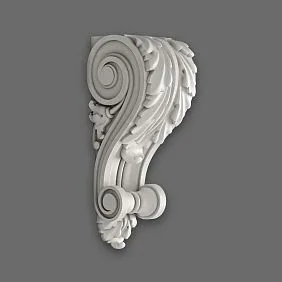
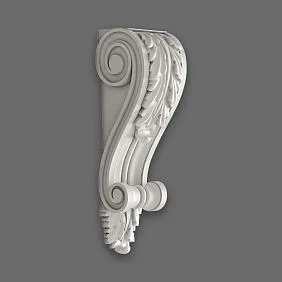
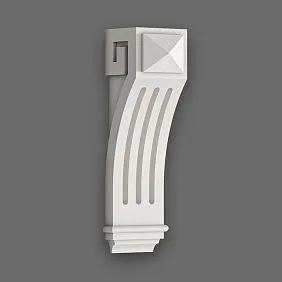
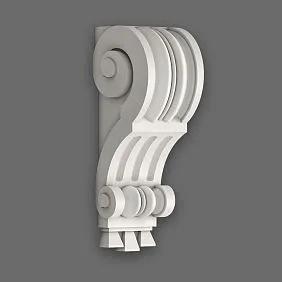
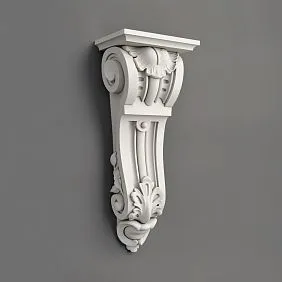
The STAVROS catalog includes hundreds of facade decor items: cornices of all standard sizes, architraves for different opening formats, pilasters with capitals of different orders, rustication, balustrades, decorative panels, keystones, brackets, modillions.
Each element is developed considering architectural canons and modern durability requirements. Materials — high-density polyurethane from European manufacturers. Molds are created based on historical samples or original designer projects.
Custom production
If standard elements do not suit your project, STAVROS will manufacture custom ones. Provide a sketch, photograph, 3D model — the company's specialists will develop a solution, create a mold, cast a sample for approval, and launch production.
This opens up limitless possibilities for architects and designers. Unique decor, not found anywhere else, makes a building truly exclusive.
Comprehensive approach
STAVROS provides not just materials, but comprehensive project support. Consultations on element selection, quantity calculation, installation recommendations, assistance in finding qualified installers, after-sales support — all this is included in the service.
Architects have access to BIM models of elements, drawings, and specifications. This simplifies design, allows for accurate cost calculation, and helps avoid errors during the procurement and installation stages.
Logistics across all of Russia
STAVROS delivers products from Kaliningrad to Vladivostok. In-house logistics for large orders and partnerships with reliable transport companies for small ones guarantee that your order arrives on time and intact.
Packaging ensures the protection of elements during transportation. Even the most fragile parts with delicate ornamentation arrive without damage.
The facade shapes the home's appearance, defines perception, and creates the first impression.facade decoration made of polyurethanehas made architectural expressiveness accessible, durable, and economically viable. It is a technology that combines the aesthetics of classical architecture with the practicality of modern materials.
In 2026, polyurethane facade decor is the choice of those who build for centuries, who value beauty but are not willing to sacrifice reason for it. Choose quality materials from trusted manufacturers like STAVROS and create homes that will delight you and impress others for decades.


