Article Contents:
- The significance of facade decoration in architecture
- Historical role of decoration
- Functions of modern facade decoration
- Facade decoration from wood - living plasticity and historical continuity
- Wood species for facade decoration
- Technology of manufacturing wooden decoration
- Protective treatment and painting
- Decorative possibilities of wood
- Facade decoration from polyurethane - ease of installation, moisture resistance, geometric precision
- Technological advantages of polymer
- Production and Diversity of Forms
- Installation and Operation
- Aesthetics and functionality of facade elements
- Crown moldings and cornices
- Window and door frames
- Pilasters and Columns
- Pediments and attic elements
- Material combinations in house design
- Principles of harmonious combination
- Successful combinations
- Errors in combining materials
- Examples of successful solutions in private architecture
- Estate in neo-Russian style
- Manor house in neoclassical style
- Modern minimalist house
- Reconstruction of a historical building
- Summary: choosing according to the building's style

The facade of a building is the face of architecture, the first impression, the business card of the owner. The exterior appearance of a house tells the story of the residents' taste, status, and stylistic preferences long before anyone steps inside. Decorative facade treatment transforms a plain box into a work of architectural art, endowing the building with character, individuality, and emotional expressiveness. From a modest lintel to a monumental portico — each decorative element contributes to creating a cohesive architectural image.
The modern market offers two fundamentally different materials for making facade decoration — natural wood and innovative polyurethane.Facade decoration made of woodembodies centuries-old craftsmanship traditions, the nobility of natural material, the uniqueness of hand carving.Facade decoration made of polyurethanedemonstrates achievements of modern technology — absolute moisture resistance, ease of installation, geometric precision, and affordability. Choosing between these materials determines not only the aesthetics of the building but also its durability, functionality, and operational characteristics.
A properly selected decoration harmonizes with the architectural style of the building, regional climatic conditions, and landscape surroundings. It can be a restrained accent, subtly highlighting the proportions of the building, or, conversely, a dominant compositional element that transforms the facade into a theatrical decoration. The scale, density, and character of the decoration — geometric or organic, classical or avant-garde — create different perceptions of the same building.



Facade decoration in architecture
Architectural decorationHistory of architectural decoration




Historical role of decoration
Ancient architecture created a system of orders - strict rules for combining load-bearing and decorative elements. Doric, Ionic, Corinthian orders differed less in construction and more in decorative character - from strict simplicity to ornate ornamentation. Capitals of columns, cornices, friezes were carved with symbolic meaning. Acanthus leaves symbolized life force, meanders - eternity, rosettes - the sun.
Medieval architecture filled facades with religious symbolism. Romanesque churches were adorned with geometric ornamentation and zoomorphic images warning of sin. Gothic cathedrals were covered with stone lace - pointed arches, ogee arches, crockets, finials created an upward orientation, materializing the soul's aspiration toward the divine. Each decorative element had a spiritual meaning.
The Renaissance revived ancient traditions, filling them with humanist content. Palace facades were adorned with classical orders, rusticated portals, pilasters, creating rhythmic structure. Baroque turned decoration into the main means of artistic expression - ornate pediments, volutes, cartouches, sculptural groups created theatrical spectacle, demonstrating the wealth and power of owners.
Neoclassicism returned restrained forms while preserving the nobility of decoration. Symmetrical compositions with porticos, colonnades, pediments embodied rationality, order, harmony of proportions. Modernism freed decoration from historical canons, creating organic forms, stylized plant motifs, asymmetrical compositions. Soviet modernism rejected decoration, proclaiming construction as the sole source of beauty.
Our factory also produces:


Functions of modern facade decoration
Visual correction of proportions - the most important function of decorative elements. Horizontal divisions - cornices, moldings, friezes - visually expand the building, making it appear grounded and solid. Vertical elements - pilasters, brackets, buttresses - direct the building upward, creating dynamism, lightening the mass. Rhythmic alternation of decorative elements structures the extended facade, breaks monotony, creates a readable composition.
Accentuating architecturally significant elements draws attention to the main focus. A richly decorated portal highlights the main entrance, making it the compositional center of the facade. Windows framed by lintels become expressive elements organizing rhythm. A cornice-emphasized plinth creates a visual base for the building. A crowning pediment completes the composition, giving the building a sense of completeness.
Protective function of decorative elements is equally important. Cornices divert rainwater from walls, preventing moisture and damage to finishes. Overhangs above windows protect openings from precipitation. Plinth bands protect the lower part of the building from splashes, dirt, mechanical damage. Lintels seal mounting joints, eliminating drafts.
Thermal insulation role is relevant for modern construction. Many decorative elements are made from materials with low thermal conductivity, additionally insulating the facade. Cornices cover cold bridges at the junction of wall and roof. Framing of openings mask mounting joints, improving airtightness. This is especially important in energy-efficient construction, where every degree of saved heat is critical.
Get Consultation
Facade decoration in wood - living plasticity and historical continuity
Natural wood remains the material of choice for enthusiasts of traditions, natural beauty, and handcrafted craftsmanship.Facade decoration made of woodIt embodies millennia of wooden architecture traditions, where each element was crafted by hand by masters passing down the secrets of their craft from generation to generation. Modern production combines traditional techniques with innovative equipment, creating products worthy of historical prototypes.
Wood species for facade decoration
Larch unquestionably leads among species for outdoor use. Density of 600-650 kilograms per cubic meter provides strength comparable to oak. Natural resins create inherent protection against rot, mold, insects - larch practically does not require antiseptic treatment. Wood does not fear moisture - it becomes even stronger when wet, making it ideal for humid climates.
Color of larch varies from golden-yellow to reddish-brown with a noble warm tone. Over time, exposed to air, wood acquires a silver patina, adding aristocracy. Historical buildings in Venice were constructed on larch piles, standing in water for centuries without decay. Larchwooden ornamentserves 50-100 years even in harsh climates without replacement.
The only drawback of larch is its high cost, 2-3 times higher than that of pine products. Also, the wood contains a lot of resin, making it difficult to process - tools quickly become clogged, requiring frequent cleaning. Hardness of larch requires powerful equipment for cutting and milling. But these complexities are compensated by phenomenal longevity.
Oak symbolizes monumentality, fundamentality, prestige. Density of 700-800 kilograms per cubic meter makes oak wood extremely hard, resistant to any mechanical and atmospheric influences. Tannins create natural antiseptic protection. Oak elements of facade decoration serve for centuries - historical buildings preserve carved oak ornaments from the 17th-18th centuries in functional condition.
Oak texture is expressive - large pores create a distinctive relief pattern, clearly visible even from afar. Color palette ranging from light honey to dark chocolate allows selecting a tone to match the facade concept. Weathered oak, soaked for decades in water, acquires a noble black color with silver sheen - an elite material for exclusive projects.
Processing oak requires professional skill and powerful equipment. Hard wood dulls tools, is difficult to carve, requires precise adherence to technology. Yet the result is impressive - oak decoration becomes a family heirloom, passed down to future generations. Cost of oak products is high, but the investment pays off through longevity and prestige.
Spruce represents an accessible segment of wooden decoration. Density of 450-500 kilograms per cubic meter ensures sufficient strength with ease of processing. Light-colored wood with distinct texture creates a characteristic Scandinavian aesthetic. Spruce is easy to carve, mill, and paint - ideal material for mass production of decoration.
Drawbacks of spruce - relative softness requiring protection from mechanical damage, and presence of resin pockets that may exude resin when heated by sunlight. For outdoor use, spruce decoration requires high-quality multi-layer protective treatment - antiseptics, primers, weather-resistant varnishes or paints. With proper protection, spruce elements serve 20-30 years.
Cedar combines ease of processing with natural durability. Wood contains essential oils repelling insects and preventing rot. Pleasant aroma emitted by cedar creates a therapeutic effect. Color ranges from pinkish-yellow to reddish-brown with a noble warm tone. Cedar decoration is popular in ecological construction, where material naturalness is important.
Technology of manufacturing wooden decoration
Modern production begins with selection of high-quality wood. Boards undergo careful sorting - elements with large knots, cracks, rot, resin pockets are rejected. Selected wood enters drying chambers, where under controlled temperature and humidity it is brought to residual moisture of 10-14 percent. Proper drying is critical - it determines the dimensional stability of the finished product.
Simple profiled elements - cornices, moldings, strips - are manufactured on CNC milling machines. Computer program controls the movement of milling cutters, reproducing the specified profile with accuracy to tenths of a millimeter. Productivity of modern equipment reaches 50-100 linear meters per shift with flawless surface quality.
Carved decoration is created using various technologies depending on complexity. Repeating elements are cut using CNC machines based on 3D models — the computer controls a multi-axis manipulator reproducing the 3D ornament. This technology ensures absolute identity of elements, which is important for mass production. Unique original works are created manually by skilled carvers.
Hand carving is an art requiring years of training and talent. The master works with a set of special chisels of various shapes, sequentially forming the relief of the ornament. The process is labor-intensive — a complex element may require dozens of hours of work, explaining the high cost of exclusive items. Yet the result is unique — the liveliness of lines, individuality of execution, the energy of handmade craftsmanship.
Combined technology optimizes the price-to-quality ratio. Large elements and main profiles are cut using machines, while fine detailing, trimming, and artistic finishing are done by hand. This approach creates items more affordable than fully handcrafted ones, yet retaining the liveliness characteristic of artisanal work.
Protective treatment and coloring
The durability of wooden facade decoration directly depends on the quality of protective treatment. A multi-layer coating system creates a barrier between the wood and aggressive external environment. The first stage — deep antiseptic impregnation — protects against biological damage. Modern water-based antiseptics penetrate to a depth of 5–10 millimeters, creating long-term protection against mold, mildew, and insects.
Primer performs multiple functions. It reveals hidden wood defects — areas with higher or lower density show different absorption of primer. It fills wood pores, creating an even base for the final coating. It improves paint or varnish adhesion. It contains UV filters protecting wood from destructive ultraviolet rays.
Finish coating can be transparent or opaque. Transparent varnishes preserve the natural beauty of the wood texture, highlighting the grain pattern. Polyurethane-based yacht varnishes create an elastic, durable film resistant to water, UV radiation, and temperature fluctuations. Alkyd varnishes provide deep penetration, good adhesion, and acceptable price. Acrylic compositions are eco-friendly and do not yellow over time.
Opaque paints completely hide the texture, creating a uniform colored surface. Acrylic paints form an elastic, breathable film allowing wood to breathe. Alkyd compositions create a durable coating with good protective properties. Oil-based paints are traditional for historical buildings, providing deep penetration into wood.
Color palette is practically unlimited. Traditional colors for wooden architecture — white, red, ochre, green — recreate the atmosphere of historical buildings. Modern intense shades — graphite, terracotta, olive — create contemporary aesthetics. Natural tones with transparent coating highlight the natural beauty of wood.
Decorative possibilities of wood
Wood carving opens boundless creative horizons. Flat geometric carving creates rhythmic compositions from triangles, rhombuses, circles. This technique is characteristic of northern wooden architecture, where strict geometry matched the harsh climate and character of inhabitants. The depth of carving is shallow — 5–15 millimeters — but the play of light and shadow creates expressive graphic decoration.
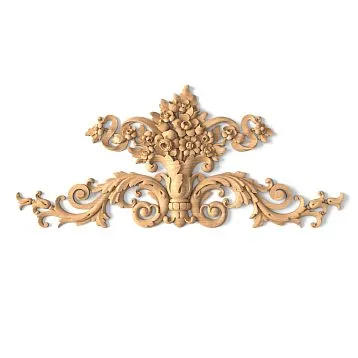
Contour relief carving forms volumetric images by removing the background. The ornament protrudes from the plane by 20–40 millimeters, creating expressive light-and-shadow play. This technique allows reproducing complex plant motifs — grapevines, acanthus leaves, floral garlands. Masters create multi-layered compositions with varying relief depths, imitating three-dimensional sculpture.
Openwork carving — the pinnacle of a carver’s skill. The background is completely removed, creating a transparent lacework of wood. The complexity lies in the fact that ornament elements must be strong enough not to break during use, yet thin enough to create lightness. Openwork cornices, moldings, friezes transform the facade into a work of decorative art.
Applied carving combines different elements, creating multi-layered compositions. The base — a flat board or profiled element. Carved details — rosettes, cartouches, consoles — are applied on top, creating deep relief without removing large wood blocks. This technique is economical — it allows creating impressive decoration with fewer labor hours.
Facade decoration from polyurethane — ease of installation, moisture resistance, geometric precision
Modern polyurethane has revolutionized the production of facade decoration.Facade decoration of the houseMade from this material, it combines the aesthetics of classical stucco with the practicality of modern technologies. The method of precision casting allows reproducing any shapes with jewel-like accuracy, unattainable by handwork.
Technological advantages of polymer
Absolute moisture resistance — key advantage of polyurethane decoration. Water absorption coefficient less than 1 percent eliminates problems typical for wood and plaster. The material does not absorb water even with prolonged direct contact, does not swell, does not deform. This makes polyurethane ideal for humid climates — coastal regions, areas with heavy rainfall, places with high air humidity.
Biological inertness completely excludes damage from fungi, mold, insects. Polyurethane is not a nutrient medium for microorganisms, does not attract wood-boring insects, never rots. Elements retain their original appearance for decades even in tropical climates, where wooden decoration deteriorates within a few years. No antiseptic treatment is required, eliminating expenses for periodic maintenance.
Temperature stability allows using polyurethane decoration in extreme conditions. The material retains its properties in a range from minus 50 to plus 80 degrees Celsius without any deformation, cracking, or geometric changes. This is relevant for northern regions with frost down to minus 40–50 degrees, southern areas with facade heating up to plus 70 degrees, continental zones with annual temperature fluctuations of 60–80 degrees.
Phenomenal lightness radically simplifies installation. Density of 200–250 kg per cubic meter is 2–3 times lower than wood. A large decorative element — console, capital, bracket — weighs 2–5 kg compared to 10–20 kg for a wooden equivalent. One person can install decoration on the entire facade of a house alone, without helpers, cranes, or scaffolds. This saves time and money on installation.
Impact resistance of modern polyurethane is high due to elasticity. Upon impact, the material absorbs energy, slightly deforms, then restores its shape. Snow, branches, random mechanical impacts leave no visible damage. This advantage over brittle plaster, which cracks under impact, and soft wood, where dents remain.
Production and variety of forms
Production begins with creating a master model — the standard sample of the future item. The model is made manually by a sculptor from clay, plaster, or gypsum, reproducing all the finest details. Based on the master model, a precision mold is made from silicone or polyurethane, accurately replicating all the relief nuances.
Two-component polyurethane system is poured into the mold. When components are mixed, a chemical reaction begins, releasing heat and forming gas. Foaming occurs under pressure in a closed mold, forming a product with two density levels. The inner layer has a porous structure ensuring lightness. The outer layer is dense, smooth, and strong — it forms a clean surface with detailed relief work.
Variety of forms is practically unlimited. Modern manufacturers offer thousands of element variants — from simple planks to complex sculptural compositions. Cornices, pilasters, capitals, consoles, brackets, keystone stones, pediments, balustrades, columns — a complete set of classical architectural decoration is available in polyurethane form.
Ornamentation reproduces all historical styles. Classical orders with fluting, Ionic volutes, Corinthian capitals. Baroque scrolls, rocaille, cartouches, lush garlands. Neoclassical strict forms with laurel wreaths, meanders. Modern organic lines, stylized plants. Contemporary abstract compositions. The casting method allows reproducing the finest details with precision down to fractions of a millimeter.
Installation and operation
Facade preparation requires leveling significant irregularities. Differences exceeding 10 millimeters are plastered. Surface is cleaned from dust, dirt, peeling coatings. Loose areas are strengthened with deep-penetration primer. The base must be strong, dry, and dust-free to ensure reliable adhesive bond of the glue.
Mounting is performed using a combination of adhesive and mechanical methods. A special polyurethane adhesive or mounting foam is applied to the back side of the element. For lightweight components, adhesive alone is sufficient. Heavy, large-format elements are additionally secured with anchors through through-holes. Anchor heads are recessed and masked with putty, becoming invisible after painting.
Joints between elements are filled with elastic sealant or special putty. Joint seams are carefully filled, sanded, and become practically invisible. Corner elements and special joint brackets simplify corner assembly, ensuring perfect profile alignment without complex fitting.
Painting is done with weather-resistant acrylic or silicone paints. The polyurethane surface does not require priming — paint is applied directly to the material. Two coats are sufficient for even coverage. The color palette is unlimited — from traditional white to the boldest modern shades.
Operation requires no special maintenance. Polyurethane does not require periodic treatment with protective compounds or repainting. Dirt is removed with a water stream from a hose. Stained areas are cleaned with a mild soap solution. The service life of quality polyurethane decoration is 30–50 years without loss of functional or aesthetic qualities.
Facade elements' aesthetics and functionality
Architectural decorationharmoniously combines beauty with practicality. Each element performs specific functions while simultaneously enhancing the facade's aesthetics.
Crown moldings and cornices
The cornice crowns the facade composition, creating a visual transition from the wall to the roof. A wide profiled cornice with consoles and modillions gives the building a classical monumental character. A minimalist rectangular cornice corresponds to modern aesthetics. Functionally, the cornice deflects rainwater from walls, protecting the cladding from moisture.
Interfloor bands horizontally divide the facade, create scale, and structure extended surfaces. A projecting band between the first and second floors visually separates the first floor's public zone from the residential zones above. Bands mask horizontal joints between panels, creating shadows that enrich the facade's plasticity.
The plinth band marks the visual base of the building, creating a transition from the foundation to the walls. A projecting profiled plinth band protects the top edge of the plinth from water runoff from the walls. Decorative treatment of the plinth band — rust, relief panels, ornament — emphasizes the building's fundamentality and solidity.
Opening frames
Window and door casings transform simple openings into expressive facade elements. Richly decorated casings with pediments, consoles, and keystone stones create classical grandeur. Simple rectangular frames correspond to minimalist aesthetics. Functionally, casings seal mounting joints, protecting them from atmospheric effects.
Sashings above windows — small awnings on consoles or brackets — protect openings from precipitation while simultaneously decorating the facade. Triangular pediments create classical rigidity, segmental pediments create baroque opulence, straight sashings create modern minimalism. Sashings visually unite windows vertically, creating rhythmic groups.
Sill bands emphasize the horizontal rhythm of windows, visually linking openings into a unified composition. A profiled band beneath windows creates shadow, enhancing the facade's plasticity. Functionally, the band protects the wall beneath the window from water runoff from the sill.
Pilasters and columns
Pilasters — flat vertical projections with bases and capitals — structure the facade, creating a classical order system. Rhythmic placement of pilasters divides an extended wall into proportional segments, creating compositional clarity. Pilasters visually support the cornice, creating an illusion of constructive logic.
Half-columns and three-quarter columns enhance plasticity, create deep shadows, and enrich the facade. A portico of columns highlights the main entrance, creating a ceremonial grand entrance. Columns at building corners visually emphasize corners, highlighting the volume's geometry.
Column and pilaster capitals define the building's stylistic affiliation. Doric capitals with strict forms create restrained monumentality. Ionic volutes add elegance. Corinthian acanthus leaves embody luxury. Modern abstract capitals create avant-garde aesthetics.
Pediments and attic elements
A pediment above the main entrance or central facade section creates a vertical accent, drawing attention to the compositional center. A triangular pediment with a tympanum embodies classical rigidity. A segmental pediment creates baroque dynamism. A broken pediment with a cartouche in the break — a characteristic Rococo device.
An attic — a decorative element above the cornice — conceals roof technical elements, adds additional height, and increases the building's scale. An ornate balustraded attic creates an airy finish. A solid attic with relief panels — a substantial monumental finish.
Acroteria — decorative elements at the corners and apex of pediments — complete the composition, creating silhouette variety. Classical vases, palmettes, and shaped finishes transform the pediment into a sculptural composition.
Material combinations in house design
A thoughtful combination of wooden and polyurethane decoration creates an optimal balance of aesthetics, functionality, and budget.Facade decoration of the housecan combine both materials, using the advantages of each.
Principles of harmonious combination
Stylistic unity is critically important. Wooden and polyurethane elements must match in profile character, scale, and degree of ornamentation. Classical oak pilasters with carved capitals harmonize with polyurethane cornices reproducing classical orders. Simple wooden planks combine with minimalist polyurethane profiles.
Color unity unifies diverse materials. All elements are painted in a single palette — traditional white for classic styles, natural wood tones for rustic or wooden architecture styles, modern colors for avant-garde projects. Contrasting painting accentuates material differences, disrupting overall unity.
Zonal division — an effective strategy for combining materials. The main entrance facade is adorned with wooden carved decoration, emphasizing status. Side and rear facades are finished with practical polyurethane. Lower floors — wood, accessible for tactile contact; upper floors — lightweight polyurethane, reducing load.
Successful combinations
Wooden window casings combine with polyurethane cornices and bands. The nobility of natural wood at eye level creates a high-quality impression. Lightweight polymer elements above the roof do not create load and are easy to install. Uniform painting makes material differences imperceptible from the ground.
Polyurethane pilasters and columns harmonize with wooden entrance portals. Large-format polymer elements create architectural scale with minimal weight. Carved wooden doors and main entrance framing emphasize significance, creating tactile value. Textural contrast — smooth polyurethane and relief wood — enriches perception.
Wooden pediments and gables combine with polyurethane wall decoration. Traditional wooden carving on pediments recreates the atmosphere of wooden architecture. Practical polyurethane elements on walls ensure longevity and require no maintenance. This solution is optimal for country houses in Russian style.
Combining styles of different decorative character creates visual dissonance. Baroque polyurethane ornament with elaborate scrolls does not harmonize with minimalist wooden planks. Strict classical wooden pilasters conflict with avant-garde polyurethane elements. Unity of stylistic language is required.
Contrasting material coloring accentuates their differences. Natural wood combined with white polyurethane draws attention to their dissimilarity. Dark wooden elements with colored polymers create chaos. Harmony requires a unified color palette — either all white or all tonally matched shades.
Excessive decoration when combining overloads the facade. Simultaneous use of richly decorated wooden and polyurethane elements on all planes deprives the composition of lightness. Balance is required — accentuated carved decoration in key zones, restraint on secondary areas.
Examples of successful solutions in private architecture
Examples of successful solutions in private architecture
Analysis of implemented projects demonstrates diversity of approaches to using wooden and polyurethane decoration in suburban construction.
Estate in neo-Russian style
Two-story house made of round logs in the Moscow region recreates the atmosphere of Russian wooden architecture. Windows are adorned with carved larch sills featuring traditional motifs — solar symbols, vegetal ornaments, geometric patterns.wooden ornamentDesigned according to historical 19th-century models with adaptation to modern proportions.
The plinth and interfloor cornice are made of polyurethane, painted to match the wood tone. Practical polymer in areas exposed to maximum atmospheric impact ensures durability without compromising aesthetics. From afar, the difference in materials is imperceptible due to the unified color scheme.
The ground-level band and interfloor cornice are made of wood-colored polyurethane. Practical polymer in areas exposed to maximum atmospheric effects ensures durability without compromising aesthetics. From afar, the difference in materials is imperceptible due to a unified color scheme.
Manor house in neoclassical style
The entablature with modillions and dentils creates a classical finish. A 400 mm wide cornice provides reliable protection for walls from precipitation. The interfloor band divides the facade into proportional sections. All windows are framed with sills featuring sandrines — triangular on the second floor, arched on the third, creating variety.
The cornice with modillions and dentils creates a classical finish. The 400 mm wide cornice provides reliable protection for walls against precipitation. The interfloor band divides the facade into proportional sections. All windows are framed with casings featuring sashings—triangular on the second floor, arched on the third—creating variety.
Entrance portal made of solid oak — carved doors, frame, oak plank steps. The nobility of natural wood at the main entrance creates an impression of respectability. The contrast of warm portal wood against snowy-white polyurethane wall decoration adds expressiveness.
Modern minimalist house
Panoramic window frames — simple rectangular polyurethane frames 100 mm wide, painted in contrasting white. Graphic contrast between dark walls and white window frames creates modern expressiveness. No ornamentation — pure geometry, rhythm of verticals and horizontals.
Entrance group accentuated by a portal made of thermally treated ash. Dark wood with visible grain adds tactile value, introducing warmth to the cold facade geometry. The only decorative element — vertical ash overlay strips creating a relief pattern on the door surface.
The entrance group is accentuated by a portal made of thermally treated ash. Dark wood with visible grain adds tactile value and warmth to the cold geometry of the facade. The only decorative element—vertical applied ash strips—creates a relief pattern on the door surface.
City mansion of the 19th century in the center of Moscow required restoration of the lost facade decoration. Historically, the building was adorned with plaster ornament, destroyed by time and poor Soviet-era repairs. Restoration using plaster would have been extremely costly due to labor-intensive manufacturing and installation.
Solution — recreation of decoration from polyurethane based on historical photographs and archival drawings. Special molds were made to precisely replicate original elements. Cast polyurethane cornices, pilasters, capitals, sills are identical to lost plaster elements in shape but surpass them in durability.
Central portal restored from oak — carved double doors, frame, steps of the porch. Using natural wood for the main entrance ensures historical authenticity. Facades painted in traditional light ochre with snowy-white decoration recreate the appearance of the building from the classical era.
The central portal is restored from oak—carved double doors, frame, and steps of the porch. Using natural wood for the main entrance ensures historical authenticity. Facades painted in traditional light ochre with white decorative elements recreate the appearance of a building from the classical era.
Summary: material choice according to building style
Unavoidable for wooden houses — log cabins, timber-frame houses, frame buildings with wooden cladding. Visual and material unity creates harmony, emphasizes naturalness, closeness to nature. Historical styles — Russian wooden architecture, Alpine chalets, Scandinavian houses — require natural wood for authenticity.
Facade decoration made of woodSuburban estates, mansions, representative residences benefit from the nobility of solid wood. Carved wooden elements become works of art, elevate the building’s prestige, create uniqueness. Owners willing to invest in quality and regularly maintain decoration receive unparalleled aesthetics of natural material.
Country estates, mansions, and representative residences benefit from the nobility of solid wood. Carved wooden elements become works of art, enhancing the prestige of the building and creating uniqueness. Owners willing to invest in quality and regularly maintain the decoration receive unparalleled aesthetics of natural materials.
Facade decoration made of polyurethaneOptimal for modern buildings with plastered or cladded facades. Smooth surfaces harmonize with geometric precision of polymer elements. Neoclassical mansions, buildings in Empire style, classical architecture use polyurethane order systems recreating classical architecture at an affordable budget.
Coastal regions, humid climate zones, areas with heavy rainfall require absolute moisture resistance of polyurethane. Northern regions with harsh winters benefit from the temperature stability of the polymer. Southern areas with intense UV exposure use polyurethane with UV stabilizers, preserving color for decades.
Budget projects choose polyurethane — cost 2–4 times lower than wooden decoration with acceptable aesthetics. Objects requiring minimal maintenance — multi-apartment buildings, commercial buildings, hotels — prefer polyurethane for its low-maintenance nature. Reconstruction of old buildings uses lightweight polymer elements that do not add extra load.
Combined solutions optimize the balance between aesthetics and budget. Grand areas are adorned with carved wood, while secondary areas use practical polyurethane. Elements at eye level, accessible for touch, are made of wood; higher elements are made of polymer. Wet zones are exclusively polyurethane; protected areas allow wood.
Color solutions define the character of the building. White decoration on colored facades creates classical purity. Contrasting dark decoration on light walls adds graphic impact. Decoration in the facade tone forms monochromatic elegance. Gold and patina recreate historical luxury.
Quality of execution is critical for the final impression. Cheap polyurethane with unclear detailing and uneven surface damages any concept. Poor-quality wood with knots, cracks, and uneven tinting looks unattractive. Investing in quality materials from reputable manufacturers pays off through durability and aesthetics.
Installation must be performed by professionals who understand the specifics of materials. Wooden elements require joinery craftsmanship—precise fitting, correct fastening, and quality protective treatment. Polyurethane elements may seem easy to install, but incorrect adhesive selection, insufficient joint sealing, or skipping technological steps lead to delamination, gaps, and reduced lifespan.
Regular maintenance extends the life of wooden decoration. Annual inspection reveals problems early. Updating protective coating every 5–7 years maintains aesthetics and protective properties. Timely repair of minor damage prevents destruction. Polyurethane decoration requires almost no maintenance—just periodic water washing.
Regular maintenance extends the life of wooden decor. Annual inspections identify problems early. Updating protective coatings every 5-7 years maintains aesthetics and protective properties. Timely repair of minor damage prevents deterioration. Polyurethane decor requires almost no maintenance—just periodic water washing.
STAVROS offers a full range of facade decoration from natural wood and polyurethane. In-house production of carved elements according to traditional and original sketches. Extensive selection of polyurethane systems for any architectural style. Professional architect consultations will help select the optimal solution, considering all project specifics.
Experienced installers will perform installation according to technology ensuring longevity. Materials meet European standards. Competitive manufacturer prices without intermediary markup. Individual approach to each project—from standard cottages to unique mansions.
Create facades where tradition meets innovation, where every detail is thoughtfully designed and perfected, where beauty serves for decades. Transform homes into works of architectural art, imbue them with character and individuality. Choose STAVROS—choose quality proven by time, aesthetics inspired by history, practicality confirmed by experience.