












































































Article Contents:
- Architectural Logic: Why Unity of Openings is Critical
- Anatomy of a Classical Portal: The Triple Alliance
- Door Casings: The Vertical Foundation
- Pediment: The Horizontal Finishing
- Decorative Molding: The Connecting Link
- Profile Repetition Technique: The Music of Forms in the Interior
- Doors and Windows: A Unified Language of Openings
- Cabinets and Furniture: Echo of Architecture
- Baseboards and Cornices: Vertical Unity
- Gradation of Decorativeness: From Private to Formal
- Entrance Door: Maximum Expressiveness
- Formal Rooms: Medium Level of Decor
- Private Rooms: Restrained Decor
- Technical Rooms: Hidden Integration
- STAVROS Ready-Made Solutions: A Systematic Approach to Portals
- Collection Approach: Coordinated Elements
- Design Principle: System Modularity
- Technical Support: From Project to Installation
- Implementation practice: from concept to realization
- Step One: Inventory and Planning
- Step Two: Collection Selection and Material Calculation
- Step Three: Opening Preparation and Installation
- Step Four: Finishing and Completion
- Connection with the Overall Interior: Portals as Part of the Whole
- Wall Moldings: Continuation of the Theme
- Ceiling Cornices: Vertical Dialogue
- Furniture and Built-in Elements: Completing the Picture
- Frequently Asked Questions about Portals: Practical FAQ
- Is it Mandatory to Use a Pediment Above Every Door?
- Can wood and polyurethane be combined in one portal?
- What to do if doors are of different widths and heights?
- How much does it cost to create a unified portal system in a house?
- How to maintain portals so they last long?
- Conclusion: entrust harmony to the professionals at STAVROS

Have you ever felt that your home looks like a patchwork quilt? Different doors, different trims, one in classic style, another in modern style, a third with no framing at all. The hallway turns into a chaos of styles, where each opening lives its own life, unconnected to the neighboring ones by rhythm, shape, or color. This is a common problem that many ignore, attributing it to renovations done at different times or budget constraints. Yet it is preciselyFraming Doorway Openingsthat forms the backbone of the interior, creates a visual rhythm, and connects disparate rooms into a single harmonious space. Professional designers know: the style of an interior is defined not by furniture and wallpaper, but by architectural details, among which door portals hold the top spot in importance.




Architectural logic: why unity of openings is critical
Imagine a person in a formal suit, sneakers, and a beach hat. Absurd? That's exactly what an interior looks like where different doors are styled in incompatible ways. Visual chaos is not just unpleasant to the eye—it creates a subconscious feeling of discomfort, randomness of the setting, and lack of thoughtfulness. The human brain constantly seeks patterns, regularities, repetitions. When it finds them—we experience peace, aesthetic satisfaction. When it encounters visual noise—anxiety and irritation arise.
A unified style for all door portals in a house creates an effect of wholeness. This does not mean complete identity—the entrance door can and should be more massive and decorated than interior doors. It's about stylistic kinship: repeating molding profiles, uniform trim material, coordinated proportions of elements. When you move through a hallway and see rhythmic repetition of forms in each opening—the space gains architectural dignity, transforming from a collection of rooms into a thoughtfully designed living environment.
The practical aspect is also significant. During future interior changes—repainting walls, replacing flooring, updating furniture—a unified portal system remains a constant, around which a new solution is built. It is an anchor of stability that allows experimenting with other elements without risking the destruction of harmony.Moldings and door opening framingbecome the foundation on which the entire interior concept rests.




Anatomy of a classic portal: the triple alliance
A traditional door portal is not just a frame around a door. It is a complex three-component system where each element performs its function and together they create an architectural whole. Understanding this structure is critical for creating a competent composition.
Our factory also produces:



Trims: the vertical foundation
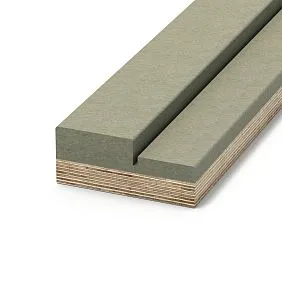
Trims are the vertical planks that frame the door opening on the sides and top, covering the technological gap between the door frame and the wall. Trim width varies from modest 60-70 millimeters for minimalist solutions to impressive 120-150 millimeters for classic interiors. The profile can be simple—a flat plank with small beveled edges, or complex—multi-stepped, with alternating convex, rounded, and grooved elements.
The material of the trims determines the status of the interior. Solid oak or beech—a premium choice where the visible wood grain, its density, and weight create a sense of quality. MDF with film coating or painted—a practical alternative, allowing any color while maintaining profile clarity. Polyurethane trims—light, moisture-resistant, but lacking the tactile warmth of wood.
Trim height is strictly tied to the height of the door opening. For a standard 2100 millimeter opening, vertical trims are 2200-2300 millimeters long, horizontal—equal to the opening width plus double the width of the vertical trims plus 20-40 millimeters for overhangs. Corner joints are made at a 45-degree angle—cutting precision is critical, an error of even one degree creates a visible gap.
Get Consultation
Pediment: the horizontal crown
Pedimentis a decorative cornice placed above the door, crowning the portal, creating visual completion of the vertical composition. In classical architecture, the pediment served a protective function, diverting rainwater from the door opening. In interiors, its function is purely aesthetic—to emphasize the importance of the entrance, create a hierarchy of openings, and give the portal architectural expressiveness.
Pediment dimensions exceed those of the trims. Typical width is 100-200 millimeters—two to three times the width of the trim. Pediment length extends beyond the side trims by 50-150 millimeters on each side, creating visual expansion, a horizontal accent. Pediment projection depth from the wall is 50-100 millimeters—sufficient to create a shadow that separates the pediment from the wall plane, creating a floating effect.
The pediment profile repeats but enhances the trim profile. If the trim has one convex element, the pediment may have two or three; if the trim is modest in decoration, the pediment becomes a focal point with carving, modillions, consoles. This is a gradation of decorativeness, where trims are the calm foundation, the pediment is the solemn peak. Indoorway framingsystems, such hierarchy creates compositional harmony.
Decorative molding: the connecting link
Between the trims and the wall, an additional decorative molding is often placed—a narrow profile 30-60 millimeters wide, which creates an additional relief layer, enhances the portal's volume, and connects it with wall decor. This molding is optional for simple solutions but critical for creating rich classic portals, where multi-layered forms create a sense of architectural complexity.
The profile of the connecting molding is coordinated with the profile of the trims and pediment, but usually simpler, more delicate—it should not compete with the main elements, but complement them. A typical profile is a simple convex or quarter-round element, without complex details. Placement—at a distance of 20-40 millimeters from the outer edge of the trim, creating a visual frame around the basic framing.
The function of the connecting molding is to create a transition between the door portal and the wall. If the room walls use moldings for divisions, panels, frames, the portal's connecting molding repeats their profile, creating stylistic unity.Window and Door Framingfrom one collection ensure this consistency without additional matching efforts.
The technique of profile repetition: the music of forms in the interior
One of the most powerful tools for creating a cohesive interior is repeating the same profile across different elements. The profile of door casings is echoed in window frames, cabinet cornices, mirror frames, and the profiles of baseboards and crown moldings. This creates a visual dialogue, rhythm, and musicality in the space, where the same melody plays in different registers.
Doors and Windows: A Unified Language of Openings
Let's start with the obvious: all door and window openings in a house should speak the same language. If door casings have a profile with a rounded bead and a cove, window frames should repeat this motif. The width may vary—window casings are typically slightly narrower than door casings, 60-80 millimeters versus 80-120 millimeters—but the profile should be recognizably related.
This is especially important in rooms where doors and windows are visible simultaneously—living rooms, dining rooms, bedrooms with panoramic glazing. The eye moves from door to window and instantly reads either the harmony of repeating forms or the dissonance of incompatible profiles. In the first case, the space is perceived as cohesive; in the second, as assembled from disparate elements.
Practical implementation: when selecting door casings, immediately order a set of window frames from the same collection. Manufacturers specializing in architectural decor offer coordinated lines where door and window elements share a common profile, differing only in size. This guarantees matching forms without additional matching efforts.
Cabinets and Furniture: Echoes of Architecture
Built-in cabinets, wardrobe systems, furniture fronts—all these elements also have frames, profiles, and moldings. When their shape echoes door portals, furniture ceases to be a separate object and becomes part of the room's architecture. This works especially effectively with built-in cabinets covering an entire wall—if their fronts are framed with moldings of the same profile as the doors, the wall transforms into a unified composition with a rhythmic alternation of opening elements.
Decorative elements for solid wood doors and furnitureshould be coordinated at the design stage. If you plan to order furniture from joiners, provide them with samples of door casings or their exact dimensions and profile. Modern CNC routers can reproduce any profile on furniture fronts, creating complete stylistic unity. For ready-made furniture, you can use applied decor—moldings and overlays mounted on smooth fronts, imitating paneled construction and repeating the profile of door portals.
Baseboards and Cornices: Vertical Unity
Baseboards and crown moldings are elements that frame the space vertically, creating lower and upper boundaries. When their profile is related to that of door casings, an effect of a closed composition arises, where all horizontal and vertical elements are connected by a single form. This does not mean the baseboard must be identical to the casing—the scale and proportions differ—but the motif, the character of the profile, should be recognizable.
A typical technique: if a door casing has a rounded bead in the upper part of the profile, the baseboard receives a similar bead, only proportionally enlarged or reduced depending on the baseboard height. If the casing has a characteristic cove, it is repeated in the crown molding profile. These are subtle echoes that are not directly conspicuous but are subconsciously perceived, creating a sense of thoughtfulness.
The unity of style between baseboards and corniceswith door portals is especially important in rooms with high ceilings, where the vertical dimension dominates. Here, the eye easily encompasses the space from floor to ceiling, and any mismatch in forms becomes noticeable. Consistency in profiles creates a vertical framework that structures the space, making it proportionate to the human scale.
Gradation of Decorativeness: From Private to Formal
Not all doors in a house are equal in significance. The entrance door is the face of the house, the first thing a guest sees. The living room door is a formal element requiring solemnity. Bedroom and study doors are more private and can be more modest in decor. Doors to technical spaces—storage rooms, laundry rooms—should be as inconspicuous as possible. Unity of style does not mean complete identity of decor for all portals. It's about a gradation of decorativeness while preserving a common language of forms.
Entrance Door: Maximum Expressiveness
The entrance portal is the culmination of the decorative system, where the most striking elements are concentrated. Here, wide casings of 120-150 millimeters with a carved profile are appropriate, a massive pediment (sandrík) with a depth of 100-150 millimeters with modillions and consoles, side pilasters—decorative half-columns flanking the opening, capitals—carved finials of the pilasters. All these elements create a portal in the full sense—an architectural structure that highlights the entrance, emphasizing its importance.
Pilasters for door portalshave a three-part structure: base—the lower part resting on the floor, shaft—the central part, smooth or with flutes (vertical grooves), capital—the upper carved part supporting the pediment. The height of pilasters from floor to the start of the pediment is typically 2200-2400 millimeters for standard ceilings. The shaft width is 80-120 millimeters, projection from the wall is 30-50 millimeters.
The profile of the entrance portal elements sets the tuning fork for all other openings in the house. If the entrance pilasters have flutes, this motif can be repeated in a reduced form on the casings of formal interior doors. If the entrance pediment is adorned with carved modillions, a simplified version of this decor can be used on the pediments of interior portals. This creates a hierarchy where the entrance portal is the main one, and the others are its derivatives.
Formal Rooms: Medium Level of Decor
Doors to living rooms, dining rooms, libraries require solemnity, but to a lesser degree than the entrance. Here, standard-width casings of 90-110 millimeters are used, a pediment of moderate massiveness with a depth of 60-80 millimeters, without pilasters, but with possible addition of decorative overlays—carved elements mounted in the center of the pediment or at the corners of the casings, adding refinement without overload.
The profile of formal door casings should be clearly related to that of the entrance portal, but simpler. If entrance casings have a three-step profile, formal ones can have a two-step profile. If the entrance pediment has large modillions, the formal one gets small dentils (tooth-like ornaments). This stepwise simplification while preserving formative motifs creates a coherent hierarchy of decorativeness.
The color scheme of formal portals may match the entrance or be a shade lighter, creating a gradation from dark, saturated at the entrance to lighter, more airy inside the house. Such gradation is subconsciously perceived as a movement from public to private, from external to internal, from formal to relaxed.
Private Rooms: Restrained Decor
Bedrooms, children's rooms, studies—spaces of personal life where excessive decorativeness is inappropriate. Here, simple casings 70-90 millimeters wide with a minimal profile—one or two bevels, a slight rounding—are sufficient. The pediment may be absent altogether or be minimalist—a rectangular strip slightly wider than the casing, without a complex profile, without projection.
At the same time, the profile should retain kinship with formal portals. If roundings were used there, use roundings here too, only with a smaller radius. If bevels at a specific angle were used there, use the same angle here, but on narrower strips. This kinship in line, where the general character of the form is recognized, but the scale of decor corresponds to the room's purpose.
The color of private portals is usually lighter than formal ones—white, light gray, natural light wood. This creates a sense of calm, neutrality, a background against which personal life unfolds. Dark, richly colored portals in a bedroom can be heavy, create pressure, and hinder relaxation.
Technical Rooms: Hidden Integration
Doors to pantries, laundry rooms, and technical spaces should be as inconspicuous as possible. Here, concealed doors without architraves are used, where the door leaf continues the wall plane, is painted the same color, and opens with a push. Alternatively, minimal architraves are used—narrow strips 50-60 millimeters wide, perfectly smooth, painted to match the wall color, which merely outline the opening without drawing attention.
Even for technical doors, it's important to maintain the overall profile line, albeit maximally simplified. If architraves with rounded edges are used throughout the house, technical doors receive the same roundings, just without additional relief. This maintains unity on a subconscious level—even barely noticeable doors speak the common language of forms.
STAVROS ready-made solutions: a systematic approach to portals
Creating a unified system of portals throughout the house is a task that requires not only aesthetic sense but also precise calculation, selection of compatible elements, and understanding of installation structural features. Independently selecting elements from different manufacturers risks mismatched profiles, shades, and sizes. That is why leading architectural decor manufacturers offer ready-made systematic solutions—collections where all elements are coordinated with each other.
Collection approach: coordinated elements
The company STAVROS has developed several collections of door portals, where architraves, pediments, pilasters, capitals, and connecting moldings are united by a single profile, a single style, and a single material. Each collection corresponds to a specific style—Classic, Neoclassical, Art Deco, Modern Classic—and offers a complete set of elements for decorating openings of varying significance.
The 'Classic' collection includes massive oak architraves 110 millimeters wide with a three-step profile, pediments with dentils and modillions, straight pilasters with Corinthian capitals, connecting moldings with floral ornamentation. All elements are made of solid oak, coated with transparent oil that emphasizes the wood grain. Color options: natural oak, gray-toned oak, fumed oak.
The 'Neoclassical' collection offers more restrained decor—architraves 90 millimeters wide with a two-step profile, pediments with simple dentils without modillions, smooth pilasters or those with light fluting, capitals of a simplified Ionic form. Material—solid oak or ash. A typical solution is painting in light tones: white, ivory, light gray, which creates an airiness corresponding to the spirit of Neoclassicism.
The 'Modern Classic' collection—minimalist forms with classical proportions. Architraves 80 millimeters wide with a simple rectangular profile and light rounding, pediments without ornamentation—rectangular strips with profiled edges, pilasters are absent or replaced by flat vertical panels. Material—MDF with matte monochrome paint: graphite, anthracite, dark blue, emerald.
Design principle: system modularity
Each STAVROS collection is built on a modular principle. The basic element is a standard-width architrave. To it, you can add a pediment—resulting in a portal of medium decorativeness. Add pilasters with capitals—resulting in a formal portal. Add a connecting molding—resulting in a multi-layered composition. Use only the architrave—resulting in a minimalist solution. Such flexibility allows varying the level of decorativeness depending on the room's purpose while maintaining stylistic unity.
The size range is also well thought out. Architraves are produced in lengths of 2.5 meters, allowing the decoration of a standard 2.1-meter-high opening with minimal trimming. Pediments are produced in lengths from 1 to 2.5 meters in 0.5-meter increments, covering the entire range of standard openings from 0.7 to 2 meters wide. Pilasters—standard height of 2.4 meters, divided into parts for ease of transport and installation: base 0.3 meters, shaft 1.8 meters, capital 0.3 meters.
Collection kits include not only main elements but also auxiliary ones: corner connectors for joining architraves at 45 degrees, pilaster bases, rosettes—round or square overlays for decorating corner joints, consoles—protruding elements supporting the pediment. All this is supplied as a set, eliminating the need to search for compatible parts from different manufacturers.
Technical support: from project to installation
Purchasing elements is only half the job. The second half is correct quantity calculation, competent installation, and finishing. STAVROS provides full technical support at all stages. At the design stage, company specialists help select a collection corresponding to the interior style, calculate the quantity of elements based on the layout, and prepare an estimate accurate to one linear meter.
At the installation stage, consultations on installation technology are available. Complex nodes—connecting a pilaster to a pediment, attaching a massive cornice, joining elements at non-right angles—require professional skills. STAVROS instructions detail each stage, show typical errors, and offer proven solutions. For professional installers, technical seminars are available where techniques for working with specific collections are practiced hands-on.
Finishing—painting, varnishing, patination—also requires knowledge. Oak and ash wood absorb paint differently and require different primers. Polyurethane elements require special compounds to ensure adhesion. STAVROS provides recommendations on selecting finishing materials, application technology, and compatibility with the decor material. This guarantees that the result will be durable and the coating will not peel off after a year.
Practice of implementation: from concept to realization
The theory of a systematic approach to door portals is clear, but how to implement it in a specific project? Let's break down the step-by-step process of creating a unified portal composition in a typical apartment or house.
Step one: inventory and planning
Start by compiling a complete list of all door openings in the house: entrance door, interior doors (with room indications), built-in wardrobe doors, technical room doors. For each opening, record the dimensions: width and height of the clear opening, wall thickness (affects door frame width and architrave projection). Note features: non-standard ceiling height, curved walls, adjacency to corners.
Based on this inventory, determine the level of decorativeness for each opening. Entrance door—maximum, living room and dining room—high level, bedrooms and studies—medium, technical rooms—minimum. This provides an understanding of which elements will be required: where full portals with pediments and pilasters are needed, where architraves are sufficient, and where concealed doors can be used altogether.
Choose a stylistic direction corresponding to the overall interior concept. For classic interiors with moldings, chandeliers, antique furniture, collections in Classic or Baroque style are suitable. For modern interiors with minimalist furniture, concealed cornices, built-in appliances—Modern Classic or even minimalist profiles. For eclectic interiors mixing old and new—Neoclassicism as a compromise between decorativeness and restraint.
Step two: collection selection and material calculation
Having decided on the style, choose a specific collection from the manufacturer. Study the catalog, pay attention to profiles, sizes, color options. Order samples—small fragments of architraves, pediments, moldings from the selected collection. Samples will allow you to assess the material, texture, color in reality, apply them to existing interior elements, and check compatibility.
The quantity of elements is calculated using formulas. For each opening with architraves: vertical architraves—2 pieces with length equal to the opening height plus 150 millimeters; horizontal architrave—1 piece with length equal to the opening width plus double the architrave width plus 100 millimeters. For a pediment: length equals the opening width plus 300-500 millimeters depending on the desired projection beyond the architraves. For pilasters: height from floor to the start of the pediment minus 50 millimeters.
Sum up all elements, add 10% for trimming and possible defects.Moldings for framingare sold by linear meter, architraves—in lengths of 2.5 meters, pediments and pilasters—by the piece. Calculate how many architrave lengths are needed: total length in meters divided by 2.5, result rounded up. For example, 45 meters of architraves requires 18 lengths.
Step three: opening preparation and installation
Before installing the decor, door openings must be completely ready: door frames installed, doors hung, gaps between the frame and wall foamed, walls around openings leveled and painted. Decor installation is a finishing operation performed after all rough and finishing work is completed.
Start with marking. For casings, mark vertical lines 10-20 millimeters from the edge of the door frame on each side — this is the gap that will be covered by the casing. For the pediment, mark a horizontal line at a height equal to the opening height plus the height of the horizontal casing plus 50-100 millimeters — this will be the lower edge of the pediment. For pilasters, mark vertical lines at a distance from the opening equal to the width of the casing plus 20-30 millimeters.
Installation is performed from bottom to top. First, install the pilaster bases (if present), then the vertical casings, then the horizontal casing, then the pilaster shafts, then the capitals, and lastly — the pediment. Fastening solid wood elements is done with adhesive plus finishing nails or screws. Adhesive — polyurethane for maximum strength, applied in a zigzag pattern on the back of the element. Nails or screws — additional fastening, placed at 400-500 millimeter intervals, countersunk, and the holes are filled with putty.
Mitering architraves at corners is a critical step. The cut is made at a 45-degree angle using a miter saw with a stop that ensures precision. The slightest angle deviation creates a gap that cannot be hidden with filler—it will be visible. Professionals use laser miter saws, which provide cutting accuracy up to 0.1 degrees. After joining, the corners are glued and secured with painter's tape until the adhesive dries.
Step four: finishing and completion
After installing all elements, finishing is performed. For solid wood elements installed without coating, surface sanding with P220-P240 abrasive is required to remove roughness, followed by primer application — alkyd for transparent finishes or acrylic for opaque painting. After 4-6 hours, apply the final coating: oil to emphasize texture, varnish to create a protective film, paint to achieve color.
For elements intended for painting (MDF, polyurethane), finishing begins with filling all joints and fastener holes with putty. Putty — acrylic, elastic, non-shrinking. After the putty dries, the joints are sanded flush with the main surface. Primer is applied, then two coats of paint with intermediate sanding using fine P320-P400 abrasive to achieve a perfectly smooth surface.
Additional techniques are used to create decorative effects. Patination — applying dark paint or wax into the profile recesses followed by removing excess from the raised parts. This emphasizes the relief, creating an aging effect. Gilding or silvering — applying metallic pigments to the raised parts of the profile to create accents. Glazing — applying semi-transparent layers of paint in different shades to create color depth.
Connection with the overall interior: portals as part of the whole
Door portals, no matter how perfect they are on their own, do not exist in a vacuum. They are part of an interior system that includes wall decor, ceiling elements, floor coverings, and furniture. Harmonious integration of portals into this system is critical for achieving spatial integrity.
Wall moldings: continuing the theme
If wall moldings are used in rooms — to create panels, frames, wall divisions — their profile must be coordinated with the profile of door portals. The ideal option is when wall moldings and portal connecting moldings are identical. This creates visual unity, where portals become part of the overall wall decor, not separate elements.
The technique of 'portal framing' — creating a frame of moldings around the door opening on the wall, repeating the contour of the casings at a distance of 100-200 millimeters. This turns the portal into an accent panel, highlights it against the wall, and creates an additional relief layer. This works especially effectively in formal rooms, where the door becomes the central element of the wall.
The color scheme of wall moldings should be coordinated with the portals. A classic technique — moldings and portals in one color, contrasting with the wall. A modern approach — moldings matching the wall tone, portals 1-2 shades darker or lighter, creating a delicate gradation. An avant-garde option — colored moldings and portals on a neutral wall, where the decor becomes the main color accent of the interior.
Ceiling cornices: vertical dialogue
The ceiling cornice — the upper horizontal of the room, visually correlating with the pediments of door portals — the lower horizontals. When the cornice profile is related to the pediment profiles, a vertical dialogue arises, where the top and middle of the room speak the same language. This does not mean identity — the cornice is usually larger, more massive than the pediment, but the character of the profile, the ratio of curves and beads should be recognizably similar.
Cornices and baseboards in a unified stylecreate a vertical framework for the room. If complemented by coordinated door portals, a three-level system is achieved: ceiling cornice — upper level, portal pediments — middle level, floor baseboard — lower level. All three levels are connected by profile kinship, creating compositional unity vertically.
Practical implementation: when choosing a door portal collection, check with the manufacturer if there are ceiling cornices and floor baseboards from the same series in the assortment. Leading architectural decor manufacturers offer comprehensive systems where all elements are coordinated. This eliminates the painful selection of compatible profiles from different suppliers.
Furniture and built-in elements: completing the picture
The final level of integration — coordinating door portals with furniture and built-in elements. If there is a fireplace in the living room, its portal molding should echo the door portals. If there is a built-in wardrobe covering the entire wall in the bedroom, its facades can be framed with moldings of the same profile as the doors. If there is a sideboard with glazed doors in the dining room, their framing can be made from the same collection of casings.
This is the highest level of interior composition, where each element is connected to all others by invisible threads of formal kinship. The space turns into a symphony, where the same theme is carried through different instruments, creating richness with unity of concept. Such interiors do not shout, do not stand out with decorativeness, but create a deep sense of harmony, thoughtfulness, and taste.
decor for furniture and doorsfrom a single manufacturer guarantees this unity without additional effort. When ordering door portal elements from STAVROS, you gain access to a complete line of coordinated decor — moldings for furniture, overlays for facades, carved elements for fireplaces, pilasters for walls, capitals for columns. All this is united by a common design concept, common execution quality, and a common philosophy of creating harmonious spaces.
Frequently asked questions about portals: a practical FAQ
Is it necessary to use a pediment above every door?
No, a pediment is not necessary for all doors. It is required for formal portals — entrance door, living room doors, dining room doors — where solemnity is needed. For private rooms — bedrooms, studies — casings are sufficient; a pediment would be excessive. For technical rooms, a pediment is definitely not needed. Rule: the more significant the room, the more complete a portal is appropriate.
Can wood and polyurethane be combined in one portal?
Yes, this is a common practice. Basic casings are made of solid wood — these are elements that are touched, at eye level, where tactility and texture are important. Pediments, pilasters, connecting moldings are made of polyurethane — they are at height, not touched, form is important, not material. Polyurethane is lighter, easier to install, cheaper. The main thing — coordination of profiles and high-quality painting in one color, then the difference in materials is not noticeable.
What to do if doors are of different widths and heights?
This is a normal situation — the entrance door is wider than interior doors, bathroom doors are narrower than living room doors. Unity of style is achieved not by identical dimensions, but by repeating the profile and proportions. Use casings from the same collection, but vary the width: for wide openings — wider casings, for narrow ones — narrower ones. Pediments are also scaled to the width of the opening. The main thing — maintain the same height from the floor to the top of the pediment in all openings with portals; this creates a horizontal rhythm.
How much does creating a unified portal system in a house cost?
The budget depends on the number of openings, the chosen collection, and the level of decorativeness. For a typical 3-room apartment with 8-10 door openings, the budget will be: economy option (MDF trims, no pediments, self-installation) — 40-60 thousand rubles; mid-range option (wooden trims, pediments on main doors, installation by a crew) — 120-180 thousand rubles; premium option (solid oak, full portals with pilasters, custom design) — 300-500 thousand rubles. For a private house with 15-20 openings, budgets increase by 1.5-2 times.
How to maintain portals so they last a long time?
Basic care involves regular dust removal with a soft cloth or a vacuum cleaner with a soft brush attachment. For relief elements, use brushes with soft bristles. Wet cleaning is acceptable, but without excess water — wipe with a slightly damp cloth and immediately dry thoroughly. Avoid aggressive cleaning agents with solvents or abrasives, as they damage the finish. Every 3-5 years, renew the protective coating: for varnished surfaces — an additional layer of varnish; for painted surfaces — touch-up in worn areas; for oiled surfaces — application of a fresh coat of oil.
Conclusion: entrust harmony to the professionals at STAVROS
Creating a unified system of door portals throughout the house is not just about buying trims and pediments. It is a comprehensive design and technical project that requires an understanding of architectural proportions, knowledge of materials, and mastery of installation technologies. DIY implementation is possible but fraught with mistakes that will cost more than the savings from forgoing professional help.
STAVROS Company has 23 years of experience in creating architectural decor, with thousands of completed projects ranging from modest apartments to palatial residences. Our own full-cycle production guarantees quality control at every stage — from wood selection to final sanding. All products undergo multi-stage inspection: checking geometry, profile conformity to the standard, surface quality, and joint strength.
STAVROS's assortment includes dozens of door portal collections in various styles and price categories. From budget MDF trims for painting to exclusive carved portals made of solid oak with hand carving and patination. Each collection is a complete system where all elements are coordinated in profile


